


NCCubFan
-
Posts
17,000 -
Joined
-
Last visited
Content Type
Profiles
Joomla Posts 1
Chicago Cubs Videos
Chicago Cubs Free Agent & Trade Rumors, Notes, & Tidbits
2026 Chicago Cubs Top Prospects Ranking
News
2023 Chicago Cubs Draft Picks
Guides & Resources
2024 Chicago Cubs Draft Picks
The Chicago Cubs Players Project
2025 Chicago Cubs Draft Pick Tracker
2026 Chicago Cubs Draft Tracker: Picks & Bonuses
Blogs
Events
Forums
Store
Gallery
Everything posted by NCCubFan
-
I'm not possitive but I believe each team is allowed to have something like 1 or 2 players over the age limit. That could be. It may be allowed primarily for injury rehabilitation.
-
Too bad we didn't do this a year ago. Maybe we could have also included Rothschild and gotten Mazzone. :D
-
He's 3-5 with a 4.40 ERA in AAA this year. The Padres probably just thought he wasn't ready yet (he was 3-6 with a 5.33 ERA in his major league stint last year). I'm surprised you can't send him down. I'm in a keeper league where once a player has exceeded a certain number of at bats or innings pitched he can't be on your minor league roster as long as he's in the majors in real baseball. However, if he gets sent down in real life you can move him back to your minor league roster.
-
I moved your previous identical post to Baseball Discussions. The Polls forum is reserved for actual polls for people to vote on. And look at my signature; we agree on Cuban. :D
-
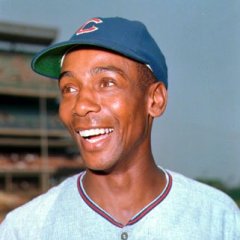 They can, they're just too stubborn to.
 -
Gammons on Samardzija
NCCubFan replied to NorthsideAvenger's topic in MLB Draft, International Signings, Amateur Baseball
From what I've read, MLB can pressure the Cubs but can't block it completely. Yep, MLB can make their feelings on the matter clear, but that's all they can do. Both EPatt and Grant Johnson were signed to contracts well above slot money, for example. That's always been my understanding too. The slot money represents recommended guidelines, not enforceable rules. They don't like it when teams pay more than slot money, but they can't stop it. And I think they look the other way in certain circumstances, such as a player whose talent would warrant a higher pick but has dropped due to signability concerns. -
Minor League Discussion & Boxes 6-14-2006
NCCubFan replied to Outshined_One's topic in Cubs Minor League Talk
-
Hagerty is listed on the Boise roster too, and I thought he was too old to play in that league.
-
Minor League Discussion & Boxes 6-14-2006
NCCubFan replied to Outshined_One's topic in Cubs Minor League Talk
The next Doug Dascenzo. :D -
Not anymore. You're back at zero, thanks to Vlad last night (he was my pick too).
-
I'm moving this to Baseball Discussions since it isn't actually a poll.
-
What if Cuban becomes owner and
NCCubFan replied to CubfaninCA's topic in MLB Draft, International Signings, Amateur Baseball
That's beyond my knowledge (I don't have any background in professional sports), but UBlink gave a good response about the Cubs specifically. They're part of the Trib, not a stand-alone company, so it's hard to measure their profitability directly. I don't know if teams try to mislead the public, but there have been times in the past when they've been accused of trying to mislead their players unions in an attempt to make it look like they're not able to pay what the unions are asking for. This issue has been raised in the past during strikes/lockouts. -
Hopefully he'll have the same success as another #22 that pitched for the Jaxx for six games in 2002.
-
Minor League Discussion & Boxes 6-13-2006
NCCubFan replied to Outshined_One's topic in Cubs Minor League Talk
It would be double sweet if we overtake them for the title after we earlier stuffed the ballot box during their mascot poll. :D -
He's been blessed by deity. Someone needs to photoshop a picture of Dunn looking down, shining brightly on Marmol from Heaven. :lol: It should be Dunn, Mercker, and Kasper looking down, the way Obi-Wan, Yoda, and Anakin looked down on Luke Skywalker at the end of Return of the Jedi. :D
-
He's been blessed by deity. Someone needs to photoshop a picture of Dunn looking down, shining brightly on Marmol from Heaven. :lol: It should be Dunn, Mercker, and Kasper looking down, the way Obi-Wan, Yoda, and Anakin looked down on Luke Skywalker at the end of Return of the Jedi.
-
Marty Brennaman's Thoughts
NCCubFan replied to CubbieRich's topic in MLB Draft, International Signings, Amateur Baseball
No, you're not. I still think he'll come around. -
Minor League Discussion & Boxes 6-12-2006
NCCubFan replied to Outshined_One's topic in Cubs Minor League Talk
Strange to be having games affected by hurricanes this early in the season. The only Hurricanes that should be affecting sports schedules at this time are the ones in North Carolina that are playing for the Stanley Cup. :lol: Oh well, better now than losing postseason due to a hurricane as happened two years ago. -
What if Cuban becomes owner and
NCCubFan replied to CubfaninCA's topic in MLB Draft, International Signings, Amateur Baseball
That's right. Companies can prepare the books however they want for managing the business internally; GAAP applies only to reporting to outsiders. So a business could really have three sets of books; one for reporting to shareholders, one for tax reporting, and one for managing the business internally. It's not legal to intentionally mislead the public. An outside auditor (if doing their job properly) would not sign off misleading financial statements; an auditor has to express an opinion on whether the financial statements fairly reflect the business's operating results and financial position. Plus, under Sarbanes-Oxley the company's CEO and CFO must certify, under penalty of law, that the financial statements are not knowingly misleading. As far as the IRS is concerned, the issue is simply whether the company has fully reported its revenue and is legitimately entitled to deduct the expenses they have. As long as the revenue and expenses have been reported in compliance with the tax code, the company's obligation is merely to pay the lowest amount of taxes they are required to pay by law. Deducting expenses in order to reduce the tax liability is perfectly acceptable as long as the tax code (or related IRS guidelines or court rulings) permit the deduction. If not, then it's tax evasion, which can result in fines and/or jail time.. In fact, tax evasion is how Al Capone and other gangsters of that time were caught. It could never be proven that they engaged in illegal activities (even though everybody knew they were), but it could be proven that they received income that they didn't report on their tax returns. By using tax evasion to get them, it only had to be proven that they had income that wasn't reported; it wasn't necessary to prove how they got the income. Test tomorrow. :D -
The REAL game of the week is NC Cubbies vs. Burning 'Bulbs to determine who's the Least of the East.
-
What if Cuban becomes owner and
NCCubFan replied to CubfaninCA's topic in MLB Draft, International Signings, Amateur Baseball
It's not only legal, but in some cases necessary to keep separate books for tax purposes vs. reporting to shareholders. For example, the method most companies use to depreciate assets for tax purposes (MACRS) is not acceptable for reporting to hhareholders because the write-off is too fast (an asset may really have a 10-year life, which would be the required write-off period for reporting to shareholders, but be depreciated over 7 years under the tax law). Requirements for reporting to shareholders are based on generally accepted accounting principles, which are developed mainly by the Financial Accounting Standards Board with input from the SEC, while reporting for tax purposes is governed by the tax code and IRS regulations. The two frequently contradict each other, requiring two sets of books. Sorry for the accounting class, but I am a university accounting professor. Class dismissed. :D -
Minor League Discussion & Boxes 6-12-2006
NCCubFan replied to Outshined_One's topic in Cubs Minor League Talk
And despite being a career minor leaguer he could probably get Pierre out right now. -
Hogwash.
-
With Guzman back up, Dusty simply MUST start him instead of Rusch. Starting Rusch is in effect forfeiting the game that could give the Cubs their first four-game winning streak of the year. They're on a bit of a roll now; you simply don't derail that by starting Rusch.
-
Marmol should replace Rusch in the rotation, not Wood. Rusch doesn't belong within eyesight of a major league rotation.
