


Cubs Video
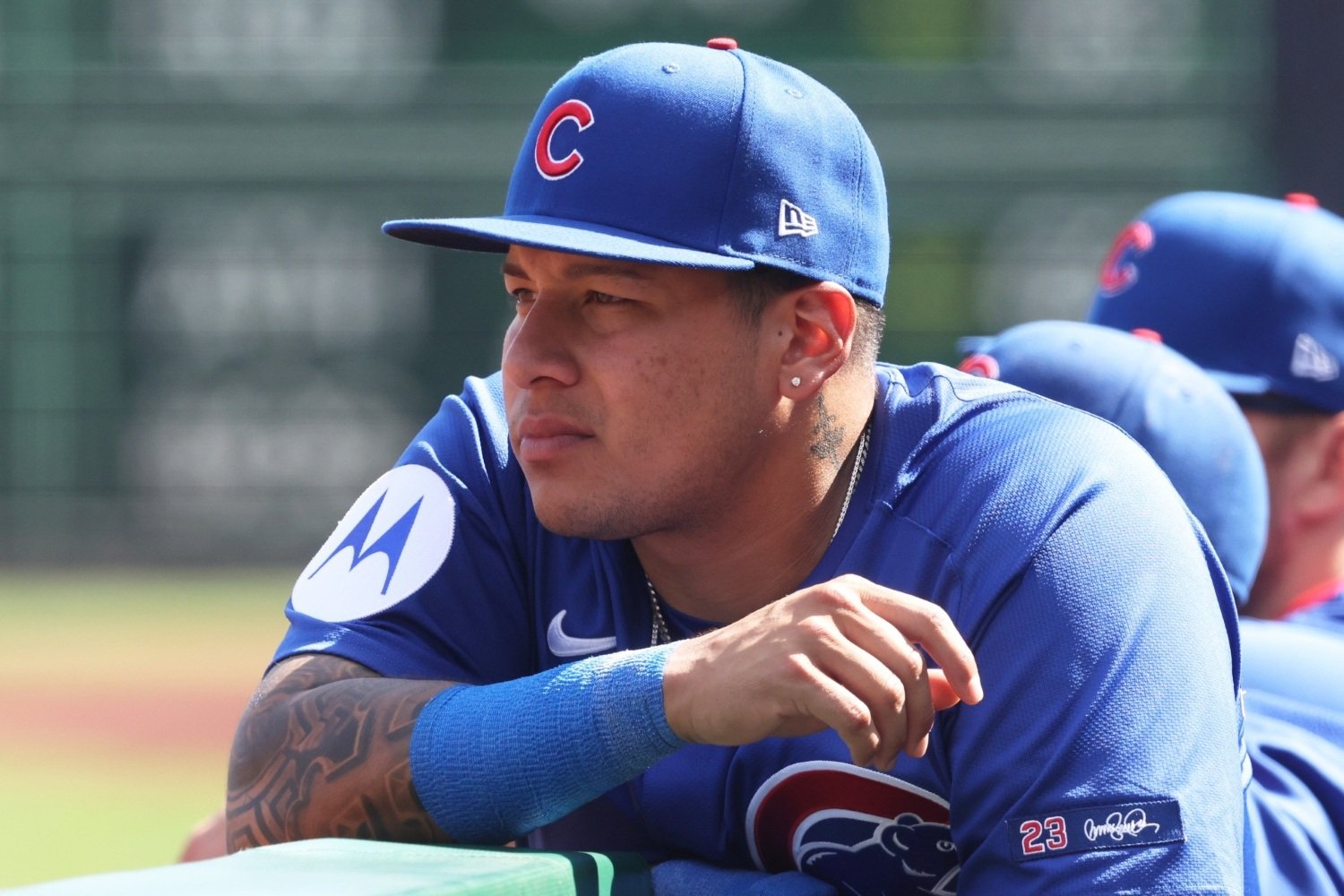
The story of the 2025 Chicago Cubs has yet to be fully written, but you'd be hard-pressed to find a more fun singular moment than Moisés Ballesteros' first major-league home run. In the second inning on a beautiful September day at Wrigley Field, the Cubs rookie laced a 103-mph line drive into the left-field bleachers. On its own, the home run was fun; there's always something special about a rookie's first bomb at Wrigley Field (go back and re-watch Christopher Morel or Willson Contreras's first round-trippers if you don't believe me), but there was something extra in the air (and the bleachers) that weekend: former Cub Anthony Rizzo. Rizzo had signed a one-day contract and retired as a Cub, and the team was honoring their iconic first baseman, who just so happened to be sitting in the bleachers to soak in the adulation. In a crazy coincidence, the rookie hit the ball directly to the legend... who dropped it.
"That's why I'm retired," the retired Rizzo was caught saying. It was a great moment, and one I won't soon forget.
Since returning due to to Kyle Tucker's calf strain, the Cub's youngster has put up an impressive .323/.446/.581 line, which has been good for a .483 wOBA and a 183 wRC+; that's a really great line. Better yet, he's got a .254 isolated slugging during that span, and a pretty fantastic 7:8 BB:K. This is a huge improvement over his first stint in the majors, when in a five-game sample size in May, he looked largely toothless.
There are a few reasons we can point to as to why he's improved. First, one of the things I spoke about in an article way back in May was that the left-handed hitter was simply swinging too often. One of the hardest things for hitters of Ballesteros's profile is to learn that just because you can hit it, doesn't mean you should hit it. Over his first cup of coffee (and his one game in July), Ballesteros had a 27.3% chase rate, and a 45.7% swing rate. Compare that, then, to his time in September. His chase rate is down to 21.4%, and his swing rate is also down to 44.5%. This means not only is he chasing less, but he's swinging more at strikes. The sample sizes are too small to make a definitive comment on how these will continue, but it's a good sign that something is clicking for the rookie.
While there are some positives in his outcomes since he's returned, there are still some things that are clearly a work in progress. The most noticeable point of emphasis is in his swing. So far, in his return, Ballesteros has gotten more open in his stance, and moved closer to the front of the plate by almost four inches. What this has allowed him to do is catch the ball a bit more out front; almost three inches of improvement. He's still catching the ball well behind the front of the plate, but it's better. This is something we saw the Cubs work on with fellow rookie, Matt Shaw, throughout the year, and it should probably continue with Ballesteros, as well. The clear-cut underlying cause for this: neither are exit velocity monsters.
One of the positives that Ballesteros has over Shaw is that his pre-swing stance is far less of a mess than Shaw's was, but they share a lot of similarities in profile. Both hitters fall into a category of "high swing/high contact" types, and neither hit the ball particularly hard. In September, Ballesteros's average EV is 87.9 mph; that's below league average. Shaw, who's had an impressive mid-season revelation as a hitter, has an EV of 85.5 mph in the second half himself. Where the Cubs' third baseman has managed to help himself out is by moving his point of contact further in front of the plate and heavily increasing his pull rate. I expect to see Ballesteros creep further up in the box himself, to replicate Shaw's high pull rate.
Getting Ballesteros to catch the ball in front of the plate a little more often would allow him to clean up how often he's hitting the ball up the middle. A lot of the reason Ballesteros is hitting the ball to his pull side only 34.8% of the time is because of where he's swinging and hitting the ball in play: low and away (the hexbin map on the left). When we compare where Ballesteros swings and puts the ball in play and his overall location heatmap (the heatmap on the right), we can see that there are more opportunities for the rookie to pull the ball than he's currently taking.


One of the reasons that so many of his balls are going up the middle (or the other way) is likely due to where he catches the ball. By catching it so deep compared to the plate, he's struggling to pull the ball with authority. We can see this represented in his spray chart (pictured below); he has essentially ignored right field so far. Instead, most of his hits have either been up the middle or the other way. Even his triple landed on the infield before it ever got to the outfield. That special moment I mentioned early? Yeah, it went to left field. Now, the pitch that he took out was certainly a pitch you'd go the other way on, but perhaps a more pull-capable hitter would have already smoked one out to right field by then. So while that special moment wasn't entirely a function of his currently limitations, it kind of is, as well, considering the nature of it being just his first one.

I know this sounds negative, but it's anything but; there's a lot to like about the Cubs' rookie right now. He makes a lot of contact, he's learning the big-league strike zone, and he's been a bright spot in the Cubs' lineup over a span in which there hasn't been a ton to get excited about.
Instead, this is meant to highlight the work that can be done. The best version of Ballesteros probably looks more in line with the best version of Shaw: a hitter who makes a lot of contact and uses mediocre exit velocities to the best of his ability by turning into a heavy pull guy. The best news is that with how deep Ballesteros is currently making contact with the baseball, there's plenty of ways to maximize that. His foundation as a hitter is probably better than those of Pete Crow-Armstrong and the aforementioned Shaw, and the Cubs have managed to maximize each of their profiles, albeit only inconsistently. It should give us a lot of hope that similar things will be done to get him to a similar spot as those two young hitters. There are still lots of plate appearances to get him anywhere close to their experience level, and we're already seeing positive momentum in that direction.
While there's certainly going to be plenty of debate to be had about what the future holds for the left-handed hitter when it comes to his defensive home, offensively, I'm filled with a lot of optimism. He's clearly not a finished product, and there will be things that occur over the offseason and the 2026 regular season that will help make him the best version of himself; but I think the pathway for that has become clear: just pull the ball more. Once he's able to do that, he's going to be a real problem for pitchers. Even in the event that he's just a designated hitter, getting him to pull the ball more, and maximize his profile will help him be a useful hitter. If the Cubs can do that and get him to a place where you can allow him to catch 60-70 games a season? Well, the Cubs would then have a very special player on their hands; let's hope they can make this outcome a reality.
What have you thought about Moises Ballesteros' second real-stint with the big league club? Do you think he will be on the MLB side of things to start 2026? Let us know in the comment section below!
Do you approve of the job the Cubs front office is doing?

Follow North Side Baseball For Chicago Cubs News & Analysis



-
 1
1
.thumb.JPG.19c99ddd60a76edf810c77d321439828.JPG)



Recommended Comments
Create an account or sign in to comment
You need to be a member in order to leave a comment
Create an account
Sign up for a new account in our community. It's easy!
Register a new accountSign in
Already have an account? Sign in here.
Sign In Now