


Cubs Video
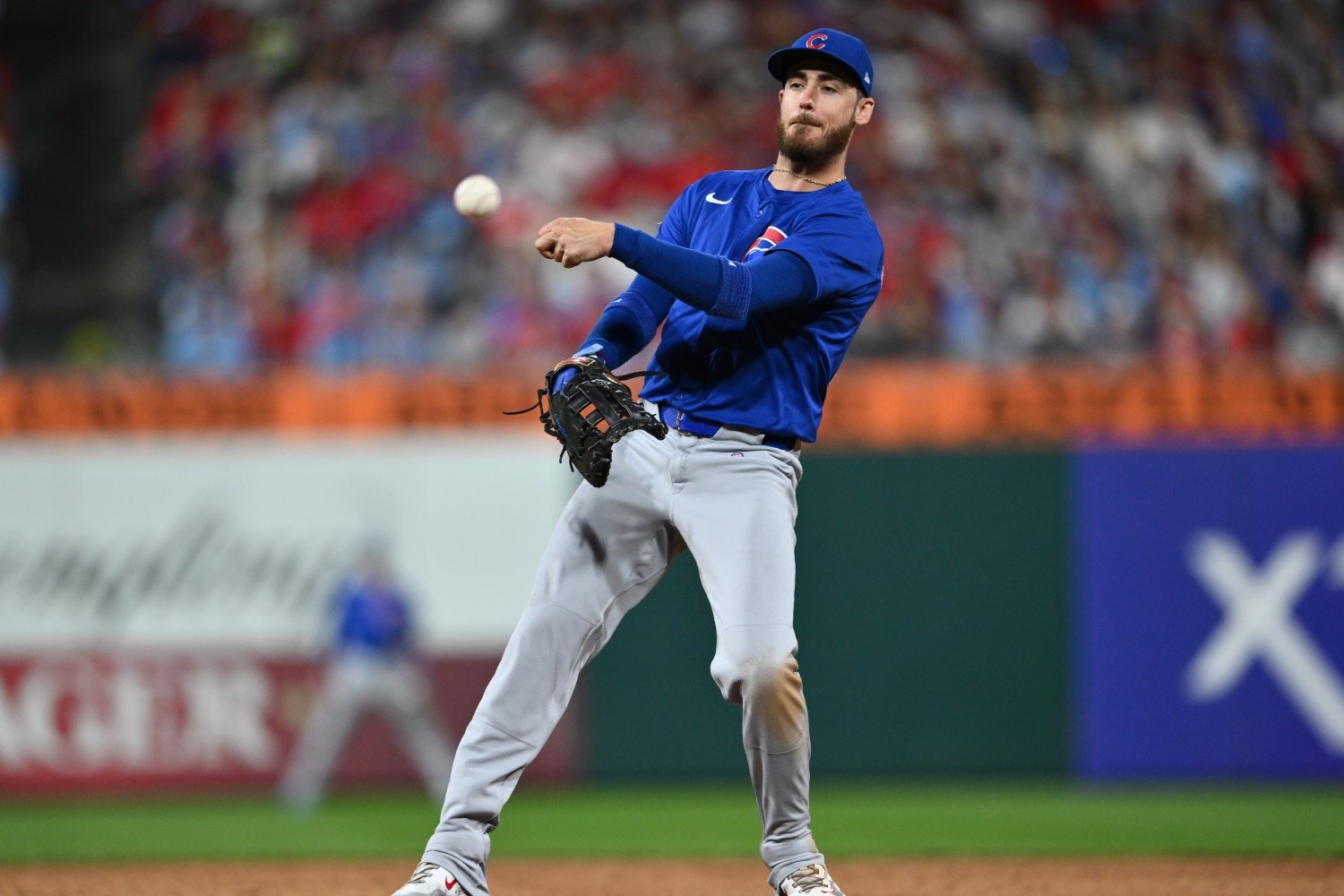
Whether or not the Cubs went over the first competitive-balance tax threshold by spending more than $237 million in annual average value salaries and benefits for 2024 matters. It matters quite a bit, for multiple reasons. Firstly, if they did go over that threshold, they did it by a very small amount, and that signals extraordinary incompetence. Jed Hoyer's comments on 670 The Score in August signaling that he expected the team to be tax payers was shocking to many fans, because the way Hoyer couched it, that had been a foregone conclusion for him ever since he chose to sign Cody Bellinger to the one-year deal (with two player options) to which those parties agreed in late February.
If that were true, though, why didn't the team spend much more aggressively than that? Even after the Bellinger deal, there were good free agents available, and some good players were traded right in the shadow of Opening Day—partially because teams needed to move their salaries. In simplest terms, no team should ever spend just beyond a tax threshold. The way to do it is to spend right up to such a threshold, assembling as much talent as possible without crossing into a new bracket and suffering more severe penalties. Furthermore, it was obvious to a great many outside observers that the Cubs were not a complete championship contender after re-signing Bellinger. If Hoyer knew that, too, why wasn't he looking for a way to spend another $10 million after bringing back Bellinger? If he didn't, it's a discouraging statement about his perspicacity as an executive.
After a close study of the invaluable resource that is Cot's Contracts, however, I think we need to have a slightly more nuanced conversation—because all may not be as it seems.; That site is powered by Baseball Prospectus (where, full disclosure, I am also a contributor), and specifically by Jeff Euston. After looking hard at the Cubs' salary breakdown for 2024, I emailed Euston with some follow-ups.
Here's the thing: according to Cot's, the Cubs are only $277,157 over the line. That's based not on the specific salaries each player was paid in 2024, but on their contracts' annual average values, plus various dues and benefits that were negotiated as part of the tax threshold calculation when the union and the league hammered out this system over the course of multiple collective bargaining agreements. Crucially, though, Euston (and all the other people trying to do similar work at competing outlets) has to estimate some of the more nebulous expenses involved there. Could it be that the Cubs aren't actually over that line, despite what Hoyer said in August?
In short: yes.
"The Cubs could come in within a million or two of the threshold in either direction," Euston wrote in an email. "Inevitably there are things that are not public--credits, cash involved in trades, undisclosed bonuses, etc. I was convinced the Angels would exceed the threshold in 2023 and pay the tax, and somehow they came in under. I parsed the figures for every transaction of their season, and I'm still not sure how they did it. So I'm resigned to the uncertainty, providing the best possible projections I can, then adjusting as I get more information."
That matches the attitude, approach, and knowledge level of the others doing the same work in public, and (difficult as this might be to believe) even some people whose job is to track this stuff for big-league teams. Every team has a down-to-the-dollar idea of their own tax situation, but even that reality can change a bit in various unexpected, last-second ways—and many teams are no more certain of their opponents' situations than we are.
Wait, then, though. If the Cubs might come in under the tax after all—which would make much more sense than exceeding it by what works out to a rounding error for an organization this big—why did Hoyer come anywhere near saying the opposite this summer?
It all comes back to Bellinger. Recall that, weeks after that now-infamous appearance on The Score, he opened his postseason press conference by talking as though Bellinger opting out of his deal was almost a foregone conclusion. Despite the outfielder's injury-marred, good-not-great season and the richness of the $50 million left on his deal over two more years, Hoyer seems very much convinced that the ex-MVP will test the market and try to capture a longer-term deal. Other sources are speculating the same outcome.
If that does happen, most of the above is moot, because Bellinger's tax number changes by an amount that dwarfs the current margins around the threshold. While the player still holds his options, the contract is calculated based on the total amount guaranteed, divided by the number of years the player can choose to stick around if they wish. Thus, Bellinger's tax number is $26.7 million right now. If he opts out, after earning $27.5 million this year, he gets a $2.5-million buyout on his way out the door. His tax number for 2024 thus surges up to $30 million, and we're no longer near the line.
Based on the information we have, I feel fairly confident in saying this: the Cubs know a little more than we do, and if Bellinger opts in, they'll stay under the tax threshold for 2024. However, they also expect him to opt out—and they're fine with that. My reading of the situation is that Hoyer is fine with being a tax-paying team this year, if it means having $30 million more to allocate as he sees fit this winter. He would rather have that flexibility than be under the line and have Bellinger back in a crowded offensive mix still needing an upgrade, and he expects things to break that way.
I want to reiterate that I think it matters whether or not they're over the line, and I still think Hoyer mangled the decision set that led to this circumstance with regard to building next year's team and the hurdles he'll face along the way. If Bellinger does opt out, the Cubs will have money to spend, but I don't trust that they'll spend as much of it as they should, either way. Moreover, Hoyer accepted a situation in which if he signs a top-tier free agent with a qualifying offer attached to them, it will cost the Cubs materially more—some of it paid in non-renewable resources, i.e. a draft pick and some bonus allotments for spending on international free agents—than it would have cost them if they'd stayed under the line.
Those penalties matter, even though the trifling sums the team figures to pay in taxes to the league don't. It would be fine to embrace those added costs if they'd been a baked-in sacrifice en route to building a juggernaut this past season, but the Cubs didn't come anywhere near doing that. Again: if Bellinger's deal really did commit the team to going over that line, they should have been several million dollars more aggressive about improving their roster after signing him.
We'll see how things play out in the days and weeks ahead. I still believe Bellinger would do best for himself by opting in, and if he does, we'll have to listen carefully and see whether Hoyer changes his tune about the team's tax status. The league will also make official announcements about taxpayer status in November, terminating this mystery. If Bellinger does opt out, then the mystery won't even materialize—but we'll still be left with haunting questions, like why Hoyer thought the 83-win team he turned into another 83-win team was going to be so much better, and why ownership believes he can turn this 83-win team into something better in 2025.





Recommended Comments
There are no comments to display.
Create an account or sign in to comment
You need to be a member in order to leave a comment
Create an account
Sign up for a new account in our community. It's easy!
Register a new accountSign in
Already have an account? Sign in here.
Sign In Now