


Cubs Video
Chicagoans want to win, but they're not as ruthless about it as they think they are. Fans will ultimately line up behind strategies and styles that produce championships, but they respond to some of them much more readily than others. Winning is good. Winning with a seething intensity and a playing style that communicates your desperation to achieve that victory is Chicago sports nirvana.
This is what made the Mike Ditka-led Bears so beloved, even after the team broke apart and some of the uglier truths about the culture of that team were exposed. It's what made Michael Jordan one of those rare global superstars just as fiercely beloved at home as abroad. The whole world fell in love with Jordan's smile and his acrobatics and the tongue hanging out as he soared through the air. Chicagoans fell in love with (arguably) the worst part of Jordan, but undeniably the defining part, too: his near-psychotic and unveiled hunger for wins. At their best, sports are art, and athletes communicate something true and emotional and important with their bodies. Jordan captured and acted out the insatiable desire to dominate that defined Chicago (and the United States as a whole) at the moment in time when he was at his best. People (and especially Chicagoans) responded to it. Not every great athlete brings that level of beautiful and apparent ferocity to their craft. When someone does, it elevates them, especially in the eyes of Chicago fans. When they don't, even if they play well, the connections between player and fan seem to burn less bright and flicker out sooner.
Pete Crow-Armstrong is a spiritual descendant of Jordan. He plays an exhilarating brand of baseball, fueled by extraordinary talent and physical grace, but he also plays with an urgency that borders on frenzy. His reactions are authentic—he's not throwing his helmet after strikeouts or climbing walls on big opponent homers that sail 50 feet over his head just as eyewash—but they're exaggerated. He's like every other intense competitor in the game right now, only more so. For a long time, that held him back a bit. It showed up in his approach at the plate, making it virtually impossible for him to sustain a decent walk rate and often leading to mishit balls early in counts. It showed up in prolonged slumps born of him working too damn hard and looking like he was suffering perpetual heartburn when that work didn't translate into results. It showed up in him trying to do too much in the field on several plays, and in his inappropriate outburst toward a fan when the Cubs last played the White Sox.
But man. When a player—a person—like that achieves just a tiny amount of added maturity and gains enough clarity to convert that intensity into consistency, there is nothing sport can offer to match it. Several times this season—in several big games—you've been able to see Crow-Armstrong furrow his brow and refuse to accept that his team might lose. He's learned the bounds of that mentality; he knows he can't will the team to victory every day. Because his inner fire won't let him accept any loss, though, he's also learned how best to give his team the chance to win even when they don't deserve to.
There was that game against the A's in early June, when he was hit by a pitch to lead off the game, stole second, but was stranded on the bases. Later, he lost a ball in the sun and gave the visitors two runs, and suddenly, the Cubs were down 4-0. The very next half-inning, though, he hit a home run to open the scoring for the Cubs. In the bottom of the ninth, he capped a four-run rally with a two-out, walkoff single. Two days later, he hit two solo home runs—the second of them coming with two outs in the bottom of the ninth—to force extra innings in a 2-2 game, which the Cubs then won in the 10th. Earlier this month, he won a showdown with Shohei Ohtani by hitting two homers and a double in his first three plate appearances, one-upping Ohtani's own two-homer day. Days later, he had a single in the bottom of the ninth to set the stage for Alex Bregman's game-tying homer against the Blue Jays, then had another hit, advanced on a throw, stole third and scored on the ensuing error to walk off the game.
Other games have offered more subtle moments of winning brilliance. Crow-Armstrong has learned that he can't always hit the home run to save the day. Sometimes, that's an option, and he expects to do it every time. When the opponents work around him or execute perfectly, though, he still finds ways to lengthen the game and give his team a better chance. Some of his walks over the last month, especially, have been of the kind the very best hitters have to accept at times, passing the baton and trusting a teammate.
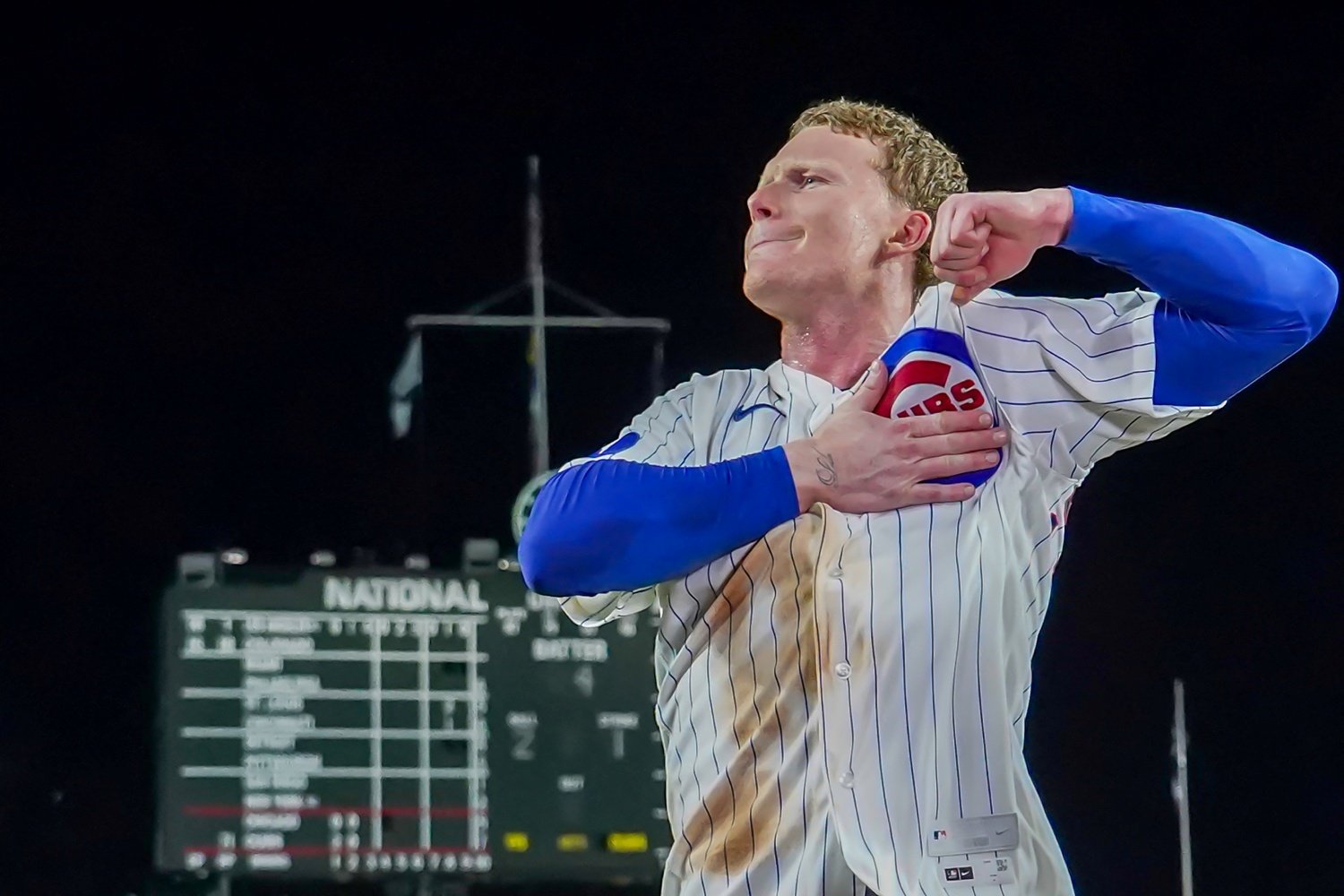
All of that churning progress toward greatness came to fruition Monday night, in (arguably) the most visible way yet. In a game the import of which was impossible to miss, Crow-Armstrong was in control throughout, and he refused to let the Cubs lose. They were playing their first full game without Dansby Swanson, and they were facing the crosstown rival White Sox, who lead the AL Central. August games don't get much bigger, especially given that the Cubs still hope to run down the Brewers in the NL Central. Crow-Armstrong emerged from a slump with a home run in Sunday's loss to the Cardinals, and (he would say later) had been putting in early batting-practice work to address an issue that plagued him early this season, too: hitting underneath the ball and pushing too many fly balls to left field. On the first pitch of the bottom of the first, he took a bite of the fruits of that labor with a home run down the right-field line.
Seiya Suzuki went back-to-back with Crow-Armstrong, but then, the Cubs stopped scoring for a while. That was no fault of Crow-Armstrong, who singled in his second at-bat and stole second, but it's what happened. Meanwhile, the White Sox's formidable offense struck back, with two quick baserunners and a three-run homer in the top of the fourth. The Cubs responded by scratching out two runs in the fifth to take a 4-3 lead, but then disaster struck again in the top of the eighth. Ryan Zeferjahn issued a leadoff walk and then, with one out, surrendered a scoreboard-flipping home run to Andrew Benintendi, making it 5-4 White Sox. At that moment, it felt like the Cubs would lose, and it felt like a gut-punch loss that might send the team into a spiral, especially as they play without their sure-handed shortstop in the coming weeks.
There was nothing Crow-Armstrong could do about that. The Sox scored five runs on four hits, and the two telling ones flew over the walls. He also couldn't will the team back to even in the bottom of the eighth, but the effort he made was exceptional. After two quick outs, Crow-Armstrong came up against White Sox reliever Trevor Richards and worked a 2-2 count. On a changeup off the outside edge, he flicked a gorgeous line-drive single to left-center—but, by getting out of the box well and using his speed, turned that single into a hustle double. He found something almost instantly on Jordan Hicks, who came in next for the Sox, and was relaying information to Suzuki from second base in the following at-bat, forcing the visitors to have a mound conference to clean things up. Suzuki struck out, though. Crow-Armstrong just couldn't seem to will his team to this particular win.
Because he got that hit and lengthened that inning, though, the Sox had to have Hicks come back after sitting down for the top of the ninth. Two walks and a well-placed single allowed the Cubs to push across the tying tally. They left the bases loaded in that inning, and Crow-Armstrong in the on-deck circle—but that also meant he would lead off the bottom of the 10th. When Jacob Webb was able to strand the Manfred Man at second base in the top of that inning, the game felt over. Four pitches later, it was.
Crow-Armstrong can be a bit much. He can be vulgar and overbearing. He will accept looking petulant or foolish, at times, because he only really cares about winning and reserves the right to howl at the gods when he can't manufacture a win. Nonetheless, his craftsmanship and his quieter, more mature intensity have been apparent to everyone who's talked to him outside the diamond, ever since he came to the majors. He's learned to take some of the studiousness and precision that guide his pregame work into games, and to be a very specific kind of patient—enough so to earn opportunities to do great big things, but never so much so that even one such opportunity passes him by. He's found the sweet spot that Jordan found, too, where overweening tenacity can be lovable, because it feels like art—like a baring of one's soul that reflects that of the viewer and invites them to feel as deeply as the performer. It's become the best show in baseball, and Monday night was its best episode yet.
Do you approve of Cubs' ownership?

Follow North Side Baseball For Chicago Cubs News & Analysis



-
 1
1


Recommended Comments
Create an account or sign in to comment
You need to be a member in order to leave a comment
Create an account
Sign up for a new account in our community. It's easy!
Register a new accountSign in
Already have an account? Sign in here.
Sign In Now