


Cubs Video
Baseball remains a wonderfully complex and nuanced game. There are many ways to win, and many ways to lose. There are still multiple successful styles available to a team aspiring to play deep into October. You don't have to be built around power, or loaded with high-priced stars. However, one thing is increasingly non-negotiable: you have to win the velocity battle, somewhere.
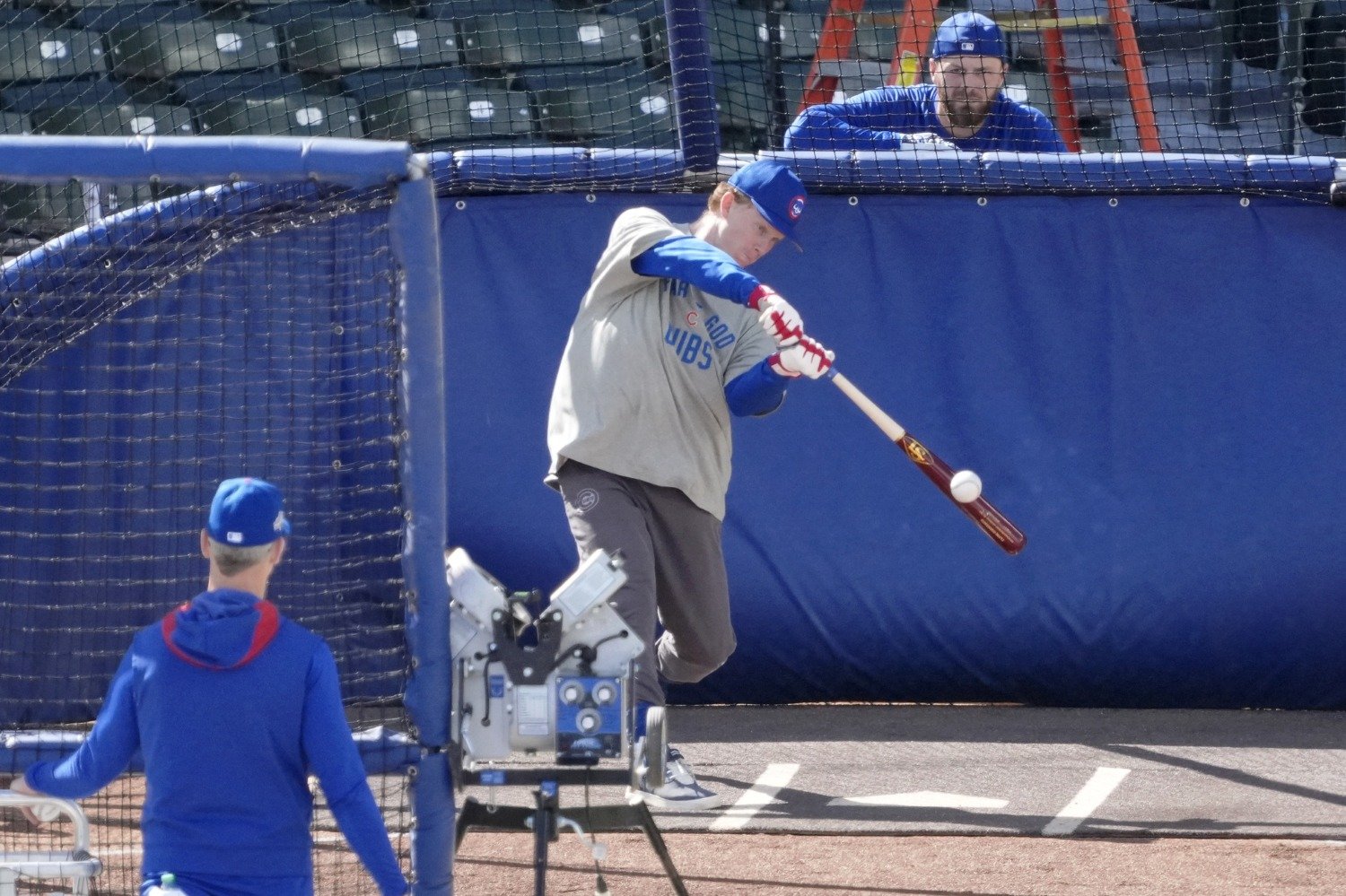
That. as much as anything else, is why the Cubs are now one loss from heading home for the winter, in the first full week of October. They're a well-rounded team. They play excellent defense, and they have plenty of offensive talent, too. Alas, they're running into the wall that awaits every team in October, and they don't have the juice to burst through it. Cubs hitters, by and large, can't hit good fastballs.
On pitches 97 miles per hour or faster, the Cubs had the third-lowest batter run value per 100 pitches in the league during the regular season, according to Statcast. Obviously, the league hits worse than its overall average on those pitches; velocity matters. But the fact that the Cubs lag so far behind the rest of the serious contenders in that ability is catching up to them in a major way.
Among Cubs who saw at least 50 pitches that fast this season, only Kyle Tucker and Michael Busch had a positive run value on them—and Busch just barely cleared that line. Obviously, with Tucker ailing and playing like a much worse version of himself over the last few months, that means the Cubs lack any kind of threat against pitchers who throw exceptionally hard. Meanwhile, Seiya Suzuki, Pete Crow-Armstrong, Dansby Swanson, Nico Hoerner, Carson Kelly and Justin Turner are all at least 2 runs worse than average per 100 pitches seen when pitchers ramp up to 97 and above. That's down in the range where 'overmatched' becomes an appropriate label.
The natural assumption might be that bat speed is the problem; the Cubs also have some of the slowest swing speed in the league. As it turns out, though, bat speed bears little relationship to success against high-velocity pitches. Suzuki and Crow-Armstrong swing fast; it does them no good. Busch is one of the slowest swingers on the team against hot heaters, but it works for him.

Rather, the issue here has to be that the team isn't calibrating their best players' approaches properly to handle great velocity. What's missing is hard to pin down. Maybe they're sitting on the wrong offerings, or trying to cover the strike zone too thoroughly. Maybe the pitfalls of Crow-Armstrong's aggressive approach are preventing him from being able to time the fastball. Maybe Suzuki and Swanson, who are so much more patient, are starting too late.
In all likelihood, each of the players struggling is doing so for a different reason. That's the biggest problem the team faces: that solving their overarching issue doesn't seem like a switch the coaching staff can flip. There are too many small things making up the big thing holding them back from producing runs in the postseason. With Game 3 of the NLDS right around the corner, the offseason looms, and there might be solutions to find there—but what everyone has been really hoping for is the lineup to wake up and do damage before they get knocked out.
Do you approve of the job Craig Counsell is doing as Cubs manager?

Follow North Side Baseball For Chicago Cubs News & Analysis



-
 1
1


Recommended Comments
Create an account or sign in to comment
You need to be a member in order to leave a comment
Create an account
Sign up for a new account in our community. It's easy!
Register a new accountSign in
Already have an account? Sign in here.
Sign In Now