


Cubs Video
In a perfect world, you could fly to the ballpark every day to watch your favorite team fire a perfect game against their chief rival. Your favorite pitcher would never give up a hit or a run, and you'd win every game by 18 runs. But that would be dreadfully boring, after no more than a week. I even think you'd get sick of flying. Gravity defines us as a species. So does adversity. Without pressure and difficulty, there would be no gratification in the grace and victory that make sports fun.
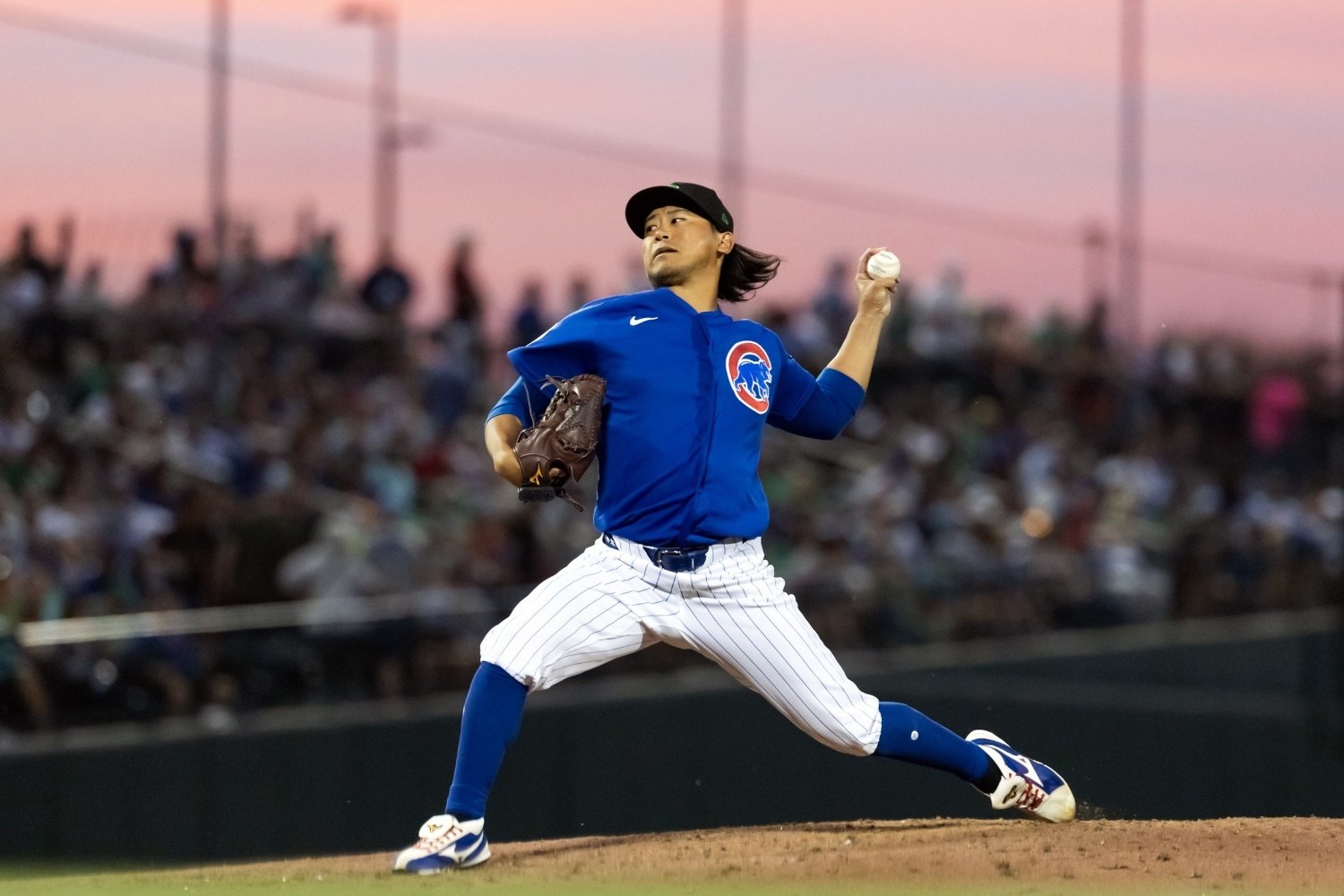
Shota Imanaga is perfect, for this blessedly imperfect world. He's a fierce, intelligent, crafty competitor on the mound, but he never invites you to forget that baseball is difficult. He doesn't throw that hard. He gives up home runs in bunches at times. Last season, he struggled mightily down the stretch and was virtually unpitchable in the Division Series against the Brewers. He's back for 2026, but the Cubs (wisely) ensured that he would be no more than their fourth starter heading into the year.
The Cactus League season has been no kinder to Imanaga, results-wise, than was the end of 2025. He racked up eight strikeouts against the Angels on Tuesday, but even that was no spotless outing. For the spring, he has a 4.85 ERA. He's given up five home runs, and though he's only walked one batter, the biggest worry for most Cubs fans—that opponents will tee off on Imanaga in a way that constantly seems to confirm supporters' secret dread that he's been figured out—has not been assuaged at all.
To those fans most in crisis, I offer this consolation: Imanaga has some tricks up his sleeve. As has already been thoroughly documented here (and elsewhere), Imanaga is throwing harder this spring. That matters. As much as velocity has become overrated in the modern game, it's inarguably important, and Imanaga's heater is humming in at 92.5 MPH this spring. That's up by almost 2 MPH from last year, when it was clear (especially after the All-Star break) that he never really got right in the wake of an early-May hamstring strain. He's retained the ride on his heater, too, which is as important to his overall effectiveness as the sheer speed.
.png.df6f09adad26ddfd306fbfd60d2525b8.png)
Imanaga has also made a small but significant change in his starting point on the mound this spring. Last year, he worked from the far first-base edge of the rubber. That was designed to maximize the deceptiveness of his funky delivery, especially by making his splitter as it first began to diverge from his four-seam heater. However, that didn't always work, and it came with some negative side effects, anyway. Imanaga has great command, but for any pitcher with natural arm-side run on the fastball, the danger of starting on the arm side of the rubber is that the ball will too often run off the plate.
The solution to that issue is as simple as you'd guess it is. This spring, Imanaga has moved to the middle of the rubber, as you can see clearly in this (otherwise grainy) screenshot from Tuesday's appearance.

A good pitcher like Imanaga can manipulate their arm to get the ball where it needs to go from almost anywhere on the rubber, but there's a limit on how much of that manipulation one generally wants to do. The more you alter your delivery or force the ball to a given spot, the less widely you can vary your shapes and locations without giving yourself away. Instead of trying to stay where he was and change how he pitches, therefore, Imanaga moved to the center of the mound, where his stuff can play more naturally to all the places where he needs it to go.
This is also going to benefit him in generating deception against right-handed batters. Compare these two 3-D animations of the trajectories of Imanaga's pitches, from the approximate vantage point of identical right-handed batters. The top image is from his appearance against Milwaukee last October; the bottom one is from Tuesday.

Moving over makes it look less like the fastball in is coming right at the righty batter, but that's not a pitch Imanaga leans on, anyway. For the heater away, up or down, being closer to the center line of the lane from the plate to the mound creates more deception. The splitter plays off his fastball better, and his curveball can play to righties a bit, which it has rarely done during his time in the States.
Imanaga still might run into homer trouble once the regular season begins. This adjustment isn't guaranteed to fix that issue, and in fact, the increased velocity is more important to that project, in terms of pitch shape and forcing less aggressive swings. However, another important goal is to minimize walks and avoid getting into unduly hitter-friendly counts. This move on the mound should help with that, and with getting some of the chases that Imanaga struggled to induce late in 2025.
Which team do you dislike the most in the NL Central?

Follow North Side Baseball For Chicago Cubs News & Analysis



-
 1
1


Recommended Comments
There are no comments to display.
Create an account or sign in to comment
You need to be a member in order to leave a comment
Create an account
Sign up for a new account in our community. It's easy!
Register a new accountSign in
Already have an account? Sign in here.
Sign In Now