


Cubs Video
I love early-season baseball, because it allows for some crazy, small sample statistics. These numbers almost certainly don't mean anything, of course, but you can convince yourself that they do. After all, who's going to tell you what's really going on? All we have to go on are these few numbers and vibes, and between those two, the numbers are usually sending a stronger signal—even after a week.
For example, if Andy Pages is the best hitter in baseball for eight games later this season, nobody outside of Los Angeles notices. However, Andy Pages was the best hitter in baseball for the first eight games of the season, which means he goes right to the top of a bunch of sorted leaderboards and everybody notices.
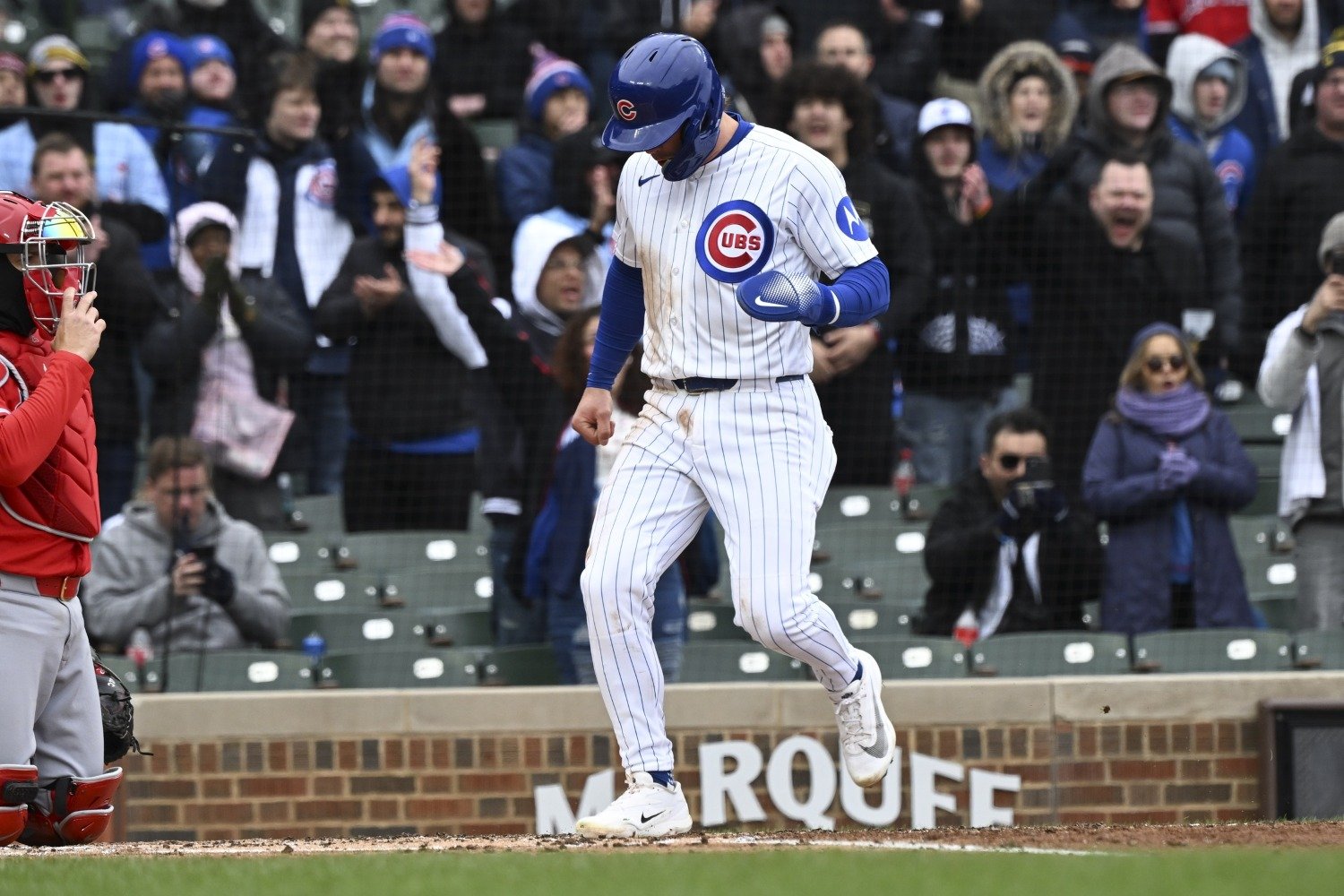
One scroll through the leaderboards for the Cubs, and the newly extended Nico Hoerner sticks out the most. Entering Sunday's doubleheader, he led Cubs regulars with a 147 wRC+, according to FanGraphs. He had a .400 on-base percentage, buoyed by a 16.7% walk rate. Then he was hit by two pitches in Game 1 of the twin bill and went 1-for-3 with a pair of walks in Game 2, so these numbers ticked up, even on a day when the rest of the Cubs offense did little.
Nico Hoerner? A 16.7% walk rate? I love Hoerner, but drawing walks is not his strong suit. Since 2022, his 6.5% walk rate is 228th among 310 qualified hitters.
When you think about it, this makes sense. The Gold Glover has also managed just 33 home runs in that time frame, which is 229th of those 310 batters. Pitchers have little reason not to challenge him. If you throw him some hittable strikes, in all likelihood, the worst thing that happens is that he ends up at second with a double. If you don’t throw him strikes and walk him, he just might end up there after a stolen base, anyway. You might as well make him earn it.
Not only that, but Hoerner so rarely swings and misses that it’s tough for him to get into a count deep enough to walk. Historically, he rarely strikes out. He succeeds by putting a lot of balls in play. With his speed, putting the ball in play that often makes sense, especially now that he's become a bit more of a line-drive guy, but that plan at the plate means relatively few walks. So, with all of that out of the way, is there any reason for the bump in walk rate this year?
For the first week or so of the season, the Cubs’ second baseman has essentially been one of the most patient hitters in baseball. His 38.5% swing rate is 180th out of 204 qualified hitters. His 47.2% swing rate at pitches in the zone is 202nd! These are all significant decreases from last season, according to FanGraphs. (He only swung at 15 of the 42 pitches he saw in the doubleheader Sunday, so these trends haven't changed after another two games.)
|
Year |
Swing Rate |
In Zone Swing Rate |
Out of Zone Swing Rate |
|
2025 |
48.5% |
63.2% |
32.3% |
|
2026 |
38.5% |
50.8% |
27.0% |
What specific pitches is Hoerner now laying off of? Here are his swing rates by zone from last season, on the left, compared to this season, on the right:

Compare this to his slugging percentage by zone from last season, and it’s clear what the plan is:

Hoerner is making a concerted effort to concentrate his swings to the lower inside quadrant of the strike zone—the area where he did the most damage last season. If it’s a strike, and it’s not down there, he is comfortable letting that pitch pass by, even if it means falling behind in the count. He’s so good at making contact that falling behind in the count doesn’t put him at that great a disadvantage, anyway.
Not all swings are created equal, even when the pitch is in the strike zone. That's especially true when you’re Nico Hoerner. When he swings, the ball is (in all likelihood) going to be put into play. When he swings at a strike that he can’t do damage with, it’s getting put into play weakly. He’s rarely living to see another pitch. Now, he's isolating the pitches he knows he can hit hard, and the result is a career-high slugging percentage, to go along with the elevated walk rate.
Oh yeah, the walk rate! That was, after all, how I noticed all of this. Do I think he’ll keep walking at a Juan Soto-like rate? Of course not! Though I do think it’s possible Hoerner will have a higher-than-usual walk rate this season if he keeps up this level of selectivity, there'll be regression here. The great source of optimism should be that, even when his walk rate comes down, this change in approach will beget more extra-base hits.
Hoerner is swinging less, and thus seeing more pitches and working deeper counts. Ultimately, that's resulting in the elevated walk rate. His strikeout rate has also increased a bit as a result, from 7.6 percent to 13.3%, but that’s still incredibly low (and he only struck out once in nine trips Sunday). The Cubs will take that tradeoff for a bit of newfound thump, as well as a few additional walks—especially from a guy that they just decided will be around Wrigleyville for a long time.





.thumb.JPG.19c99ddd60a76edf810c77d321439828.JPG)


Recommended Comments
There are no comments to display.
Create an account or sign in to comment
You need to be a member in order to leave a comment
Create an account
Sign up for a new account in our community. It's easy!
Register a new accountSign in
Already have an account? Sign in here.
Sign In Now