


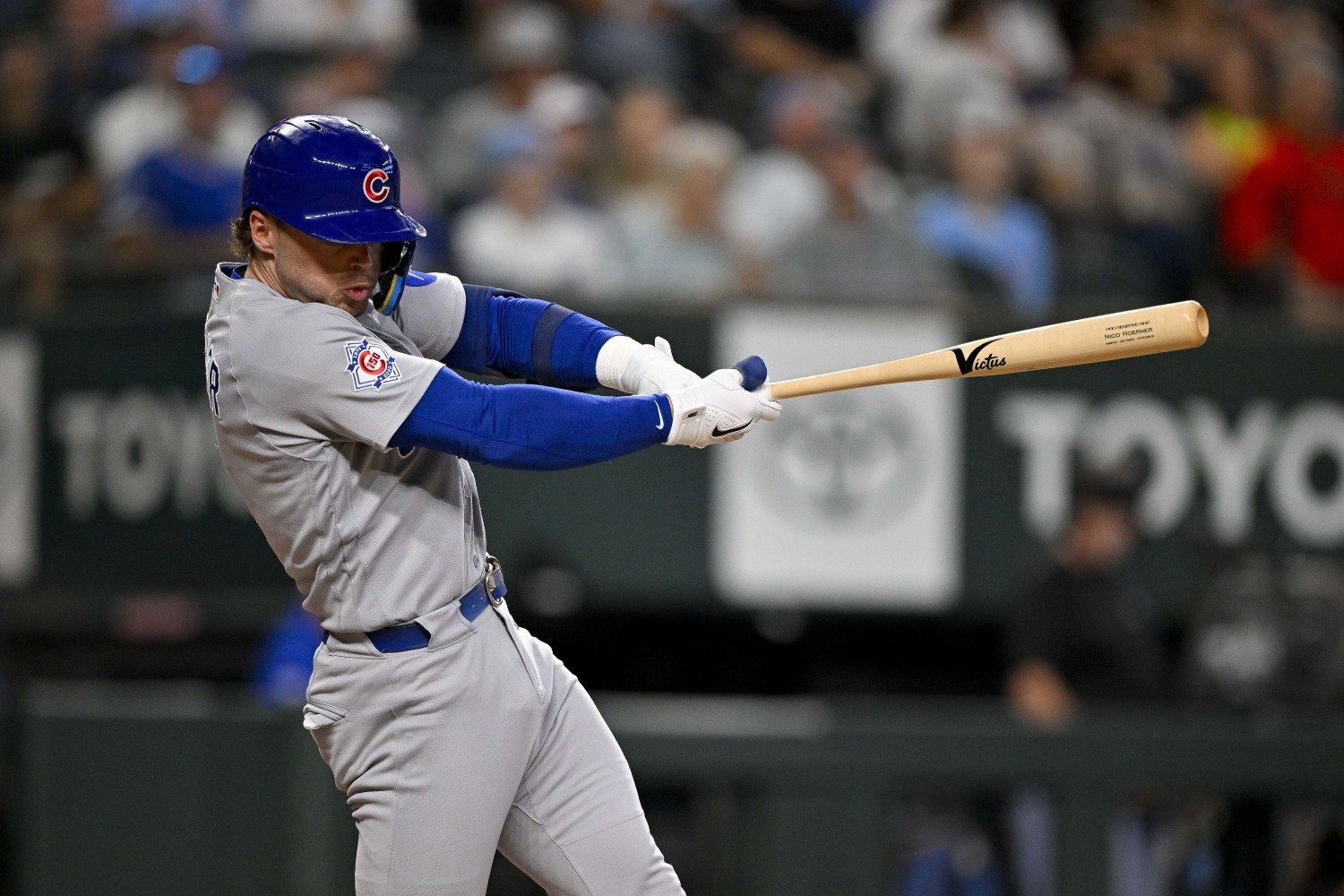
Cubs Video
For roughly the first half of what has been the 2026 season to date, Nico Hoerner was a dynamo. In fact, the Cubs have played 48 games, and in their first 24, Hoerner batted .320/.393/.515. He had several outlets—including this one, of course, but even nationally—singing his praises. He continued to play excellent defense and run the bases well. Along the way, of course, he signed a six-year deal with the Cubs, making him a long-term part of the team's plans and heading off his free agency, which had loomed over him and the team until that point. It looked like everything was lining up for Hoerner to be the face of the Cubs for the balance of this decade and beyond.
Then, the second half of this season happened. Sure, it's only 24 games, but so was that remarkable start. In this segment of the year, he's hitting .194/.290/.247. In 107 plate appearances, he's walked 12 times and struck out just five times, but he also has just five extra-base hits (all doubles) and has become a problem at the top of the team's batting order, rather than a source of stability and electricity.
Before he signed his extension, if Hoerner had gone through a prolonged slump this ugly, the Cubs would have had to seriously consider changing their tack for the future. After all, there's always been a ceiling here. Hoerner's lack of bat speed and over-the-fence power make him a risky proposition, in terms of the aging curve. In the short term, though, he was always going to be allowed to keep hitting high in the lineup and try to get right, because for this season (at the very least), he's a good player whom the team needs badly.
The stakes, then, weren't whether or not to play Hoerner, anyway, but those stakes nonetheless feel higher now. This guy is locked into the team's lineup for the next half-decade. It's crucially important, now, to know this: How can Hoerner get right? What's going wrong, and what will fix it?
Firstly, it might be wise to take him out of the leadoff spot. While his skill set begs to be used that way, his approach since being thus elevated has ended up being detrimental. Hoerner is swinging at the first pitch just 16.4% of the time this year. For any player whose game is more about singles and doubles than walks, that's far too little. Patience is a virtue, but Hoerner has tipped over that line into passivity. He's swinging at just 54.3% of pitches inside the zone, down from roughly 63.5% over the last two years. He's still avoiding strikeouts exceptionally well, which traces to his almost unbelievable 98.5% contact rate on swings within the zone. However, he's not making solid enough contact, because he's often working from behind in counts.
None of Hoerner's essential public-facing bat-tracking data are meaningfully changed during this slump. His bat speed, swing tilt, attack angle and attack direction are all virtually identical to what they were when he was red-hot. Ditto for his average contact point. The problems, then, lie in what he's swinging (or not swinging) at, and on where the ball is going when he hits it.
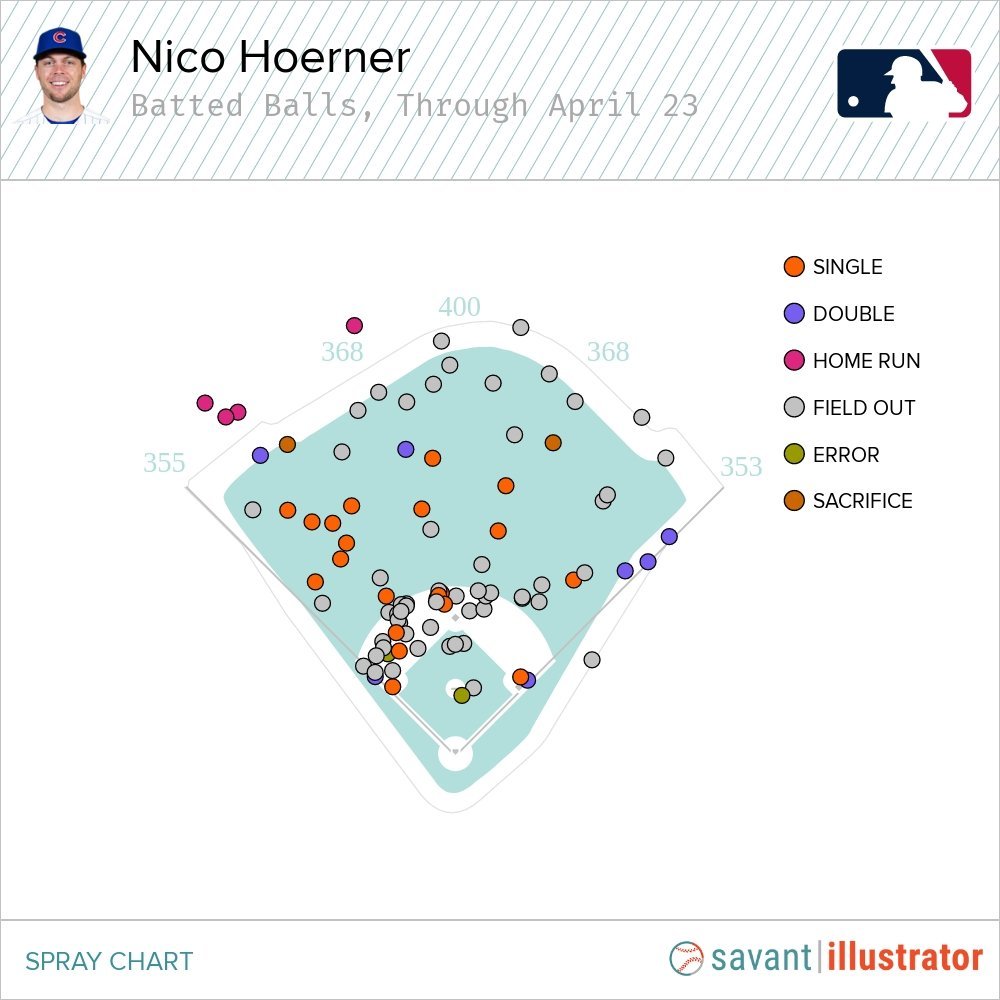
Here's where Hoerner's batted balls were going through April 23.
Here's where they've gone since then:
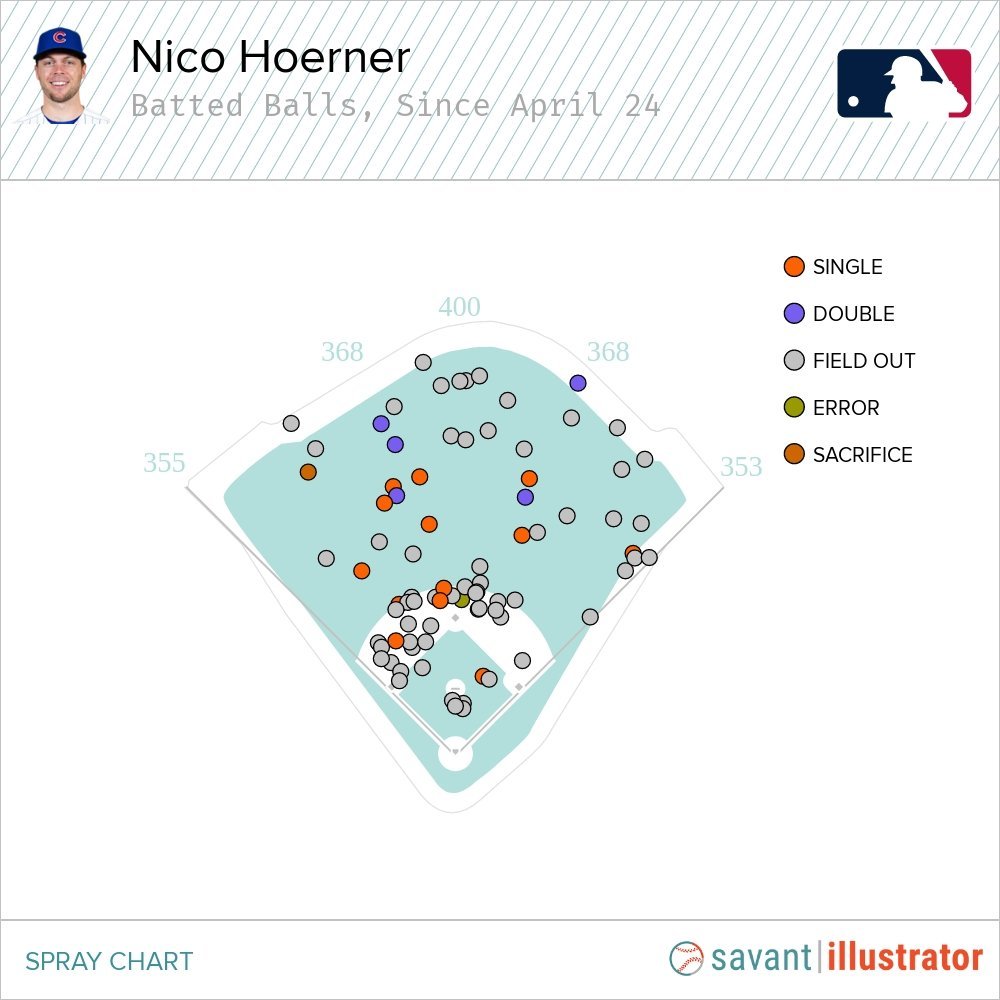
All the plaudits we've given Hoerner over the last year have been about how, since the middle of 2024, he steadfastly and smartly reoriented his approach to produce more pulled line drives. Right now, he's back to "using the big part of the field," old-school baseball advice that sounds good but results in nothing but heartache.
Again, the swing is fundamentally unchanged in both its timing and its shape, so the key reasons for this are:
- Pitchers are pitching Hoerner differently; and
- He's not reacting properly to it.
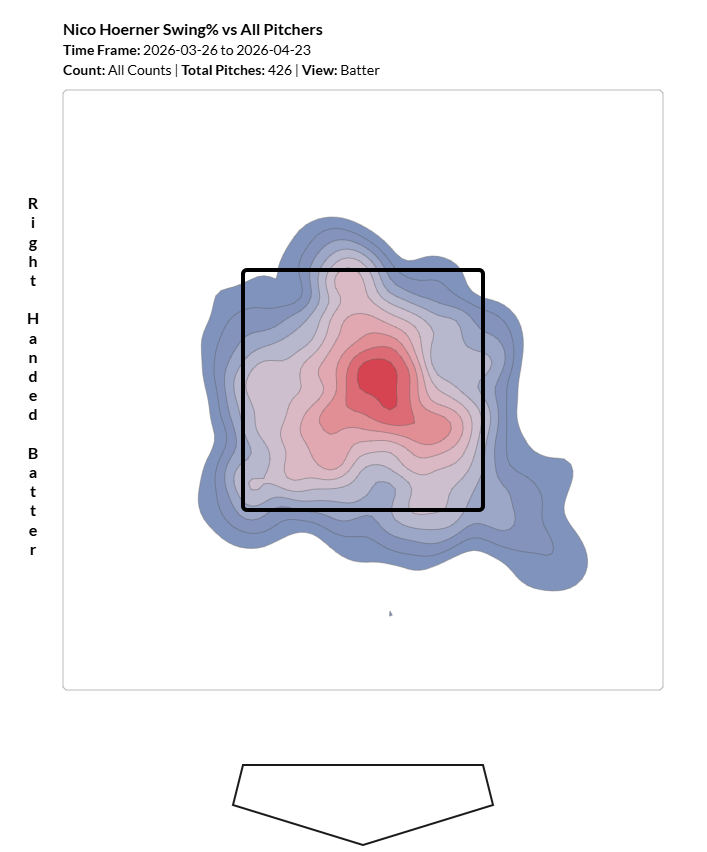
Here's the FanGraphs heat map for Hoerner's swing rate through April 23:
Here's the same graphic for the games since:
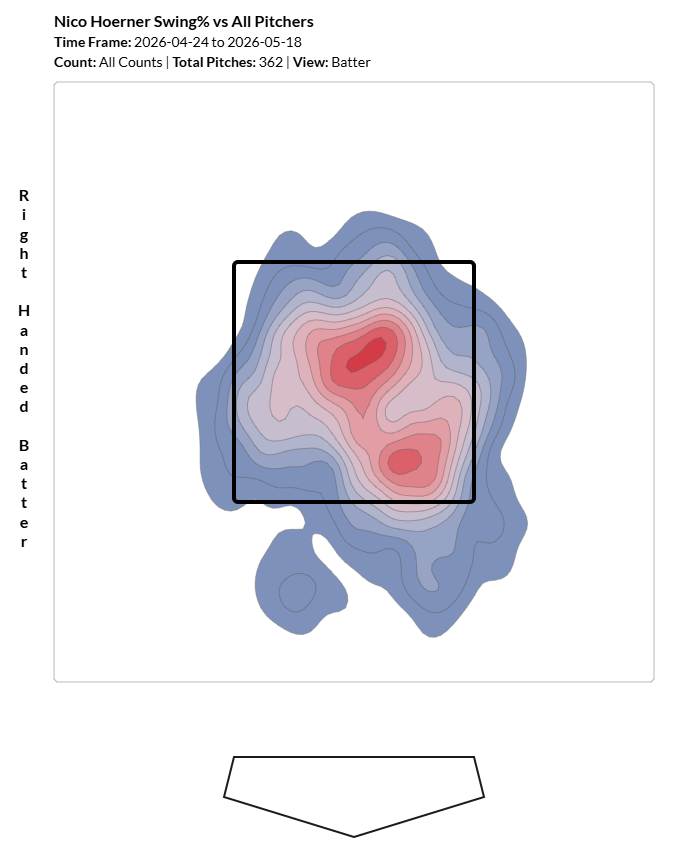
If Hoerner's passivity in the zone had taken the form of only swinging at pitches from the middle of the plate in, he might have remained productive even as the league adjusted to him. Instead, he's falling behind by taking too many pitches, then being forced to go after pitcher-friendly offerings low and away. His swing is better geared to produce those pulled batted balls than it used to be, but if he's consistently putting balls in the lower and outer thirds of the zone in play, he's going to end up hitting them up the middle—and not as sharply.
Hoerner does still seem to have the knack for keeping the ball off the ground, but lately, even his liners are finding gloves. That's only partially bad luck. It's also the product of a flawed approach, leading to swings at the wrong pitches to match a consciously reengineered swing. The good news, here, is that Hoerner isn't permanently broken. He's just responded badly to the league's latest round of adjustments to him. He has to get back to being more aggressive early in counts. He has to occasionally anticipate the pitch away and look to shoot it down the right-field line, but otherwise be more selective on the outer third and punishy pitchers who miss over the middle or inner lanes. If he does all of that, he'll be back to batting .300 with gap power in no time. That might not be permanent, either, but maybe the next round of adjustment and counter-adjustment can be a bit less painful than this one has been.





Recommended Comments
There are no comments to display.
Create an account or sign in to comment
You need to be a member in order to leave a comment
Create an account
Sign up for a new account in our community. It's easy!
Register a new accountSign in
Already have an account? Sign in here.
Sign In Now