


Cubs Video
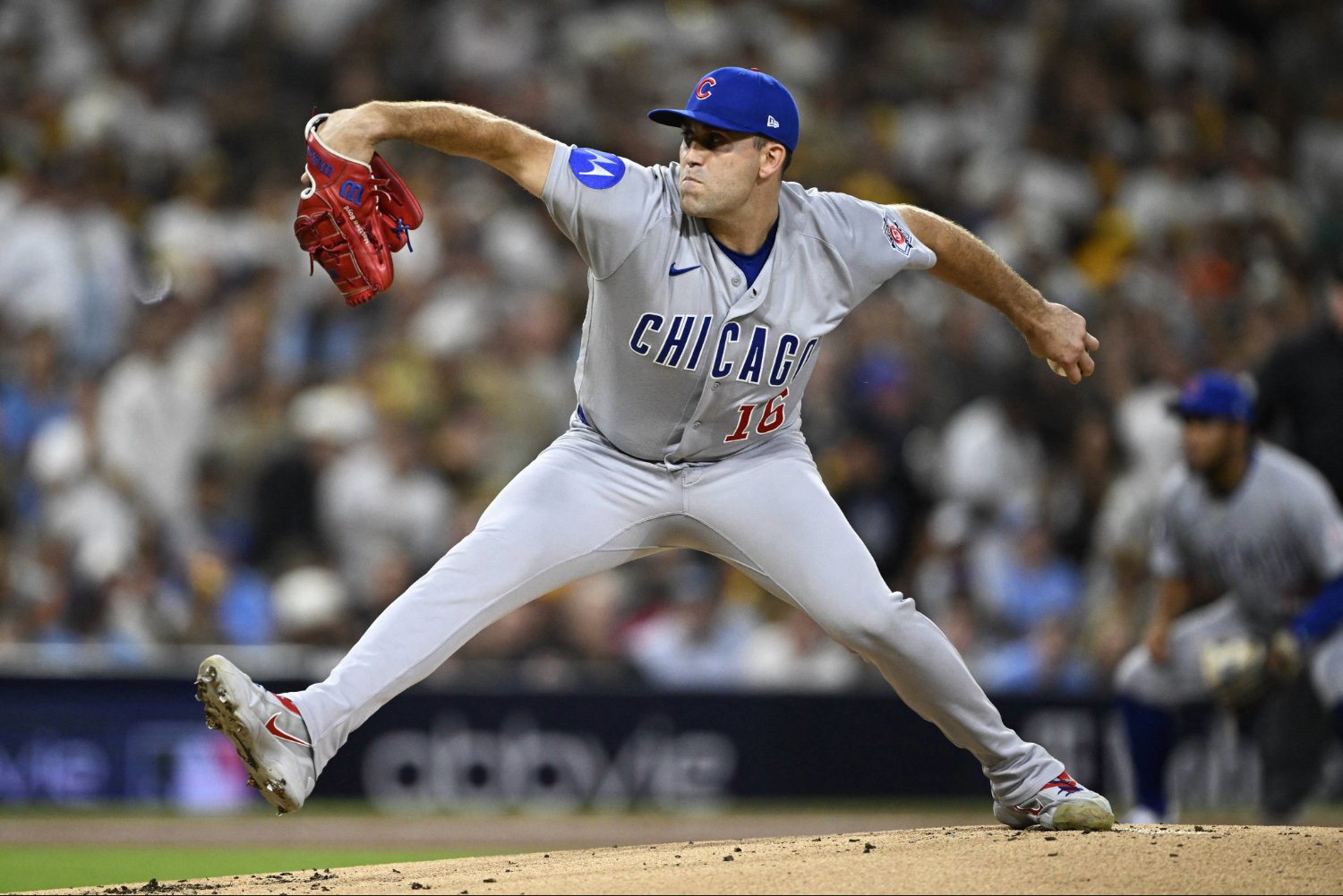
It was a year filled with injuries for the Chicago Cubs' pitching staff, and that included left-hander Matthew Boyd. The veteran starter had two separate stints on the injured list, first with a bicep strain in April and later with a torn meniscus that occurred while trying to sit down and play with his kids.
Those injuries limited Boyd to just 126 2/3 innings this season, making it difficult to find much consistency throughout the year. And while his final numbers weren't necessarily bad, his 2026 campaign was a tale of two halves, albeit in a somewhat unexpected way.
Boyd was limited to just 46 innings before the All-Star break, posting a 4.50 ERA during that stretch. After the break, he recorded a 3.57 ERA across 80 2/3 innings, resembling the pitcher we came to know throughout his breakout 2025 season. On the surface, it would be easy to attribute that improvement to Boyd getting healthier and finding his rhythm following his early-season injuries. And to some extent, that might be true. However, a closer look at the underlying numbers tells a much different story.
Despite his first-half ERA being nearly a full run higher than his second-half mark, Boyd's first-half FIP was actually a full run lower. His strikeout rate dropped significantly after the All-Star break, going from 24% in the first half to an ugly 15.1% in the second half. Boyd also walked batters at a higher rate after the break. So, while he did a better job of keeping runs off the scoreboard, the underlying process behind those results was considerably worse. That's not to say the southpaw wasn't a useful piece of Chicago's rotation, but the difference between his ERA and FIP throughout the season suggests there might have been some good fortune involved in his second-half results.
When looking at his season as a whole, he finished with a 3.91 ERA and a 4.21 FIP. Those numbers aren't terrible for a middle-of-the-rotation starter, especially one who missed time with multiple injuries. Still, several of his underlying metrics regressed from where they were in 2025. The most notable decline came in the swing-and-miss department.
Neither Boyd's whiff rate nor his strikeout rate was particularly impressive last season, but both took another step backward in 2026. His whiff rate dropped from the 30th percentile to the 26th percentile, while his strikeout rate fell from the 41st percentile to the 23rd percentile. That decline is worth monitoring, particularly for a pitcher who doesn't necessarily overpower hitters with elite velocity.
Speaking of which, part of the problem could be traced to Boyd's four-seam fastball, which averaged roughly half a mile per hour less than it did in 2025. That might not sound like a significant difference, but even a small drop in velocity can matter when a pitcher is already working on the margins. When hitters don't have to respect velocity as much, they can become more aggressive against other offerings. And for Boyd, that could have contributed to the struggles he experienced generating swings and misses.
His changeup, which serves as his primary secondary offering, also wasn't as effective as it had been previously. Hitters put the pitch in play more frequently, and Boyd generated fewer swings and misses with it. Yet without the ability to keep the opposition more honest with a more threatening heater, the changeup may never recover its previous lethality.
Of course, the injuries certainly played a role in these struggles, too. It's difficult to separate the effects of a disrupted season from a genuine decline in performance, especially when a pitcher spends time recovering and trying to regain his normal workload. Still, the Cubs will need to pay attention to those numbers when evaluating Boyd's future with the organization.
Despite the decline in his swing-and-miss numbers, Boyd wasn't without areas of improvement. His quality-of-contact metrics were better than they were in 2025. His hard-hit rate declined slightly, while both his barrel rate and average exit velocity allowed went down as well. He also generated ground balls more frequently, giving him another way to limit opposing offenses when he wasn't missing bats.
Those improvements don't erase the concerns surrounding his declining strikeout rate, but they do provide some reasons for optimism. Boyd still showed that he could be an effective major-league starter, even if his path to getting outs looked a little different this season. The question is whether those positive signs will be enough to offset the decline in his ability to miss bats moving forward.
Boyd's future in Chicago will largely depend on how both sides approach his mutual option for the 2027 season. The option is valued at $15 million, although the effective cost for the Cubs would be closer to $13 million because $2 million is attached via a buyout if either side declines the option. For Chicago, that's a reasonable price for a proven middle-of-the-rotation starter. Even with the concerns surrounding Boyd's 2026 performance, finding a comparable arm on a one-year deal in free agency could prove difficult.
The lefty, however, will likely decline his side of the option and test the free-agent market. Whether there's mutual interest in a reunion remains to be seen. The Cubs will have to determine how much they trust Boyd to remain healthy and whether his underlying performance suggests there's room for a bounce-back in the future. But if the 2026 season taught Chicago anything, it's that you can never have too many quality arms.





Recommended Comments
There are no comments to display.
Create an account or sign in to comment
You need to be a member in order to leave a comment
Create an account
Sign up for a new account in our community. It's easy!
Register a new accountSign in
Already have an account? Sign in here.
Sign In Now