


Cubs Video
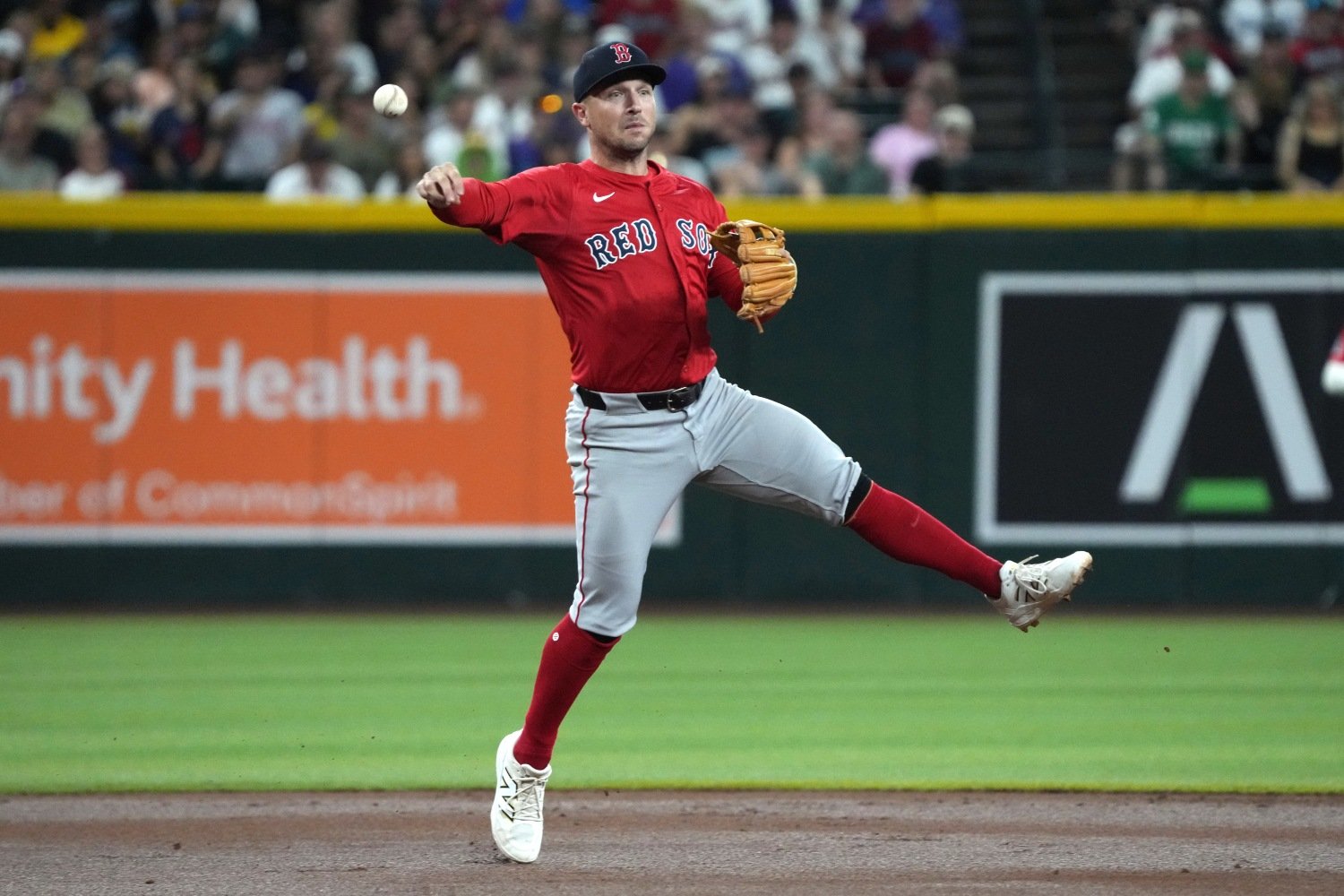
Signing Alex Bregman was primarily about adding a missing ingredient to the Cubs' batting order. Since Bregman agreed to a deal Saturday night, we've covered his fit into the lineup and his new home park, and we've dissected how well he approaches at-bats in big situations. Bregman also has an important defensive role to play, though. He'll be the team's starting third baseman for the foreseeable future. Thus, it would be wise for us to get to know him as a fielder.
Bregman has consistently rated as an above-average defender at the hot corner. That's the headline. In nine of his 10 seasons in the majors, he's been average or better, according to both Defensive Runs Saved (DRS) from Sports Info Solutions and Deserved Runs Prevented from Baseball Prospectus. Somewhat surprisingly, he's even gotten better as his career has progressed. Whereas most players' defense peaks in their early 20s, Bregman won his first Gold Glove in 2024, at age 30. Two of his three best seasons by DRS came in 2023 (5) and 2024 (6), and he posted 1 DRS in 2025, despite missing a significant chunk of the season.
The key to his unusually late peak has been improving steadily on plays down the third-base line, even as he's lost a bit of his ability to range to his left and take plays away from his shortstops.
| Plays Saved | |||
| Season | To His Right | Straight On | To His Left |
| 2016 | 0 | 0 | 6 |
| 2017 | -5 | 0 | 4 |
| 2018 | 1 | -3 | 3 |
| 2019 | 1 | 2 | 8 |
| 2020 | -1 | 1 | 0 |
| 2021 | -3 | 1 | 4 |
| 2022 | -2 | 0 | -5 |
| 2023 | 5 | -2 | 2 |
| 2024 | 8 | 0 | -2 |
| 2025 | 1 | -1 | 1 |
That might come as a minor surprise, to some, because Bregman is small for a third baseman (5-foot-11, 190 pounds) and doesn't have an elite arm. One way for third basemen to guard the foul line is the step-and-a-dive plan, but Bregman doesn't make many of those plays, and lacks the length for them.
He does throw harder, on average, than Dansby Swanson or Nico Hoerner, and is right near shortstops Trea Turner and Bo Bichette on Statcast's arm strength leaderboards, but those are the guys whose arms put them at risk of having to move off short. For the long throw from the line behind third to first base, most players need above-average raw arm strength. That was the one strength of Christopher Morel, during his stint at third. A lack of arm strength prompted Nick Madrigal to play close to the line and deep, so that his throws could come with as much momentum toward first as possible. Playing deep was also Matt Shaw's way of providing more time to process the ball off the bat and cover ground; it allowed him a gentler transition from his previous homes in the middle infield.
How, then, has Bregman gotten better at closing down the plays to his right, without completely compromising his ability to range to his left? Firstly, he's moved a step closer to third, on average. Here are his average depth and angle (relative to second base, where 45° would be right at third base and 0° would be right at second) of positioning, based on handedness and infield alignment, since 2021. For a stylistic comparison, I've also included Matt Shaw's positioning data for 2025.
| RHB | LHB | |||||||
| No Shift/Shade | Shift/Shade | No Shift/Shade | Shift/Shade | |||||
| Season | Depth (ft.) | Angle (deg.) | Depth (ft.) | Angle (deg.) | Depth (ft.) | Angle (deg.) | Depth (ft.) | Angle (deg.) |
| 2021 | 118 | 36 | 120 | 38 | 105 | 28 | 130 | 12 |
| 2022 | 118 | 36 | 119 | 37 | 101 | 29 | 131 | 13 |
| 2023 | 117 | 36 | 117 | 37 | 104 | 27 | 129 | 23 |
| 2024 | 120 | 36 | 122 | 37 | 102 | 28 | 129 | 22 |
| 2025 | 117 | 37 | 117 | 37 | 104 | 28 | 128 | 21 |
| Matt Shaw - 2025 | 122 | 35 | 122 | 37 | 112 | 27 | 125 | 21 |
Remember, after 2022, the rules changed and severely restricted where teams could move infielders. Bregman was one of the players whose role significantly changed at that point. When the shift was allowed, the Astros used it extremely heavily, and Bregman was often playing a de facto shortstop against left-handed batters. Over the last three years, he's experimented with different ways to have an impact on the game, continuing to view himself as a shortstop-caliber defender even though he hasn't officially played there since 2019.
Compared to Shaw, Bregman plays shallower, except when the infield plays a lefty to pull. In 2025, he also played a bit closer to the line in his default position against righties than he had before, whereas Shaw cheated slightly more toward the hole.
In general, smaller players play deeper at third base, trying to use their speed to cut off the ball and leaving as much space as possible to get up to speed before it reaches them. Bregman is the exception. Like any good defender, he has figured out how to use his immutable traits to his advantage, rather than let them hurt him. Exceptionally quick with the first step, he doesn't need the extra five or 10 feet he could often have to get to balls a few steps to either side of him. Because he's not tall, he's often able to field the ball without much bend, partially because he plays shallow. A sharply hit ball will often be at the peak height of its first bounce when Bregman encounters it, and that means he can play it waist-high. The way he addresses the ball increases the utility of his arm; he can get off throws faster and with less wasted movement than most third basemen.
That doesn't mean he's incapable of getting down for balls when he needs to. Moving closer to the line last year made that easier, not just because he had reduced the ground he needed to cover before getting down but because he was doing so under greater body control, making it easier to get back up and fire the ball across the diamond quickly.
That doesn't mean he's a perfect defender at third, or that moving toward the line hasn't cost him anything. Ranging toward shortstop now requires a bit more of his speed, and he's not always as smooth as he needs to be when embarking on those long journeys to his left. Shaw excelled at this last year, which helped cover for the slow diminishment of Swanson's speed and arm. Bregman and Swanson will have to develop a good rapport that allows them to know which is best-positioned to make a play on each and every ball hit into the hole, to make up for a dearth of the sheer athleticism you see from most good duos on the left side of an infield.
On balance, though, Bregman is much more of a playmaker than Shaw, Madrigal, Morel, Patrick Wisdom, or any other Cub who has consistently manned third base in this century. Much of it shows up against left-handed batters, because he moves much closer to shortstop than Shaw did and can make plays like a true shortstop.
It also has to do with the smaller things his sure hands and high baseball IQ bring to the table, though. Bregman loves to play shallow and take away the bunt, and part of that is being willing and able to take down the lead runner when a batter tries a sacrifice. It's fundamentals, but between positioning, footwork and the chutzpah to try it, many defenders cop out and throw to first when they have a play at second in the modern game. Not Bregman.
Chicago's defense will need to adapt a bit. They not only shaded left-handed batters about a third less often than did the Red Sox last year, but weren't as aggressive about pulling Shaw toward the middle of the diamond to make plays as the Sox were with Bregman.


If Craig Counsell, Bregman and Swanson are on the same page, this move can augment the team's defense, as well as its offense. Bregman is not your typical third baseman, and he's not your typical 32-year-old. There is value left in his leather.





Recommended Comments
Create an account or sign in to comment
You need to be a member in order to leave a comment
Create an account
Sign up for a new account in our community. It's easy!
Register a new accountSign in
Already have an account? Sign in here.
Sign In Now