


Cubs Video
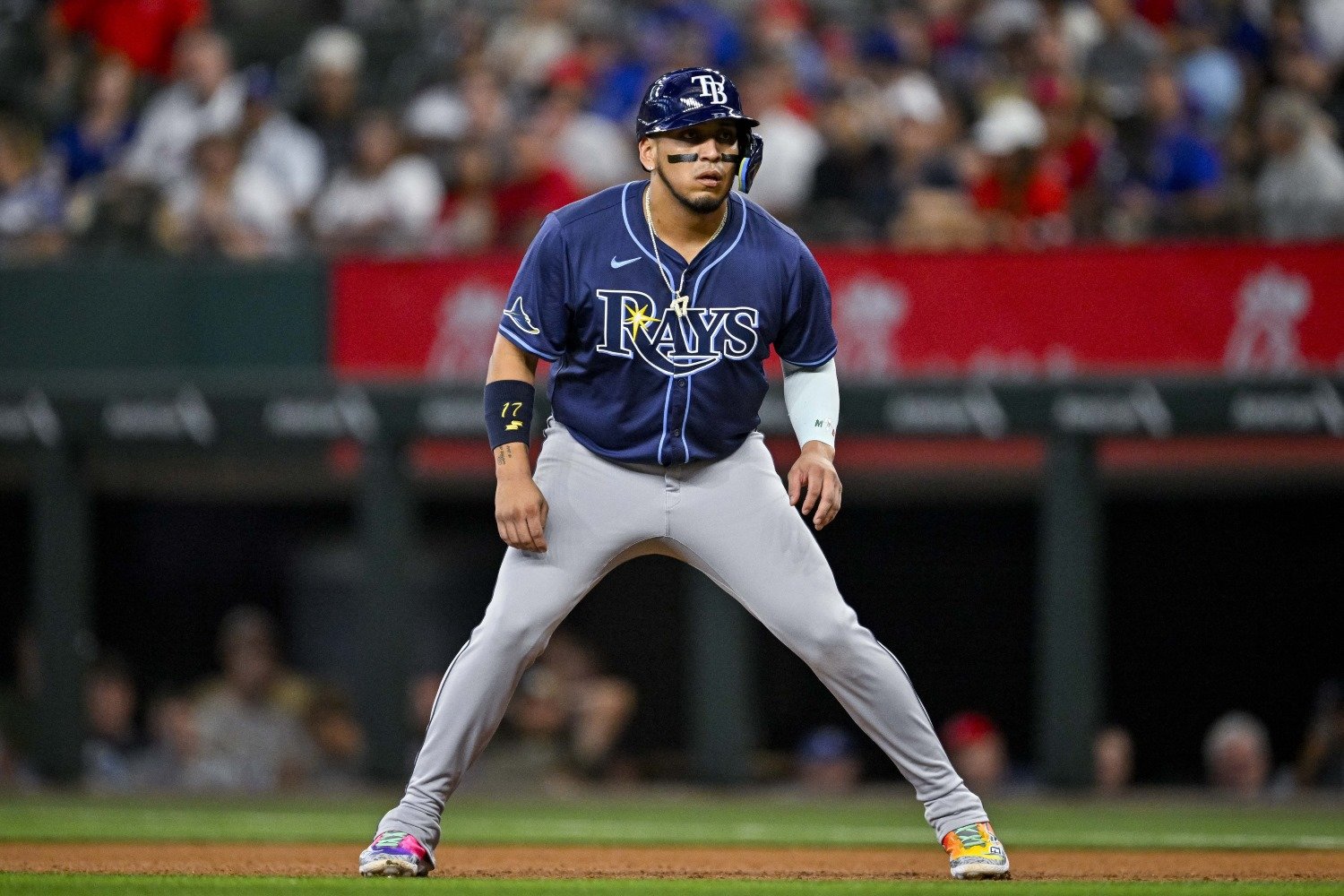
For the second consecutive year, the Chicago Cubs have acquired a corner infielder that was once part of their own organization (and, in a further level of irony, included in the same 2017 trade). However, the difference in context between last year’s Jeimer Candelario addition and Sunday’s acquisition of Isaac Paredes could not be starker.
Candelario was a pure rental. The Cubs rode a scorching July into “buy” mode, and were willing to surrender their MLB Pipeline Nos. 16 and 17 prospects (Kevin Made and DJ Herz) to make it possible. The consequence of trading away Christopher Morel and Hunter Bigge to acquire Paredes is one of more immediately notable impact, but also one that maintains a keen eye on the future in a way that last year’s move did not.
Let’s start with what the Cubs are trading away. I’m running on a month free of Twitter. But I imagine the reaction to this move will be extremely polarizing. Despite an offensive season wrecked by poor batted-ball luck and a defensive one that failed to see the development we collectively hoped for, Morel was an immensely popular player. He brought an energy to the roster and a power output that hasn’t been particularly common throughout the last couple of seasons. Hunter Bigge flashed big-time stuff in a three-inning sample. The Rays are going to have him throwing, like, 110 MPH. Barely a year after being a 15th-round pick out of Ball State, Ty Johnson has touched 98 and missed lots of bats this year, although it all came below Double-A and he's been a bit on the effectively wild side.
Unlike last year’s trade, where it was a lower-level prospect and a guy who would’ve had a tough time breaking into a deep staff, the departures here are guys whom we know--and whom we like. The reality, though, is that this move makes loads of sense from a logistical standpoint.
You’d like to keep Morel around as a bat. But unless the organization was going to look at another position change – unlikely given the Cubs’ organizational depth on the outfield grass – he wasn’t a defensive fit. His presence as a DH-only, then, would’ve hamstrung their ability to cycle some other guys into the lineup at various points. I’m not so sure Craig Counsell likes that kind of limitation for that spot. The sample is very limited, but in 2020, 2022, and 2023, the only player who got more than a quarter of the starts at DH in a season for him with the Brewers was Andrew McCutchen, who started there 82 times in 2022.
With Bigge, on the other hand, you’re capitalizing on the value of a pitcher with some volatility throughout his minor-league career. You’d like to see both on the North Side, for both practical and sentimental reasons. Jed Hoyer, though, showed he can be shrewd (for a change) in his pursuit of actual improvements to the roster.
Because that’s what Isaac Paredes is. He’s an established bat at this point, with a career wRC+ of 121. Though not demonstrating quite the power output of last year, he still has an ISO lingering around .200, with very strong strikeout and walk numbers. In direct comparison with Morel, the Cubs clearly lose out on some power potential, but gain in multiple facets of hitting.
His defense at the hot corner is also solid. The Cubs have had five players log at least one full inning at third base this season. Only Miles Mastrobuoni has come out clean in the eyes of the defensive metrics. Morel’s -9 FRV & -12 OAA made him one of the worst positional defenders in all of baseball. Even with Paredes sitting exactly average by FRV (0) and barely above by OAA (1), he’s a massive upgrade. He’s been average or above in each of the last four seasons. And he’s in place well beyond this year.
That’s perhaps the most important thing to note about this trade. Despite what will likely be painted as a black-and-white, buyers vs. sellers perception, this isn’t indicating the Cubs as “buyers” in the grand sense. Buying, at least to me, implies a pursuit of contention within that year. There’s intentionality behind it. The Cubs have acquired an impact player, yes. But they didn’t do so in hopes of spinning themselves into a contender by year’s end. It’s not totally unrealistic that it could happen. Given their place within the standings, though, it probably won’t.
Instead, this is Hoyer planning for next year. Paredes isn’t a free agent until 2028. You give yourself some stability at a position that lacked it going back to last year, while removing a logjam at the designated hitter slot. That allows you to cycle in some depth guys or prospects as the season progresses, whether as a DH or positionally.
While the notion of the Cubs as buyers should be dispelled, the move does, however, increase the fascination with the direction of the team in the next 48 hours. Will Paredes play third base exclusively, given his previous versatility in Tampa Bay? Does it make a Nico Hoerner trade more likely, now that you’ve filled a spot that could’ve otherwise housed Matt Shaw or James Triantos? Might we get more of a chance to see young bats now that they could, in theory, come up to hit a little bit as a DH? So many questions.
The good news, at least, is that third base is finally not one of those questions.
Which team do you dislike the most in the NL Central?

Follow North Side Baseball For Chicago Cubs News & Analysis



-
 1
1


Recommended Comments
Create an account or sign in to comment
You need to be a member in order to leave a comment
Create an account
Sign up for a new account in our community. It's easy!
Register a new accountSign in
Already have an account? Sign in here.
Sign In Now