


Cubs Video
That the Chicago Cubs' bullpen hasn't been a total catastrophe serves as something of a minor miracle in this 2026 season. Despite a fWAR figure that ranks just 24th in the league (-0.1), they sit comfortably in the top half of the league in reliever ERA (3.82), walk rate (9.2 percent), and groundball rate (42.6 percent). Those elements have helped them to remain afloat in the face of consistent instability permeating throughout the individuals in the group.
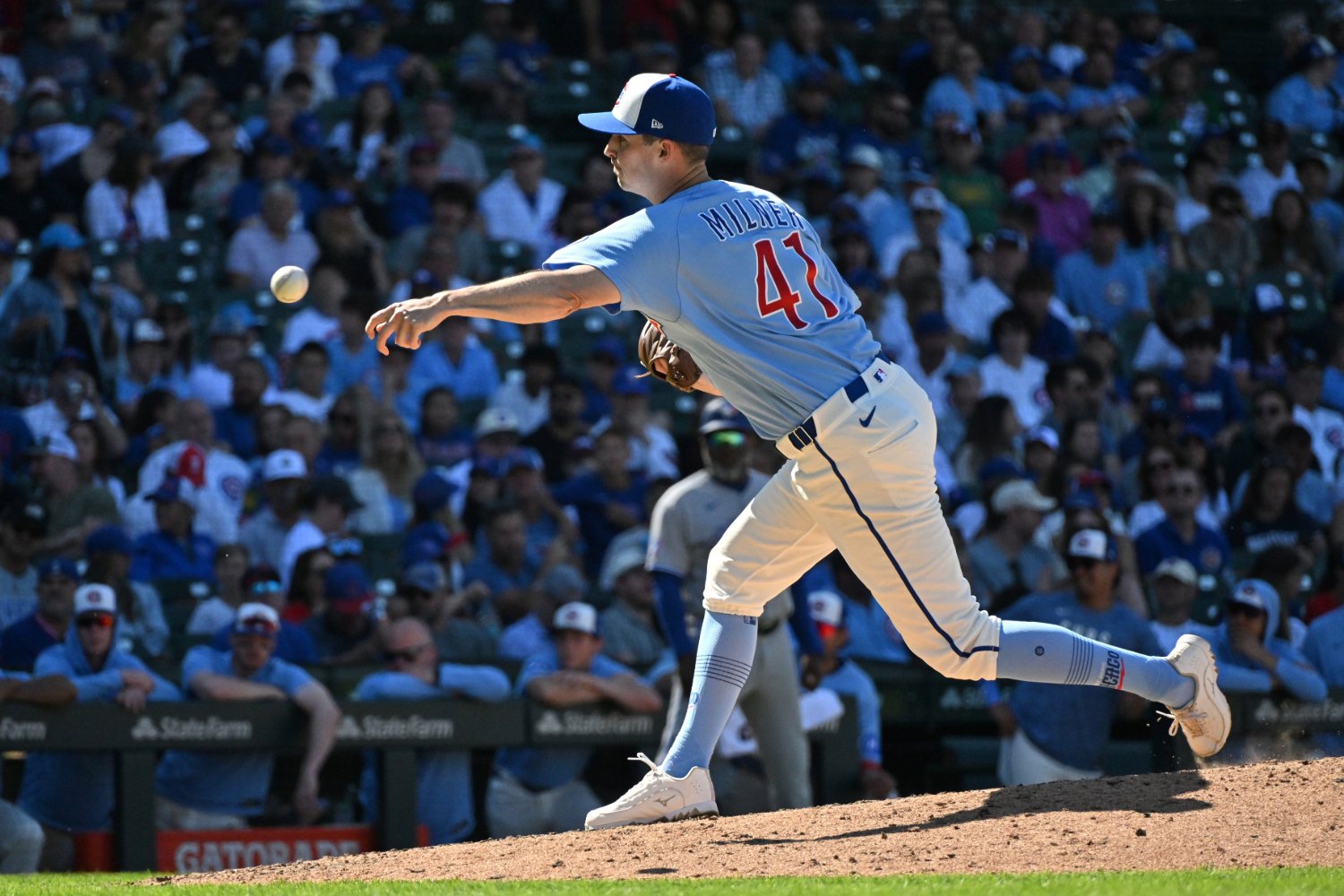
The absence of stability in the team's relief corps stems from a few different factors. Its construction is one. Injuries, both internally and within the rotation, have represented another (perhaps even more significantly so). In the face of such turmoil, one unassuming arm has emerged as a source of stability for Craig Counsell in the form of Hoby Milner.
Our Jason Ross last discussed Milner in this space back in April. Therein, he noted some of the successes that Milner was experiencing in the early going but also confronted some of the red flags. At that point in the year, the veteran southpaw was rolling at a 2.39 ERA but a FIP over six, with a sharp decline in his typical groundball tendencies. Milner ended April with 15 innings pitched and a 2.40 ERA. His strikeout rate, though, sat at 8.6 percent, a low number even by his modest standards. His 6.9 percent walk rate was also up a bit from his career norms, with a .192 opposing batting average that indicated some good fortune in the face of uneven trends. There were some role changes and subsequent usage tweaks at play that impacted him, but the bottom line was that the results weren't completely jiving with the underlying trends.
Fast-forward almost exactly two months to now and many of the concerns around Milner's early performance have stabilized. As of this writing, he has a 3.38 ERA to his credit and a 4.20 FIP. He's still outperforming the peripherals a touch (4.94 xERA, 4.71 xFIP), but there's been a progression over the last three months that helps to illustrate his value as a steady arm in this bullpen.
The two months since April have looked as follows:
- May: 10.1 IP, 2.61 ERA, 2.33 FIP, 15.9 K%, 4.5 BB%, 50.0 GB%, .250 opposing batting average
- June: 9.1 IP, 5.79 ERA, 4.39 FIP, 12.8 K%, 5,1 BB%, 40.0 GB%, .294 opponent batting average
At first blush, the idea that Milner not only has his red flags behind him (as the headline posits) but is also a source of stability would seem outrageous. After really find his groove in May, the surface numbers are more indicative of a player falling back toward the regression feared by some of the trends back in April. However, it's important to note that Milner had an especially poor outing back on June 5. He allowed six earned runs in just a third of an inning. In his other nine innings of work, he's allowed zero runners to cross home plate.
Which means that the image of Milner as a reliable arm in relief is still very much intact. His usage is starting to support that idea as well.
In Jason's piece, he noted the increased usage of Milner's sinker given some of the higher traffic on the basepaths, as well as the higher-leverage situations into which an increased role had pressed him. That came at the expense of his sweeper. In the stretch of time since, he's gotten back to the arsenal we generally expect:

The shift in usage from being sinker-heavy to blending the sinker and sweeper more effectively comes as a result of Milner not being asked to handle make-or-break moments, while also being deployed against left-handed hitters more frequently than righties. That June 5 outing notwithstanding, he's regained his form in limiting baserunners while also maintaining strikeout and walk trends more akin to his career norms.
As a result, Milner has been able to maintain his status as perhaps the most stable arm this relief corps has to offer. He's taken on more work than any current member of the bullpen (34.2 IP), and while the early turbulence forced him to take on an increased role, the early red flags — the traffic, absence of strikeouts, and waning groundball contact — are largely behind him. Given how messy the configuration of this group of relievers has been (mostly for reasons which are out of their control), that Milner has settled back into his usual self speaks to exactly what the Cubs were hoping he'd provide as a veteran soft-tossing lefty.





Recommended Comments
There are no comments to display.
Create an account or sign in to comment
You need to be a member in order to leave a comment
Create an account
Sign up for a new account in our community. It's easy!
Register a new accountSign in
Already have an account? Sign in here.
Sign In Now