Jump to content
North Side Baseball
  • Cubs News & Analysis

    The Cubs and the Vice of Patience


    Brandon Glick

    Jed Hoyer has a reputation for being patient. It often serves the Cubs well. This offseason, however, Jed’s greatest virtue might be betraying him and the team.

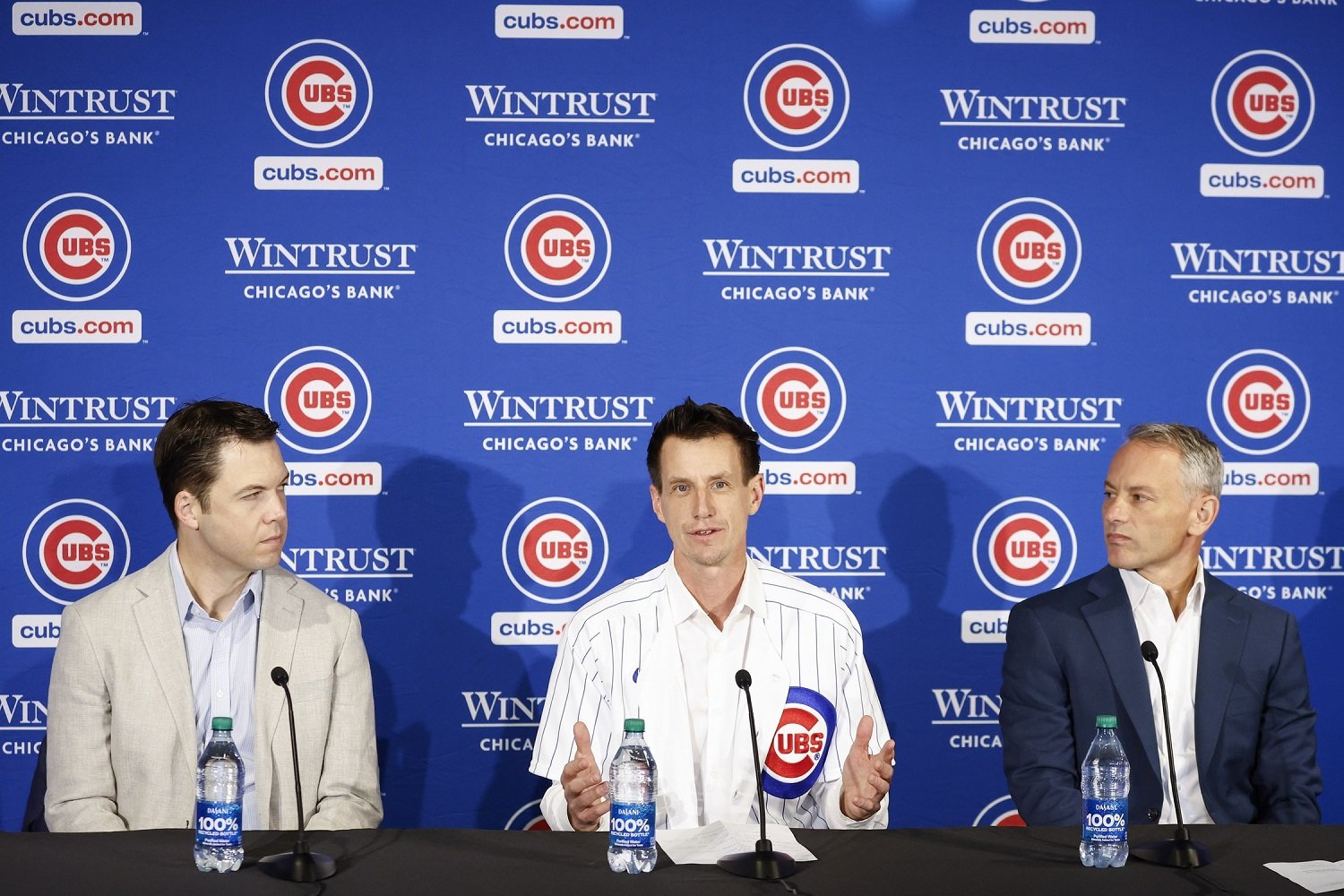
    Image courtesy of Kamil Krzaczynski, USA Today

    Cubs Video

    This is a companion piece to another I wrote regarding the Cubs’ modus operandi of sticking close to their internal player valuations. There, I was fair and holistic, analyzing how the organization-wide patience has both helped and hurt the Cubs in the past and present. This follow-up, however, is a condemnation of the Cubs for their inflexibility and unwillingness to adapt to the baseball landscape around them. 

    Depending on whom you consult, the proverb “patience is a virtue” dates to at least the 1300s, and perhaps as far back as the fifth century (from the epic poem, Psychomachia). That little history lesson may not be entirely relevant to the Chicago Cubs of Major League Baseball in the year 2024, but it is a useful reminder that, in most disciplines in life, patience is a good quality to have. 

    Sports are not like most disciplines. When the monetary value of the dollar increases rapidly in the real world, it skyrockets in the sphere of athletics. Valuations of sports teams long ago left the stratosphere, now entering territory that feels as much imaginary as merely gaudy. 

    Year
    Value of Chicago Cubs
    2003 $335 million
    2013 $1 billion
    2023 $4.1 billion

    Shohei Ohtani just signed a contract worth $700 million (your jokes about deferrals are appreciated), and then the same team that signed hhim turned around and handed Tyler Glasnow $136 million and Yoshinobu Yamamoto $325 million. Making “smart” deals is good business, but refusing to rescale your budget as the market shifts is not. 

    In a vacuum, it’s easy to make a case that none of those three players are worth the money the Dodgers gave them. Ohtani’s pitching future is in doubt after a second Tommy John surgery, Glasnow has never thrown more than 120 innings in a year, and Yamomoto just earned the most expensive contract for a pitcher in MLB history even though he’s never thrown a pitch in the league before. That’s an obscene amount of risk on a $1.15 billion investment. 

    Now, in the same breath, take a look at every roster in the National League. There isn’t a single team that can compete with the raw star power of the Dodgers, and only the Atlanta Braves deserve to even be mentioned in the same conversation of the NL’s true hegemon. Yes, the Dodgers have won the division every year since 2012 (besides 2021) and only won the World Series once (during the pandemic season), but what they’ve done should be the goal of every team: putting together an exceptionally competitive roster. 

    Naturally, this is a good place for one of Jed’s favorite disclaimers: winning the offseason does not guarantee winning the season. In an interview with The Athletic before the Winter Meetings this year, Hoyer explained his approach.

    “As I’ve said a lot of times over the years, winning the offseason is probably more curse than blessing. Cody Bellinger wasn’t exactly a move that people were lauding tremendously last year, and it was probably one of the best free-agent signings on the market," he said. "You just don’t know where the best deals are going to come from. Certainly, there are immensely talented players on the market, but I think if you go in thinking it’s one of those guys or bust, you can make some really bad long-term decisions.”

    That attitude has helped the Cubs avoid onerous deals that clog up the payroll, like Anthony Rendon on the Angels or Carlos Rodón on the Yankees. It’s also the reason the Cubs began last season with Eric Hosmer, Luis Torrens, and Trey Mancini eating starts at first base and designated hitter, which probably cost them a couple of games in a year where they fell one game shy of the last Wild Card berth. 

    There’s still a number of good players available, to be sure. Blake Snell, Jordan Montgomery, and Shota Imanaga are a trio of lefties with high-end starter upside. Josh Hader, David Robertson, and Jordan Hicks are a few late-game relievers with a track record of being a closer. Bellinger, Matt Chapman, and J.D. Martinez have the power and pedigree that could help transform the Cubs lineup, and each of them play positions at which the Cubs desperately need reinforcements. 

    In a vacuum, signing any of those guys would make a lot of sense for the Cubs. But baseball doesn’t happen in a vacuum. There are other teams bidding for these players' services, each of which are only getting more antsy as each talented player comes off the board. And in a year in which the NL Central is wide open, the Cubs have done absolutely nothing to establish themselves as the cream of the crop. 

    The Cubs can continue to be patient. In all likelihood, they will. Winning the offseason doesn’t guarantee winning the actual season, after all. But while the Dodgers and Braves can rest on their laurels, armed with as much leverage and talent as any organization in baseball, the Cubs will be forced to scour the remains of the market, battling it out in the trenches with other teams growing as desperate as they are. 

    And they only have themselves to blame.

    Follow North Side Baseball For Chicago Cubs News & Analysis

    • Like 1

    Recent Cubs Articles

    Recent Cubs Videos


    User Feedback

    Recommended Comments


    Featured Comments

    Rcal10

    Posted

    1 hour ago, We Got The Whole 9 said:

    The simple answer is you throw a decent prospect with the bad contract and trade it to a rich team. This has happened so many times over the years. Not sure the Cubs will ever do it, but the point remains. 

    Honestly I am not even talking about that kind of a signing now. I am just talking about with the guys who are left. If there is a bat and a starting pitcher the Cubs do want, I don’t feel they need to let the market play out so they can get the best deal. Go get the guy. If their plan is Bellinger, for example, then sign him. Don’t wait and have someone else get him so you change your plan to Chapman. I don’t like the idea of the market dictating the Xubs moves. That is what small market teams do. Same with pitchers. If they like a pit her more than  others then sing him. Again, don’t wait to take the guy who is standing. He might be your last choice. At least with pitchers they won’t have to change the direction of the rest of the if season. With a bat they do. If Hoskins falls and ends up the guy the Cubs can get, then maybe they don’t want to trade for Naylor. But if they are left with Chapman standing maybe they should have traded for Naylor. Waiting on the bat slows down anything else they want to do. I would just like to see them operate S if they have a ola  as to who they want. Not a ola  to take what is left.

    Backtobanks

    Posted

    2 hours ago, Rcal10 said:

    Honestly I am not even talking about that kind of a signing now. I am just talking about with the guys who are left. If there is a bat and a starting pitcher the Cubs do want, I don’t feel they need to let the market play out so they can get the best deal. Go get the guy. If their plan is Bellinger, for example, then sign him. Don’t wait and have someone else get him so you change your plan to Chapman. I don’t like the idea of the market dictating the Xubs moves. That is what small market teams do. Same with pitchers. If they like a pit her more than  others then sing him. Again, don’t wait to take the guy who is standing. He might be your last choice. At least with pitchers they won’t have to change the direction of the rest of the if season. With a bat they do. If Hoskins falls and ends up the guy the Cubs can get, then maybe they don’t want to trade for Naylor. But if they are left with Chapman standing maybe they should have traded for Naylor. Waiting on the bat slows down anything else they want to do. I would just like to see them operate S if they have a ola  as to who they want. Not a ola  to take what is left.

    I am so tired of waiting for Jed to do something.  waiting for Bellinger and/or Hoskins to lower their asking price is one thing but moves like Bieber and Naylor have been sitting there for quite a while and seem rather affordable (prospect wise) and would make great additions to the team without adding too much to the payroll.

    Stratos

    Posted

    8 hours ago, Rcal10 said:

    How do I get specific on overcoming an overpriced contract? I can give you an example of the Dodger. Most years they are overpaying several guys on their team and winning. I believe one year they had Crawford & Price on their team for crazy money and not playing them and won. They had Bauer for a lot of money getting no value. If you look you can find example after example of a team winning with a guy making big money and not playing. And I am not even talking about that now. I agree with you on the super long contracts for the super stars. It makes me nervous too. But what I am talking about is guys that are available now. If they want Bellinger than get him. Maybe they only want 5 years. But if they have to go to 7, than do it. If they want him. Same with any of the pitchers, Chapman or whoever else they are interested in. Why do they have to wait until the rest of the market passes on a guy and get him cheap? In the case of Bellinger, if he was making $26M a year and was solid for 4 or 5 those years and the last 2 he was an ok player being overpaid, does that cripple the Cubs? If he is a starter who ends up with a WAR of 2.5 does paying more than he is worth soon the Cubs to failure? I don’t think so.

    TBH I am still not comfortable with the 10-12 year deal either. I just know if the Cubs never do that sort of deal they will never get the top FA.

    If the Cubs spent like the Dodgers and could just spend away their bad contracts sure that would be great and would be my preference.  But we can't keep comparing ourselves to the Dodgers.  They have about 130 mil more in annual revenue.  I'm going on the assumption the Cubs have a budget limit every season because that's how Ricketts has always handled the payroll and Jed has to work within that budget, even if I don't like it.  Theo wasn't able to just "spend away" Heyward's underperformance.  Yes guys get hurt etc and it can't be predicted, and Heyward looked like a smart contract that they still shouldn't have regret signing.  But you can minimize the risks, try to choose younger guys over older ones, sign 7 year deals over 10 year deals etc if the choice is there.   If you think of the stock market, putting your eggs all in one basket is a lot riskier than diversifying your risk and spreading your money across several good or very good players rather than dropping bombs of money on 1 or 2 stars player through age 40.  More risk can mean more reward but it can also blow up in your face and hamper a franchise for years.

    I don't have an issue of them signing Bellinger or a 30 y/o SP even if they have a couple of meh years near the end.  My point before is that they have the flexibility to not pigeon-hole themselves with 1 specific SP or 1 big position guy they like.  There have been numerous quality SP's on the market this year with similar value and they can trade for a SP too.  e.g. If bidding for Montgomery gets much higher than expected and you can get Bieber cheap then get Bieber, if Montgomery falls in your lap for cheaper than expected and Bieber is expensive then go Montgomery.

    I think the Braves have a good philosophy.  Develop your best players via prospects, extend them or let them walk like Swanson/Freeman if they won't and take the QO or trade them to reload the farm.  Supplement the team with trades and smart FA signings.  Jed has done the same with Happ, Baez, Bryant etc and it's been working out well so far.

    Stratos

    Posted (edited)

    8 hours ago, We Got The Whole 9 said:

    The simple answer is you throw a decent prospect with the bad contract and trade it to a rich team. This has happened so many times over the years. Not sure the Cubs will ever do it, but the point remains. 

    Yeah but you're still losing a prospect.  If a player loses value that value is lost and can't be recovered, you can only spend more than you would have to compensate.  Ricketts has never really let the FO do that.  He's thrown them several extra million when needed in a pinch but not 20-30 million every year.

    Edited by Stratos
    Rex Buckingham

    Posted

    The Cubs, like every other major league team, can spend basically whatever they want and still turn a profit. 

    • Like 2


    Create an account or sign in to comment

    You need to be a member in order to leave a comment

    Create an account

    Sign up for a new account in our community. It's easy!

    Register a new account

    Sign in

    Already have an account? Sign in here.

    Sign In Now

×
×
  • Create New...