


Cubs Video
There's no question that the Guardians are interested in trading Shane Bieber, who is set to make somewhere between $12 million and $14 million via arbitration in 2024 and hit free agency after the season. They won't trade him purely to shed that salary, though; they have other ways to manage their budgetary restrictions for the coming year. The Cubs, in turn, are interested in Bieber, but not at the cost of Christopher Morel or any of the top tier of prospects (Pete Crow-Armstrong, Cade Horton, or Kevin Alcantara) in their farm system.
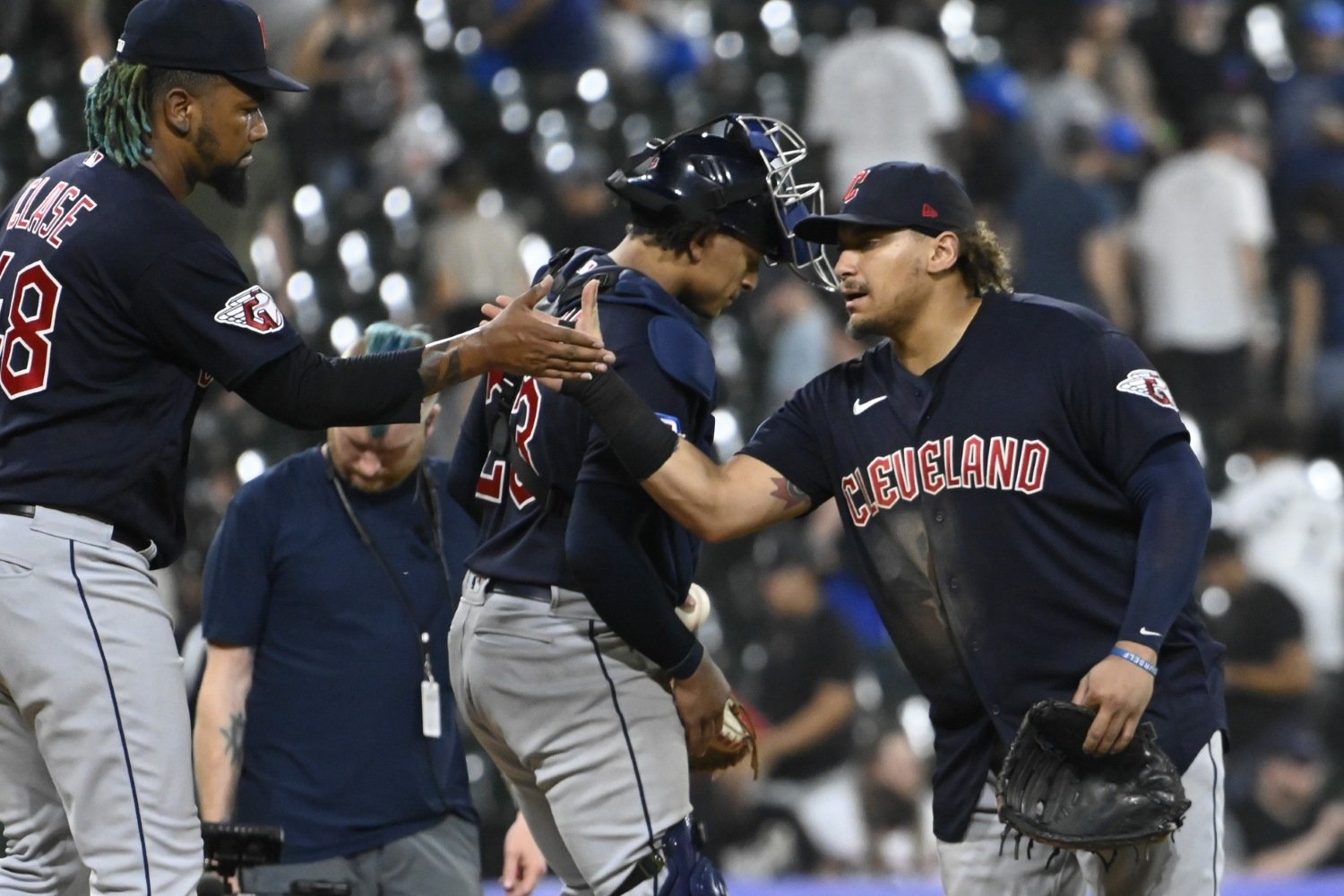
As the free agency of Shohei Ohtani and the trade markets of Juan Soto and Tyler Glasnow played out, these two teams circled each other and exchanged ideas about deals that would include Bieber, but also expand beyond him. Cleveland might have longer-term payroll constraints to consider, which could lead them to move first baseman Josh Naylor, closer Emmanuel Clase, or both. I've written about why Naylor and Clase would each be excellent fits for the Cubs, and I can directly report that the two sides have talked about permutations of deals that would involve each of these three players--though, as far as I know, not all three in any one deal.
Let's take this from the abstract to the concrete. Here are three possible versions of a trade between the Cubs and Guardians, each of which is theoretically possible but (perhaps) none of which is actually likely. This way, we can better define what does and doesn't make sense for each side.
The Clean Rental
Cubs acquire Shane Bieber; Guardians acquire Alexander Canario and Brandon Birdsell
One important thing to keep in mind, when trading with Cleveland, is that they are almost perpetually in a roster crunch. With a highly effective model-based approach to the draft and a solid operation in Latin America, the Guardians' farm system is almost always deep, but it's especially deep with guys who quickly fill up the 40-man roster. That model-centric draft strategy leads to a lot of college picks, and those guys become Rule 5-eligible sooner than high-school selections. Right now, Cleveland has a full 40-man roster, so (while they could always designate someone for assignment or make a separate move) they're not looking to take on multiple MLB-ready pieces in a trade for Bieber.
This deal fits their needs neatly. Canario would slot right into an outfield mix that remains a disaster area, and Birdsell made six starts at Double A this season, but doesn't become Rule 5-eligible until after 2025. In the long run, Birdsell might need to move to the bullpen, and Canario might be a better platoon outfielder than everyday guy, but they each give Cleveland a nice blend of upside and surety, without straining their organizational logistics. The Cubs, meanwhile, can spare both players, as they each exist in areas of depth for the team. Bieber would slot in right alongside Justin Steele, Jameson Taillon, and Kyle Hendricks, in what would be a very flat but impressively deep starting corps.
The Two-Birds, One-Stone Approach
Cubs acquire Shane Bieber, Josh Naylor, and Myles Straw; Guardians acquire Kevin Alcántara, Ben Brown, Alexander Canario, Brandon Birdsell, and Haydn McGeary
Crucially, this deal is not just about the Cubs filling two of their most urgent needs. It also doubles Cleveland's pleasure. The Guardians signed Straw to a five-year contract extension in April 2022, and they almost immediately regretted it. After he'd excited them with a season in which he batted .271/.349/.348 with excellent outfield defense, he's batted .229/.296/.284 in the two seasons since. Now 29, Straw is still a solid defensive center fielder, but that bat is unplayable, at least as anything more than a fifth outfielder. He's due $4.5 million in 2024, $13 million over the following two seasons, and then small buyouts on club options for 2027 and 2028.
Such a deal wouldn't hamstring the Cubs, of course, but it's the kind of mistake the Guardians really can't afford. They've been looking for ways to get out from under it, although their desire to do so comes far short of compelling them to give up a prospect just to do so. In this trade, they get major value for both Bieber and Naylor, and they also clear Straw's contract from their books. The Cubs, of course, fill both their rotation and their first base void. Alcántara would be a major loss, given his tremendous upside, but the team's medium-term outfield picture is crowded enough to make it worthwhile.
Notably, this deal amounts to stacking Naylor and Straw (bad contract and all) for Alcántara, Brown, and McGeary atop the first trade. That's a plausible structure, but whether the Guardians would actually take an interest in it depends on where they fall on the wide spectrum of industry opinions about both Alcántara and Brown. For what it's worth, Brown is a good fit for what Cleveland likes to target and do with young hurlers.
The Moonshot
Cubs acquire Shane Bieber and Emmanuel Clase; Guardians acquire Christopher Morel, Kevin Alcántara, Brody McCullough and Brandon Birdsell
This will seem far too rich to most Cubs fans, which reflects the reality of the stalemate between the teams. The Cubs are willing to move Morel, but they view him as a very valuable trade piece. Other teams, including the Guardians, see him as desirable but not a premium chip. If a deal around Bieber and Clase came together, it would probably be because the Cubs capitulated on giving up one of their top three prospects (they'd sooner let go of Alcántara than Pete Crow-Armstrong or Cade Horton, at this stage) and met the Guardians halfway on Morel.
Right now, the Cubs' most urgent need is for better pitching depth. This move would solve that in one fell swoop, and Clase's long-term, team-friendly deal would give it a long-lasting impact. With the losses of Morel and Crow-Armstrong, they'd then face an equally urgent imperative to shore up the offense (and the outfield), and Bieber and Clase would take up a good-sized chunk of their payroll, so the viability of it might hinge on the team's sense of their budgetary flexibility.
Still, there are ways to make up for the losses of Morel and Alcántara via free agency, and the Cubs' organizational pitching depth is sufficient to cushion the blow of giving up Birdsell and McCullough. This version of the deal is the least likely, but it would have the greatest chance of setting up the Cubs to compete for a World Series in the short term, and it would simultaneously have the greatest long-term impact of any of these possibilities.
What do you think? Are any of these moves you would endorse? What changes to these frameworks do you propose? Bring me any good thoughts. Bring me anything but screenshots of the Trade Values site.





Recommended Comments
Create an account or sign in to comment
You need to be a member in order to leave a comment
Create an account
Sign up for a new account in our community. It's easy!
Register a new accountSign in
Already have an account? Sign in here.
Sign In Now