


Cubs Video
The Chicago Cubs have addressed multiple areas of need this winter. They acquired a catalyst for their lineup in Kyle Tucker. They acquired a true closer in Ryan Pressly. They shored up the middle and back of the rotation via the signings of Matthew Boyd and Colin Rea. They checked a lot of boxes and, at worst, appear to be better than they were in 2024.
And yet, I find myself continually staving off disappointment when looking at the broad picture of the offseason.
With specific items crossed off the list—some of them more emphatically than others—and a coaching staff more suited to what manager Craig Counsell wanted around him, it seems like the Cubs did almost precisely what they set out to do from the jump. So why the feeling of apprehension as February draws near?
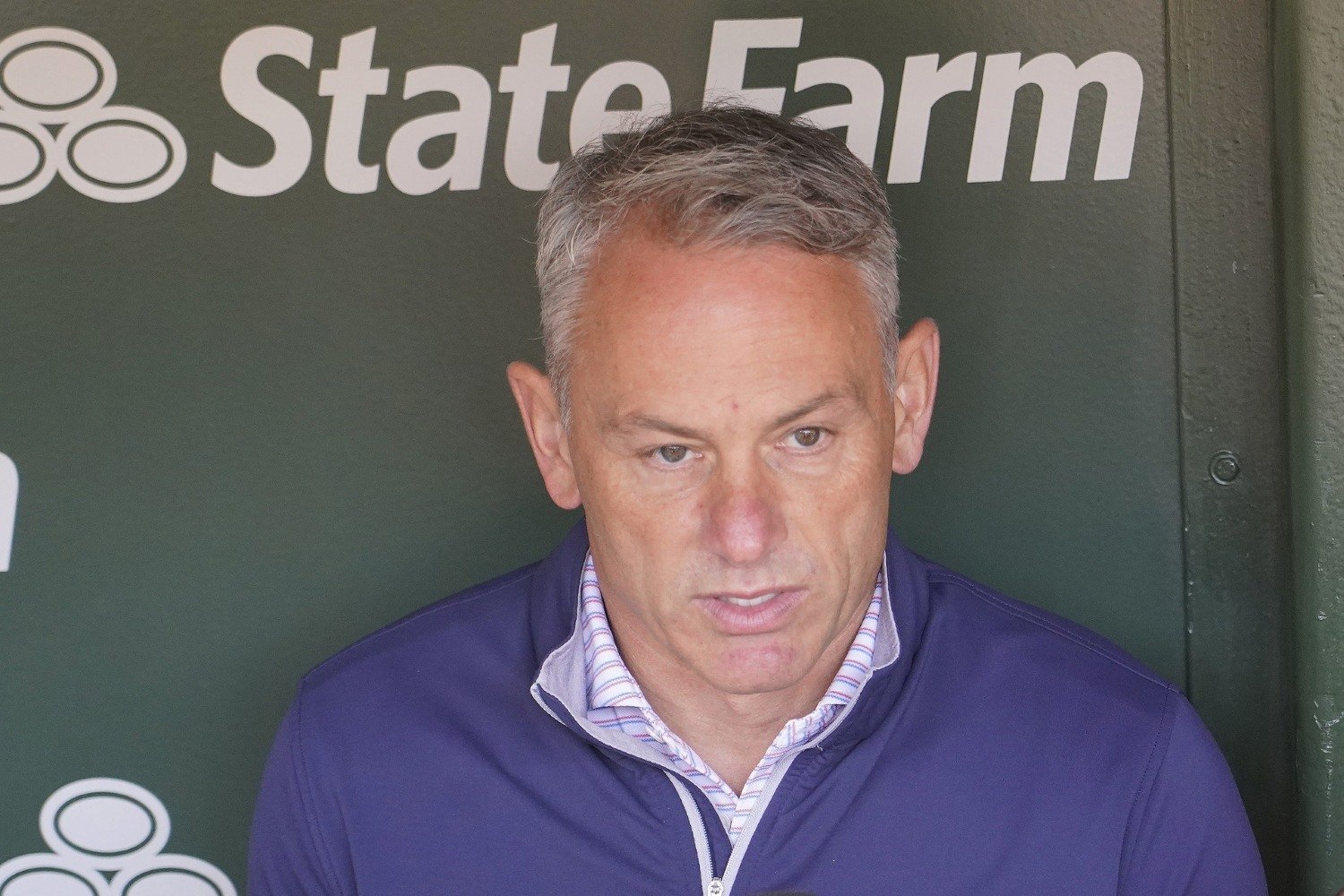
This is where I landed: In spite of those additions—all of which have the ability to provide plenty of benefits for the Cubs—this is an organization still relying on the upside play. It’s a criticism we’ve held over Jed Hoyer with increasing frequency in the past year or two, and one that has lingered throughout a moderately busy winter.
The Tucker move is obviously a counterargument to this, unto itself. It was a big swing. We can fixate on the lack of hope as far as an extension goes or fall into despair over the fact that the Cubs won’t be in the mix for him on the free-agent market next offseason. We can and, frankly, we probably will, as the season wears on. But he represents a genuine aspect of improvement for the 2025 Chicago Cubs.
While his individual addition is key, though, it’s important to note that it’s not entirely without its own context in this discussion independent of the move itself. When the Cubs made the trade, I discussed the importance of the next move. The hyper-conservative front office took an uncharacteristically bold step. Was that a precursor to additional ambition? After all, when one looks out at the National League landscape, it’s top-heavy. The Dodgers, Phillies, Mets, and that team from suburban Cobb County, Georgia are not easy opponents to overcome. The same could be said of Arizona, Milwaukee, San Francisco and maybe San Diego. A single move, however impactful it may have been, wasn’t going to tip the scales in the Cubs’ favor. They needed more.
Yet, since the Tucker acquisition on Dec. 13, we’ve seen the Cubs sign Rea for the rotation, Jon Berti for the bench, and trade for Pressly to insert into the closer’s role. That's to say nothing of the smattering of minor-league deals for relief arms. Ultimately, beyond Tucker, though, we have a fringe starter, a journeyman utility infielder, and a 36-year-old reliever whose peripherals have wavered in the past couple of years. It’s an oversimplification on some level, but it still speaks to how uninspired the Hoyer-led group has continued to be since their bold move in mid-December. The scales haven’t tipped. The Cubs are barely even the favorite in their own division, let alone a threat to contenders elsewhere on the Senior Circuit.
They continue to be reliant on overperformance. Pete Crow-Armstrong doesn’t have a safety net if his development doesn’t continue in the right direction. Same with Michael Busch. Matt Shaw doesn’t have one either, with only a small handful of largely inexperienced glove-first types threatening a job that the front office insisted wouldn’t be handed to him. The bullpen should, somewhat organically, be better, by virtue of improved rotation depth. But remember when we heard about the team pursuing established arms for relief, instead of stocking up on reclamation types? Does Pressly quite clear that bar?
It's a negative read on what the team has done this offseason. I’m not ignorant of that. It likely undervalues someone like Tucker, downplays the upside of Shaw, and oversimplifies Pressly’s performance against peripherals that haven’t completely fallen apart (even if I have certain concerns). But as an individual who struggles to exist in the abstract, this is a team that has, yet again, turned a blind eye toward the option of building a roster with more tangible components than theoretical ones.
In a vacuum, it’s not a bad offseason. But roster construction doesn’t happen in a vacuum. The Dodgers rule the league. The Mets aren’t far behind. Arizona has made massive moves. The Georgia club should be healthy. We don’t have reason to suspect Philadelphia or Milwaukee are going away. When you combine the broader NL context with a continued streak of barely marginal improvements to a roster that needed much more, it’s hard to muster up enthusiasm—and that was before Tom Ricketts’ vomit-inducing comments about spending.
There’s youth here. That comes with a certain level of apprehension on its own. But you also need sustained improvement from Miguel Amaya and sustained… anything from Dansby Swanson. Ian Happ can’t stagnate for the first two months of the season again. The rotation has its own limitations, despite opportunities for improvement at various levels of the market this winter.
This could still change. There are rumors of more moves in the air, some of which are tantalizing possibilities. For now, though, we wait, even as things keep happening; they don't quite fulfill our cravings. It's a special kind of purgatory, not unlike some of their other Chicago sports counterparts. And it’s wrought by, above all, a stubborn reluctance to cling to abstract upside to a more tangible ambition.





Recommended Comments
Create an account or sign in to comment
You need to be a member in order to leave a comment
Create an account
Sign up for a new account in our community. It's easy!
Register a new accountSign in
Already have an account? Sign in here.
Sign In Now