


Cubs Video
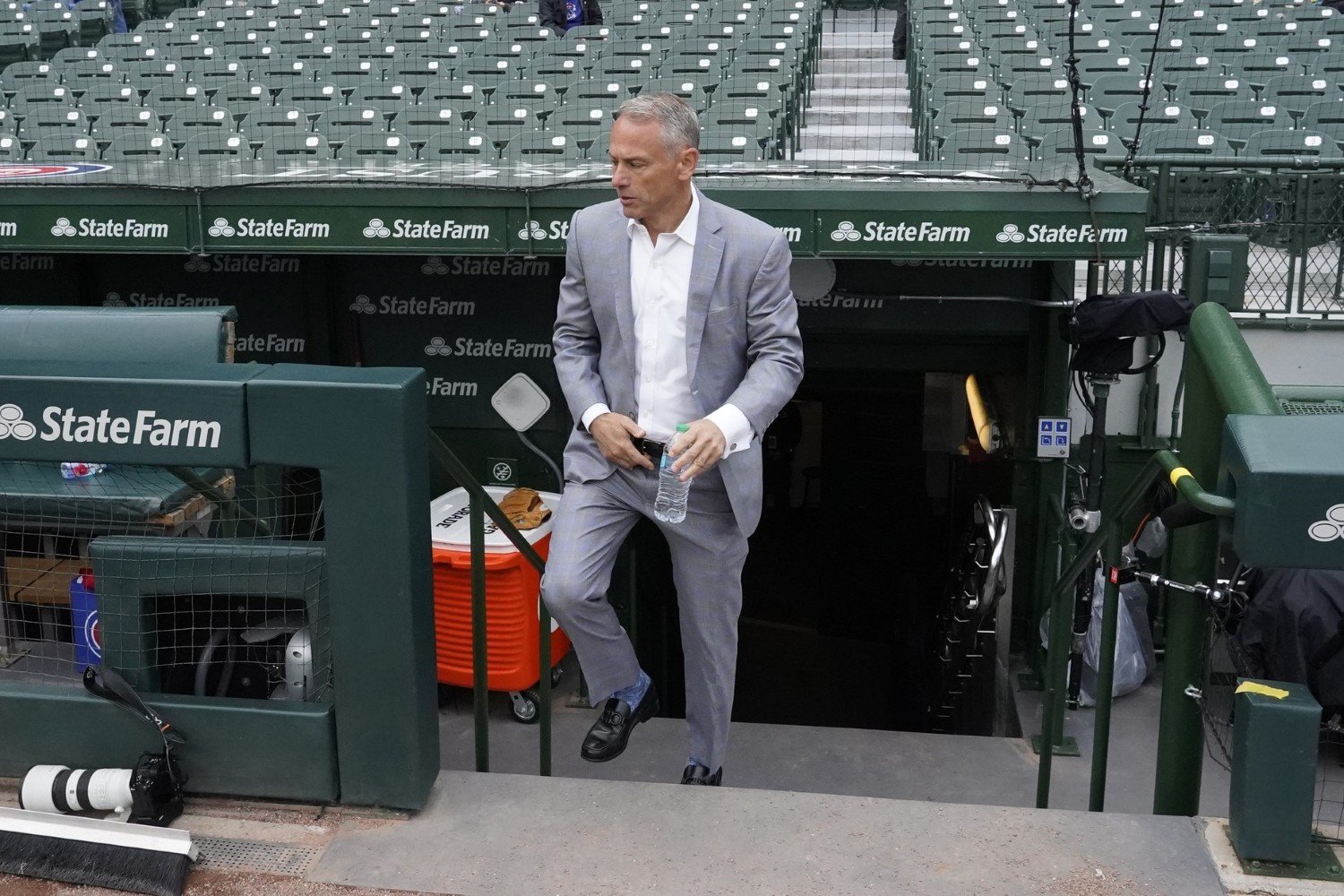
He's faced plenty of well-earned criticism throughout his tenure, but Chicago Cubs president of baseball operations Jed Hoyer has occasionally been able to flip the narrative in his favor. We saw it when he traded for Kyle Tucker prior to the 2025 season. We saw it manifest in a different way with the signing of Alex Bregman, followed by the acquisition of Edward Cabrera from the Miami Marlins. An executive known for being among the game's most conservative was willing to push the chips in if he felt the fit was there.
Moves of that magnitude have reshaped perception of Hoyer a bit recently. Additional criticisms have persisted, though. Chief among them is Hoyer's tendency to go conservative on the other end of the roster. Rather than address the shortcomings of a group with surefire solutions, his reign atop the front office hierarchy has been marked by half-measures. The 2024 team acquired Isaac Paredes, Nate Pearson, and a couple of minor-league fliers for a team that finished middle-of-the-pack in their production from the mound. Last year, it was Willi Castro, Michael Soroka, Andrew Kittredge, and Taylor Rogers. Needs were addressed, but in a way that spoke to more of an on-paper sense and allowed Hoyer to preserve his farm system above all.
It's the type of trend we've seen from Hoyer in working to fill out the fringes of a roster. He's made a bad habit of building bad benches. On the mound, he's chased reclamation projects, rather than paying top dollar for established entities. He took a step toward dispelling both critiques, however, with an uncharacteristically aggressive approach to this year's trade deadline.
The Cubs entered the 2026 trading frenzy with extremely clear needs. A rash of injuries has left them depleted in the rotation all year, with those woes spilling over into the relief corps. Starting pitching was the focus above all, with innings coverage needed and playoff-caliber upside still in short supply. Relief help was a secondary but major need, too. The Cubs bullpen has stabilized in the wake of myriad injuries, but further help was needed. At the bottom of the list (but still noteworthy) was a right-handed bat to combat the volume of left-handed pitchers they'd be liable to face come playoff time.
Hoyer was able to strike to address all three in the most impactful ways possible. While he didn't morph into an executive from the same stratum as someone like A.J. Preller and sell the farm entirely, he stood far less on sentiment here. Prospects with actual name recognition in the system—Jefferson Rojas, Moisés Ballesteros, Jonathon Long, Brett Bateman, and Mason McGwire among them—were sent out for players who can help the Cubs immediately.
In Kevin Gausman, Clay Holmes, and Braxton Garrett, Hoyer addressed his team's need for starting pitching almost entirely. Gausman is an innings-eater with actual playoff experience. Holmes, upon his return from a broken leg, offers additional stability in the middle of the rotation. Garrett has flashed upside as recently as 2023, though injuries have derailed him. He offers medium-term team control, and can still be optioned to the minor leagues while he tries to unlock his fujl skill set again. He's the least exciting of the three, but he adds additional flexibility to a starting group that sorely needed it.
From there, you get into how this could lead to arms currently starting transitioning into relief roles. Javier Assad or Colin Rea could extend their value by working out of the bullpen. That alone adds depth, in addition to the acquisition of Ryan Zeferjahn, who should see his strong peripherals play up to the front of the stat sheet with an elite defense behind him. And in Tyrone Taylor, the Cubs get a lefty masher that can compensate for Ian Happ's absence of productivity against pitchers of that handedness (and work as a solid bench bat in a general sense).
These aren't half measures. All told, Hoyer moved four prospects from our top-20 list and another that had just graduated from it. The players acquired aren't the types we've grown accustomed to seeing from Jed Hoyer this time of year. There's actual value in what they can provide down the stretch in 2026.
The change of tack is not necessarily indicative of a change in philosophy for Hoyer himself. More than anything, it speaks to the faith Hoyer has in this year's group. This is a roster that features one of the league's most productive offensive groups and a defense that far exceeds that of its peers across the league. The jury very much still may be out on the quality of Jed Hoyer as an executive. But good executives move in a shrewd fashion when things are aligned correctly within their organization. Hoyer just did a thing that good executives do.






Recommended Comments
There are no comments to display.
Create an account or sign in to comment
You need to be a member in order to leave a comment
Create an account
Sign up for a new account in our community. It's easy!
Register a new accountSign in
Already have an account? Sign in here.
Sign In Now