


N.B. Lindberg
-
Posts
6 -
Joined
-
Last visited
Content Type
Profiles
Chicago Cubs Videos
Chicago Cubs Trade & Free Agent Rumors
2026 Chicago Cubs Top Prospect Rankings
Chicago Cubs News, Rumors & Analysis
2023 Chicago Cubs Draft Picks & Signing Bonuses
Chicago Cubs Fan Guides & Resources
2024 Chicago Cubs Draft Picks & Signing Bonuses
2025 Chicago Cubs Draft Picks & Signing Bonuses
2026 Chicago Cubs Draft Picks & Signing Bonuses
Blogs
Events
Forums
Store
Gallery
Everything posted by N.B. Lindberg
-
The Chicago Cubs just took the biggest position player swing of the offseason: Teruaki Sato, 27, has agreed to a six-year, $120 million deal. Much like Satō’s swing, this move could be a towering home run, or it could be a huge whiff. Over the past two NPB seasons, Satō made no doubt who was the best position player in the league. He took home Central League MVP honors in both 2025 and 2026, as well as the triple crown in his final Japanese campaign. Needless to say, Satō had nothing left to prove in NPB, and a trip across the Pacific was his next logical stop. The track record for multi-time Central or Pacific League MVPs in MLB is quite strong but also incredibly limited. The only Japanese-born position players to take home the award multiple times before heading stateside are Hideki Matsui, Ichiro Suzuki, and, most recently, Munetaka Murakami. Suzuki obviously had a Hall of Fame career, Matsui was an excellent bat into his mid-30s, and Murakami just belted 35 home runs in 127 games as a rookie. When you throw in all of the other successful exports—Shohei Ohtani and Seiya Suzuki among them—it would stand to reason that Satō should acclimate quite well to MLB. Yet, despite terrorizing Japanese pitchers for the past two years, he is a far riskier gamble than you would think, and the characteristics that made him a star in Japan could be his undoing in America. Teruaki Sato's Updated Cubs Scouting Report Satō’s carrying trait is power. He belted 40 home runs in 2025 and 39 in 2026. Since the Japanese season is only 143 games, that’s a 45 home run pace per 162 games, which would have been enough to tie with Kyle Schwarber and Pete Crow-Armstrong atop the MLB leaderboard in 2026. Fortunately, Satō’s measurable power is beyond legit. Last season, he posted a max exit velocity of 116 mph, an EV90 of 108 mph, and a hard-hit rate of 56%. If that translates to MLB, his peers are exceptional. Max Exit Velocity Nick Kurtz: 115.9 (16th), Wilson Contreras: 116 (15th), Jac Caglianone: 116.1 (14th) EV90 James Wood: 106.5 (1st) Hard-Hit% Pete Alonso: 56.2% (4th) The NPB batted-ball data floating around is not as reliable as what we have access to from MLB, but you cannot fake that level of power. Satō probably won’t play at a 45 home run pace, but 30-35 seems reasonable, which means 40 home run seasons are in the cards. With such excellent production and so much raw juice, how is Satō a risky bet? Well, you first need to hit the ball to send it a long way. The red flag in Satō’s profile is his contact rate. Despite the average NPB fastball coming in at 92 MPH, he ran an overall contact rate of 67%. That would have been the fourth-lowest contact rate in the majors and it should be expected to drop in MLB. Now, running that low of a contact rate isn’t disqualifying, though it all but guarantees a high strikeout rate. However, the scariest part of his profile is his 67% contact rate against fastballs specifically. There are very few hitters who run sub-67% contact rates against fastballs and still prosper. Among players who faced over 200 four-seam fastballs last season, only four posted an above-average batting line within that threshold, and their success raises one concern for Satō. Player FA Contact % Swing % Contact % BB% K% ISO wRC+ Munetaka Murakami 60.7% 40.7% 60.2% 16.6% 35.4% 0.271 129 Rafael Devers 64.7% 47.4% 73.4% 10.9% 25.4% 0.267 136 Nick Kurtz 66.5% 43.1% 66.7% 18.2% 32.5% 0.227 138 Esmerlyn Valdez 59.3% 41.3% 63.9% 14.6% 37.6% 0.278 130 Teruaki Sato (NPB) 67.0% 52.4% 67.0% 11.1% 26.7% 0.302 196 To pull off this approach, you need serious power, but you also need incredible patience. Only Devers was able to thrive with a low contact rate against four seamers and an above-45% swing rate because of his overall ability to make contact far outstripped the rest. With Satō’s current profile, he looks incredibly likely to run a sub-10% walk rate with a strikeout rate well above 30%. If Satō were coming over to man third base full time, his offensive concerns would be a bit more muted. While he doesn’t project to be a plus defender on the dirt, an average defensive third baseman with a lopsided power-over-everything batting line, is still a valuable player. Unfortunately, the Cubs already have an elite infield defense, and he looks poised to head to an outfield corner. In 2026, the average wRC+ for a third baseman was 99, and for right and left fielders it was 102. While that’s a trivial difference, it still underscores what the bare minimum expectations are right now. Fundamentally, for Satō to be an above-average contributor, he either needs to be incredibly good defensively, or hit well above league average. Why Teruaki Satō Will Hit Through His Concerns The strengths and weaknesses in Satō’s profile are readily apparent, but I’d lean on the side of him mashing in the majors anyway. First, the level of power he has demonstrated in NPB is elite. As Murakami showed on the South Side, dropping bombs goes a long way. On top of that, contact rates are fundamentally a threshold stat, so long as there is sufficient power. Think of it this way: With Satō’s power, he only needed to make contact 67% of the time to be literally the best player in his league. It’s not that he was trying to swing and miss, but there was no reason to make more contact when the contact he made was so productive. There’s no reason to believe that he can’t make adjustments to address a potential contact problem, and with his level of power, he has multiple pathways toward success; he could become hyper selective and trade even more strikeouts for walks, or he could shorten up his swing and trade some power for contact. The bust potential is certainly there. If he just can’t connect on league-average fastballs, he might be toast. But a boom scenario is equally in the cards. He has demonstrated 70-to-80-grade power in Japan. You really don’t need to make that much contact if you crush the ball, and he really crushes it. The final bit of the equation is the contract. Six years and $120 million sounds like a lot, but an AAV of $20 million to cover a player’s age 28 through 33 seasons is just not that much for a marquee free agent. On average, the cost to sign a player projected to produce over 2.0 WAR, which Satō is, is about $12 million per WAR. If Satō is just an average player over the life of this contract, then it’ll have been a completely reasonable deal. At the end of the day, he’s not being paid to be a star; he’s being paid to functionally replace Ian Happ. He should succeed at that. And, lest any doubts linger, how many guys can do this? Image courtesy of Darren Yamashita-Imagn Images View full article
-
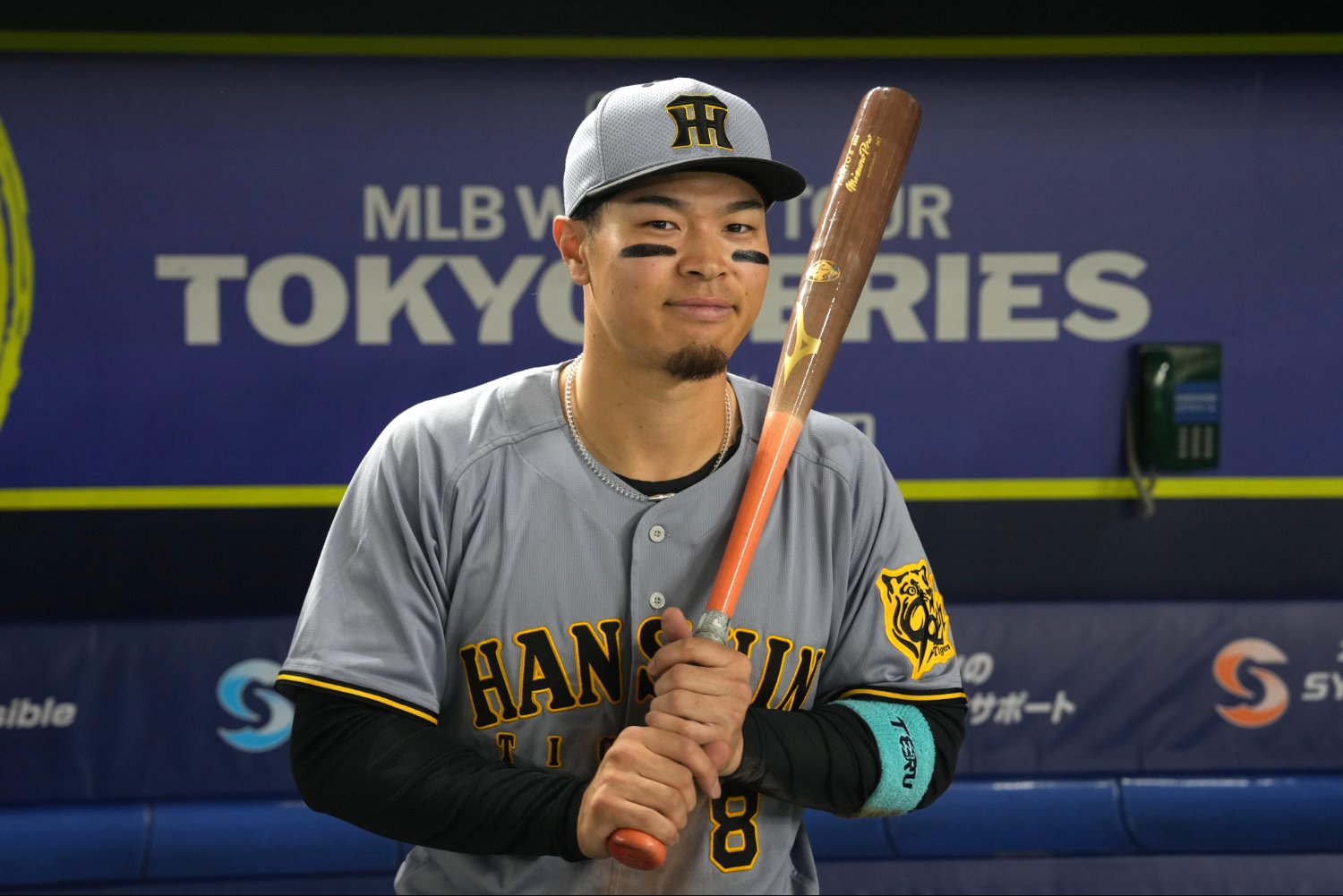 The Chicago Cubs just took the biggest position player swing of the offseason: Teruaki Sato, 27, has agreed to a six-year, $120 million deal. Much like Satō’s swing, this move could be a towering home run, or it could be a huge whiff. Over the past two NPB seasons, Satō made no doubt who was the best position player in the league. He took home Central League MVP honors in both 2025 and 2026, as well as the triple crown in his final Japanese campaign. Needless to say, Satō had nothing left to prove in NPB, and a trip across the Pacific was his next logical stop. The track record for multi-time Central or Pacific League MVPs in MLB is quite strong but also incredibly limited. The only Japanese-born position players to take home the award multiple times before heading stateside are Hideki Matsui, Ichiro Suzuki, and, most recently, Munetaka Murakami. Suzuki obviously had a Hall of Fame career, Matsui was an excellent bat into his mid-30s, and Murakami just belted 35 home runs in 127 games as a rookie. When you throw in all of the other successful exports—Shohei Ohtani and Seiya Suzuki among them—it would stand to reason that Satō should acclimate quite well to MLB. Yet, despite terrorizing Japanese pitchers for the past two years, he is a far riskier gamble than you would think, and the characteristics that made him a star in Japan could be his undoing in America. Teruaki Sato's Updated Cubs Scouting Report Satō’s carrying trait is power. He belted 40 home runs in 2025 and 39 in 2026. Since the Japanese season is only 143 games, that’s a 45 home run pace per 162 games, which would have been enough to tie with Kyle Schwarber and Pete Crow-Armstrong atop the MLB leaderboard in 2026. Fortunately, Satō’s measurable power is beyond legit. Last season, he posted a max exit velocity of 116 mph, an EV90 of 108 mph, and a hard-hit rate of 56%. If that translates to MLB, his peers are exceptional. Max Exit Velocity Nick Kurtz: 115.9 (16th), Wilson Contreras: 116 (15th), Jac Caglianone: 116.1 (14th) EV90 James Wood: 106.5 (1st) Hard-Hit% Pete Alonso: 56.2% (4th) The NPB batted-ball data floating around is not as reliable as what we have access to from MLB, but you cannot fake that level of power. Satō probably won’t play at a 45 home run pace, but 30-35 seems reasonable, which means 40 home run seasons are in the cards. With such excellent production and so much raw juice, how is Satō a risky bet? Well, you first need to hit the ball to send it a long way. The red flag in Satō’s profile is his contact rate. Despite the average NPB fastball coming in at 92 MPH, he ran an overall contact rate of 67%. That would have been the fourth-lowest contact rate in the majors and it should be expected to drop in MLB. Now, running that low of a contact rate isn’t disqualifying, though it all but guarantees a high strikeout rate. However, the scariest part of his profile is his 67% contact rate against fastballs specifically. There are very few hitters who run sub-67% contact rates against fastballs and still prosper. Among players who faced over 200 four-seam fastballs last season, only four posted an above-average batting line within that threshold, and their success raises one concern for Satō. Player FA Contact % Swing % Contact % BB% K% ISO wRC+ Munetaka Murakami 60.7% 40.7% 60.2% 16.6% 35.4% 0.271 129 Rafael Devers 64.7% 47.4% 73.4% 10.9% 25.4% 0.267 136 Nick Kurtz 66.5% 43.1% 66.7% 18.2% 32.5% 0.227 138 Esmerlyn Valdez 59.3% 41.3% 63.9% 14.6% 37.6% 0.278 130 Teruaki Sato (NPB) 67.0% 52.4% 67.0% 11.1% 26.7% 0.302 196 To pull off this approach, you need serious power, but you also need incredible patience. Only Devers was able to thrive with a low contact rate against four seamers and an above-45% swing rate because of his overall ability to make contact far outstripped the rest. With Satō’s current profile, he looks incredibly likely to run a sub-10% walk rate with a strikeout rate well above 30%. If Satō were coming over to man third base full time, his offensive concerns would be a bit more muted. While he doesn’t project to be a plus defender on the dirt, an average defensive third baseman with a lopsided power-over-everything batting line, is still a valuable player. Unfortunately, the Cubs already have an elite infield defense, and he looks poised to head to an outfield corner. In 2026, the average wRC+ for a third baseman was 99, and for right and left fielders it was 102. While that’s a trivial difference, it still underscores what the bare minimum expectations are right now. Fundamentally, for Satō to be an above-average contributor, he either needs to be incredibly good defensively, or hit well above league average. Why Teruaki Satō Will Hit Through His Concerns The strengths and weaknesses in Satō’s profile are readily apparent, but I’d lean on the side of him mashing in the majors anyway. First, the level of power he has demonstrated in NPB is elite. As Murakami showed on the South Side, dropping bombs goes a long way. On top of that, contact rates are fundamentally a threshold stat, so long as there is sufficient power. Think of it this way: With Satō’s power, he only needed to make contact 67% of the time to be literally the best player in his league. It’s not that he was trying to swing and miss, but there was no reason to make more contact when the contact he made was so productive. There’s no reason to believe that he can’t make adjustments to address a potential contact problem, and with his level of power, he has multiple pathways toward success; he could become hyper selective and trade even more strikeouts for walks, or he could shorten up his swing and trade some power for contact. The bust potential is certainly there. If he just can’t connect on league-average fastballs, he might be toast. But a boom scenario is equally in the cards. He has demonstrated 70-to-80-grade power in Japan. You really don’t need to make that much contact if you crush the ball, and he really crushes it. The final bit of the equation is the contract. Six years and $120 million sounds like a lot, but an AAV of $20 million to cover a player’s age 28 through 33 seasons is just not that much for a marquee free agent. On average, the cost to sign a player projected to produce over 2.0 WAR, which Satō is, is about $12 million per WAR. If Satō is just an average player over the life of this contract, then it’ll have been a completely reasonable deal. At the end of the day, he’s not being paid to be a star; he’s being paid to functionally replace Ian Happ. He should succeed at that. And, lest any doubts linger, how many guys can do this?
-
Cubs Can Win World Series By Addressing One Major Weakness In October
N.B. Lindberg posted an article in Cubs
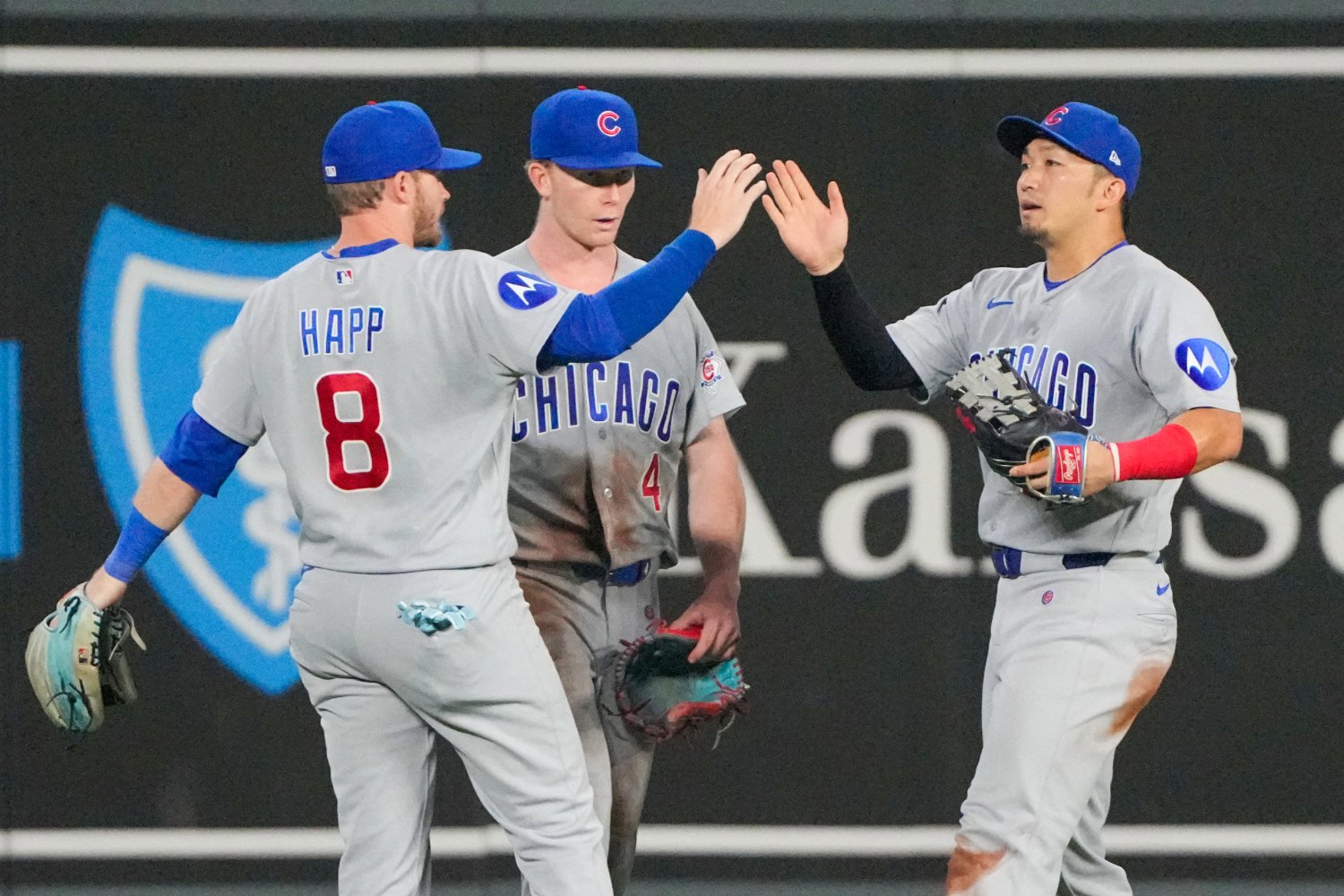 The Chicago Cubs are a team of extremes. They have the best position player core in baseball by a comical margin. They lead baseball in both offensive and defensive value, and their 37.8 fWAR leads the second-place Dodgers by an unfathomable 11.0 Wins Above Replacement. Of course, at the other end of that extreme is their pitching. Their pitchers have combined for 6.0 fWAR, which gives them a slight edge over the Royals (5.1) and Nationals (4.8) for the worst mark in baseball. Despite dodging the cellar, this is the worst pitching staff among National League playoff teams. In most situations, a staff of such ill repute would doom any World Series journey from the start, but the Cubs actually have a road map to a title, and a simple one at that: keep the ball in the park. This is far from groundbreaking analysis, but giving up home runs is bad, and the Cubs love to cough up a gopher ball. They’ve given up the second-most home runs in baseball (231) and have the highest home run to flyball ratio (14.4%) in the sport. Soft toss in a below-average strikeout rate (20.8%), and the only thing Cubs pitchers have done well is limit walks (8.2%). Despite this overall inability to pitch well, the team's run prevention isn’t awful. Thanks to an elite defense, they finished the season with a team ERA of 4.12 (14th), a significant improvement from their xERA of 4.54 (24th) and FIP of 4.60 (25th). On paper, the Cubs will enter every series at a serious pitching disadvantage. They don’t have a real ace, their bullpen is shaky, and the back of their rotation is bland. But they do have the best defense in baseball, which can be a game changer. If we take the Cubs’ ERA and ERA estimators at face value, their defense shaves off around 0.45 of ERA. That’s nearly a full standard deviation (0.538) of team ERA, which is why and how this team found a way to win nearly 90 games in the regular season. However, the only way their defense can make up for their pitching is if the ball stays in the ballpark. No team in baseball suffered more at the hands of the long ball. They gave them up at the highest rate in baseball, despite also having the depth chart best suited to turn fly balls into fly-outs. But that also means they have the most to gain by limiting them. The Cubs’ xFIP, which assumes a league-average home run to flyball rate, was 4.19 (16th). If they can get there, while maintaining their massive defensive advantage over the rest of the league, suddenly their team ERA would be 3.74 (by our previous ERA vs. ERA estimator calculation). That would have been the league’s eighth-best ERA. But why stop there? Cubs' Hypothetical Run Prevention HR/FB HR FIP ERA 14.40% 231 4.60 4.15 11% 176 4.11 3.66 10% 160 3.97 3.52 8% 128 3.68 3.23 *HR total based on 1604 fly balls; ERA is calculated as FIP-0.45 This table, effectively, is meant to show just how important keeping the ball in the park is. If the pitching staff can turn a few of those homers into warning-track blasts, the Cubs' ability to keep runs off the board will increase dramatically. Perhaps playing in a pitcher-friendly place like Petco Park will actually be more beneficial than staying at home and dealing with the wind gods in Wrigley. Any team that wins the World Series is going to need something(s) to go their way. That’s just the nature of short-series baseball, but the Cubs really only need one thing to swing their way: home run variance. It limits their greatest team weakness while accentuating one of their strengths. If their gloves and sticks live up to the billing, all their pitchers need to do is keep throwing strikes and hope the gophers think there are six more weeks of winter. It's simple, but that’s how the Cubs can win the World Series.
-
Image courtesy of Denny Medley-Imagn Images The Chicago Cubs are a team of extremes. They have the best position player core in baseball by a comical margin. They lead baseball in both offensive and defensive value, and their 37.8 fWAR leads the second-place Dodgers by an unfathomable 11.0 Wins Above Replacement. Of course, at the other end of that extreme is their pitching. Their pitchers have combined for 6.0 fWAR, which gives them a slight edge over the Royals (5.1) and Nationals (4.8) for the worst mark in baseball. Despite dodging the cellar, this is the worst pitching staff among National League playoff teams. In most situations, a staff of such ill repute would doom any World Series journey from the start, but the Cubs actually have a road map to a title, and a simple one at that: keep the ball in the park. This is far from groundbreaking analysis, but giving up home runs is bad, and the Cubs love to cough up a gopher ball. They’ve given up the second-most home runs in baseball (231) and have the highest home run to flyball ratio (14.4%) in the sport. Soft toss in a below-average strikeout rate (20.8%), and the only thing Cubs pitchers have done well is limit walks (8.2%). Despite this overall inability to pitch well, the team's run prevention isn’t awful. Thanks to an elite defense, they finished the season with a team ERA of 4.12 (14th), a significant improvement from their xERA of 4.54 (24th) and FIP of 4.60 (25th). On paper, the Cubs will enter every series at a serious pitching disadvantage. They don’t have a real ace, their bullpen is shaky, and the back of their rotation is bland. But they do have the best defense in baseball, which can be a game changer. If we take the Cubs’ ERA and ERA estimators at face value, their defense shaves off around 0.45 of ERA. That’s nearly a full standard deviation (0.538) of team ERA, which is why and how this team found a way to win nearly 90 games in the regular season. However, the only way their defense can make up for their pitching is if the ball stays in the ballpark. No team in baseball suffered more at the hands of the long ball. They gave them up at the highest rate in baseball, despite also having the depth chart best suited to turn fly balls into fly-outs. But that also means they have the most to gain by limiting them. The Cubs’ xFIP, which assumes a league-average home run to flyball rate, was 4.19 (16th). If they can get there, while maintaining their massive defensive advantage over the rest of the league, suddenly their team ERA would be 3.74 (by our previous ERA vs. ERA estimator calculation). That would have been the league’s eighth-best ERA. But why stop there? Cubs' Hypothetical Run Prevention HR/FB HR FIP ERA 14.40% 231 4.60 4.15 11% 176 4.11 3.66 10% 160 3.97 3.52 8% 128 3.68 3.23 *HR total based on 1604 fly balls; ERA is calculated as FIP-0.45 This table, effectively, is meant to show just how important keeping the ball in the park is. If the pitching staff can turn a few of those homers into warning-track blasts, the Cubs' ability to keep runs off the board will increase dramatically. Perhaps playing in a pitcher-friendly place like Petco Park will actually be more beneficial than staying at home and dealing with the wind gods in Wrigley. Any team that wins the World Series is going to need something(s) to go their way. That’s just the nature of short-series baseball, but the Cubs really only need one thing to swing their way: home run variance. It limits their greatest team weakness while accentuating one of their strengths. If their gloves and sticks live up to the billing, all their pitchers need to do is keep throwing strikes and hope the gophers think there are six more weeks of winter. It's simple, but that’s how the Cubs can win the World Series. View full article
-
Matthew Boyd Has A Clear Path Toward Postseason Relevance With Cubs
N.B. Lindberg posted an article in Cubs
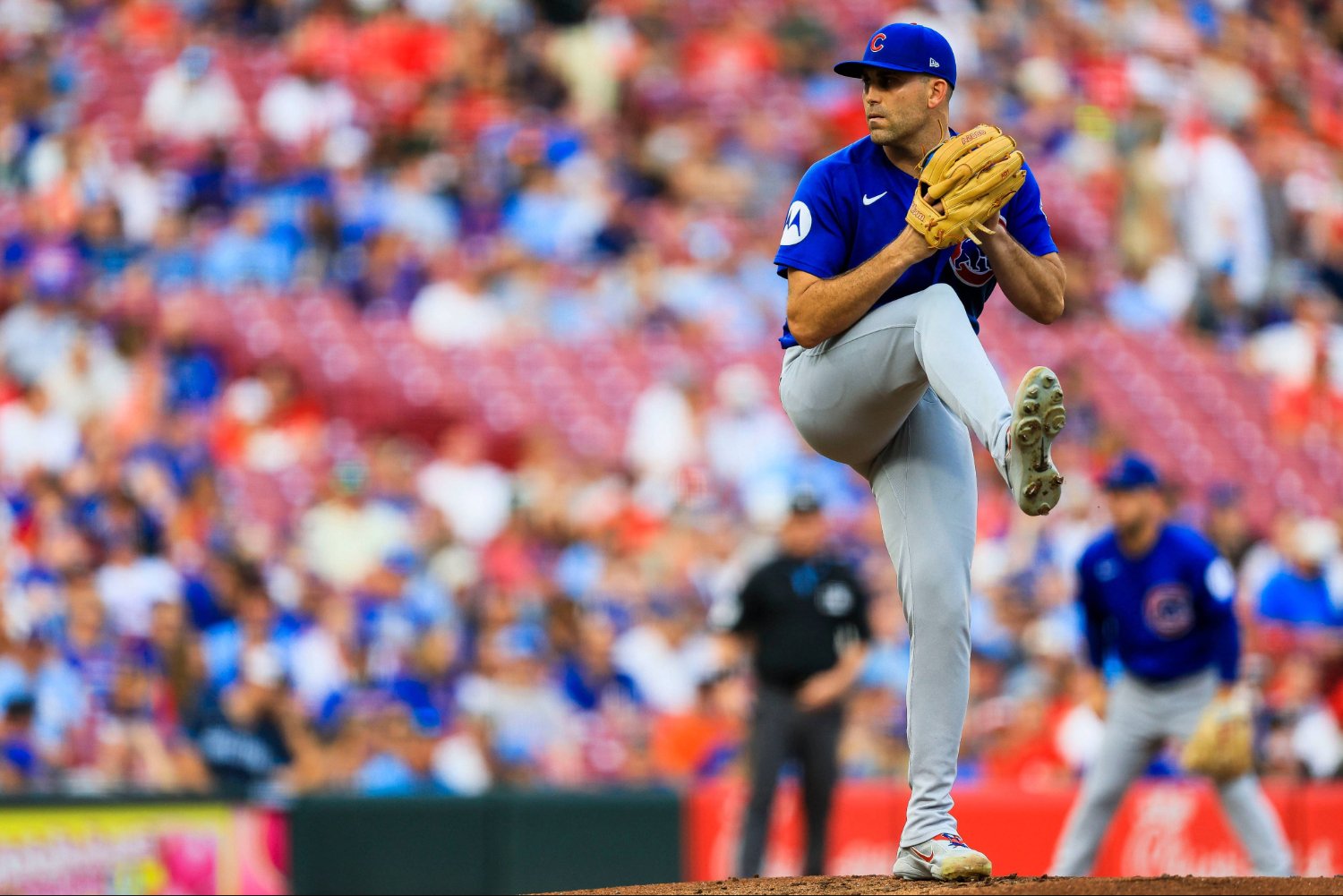 Matthew Boyd is no one’s definition of an ace. He has a career 4.52 ERA, with peripherals to match, and has topped out at 185 innings pitched in a single season. Teams don’t build their rotation around guys like Boyd, but they sure as hell appreciate them when they’re around. As such, the Chicago Cubs are going to need him in order to make a deep run in the postseason. Of all the likely playoff teams, the Cubs’ pitching staff is maybe the single weakest unit; their bullpen has been bad and their starters not much better. While they were active at the trade deadline to bolster their rotation, you can only rebuild so much of a rotation on the fly. Kevin Gausman got homer-itis from Shota Imanaga, and trusting David Peterson and Clay Holmes doesn’t sound particularly enticing, which leaves Boyd as a clear-cut option for the playoff rotation. Boyd is by no means a bad pitcher. Last season, over 179.2 innings, he pitched to a 3.21 ERA, 3.75 xERA, 3.65 FIP, and 4.22 xFIP. Just about every team in baseball would take that from their third starter. Unfortunately, 2026 has been a step back. His ERA and ERA estimators have all risen (4.06 ERA, 4.72 xERA, 4.28 FIP, and 4.30 xFIP), while his innings have decreased (119.2 innings). The good news is that the veteran southpaw has been far better as of late. Over his past five starts, he has a 3.77 ERA, 3.72 xERA, 2.96 FIP, and 3.77 xFIP. Those won’t win you a Cy Young, but they’re good enough to keep the Cubs’ potent offense in the game. Not much has changed for Boyd over the past month, save for one crucial component. Those long lists of ERA estimators are there for a reason, and not just for a word count. Last season, Boyd’s xFIP, which assumes a league-average home run rate on fly balls, was 4.22, and this season it’s 4.30. In many respects, Boyd has pitched about as well as he did last season, just with different home run luck. Over his past five starts, he once again has been hot in the home run department, posting a 4.2% HR/FB, but he has also done a better job keeping the ball out of the air. His flyball percentage of 30.4% is far better than the 39.3% he managed over his first 16 starts. The most pronounced change in his game has been an uptick in his changeup usage. Over his first 16 starts, he threw his changeup 25.8% of the time, but he has ramped its usage up to 33.3% recently. As he has leaned more heavily on his changeup, his fastball and slider have performed better as well. This is all in the realm of a small sample blip, but at least some dots are connecting. Realistically, Boyd’s best bet to help the Cubs make a deep playoff run is to keep the ball in the ballpark and let his excellent defense take care of the rest. Despite a solid walk rate (7.5%), he simply doesn’t strike out enough batters (18.9%) to survive the long ball. It’s not the sexiest postseason plan, but history is littered with magnificent pitching runs that followed it to a tee. Notable Low HR/FB & BABIP Playoff Runs 2002-2025, Best Postseason Pitcher Runs With Sub 8K/9, min 30 IP Pitcher Season IP ERA BABIP HR/FB xFIP Madison Bumgarner 2014 52.2 1.03 0.180 4.60% 3.40 Cliff Lee 2009 40.1 1.56 0.241 0.00% 3.37 Yoshinobu Yamamoto 2025 37.1 1.45 0.210 6.70% 3.33 CC Sabathia 2009 36.1 1.98 0.245 12.50% 3.32 Jon Lester 2016 35.2 2.02 0.250 9.40% 3.55 Cole Hammels 2008 35 1.80 0.233 6.30% 3.40 Jon Lester 2013 34.2 1.56 0.239 9.40% 3.50 Chris Carpenter 2006 32.1 2.78 0.263 12.50% 3.60 Jose Contreras 2005 32 3.09 0.229 8% 3.69 Jordan Montgomery 2023 31 2.90 0.309 8.60% 4.51 Andy Pettitte 2009 30.2 3.52 0.256 15.60% 3.91 Kevin Gausman 2025 30.2 2.93 0.169 10% 4.53 Matthew Boyd isn’t the ideal candidate to be a postseason ace, but as long as he can keep the ball in the yard, he’ll give himself and the Cubs a chance to make some noise. There’s no reason he couldn’t be 2026’s Jordan Montgomery, which could be exactly the kind of revelation that could elevate Chicago into the championship tier of contenders.
-
Image courtesy of Katie Stratman-Imagn Images Matthew Boyd is no one’s definition of an ace. He has a career 4.52 ERA, with peripherals to match, and has topped out at 185 innings pitched in a single season. Teams don’t build their rotation around guys like Boyd, but they sure as hell appreciate them when they’re around. As such, the Chicago Cubs are going to need him in order to make a deep run in the postseason. Of all the likely playoff teams, the Cubs’ pitching staff is maybe the single weakest unit; their bullpen has been bad and their starters not much better. While they were active at the trade deadline to bolster their rotation, you can only rebuild so much of a rotation on the fly. Kevin Gausman got homer-itis from Shota Imanaga, and trusting David Peterson and Clay Holmes doesn’t sound particularly enticing, which leaves Boyd as a clear-cut option for the playoff rotation. Boyd is by no means a bad pitcher. Last season, over 179.2 innings, he pitched to a 3.21 ERA, 3.75 xERA, 3.65 FIP, and 4.22 xFIP. Just about every team in baseball would take that from their third starter. Unfortunately, 2026 has been a step back. His ERA and ERA estimators have all risen (4.06 ERA, 4.72 xERA, 4.28 FIP, and 4.30 xFIP), while his innings have decreased (119.2 innings). The good news is that the veteran southpaw has been far better as of late. Over his past five starts, he has a 3.77 ERA, 3.72 xERA, 2.96 FIP, and 3.77 xFIP. Those won’t win you a Cy Young, but they’re good enough to keep the Cubs’ potent offense in the game. Not much has changed for Boyd over the past month, save for one crucial component. Those long lists of ERA estimators are there for a reason, and not just for a word count. Last season, Boyd’s xFIP, which assumes a league-average home run rate on fly balls, was 4.22, and this season it’s 4.30. In many respects, Boyd has pitched about as well as he did last season, just with different home run luck. Over his past five starts, he once again has been hot in the home run department, posting a 4.2% HR/FB, but he has also done a better job keeping the ball out of the air. His flyball percentage of 30.4% is far better than the 39.3% he managed over his first 16 starts. The most pronounced change in his game has been an uptick in his changeup usage. Over his first 16 starts, he threw his changeup 25.8% of the time, but he has ramped its usage up to 33.3% recently. As he has leaned more heavily on his changeup, his fastball and slider have performed better as well. This is all in the realm of a small sample blip, but at least some dots are connecting. Realistically, Boyd’s best bet to help the Cubs make a deep playoff run is to keep the ball in the ballpark and let his excellent defense take care of the rest. Despite a solid walk rate (7.5%), he simply doesn’t strike out enough batters (18.9%) to survive the long ball. It’s not the sexiest postseason plan, but history is littered with magnificent pitching runs that followed it to a tee. Notable Low HR/FB & BABIP Playoff Runs 2002-2025, Best Postseason Pitcher Runs With Sub 8K/9, min 30 IP Pitcher Season IP ERA BABIP HR/FB xFIP Madison Bumgarner 2014 52.2 1.03 0.180 4.60% 3.40 Cliff Lee 2009 40.1 1.56 0.241 0.00% 3.37 Yoshinobu Yamamoto 2025 37.1 1.45 0.210 6.70% 3.33 CC Sabathia 2009 36.1 1.98 0.245 12.50% 3.32 Jon Lester 2016 35.2 2.02 0.250 9.40% 3.55 Cole Hammels 2008 35 1.80 0.233 6.30% 3.40 Jon Lester 2013 34.2 1.56 0.239 9.40% 3.50 Chris Carpenter 2006 32.1 2.78 0.263 12.50% 3.60 Jose Contreras 2005 32 3.09 0.229 8% 3.69 Jordan Montgomery 2023 31 2.90 0.309 8.60% 4.51 Andy Pettitte 2009 30.2 3.52 0.256 15.60% 3.91 Kevin Gausman 2025 30.2 2.93 0.169 10% 4.53 Matthew Boyd isn’t the ideal candidate to be a postseason ace, but as long as he can keep the ball in the yard, he’ll give himself and the Cubs a chance to make some noise. There’s no reason he couldn’t be 2026’s Jordan Montgomery, which could be exactly the kind of revelation that could elevate Chicago into the championship tier of contenders. View full article
