


Cubs Video
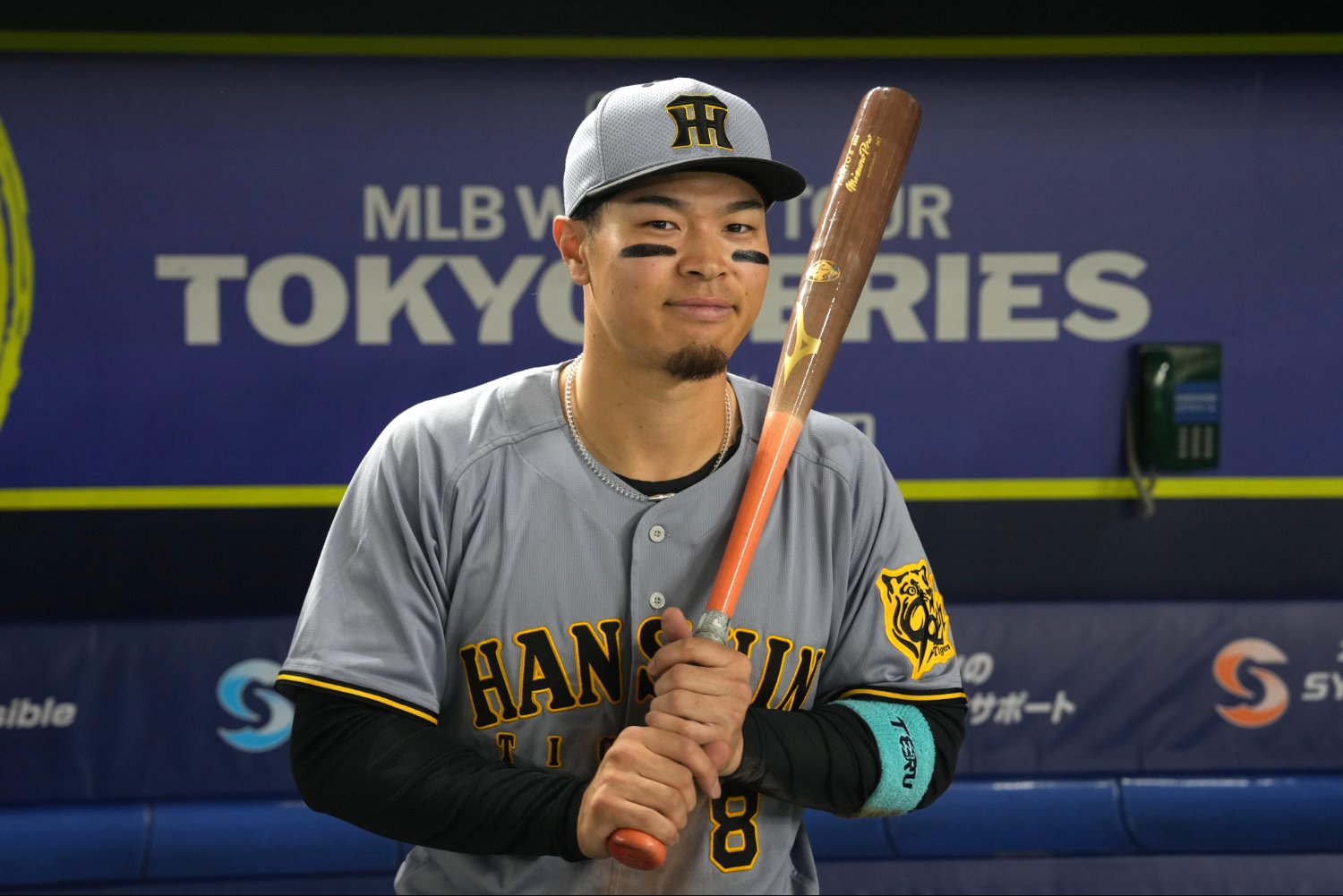
The Chicago Cubs just took the biggest position player swing of the offseason: Teruaki Sato, 27, has agreed to a six-year, $120 million deal. Much like Satō’s swing, this move could be a towering home run, or it could be a huge whiff.
Over the past two NPB seasons, Satō made no doubt who was the best position player in the league. He took home Central League MVP honors in both 2025 and 2026, as well as the triple crown in his final Japanese campaign. Needless to say, Satō had nothing left to prove in NPB, and a trip across the Pacific was his next logical stop.
The track record for multi-time Central or Pacific League MVPs in MLB is quite strong but also incredibly limited. The only Japanese-born position players to take home the award multiple times before heading stateside are Hideki Matsui, Ichiro Suzuki, and, most recently, Munetaka Murakami. Suzuki obviously had a Hall of Fame career, Matsui was an excellent bat into his mid-30s, and Murakami just belted 35 home runs in 127 games as a rookie.
When you throw in all of the other successful exports—Shohei Ohtani and Seiya Suzuki among them—it would stand to reason that Satō should acclimate quite well to MLB. Yet, despite terrorizing Japanese pitchers for the past two years, he is a far riskier gamble than you would think, and the characteristics that made him a star in Japan could be his undoing in America.
Teruaki Sato's Updated Cubs Scouting Report
Satō’s carrying trait is power. He belted 40 home runs in 2025 and 39 in 2026. Since the Japanese season is only 143 games, that’s a 45 home run pace per 162 games, which would have been enough to tie with Kyle Schwarber and Pete Crow-Armstrong atop the MLB leaderboard in 2026.
Fortunately, Satō’s measurable power is beyond legit. Last season, he posted a max exit velocity of 116 mph, an EV90 of 108 mph, and a hard-hit rate of 56%. If that translates to MLB, his peers are exceptional.
Max Exit Velocity
Nick Kurtz: 115.9 (16th), Wilson Contreras: 116 (15th), Jac Caglianone: 116.1 (14th)
EV90
James Wood: 106.5 (1st)
Hard-Hit%
Pete Alonso: 56.2% (4th)
The NPB batted-ball data floating around is not as reliable as what we have access to from MLB, but you cannot fake that level of power. Satō probably won’t play at a 45 home run pace, but 30-35 seems reasonable, which means 40 home run seasons are in the cards. With such excellent production and so much raw juice, how is Satō a risky bet? Well, you first need to hit the ball to send it a long way.
The red flag in Satō’s profile is his contact rate. Despite the average NPB fastball coming in at 92 MPH, he ran an overall contact rate of 67%. That would have been the fourth-lowest contact rate in the majors and it should be expected to drop in MLB. Now, running that low of a contact rate isn’t disqualifying, though it all but guarantees a high strikeout rate.
However, the scariest part of his profile is his 67% contact rate against fastballs specifically. There are very few hitters who run sub-67% contact rates against fastballs and still prosper. Among players who faced over 200 four-seam fastballs last season, only four posted an above-average batting line within that threshold, and their success raises one concern for Satō.
|
Player |
FA Contact % |
Swing % |
Contact % |
BB% |
K% |
ISO |
wRC+ |
|
Munetaka Murakami |
60.7% |
40.7% |
60.2% |
16.6% |
35.4% |
0.271 |
129 |
|
64.7% |
47.4% |
73.4% |
10.9% |
25.4% |
0.267 |
136 |
|
|
Nick Kurtz |
66.5% |
43.1% |
66.7% |
18.2% |
32.5% |
0.227 |
138 |
|
59.3% |
41.3% |
63.9% |
14.6% |
37.6% |
0.278 |
130 |
|
|
Teruaki Sato (NPB) |
67.0% |
52.4% |
67.0% |
11.1% |
26.7% |
0.302 |
196 |
To pull off this approach, you need serious power, but you also need incredible patience. Only Devers was able to thrive with a low contact rate against four seamers and an above-45% swing rate because of his overall ability to make contact far outstripped the rest. With Satō’s current profile, he looks incredibly likely to run a sub-10% walk rate with a strikeout rate well above 30%.
If Satō were coming over to man third base full time, his offensive concerns would be a bit more muted. While he doesn’t project to be a plus defender on the dirt, an average defensive third baseman with a lopsided power-over-everything batting line, is still a valuable player. Unfortunately, the Cubs already have an elite infield defense, and he looks poised to head to an outfield corner.
In 2026, the average wRC+ for a third baseman was 99, and for right and left fielders it was 102. While that’s a trivial difference, it still underscores what the bare minimum expectations are right now. Fundamentally, for Satō to be an above-average contributor, he either needs to be incredibly good defensively, or hit well above league average.
Why Teruaki Satō Will Hit Through His Concerns
The strengths and weaknesses in Satō’s profile are readily apparent, but I’d lean on the side of him mashing in the majors anyway. First, the level of power he has demonstrated in NPB is elite. As Murakami showed on the South Side, dropping bombs goes a long way. On top of that, contact rates are fundamentally a threshold stat, so long as there is sufficient power.
Think of it this way: With Satō’s power, he only needed to make contact 67% of the time to be literally the best player in his league. It’s not that he was trying to swing and miss, but there was no reason to make more contact when the contact he made was so productive. There’s no reason to believe that he can’t make adjustments to address a potential contact problem, and with his level of power, he has multiple pathways toward success; he could become hyper selective and trade even more strikeouts for walks, or he could shorten up his swing and trade some power for contact.
The bust potential is certainly there. If he just can’t connect on league-average fastballs, he might be toast. But a boom scenario is equally in the cards. He has demonstrated 70-to-80-grade power in Japan. You really don’t need to make that much contact if you crush the ball, and he really crushes it.
The final bit of the equation is the contract. Six years and $120 million sounds like a lot, but an AAV of $20 million to cover a player’s age 28 through 33 seasons is just not that much for a marquee free agent. On average, the cost to sign a player projected to produce over 2.0 WAR, which Satō is, is about $12 million per WAR. If Satō is just an average player over the life of this contract, then it’ll have been a completely reasonable deal.
At the end of the day, he’s not being paid to be a star; he’s being paid to functionally replace Ian Happ. He should succeed at that. And, lest any doubts linger, how many guys can do this?
Want to play the role of Cubs general manager? Check out our free-to-use "You're The GM" offseason tool and build your own Cubs roster!
Build Your 2027 Roster



Recommended Comments
There are no comments to display.
Create an account or sign in to comment
You need to be a member in order to leave a comment
Create an account
Sign up for a new account in our community. It's easy!
Register a new accountSign in
Already have an account? Sign in here.
Sign In Now