


N.B. Lindberg
-
Posts
4 -
Joined
-
Last visited
N.B. Lindberg's Achievements

Prep Ball (1/14)
0
Reputation
-
Image courtesy of Denny Medley-Imagn Images The Chicago Cubs are a team of extremes. They have the best position player core in baseball by a comical margin. They lead baseball in both offensive and defensive value, and their 37.8 fWAR leads the second-place Dodgers by an unfathomable 11.0 Wins Above Replacement. Of course, at the other end of that extreme is their pitching. Their pitchers have combined for 6.0 fWAR, which gives them a slight edge over the Royals (5.1) and Nationals (4.8) for the worst mark in baseball. Despite dodging the cellar, this is the worst pitching staff among National League playoff teams. In most situations, a staff of such ill repute would doom any World Series journey from the start, but the Cubs actually have a road map to a title, and a simple one at that: keep the ball in the park. This is far from groundbreaking analysis, but giving up home runs is bad, and the Cubs love to cough up a gopher ball. They’ve given up the second-most home runs in baseball (231) and have the highest home run to flyball ratio (14.4%) in the sport. Soft toss in a below-average strikeout rate (20.8%), and the only thing Cubs pitchers have done well is limit walks (8.2%). Despite this overall inability to pitch well, the team's run prevention isn’t awful. Thanks to an elite defense, they finished the season with a team ERA of 4.12 (14th), a significant improvement from their xERA of 4.54 (24th) and FIP of 4.60 (25th). On paper, the Cubs will enter every series at a serious pitching disadvantage. They don’t have a real ace, their bullpen is shaky, and the back of their rotation is bland. But they do have the best defense in baseball, which can be a game changer. If we take the Cubs’ ERA and ERA estimators at face value, their defense shaves off around 0.45 of ERA. That’s nearly a full standard deviation (0.538) of team ERA, which is why and how this team found a way to win nearly 90 games in the regular season. However, the only way their defense can make up for their pitching is if the ball stays in the ballpark. No team in baseball suffered more at the hands of the long ball. They gave them up at the highest rate in baseball, despite also having the depth chart best suited to turn fly balls into fly-outs. But that also means they have the most to gain by limiting them. The Cubs’ xFIP, which assumes a league-average home run to flyball rate, was 4.19 (16th). If they can get there, while maintaining their massive defensive advantage over the rest of the league, suddenly their team ERA would be 3.74 (by our previous ERA vs. ERA estimator calculation). That would have been the league’s eighth-best ERA. But why stop there? Cubs' Hypothetical Run Prevention HR/FB HR FIP ERA 14.40% 231 4.60 4.15 11% 176 4.11 3.66 10% 160 3.97 3.52 8% 128 3.68 3.23 *HR total based on 1604 fly balls; ERA is calculated as FIP-0.45 This table, effectively, is meant to show just how important keeping the ball in the park is. If the pitching staff can turn a few of those homers into warning-track blasts, the Cubs' ability to keep runs off the board will increase dramatically. Perhaps playing in a pitcher-friendly place like Petco Park will actually be more beneficial than staying at home and dealing with the wind gods in Wrigley. Any team that wins the World Series is going to need something(s) to go their way. That’s just the nature of short-series baseball, but the Cubs really only need one thing to swing their way: home run variance. It limits their greatest team weakness while accentuating one of their strengths. If their gloves and sticks live up to the billing, all their pitchers need to do is keep throwing strikes and hope the gophers think there are six more weeks of winter. It's simple, but that’s how the Cubs can win the World Series. View full article
-
Cubs Can Win World Series By Addressing One Major Weakness In October
N.B. Lindberg posted an article in Cubs
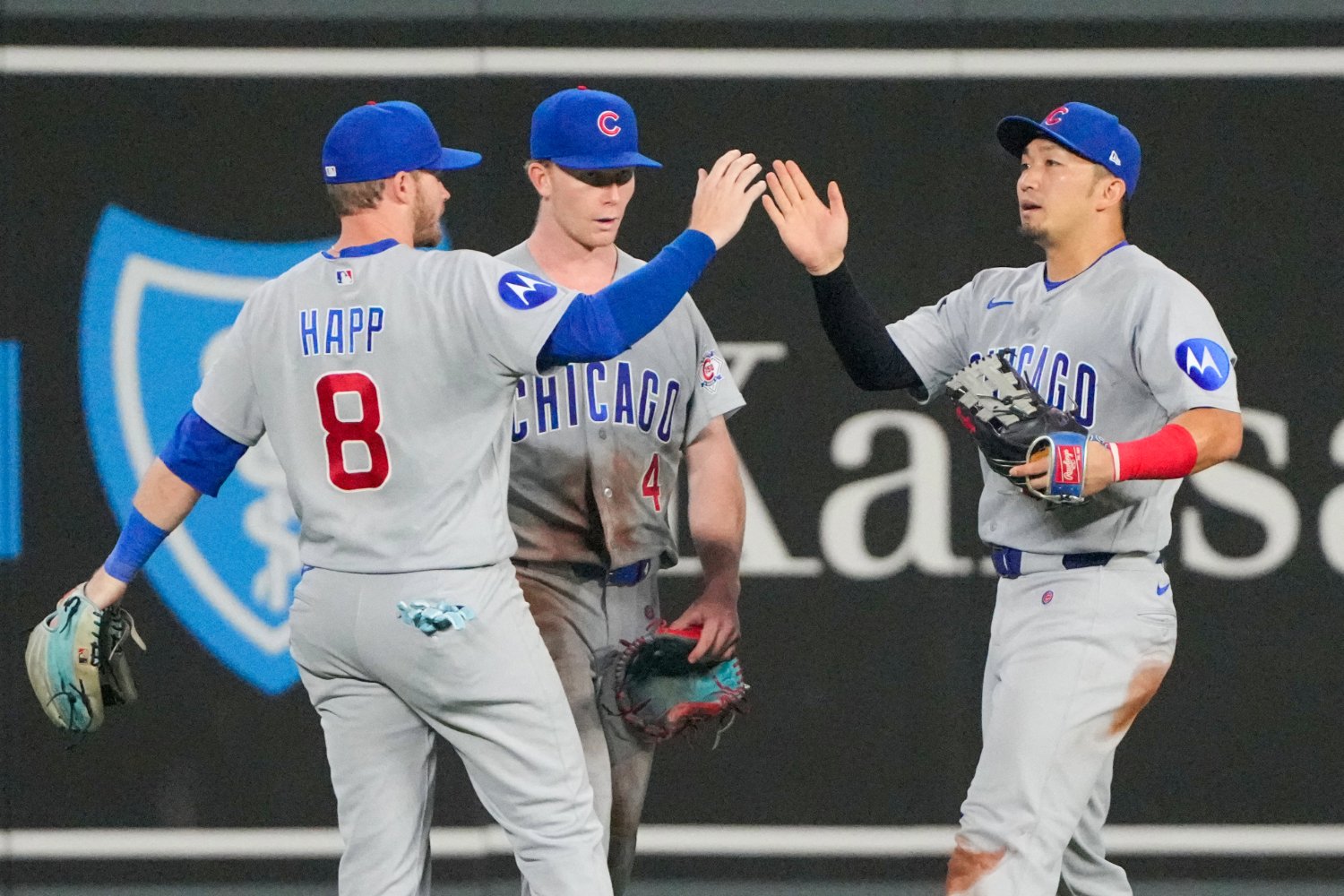 The Chicago Cubs are a team of extremes. They have the best position player core in baseball by a comical margin. They lead baseball in both offensive and defensive value, and their 37.8 fWAR leads the second-place Dodgers by an unfathomable 11.0 Wins Above Replacement. Of course, at the other end of that extreme is their pitching. Their pitchers have combined for 6.0 fWAR, which gives them a slight edge over the Royals (5.1) and Nationals (4.8) for the worst mark in baseball. Despite dodging the cellar, this is the worst pitching staff among National League playoff teams. In most situations, a staff of such ill repute would doom any World Series journey from the start, but the Cubs actually have a road map to a title, and a simple one at that: keep the ball in the park. This is far from groundbreaking analysis, but giving up home runs is bad, and the Cubs love to cough up a gopher ball. They’ve given up the second-most home runs in baseball (231) and have the highest home run to flyball ratio (14.4%) in the sport. Soft toss in a below-average strikeout rate (20.8%), and the only thing Cubs pitchers have done well is limit walks (8.2%). Despite this overall inability to pitch well, the team's run prevention isn’t awful. Thanks to an elite defense, they finished the season with a team ERA of 4.12 (14th), a significant improvement from their xERA of 4.54 (24th) and FIP of 4.60 (25th). On paper, the Cubs will enter every series at a serious pitching disadvantage. They don’t have a real ace, their bullpen is shaky, and the back of their rotation is bland. But they do have the best defense in baseball, which can be a game changer. If we take the Cubs’ ERA and ERA estimators at face value, their defense shaves off around 0.45 of ERA. That’s nearly a full standard deviation (0.538) of team ERA, which is why and how this team found a way to win nearly 90 games in the regular season. However, the only way their defense can make up for their pitching is if the ball stays in the ballpark. No team in baseball suffered more at the hands of the long ball. They gave them up at the highest rate in baseball, despite also having the depth chart best suited to turn fly balls into fly-outs. But that also means they have the most to gain by limiting them. The Cubs’ xFIP, which assumes a league-average home run to flyball rate, was 4.19 (16th). If they can get there, while maintaining their massive defensive advantage over the rest of the league, suddenly their team ERA would be 3.74 (by our previous ERA vs. ERA estimator calculation). That would have been the league’s eighth-best ERA. But why stop there? Cubs' Hypothetical Run Prevention HR/FB HR FIP ERA 14.40% 231 4.60 4.15 11% 176 4.11 3.66 10% 160 3.97 3.52 8% 128 3.68 3.23 *HR total based on 1604 fly balls; ERA is calculated as FIP-0.45 This table, effectively, is meant to show just how important keeping the ball in the park is. If the pitching staff can turn a few of those homers into warning-track blasts, the Cubs' ability to keep runs off the board will increase dramatically. Perhaps playing in a pitcher-friendly place like Petco Park will actually be more beneficial than staying at home and dealing with the wind gods in Wrigley. Any team that wins the World Series is going to need something(s) to go their way. That’s just the nature of short-series baseball, but the Cubs really only need one thing to swing their way: home run variance. It limits their greatest team weakness while accentuating one of their strengths. If their gloves and sticks live up to the billing, all their pitchers need to do is keep throwing strikes and hope the gophers think there are six more weeks of winter. It's simple, but that’s how the Cubs can win the World Series.
 -
Image courtesy of Katie Stratman-Imagn Images Matthew Boyd is no one’s definition of an ace. He has a career 4.52 ERA, with peripherals to match, and has topped out at 185 innings pitched in a single season. Teams don’t build their rotation around guys like Boyd, but they sure as hell appreciate them when they’re around. As such, the Chicago Cubs are going to need him in order to make a deep run in the postseason. Of all the likely playoff teams, the Cubs’ pitching staff is maybe the single weakest unit; their bullpen has been bad and their starters not much better. While they were active at the trade deadline to bolster their rotation, you can only rebuild so much of a rotation on the fly. Kevin Gausman got homer-itis from Shota Imanaga, and trusting David Peterson and Clay Holmes doesn’t sound particularly enticing, which leaves Boyd as a clear-cut option for the playoff rotation. Boyd is by no means a bad pitcher. Last season, over 179.2 innings, he pitched to a 3.21 ERA, 3.75 xERA, 3.65 FIP, and 4.22 xFIP. Just about every team in baseball would take that from their third starter. Unfortunately, 2026 has been a step back. His ERA and ERA estimators have all risen (4.06 ERA, 4.72 xERA, 4.28 FIP, and 4.30 xFIP), while his innings have decreased (119.2 innings). The good news is that the veteran southpaw has been far better as of late. Over his past five starts, he has a 3.77 ERA, 3.72 xERA, 2.96 FIP, and 3.77 xFIP. Those won’t win you a Cy Young, but they’re good enough to keep the Cubs’ potent offense in the game. Not much has changed for Boyd over the past month, save for one crucial component. Those long lists of ERA estimators are there for a reason, and not just for a word count. Last season, Boyd’s xFIP, which assumes a league-average home run rate on fly balls, was 4.22, and this season it’s 4.30. In many respects, Boyd has pitched about as well as he did last season, just with different home run luck. Over his past five starts, he once again has been hot in the home run department, posting a 4.2% HR/FB, but he has also done a better job keeping the ball out of the air. His flyball percentage of 30.4% is far better than the 39.3% he managed over his first 16 starts. The most pronounced change in his game has been an uptick in his changeup usage. Over his first 16 starts, he threw his changeup 25.8% of the time, but he has ramped its usage up to 33.3% recently. As he has leaned more heavily on his changeup, his fastball and slider have performed better as well. This is all in the realm of a small sample blip, but at least some dots are connecting. Realistically, Boyd’s best bet to help the Cubs make a deep playoff run is to keep the ball in the ballpark and let his excellent defense take care of the rest. Despite a solid walk rate (7.5%), he simply doesn’t strike out enough batters (18.9%) to survive the long ball. It’s not the sexiest postseason plan, but history is littered with magnificent pitching runs that followed it to a tee. Notable Low HR/FB & BABIP Playoff Runs 2002-2025, Best Postseason Pitcher Runs With Sub 8K/9, min 30 IP Pitcher Season IP ERA BABIP HR/FB xFIP Madison Bumgarner 2014 52.2 1.03 0.180 4.60% 3.40 Cliff Lee 2009 40.1 1.56 0.241 0.00% 3.37 Yoshinobu Yamamoto 2025 37.1 1.45 0.210 6.70% 3.33 CC Sabathia 2009 36.1 1.98 0.245 12.50% 3.32 Jon Lester 2016 35.2 2.02 0.250 9.40% 3.55 Cole Hammels 2008 35 1.80 0.233 6.30% 3.40 Jon Lester 2013 34.2 1.56 0.239 9.40% 3.50 Chris Carpenter 2006 32.1 2.78 0.263 12.50% 3.60 Jose Contreras 2005 32 3.09 0.229 8% 3.69 Jordan Montgomery 2023 31 2.90 0.309 8.60% 4.51 Andy Pettitte 2009 30.2 3.52 0.256 15.60% 3.91 Kevin Gausman 2025 30.2 2.93 0.169 10% 4.53 Matthew Boyd isn’t the ideal candidate to be a postseason ace, but as long as he can keep the ball in the yard, he’ll give himself and the Cubs a chance to make some noise. There’s no reason he couldn’t be 2026’s Jordan Montgomery, which could be exactly the kind of revelation that could elevate Chicago into the championship tier of contenders. View full article
-
Matthew Boyd Has A Clear Path Toward Postseason Relevance With Cubs
N.B. Lindberg posted an article in Cubs
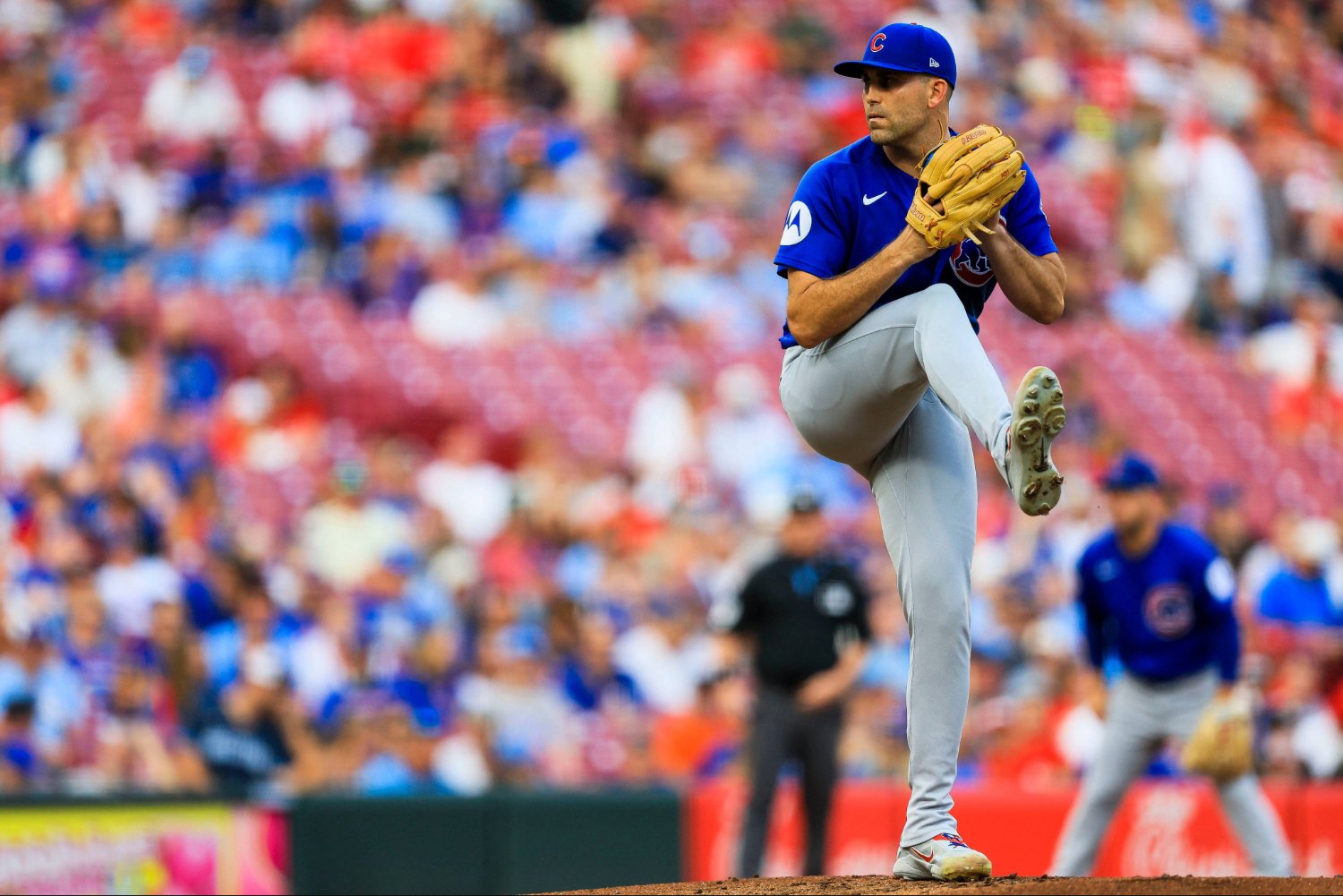 Matthew Boyd is no one’s definition of an ace. He has a career 4.52 ERA, with peripherals to match, and has topped out at 185 innings pitched in a single season. Teams don’t build their rotation around guys like Boyd, but they sure as hell appreciate them when they’re around. As such, the Chicago Cubs are going to need him in order to make a deep run in the postseason. Of all the likely playoff teams, the Cubs’ pitching staff is maybe the single weakest unit; their bullpen has been bad and their starters not much better. While they were active at the trade deadline to bolster their rotation, you can only rebuild so much of a rotation on the fly. Kevin Gausman got homer-itis from Shota Imanaga, and trusting David Peterson and Clay Holmes doesn’t sound particularly enticing, which leaves Boyd as a clear-cut option for the playoff rotation. Boyd is by no means a bad pitcher. Last season, over 179.2 innings, he pitched to a 3.21 ERA, 3.75 xERA, 3.65 FIP, and 4.22 xFIP. Just about every team in baseball would take that from their third starter. Unfortunately, 2026 has been a step back. His ERA and ERA estimators have all risen (4.06 ERA, 4.72 xERA, 4.28 FIP, and 4.30 xFIP), while his innings have decreased (119.2 innings). The good news is that the veteran southpaw has been far better as of late. Over his past five starts, he has a 3.77 ERA, 3.72 xERA, 2.96 FIP, and 3.77 xFIP. Those won’t win you a Cy Young, but they’re good enough to keep the Cubs’ potent offense in the game. Not much has changed for Boyd over the past month, save for one crucial component. Those long lists of ERA estimators are there for a reason, and not just for a word count. Last season, Boyd’s xFIP, which assumes a league-average home run rate on fly balls, was 4.22, and this season it’s 4.30. In many respects, Boyd has pitched about as well as he did last season, just with different home run luck. Over his past five starts, he once again has been hot in the home run department, posting a 4.2% HR/FB, but he has also done a better job keeping the ball out of the air. His flyball percentage of 30.4% is far better than the 39.3% he managed over his first 16 starts. The most pronounced change in his game has been an uptick in his changeup usage. Over his first 16 starts, he threw his changeup 25.8% of the time, but he has ramped its usage up to 33.3% recently. As he has leaned more heavily on his changeup, his fastball and slider have performed better as well. This is all in the realm of a small sample blip, but at least some dots are connecting. Realistically, Boyd’s best bet to help the Cubs make a deep playoff run is to keep the ball in the ballpark and let his excellent defense take care of the rest. Despite a solid walk rate (7.5%), he simply doesn’t strike out enough batters (18.9%) to survive the long ball. It’s not the sexiest postseason plan, but history is littered with magnificent pitching runs that followed it to a tee. Notable Low HR/FB & BABIP Playoff Runs 2002-2025, Best Postseason Pitcher Runs With Sub 8K/9, min 30 IP Pitcher Season IP ERA BABIP HR/FB xFIP Madison Bumgarner 2014 52.2 1.03 0.180 4.60% 3.40 Cliff Lee 2009 40.1 1.56 0.241 0.00% 3.37 Yoshinobu Yamamoto 2025 37.1 1.45 0.210 6.70% 3.33 CC Sabathia 2009 36.1 1.98 0.245 12.50% 3.32 Jon Lester 2016 35.2 2.02 0.250 9.40% 3.55 Cole Hammels 2008 35 1.80 0.233 6.30% 3.40 Jon Lester 2013 34.2 1.56 0.239 9.40% 3.50 Chris Carpenter 2006 32.1 2.78 0.263 12.50% 3.60 Jose Contreras 2005 32 3.09 0.229 8% 3.69 Jordan Montgomery 2023 31 2.90 0.309 8.60% 4.51 Andy Pettitte 2009 30.2 3.52 0.256 15.60% 3.91 Kevin Gausman 2025 30.2 2.93 0.169 10% 4.53 Matthew Boyd isn’t the ideal candidate to be a postseason ace, but as long as he can keep the ball in the yard, he’ll give himself and the Cubs a chance to make some noise. There’s no reason he couldn’t be 2026’s Jordan Montgomery, which could be exactly the kind of revelation that could elevate Chicago into the championship tier of contenders.
