


Rice Cube
-
Posts
34 -
Joined
-
Last visited
Content Type
Profiles
Joomla Posts 1
Chicago Cubs Videos
Chicago Cubs Free Agent & Trade Rumors, Notes, & Tidbits
2026 Chicago Cubs Top Prospects Ranking
News
2023 Chicago Cubs Draft Picks
Guides & Resources
2024 Chicago Cubs Draft Picks
The Chicago Cubs Players Project
2025 Chicago Cubs Draft Pick Tracker
2026 Chicago Cubs Draft Tracker: Picks & Bonuses
Blogs
Events
Forums
Store
Gallery
Everything posted by Rice Cube
-
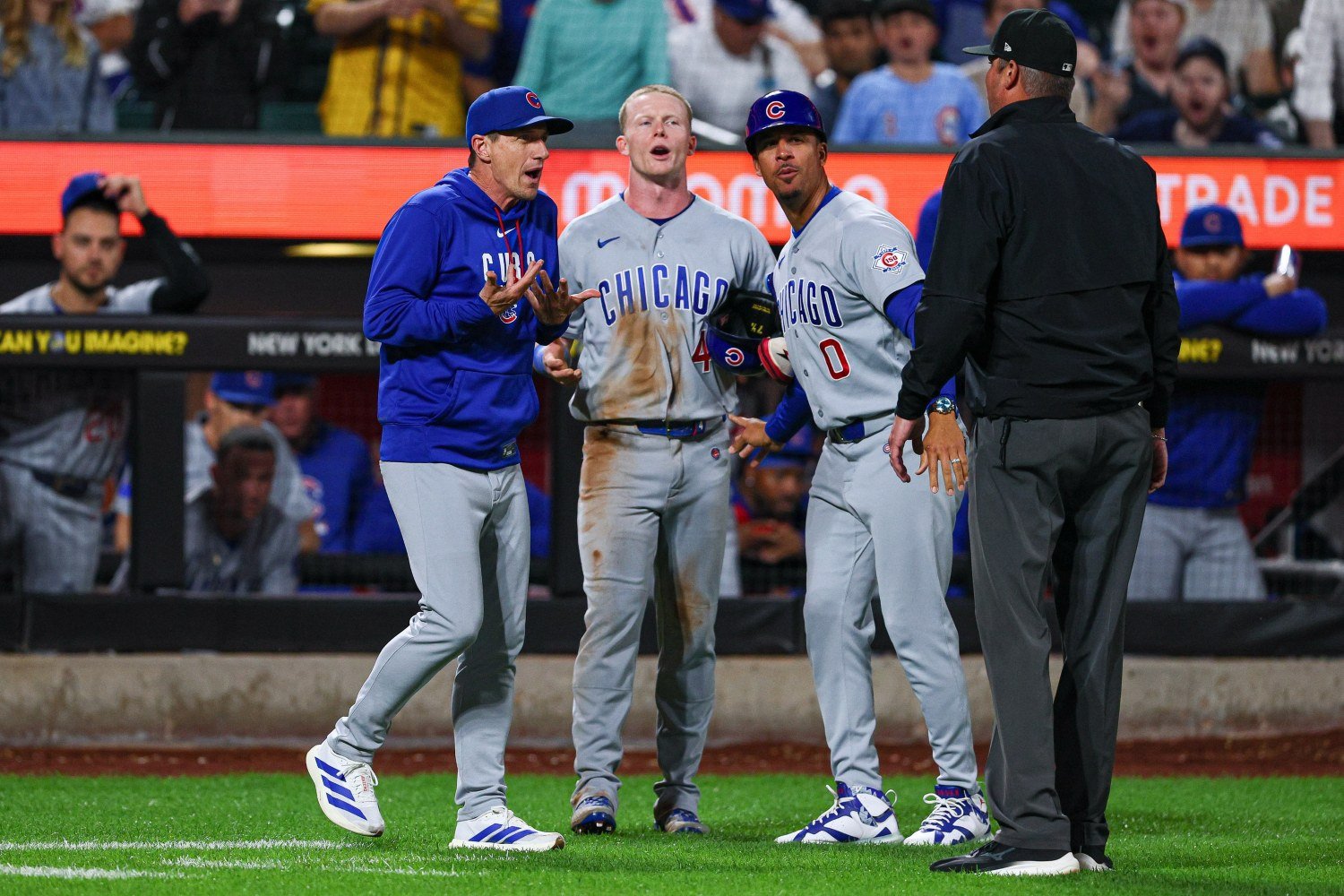
 Image courtesy of © Vincent Carchietta-Imagn Images I took a philosophy course in college once to fulfill a breadth requirement, and only really did AP Psychology in high school, but some things really stick with me and enrich my view of the world—even though the rest of my coursework and career was basically science and math. It does speak to how we need more arts and culture to enliven us beyond the "hard stuff", particularly when everyone craves new content (but often don't want to pay for it, ironic right?). Anyway, despite us nerds understanding that baseball is a marathon full of hills and valleys throughout the months-long grind, every win and loss brings with it a narrative shift, overanalysis of someone's swing or pitch mix, and thoughts on what's going on in our sports heroes' minds as they try to find some "consistency" in their baseball work (whatever that means, with the inherent chaos that is a baseball put in play). Aside from the philosophy of baseball that I tried to address in the previous entry, which is oddly prescient knowing that a few wins have been pissed away by poor bullpen performance exacerbated by the myriad injuries the Cubs have to navigate, I was thinking about a Maslow's hierarchy piece but for Cubs (though that may be more appropriate for the upcoming offseason, if we don't have a protracted lockout, or perhaps for the trade deadline). However, something more fitting for the day-to-day grind of baseball is the story archetypes, or basic plots, that sports writers probably draw from unknowingly as they pen their postgame pieces or character sketches. I'll do it in a slightly different order than the Wiki article, but I think the basic plots really encapsulate all the emotions we've felt in what's only been half of the season so far. The Quest Some of us may rationalize our baseball fandom as just wanting a competitive team year in and year out, but the ultimate goal isn't just to make the playoffs, but to win the whole thing. If the Cubs make it to October (and right now there are so many games remaining and the National League and MLB as a whole have so many middling teams that we can't rule it out) and pull off what right now may seem like an improbable victory (and really, even the teams with the best World Series odds are in the realm of "improbable"), there will be multiple books written about the journey of this team to the promised land. This is more of a whole-season narrative, but every day of the 162-game grind is a part of the main quest. There will be side quests with the All-Star Game and Happ's podcast and the Lovable Reunion and all that, but the primary focus is to make it to October and grab the prize. Rags to Riches Far be it for me to say that a young superstar-in-the-making who got a pretty sizable draft bonus can be considered "rags," but we've already seen this with both Nico Hoerner and Pete Crow-Armstrong signing surprising but sensible extensions. Perhaps later on, we might see others showing out in the minors and proving their mettle in the Show to secure that big payday, but if they do get into October, those postseason shares could add up, too! Ooh, here's a true rags-to-riches: Pedro Ramirez only signed for $75,000 over five years ago. Now, he looks like a big-leaguer with staying power, making $75,000 every fortnight or so. Voyage and Return This more applies to key prospects (or at least we hope so) like Moisés Ballesteros, who was recently optioned to Iowa to get more playing time and reset his bat. While Ballesteros doesn't have to fend off Sirens and fight a Cyclops (at least I don't think Iowa is that bad), the journey should be helpful for him to get the bat right again, plus get more time behind the dish, where he's shown enough proficiency for the Cubs to want him to continue as a catcher. Hopefully, it's a situation similar to when a struggling Happ was sent down and then came back to become the infuriatingly boring but consistent player he is for the Cubs now—though we also hope Ballesteros shows some extra oomph from that quick bat! Comedy/Tragedy Famously the two sides of the universal symbol of drama and theater, the struggles the Cubs have experienced are a combination of both comedy and tragedy. It's been simultaneously hilarious and painful to wonder which Cub will pop up on the infield or strike out or line into a double play because the BABIP luck dragon hates their guts when the bases are loaded, but we know that simple regression will let them finally cash in all those baserunners they're racking up. And just when the offense looks like it's getting on track again, the bullpen finally shows cracks. It's confirmation bias and self-fulfilling prophecy and all the jargon rolled into one for this conundrum of a Cubs team, but still we soldier on to see what happens for the remainder of this season's story. Rebirth As Matthew Boyd is slated to come off the injured list Thursday and Justin Steele eventually (hopefully) makes his way back to contributing to the club, the name of the game is survival until key pieces return and the pitching staff is, in a sense, reborn to what we hoped their potential would be before the season began and the injury demon destroyed all the depth. Then we could get better performances, as we also hoped, with Alex Bregman, awakening bats such as Seiya Suzuki, some batted-ball luck for Hoerner, and even average production from Dansby Swanson, among others, to get the offense humming again. Like Superman coming back from the dead or Batman recovering to defeat Bane or the Avengers finally defeating Thanos, this could be a fun narrative should the Cubs find enough strong performances (and some luck) to come all the way back, which leads us to... Overcoming the Monster| ...why are the Milwaukee Brewers always so good at racking up wins? It defies logic, and yet there they are again, with a comfortable lead in the division and finding ways to snatch victories from the jaws of defeat over and over again. The Cubs have a chance to put a dent in their devil magic armor to end the month of June, and a huge part of completing their quest may come down to defeating said Brewers in October, something they couldn't quite pull off last year. Barring the heat death of the universe or MLB and ownership killing baseball as we know it, at least this story will have a sequel, but I sure would love a happy ending to this chapter before the cliffhanger. View full article
 -
The 2026 Cubs, Baseball Narratives, and Story Archetypes
Rice Cube posted an article in Just For Fun
 I took a philosophy course in college once to fulfill a breadth requirement, and only really did AP Psychology in high school, but some things really stick with me and enrich my view of the world—even though the rest of my coursework and career was basically science and math. It does speak to how we need more arts and culture to enliven us beyond the "hard stuff", particularly when everyone craves new content (but often don't want to pay for it, ironic right?). Anyway, despite us nerds understanding that baseball is a marathon full of hills and valleys throughout the months-long grind, every win and loss brings with it a narrative shift, overanalysis of someone's swing or pitch mix, and thoughts on what's going on in our sports heroes' minds as they try to find some "consistency" in their baseball work (whatever that means, with the inherent chaos that is a baseball put in play). Aside from the philosophy of baseball that I tried to address in the previous entry, which is oddly prescient knowing that a few wins have been pissed away by poor bullpen performance exacerbated by the myriad injuries the Cubs have to navigate, I was thinking about a Maslow's hierarchy piece but for Cubs (though that may be more appropriate for the upcoming offseason, if we don't have a protracted lockout, or perhaps for the trade deadline). However, something more fitting for the day-to-day grind of baseball is the story archetypes, or basic plots, that sports writers probably draw from unknowingly as they pen their postgame pieces or character sketches. I'll do it in a slightly different order than the Wiki article, but I think the basic plots really encapsulate all the emotions we've felt in what's only been half of the season so far. The Quest Some of us may rationalize our baseball fandom as just wanting a competitive team year in and year out, but the ultimate goal isn't just to make the playoffs, but to win the whole thing. If the Cubs make it to October (and right now there are so many games remaining and the National League and MLB as a whole have so many middling teams that we can't rule it out) and pull off what right now may seem like an improbable victory (and really, even the teams with the best World Series odds are in the realm of "improbable"), there will be multiple books written about the journey of this team to the promised land. This is more of a whole-season narrative, but every day of the 162-game grind is a part of the main quest. There will be side quests with the All-Star Game and Happ's podcast and the Lovable Reunion and all that, but the primary focus is to make it to October and grab the prize. Rags to Riches Far be it for me to say that a young superstar-in-the-making who got a pretty sizable draft bonus can be considered "rags," but we've already seen this with both Nico Hoerner and Pete Crow-Armstrong signing surprising but sensible extensions. Perhaps later on, we might see others showing out in the minors and proving their mettle in the Show to secure that big payday, but if they do get into October, those postseason shares could add up, too! Ooh, here's a true rags-to-riches: Pedro Ramirez only signed for $75,000 over five years ago. Now, he looks like a big-leaguer with staying power, making $75,000 every fortnight or so. Voyage and Return This more applies to key prospects (or at least we hope so) like Moisés Ballesteros, who was recently optioned to Iowa to get more playing time and reset his bat. While Ballesteros doesn't have to fend off Sirens and fight a Cyclops (at least I don't think Iowa is that bad), the journey should be helpful for him to get the bat right again, plus get more time behind the dish, where he's shown enough proficiency for the Cubs to want him to continue as a catcher. Hopefully, it's a situation similar to when a struggling Happ was sent down and then came back to become the infuriatingly boring but consistent player he is for the Cubs now—though we also hope Ballesteros shows some extra oomph from that quick bat! Comedy/Tragedy Famously the two sides of the universal symbol of drama and theater, the struggles the Cubs have experienced are a combination of both comedy and tragedy. It's been simultaneously hilarious and painful to wonder which Cub will pop up on the infield or strike out or line into a double play because the BABIP luck dragon hates their guts when the bases are loaded, but we know that simple regression will let them finally cash in all those baserunners they're racking up. And just when the offense looks like it's getting on track again, the bullpen finally shows cracks. It's confirmation bias and self-fulfilling prophecy and all the jargon rolled into one for this conundrum of a Cubs team, but still we soldier on to see what happens for the remainder of this season's story. Rebirth As Matthew Boyd is slated to come off the injured list Thursday and Justin Steele eventually (hopefully) makes his way back to contributing to the club, the name of the game is survival until key pieces return and the pitching staff is, in a sense, reborn to what we hoped their potential would be before the season began and the injury demon destroyed all the depth. Then we could get better performances, as we also hoped, with Alex Bregman, awakening bats such as Seiya Suzuki, some batted-ball luck for Hoerner, and even average production from Dansby Swanson, among others, to get the offense humming again. Like Superman coming back from the dead or Batman recovering to defeat Bane or the Avengers finally defeating Thanos, this could be a fun narrative should the Cubs find enough strong performances (and some luck) to come all the way back, which leads us to... Overcoming the Monster| ...why are the Milwaukee Brewers always so good at racking up wins? It defies logic, and yet there they are again, with a comfortable lead in the division and finding ways to snatch victories from the jaws of defeat over and over again. The Cubs have a chance to put a dent in their devil magic armor to end the month of June, and a huge part of completing their quest may come down to defeating said Brewers in October, something they couldn't quite pull off last year. Barring the heat death of the universe or MLB and ownership killing baseball as we know it, at least this story will have a sequel, but I sure would love a happy ending to this chapter before the cliffhanger.
 -
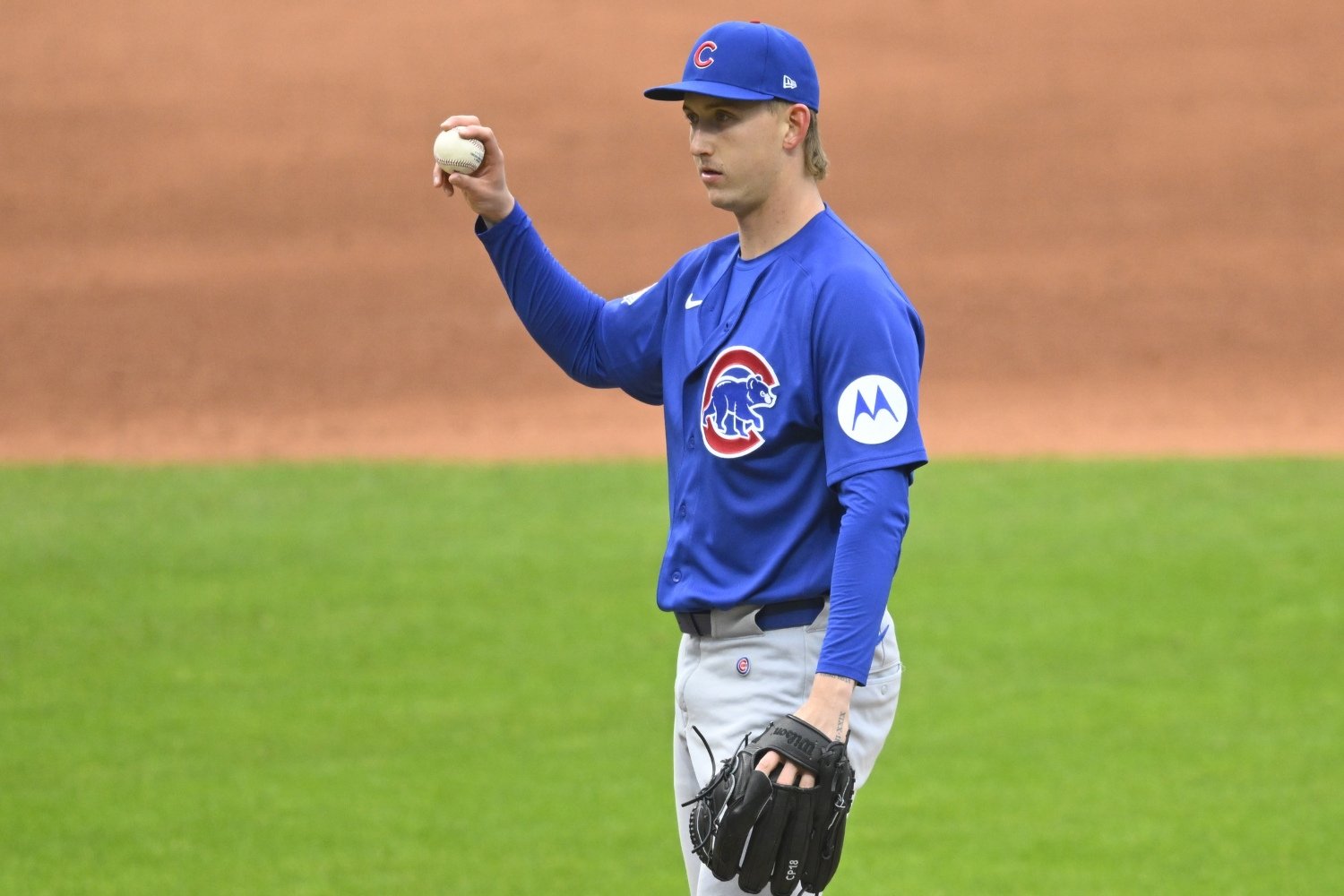
Image courtesy of © David Richard-Imagn Images As we await the return of Justin Steele and weather the losses of Matthew Boyd and Cade Horton to the injured list, I considered the grief of being a Cubs fan through this early part of 2026, and recalled the infamous "Five Stages of Grief" in trying to process my feelings. Known as the Kubler-Ross model for its original author, the five stages are well-known—but also widely criticized for oversimplifying the process of grief. Similarly, most Cubs fans criticizing Jed Hoyer for spackling together a bullpen are trivializing the complexities that go into a competent relief unit. But since we have our theme today, let's run through these stages of relief (which might be more concentrated on our feelings about losing Cade Horton for the year, but that's another story for another day). Denial This offseason, the Cubs spent a significant amount of money on some relievers with upside. They let Brad Keller go, but we were all fairly excited about the prospect of decent arms like Phil Maton or intriguing arms that could still have magic in them: Hoby Milner, Jacob Webb, and Hunter Harvey. Along with the returning arms, this was supposed to be a superior relief corps, one that could be versatile and lock down games regularly. Instead, three of the aforementioned relievers have suffered extreme meltdowns leading to losses, and even Milner has coughed up a few runs, while striking out nobody to this point. The Cubs can't be that bad at scouting pitching, can they? Didn't they build a Pitch Lab or something? We can't be THAT cursed! Anger Why did the Cubs just scrape the barrel again or try to do their magic scouting, instead of just throwing all the money at guys like Devin Williams or Edwin Díaz? Never mind that they still have a perfectly capable Caleb Thielbar and a Daniel Palencia still going off the high of winning the World Baseball Classic with Team Venezuela, or that Colin Rea got yet another three-inning save. If only the Rickettses weren't always so cheap, and Hoyer would actually just throw money at the most volatile personnel in all of sports! Bargaining Look, I know these guys are good and all, and maybe it's just the early season cold weather (it really does suck to play baseball in the Midwest in April, I should know, I used to coach high school baseball here in Chicago), but all I'm really asking is that they don't walk people and throw pitches that don't get pummeled over the wall at inopportune times. Is that really too much to ask? I'd even live with the walks, if they'd stop giving up the homers! Or be ok with the homers, if they stopped clogging the bases with walks first! Depression Even with an exciting debut in Riley Martin, knowing that most of these guys can't be optioned and aren't going to just be randomly released just yet is annoying—and even if they did cut bait with somebody, the Cubs can't trade for anybody interesting for a couple months anyway, so we're kind of screwed there. Acceptance Then again, we're less than 10% into the season, and this team is too good to not figure it out, and that includes the bullpen full of guys who have decent track records, coaches who have found ways to bring the most out of their pitchers, and competent catchers who can guide their battery mates through trouble. We can't get rid of these guys yet, anyway, so we might as well hope that they do figure it out. When they do, along with a resurgence in the offense and a typically elite defense, Cubs baseball will be fun to watch again. You'll see! View full article
-
 As we await the return of Justin Steele and weather the losses of Matthew Boyd and Cade Horton to the injured list, I considered the grief of being a Cubs fan through this early part of 2026, and recalled the infamous "Five Stages of Grief" in trying to process my feelings. Known as the Kubler-Ross model for its original author, the five stages are well-known—but also widely criticized for oversimplifying the process of grief. Similarly, most Cubs fans criticizing Jed Hoyer for spackling together a bullpen are trivializing the complexities that go into a competent relief unit. But since we have our theme today, let's run through these stages of relief (which might be more concentrated on our feelings about losing Cade Horton for the year, but that's another story for another day). Denial This offseason, the Cubs spent a significant amount of money on some relievers with upside. They let Brad Keller go, but we were all fairly excited about the prospect of decent arms like Phil Maton or intriguing arms that could still have magic in them: Hoby Milner, Jacob Webb, and Hunter Harvey. Along with the returning arms, this was supposed to be a superior relief corps, one that could be versatile and lock down games regularly. Instead, three of the aforementioned relievers have suffered extreme meltdowns leading to losses, and even Milner has coughed up a few runs, while striking out nobody to this point. The Cubs can't be that bad at scouting pitching, can they? Didn't they build a Pitch Lab or something? We can't be THAT cursed! Anger Why did the Cubs just scrape the barrel again or try to do their magic scouting, instead of just throwing all the money at guys like Devin Williams or Edwin Díaz? Never mind that they still have a perfectly capable Caleb Thielbar and a Daniel Palencia still going off the high of winning the World Baseball Classic with Team Venezuela, or that Colin Rea got yet another three-inning save. If only the Rickettses weren't always so cheap, and Hoyer would actually just throw money at the most volatile personnel in all of sports! Bargaining Look, I know these guys are good and all, and maybe it's just the early season cold weather (it really does suck to play baseball in the Midwest in April, I should know, I used to coach high school baseball here in Chicago), but all I'm really asking is that they don't walk people and throw pitches that don't get pummeled over the wall at inopportune times. Is that really too much to ask? I'd even live with the walks, if they'd stop giving up the homers! Or be ok with the homers, if they stopped clogging the bases with walks first! Depression Even with an exciting debut in Riley Martin, knowing that most of these guys can't be optioned and aren't going to just be randomly released just yet is annoying—and even if they did cut bait with somebody, the Cubs can't trade for anybody interesting for a couple months anyway, so we're kind of screwed there. Acceptance Then again, we're less than 10% into the season, and this team is too good to not figure it out, and that includes the bullpen full of guys who have decent track records, coaches who have found ways to bring the most out of their pitchers, and competent catchers who can guide their battery mates through trouble. We can't get rid of these guys yet, anyway, so we might as well hope that they do figure it out. When they do, along with a resurgence in the offense and a typically elite defense, Cubs baseball will be fun to watch again. You'll see!
 -
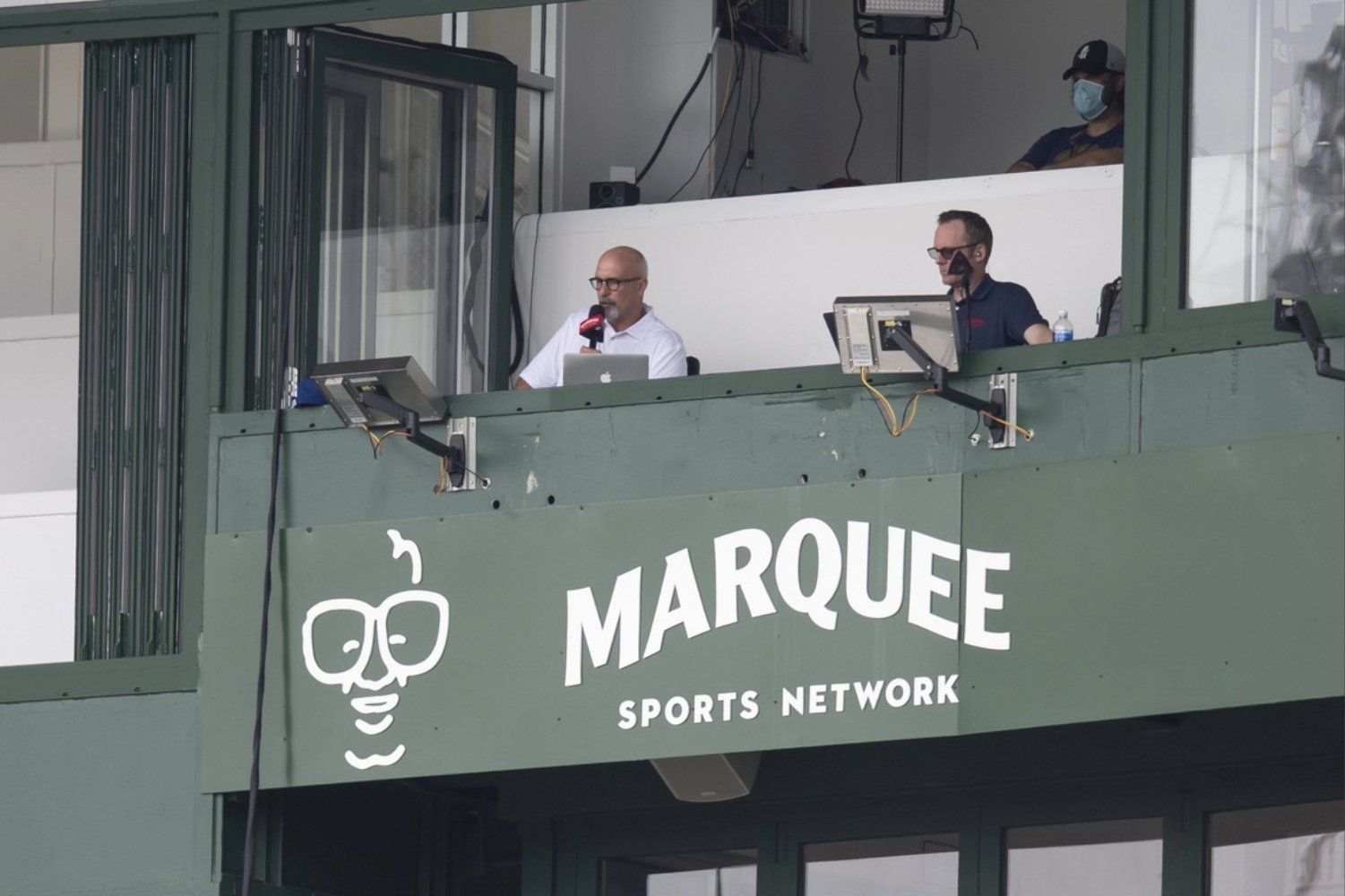
Image courtesy of © Patrick Gorski-Imagn Images As of this writing, the Chicago Cubs have played 13 spring training games so far, including one exhibition against Team Italy in their tune up for the World Baseball Classic. We knew from the beginning of the year that Marquee Sports Network, whose main function is to show Cubs games and content, will not show most of the spring training games. That Tribune article is behind a paywall, so here's a Sports Illustrated proxy that tells us which 11 games we expect to see on Marquee itself, whereas the rest you might have to hunt down an opponent's feed with a VPN because of the Chicago-area blackout. What's even more galling is that of the broadcasts those of us who even have Marquee have seen, at least two of them have been just carrying the opposing team's feed. I suppose there are contract details we aren't privy to for on-air talent such as Boog Sciambi, Elise Menaker, and Taylor MacGregor. Plus, it isn't like the Cubs and Marquee are the only ones not showing every single spring game, as there have been a handful where neither team has a feed and we're just left to the literal devices of fans in attendance, or the social media intern if the team(s) could even bother to bring them along. For the remainder of the Cactus League slate before we get back to Wrigley for Opening Day, we can expect only six more Marquee broadcasts, and I just ran through the schedule and I see the following: Friday, March 6 - @ Padres, via SDPA, MLB Network, and free game broadcast on MLB.tv Sunday, March 8 - vs Giants at Sloan, OMG it's actually on Marquee and also MLB Network Friday, March 13 - @ White Sox, via CHSN Sunday, March 15 - vs Dodgers at Sloan, via SNLA and Marquee Monday, March 16 - @ Guardians, via CLEG (I assume that's Cleveland's network) Friday, March 20 - split squad @ Athletics, via Marquee and NBC Sports CA (they're not showing the split squad game at Sloan, which is frustrating) Saturday, March 21 - @ Mariners, via Marquee and the Mariners network Sunday, March 22 - vs Brewers at Sloan, via Brewers, Marquee, and ESPN+ At least the first exhibition against the Yankees on Monday, March 23, will be broadcast on the radio, but then we get nothing until Opening Day. Noting that most of the remaining Marquee broadcasts are actually away games, I'd expect Marquee to be paying the rental fee just to carry the other team's broadcast. The fact that the Cubs chose not to also pay for the three opponent broadcasts (bolded above) as well suggests some behind-the-scenes drama, which was alluded to by Crane Kenney's comments in the Tribune article. If you checke on the Dodgers broadcast schedule, you'll note that every game is on their channel, and though other big market clubs like the Yankees and Red Sox have scaled back their broadcast dates, they still seem to be showing way more than the Cubs are, and the Yankees even have a streaming app for most of the games that aren't on YES. There are, again, most likely contract stipulations for any "extra" work done outside the regular season, but the Yankees streaming app (known as Gotham Sports App, which combines content from YES and MSG) shows at least one alternative that Marquee could employ, especially since they have their own direct streaming app now (which ironically shows a splash screen of spring training content, and I'm just like, "what content?"). It also isn't like the Cubs situation is unique with a team-owned network, as Atlanta and Detroit have both announced new launches of multimedia platforms beginning this season. With the Cubs, at least Marquee is established. Now, they just have to use it properly to bring us the content we fans demand and deserve. Whether it's just paying a fee to use their opponent's feed, or just putting a static camera that either is set up in the batter's eye and focuses on home plate, or is set up from the press box and shows you the entire field, some content is better than no content. We can even see that the Cubs have such a camera set up as they were able to show Dansby Swanson's home run against Team Italy at Sloan! If Marquee really is having issues (financial or otherwise), this needs to become a priority in whatever restructure takes place. One hopes that as the Cubs navigate the new era of cord-cutting and further establish their in-market app while figuring out carriage issues, they find the resources to make this happen so we don't complain about this same issue next spring, particularly when the Collective Bargaining Agreement is set to expire and we'll be locked out of spring training anyway. Among other things Cubs roster-wise and spring training, we also lamented the lack of coverage by Marquee on the latest Dreamcast episode. View full article
-
 As of this writing, the Chicago Cubs have played 13 spring training games so far, including one exhibition against Team Italy in their tune up for the World Baseball Classic. We knew from the beginning of the year that Marquee Sports Network, whose main function is to show Cubs games and content, will not show most of the spring training games. That Tribune article is behind a paywall, so here's a Sports Illustrated proxy that tells us which 11 games we expect to see on Marquee itself, whereas the rest you might have to hunt down an opponent's feed with a VPN because of the Chicago-area blackout. What's even more galling is that of the broadcasts those of us who even have Marquee have seen, at least two of them have been just carrying the opposing team's feed. I suppose there are contract details we aren't privy to for on-air talent such as Boog Sciambi, Elise Menaker, and Taylor MacGregor. Plus, it isn't like the Cubs and Marquee are the only ones not showing every single spring game, as there have been a handful where neither team has a feed and we're just left to the literal devices of fans in attendance, or the social media intern if the team(s) could even bother to bring them along. For the remainder of the Cactus League slate before we get back to Wrigley for Opening Day, we can expect only six more Marquee broadcasts, and I just ran through the schedule and I see the following: Friday, March 6 - @ Padres, via SDPA, MLB Network, and free game broadcast on MLB.tv Sunday, March 8 - vs Giants at Sloan, OMG it's actually on Marquee and also MLB Network Friday, March 13 - @ White Sox, via CHSN Sunday, March 15 - vs Dodgers at Sloan, via SNLA and Marquee Monday, March 16 - @ Guardians, via CLEG (I assume that's Cleveland's network) Friday, March 20 - split squad @ Athletics, via Marquee and NBC Sports CA (they're not showing the split squad game at Sloan, which is frustrating) Saturday, March 21 - @ Mariners, via Marquee and the Mariners network Sunday, March 22 - vs Brewers at Sloan, via Brewers, Marquee, and ESPN+ At least the first exhibition against the Yankees on Monday, March 23, will be broadcast on the radio, but then we get nothing until Opening Day. Noting that most of the remaining Marquee broadcasts are actually away games, I'd expect Marquee to be paying the rental fee just to carry the other team's broadcast. The fact that the Cubs chose not to also pay for the three opponent broadcasts (bolded above) as well suggests some behind-the-scenes drama, which was alluded to by Crane Kenney's comments in the Tribune article. If you checke on the Dodgers broadcast schedule, you'll note that every game is on their channel, and though other big market clubs like the Yankees and Red Sox have scaled back their broadcast dates, they still seem to be showing way more than the Cubs are, and the Yankees even have a streaming app for most of the games that aren't on YES. There are, again, most likely contract stipulations for any "extra" work done outside the regular season, but the Yankees streaming app (known as Gotham Sports App, which combines content from YES and MSG) shows at least one alternative that Marquee could employ, especially since they have their own direct streaming app now (which ironically shows a splash screen of spring training content, and I'm just like, "what content?"). It also isn't like the Cubs situation is unique with a team-owned network, as Atlanta and Detroit have both announced new launches of multimedia platforms beginning this season. With the Cubs, at least Marquee is established. Now, they just have to use it properly to bring us the content we fans demand and deserve. Whether it's just paying a fee to use their opponent's feed, or just putting a static camera that either is set up in the batter's eye and focuses on home plate, or is set up from the press box and shows you the entire field, some content is better than no content. We can even see that the Cubs have such a camera set up as they were able to show Dansby Swanson's home run against Team Italy at Sloan! If Marquee really is having issues (financial or otherwise), this needs to become a priority in whatever restructure takes place. One hopes that as the Cubs navigate the new era of cord-cutting and further establish their in-market app while figuring out carriage issues, they find the resources to make this happen so we don't complain about this same issue next spring, particularly when the Collective Bargaining Agreement is set to expire and we'll be locked out of spring training anyway. Among other things Cubs roster-wise and spring training, we also lamented the lack of coverage by Marquee on the latest Dreamcast episode.
 -
Image courtesy of © Ken Ruinard / USA Today Co / USA TODAY NETWORK via Imagn Images 'Twas the night before Christmas, and all through the 'Ville, We pondered how the Cubs' roster be filled Between trades, signings, and Japanese postings And last minute visits the Cubs might be hosting. Last month, the Mariners re-signed Josh Naylor, Jays got Cease and Rogers (Tyler, not Taylor). O's got Big Pete and made quite a few trades And even some signings by the Tampa Bay Rays! The Yankees gave one-year deals to some folks Because Hal Steinbrenner cried he was broke. White Sox Murakami, Royals trying again! Detroit got Kenley, and Kyle Finnegan! The Mets got Semien and traded away Nimmo, Atlanta signed relievers for another go. The Twins for some reason signed up Josh Bell... And the Marlins brought in old friend Chris Morel! Phillies re-signed Schwarber and brought in Brad Keller, Cards traded bulk to Boston on their way to the cellar. The NL West signed up pitching in spades... Even the Pirates made a bunch of cool trades! Which brings us to the Cubs, who've been mostly quiet... Though some bullpen signings occurred, can't deny it. Still plenty of room under the luxury tax, They definitely should spend, and those are the facts. Up at Gallagher Way, the lights shining bright As the front office worked far into the night Jed Hoyer and crew consider both old and new-ish Working on Christmas Eve? It's OK, 'cause Jed's Jewish. If they look into Japan, would they sign Imai? Or perhaps they'll add Okamoto to the fray? What of Framber, or even Zac Gallen? Or will they do trades (Gore? Joe Ryan?) No one knows what's up with Bo Bichette or Bregman As Scott Boras spews his dad jokes and bad puns The Cubs know they need more pitching and bats But they can't just pull a name out of a hat. Might not be Tucker, and probably not Belli, But hopefully someone who can hit dingers aplenty. Alex Bregman still seems to be the best play, Then maybe trade Matt Shaw for a new ace. The lineup is solid if they can replace Kyle's bat, The rotation needs at least one more stud, stat. The bullpen, as always, cost-effective but great? The bench needs a utility guy, then they'd be in good shape. Now Porter! Now Maton! Now Milner! Now Webb! On, Danny! On, Ben Brown! On Colin, and Caleb! Get Craig those out-getters, manage that contact, Maximize the funk and miss the fat of the bat.= With months to go until Cactus League play, The plan the Cubs laid out hasn't much changed. Get that star bat (most likely third base), Shore up the bullpen, and get that new ace. Jed has some decisions with CBA looming He might get taxed, but salaries are expiring. Here's to some sweet additions to this great core Postseason bound next season, and here's to much more! View full article
- 1 reply
-
- 1
-

-
 'Twas the night before Christmas, and all through the 'Ville, We pondered how the Cubs' roster be filled Between trades, signings, and Japanese postings And last minute visits the Cubs might be hosting. Last month, the Mariners re-signed Josh Naylor, Jays got Cease and Rogers (Tyler, not Taylor). O's got Big Pete and made quite a few trades And even some signings by the Tampa Bay Rays! The Yankees gave one-year deals to some folks Because Hal Steinbrenner cried he was broke. White Sox Murakami, Royals trying again! Detroit got Kenley, and Kyle Finnegan! The Mets got Semien and traded away Nimmo, Atlanta signed relievers for another go. The Twins for some reason signed up Josh Bell... And the Marlins brought in old friend Chris Morel! Phillies re-signed Schwarber and brought in Brad Keller, Cards traded bulk to Boston on their way to the cellar. The NL West signed up pitching in spades... Even the Pirates made a bunch of cool trades! Which brings us to the Cubs, who've been mostly quiet... Though some bullpen signings occurred, can't deny it. Still plenty of room under the luxury tax, They definitely should spend, and those are the facts. Up at Gallagher Way, the lights shining bright As the front office worked far into the night Jed Hoyer and crew consider both old and new-ish Working on Christmas Eve? It's OK, 'cause Jed's Jewish. If they look into Japan, would they sign Imai? Or perhaps they'll add Okamoto to the fray? What of Framber, or even Zac Gallen? Or will they do trades (Gore? Joe Ryan?) No one knows what's up with Bo Bichette or Bregman As Scott Boras spews his dad jokes and bad puns The Cubs know they need more pitching and bats But they can't just pull a name out of a hat. Might not be Tucker, and probably not Belli, But hopefully someone who can hit dingers aplenty. Alex Bregman still seems to be the best play, Then maybe trade Matt Shaw for a new ace. The lineup is solid if they can replace Kyle's bat, The rotation needs at least one more stud, stat. The bullpen, as always, cost-effective but great? The bench needs a utility guy, then they'd be in good shape. Now Porter! Now Maton! Now Milner! Now Webb! On, Danny! On, Ben Brown! On Colin, and Caleb! Get Craig those out-getters, manage that contact, Maximize the funk and miss the fat of the bat.= With months to go until Cactus League play, The plan the Cubs laid out hasn't much changed. Get that star bat (most likely third base), Shore up the bullpen, and get that new ace. Jed has some decisions with CBA looming He might get taxed, but salaries are expiring. Here's to some sweet additions to this great core Postseason bound next season, and here's to much more!
 -
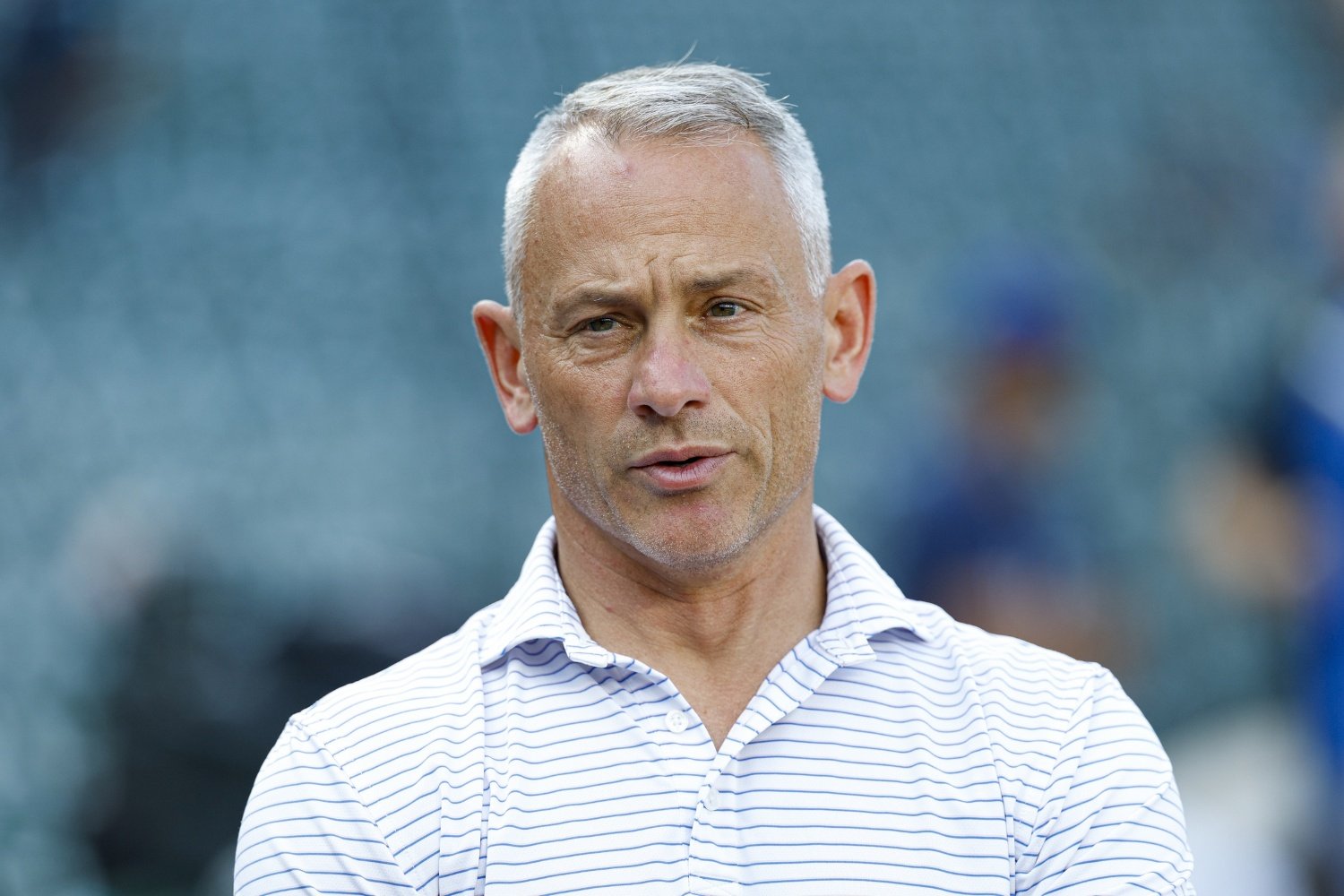 Here we are at the beginning of July, just after Independence Day. As you know, the MLB trade deadline is the evening of July 31, and other than an insane and surprising Rafael Devers trade (which probably wouldn't have involved the Cubs but is fun to think about), nothing really has happened beyond a few waiver claims and minor trades. I've spoken at length, including on our hobby podcast, about how even the Cubs' earliest trades would have happened around this time (i.e., the Jeff Samardzija trade right as fireworks were going off a decade ago), and conventional wisdom suggests that any trade now, a month before the deadline, would require a premium to be surrendered. But there is another reason that I think is more impactful to most of the teams in MLB right now not named the Colorado Rockies, and that is the standings. Just past the halfway mark and with a week to go until the All-Star break (not to mention Sunday's MLB Draft), aside from the bottom three or four teams in either league, most teams are within seven games of the final playoff spot. Even the beleaguered Braves, who have suffered plenty of injuries and poor performances for what should have been a contender this season, are within 8.5 games. They would have to leapfrog six teams to get into that final spot, but there are over 70 games remaining for everyone and a few weeks until they have to make the "buy or sell" decision. In the unusually mediocre American League, even though the Tigers and Astros have comfortable leads in their divisions and Toronto is taking advantage of a Yankees slump to move ahead, the Wild Card spots are there for the taking, so we are likely stuck in a waiting game until the days before the deadline, particularly with many organizations focusing their resources on the draft in the meantime. Another consideration is the direction of a few clubs who would clearly be selling in the pre-expanded postseason era. Other than the Rockies, who should probably fire everyone (including their owner) and start over, most of the other teams have potential in the near future and might not want to do a full tear down, which limits the types of trades that could be available unless an aggressive team (maybe the Cubs?) pulls the trigger on a massive overpay. The general feeling I have in the modern baseball atmosphere is that trades where only one team clearly "wins" are no more. For the most part, you see both teams get exactly what they want for their overall vision going forward, similar to the recent Michael Busch or Kyle Tucker trades the Cubs were involved in. Certainly, unlike the amusing Twitter GM trades, you are unlikely to see a "steal" trade where one side offers their scraps and unwanted players for another team's superstar(s), because force trade is not enabled in the real world, barring a particularly gullible ownership group. The Orioles might well elect not to jeopardize a young, controlled core with that much potential to either add or subtract right now, despite being barely ahead of the bottom of the barrel. Ditto a team like the Washington Nationals, who have shown some spark but are battling through their own growing pains right now. I surmise that things could change rapidly in the games surrounding the All-Star break, as we see which teams give off indicators one way or the other, and then we can start dreaming on plucking some talent away from the Royals or the Twins, or grab the best available power bat from the Diamondbacks. Until then, it is no surprise that we are in an extreme holding pattern, and teams at the top will just have to keep grinding while awaiting their opportunity to strike.
 -
Image courtesy of © Kamil Krzaczynski-Imagn Images Here we are at the beginning of July, just after Independence Day. As you know, the MLB trade deadline is the evening of July 31, and other than an insane and surprising Rafael Devers trade (which probably wouldn't have involved the Cubs but is fun to think about), nothing really has happened beyond a few waiver claims and minor trades. I've spoken at length, including on our hobby podcast, about how even the Cubs' earliest trades would have happened around this time (i.e., the Jeff Samardzija trade right as fireworks were going off a decade ago), and conventional wisdom suggests that any trade now, a month before the deadline, would require a premium to be surrendered. But there is another reason that I think is more impactful to most of the teams in MLB right now not named the Colorado Rockies, and that is the standings. Just past the halfway mark and with a week to go until the All-Star break (not to mention Sunday's MLB Draft), aside from the bottom three or four teams in either league, most teams are within seven games of the final playoff spot. Even the beleaguered Braves, who have suffered plenty of injuries and poor performances for what should have been a contender this season, are within 8.5 games. They would have to leapfrog six teams to get into that final spot, but there are over 70 games remaining for everyone and a few weeks until they have to make the "buy or sell" decision. In the unusually mediocre American League, even though the Tigers and Astros have comfortable leads in their divisions and Toronto is taking advantage of a Yankees slump to move ahead, the Wild Card spots are there for the taking, so we are likely stuck in a waiting game until the days before the deadline, particularly with many organizations focusing their resources on the draft in the meantime. Another consideration is the direction of a few clubs who would clearly be selling in the pre-expanded postseason era. Other than the Rockies, who should probably fire everyone (including their owner) and start over, most of the other teams have potential in the near future and might not want to do a full tear down, which limits the types of trades that could be available unless an aggressive team (maybe the Cubs?) pulls the trigger on a massive overpay. The general feeling I have in the modern baseball atmosphere is that trades where only one team clearly "wins" are no more. For the most part, you see both teams get exactly what they want for their overall vision going forward, similar to the recent Michael Busch or Kyle Tucker trades the Cubs were involved in. Certainly, unlike the amusing Twitter GM trades, you are unlikely to see a "steal" trade where one side offers their scraps and unwanted players for another team's superstar(s), because force trade is not enabled in the real world, barring a particularly gullible ownership group. The Orioles might well elect not to jeopardize a young, controlled core with that much potential to either add or subtract right now, despite being barely ahead of the bottom of the barrel. Ditto a team like the Washington Nationals, who have shown some spark but are battling through their own growing pains right now. I surmise that things could change rapidly in the games surrounding the All-Star break, as we see which teams give off indicators one way or the other, and then we can start dreaming on plucking some talent away from the Royals or the Twins, or grab the best available power bat from the Diamondbacks. Until then, it is no surprise that we are in an extreme holding pattern, and teams at the top will just have to keep grinding while awaiting their opportunity to strike. View full article
-
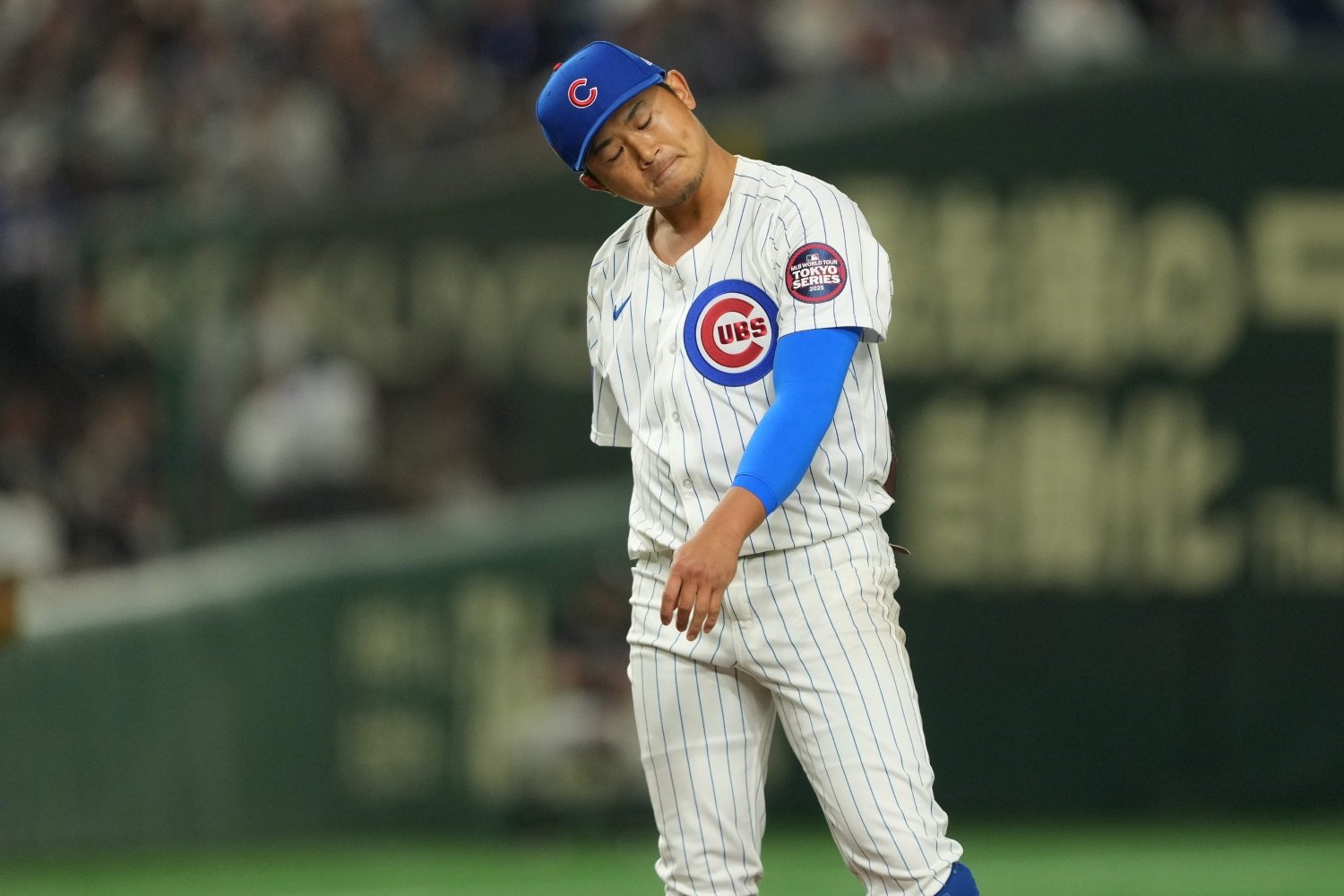 It's been an age since I've been able to write for the website with all the life issues and work-related busy stuff I've had to deal with. Still, of course, I was listening to Cubs games and watching when I could, very pleased that they're continuing to do well despite a .500 June "swoon" of sorts. The other day, Shota Imanaga gave up a few solo home runs (including some basket shots), and had a pretty funny bit in his postgame interview (about 25 minutes into this video, if it doesn't jump to it): The interview also had a bit about his t-shirts, where he's apparently found a fun clothing line that highlights some of the great bands of yore, yet he knows not the songs. But the particular line about the basket being heaven or hell definitely channels "Hotel California," so please enjoy this attempt at parody inspired by Imanaga and sung through his eyes while he watches pop-ups decide where they want to go, depending on the wind... On the mound here at Wrigley, cool wind in my hair Warming up to my catcher next to a pantsless bear Up above on the scoreboard, the flags blow out to right Then the wind changed and the flags went limp, it was that kind of night First batter steps to the plate, pops it up toward the well And I was thinking to myself, "This could be heaven or this could be hell" Then I looked at the fielder, he was following the wall The fans and players held their breath, where would this ball fall? Welcome to the Wrigley Field experience Where will the wind blow (where will the wind blow?) Heck, nobody knows Pitchers are scared of the Wrigley Field experience Will it be an out (will it be an out) Or will it fly on out? This one bounced off the basket, dropped in for a hit Going to have to buckle down here for the inning to end Keep the ball in the ballyard, come to a set The pitch is delivered, bat and ball met And here's another pop-up, fielder runs on a line The wind continues to blow, but launch angle's 69 The basket right now looks so far away Baseball sails in the middle of the sky, will Happ have a play? Welcome to the Wrigley Field experience Where will the wind blow (where will the wind blow?) Heck, nobody knows Popping it up at the Wrigley Field experience Each play a surprise (Each play a surprise) Out or RBIs? This one's short of the basket, just a sacrifice fly Next time perhaps hit it on the ground, instead of in the sky And the flags on the scoreboard, now they fly west to east The righty batter pokes it opposite field; will this pain never cease? Last thing I remember, the crowd rose to a roar That can't get out, can it? Launch angle's forty-four! Relax, said the fielder, as he raced back to receive But with the wind blowing into the night, will the baseball leave?
 -
Image courtesy of © Darren Yamashita-Imagn Images It's been an age since I've been able to write for the website with all the life issues and work-related busy stuff I've had to deal with. Still, of course, I was listening to Cubs games and watching when I could, very pleased that they're continuing to do well despite a .500 June "swoon" of sorts. The other day, Shota Imanaga gave up a few solo home runs (including some basket shots), and had a pretty funny bit in his postgame interview (about 25 minutes into this video, if it doesn't jump to it): The interview also had a bit about his t-shirts, where he's apparently found a fun clothing line that highlights some of the great bands of yore, yet he knows not the songs. But the particular line about the basket being heaven or hell definitely channels "Hotel California," so please enjoy this attempt at parody inspired by Imanaga and sung through his eyes while he watches pop-ups decide where they want to go, depending on the wind... On the mound here at Wrigley, cool wind in my hair Warming up to my catcher next to a pantsless bear Up above on the scoreboard, the flags blow out to right Then the wind changed and the flags went limp, it was that kind of night First batter steps to the plate, pops it up toward the well And I was thinking to myself, "This could be heaven or this could be hell" Then I looked at the fielder, he was following the wall The fans and players held their breath, where would this ball fall? Welcome to the Wrigley Field experience Where will the wind blow (where will the wind blow?) Heck, nobody knows Pitchers are scared of the Wrigley Field experience Will it be an out (will it be an out) Or will it fly on out? This one bounced off the basket, dropped in for a hit Going to have to buckle down here for the inning to end Keep the ball in the ballyard, come to a set The pitch is delivered, bat and ball met And here's another pop-up, fielder runs on a line The wind continues to blow, but launch angle's 69 The basket right now looks so far away Baseball sails in the middle of the sky, will Happ have a play? Welcome to the Wrigley Field experience Where will the wind blow (where will the wind blow?) Heck, nobody knows Popping it up at the Wrigley Field experience Each play a surprise (Each play a surprise) Out or RBIs? This one's short of the basket, just a sacrifice fly Next time perhaps hit it on the ground, instead of in the sky And the flags on the scoreboard, now they fly west to east The righty batter pokes it opposite field; will this pain never cease? Last thing I remember, the crowd rose to a roar That can't get out, can it? Launch angle's forty-four! Relax, said the fielder, as he raced back to receive But with the wind blowing into the night, will the baseball leave? View full article
-
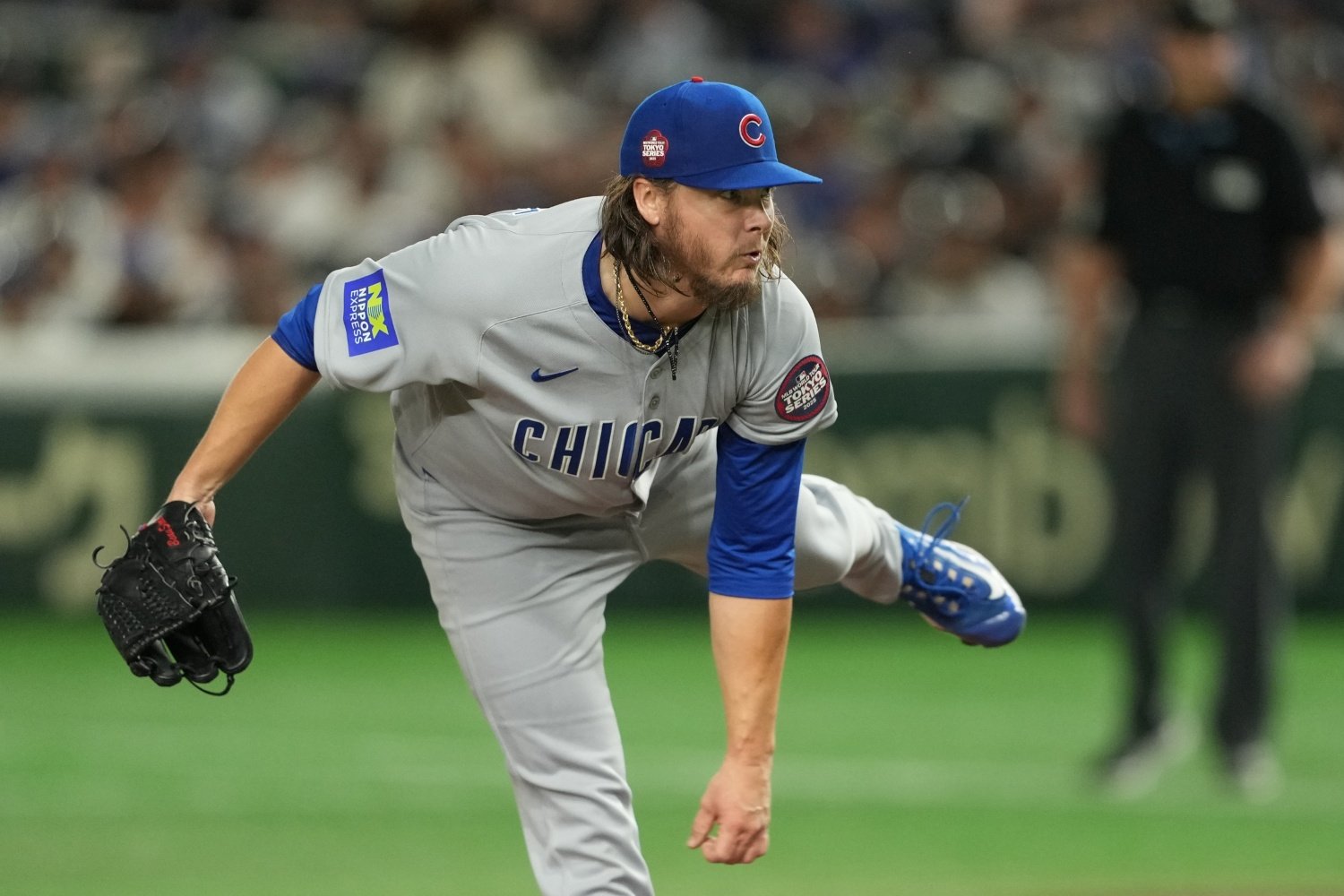 As I watched the final Cubs spring training exhibition of 2025—with very little stress and plenty of fun moments—I pondered the philosophies behind being a baseball fan in the first place. Against the backdrop of the NCAA basketball tournaments and its single-elimination chaos, the inherent randomness of individual baseball games (even stretches of games!) is an appropriate analogy. Sometimes, the better team just won't pull out the victory. Looking back at the spring preparations, the Cactus League games, and the contests in Japan, there were plenty of positives to be excited for, along with issues that could be cleaned up. I really liked the title Thomas Domol chose for his recent article, stating that only the Cubs can keep the Cubs out of the postseason. While that is true to a large extent, there is a reason why the mantra goes "You Can't Predict Baseball". There's no telling which amazing and stupid things can happen on a baseball field on any given play. I recalled some sayings, which I will paraphrase, about what you can control. First, consider the wisdom of the Buddhists, who believe that suffering stems from a focus beyond one's self, and therefore, beyond one's circle of control. Then, remember Viktor Frankl. "Everything can be taken from a man but one thing," Frankl famously said, "the last of the human freedoms—to choose one's attitude in any given set of circumstances, to choose one's own way." In other words: what is within your control is your reaction to external circumstances, rather than the circumstances themselves. Going back to Japan, we saw a few strike calls and (even a home run call) not go the Cubs' way. Even in this final exhibition game against Atlanta, the sun prevented what should have been an easy flyout and Ben Brown got tagged for a two-run shot, instead of just a solo home run. In Japan, Justin Steele could have shaken off the bad call by the umpire to get the out on the next pitch, but instead, he served up a home run to increase the Cubs' deficit. In Mesa, Brown gave up the bomb, but still had a fantastic final tune-up before he goes into the season as the fifth starter. This isn't a perfect metaphor, but what I expect will happen is that, while the Cubs won't always be able to make the perfect pitch or play to get themselves out of a jam, they will not sulk about a bad play or pitch. If they're as mature and well-managed as they advertise themselves to be, they'll just move on to the next pitch to give themselves a chance to win. Despite the poor results in the standings in Japan, the Cubs did put themselves in many positions to score and mount a comeback, which is something I hope happens consistently throughout the season. That is just on the field, though! In the grand scheme of things, I've seen plenty of complaints that the Cubs only got Kyle Tucker for this one season; that Cam Smith is already making the Astros roster; and that the Rickettses are cheap, among many of the other usual Cubs fan tropes. As fans, we simply cannot control how Cubs ownership spends, or how the front office conducts transactions. What we do know is that Tucker is a Cub for 2025—part of a team that is projected to win the division—and that is something we can build on to promote a positive attitude. So I say we forget those two losses in Japan. They happened, they count, and there's nothing anyone can do about it now. We forget about any Tucker or Pete Crow-Armstrong extension talk, because they are already on the team for 2025. The singular focus is how many wins they can rack up between now and October, so if they take care of business and stay healthy and prepared, this can be a magical season that we will look back on fondly. What I have heard from the sound bites and postgames suggests that the players and coaching staff have the right attitudes to succeed. Now, they just have to prove their mettle on the field. In conclusion, may the Cubs players remember to stretch and condition well between games, with plenty of video study and the appropriate drills. May the training and medical staff keep our favorite (and most productive) players on the field as long as possible. And here's to positive vibes at and outside of Wrigley Field, as the Cubs work their way back to the postseason and beyond. I did have to talk my friend off the ledge a bit in the latest Dreamcast, if you wish to take a listen below. Now we just wait for actual baseball to begin anew, with our spirits high, knowing that chaos lurks. Here's to a great 2025!
 -
The (rest of the) season starts on Thursday, and the Cubs need to take care of everything in their control to minimize the silly randomness that is baseball and life. Image courtesy of © Darren Yamashita-Imagn Images The (rest of the) season starts on Thursday, and the Cubs need to take care of everything in their control to minimize the silly randomness that is baseball and life. As I watched the final Cubs spring training exhibition of 2025—with very little stress and plenty of fun moments—I pondered the philosophies behind being a baseball fan in the first place. Against the backdrop of the NCAA basketball tournaments and its single-elimination chaos, the inherent randomness of individual baseball games (even stretches of games!) is an appropriate analogy. Sometimes, the better team just won't pull out the victory. Looking back at the spring preparations, the Cactus League games, and the contests in Japan, there were plenty of positives to be excited for, along with issues that could be cleaned up. I really liked the title Thomas Domol chose for his recent article, stating that only the Cubs can keep the Cubs out of the postseason. While that is true to a large extent, there is a reason why the mantra goes "You Can't Predict Baseball". There's no telling which amazing and stupid things can happen on a baseball field on any given play. I recalled some sayings, which I will paraphrase, about what you can control. First, consider the wisdom of the Buddhists, who believe that suffering stems from a focus beyond one's self, and therefore, beyond one's circle of control. Then, remember Viktor Frankl. "Everything can be taken from a man but one thing," Frankl famously said, "the last of the human freedoms—to choose one's attitude in any given set of circumstances, to choose one's own way." In other words: what is within your control is your reaction to external circumstances, rather than the circumstances themselves. Going back to Japan, we saw a few strike calls and (even a home run call) not go the Cubs' way. Even in this final exhibition game against Atlanta, the sun prevented what should have been an easy flyout and Ben Brown got tagged for a two-run shot, instead of just a solo home run. In Japan, Justin Steele could have shaken off the bad call by the umpire to get the out on the next pitch, but instead, he served up a home run to increase the Cubs' deficit. In Mesa, Brown gave up the bomb, but still had a fantastic final tune-up before he goes into the season as the fifth starter. This isn't a perfect metaphor, but what I expect will happen is that, while the Cubs won't always be able to make the perfect pitch or play to get themselves out of a jam, they will not sulk about a bad play or pitch. If they're as mature and well-managed as they advertise themselves to be, they'll just move on to the next pitch to give themselves a chance to win. Despite the poor results in the standings in Japan, the Cubs did put themselves in many positions to score and mount a comeback, which is something I hope happens consistently throughout the season. That is just on the field, though! In the grand scheme of things, I've seen plenty of complaints that the Cubs only got Kyle Tucker for this one season; that Cam Smith is already making the Astros roster; and that the Rickettses are cheap, among many of the other usual Cubs fan tropes. As fans, we simply cannot control how Cubs ownership spends, or how the front office conducts transactions. What we do know is that Tucker is a Cub for 2025—part of a team that is projected to win the division—and that is something we can build on to promote a positive attitude. So I say we forget those two losses in Japan. They happened, they count, and there's nothing anyone can do about it now. We forget about any Tucker or Pete Crow-Armstrong extension talk, because they are already on the team for 2025. The singular focus is how many wins they can rack up between now and October, so if they take care of business and stay healthy and prepared, this can be a magical season that we will look back on fondly. What I have heard from the sound bites and postgames suggests that the players and coaching staff have the right attitudes to succeed. Now, they just have to prove their mettle on the field. In conclusion, may the Cubs players remember to stretch and condition well between games, with plenty of video study and the appropriate drills. May the training and medical staff keep our favorite (and most productive) players on the field as long as possible. And here's to positive vibes at and outside of Wrigley Field, as the Cubs work their way back to the postseason and beyond. I did have to talk my friend off the ledge a bit in the latest Dreamcast, if you wish to take a listen below. Now we just wait for actual baseball to begin anew, with our spirits high, knowing that chaos lurks. Here's to a great 2025! View full article
-
- 2
-

-
- justin steele
- ben brown
- (and 1 more)
-
There have been complaints about MLB international series being too disruptive or unusual, in a way that affects play in games that matter. What solutions can we come up with to reduce these objections? Image courtesy of © Darren Yamashita-Imagn Images There have been complaints about MLB international series being too disruptive or unusual, in a way that affects play in games that matter. What solutions can we come up with to reduce these objections? The Tokyo Series is in the books, with the Cubs doing their best to be competitive but ultimately unable to overcome the reigning World Series champions—who appeared to be favored by the crowd in Japan, despite these technically being Cubs home games. It's still only two games, with 160 remaining once they're back in the U.S., but I do like that everyone seemed to have a great time, Matt Shaw got his first taste of being a major-leaguer, and nobody got maimed in the field. In my travels around the Cubs blogosphere, it seems that the common complaints are that: The games are on at a time that is not very conducive to our sleep and work or school schedules; These games are "fake" because they require faster preparation due to the scheduling, which makes it more difficult to get as ready as you might for a more "regular" Opening Day in multiple ways: hitters not having their timing completely tuned in, pitchers not being completely stretched out, and so on. To the first point, I would say that these games aren't for us Americans (or Canadians, or other North/South Americans), but for the local fans who are being directly served by seeing Major League Baseball in their backyards. I would say that the games aren't "fake" because they would be managed differently than later in the season, since (in many instances) managers in today's game would want to slow-roll their pitchers, anyway—to start the season slowly and pace them so they can survive the marathon of 162 games. That said, it is true that the week of travel, exhibitions, and actual games before returning to readjust to U.S. time zones and trying to maintain the state of readiness while awaiting the "true" Opening Day is objectively disruptive, and perhaps something can be done to level the playing field. We already discussed the importance of routine for baseball players, and if we assume that MLB can find economically viable locales, then perhaps there are solutions we can consider to level the playing field so it's not just two teams getting their bodies pressed through the wringer for a global exhibition series, whether or not the games matter in the standings. Everyone Takes a Field Trip Taking into account that the Cubs have lost two home games (although they'll be repaid the lost revenue from those contests) and that they and the Dodgers are going to be the only two teams to get disrupted this season, it does seem a tad unfair that the rest of the league doesn't have to deal with this quirk in the schedule. So the primary proposal here is that all 30 teams (or 32, when they finally expand in a decade or so) participate in MLB Global. I think the 162-game schedule can accommodate every pairing to do a home-and-home series in a non-US/Canada locale, such that each team only loses one home date, and they can plug the remainder of their annual matchups into the rest of the schedule. I guess if they prefer to do all games in a series as the primary home team, you can do a couple of two-game series throughout the year, which leads us to... When Can We Fit It In? Because we aren't doing phrasing anymore, the other challenge is making sure the travel and adjustment periods are built into the schedule—which is also disruptive to club revenue streams, in a way, since you basically have to shut down play for a few days surrounding the global series. Since we already established above that everyone shuts down at the same time, that isn't really a consideration. You just have to find a way to not start the season too early or end it too late, when more extreme fall/winter weather would affect play and player comfort. A Modest Proposal Since everyone thinks spring training goes on a bit too long anyway, it makes some sense to keep the global series at its regularly scheduled days in mid-March. If full squads have already reported by Valentine's Day, after most players have already been doing their offseason work for at least a month or so, that gives you a full month to prepare rosters for that first group of 31 players (as the Dodgers and Cubs did this year_ and then another week to trim down to the final group of 26. It's like September call-ups, but in March. I think that might be agreeable, although Arizona- and Florida-based businesses would have to prepare differently to try to max out their intake from the new schedule. So I'd keep a two-game series at this same spot in the year. The final two-game series would need to fit elsewhere in the schedule that does not impact preparations for postseason-bound teams. For that, I have a set of ideas that could affect the All-Star Game... Track One: Global Series 2 Adjacent to the All-Star Break In this proposal, the clubs take approximately 10-14 days off, and the All-Star Game happens just after the globetrotting and games. Unlike in the spring, teams can't play a set of exhibitions against teams in the host countries, but they should be able to accommodate the day of travel, some adjustment time, the two games, and then travel home. The idea behind this is that the players would then slide into the traditional All-Star break, where they hold the Home Run Derby just a day later, then the All-Star Game itself after that, when everyone's had a chance to readjust to being back in the States. There are usually two or three days after that to further recover before the regular season resumes. Track Two: All-Star Game Becomes Like the Pro Bowl In this case, the midsummer All-Star Break is ceded to MLB Global, where you get the same time off (with maybe one or two adjustment days to buffer it) but now the All-Star Game is at the end of the season. Based on what I understand of the Pro Bowl in the NFL, they schedule the game in the bye week between the conference championships and the Super Bowl, and only players who aren't playing in the Super Bowl are playing their version of the All-Star Game. In this scenario, MLB would have to adjust the earlier playoff rounds, up to the League Championship Series, a bit earlier to accommodate this new All-Star break, which you assume would also have the Home Run Derby, Futures Game, and so forth. Fans can vote for full-season All-Stars at the end of the regular season, giving the league at least two weeks to tabulate all the votes before assigning All-Stars and alternates. The new All-Star break also gives a buffer of at least three or four days for the two World Series participants to rest and reset their rotations. I feel like this could work. Besides, tons of players already beg out of participating in the All-Star Game, can't play because they pitched on Sunday, and so on, so I don't think this will matter too much in the long run. If spring training technically ends early anyway (no matter where they're sticking the All-Star break), the season can start earlier, they can figure out how to start as many series as possible in domes to reduce rainouts, and start the postseason early enough to make sure the World Series doesn't leak into Thanksgiving. I have other thoughts about adjusting the postseason, but I'll save that for another day. I recognize that there are multiple hurdles to making any of this happen, but I also think my proposal is way more practical than eating the young. As the modern world becomes more connected, this is the logical next step in globalizing the MLB brand. Since we have a few days to kill until the Cubs resume Cactus League play, I'd love to hear your thoughts. View full article
-
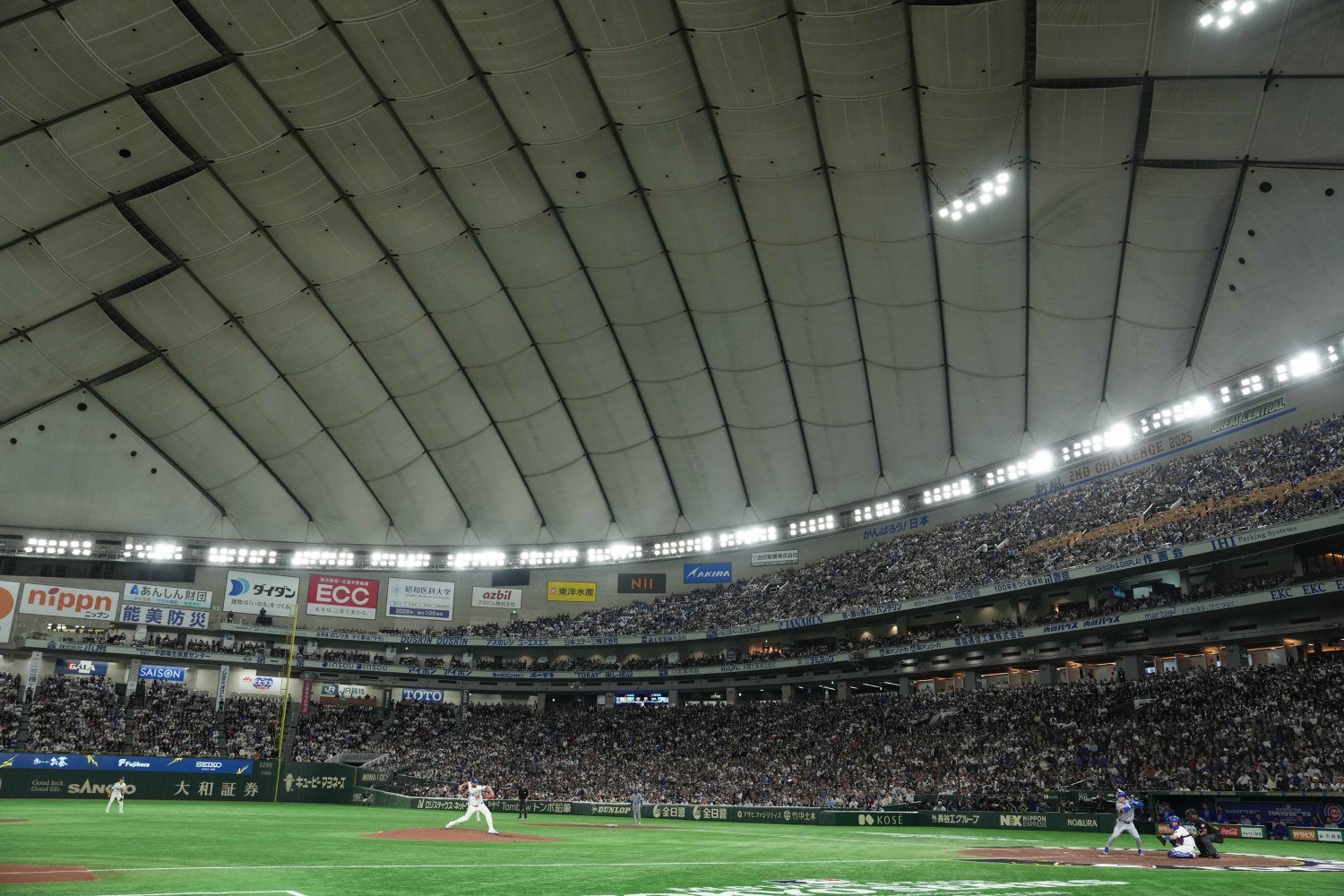 The Tokyo Series is in the books, with the Cubs doing their best to be competitive but ultimately unable to overcome the reigning World Series champions—who appeared to be favored by the crowd in Japan, despite these technically being Cubs home games. It's still only two games, with 160 remaining once they're back in the U.S., but I do like that everyone seemed to have a great time, Matt Shaw got his first taste of being a major-leaguer, and nobody got maimed in the field. In my travels around the Cubs blogosphere, it seems that the common complaints are that: The games are on at a time that is not very conducive to our sleep and work or school schedules; These games are "fake" because they require faster preparation due to the scheduling, which makes it more difficult to get as ready as you might for a more "regular" Opening Day in multiple ways: hitters not having their timing completely tuned in, pitchers not being completely stretched out, and so on. To the first point, I would say that these games aren't for us Americans (or Canadians, or other North/South Americans), but for the local fans who are being directly served by seeing Major League Baseball in their backyards. I would say that the games aren't "fake" because they would be managed differently than later in the season, since (in many instances) managers in today's game would want to slow-roll their pitchers, anyway—to start the season slowly and pace them so they can survive the marathon of 162 games. That said, it is true that the week of travel, exhibitions, and actual games before returning to readjust to U.S. time zones and trying to maintain the state of readiness while awaiting the "true" Opening Day is objectively disruptive, and perhaps something can be done to level the playing field. We already discussed the importance of routine for baseball players, and if we assume that MLB can find economically viable locales, then perhaps there are solutions we can consider to level the playing field so it's not just two teams getting their bodies pressed through the wringer for a global exhibition series, whether or not the games matter in the standings. Everyone Takes a Field Trip Taking into account that the Cubs have lost two home games (although they'll be repaid the lost revenue from those contests) and that they and the Dodgers are going to be the only two teams to get disrupted this season, it does seem a tad unfair that the rest of the league doesn't have to deal with this quirk in the schedule. So the primary proposal here is that all 30 teams (or 32, when they finally expand in a decade or so) participate in MLB Global. I think the 162-game schedule can accommodate every pairing to do a home-and-home series in a non-US/Canada locale, such that each team only loses one home date, and they can plug the remainder of their annual matchups into the rest of the schedule. I guess if they prefer to do all games in a series as the primary home team, you can do a couple of two-game series throughout the year, which leads us to... When Can We Fit It In? Because we aren't doing phrasing anymore, the other challenge is making sure the travel and adjustment periods are built into the schedule—which is also disruptive to club revenue streams, in a way, since you basically have to shut down play for a few days surrounding the global series. Since we already established above that everyone shuts down at the same time, that isn't really a consideration. You just have to find a way to not start the season too early or end it too late, when more extreme fall/winter weather would affect play and player comfort. A Modest Proposal Since everyone thinks spring training goes on a bit too long anyway, it makes some sense to keep the global series at its regularly scheduled days in mid-March. If full squads have already reported by Valentine's Day, after most players have already been doing their offseason work for at least a month or so, that gives you a full month to prepare rosters for that first group of 31 players (as the Dodgers and Cubs did this year_ and then another week to trim down to the final group of 26. It's like September call-ups, but in March. I think that might be agreeable, although Arizona- and Florida-based businesses would have to prepare differently to try to max out their intake from the new schedule. So I'd keep a two-game series at this same spot in the year. The final two-game series would need to fit elsewhere in the schedule that does not impact preparations for postseason-bound teams. For that, I have a set of ideas that could affect the All-Star Game... Track One: Global Series 2 Adjacent to the All-Star Break In this proposal, the clubs take approximately 10-14 days off, and the All-Star Game happens just after the globetrotting and games. Unlike in the spring, teams can't play a set of exhibitions against teams in the host countries, but they should be able to accommodate the day of travel, some adjustment time, the two games, and then travel home. The idea behind this is that the players would then slide into the traditional All-Star break, where they hold the Home Run Derby just a day later, then the All-Star Game itself after that, when everyone's had a chance to readjust to being back in the States. There are usually two or three days after that to further recover before the regular season resumes. Track Two: All-Star Game Becomes Like the Pro Bowl In this case, the midsummer All-Star Break is ceded to MLB Global, where you get the same time off (with maybe one or two adjustment days to buffer it) but now the All-Star Game is at the end of the season. Based on what I understand of the Pro Bowl in the NFL, they schedule the game in the bye week between the conference championships and the Super Bowl, and only players who aren't playing in the Super Bowl are playing their version of the All-Star Game. In this scenario, MLB would have to adjust the earlier playoff rounds, up to the League Championship Series, a bit earlier to accommodate this new All-Star break, which you assume would also have the Home Run Derby, Futures Game, and so forth. Fans can vote for full-season All-Stars at the end of the regular season, giving the league at least two weeks to tabulate all the votes before assigning All-Stars and alternates. The new All-Star break also gives a buffer of at least three or four days for the two World Series participants to rest and reset their rotations. I feel like this could work. Besides, tons of players already beg out of participating in the All-Star Game, can't play because they pitched on Sunday, and so on, so I don't think this will matter too much in the long run. If spring training technically ends early anyway (no matter where they're sticking the All-Star break), the season can start earlier, they can figure out how to start as many series as possible in domes to reduce rainouts, and start the postseason early enough to make sure the World Series doesn't leak into Thanksgiving. I have other thoughts about adjusting the postseason, but I'll save that for another day. I recognize that there are multiple hurdles to making any of this happen, but I also think my proposal is way more practical than eating the young. As the modern world becomes more connected, this is the logical next step in globalizing the MLB brand. Since we have a few days to kill until the Cubs resume Cactus League play, I'd love to hear your thoughts.
 -
I was reminded from a side conversation that baseballs are a mostly manual manufacturing process. There is some automation in the making of the pill in the middle, and the twirling of the layers of string and yarn and stuff, but the 108 stitches are done by hand and it looks tedious. Anyway, just an excuse to share this very cathartic video.
-
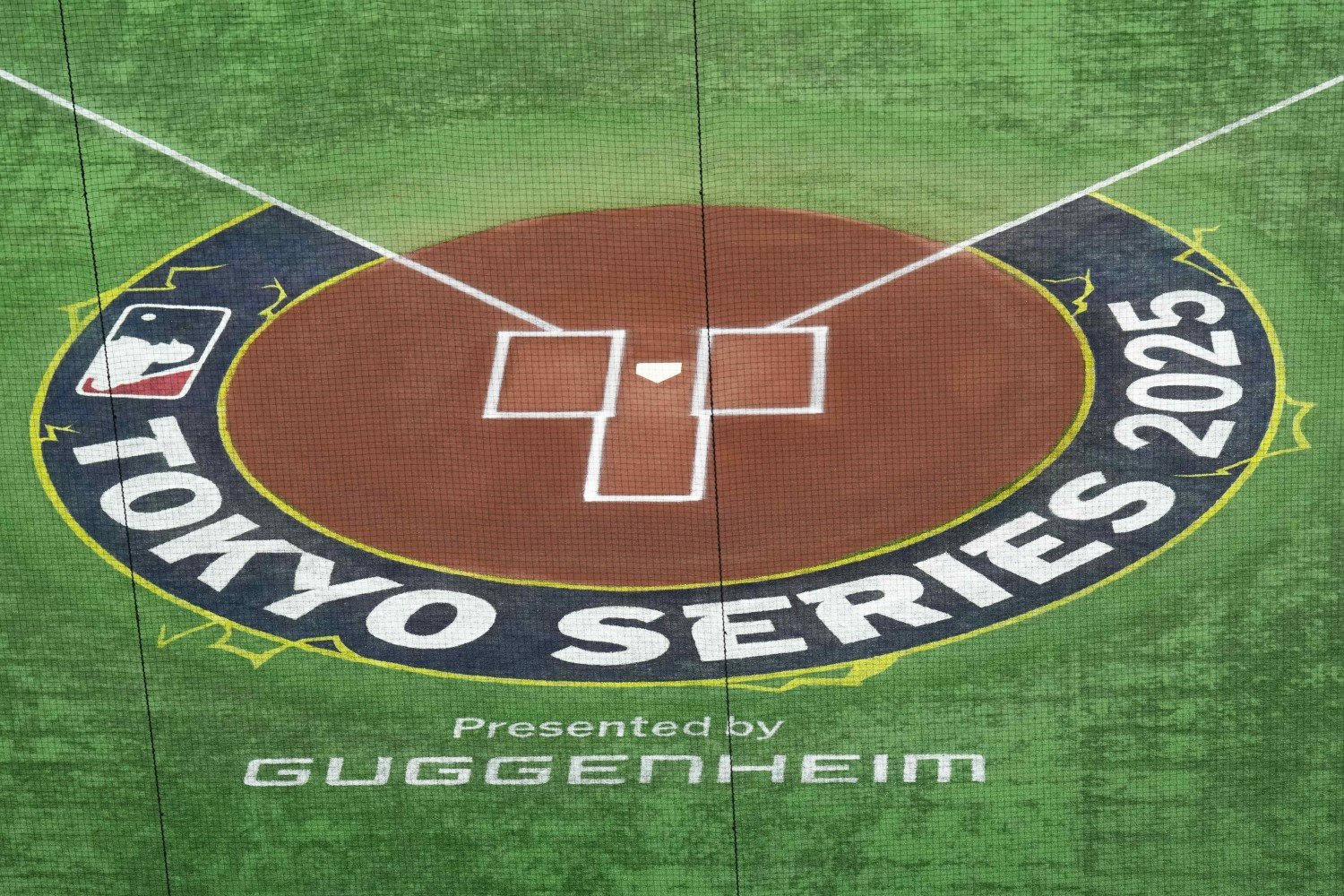 The Cubs and Dodgers are making headlines in Japan right now as goodwill ambassadors for Major League Baseball, but unlike previous seasons, it seems that the upcoming Tokyo Series is it for 2025 in terms of international MLB competitions. The main issue appears to be economical, as MLB commissioner Rob Manfred suggested that the games in San Juan, Puerto Rico, and other venues outside of Japan were not good business decisions in 2025—unlike Tokyo, where the fan base and interest are so fevered (plus the local cuisine, but I doubt MLB cares about that too much). The only other international adventure this season is an exhibition series in Monterrey, Mexico, where the Boston Red Sox will play before they head to Texas for Opening Day. Regular-season big-league baseball has been played outside the United States and Canada quite a few times over the years, including the batch of games played in Puerto Rico for the last years of the Montreal Expos franchise before they moved to Washington, D.C. In addition to San Juan, the other venues mostly have their own professional leagues, including the Australian Baseball League (that flight to and from Perth has to suck), the Korean Baseball Organization (KBO in Korea), Nippon Professional Baseball (NPB in Japan), and of course the Mexican League, former home of baseball legend Jake Taylor. The league has also played in London, which is an interesting choice given that the United Kingdom only has a governing body and not exactly a professional league, but perhaps that will change in the future. The current Collective Bargaining Agreement calls for games in San Juan, Mexico City, and London in 2026, but the league canceled games in two of those locales plus Paris for 2025, so it's hard to know where the league will actually play international games (if there will be any at all) next year. I know that the usual suspects in Japan, Korea, Australia, Mexico, and the U.K. will be considered, but the world is huge, and so many other communities love baseball. We don't even have to get crazy here. Just looking at the nations represented in the World Baseball Classic (including qualifying rounds), there are unreached hotbeds of baseball. We do have to consider the business side, though, as in whether MLB believes they would have enough return on investment for whatever journies they undertake. Let's take a little trip around this blue marble we call home, in no particular order except that this is the order in which they occurred to me. Option 1: Puerto Rico (or Hawai'i) The main venue in San Juan, Puerto Rico, Hiram Bithorn Stadium, was host to about a quarter of the games played by the Expos in the two seasons before they became the Nationals, and also a handful of regular-season games by other clubs since. In a minimalist sense, the stadium is MLB-capable, and of course, Puerto Rico is always represented well in WBC play. The U.S. colony is home to many of the greatest stars, now and throughout the game's history. Absorbing Puerto Rico into the MLB Draft in 1989 really messed with the production of great talents from the archipelago for a while, but we're now well into the renaissance of boricua ballplayers. As you may have guessed, though, Puerto Rico's economy isn't particularly strong, so even if the interest is there, it might not be the boondoggle the sport seeks for these events. It may be easier to do this in an actual US state like Alaska or Hawai'i—the latter of which used to actually have a professional league of sorts, and a pretty solid stadium at the University of Hawai'i. While each of those options would come with more profound travel headaches, Puerto Rico is also farther from the rest of the country than you might think, and the previous series there have drained a bit of the novelty from the event. Honolulu, by contrast, hasn't seen regular-season MLB action since 1997. Option 2: The Netherlands The Dutch have been a popular rooting interest in recent World Baseball Classics, as we were introduced to "Honkbal". That's how I learned that Curaçao was a Dutch territory, and thus that players from that Caribbean island were allowed to represent the Netherlands in international competition. Star players from the island include near-Hall of Famer Andruw Jones; former Cubs legend Andrelton Simmons; Kenley Jansen; and Ozzie Albies, so Curaçao is well-represented by elite talent. Given the popularity of baseball in the Netherlands to support a pro league and the Dutch being some of the most eager baseball fans in Europe, it seems like a no-brainer to consider MLB events in Amsterdam or one of the other big cities. The thing with the Honkbal stadiums is that they're rather small, so MLB and the local authorities may have to do it at a soccer stadium instead to accommodate the fans. But outside of the U.K., I can't imagine a more receptive audience than the Dutch. Option 3: The Dominican Republic I imagine that, as a developing nation with a growing economy (combined with the very obvious baseball pedigree and multiple Hall of Famers and active players who may one day join the club), the Dominican Republic makes a lot of sense to pack some stadiums, particularly the one that hosts Licey and Escogido. The small island nation is already crazy about baseball, so I doubt you have to convince the locals to make their pitch to MLB, but I guess the main thing—again—is how much they can charge for the tickets and whether MLB can max out their ROI. It's largely irrational, but given the hard time the league has given the Cubs about security as the team tries to win an All-Star Game at Wrigley Field, the Commissioner's office might be reluctant to host an event in Santo Domingo. Option 4: Italy Italy has a rich history of baseball of its own, and many famous MLB players can claim the boot as their ancestral land, including Team Italy member and former Cubs legend Anthony Rizzo. While I doubt MLB can convince the leadership in Rome to repurpose the Colosseum to hold an event, there are plenty of baseball and football stadia that can be employed to accommodate fans, and given the relatively small size of the country, it would seem plenty of the baseball fans there would travel to a bigger locale to watch MLB action. Option 5: France The planned event in Paris in 2025 was scrapped when MLB couldn't find a promoter, but that shouldn't prevent a future series from being played in France somewhere, including Paris. France has its own baseball organization and seemed to have enough initial interest to get to the planning stages, even if it didn't lift off. It's just a matter of aligning the stars and the dollar/euro signs here. Option 6: China or Taiwan There are contentious feelings between China and Taiwan (or Chinese Taipei, as they're known in international competition), but the fact is that China is still the most populous nation in the world, and Taiwan has its own professional league that has yielded some MLB players as well. My guess is that if MLB were to try to expand its circle of influence outside of Japan and Korea, it would be in Taiwan, as Mainland China doesn't seem to like baseball as much. (They sure do love their basketball though, as the NBA has noticed.) Option 7: India If nothing else, India has a boatload of people, and therefore a huge pool of talent from which to draw. That was the basis for the "Million Dollar Arm" reality show, which culminated in the Pittsburgh Pirates signing a couple of Indian pitching prospects. This inspired a movie, and while the prospects didn't pan out, it seems at least one of them is living his best life and making a difference. Anyway, yeah, India has a lot of people and at least a fraction of them have to like baseball, right? And one of the teams in the Saudi Baseball United league is (nominally) based in Mumbai, with another in Pakistan, so there is at least some infrastructure in the region. Option 8: South America The more obvious options are Colombia and Venezuela, where baseball is the most popular, but of course, there are also some Brazilian baseball players, including former Cubs legend Yan Gomes. I feel like this would be a long shot, particularly with the societal turmoil in Venezuela, which would necessitate an insane amount of security work that would probably make this venture even more unprofitable than it already is. Ok, forget I said anything. Maybe farther into the future, this can be more feasible, because there's no question that Venezuela and Colombia love baseball. At least playing in South America means big-leaguers can stay in a Western Hemisphere time zone and avoid trashing their body clocks too badly—despite a long plane ride. Option 9: Africa This is an even longer shot than South America. But in neighboring Arabia and the United Arab Emirates there are a couple of those Saudi Baseball United teams, so imagine a baseball game with the backdrop of the Egyptian pyramids or Mount Kilimanjaro behind center field. They did film part of Star Wars in Tunisia, and Casablanca was set in Morocco...but that isn't relevant to the economic issues all parties would have to overcome to make this viable. Yeah, this ain't happening. The closest we get to feasible is probably somewhere in east-central Africa, like Uganda or Kenya. The Dodgers have established an academy in Uganda and signed a player from it this January. Option 10: Montreal With the Rays' stadium deal falling apart and various rumors of trying to make Montreal a big-league city again, why not? They probably have to fix up the old Olympic Stadium first, although it was in good enough nick to host an exhibition series on the eve of the season each year until the pandemic. There are other Canadian venues with minor-league affiliates that would probably welcome some majors-caliber action, instead of having to trek to Toronto. Option 11: Cuba Just like the other Caribbean nations, Cuba really loves their baseball and has produced many great players. The relationship between the US and Cuba is strained, though, and getting worse almost by the day. Uganda might be a better bet, at least for the foreseeable future. Option 12: Antarctica This is purely facetious, but tell me it wouldn't be cool to see actual emperor penguins flapping in the "stands" (read: the ice outside of whatever boundary they use for the outfield wall). Global climate change means that some parts of the southernmost continent can get pretty warm in their summer, so never say never! Here's to a fun Tokyo Series, and I am excited to see what may come for 2026 and beyond!
 -
The Cubs and Dodgers play the only international MLB series this year in Tokyo, but could the league do more to push globalization and engage more fans around the world with greater frequency? Image courtesy of © Darren Yamashita-Imagn Images The Cubs and Dodgers play the only international MLB series this year in Tokyo, but could the league do more to push globalization and engage more fans around the world with greater frequency? The Cubs and Dodgers are making headlines in Japan right now as goodwill ambassadors for Major League Baseball, but unlike previous seasons, it seems that the upcoming Tokyo Series is it for 2025 in terms of international MLB competitions. The main issue appears to be economical, as MLB commissioner Rob Manfred suggested that the games in San Juan, Puerto Rico, and other venues outside of Japan were not good business decisions in 2025—unlike Tokyo, where the fan base and interest are so fevered (plus the local cuisine, but I doubt MLB cares about that too much). The only other international adventure this season is an exhibition series in Monterrey, Mexico, where the Boston Red Sox will play before they head to Texas for Opening Day. Regular-season big-league baseball has been played outside the United States and Canada quite a few times over the years, including the batch of games played in Puerto Rico for the last years of the Montreal Expos franchise before they moved to Washington, D.C. In addition to San Juan, the other venues mostly have their own professional leagues, including the Australian Baseball League (that flight to and from Perth has to suck), the Korean Baseball Organization (KBO in Korea), Nippon Professional Baseball (NPB in Japan), and of course the Mexican League, former home of baseball legend Jake Taylor. The league has also played in London, which is an interesting choice given that the United Kingdom only has a governing body and not exactly a professional league, but perhaps that will change in the future. The current Collective Bargaining Agreement calls for games in San Juan, Mexico City, and London in 2026, but the league canceled games in two of those locales plus Paris for 2025, so it's hard to know where the league will actually play international games (if there will be any at all) next year. I know that the usual suspects in Japan, Korea, Australia, Mexico, and the U.K. will be considered, but the world is huge, and so many other communities love baseball. We don't even have to get crazy here. Just looking at the nations represented in the World Baseball Classic (including qualifying rounds), there are unreached hotbeds of baseball. We do have to consider the business side, though, as in whether MLB believes they would have enough return on investment for whatever journies they undertake. Let's take a little trip around this blue marble we call home, in no particular order except that this is the order in which they occurred to me. Option 1: Puerto Rico (or Hawai'i) The main venue in San Juan, Puerto Rico, Hiram Bithorn Stadium, was host to about a quarter of the games played by the Expos in the two seasons before they became the Nationals, and also a handful of regular-season games by other clubs since. In a minimalist sense, the stadium is MLB-capable, and of course, Puerto Rico is always represented well in WBC play. The U.S. colony is home to many of the greatest stars, now and throughout the game's history. Absorbing Puerto Rico into the MLB Draft in 1989 really messed with the production of great talents from the archipelago for a while, but we're now well into the renaissance of boricua ballplayers. As you may have guessed, though, Puerto Rico's economy isn't particularly strong, so even if the interest is there, it might not be the boondoggle the sport seeks for these events. It may be easier to do this in an actual US state like Alaska or Hawai'i—the latter of which used to actually have a professional league of sorts, and a pretty solid stadium at the University of Hawai'i. While each of those options would come with more profound travel headaches, Puerto Rico is also farther from the rest of the country than you might think, and the previous series there have drained a bit of the novelty from the event. Honolulu, by contrast, hasn't seen regular-season MLB action since 1997. Option 2: The Netherlands The Dutch have been a popular rooting interest in recent World Baseball Classics, as we were introduced to "Honkbal". That's how I learned that Curaçao was a Dutch territory, and thus that players from that Caribbean island were allowed to represent the Netherlands in international competition. Star players from the island include near-Hall of Famer Andruw Jones; former Cubs legend Andrelton Simmons; Kenley Jansen; and Ozzie Albies, so Curaçao is well-represented by elite talent. Given the popularity of baseball in the Netherlands to support a pro league and the Dutch being some of the most eager baseball fans in Europe, it seems like a no-brainer to consider MLB events in Amsterdam or one of the other big cities. The thing with the Honkbal stadiums is that they're rather small, so MLB and the local authorities may have to do it at a soccer stadium instead to accommodate the fans. But outside of the U.K., I can't imagine a more receptive audience than the Dutch. Option 3: The Dominican Republic I imagine that, as a developing nation with a growing economy (combined with the very obvious baseball pedigree and multiple Hall of Famers and active players who may one day join the club), the Dominican Republic makes a lot of sense to pack some stadiums, particularly the one that hosts Licey and Escogido. The small island nation is already crazy about baseball, so I doubt you have to convince the locals to make their pitch to MLB, but I guess the main thing—again—is how much they can charge for the tickets and whether MLB can max out their ROI. It's largely irrational, but given the hard time the league has given the Cubs about security as the team tries to win an All-Star Game at Wrigley Field, the Commissioner's office might be reluctant to host an event in Santo Domingo. Option 4: Italy Italy has a rich history of baseball of its own, and many famous MLB players can claim the boot as their ancestral land, including Team Italy member and former Cubs legend Anthony Rizzo. While I doubt MLB can convince the leadership in Rome to repurpose the Colosseum to hold an event, there are plenty of baseball and football stadia that can be employed to accommodate fans, and given the relatively small size of the country, it would seem plenty of the baseball fans there would travel to a bigger locale to watch MLB action. Option 5: France The planned event in Paris in 2025 was scrapped when MLB couldn't find a promoter, but that shouldn't prevent a future series from being played in France somewhere, including Paris. France has its own baseball organization and seemed to have enough initial interest to get to the planning stages, even if it didn't lift off. It's just a matter of aligning the stars and the dollar/euro signs here. Option 6: China or Taiwan There are contentious feelings between China and Taiwan (or Chinese Taipei, as they're known in international competition), but the fact is that China is still the most populous nation in the world, and Taiwan has its own professional league that has yielded some MLB players as well. My guess is that if MLB were to try to expand its circle of influence outside of Japan and Korea, it would be in Taiwan, as Mainland China doesn't seem to like baseball as much. (They sure do love their basketball though, as the NBA has noticed.) Option 7: India If nothing else, India has a boatload of people, and therefore a huge pool of talent from which to draw. That was the basis for the "Million Dollar Arm" reality show, which culminated in the Pittsburgh Pirates signing a couple of Indian pitching prospects. This inspired a movie, and while the prospects didn't pan out, it seems at least one of them is living his best life and making a difference. Anyway, yeah, India has a lot of people and at least a fraction of them have to like baseball, right? And one of the teams in the Saudi Baseball United league is (nominally) based in Mumbai, with another in Pakistan, so there is at least some infrastructure in the region. Option 8: South America The more obvious options are Colombia and Venezuela, where baseball is the most popular, but of course, there are also some Brazilian baseball players, including former Cubs legend Yan Gomes. I feel like this would be a long shot, particularly with the societal turmoil in Venezuela, which would necessitate an insane amount of security work that would probably make this venture even more unprofitable than it already is. Ok, forget I said anything. Maybe farther into the future, this can be more feasible, because there's no question that Venezuela and Colombia love baseball. At least playing in South America means big-leaguers can stay in a Western Hemisphere time zone and avoid trashing their body clocks too badly—despite a long plane ride. Option 9: Africa This is an even longer shot than South America. But in neighboring Arabia and the United Arab Emirates there are a couple of those Saudi Baseball United teams, so imagine a baseball game with the backdrop of the Egyptian pyramids or Mount Kilimanjaro behind center field. They did film part of Star Wars in Tunisia, and Casablanca was set in Morocco...but that isn't relevant to the economic issues all parties would have to overcome to make this viable. Yeah, this ain't happening. The closest we get to feasible is probably somewhere in east-central Africa, like Uganda or Kenya. The Dodgers have established an academy in Uganda and signed a player from it this January. Option 10: Montreal With the Rays' stadium deal falling apart and various rumors of trying to make Montreal a big-league city again, why not? They probably have to fix up the old Olympic Stadium first, although it was in good enough nick to host an exhibition series on the eve of the season each year until the pandemic. There are other Canadian venues with minor-league affiliates that would probably welcome some majors-caliber action, instead of having to trek to Toronto. Option 11: Cuba Just like the other Caribbean nations, Cuba really loves their baseball and has produced many great players. The relationship between the US and Cuba is strained, though, and getting worse almost by the day. Uganda might be a better bet, at least for the foreseeable future. Option 12: Antarctica This is purely facetious, but tell me it wouldn't be cool to see actual emperor penguins flapping in the "stands" (read: the ice outside of whatever boundary they use for the outfield wall). Global climate change means that some parts of the southernmost continent can get pretty warm in their summer, so never say never! Here's to a fun Tokyo Series, and I am excited to see what may come for 2026 and beyond! View full article
-
It would be a shame to not partake in the native fare while visiting Tokyo, particularly if you're one of the lucky American Cubs fans who got to go check out a unique series. Image courtesy of © Kirby Lee-Imagn Images It would be a shame to not partake in the native fare while visiting Tokyo, particularly if you're one of the lucky American Cubs fans who got to go check out a unique series. A quick check-in from Cubs announcer Alex Cohen suggested that the Cubs have arrived in Tokyo, time-stamped just after midnight local time. At the time of this writing, it is quite late for Japan, as they are in the really early morning hours on Thursday, so one hopes that Cubs players are settled in and trying to sleep off their travel day. The goal is to rise and shine at a reasonable hour, to hard reset their clocks. Once refreshed, it's nice to know that Shota Imanaga and Seiya Suzuki will help the team partake in a hearty meal. There's probably plenty of time outside of the games and workouts for the players to take in some sights around Tokyo and try other restaurants on their own during this week. I guess the Chicago Mag tried to do some quick bits for fans visiting during the Tokyo Series, and there are some FAQs and broadcast info for those of us who can't actually be at the Tokyo Dome. If I were there, I would most likely visit some of the spots on this traveler guide, and also this particular capybara cafe—because capybaras. As is usually the case with my family and I, because we are now fat Americans who live to eat, I would be excited about the food options, and I'm guessing the Cubs party would be as well. The Tokyo Dome is one of the most famous sports venues in the world, located in the Bunkyō ward of Tokyo. It's nice that every exhibition and the two MLB games will be there, and there's actually quite a bit to do in the area already, although Tokyo's transit system is so good that you can probably get anywhere else in a reasonable time if you want to. The screenshot below does show a few restaurants around the Dome that you can walk to within 10 to 20 minutes, if you don't feel like eating stadium food, but the Tokyo Dome City also offers plenty of options for dining and takeout/delivery. As expected, there is plenty of sushi and traditional Japanese fare, and also themed restaurants for foreign guests, which include a TGI Friday's (those still exist?), a Bubba Gump Shrimp (ha!), and an Indian restaurant that's fairly well-rated. But honestly, what I would be excited about is the 7-Eleven, Japanese style! There are three of these stores within walking distance of the Tokyo Dome (the closest is 15 minutes away), and if you want some late-night munchies but don't want to splurge at a restaurant, this is a fantastic option, given all the fun food items you simply wouldn't get back in Chicago... Between all the hot snacks and the Asian-style instant and not-so-instant food items, Japanese 7-Eleven is leaps and bounds above anything you might find at an American 7-Eleven. I would lobby for a 7-Eleven (Japan style) to be opened here in Chicagoland, where there is a pretty significant Japanese (and Asian, more broadly) population, though I guess they'd have to compete with the H-Mart or the Mitsuwa (which will have some of the items you saw in the video, but isn't as comprehensive), or pretty much all of Chinatown. Still, there's certainly a market for it! If you are fortunate enough to go to Japan for the Tokyo Series, don't just go to the games, take advantage of the opportunity to explore a fun and tasty new land. Whether you stay around the neighborhood or venture beyond, there's going to be something to satisfy your palate! View full article
-
 A quick check-in from Cubs announcer Alex Cohen suggested that the Cubs have arrived in Tokyo, time-stamped just after midnight local time. At the time of this writing, it is quite late for Japan, as they are in the really early morning hours on Thursday, so one hopes that Cubs players are settled in and trying to sleep off their travel day. The goal is to rise and shine at a reasonable hour, to hard reset their clocks. Once refreshed, it's nice to know that Shota Imanaga and Seiya Suzuki will help the team partake in a hearty meal. There's probably plenty of time outside of the games and workouts for the players to take in some sights around Tokyo and try other restaurants on their own during this week. I guess the Chicago Mag tried to do some quick bits for fans visiting during the Tokyo Series, and there are some FAQs and broadcast info for those of us who can't actually be at the Tokyo Dome. If I were there, I would most likely visit some of the spots on this traveler guide, and also this particular capybara cafe—because capybaras. As is usually the case with my family and I, because we are now fat Americans who live to eat, I would be excited about the food options, and I'm guessing the Cubs party would be as well. The Tokyo Dome is one of the most famous sports venues in the world, located in the Bunkyō ward of Tokyo. It's nice that every exhibition and the two MLB games will be there, and there's actually quite a bit to do in the area already, although Tokyo's transit system is so good that you can probably get anywhere else in a reasonable time if you want to. The screenshot below does show a few restaurants around the Dome that you can walk to within 10 to 20 minutes, if you don't feel like eating stadium food, but the Tokyo Dome City also offers plenty of options for dining and takeout/delivery. As expected, there is plenty of sushi and traditional Japanese fare, and also themed restaurants for foreign guests, which include a TGI Friday's (those still exist?), a Bubba Gump Shrimp (ha!), and an Indian restaurant that's fairly well-rated. But honestly, what I would be excited about is the 7-Eleven, Japanese style! There are three of these stores within walking distance of the Tokyo Dome (the closest is 15 minutes away), and if you want some late-night munchies but don't want to splurge at a restaurant, this is a fantastic option, given all the fun food items you simply wouldn't get back in Chicago... Between all the hot snacks and the Asian-style instant and not-so-instant food items, Japanese 7-Eleven is leaps and bounds above anything you might find at an American 7-Eleven. I would lobby for a 7-Eleven (Japan style) to be opened here in Chicagoland, where there is a pretty significant Japanese (and Asian, more broadly) population, though I guess they'd have to compete with the H-Mart or the Mitsuwa (which will have some of the items you saw in the video, but isn't as comprehensive), or pretty much all of Chinatown. Still, there's certainly a market for it! If you are fortunate enough to go to Japan for the Tokyo Series, don't just go to the games, take advantage of the opportunity to explore a fun and tasty new land. Whether you stay around the neighborhood or venture beyond, there's going to be something to satisfy your palate!
 -
 My first visit to Wrigley Field was in May 2001, when my friend graduated from college. Sammy Sosa was still on the team but had the day off, though the Cubs did win that game. (In fact, they swept the Reds that series and Sammy played the day after we went. Lame. On the other hand, I can say I was there for the fourth game of the famous 12-game winning streak that year.) It was a cloudy day with a light rain, and the ivy had barely started to bloom. You could see all the bare vines, with a few hopeful sprigs along the iconic brick wall. I've since been to Wrigley over a dozen times as a Chicago citizen, seeing the ivy in its various states of fullness, and it is always a welcome sight. As recently as last year, when Cody Bellinger ran into the not-yet-fully-covered brick wall, which cracked some ribs and landed him on the injured list for a couple of weeks—and certainly long before that—there has been discourse about what to do about that potential menace. Seasoned veterans like Ian Happ know where the wall is and how to time and manage a jump so as not to obliterate themselves on a catch attempt, but even the best outfielders can't always avoid a full collision. The best-case scenario at that point is that you maintain control of the ball but get the wind knocked out of you. I'm guessing these conversations have been held since time immemorial, but this is going to be a different twist from all those stories from before. The Premise and the Challenge Of course, any Cubs fan worth their salt knows that Wrigley Field is protected as a US National Historic Landmark, which the Ricketts Family used to secure tax relief during their renovation of the ballpark. Protected features include the center-field scoreboard (reasonable), the red marquee sign (yes), and the bricks and ivy. The purist Cubs fan would agree with all of those decisions, but the realistic Cubs fan (there is a Venn diagram intersection here!) would wonder how outfielders are supposed to not hurt themselves. Granted, you cannot get rid of the brick wall (they painstakingly preserved the wall as they tore down the bleachers during that first major phase of the renovation), at least not very easily. In short, we need a solution that does not damage the federally protected bricks, allows the ivy to continue to grow as it has for decades prior, and will protect the outfielders (for the most part) if they were to go head-on into the walls. Sounds easy, right? Things I Learned About Ivy So the ivy at Wrigley Field has gone through several iterations, but the current growth is of Boston Ivy that is mixed with Japanese sweet vines. There's at least some period of Wrigley's earlier history where the ivy was anchored to a wiring system across the outfield wall, but it seems the ivy is capable of using its innate rooting system to attach itself to the bricks. This is, of course, very convenient in adhering to the landmark regulations, and helpfully, there is no rule against the bricks and ivy. Nothing in the collective bargaining agreement (the Basic Agreement between the MLB Players Association and the league), the Official Baseball Rules, or the Major League Rules (yes, those are two different sets of rules, with some overlap) proscribes them, nor mentions padding on the fences at all. In fact, Rule 5.05(a)(6) in the Official Baseball Rules mentions vines or shrubbery on or along the fence, specifically allowing for it. I did some quick research and found that ivy generally doesn't do well on plastic, which would preclude most padding options, and padding would obscure the brick walls, anyway—which would seem to run afoul of the landmark protection. A Plea For Creative Engineering In addition to what we discussed in the introduction with respect to protecting the player and preserving the ivy, you do have to see the brick wall. The padding used in football games hosted at Wrigley is temporary and kind of ugly, but those options (plus the padding along the baselines) at least provide a reference for the thickness of padding you need to genuinely protect players. My guess is that most padding of that nature is similar to this general specification, where you have size-customizable pads made out of polyurethane. The part about being able to see the brick wall is important to preserving the mystique of Wrigley Field, though, and the team's hands are tied by the protected status of that wall. I suppose one way you can do that is to have porous padding to allow the ivy to root on the wall and flower through the padding, but that would seem like a logistical nightmare: You have to first ensure the plants can anchor into the underlying brick wall, then find their way to one of the "pores" before sprouting out where we can see them. And since I'm not a horticulturist, I am unsure how that affects the health of the ivy. The padding might need to be (somehow) removable when the team is on the road, to allow the requisite water and sunlight to reach the plants. The second method, barring the invention of electromagnetic force fields (which could be useful against rain!), is to set up clear padding. It is possible to make optically clear plastics of many types, though not exactly polyurethane, as I only found varnishes and liquid coating agents of that particular plastic. Optically clear plastics I've personally worked with include polystyrene, polypropylene, PVC, and of course the many types of plastic bottles we get our sports drinks in. I did mention previously that ivy will have trouble rooting effectively on most plastics, so that would require some kind of etching into the surface of the plastic so the roots can take hold, which would probably cause a scattering of light at that etched surface and obscure the bricks. The other issue is that, unless you intend to make that clear plastic padding inflatable (wouldn't it be crazy to hear snaps, crackles and pops as Pete Crow-Armstrong smashes into the wall and blows up the padding?), progressively layering plastics will also distort, diffract, and block light, also obscuring the bricks. There's probably an engineering solution that would work, but I will leave that to smarter people than I. So if you're a materials scientist, a botanist, or a bit of both (like Matt Damon from the Mars movie), I'd love to hear your thoughts. In the meantime, here's to Pete not killing himself diving for a fly ball in center field. This might be a problem for which the only solution is the one players have used for the last 100 years: more-than-usual caution when going back on fly balls.
 -
Baseball enthusiasts (particularly fans of the Cubs) find themselves at odds between protecting their favorite players and preserving the historical aspects of Wrigley Field. What can be done to reach a reasonable compromise? Image courtesy of © Patrick Gorski-Imagn Images Baseball enthusiasts (particularly fans of the Cubs) find themselves at odds between protecting their favorite players and preserving the historical aspects of Wrigley Field. What can be done to reach a reasonable compromise? My first visit to Wrigley Field was in May 2001, when my friend graduated from college. Sammy Sosa was still on the team but had the day off, though the Cubs did win that game. (In fact, they swept the Reds that series and Sammy played the day after we went. Lame. On the other hand, I can say I was there for the fourth game of the famous 12-game winning streak that year.) It was a cloudy day with a light rain, and the ivy had barely started to bloom. You could see all the bare vines, with a few hopeful sprigs along the iconic brick wall. I've since been to Wrigley over a dozen times as a Chicago citizen, seeing the ivy in its various states of fullness, and it is always a welcome sight. As recently as last year, when Cody Bellinger ran into the not-yet-fully-covered brick wall, which cracked some ribs and landed him on the injured list for a couple of weeks—and certainly long before that—there has been discourse about what to do about that potential menace. Seasoned veterans like Ian Happ know where the wall is and how to time and manage a jump so as not to obliterate themselves on a catch attempt, but even the best outfielders can't always avoid a full collision. The best-case scenario at that point is that you maintain control of the ball but get the wind knocked out of you. I'm guessing these conversations have been held since time immemorial, but this is going to be a different twist from all those stories from before. The Premise and the Challenge Of course, any Cubs fan worth their salt knows that Wrigley Field is protected as a US National Historic Landmark, which the Ricketts Family used to secure tax relief during their renovation of the ballpark. Protected features include the center-field scoreboard (reasonable), the red marquee sign (yes), and the bricks and ivy. The purist Cubs fan would agree with all of those decisions, but the realistic Cubs fan (there is a Venn diagram intersection here!) would wonder how outfielders are supposed to not hurt themselves. Granted, you cannot get rid of the brick wall (they painstakingly preserved the wall as they tore down the bleachers during that first major phase of the renovation), at least not very easily. In short, we need a solution that does not damage the federally protected bricks, allows the ivy to continue to grow as it has for decades prior, and will protect the outfielders (for the most part) if they were to go head-on into the walls. Sounds easy, right? Things I Learned About Ivy So the ivy at Wrigley Field has gone through several iterations, but the current growth is of Boston Ivy that is mixed with Japanese sweet vines. There's at least some period of Wrigley's earlier history where the ivy was anchored to a wiring system across the outfield wall, but it seems the ivy is capable of using its innate rooting system to attach itself to the bricks. This is, of course, very convenient in adhering to the landmark regulations, and helpfully, there is no rule against the bricks and ivy. Nothing in the collective bargaining agreement (the Basic Agreement between the MLB Players Association and the league), the Official Baseball Rules, or the Major League Rules (yes, those are two different sets of rules, with some overlap) proscribes them, nor mentions padding on the fences at all. In fact, Rule 5.05(a)(6) in the Official Baseball Rules mentions vines or shrubbery on or along the fence, specifically allowing for it. I did some quick research and found that ivy generally doesn't do well on plastic, which would preclude most padding options, and padding would obscure the brick walls, anyway—which would seem to run afoul of the landmark protection. A Plea For Creative Engineering In addition to what we discussed in the introduction with respect to protecting the player and preserving the ivy, you do have to see the brick wall. The padding used in football games hosted at Wrigley is temporary and kind of ugly, but those options (plus the padding along the baselines) at least provide a reference for the thickness of padding you need to genuinely protect players. My guess is that most padding of that nature is similar to this general specification, where you have size-customizable pads made out of polyurethane. The part about being able to see the brick wall is important to preserving the mystique of Wrigley Field, though, and the team's hands are tied by the protected status of that wall. I suppose one way you can do that is to have porous padding to allow the ivy to root on the wall and flower through the padding, but that would seem like a logistical nightmare: You have to first ensure the plants can anchor into the underlying brick wall, then find their way to one of the "pores" before sprouting out where we can see them. And since I'm not a horticulturist, I am unsure how that affects the health of the ivy. The padding might need to be (somehow) removable when the team is on the road, to allow the requisite water and sunlight to reach the plants. The second method, barring the invention of electromagnetic force fields (which could be useful against rain!), is to set up clear padding. It is possible to make optically clear plastics of many types, though not exactly polyurethane, as I only found varnishes and liquid coating agents of that particular plastic. Optically clear plastics I've personally worked with include polystyrene, polypropylene, PVC, and of course the many types of plastic bottles we get our sports drinks in. I did mention previously that ivy will have trouble rooting effectively on most plastics, so that would require some kind of etching into the surface of the plastic so the roots can take hold, which would probably cause a scattering of light at that etched surface and obscure the bricks. The other issue is that, unless you intend to make that clear plastic padding inflatable (wouldn't it be crazy to hear snaps, crackles and pops as Pete Crow-Armstrong smashes into the wall and blows up the padding?), progressively layering plastics will also distort, diffract, and block light, also obscuring the bricks. There's probably an engineering solution that would work, but I will leave that to smarter people than I. So if you're a materials scientist, a botanist, or a bit of both (like Matt Damon from the Mars movie), I'd love to hear your thoughts. In the meantime, here's to Pete not killing himself diving for a fly ball in center field. This might be a problem for which the only solution is the one players have used for the last 100 years: more-than-usual caution when going back on fly balls. View full article
-
How do you separate the joyful anxiety of watching any Cubs baseball game, even a practice one, from the knowledge that spring training generally doesn't matter? Image courtesy of © Rick Scuteri-Imagn Images How do you separate the joyful anxiety of watching any Cubs baseball game, even a practice one, from the knowledge that spring training generally doesn't matter? The Cubs' spring training game against the White Sox got rained out on Friday, but that still leaves them eight games to play in the Cactus League, not including the Spring Breakout games and the exhibitions in Japan before the two games that matter. It has been fun, in the few opportunities I've had to listen on the radio or actually get a free MLB.tv broadcast, to follow the practice game action as it happens, and even if I can't watch or listen, at least there are highlights via Marquee's YouTube channel or the various denizens of Cubs social media who enjoy clipping highlights for the rest of us. It's even more fun knowing that most of it doesn't matter, as long as everyone comes out of it healthy and feeling good. I think I was catching up on a condensed game on YouTube when I saw a random comment saying they hope Kyle Tucker figures it out soon. If you have time to look it up, it seems so far that poor Kyle has no hits, just three walks, and a bunch of strikeouts. Now, Tucker has famously told us that he approaches batting practice differently than most, where he doesn't really swing so much as he tracks the pitches. A quick Google search shows at least 20 articles lamenting Kyle's 0-fer, including Matt Trueblood being tongue-in-cheek here, and a nearly equal number of articles touting the main piece traded to the Astros, Cam Smith, who apparently is now their top prospect. It probably isn't too surprising hearing from the Cubs that they're not worried about the lack of hits so far from Tucker, and the fact is that while Cam Smith is "tearing it up" in spring so far, he has at this writing only 15 plate appearances—half as many as Gage Workman, who is vying for a bench spot. If you dig into it a bit more, you realize that Smith has done most of his damage in the parts of the game that nobody really cares about anymore because the starters are out, whereas Workman has a healthy mix of starts and late-game entries. I don't know that you can draw any conclusions in spring no matter if you're in Arizona or Florida, but sports sites have to sell content and clicks, right? Therein lies our cognitive dissonance, where we know that guys just need to get reps, get their game timing on, and you really only care about performance for the guys on the fringe, who are trying to get that last bench spot or the last bullpen role. I think that's where you can kind of shrug at Ben Brown's three runs given up against the Royals, while you can understand why the Cubs just sent Chris Flexen packing to minor-league camp. Yet, in our human tendency to react emotionally despite past experiences and empirical data, we prefer to see the players representing our favorite squad do well, and we'd love to see the Cubs remain atop the Cactus League (nope, it's the Rockies, who are definitely going places). It is comforting to know that the professionals in charge of preparing for the games that do matter are taking this in stride, and especially reassuring that most everyone is healthy. Guys who are on the shelf will come back sooner rather than later, and there's so much depth on the Cubs that we see dozens of articles, including on this here website, debating who will make the cut. Perhaps the anxiety we feel now is good practice for the regular season, but there is some level of satisfaction knowing that the Cubs have done their best to prepare for 2025, even if it isn't reflected in the box score. Of course, it would be nice if Pete Crow-Armstrong would save some of his chaos for games that matter, but there's no dissonance in saying that we've enjoyed his madness so far. View full article
-
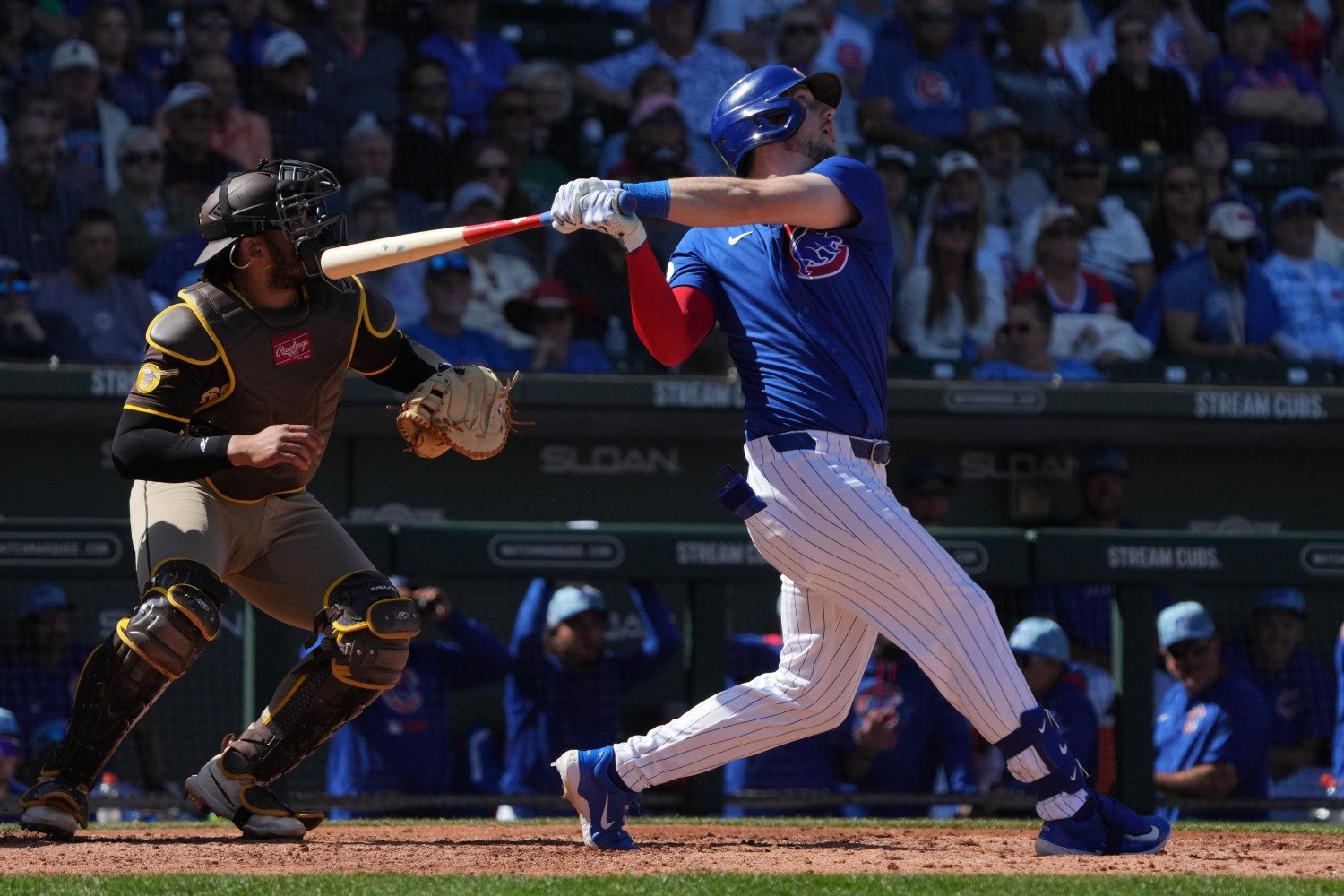 The Cubs' spring training game against the White Sox got rained out on Friday, but that still leaves them eight games to play in the Cactus League, not including the Spring Breakout games and the exhibitions in Japan before the two games that matter. It has been fun, in the few opportunities I've had to listen on the radio or actually get a free MLB.tv broadcast, to follow the practice game action as it happens, and even if I can't watch or listen, at least there are highlights via Marquee's YouTube channel or the various denizens of Cubs social media who enjoy clipping highlights for the rest of us. It's even more fun knowing that most of it doesn't matter, as long as everyone comes out of it healthy and feeling good. I think I was catching up on a condensed game on YouTube when I saw a random comment saying they hope Kyle Tucker figures it out soon. If you have time to look it up, it seems so far that poor Kyle has no hits, just three walks, and a bunch of strikeouts. Now, Tucker has famously told us that he approaches batting practice differently than most, where he doesn't really swing so much as he tracks the pitches. A quick Google search shows at least 20 articles lamenting Kyle's 0-fer, including Matt Trueblood being tongue-in-cheek here, and a nearly equal number of articles touting the main piece traded to the Astros, Cam Smith, who apparently is now their top prospect. It probably isn't too surprising hearing from the Cubs that they're not worried about the lack of hits so far from Tucker, and the fact is that while Cam Smith is "tearing it up" in spring so far, he has at this writing only 15 plate appearances—half as many as Gage Workman, who is vying for a bench spot. If you dig into it a bit more, you realize that Smith has done most of his damage in the parts of the game that nobody really cares about anymore because the starters are out, whereas Workman has a healthy mix of starts and late-game entries. I don't know that you can draw any conclusions in spring no matter if you're in Arizona or Florida, but sports sites have to sell content and clicks, right? Therein lies our cognitive dissonance, where we know that guys just need to get reps, get their game timing on, and you really only care about performance for the guys on the fringe, who are trying to get that last bench spot or the last bullpen role. I think that's where you can kind of shrug at Ben Brown's three runs given up against the Royals, while you can understand why the Cubs just sent Chris Flexen packing to minor-league camp. Yet, in our human tendency to react emotionally despite past experiences and empirical data, we prefer to see the players representing our favorite squad do well, and we'd love to see the Cubs remain atop the Cactus League (nope, it's the Rockies, who are definitely going places). It is comforting to know that the professionals in charge of preparing for the games that do matter are taking this in stride, and especially reassuring that most everyone is healthy. Guys who are on the shelf will come back sooner rather than later, and there's so much depth on the Cubs that we see dozens of articles, including on this here website, debating who will make the cut. Perhaps the anxiety we feel now is good practice for the regular season, but there is some level of satisfaction knowing that the Cubs have done their best to prepare for 2025, even if it isn't reflected in the box score. Of course, it would be nice if Pete Crow-Armstrong would save some of his chaos for games that matter, but there's no dissonance in saying that we've enjoyed his madness so far.
