


Jacob Zanolla
-
Posts
53 -
Joined
-
Last visited
Content Type
Profiles
Joomla Posts 1
Chicago Cubs Videos
Chicago Cubs Free Agent & Trade Rumors, Notes, & Tidbits
2026 Chicago Cubs Top Prospects Ranking
News
2023 Chicago Cubs Draft Picks
Guides & Resources
2024 Chicago Cubs Draft Picks
The Chicago Cubs Players Project
2025 Chicago Cubs Draft Pick Tracker
2026 Chicago Cubs Draft Tracker: Picks & Bonuses
Blogs
Events
Forums
Store
Gallery
Everything posted by Jacob Zanolla
-
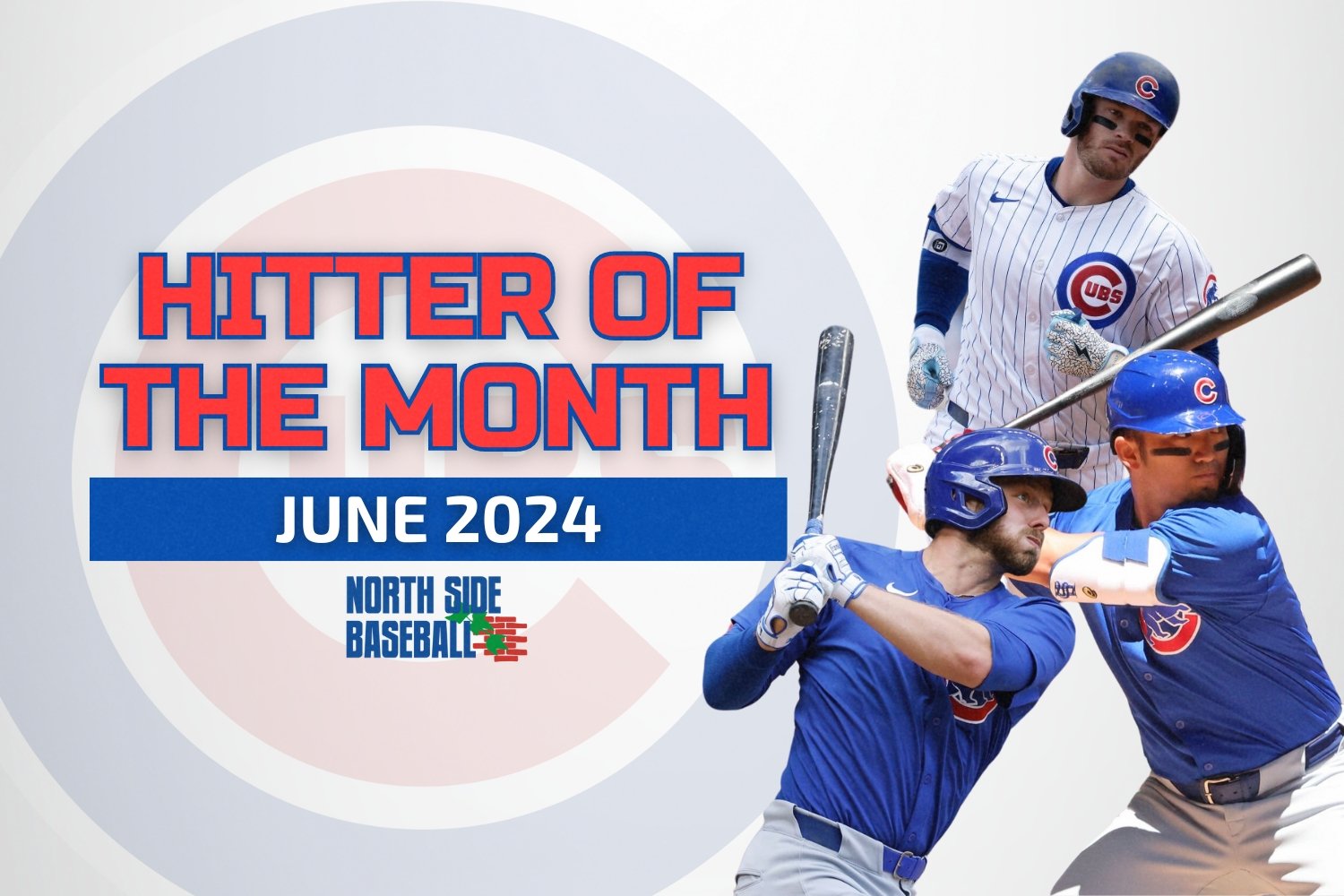 Seiya Suzuki can be a very frustrating hitter to watch, but overall, he has put up good numbers. Suzuki also had a high strikeout rate of 32.7%, with a relatively low walk rate. He had a .851 OPS in June, hitting five home runs with twelve RBIs. What's most frustrating with Suzuki is how he often puts up uncompetitive at-bats. It seems like every night, he strikes out looking or will swing and miss at a fastball down the heart of the plate. However, similar to Happ, the numbers tell a different story: he has been a decent hitter. The defense was abysmal when Suzuki appeared in the right, so he has switched to designated hitter lately. Another positive about Suzuki’s June is his hard-hit rate. His soft contact rate was only 6.6%, which is extremely impressive. He’s hitting the ball hard; however, it’s not always landing away from the defense. He struck out three times as much as he walked but hit two triples. This all may sound negative, but I had a hard time choosing for this award apart from the number one spot. Suzuki was solid this month, but many flaws became apparent. No team is without its flaws, but they’re even more apparent when the whole team forgets how to hit a baseball. It's not a fun time in Chicago right now. Ian Happ is a very streaky hitter, but thankfully, he was solid in June. He did have a slump or two, but Happ was so good during the rest of the month that it didn’t matter. Happ hit five home runs in June, with a .244 average and .887 OPS. His strikeout percentage was 27.4%, but he continued to draw walks like usual. To end the month, Happ hit two lead-taking home runs in the eighth inning or later within three days! He’s been clutch, which the team has needed. The problem is that the rest of the team, besides the other two hitters in this piece, have been rather terrible. Ian Happ is usually a consistent fielder, aside from a few costly errors (especially the one in Milwaukee from this past series). He could be moved at the deadline, even though he has an NTC (No Trade Clause). His versatility as a switch-hitter and the defense could make him a very intriguing trade target for teams looking to compete down the stretch. Michael Busch was easily the best choice for hitter of the month, continuing what has been a spectacular season for the rookie first baseman. One thing that he still struggles with is his strikeouts, especially on the high fastball. Craig Counsell has been hitting him second lately, which seems to be a good choice. This year, he has a .289 average and 140 wRC+ in the two-hole. His walk rate was 14.9%, which greatly helps his on-base percentage. In June, Busch reached base more than 40% of the time and now ranks 23rd in baseball in on-base percentage. Busch only hit two home runs last month, but a slugging of .446 is excellent, given the high batting average of .297. Busch has been playing a lot of first base and now has 3 OAA (Outs above average) on the season. Seiya Suzuki has started to play at DH more, which means Cody Bellinger starts in right field. Thanks to this, Michael Busch is now the clear everyday first baseman, with no worries about Bellinger taking his place. If Busch can limit the strikeouts, his value would increase even more. He’s already producing at a high level, so fans should be excited to see what he does for the rest of the season.
 -
The 2024 Chicago Cubs certainly haven't earned an infusion of talent, at the expense of their future. They're no deadline buyers. Can they be deadline sellers, in any serious sense? Image courtesy of © John Hefti-USA TODAY Sports The Cubs continue to plummet down the standings page of the NL Central, with each game feeling like a worse loss than the last. After Monday’s game, they were 37-42, the same record as last year at this time. In 2023, they were able to turn it around, and missed the playoffs by one game. At first, it appeared as if they would sell at the deadline, but a sudden push in the middle of July changed things up, with the Cubs suddenly being buyers. They didn’t really do much, although acquiring Jeimer Candelario was one of the biggest offensive moves made by any team at the deadline. However, at this time last year, the Cubs were on the upswing. The 2024 squad started off strong, but has since shown its many weaknesses. Whether it’s blowing saves, leaving runners on base all game, or all of the above, this team is an absolute mess. It had seemed like the Cubs could buy at the deadline, making a playoff push before truly competing next season. Jed Hoyer is in a difficult position, because this team isn’t really in a good spot to sell. Not only are they supposed to be competing, but they have a great farm system. Buying would be perfect because of those prospects, who give Hoyer a lot of capital with which to acquire talent. Right now, the team has many holes to fill, so I can’t really justify buying. Hoyer has had multiple chances to trade prospects for better talent, but hasn’t really done anything. The two big trades of late were giving up DJ Herz for Candelario, and losing Zyhir Hope and Jackson Ferris for Michael Busch and Yency Almonte. The Cubs still have a top farm system, which does speak to the depth within these minor-league affiliates. Hoyer seems persistent in waiting to see what they become, praying that they all become quality major-league players. At some point, he has to realize that selling some of the prospects now will get him current talent, eliminating the risk of keeping those uncertain young names in your system. Instead, he’s “prospect-hugging,” and it is clearly not working. Does Hoyer sell what he can? Buy, even though the chances of competing are not great? Does he do nothing, and let the team continue to drown in the pools of incompetence? A popular topic among Cubs fans is the job security of Jed Hoyer, and whether or not he should be in the hot seat. His contract doesn’t expire until after the 2025 season, but that doesn’t mean he has to be with the Cubs for that time. While I think this deadline will be very telling for the future of this organization, I still can’t wrap my head around how I will be happy come August. The Cubs do have some names that could be traded, most likely for more prospects. If the Cubs do get more prospects, what will they do with them? The logical thing to do is trade them for major-league talent this offseason, but I honestly don’t think Hoyer will do that. He is very patient, which at times works out for the team. Other times, he misses out on opportunities because he doesn’t want to overpay in any way, shape, or form. We saw this during the last winter, when Hoyer waited until January to make his first move. I won’t discuss the fact that the team didn’t sign Bryce Harper, as I blame Tom Ricketts for being dumb enough to not pull the trigger and sign one of the greatest players of our generation. Something I will mention is his contract, and how insane that was at the time. The market is changing. So are the values of players' contracts. In 2019, Bryce Harper signed a 13-year deal with the Phillies for $330 Million. His AAV (Average Annual Value) is $25.38 Million. Dansby Swanson signed a 7-year deal worth $177 Million before the 2023 season, with an AAV of $25.29 Million. I know there is a difference in length, but there is no difference in AAV. Harper is easily the better player, which shows that contract values continue to go up. What seems like an overpay now will most likely be a solid contract in the future, if you bet on the right stars. I saw this as Dansby is not producing offensively, but sometimes risks have to be taken in order to win. When looking at the Cubs roster, there aren’t many pieces that can easily move at this deadline. One possible option is Nico Hoerner, although that would upset many fans. Hoerner hasn’t produced at his normal rate this season, with all of his offensive numbers being down. Cody Bellinger is another name that could be moved, but his contract situation will make it interesting and thorny. Mike Tauchman’s injury means he most likely won’t be dealt, or that the return will be way less than it could have been. A few relievers could be moved, but none of them have been good enough to warrant any good package. Matt Trueblood wrote the other day about trading Ian Happ or Seiya Suzuki, which I would very much be a fan of. The Cubs have a lot of outfield depth in the minors, so getting something back while freeing up some payroll would be smart. As with Bellinger, though, the contract terms to which Hoyer agreed will now make the work of moving on more difficult. Hoyer doesn’t have many options to sell, which means that this deadline will be very interesting. He could buy in a panic to save his job, although I’m afraid that he isn’t on the hot seat just yet. Should he be? Probably, as I’m sure many Cubs fans agree. However, I’m afraid Cubs fans are just going to have to wait this out until next season--at the earliest. View full article
-
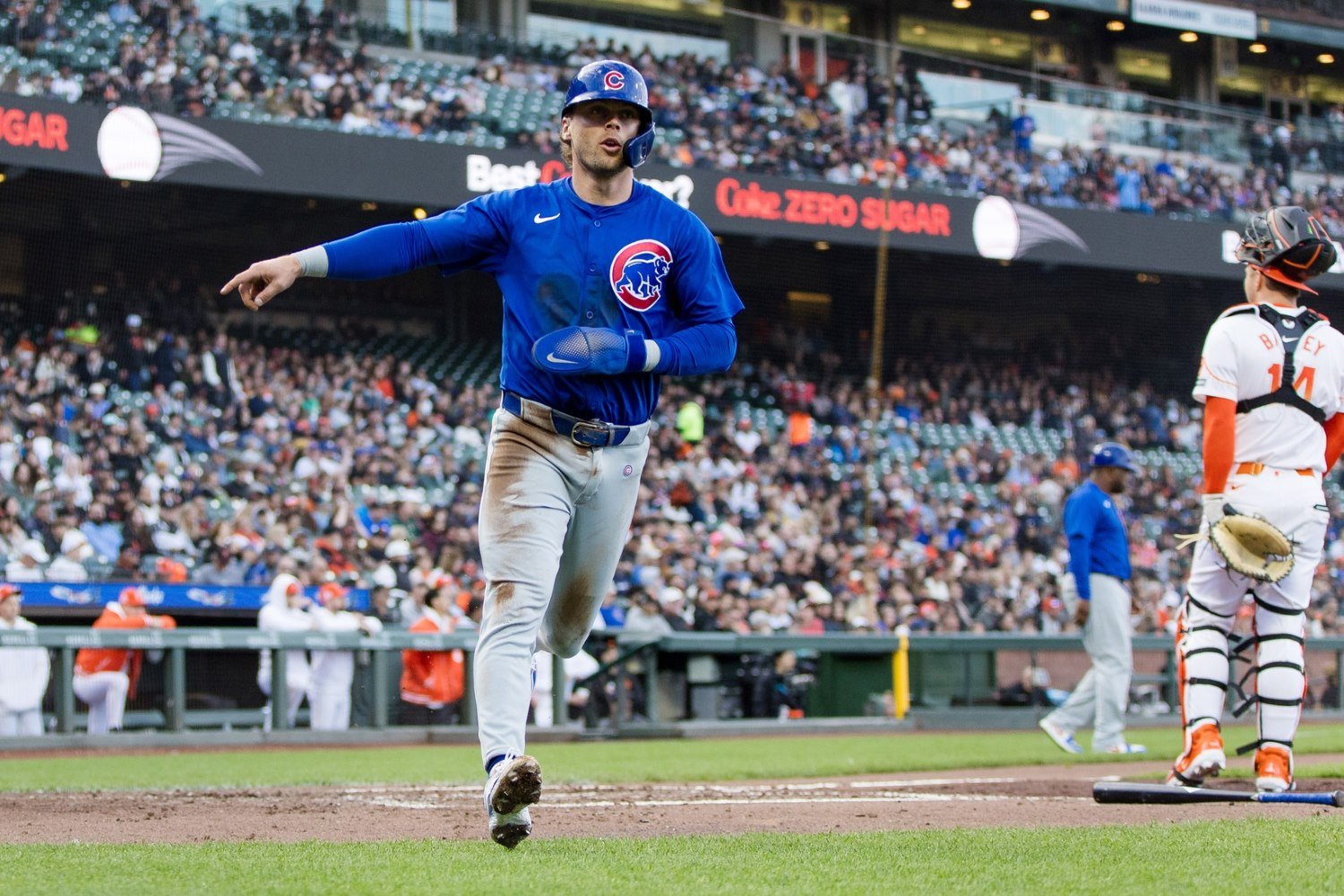 The Cubs continue to plummet down the standings page of the NL Central, with each game feeling like a worse loss than the last. After Monday’s game, they were 37-42, the same record as last year at this time. In 2023, they were able to turn it around, and missed the playoffs by one game. At first, it appeared as if they would sell at the deadline, but a sudden push in the middle of July changed things up, with the Cubs suddenly being buyers. They didn’t really do much, although acquiring Jeimer Candelario was one of the biggest offensive moves made by any team at the deadline. However, at this time last year, the Cubs were on the upswing. The 2024 squad started off strong, but has since shown its many weaknesses. Whether it’s blowing saves, leaving runners on base all game, or all of the above, this team is an absolute mess. It had seemed like the Cubs could buy at the deadline, making a playoff push before truly competing next season. Jed Hoyer is in a difficult position, because this team isn’t really in a good spot to sell. Not only are they supposed to be competing, but they have a great farm system. Buying would be perfect because of those prospects, who give Hoyer a lot of capital with which to acquire talent. Right now, the team has many holes to fill, so I can’t really justify buying. Hoyer has had multiple chances to trade prospects for better talent, but hasn’t really done anything. The two big trades of late were giving up DJ Herz for Candelario, and losing Zyhir Hope and Jackson Ferris for Michael Busch and Yency Almonte. The Cubs still have a top farm system, which does speak to the depth within these minor-league affiliates. Hoyer seems persistent in waiting to see what they become, praying that they all become quality major-league players. At some point, he has to realize that selling some of the prospects now will get him current talent, eliminating the risk of keeping those uncertain young names in your system. Instead, he’s “prospect-hugging,” and it is clearly not working. Does Hoyer sell what he can? Buy, even though the chances of competing are not great? Does he do nothing, and let the team continue to drown in the pools of incompetence? A popular topic among Cubs fans is the job security of Jed Hoyer, and whether or not he should be in the hot seat. His contract doesn’t expire until after the 2025 season, but that doesn’t mean he has to be with the Cubs for that time. While I think this deadline will be very telling for the future of this organization, I still can’t wrap my head around how I will be happy come August. The Cubs do have some names that could be traded, most likely for more prospects. If the Cubs do get more prospects, what will they do with them? The logical thing to do is trade them for major-league talent this offseason, but I honestly don’t think Hoyer will do that. He is very patient, which at times works out for the team. Other times, he misses out on opportunities because he doesn’t want to overpay in any way, shape, or form. We saw this during the last winter, when Hoyer waited until January to make his first move. I won’t discuss the fact that the team didn’t sign Bryce Harper, as I blame Tom Ricketts for being dumb enough to not pull the trigger and sign one of the greatest players of our generation. Something I will mention is his contract, and how insane that was at the time. The market is changing. So are the values of players' contracts. In 2019, Bryce Harper signed a 13-year deal with the Phillies for $330 Million. His AAV (Average Annual Value) is $25.38 Million. Dansby Swanson signed a 7-year deal worth $177 Million before the 2023 season, with an AAV of $25.29 Million. I know there is a difference in length, but there is no difference in AAV. Harper is easily the better player, which shows that contract values continue to go up. What seems like an overpay now will most likely be a solid contract in the future, if you bet on the right stars. I saw this as Dansby is not producing offensively, but sometimes risks have to be taken in order to win. When looking at the Cubs roster, there aren’t many pieces that can easily move at this deadline. One possible option is Nico Hoerner, although that would upset many fans. Hoerner hasn’t produced at his normal rate this season, with all of his offensive numbers being down. Cody Bellinger is another name that could be moved, but his contract situation will make it interesting and thorny. Mike Tauchman’s injury means he most likely won’t be dealt, or that the return will be way less than it could have been. A few relievers could be moved, but none of them have been good enough to warrant any good package. Matt Trueblood wrote the other day about trading Ian Happ or Seiya Suzuki, which I would very much be a fan of. The Cubs have a lot of outfield depth in the minors, so getting something back while freeing up some payroll would be smart. As with Bellinger, though, the contract terms to which Hoyer agreed will now make the work of moving on more difficult. Hoyer doesn’t have many options to sell, which means that this deadline will be very interesting. He could buy in a panic to save his job, although I’m afraid that he isn’t on the hot seat just yet. Should he be? Probably, as I’m sure many Cubs fans agree. However, I’m afraid Cubs fans are just going to have to wait this out until next season--at the earliest.
 -
Let's Make A Deal! What Players Can The Cubs Acquire From The Mets?
Jacob Zanolla posted an article in Cubs
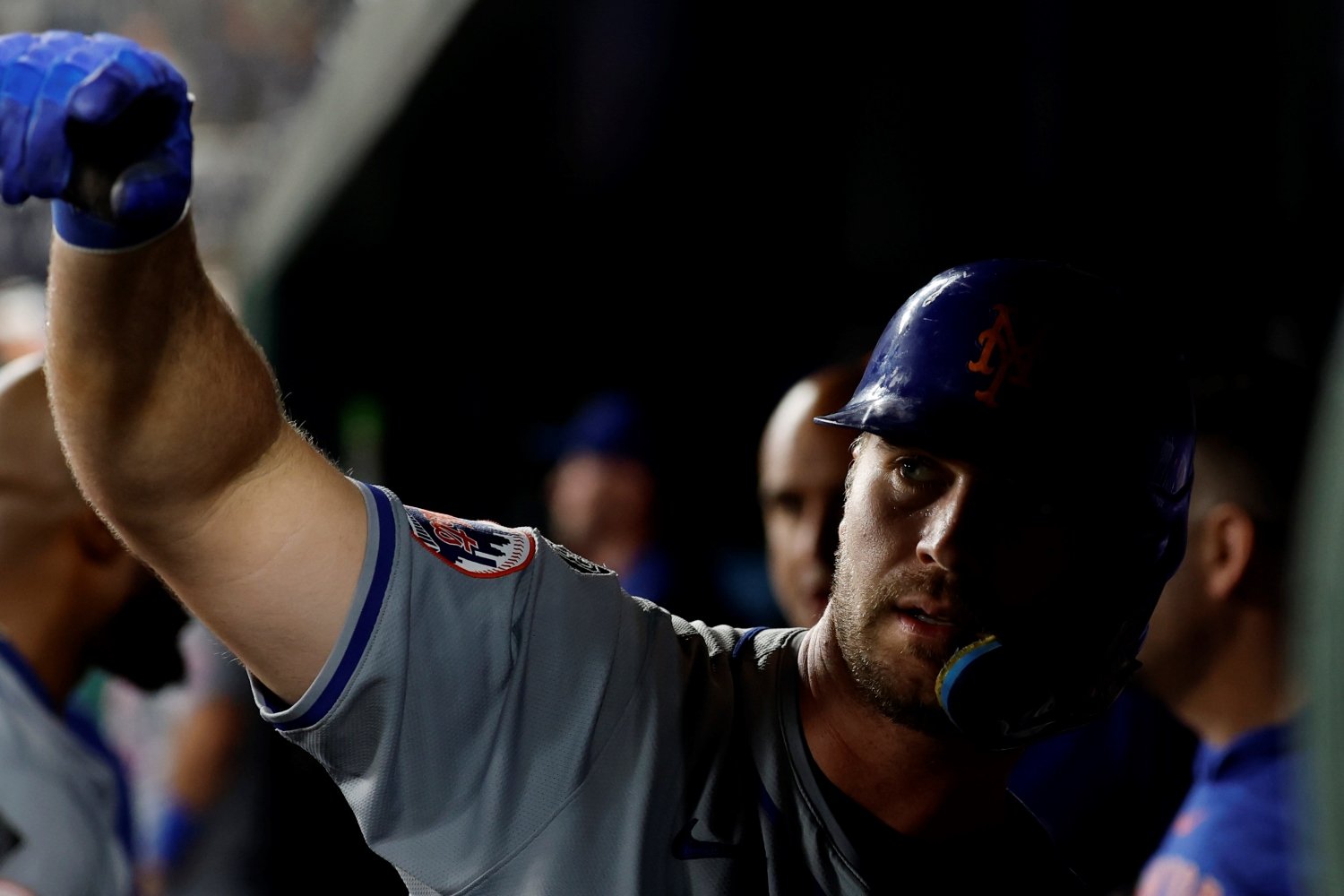 The first player I want to discuss is Pete Alonso. The Cubs were connected to Alonso this past offseason, but it seems like the Mets didn’t really want to trade him at that juncture. Jeff Passan reported in his Early Trade Deadline Preview that multiple executives around baseball expect him to be traded, mainly due to his large contract. The Mets would only receive a fourth-round pick from the qualifying offer if they keep him, leading me to also agree that moving him seems like the most logical option. The Cubs may have Michael Busch at first base right now, but that can easily change. Alonso can always be put into the DH spot, or Busch can be placed there. Busch can play second or third as well, although he isn’t as comfortable there. Alonso is a known power hitter, which the Cubs could really use this year. Right now, the team ranks 20th in team slugging percentage, and they're tied for 17th in home runs. While power isn’t everything in today’s version of baseball, it definitely can help you win more ball games. The top three teams in slugging percentage and home runs are the same three teams: The Baltimore Orioles are first, followed by the New York Yankees and Los Angeles Dodgers. These three teams are a combined 59 games over .500, so yeah, power helps. The sturdily-built Alonso has a 130 wRC+ this year, and has already hit 14 home runs. He would have the most home runs on the Cubs as of now, as well as the highest wRC+. While he may be expensive prospect-wise, I don’t think it would require an insane package to bring Alonso to Chicago. It frees up money for the Mets, and at least gets them something before he goes to the open market. Jon Heyman went on 670 the Score Monday morning and said he believes Alonso is a “logical” and realistic trade target for the Cubs, falling in line with the belief of many analysts in the Cubs community. Then again, of course, the team has to play much better in order to be suitors for Alonso types at all. Another player whom I think the Cubs should look into is JD Martinez. This wouldn’t be a package deal, but if Hoyer thinks Alonso is too expensive, pivoting to Martinez could be beneficial. Martinez is someone whom I was hoping the Cubs would acquire this past offseason, but he waited it out before signing near the end of March. The Cubs are currently just rotating who is in the DH spot, which is a popular solution these days. However, as I said before, this lineup needs more power. He shouldn’t be a top target, but more of a backup option if other players don’t work out. Martinez hits for a higher average than Alonso, but still has a slugging of .444. This is under his career performance, but the underlying numbers help show that he’s getting unlucky. His expected slugging is .497, 53 points higher than his actual slugging. His Barrel% of 16.3% is in the 95th percentile, with an average exit velocity of 91.1 miles per hour. He’s also a veteran, and has been playing in the majors for over a decade. Having his leadership would be awesome for young power hitters, like Christopher Morel. The Mets aren’t the only option to acquire legit talent, but considering where they sit right now, it sure seems like they may be one of the best teams to offer fits for the Cubs' needs.
 -
As we get closer to July, the trade deadline is becoming more of a conversation around baseball. While many teams are still in the hunt, clearly, a few teams are going to be sellers come late July. One of those teams is the New York Mets, who are currently in fourth place in the NL East, eight games under .500. It may not be known if the Cubs will be buying or not, but let’s assume that the team is able to turn things around, and Jed Hoyer does decide to add before making a playoff push. Whom should the Cubs target? Image courtesy of © Geoff Burke-USA TODAY Sports The first player I want to discuss is Pete Alonso. The Cubs were connected to Alonso this past offseason, but it seems like the Mets didn’t really want to trade him at that juncture. Jeff Passan reported in his Early Trade Deadline Preview that multiple executives around baseball expect him to be traded, mainly due to his large contract. The Mets would only receive a fourth-round pick from the qualifying offer if they keep him, leading me to also agree that moving him seems like the most logical option. The Cubs may have Michael Busch at first base right now, but that can easily change. Alonso can always be put into the DH spot, or Busch can be placed there. Busch can play second or third as well, although he isn’t as comfortable there. Alonso is a known power hitter, which the Cubs could really use this year. Right now, the team ranks 20th in team slugging percentage, and they're tied for 17th in home runs. While power isn’t everything in today’s version of baseball, it definitely can help you win more ball games. The top three teams in slugging percentage and home runs are the same three teams: The Baltimore Orioles are first, followed by the New York Yankees and Los Angeles Dodgers. These three teams are a combined 59 games over .500, so yeah, power helps. The sturdily-built Alonso has a 130 wRC+ this year, and has already hit 14 home runs. He would have the most home runs on the Cubs as of now, as well as the highest wRC+. While he may be expensive prospect-wise, I don’t think it would require an insane package to bring Alonso to Chicago. It frees up money for the Mets, and at least gets them something before he goes to the open market. Jon Heyman went on 670 the Score Monday morning and said he believes Alonso is a “logical” and realistic trade target for the Cubs, falling in line with the belief of many analysts in the Cubs community. Then again, of course, the team has to play much better in order to be suitors for Alonso types at all. Another player whom I think the Cubs should look into is JD Martinez. This wouldn’t be a package deal, but if Hoyer thinks Alonso is too expensive, pivoting to Martinez could be beneficial. Martinez is someone whom I was hoping the Cubs would acquire this past offseason, but he waited it out before signing near the end of March. The Cubs are currently just rotating who is in the DH spot, which is a popular solution these days. However, as I said before, this lineup needs more power. He shouldn’t be a top target, but more of a backup option if other players don’t work out. Martinez hits for a higher average than Alonso, but still has a slugging of .444. This is under his career performance, but the underlying numbers help show that he’s getting unlucky. His expected slugging is .497, 53 points higher than his actual slugging. His Barrel% of 16.3% is in the 95th percentile, with an average exit velocity of 91.1 miles per hour. He’s also a veteran, and has been playing in the majors for over a decade. Having his leadership would be awesome for young power hitters, like Christopher Morel. The Mets aren’t the only option to acquire legit talent, but considering where they sit right now, it sure seems like they may be one of the best teams to offer fits for the Cubs' needs. View full article
-
Id love this but don't see it as a real likelihood. We know Jed is cheap and wants to keep all of his prospects, and Vlad would cost a lot. Seems like a good move that a lot of GMs would make but sadly not Jed
-
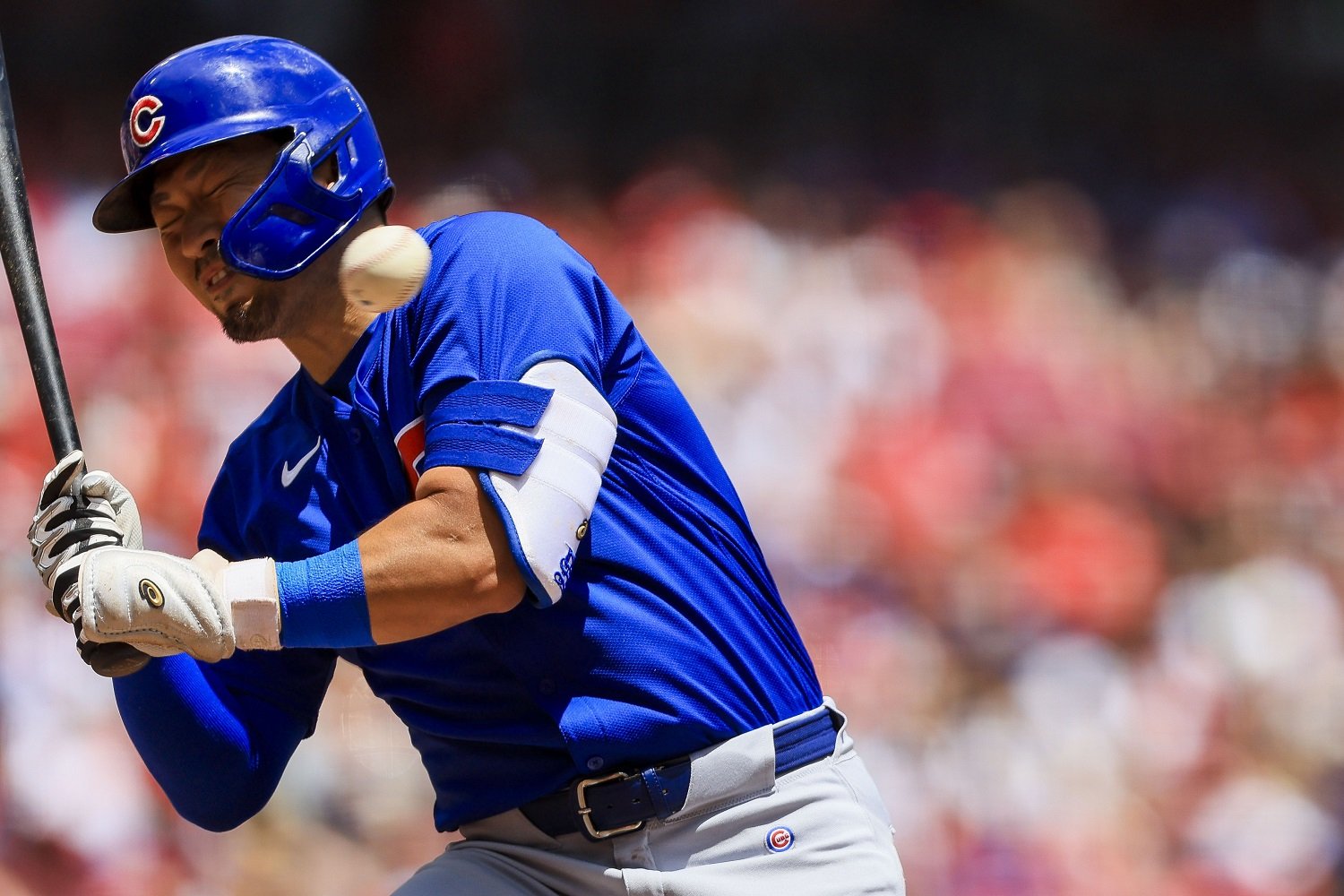 Seiya Suzuki has been a liability defensively this season. He currently has -2 Outs Above Average, and Cubs fans know that that evaluation is (if anything) generous. The Chicago outfield is already packed, and moving him to DH wouldn’t be the worst option in the world. He doesn’t have to be there every day, but giving him some extra days off might be for the best, as well. He’s already injured his oblique twice in as many seasons, and his hand and ankle on separate occasions in 2022. Three times, he's required a stint on the injured list. With Suzuki clearly being injury-prone, some days off could limit the chance he is injured, which might not only reduce the number of games he misses, but avoid the disruptions to his rhythm and production that have come with each injury. Thankfully, Craig Counsell has plenty of options to help out the lineup, making this a feasible possibility. The first one is pretty obvious, which is giving Pete Crow-Armstrong more playing time. He already has 0.8 fWAR, although that is mainly because of defense. He hasn't been used quite like a regular, let alone an everyday fixture. If he can get more consistent at-bats, I would assume his numbers should improve somewhat. Making Crow-Armstrong the main center fielder would move Cody Bellinger over to right field. Thanks to his versatility, Bellinger could always play first base, too, and allow Mike Tauchman to patrol right field on days that Michael Busch has off. Bellinger’s ability to play first is very helpful, and ensures the presence of his bat in the lineup every day. Another option is calling up Brennen Davis, who has been raking in Triple-A Iowa since coming back from an injury. Davis has already blasted 10 home runs, giving him a 150 wRC+ and .582 SLG. His walk percentage is 14.1%, which would be the best on the Cubs' major-league squad as of right now. Davis can help in the outfield, while also giving the struggling Cubs offense a spark in the lineup with the potential to send a baseball onto Waveland Ave. Fans have been asking for his promotion for a few weeks now, as more and more highlights are coming out of Iowa of the stellar Triple-A squad hitting home run after home run after home run. If Davis is called up, one of my main worries is that he will just sit on the bench like Alexander Canario did when he was promoted earlier this year. Davis had been one of the best prospects in baseball before his back injury, so it’s really exciting to see him back to his old self, and hopefully, he gets a chance in Chicago soon. Canario, too, has been raking in Iowa, as I mentioned in the last section. He’s gotten a couple of chances in Chicago, and has done solid work in those brief stints with the big-league club. The one problem was his strikeout rate, which was at 44%. That’s not sustainable, and can make him borderline unplayable. However, after going back down to Iowa, he has reduced that to a 26.1% K rate. That’s still not great, but it’s certainly better than striking out nearly half of his plate appearances. Canario has a .586 slugging in Iowa, already hitting 11 home runs. A 138 wRC+ is right around what he put up in Chicago, but that shows that the power is there. Calling him up would add another outfield option, as well as putting him in the DH spot. Michael Busch has positional flexibility, as well, so there is a chance we could see him at third base, along with some more playing time at second. This means Bellinger can play first base more, opening up the outfield for whomever they would call up to get some more playing time. While the team plainly doesn't want to use Busch at positions other than first base with any regularity, they've broken that seal now. Moving Suzuki to a near-exclusive DH role and utilizing the positional flexibility of Bellinger and Busch could make way for another young hitter, even though it would have to come at the expense of a much-respected veteran, be it David Bote or Patrick Wisdom. That move doesn't feel imminent, but it might be closer than we think.
 -
Seiya Suzuki was hit by a baseball on Friday while trying to steal second base, and soon had to be removed from the game. It proved not to be cause for alarm, but it speaks to an underlying issue for the Cubs right fielder. Do they need to change his usage to keep him healthy? And how could they do so? Image courtesy of © Katie Stratman-USA TODAY Sports Seiya Suzuki has been a liability defensively this season. He currently has -2 Outs Above Average, and Cubs fans know that that evaluation is (if anything) generous. The Chicago outfield is already packed, and moving him to DH wouldn’t be the worst option in the world. He doesn’t have to be there every day, but giving him some extra days off might be for the best, as well. He’s already injured his oblique twice in as many seasons, and his hand and ankle on separate occasions in 2022. Three times, he's required a stint on the injured list. With Suzuki clearly being injury-prone, some days off could limit the chance he is injured, which might not only reduce the number of games he misses, but avoid the disruptions to his rhythm and production that have come with each injury. Thankfully, Craig Counsell has plenty of options to help out the lineup, making this a feasible possibility. The first one is pretty obvious, which is giving Pete Crow-Armstrong more playing time. He already has 0.8 fWAR, although that is mainly because of defense. He hasn't been used quite like a regular, let alone an everyday fixture. If he can get more consistent at-bats, I would assume his numbers should improve somewhat. Making Crow-Armstrong the main center fielder would move Cody Bellinger over to right field. Thanks to his versatility, Bellinger could always play first base, too, and allow Mike Tauchman to patrol right field on days that Michael Busch has off. Bellinger’s ability to play first is very helpful, and ensures the presence of his bat in the lineup every day. Another option is calling up Brennen Davis, who has been raking in Triple-A Iowa since coming back from an injury. Davis has already blasted 10 home runs, giving him a 150 wRC+ and .582 SLG. His walk percentage is 14.1%, which would be the best on the Cubs' major-league squad as of right now. Davis can help in the outfield, while also giving the struggling Cubs offense a spark in the lineup with the potential to send a baseball onto Waveland Ave. Fans have been asking for his promotion for a few weeks now, as more and more highlights are coming out of Iowa of the stellar Triple-A squad hitting home run after home run after home run. If Davis is called up, one of my main worries is that he will just sit on the bench like Alexander Canario did when he was promoted earlier this year. Davis had been one of the best prospects in baseball before his back injury, so it’s really exciting to see him back to his old self, and hopefully, he gets a chance in Chicago soon. Canario, too, has been raking in Iowa, as I mentioned in the last section. He’s gotten a couple of chances in Chicago, and has done solid work in those brief stints with the big-league club. The one problem was his strikeout rate, which was at 44%. That’s not sustainable, and can make him borderline unplayable. However, after going back down to Iowa, he has reduced that to a 26.1% K rate. That’s still not great, but it’s certainly better than striking out nearly half of his plate appearances. Canario has a .586 slugging in Iowa, already hitting 11 home runs. A 138 wRC+ is right around what he put up in Chicago, but that shows that the power is there. Calling him up would add another outfield option, as well as putting him in the DH spot. Michael Busch has positional flexibility, as well, so there is a chance we could see him at third base, along with some more playing time at second. This means Bellinger can play first base more, opening up the outfield for whomever they would call up to get some more playing time. While the team plainly doesn't want to use Busch at positions other than first base with any regularity, they've broken that seal now. Moving Suzuki to a near-exclusive DH role and utilizing the positional flexibility of Bellinger and Busch could make way for another young hitter, even though it would have to come at the expense of a much-respected veteran, be it David Bote or Patrick Wisdom. That move doesn't feel imminent, but it might be closer than we think. View full article
-
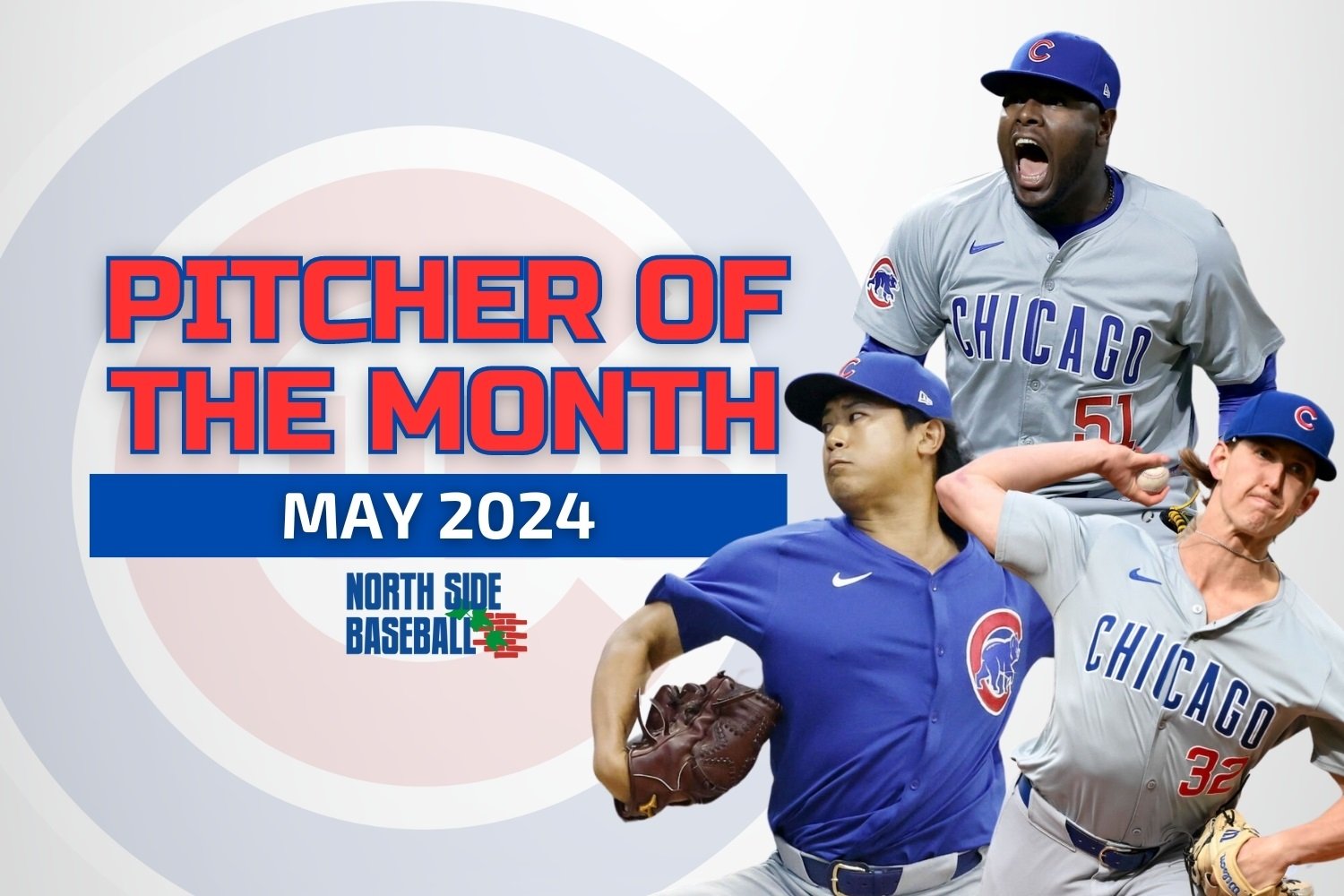 Héctor Neris has been in the big leagues for a long time, and at times, he has had a ton of success. Shota Imanaga was the choice in April. How did he follow it up in May? Did his final start of the month cost him a top spot? With Jordan Wicks out, the Cubs really needed Ben Brown to step up and perform. He did exactly that, and has therefore earned himself a spot in this rotation going forward. Brown didn't just keep the team alive in his starts, but he gave them every chance he could by being one of the best starting pitchers in the month of May. Let's get right to it. Top 3 Cubs Pitchers in May #3: RHP Héctor Neris Once Adbert Alzolay struggled for a few weeks, he was demoted out of the closer position. Neris pitched 10 innings during the month of May, and boasted a 2.70 ERA with two saves. He also had a 4-0 record, which isn’t necessarily great due to the fact he’s the closer. Hayden Wesneski said that the clubhouse nicknamed him “Heart Attack Héctor,” which was a nickname some fans gave him online as well. It’s not wrong, as he often does let players reach base before finishing the game. Giving up home runs has been a big problem for the bullpen, but thankfully Neris didn’t allow a long ball all month. He gave up a run in his last two appearances, but otherwise had one run allowed in all of May. His opponent’s xwOBA went down by 45 points during the month, and he trimmed his walk rate impressively. He started a new tradition after each win, giving a 'W' flag to a pitcher and player of the game. He has the veteran leadership needed to help this young bullpen, and hopefully, he continues to improve into June. #2: LHP Shota Imanaga Imanaga was our winner last month, and continued to be absolutely insane throughout the month of May. He gave up seven runs to the Brewers in his last start after 10 days of rest, but even after that, he has the third-best ERA in the major leagues. Imanaga has one of the best fastballs in baseball, which he mixes in with his splitter to change speeds. The four-seam fastball has a +12 run value, with opponents hitting .180 and boasting a .236 wOBA off of that pitch so far this season. In five starts this month, he allowed nine runs and threw 30 1/3 innings. He allowed two of those runs against the Padres, when Craig Counsell sent him out for the eighth inning. He gave up a two-run home run to Jurickson Profar, which were the only runs he allowed all game. If he hadn’t given up so many runs to the Brewers in his last start of the month, I would have considered him as the winner once again. However, he came up just short. Imanaga had a 2.67 ERA in May, with a 9.2 K/9 and 2.1 BB/9. He earned his first loss in his short MLB career, but otherwise was very effective. Chicago Cubs Pitcher of the Month (May): RHP Ben Brown Brown was incredible throughout May, over 23 1/3 innings. Brown started three times, and came out of the bullpen three times, as well. Brown began the month with a start in New York versus the Mets, with two runs allowed in 4 2/3 innings. Counsell then proceeded to use him three times in the bullpen for 7 2/3 innings total, in which he gave up one earned run. Brown’s WHIP was 0.94 and his ERA was 1.16, striking out 33 batters. His last outing was in Milwaukee, where he threw seven hitless innings. Counsell took him out at that point, but he was brilliant, striking out 10 and only walking two batters. One of the coolest things about Brown is the fact that he only throws two pitches, drawing many comparisons to a closer. Brown normally will throw a four-seam fastball, as well as mixing in a knuckle curve and the very rare changeup or sweeper. Brown has only allowed two home runs all year, with a 38.4% ground ball rate. His curveball has a +8 run value, one of the most valuable breaking balls in all of baseball. If I had to give Brown one critique, it’s that he gives up a lot of hard contact. His average exit velocity given up of 93.4 miles per hour is the worst in baseball, and so is his hard-hit rate. This is not great, but his whiff rate is 31.7% (89th percentile), so it’s nice to know that he isn’t letting the batter make contact very often. With Wicks out, the Cubs really needed Brown. He met the challenge, and has therefore earned himself a spot in this rotation going forward. Brown didn't just keep the team alive in his starts, but he gave them every chance he could by being one of the best starting pitchers in the month of May. I’m in favor of the Cubs using a six-man rotation, which would mean Brown continuing to start. However, if they don’t do this, he will most likely be a late-inning reliever, which could work as well. No matter where he's placed, Brown has a very bright future ahead of him.
 -
While the Cubs' bats were fairly quiet in May, the pitching staff was able to keep them in the game most times out. Which pitchers were the best for the Cubs last month? Héctor Neris has been in the big leagues for a long time, and at times, he has had a ton of success. Shota Imanaga was the choice in April. How did he follow it up in May? Did his final start of the month cost him a top spot? With Jordan Wicks out, the Cubs really needed Ben Brown to step up and perform. He did exactly that, and has therefore earned himself a spot in this rotation going forward. Brown didn't just keep the team alive in his starts, but he gave them every chance he could by being one of the best starting pitchers in the month of May. Let's get right to it. Top 3 Cubs Pitchers in May #3: RHP Héctor Neris Once Adbert Alzolay struggled for a few weeks, he was demoted out of the closer position. Neris pitched 10 innings during the month of May, and boasted a 2.70 ERA with two saves. He also had a 4-0 record, which isn’t necessarily great due to the fact he’s the closer. Hayden Wesneski said that the clubhouse nicknamed him “Heart Attack Héctor,” which was a nickname some fans gave him online as well. It’s not wrong, as he often does let players reach base before finishing the game. Giving up home runs has been a big problem for the bullpen, but thankfully Neris didn’t allow a long ball all month. He gave up a run in his last two appearances, but otherwise had one run allowed in all of May. His opponent’s xwOBA went down by 45 points during the month, and he trimmed his walk rate impressively. He started a new tradition after each win, giving a 'W' flag to a pitcher and player of the game. He has the veteran leadership needed to help this young bullpen, and hopefully, he continues to improve into June. #2: LHP Shota Imanaga Imanaga was our winner last month, and continued to be absolutely insane throughout the month of May. He gave up seven runs to the Brewers in his last start after 10 days of rest, but even after that, he has the third-best ERA in the major leagues. Imanaga has one of the best fastballs in baseball, which he mixes in with his splitter to change speeds. The four-seam fastball has a +12 run value, with opponents hitting .180 and boasting a .236 wOBA off of that pitch so far this season. In five starts this month, he allowed nine runs and threw 30 1/3 innings. He allowed two of those runs against the Padres, when Craig Counsell sent him out for the eighth inning. He gave up a two-run home run to Jurickson Profar, which were the only runs he allowed all game. If he hadn’t given up so many runs to the Brewers in his last start of the month, I would have considered him as the winner once again. However, he came up just short. Imanaga had a 2.67 ERA in May, with a 9.2 K/9 and 2.1 BB/9. He earned his first loss in his short MLB career, but otherwise was very effective. Chicago Cubs Pitcher of the Month (May): RHP Ben Brown Brown was incredible throughout May, over 23 1/3 innings. Brown started three times, and came out of the bullpen three times, as well. Brown began the month with a start in New York versus the Mets, with two runs allowed in 4 2/3 innings. Counsell then proceeded to use him three times in the bullpen for 7 2/3 innings total, in which he gave up one earned run. Brown’s WHIP was 0.94 and his ERA was 1.16, striking out 33 batters. His last outing was in Milwaukee, where he threw seven hitless innings. Counsell took him out at that point, but he was brilliant, striking out 10 and only walking two batters. One of the coolest things about Brown is the fact that he only throws two pitches, drawing many comparisons to a closer. Brown normally will throw a four-seam fastball, as well as mixing in a knuckle curve and the very rare changeup or sweeper. Brown has only allowed two home runs all year, with a 38.4% ground ball rate. His curveball has a +8 run value, one of the most valuable breaking balls in all of baseball. If I had to give Brown one critique, it’s that he gives up a lot of hard contact. His average exit velocity given up of 93.4 miles per hour is the worst in baseball, and so is his hard-hit rate. This is not great, but his whiff rate is 31.7% (89th percentile), so it’s nice to know that he isn’t letting the batter make contact very often. With Wicks out, the Cubs really needed Brown. He met the challenge, and has therefore earned himself a spot in this rotation going forward. Brown didn't just keep the team alive in his starts, but he gave them every chance he could by being one of the best starting pitchers in the month of May. I’m in favor of the Cubs using a six-man rotation, which would mean Brown continuing to start. However, if they don’t do this, he will most likely be a late-inning reliever, which could work as well. No matter where he's placed, Brown has a very bright future ahead of him. View full article
-
Tuesday's Dramatic, Cathartic Win Points the Way Back for Struggling Cubs
Jacob Zanolla posted an article in Cubs
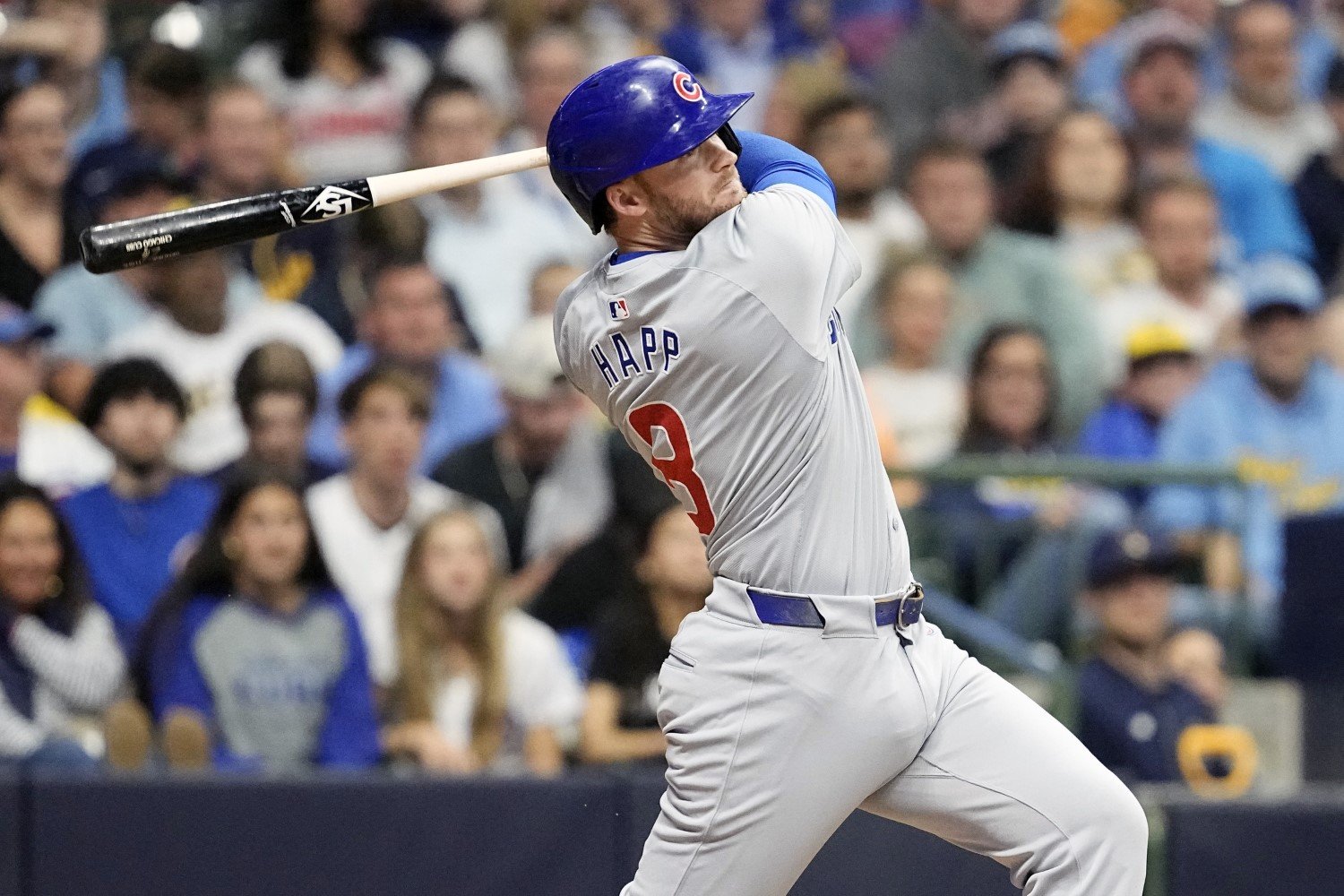 The Cubs were able to snap a five game losing streak on Tuesday, beating the Milwaukee Brewers in 10 innings. While it may not have seemed like it at first, this is exactly the type of game they needed to get back on a winning track--and Wednesday's loss, while no fun, only reinforced the notion that the offense is ready to wake up. Michael Busch hit a solo home run in the second inning to give the Cubs an early lead Tuesday, something that hasn’t happened in quite a long time. Looking back on the last homestand against Pittsburgh and Atlanta, the only two times they had the lead were at the moments when they walked off the opponents for wins. In a way, they never really had the lead all homestand. The Cardinals series was a sweep, so not much to be extremely happy about there. Busch has been slumping, and was named a candidate by some to be sent down in a few days when Pete Crow-Armstrong is eligible to be promoted again. He sat on a first-pitch curveball and absolutely demolished it to center field, which had to be a confidence boost for the struggling first baseman. With the first run out of the way, insurance would have been ideal. That didn’t happen, as the Cubs offense once again forgot how to hit a baseball. To be fair, Freddy Peralta was on the mound. It’s going to be hard to get much going against him, but they did it a few weeks ago in Chicago, so we know it’s possible. We know the offense has been struggling, so I don’t want to focus too much on that. Let’s try and ignore the lack of runs for a minute, and focus on what was once again elite: the starting pitching. Ben Brown was acquired from the Phillies for David Robertson in 2022. Brown spent the balance of that campaigna and all of 2023 in the minors, but did well this spring and just missed out on a spot in the rotation. He got an early chance with the Cubs this season because of Justin Steele’s untimely injury, and has been spectacular (minus his first, poor relief outing) in Texas. He had everything working in this game, striking out 10 and allowing only two walks. He didn’t give up any runs, but the best part is that he kept the Brewers offense hitless. Cody Bellinger robbed a home run from Willy Adames that would have tied the game and been the first hit for the Brewers all night. This felt like the play that always happens when there is a no-hitter, something that fans look back on and single out as the play that saved the feat. Brown was taken out after the seventh inning, and the no-hitter was lost two batters later. Héctor Neris ended up blowing the one-run lead in the ninth inning, continuing to earn his nickname of "Heart Attack Hector". At first, I was really frustrated, and worried the team would squander this fantastic start by Brown. The Cubs ended up breaking out in the 10th inning, though, scoring five times to give the bullpen some much-needed breathing room. Ian Happ cracked a two-run double, with Busch, Mike Tauchman and Cody Bellinger having one RBI apiece in the frame. Happ and Busch have been struggling, along with Bellinger if we really dive into the numbers. He hasn't been doing as poorly as the others, but he's definitely been slumping as well. With another six runs and a couple of near-misses that could have driven that number higher, the Cubs followed Tuesday night's win with another encouraging offensive performance. It goes down as a loss, but that game reinforced the progress suggested by Tuesday night's win. Hopefully, the team is turning a corner, and will get back to playing winning baseball in the weeks ahead.
 -
Lately, the Cubs have been really bad offensively, and really good on the pitching side of things. Sure, a 1-0 win Tuesday night would have been cool, but Héctor Neris giving up the tying run so we went to extras ended up working out. If the Cubs had lost the game, it clearly would have been a worst-case scenario, and I would have been livid. However, they not only won, but we saw some great pitching backed by an electric outburst of offense in the 10th inning. Whether they can use that momentum is yet to be seen, but it's a good start. Image courtesy of © Jeff Hanisch-USA TODAY Sports The Cubs were able to snap a five game losing streak on Tuesday, beating the Milwaukee Brewers in 10 innings. While it may not have seemed like it at first, this is exactly the type of game they needed to get back on a winning track--and Wednesday's loss, while no fun, only reinforced the notion that the offense is ready to wake up. Michael Busch hit a solo home run in the second inning to give the Cubs an early lead Tuesday, something that hasn’t happened in quite a long time. Looking back on the last homestand against Pittsburgh and Atlanta, the only two times they had the lead were at the moments when they walked off the opponents for wins. In a way, they never really had the lead all homestand. The Cardinals series was a sweep, so not much to be extremely happy about there. Busch has been slumping, and was named a candidate by some to be sent down in a few days when Pete Crow-Armstrong is eligible to be promoted again. He sat on a first-pitch curveball and absolutely demolished it to center field, which had to be a confidence boost for the struggling first baseman. With the first run out of the way, insurance would have been ideal. That didn’t happen, as the Cubs offense once again forgot how to hit a baseball. To be fair, Freddy Peralta was on the mound. It’s going to be hard to get much going against him, but they did it a few weeks ago in Chicago, so we know it’s possible. We know the offense has been struggling, so I don’t want to focus too much on that. Let’s try and ignore the lack of runs for a minute, and focus on what was once again elite: the starting pitching. Ben Brown was acquired from the Phillies for David Robertson in 2022. Brown spent the balance of that campaigna and all of 2023 in the minors, but did well this spring and just missed out on a spot in the rotation. He got an early chance with the Cubs this season because of Justin Steele’s untimely injury, and has been spectacular (minus his first, poor relief outing) in Texas. He had everything working in this game, striking out 10 and allowing only two walks. He didn’t give up any runs, but the best part is that he kept the Brewers offense hitless. Cody Bellinger robbed a home run from Willy Adames that would have tied the game and been the first hit for the Brewers all night. This felt like the play that always happens when there is a no-hitter, something that fans look back on and single out as the play that saved the feat. Brown was taken out after the seventh inning, and the no-hitter was lost two batters later. Héctor Neris ended up blowing the one-run lead in the ninth inning, continuing to earn his nickname of "Heart Attack Hector". At first, I was really frustrated, and worried the team would squander this fantastic start by Brown. The Cubs ended up breaking out in the 10th inning, though, scoring five times to give the bullpen some much-needed breathing room. Ian Happ cracked a two-run double, with Busch, Mike Tauchman and Cody Bellinger having one RBI apiece in the frame. Happ and Busch have been struggling, along with Bellinger if we really dive into the numbers. He hasn't been doing as poorly as the others, but he's definitely been slumping as well. With another six runs and a couple of near-misses that could have driven that number higher, the Cubs followed Tuesday night's win with another encouraging offensive performance. It goes down as a loss, but that game reinforced the progress suggested by Tuesday night's win. Hopefully, the team is turning a corner, and will get back to playing winning baseball in the weeks ahead. View full article
-
The Cubs pitching depth has been put to the ultimate test this season, and we’re only one month in. Somehow, the team is still doing very well, thanks to a few pitchers who have exceeded expectations in order to keep the Cubs in strong contention for the NL Central crown. The Cubs pitching depth has been put to the ultimate test this season, and we’re only one month in. Jameson Taillon missed a few weeks after an injury in Spring Training, Justin Steele only made it half a game in before hurting his hamstring, Julian Merryweather will be out until at least June, and finally Kyle Hendricks and Drew Smyly went to the IL after rough starts to the 2024 campaign. Somehow, the team is still doing very well, thanks to a few pitchers who have exceeded expectations in order to keep the Cubs in strong contention for the NL Central crown. Top 3 Cubs Pitchers in April #3: RHP Mark Leiter Jr. 14 G, 1-1, 5 Holds, 0.69 ERA, 1.23 WHIP, 13 IP, 3 R, 1 ER, 10 H, 6 BB, 13 K. Mark Leiter Jr. has been the Cubs top reliever thus far, a role that was left empty when Merryweather was injured. Leiter Jr. had a rough end to last season, losing all control of his splitter. He was filling in for injured closer Adbert Alzolay and had a brutal September. Leiter Jr. had an 8.59 ERA that month, with an 8.44 FIP and 13.5% walk rate. I was glad he made the team to begin the season this year but was worried about how he could rebound after a brutal finish to his 2023 campaign. Thankfully, he has been nothing short of fantastic this season. With countless pitching injuries, as I mentioned above, the need for elite pitching has become clear for Craig Counsell and Cubs fans alike. He threw 12 1/3 innings before allowing his first earned run and had a rough game in Boston. The Cubs clearly don't have a closer, which is an issue that needs to be fixed rather quickly. Adbert Alzolay is an absolute mess, as he has forgotten how to pitch in any situation whatsoever. Hector Neris has four straight saves, but the numbers show that he is getting lucky, and that it would probably suit Counsell to look elsewhere. Where can he look, you may ask? Leiter Jr. would be the perfect answer, especially with his elite splitter, a pitch that has generated a 55.9% whiff rate so far this year. #2: RHP Javier Assad 6 GS, 2-0, 1.97 ERA, 1.00 WHIP, 32 IP, 7 ER, 23 H, 9 BB, 27 K. Javier Assad was originally going to be in the bullpen this season, but Jameson Taillon’s injury moved him into the rotation. Once Taillon came back, Assad stayed because Hendricks then got hurt. Over his career, he has been extremely efficient, with a 2.87 ERA over 179 innings. This season, he’s started six games, throwing a total of 32 innings. His ERA currently sits at 1.97, with a 7.1% walk rate and 27 strikeouts. Hitters have a .198 average against Assad, scoring only seven runs. One of his best qualities is the hit rate, which is only 31.8%. This is 82nd percentile in all of baseball, complimented by an average exit velocity of 87.6 miles per hour (69th percentile). He doesn’t have just one main pitch, but mixes in a sinker, cutter, and four-seam fastball. Along with this he throws a slider, changeup, and the occasional curveball. Assad generates the most whiffs on his slider with a 35.3% whiff rate, although a majority of his strikeouts come from either a sinker or four-seam fastball. This sinker has a run value of +6, with opponents owning a .154 batting average against said pitch. While it’s unclear how long he will last in the rotation, I think it’s safe to say he will keep the job once Justin Steele returns. Chicago Cubs Pitcher of the Month (April): LHP Shōta Imanaga 5 GS, 4-0, 0.98 ERA, 0.80 WHIP, 27 2/3 IP, 5 R, 3 ER, 19 H, 3 BB, 28 K. Shōta Imanaga was one of the biggest free agents coming over from Japan this offseason and has done nothing but outperform his expectations. The Cubs are 5-0 in games started by Imanaga, who has a 4-0 record due to a rain delay that shortened his start against the Dodgers on April 7th, hindering his ability to earn that fifth win. We were told a few things when Imanaga signed with the Cubs, including multiple comments about his excellent command. He doesn't throw hard but still figures out a way to strike batters out. One specific example was on April 7th when he struck out Shohei Ohtani in the first inning. He threw a four-season fastball at 94.4 miles per hour, with a spin rate of 2476, and horizontal break of 10 inches running towards from Ohtani. This specific pitch stuck out to me because of the fact that he didn't throw it very hard, yet Ohtani nearly lost his helmet on the swing. There is clearly a lot of movement on his pitches, the velocity doesn’t matter. Imanaga averages 19.2 inches of vertical break on his fastball, which is in the upper 5% of all pitchers. The fastball was elite in Japan for Imanaga, and that has clearly carried over to pitching in the big leagues as well. He currently has a 0.98 ERA, along with a 2.8% walk rate, which is one of the lowest in baseball. The main concern for Imanaga is the fly balls, and how he will most likely give up a lot of home runs. His fly ball rate through April is only 36.4%, and he has a 0.65 HR/9. Imanaga made his major league debut on April 1st, appearing in the Cubs home opener against the Rockies. I was worried about how the weather would affect him, as his first few starts were in colder conditions. I mentioned this in a prior article, but he continued to perform even in warmer conditions. When Justin Steele went down on Opening Day, his absence loomed large. Thankfully, Imanaga has stepped up to fill his shoes and even excelled at the standards that were put on him. As I mentioned earlier, Assad and Leiter Jr. were elite to begin the season. The fact someone was better than them is impressive, and great for the overall performance of the team. There was no way I could choose someone other than Imanaga, as he’s not only been the best pitcher for the Cubs, but is also one of the best pitchers in all of baseball. Do you agree with our choice of Shota Imanaga as the Cubs Pitcher of the Month in April? View full article
-
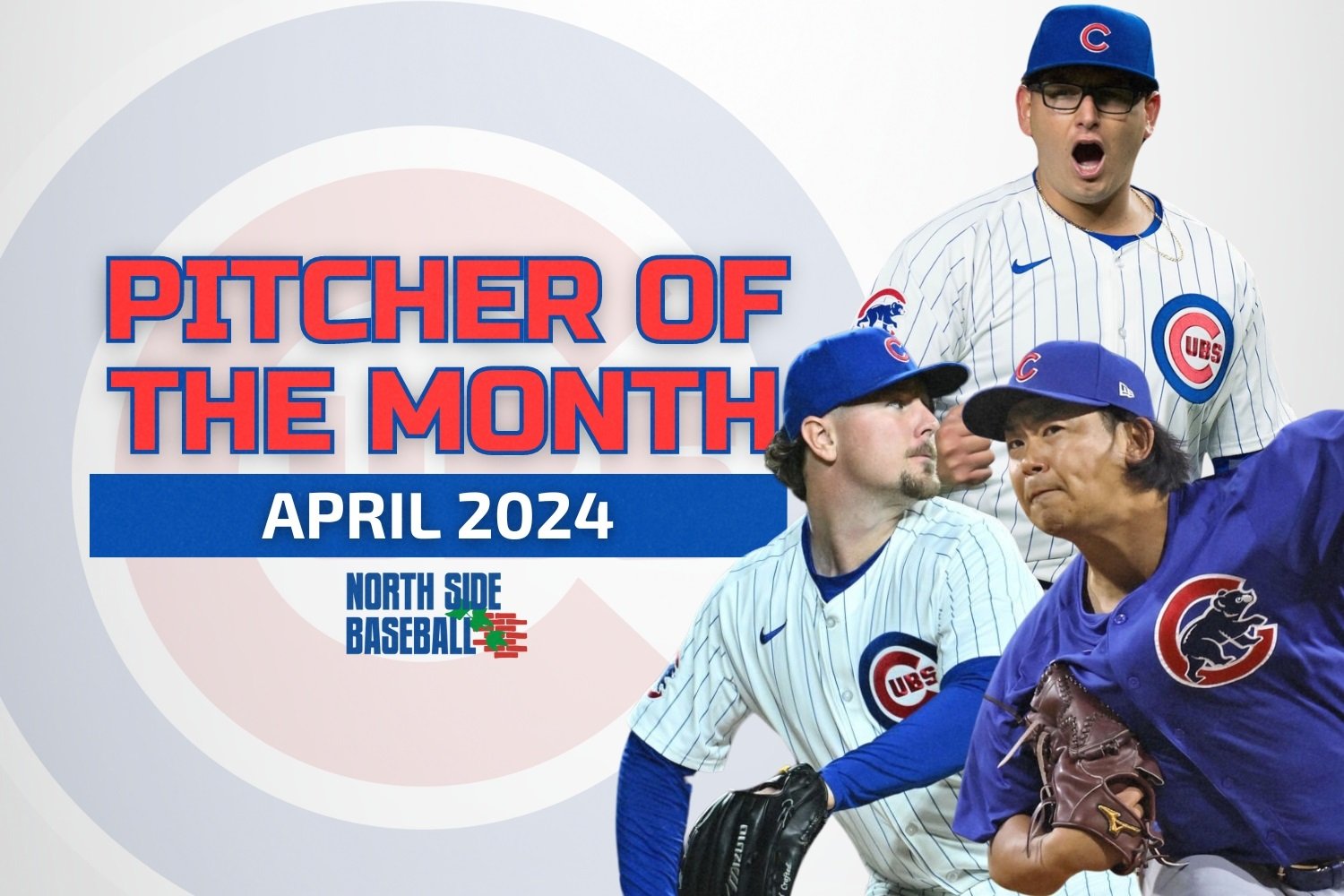 The Cubs pitching depth has been put to the ultimate test this season, and we’re only one month in. Jameson Taillon missed a few weeks after an injury in Spring Training, Justin Steele only made it half a game in before hurting his hamstring, Julian Merryweather will be out until at least June, and finally Kyle Hendricks and Drew Smyly went to the IL after rough starts to the 2024 campaign. Somehow, the team is still doing very well, thanks to a few pitchers who have exceeded expectations in order to keep the Cubs in strong contention for the NL Central crown. Top 3 Cubs Pitchers in April #3: RHP Mark Leiter Jr. 14 G, 1-1, 5 Holds, 0.69 ERA, 1.23 WHIP, 13 IP, 3 R, 1 ER, 10 H, 6 BB, 13 K. Mark Leiter Jr. has been the Cubs top reliever thus far, a role that was left empty when Merryweather was injured. Leiter Jr. had a rough end to last season, losing all control of his splitter. He was filling in for injured closer Adbert Alzolay and had a brutal September. Leiter Jr. had an 8.59 ERA that month, with an 8.44 FIP and 13.5% walk rate. I was glad he made the team to begin the season this year but was worried about how he could rebound after a brutal finish to his 2023 campaign. Thankfully, he has been nothing short of fantastic this season. With countless pitching injuries, as I mentioned above, the need for elite pitching has become clear for Craig Counsell and Cubs fans alike. He threw 12 1/3 innings before allowing his first earned run and had a rough game in Boston. The Cubs clearly don't have a closer, which is an issue that needs to be fixed rather quickly. Adbert Alzolay is an absolute mess, as he has forgotten how to pitch in any situation whatsoever. Hector Neris has four straight saves, but the numbers show that he is getting lucky, and that it would probably suit Counsell to look elsewhere. Where can he look, you may ask? Leiter Jr. would be the perfect answer, especially with his elite splitter, a pitch that has generated a 55.9% whiff rate so far this year. #2: RHP Javier Assad 6 GS, 2-0, 1.97 ERA, 1.00 WHIP, 32 IP, 7 ER, 23 H, 9 BB, 27 K. Javier Assad was originally going to be in the bullpen this season, but Jameson Taillon’s injury moved him into the rotation. Once Taillon came back, Assad stayed because Hendricks then got hurt. Over his career, he has been extremely efficient, with a 2.87 ERA over 179 innings. This season, he’s started six games, throwing a total of 32 innings. His ERA currently sits at 1.97, with a 7.1% walk rate and 27 strikeouts. Hitters have a .198 average against Assad, scoring only seven runs. One of his best qualities is the hit rate, which is only 31.8%. This is 82nd percentile in all of baseball, complimented by an average exit velocity of 87.6 miles per hour (69th percentile). He doesn’t have just one main pitch, but mixes in a sinker, cutter, and four-seam fastball. Along with this he throws a slider, changeup, and the occasional curveball. Assad generates the most whiffs on his slider with a 35.3% whiff rate, although a majority of his strikeouts come from either a sinker or four-seam fastball. This sinker has a run value of +6, with opponents owning a .154 batting average against said pitch. While it’s unclear how long he will last in the rotation, I think it’s safe to say he will keep the job once Justin Steele returns. Chicago Cubs Pitcher of the Month (April): LHP Shōta Imanaga 5 GS, 4-0, 0.98 ERA, 0.80 WHIP, 27 2/3 IP, 5 R, 3 ER, 19 H, 3 BB, 28 K. Shōta Imanaga was one of the biggest free agents coming over from Japan this offseason and has done nothing but outperform his expectations. The Cubs are 5-0 in games started by Imanaga, who has a 4-0 record due to a rain delay that shortened his start against the Dodgers on April 7th, hindering his ability to earn that fifth win. We were told a few things when Imanaga signed with the Cubs, including multiple comments about his excellent command. He doesn't throw hard but still figures out a way to strike batters out. One specific example was on April 7th when he struck out Shohei Ohtani in the first inning. He threw a four-season fastball at 94.4 miles per hour, with a spin rate of 2476, and horizontal break of 10 inches running towards from Ohtani. This specific pitch stuck out to me because of the fact that he didn't throw it very hard, yet Ohtani nearly lost his helmet on the swing. There is clearly a lot of movement on his pitches, the velocity doesn’t matter. Imanaga averages 19.2 inches of vertical break on his fastball, which is in the upper 5% of all pitchers. The fastball was elite in Japan for Imanaga, and that has clearly carried over to pitching in the big leagues as well. He currently has a 0.98 ERA, along with a 2.8% walk rate, which is one of the lowest in baseball. The main concern for Imanaga is the fly balls, and how he will most likely give up a lot of home runs. His fly ball rate through April is only 36.4%, and he has a 0.65 HR/9. Imanaga made his major league debut on April 1st, appearing in the Cubs home opener against the Rockies. I was worried about how the weather would affect him, as his first few starts were in colder conditions. I mentioned this in a prior article, but he continued to perform even in warmer conditions. When Justin Steele went down on Opening Day, his absence loomed large. Thankfully, Imanaga has stepped up to fill his shoes and even excelled at the standards that were put on him. As I mentioned earlier, Assad and Leiter Jr. were elite to begin the season. The fact someone was better than them is impressive, and great for the overall performance of the team. There was no way I could choose someone other than Imanaga, as he’s not only been the best pitcher for the Cubs, but is also one of the best pitchers in all of baseball. Do you agree with our choice of Shota Imanaga as the Cubs Pitcher of the Month in April?
 -
The Chicago Cubs have been banged-up during the first few weeks of the season, but Craig Counsell is still getting them to produce at an elite rate. They're currently in second place, but where do projections believe they will finish at the end of the year? Image courtesy of © Jerome Miron-USA TODAY Sports The Cubs are currently in second place in the NL Central, behind the Milwaukee Brewers. They just finished a successful west coast trip where they faced the Padres, Mariners, and Diamondbacks. They blew two games due to a poor bullpen performance, which I could argue is still a good sign, showing their potential. At the beginning of the season, the St. Louis Cardinals were the favorites to win the division. Why this was the case is beyond me, as I predicted them to finish in the bottom half of the division. On Opening Day, St. Louis had a 32.5% chance to win the division. Thanks to their poor start, these odds are now 21.5%. At 9-10, the Cardinals are currently in last place. It's only a few weeks into the season, so there is plenty of time to turn things around. These odds can change. Even though they’re in last place, the Cardinals are still projected to finish third. The Cubs started at 25% to win the division but have raised that to 30.4% over the last few weeks. Let's look at what has affected that increase and where the Cubs stand as they enter a short seven-game homestand. At 11-7, Craig Counsell’s team has the 7th-best record in all of baseball. Fangraphs projects the Cubs to finish at 84 wins. This projection has the Brewers and Cardinals winning 83 games each, which would make for a very stressful finish to the season. Something that I think will help is when the team is healthy. Losing Justin Steele on Opening Day hurt this ball club, but Javier Assad has been fantastic to replace the team’s ace. He has a 2.16 ERA and a 0.960 WHIP, averaging 5.4 innings per start. My main worry when Steele got injured was that whoever replaced him would be subpar at best and nowhere near a quality replacement. Thankfully, Assad has taken over wonderfully. He will most likely move to the bullpen soon, but having him as a long relief option is extremely valuable for Counsell. Due to taking Assad out of the bullpen and having a possible relief option in Ben Brown be part of the rotation, there haven’t been many trustworthy arms after the starter leaves the game. Taillon returning will allow more bullpen flexibility, along with Steele in a few weeks. Hendricks has been awful, although that’s a conversation for another time. Another fun reason to believe in the rotation is that we have a deep farm system to trade for another pitcher and eventually call up Cade Horton. The Cubs' offense has been relatively healthy, for which we are very fortunate. There was a rumor that Christopher Morel would be out for some time, but thankfully, he has looked better in the last few games. Seiya Suzuki went on the Injured List (IL) after hurting his oblique, a major blow to this lineup. Cody Bellinger and Nico Hoerner have been off to rather slow starts, and Ian Happ and Dansby Swanson are cooling off offensively. The main thing that can give you hope with the offense is that even with all of these parts missing, the Cubs are still projected to win the division. Eighty-four wins does seem low, and I assume the division champion will secure at least 86-88 wins after the season concludes. We can better assess the projections once April is over, giving us more time to see how things play out. One thing to always keep in mind is that these are just projections. Baseball is a crazy game, and wild things happen all the time. No, I’m not saying the Athletics will win the division (although that would be highly entertaining). However, things can change quickly, so you should always look at projections with a grain of salt. The other teams in the NL Central seem to be cooling off, so now would be a perfect time for the Cubs to have an elite homestead and take control of first place. As Mike Tauchman said at Cubs Convention this January, "If you get in the dance, you have a chance." View full article
-
What Does Fangraphs Have To Say About The Current NL Central Outlook?
Jacob Zanolla posted an article in Cubs
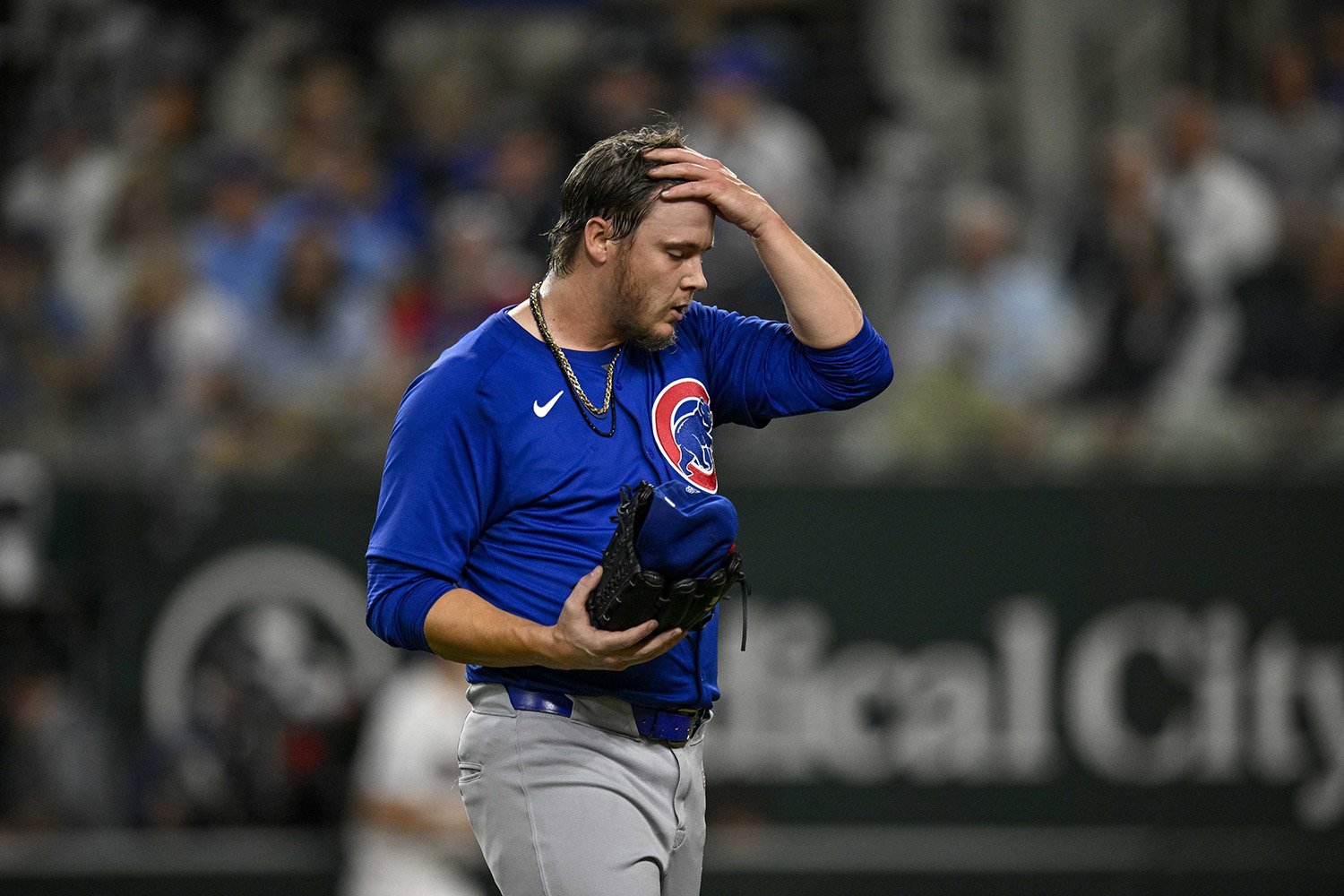 The Cubs are currently in second place in the NL Central, behind the Milwaukee Brewers. They just finished a successful west coast trip where they faced the Padres, Mariners, and Diamondbacks. They blew two games due to a poor bullpen performance, which I could argue is still a good sign, showing their potential. At the beginning of the season, the St. Louis Cardinals were the favorites to win the division. Why this was the case is beyond me, as I predicted them to finish in the bottom half of the division. On Opening Day, St. Louis had a 32.5% chance to win the division. Thanks to their poor start, these odds are now 21.5%. At 9-10, the Cardinals are currently in last place. It's only a few weeks into the season, so there is plenty of time to turn things around. These odds can change. Even though they’re in last place, the Cardinals are still projected to finish third. The Cubs started at 25% to win the division but have raised that to 30.4% over the last few weeks. Let's look at what has affected that increase and where the Cubs stand as they enter a short seven-game homestand. At 11-7, Craig Counsell’s team has the 7th-best record in all of baseball. Fangraphs projects the Cubs to finish at 84 wins. This projection has the Brewers and Cardinals winning 83 games each, which would make for a very stressful finish to the season. Something that I think will help is when the team is healthy. Losing Justin Steele on Opening Day hurt this ball club, but Javier Assad has been fantastic to replace the team’s ace. He has a 2.16 ERA and a 0.960 WHIP, averaging 5.4 innings per start. My main worry when Steele got injured was that whoever replaced him would be subpar at best and nowhere near a quality replacement. Thankfully, Assad has taken over wonderfully. He will most likely move to the bullpen soon, but having him as a long relief option is extremely valuable for Counsell. Due to taking Assad out of the bullpen and having a possible relief option in Ben Brown be part of the rotation, there haven’t been many trustworthy arms after the starter leaves the game. Taillon returning will allow more bullpen flexibility, along with Steele in a few weeks. Hendricks has been awful, although that’s a conversation for another time. Another fun reason to believe in the rotation is that we have a deep farm system to trade for another pitcher and eventually call up Cade Horton. The Cubs' offense has been relatively healthy, for which we are very fortunate. There was a rumor that Christopher Morel would be out for some time, but thankfully, he has looked better in the last few games. Seiya Suzuki went on the Injured List (IL) after hurting his oblique, a major blow to this lineup. Cody Bellinger and Nico Hoerner have been off to rather slow starts, and Ian Happ and Dansby Swanson are cooling off offensively. The main thing that can give you hope with the offense is that even with all of these parts missing, the Cubs are still projected to win the division. Eighty-four wins does seem low, and I assume the division champion will secure at least 86-88 wins after the season concludes. We can better assess the projections once April is over, giving us more time to see how things play out. One thing to always keep in mind is that these are just projections. Baseball is a crazy game, and wild things happen all the time. No, I’m not saying the Athletics will win the division (although that would be highly entertaining). However, things can change quickly, so you should always look at projections with a grain of salt. The other teams in the NL Central seem to be cooling off, so now would be a perfect time for the Cubs to have an elite homestead and take control of first place. As Mike Tauchman said at Cubs Convention this January, "If you get in the dance, you have a chance."
 -
The Chicago Cubs are about to get back one of their injured veteran starting pitchers, but the injury bug bit again Saturday--this time, one of their young, ascendant arms in the minors. Jameson Taillon got hurt during Spring Training, right before his Cactus League debut. He injured his lower back, and has been out ever since. Taillon has thrown two rehab starts, one for Double-A Tennessee and one for Triple-A Iowa. He only threw a total of 6 1/3 innings in these starts, but that’s normal for a starter on a rehab stint. Four runs scored in the first start, but he allowed zero during his start in Iowa. Craig Counsell announced that Taillon’s next start will come with the major-league team. I assume it will be in Arizona, although Counsell has a lot of options. Ben Brown would be the most likely candidate to lose his starting role, but a six-man rotation would also make sense for a week or two. As I mentioned before, this rotation needs a break. If the Cubs decide to simply add Taillon while they wait for Steele to return, this could be a viable option. The Iowa Cubs beat St. Paul 4-3 Saturday, featuring a Matt Mervis home run, his fourth of the young campaign. Alas, Kohl Franklin came out in the third inning, which was the main story for the game. Franklin was recently added to the Cubs' top-30 prospects, currently sitting at 29, per MLB Pipeline. He pitched in one game for the Tennessee Smokies, and was recently promoted to the Iowa Cubs. In his first start, he came out in the third due to an arm injury. Right after releasing the pitch, he grabbed his arm, and it was clear he was in extreme pain. While we don’t know his injury yet, my mind immediately goes to thinking about Tommy John Surgery. No matter what the injury is, it’s awful to see him go down and most likely miss some time when he had a chance to reach Chicago this year. While Franklin’s injury hurts the pitching depth, it’s really good to see Taillon and Steele inching toward a return. The Cubs are about to have more depth, though they're still not at (or even near) full strength. View full article
-
 Jameson Taillon will meet the Cubs in Arizona, as they finish their long Western road trip this week. He should be back on the mound sometime during that series. Justin Steele is further away, but on schedule. When prospect Kohl Franklin will pitch again, unfortunately, is anyone's guess. Chicago Tribune Cubs beat reporter Meghan Montemurro tweeted a few notes Saturday regarding the starting rotation, which has already been beaten up this spring. First off, she said that Justin Stele threw a bullpen Saturday and is making progress. That was expected, but the news confirms that there haven’t been any major setbacks to Steele’s recovery. The rotation hasn’t been awful so far, but Cubs starters aren’t going very deep into games. Steele's return can't come too soon. Jameson Taillon got hurt during Spring Training, right before his Cactus League debut. He injured his lower back, and has been out ever since. Taillon has thrown two rehab starts, one for Double-A Tennessee and one for Triple-A Iowa. He only threw a total of 6 1/3 innings in these starts, but that’s normal for a starter on a rehab stint. Four runs scored in the first start, but he allowed zero during his start in Iowa. Craig Counsell announced that Taillon’s next start will come with the major-league team. I assume it will be in Arizona, although Counsell has a lot of options. Ben Brown would be the most likely candidate to lose his starting role, but a six-man rotation would also make sense for a week or two. As I mentioned before, this rotation needs a break. If the Cubs decide to simply add Taillon while they wait for Steele to return, this could be a viable option. The Iowa Cubs beat St. Paul 4-3 Saturday, featuring a Matt Mervis home run, his fourth of the young campaign. Alas, Kohl Franklin came out in the third inning, which was the main story for the game. Franklin was recently added to the Cubs' top-30 prospects, currently sitting at 29, per MLB Pipeline. He pitched in one game for the Tennessee Smokies, and was recently promoted to the Iowa Cubs. In his first start, he came out in the third due to an arm injury. Right after releasing the pitch, he grabbed his arm, and it was clear he was in extreme pain. While we don’t know his injury yet, my mind immediately goes to thinking about Tommy John Surgery. No matter what the injury is, it’s awful to see him go down and most likely miss some time when he had a chance to reach Chicago this year. While Franklin’s injury hurts the pitching depth, it’s really good to see Taillon and Steele inching toward a return. The Cubs are about to have more depth, though they're still not at (or even near) full strength.
 -
With two of their key veteran starters sidelined for most of the first month of this season, the Chicago Cubs needed a stabilizing presence in the rotation. Their newest starter has stopped that gap. Image courtesy of © David Banks-USA TODAY Sports Shota Imanaga is off to a very strong start, but how long will it last? Imanaga has appeared in two games so far this season, both being at Wrigley Field. I’ve been present for both, and they were an absolute joy to watch. The first game was the Cubs' home opener, a 1:20 game against the Rockies. It was very cold, with the wind chill sitting around 36-42 degrees. The wind was blowing in at around 12 miles per hour. I was in the bleachers for this game (left field, of course), so I had no cover from the rain. While it was cold, I was ok with just a few layers on. However, it started to rain later in the game, which made the conditions much worse. My initial worry was how Imanaga would react to the cold weather, but he did just fine. He carried a no-hitter into the sixth inning, when Charlie Blackmon broke it up with a single. The reason I bring up the weather is that those conditions have major implications, for pitchers and for hitters. When it is cold, we normally see fewer runs scored. The wind was also blowing in, which helps prevent fly balls from becoming home runs. Imanaga is a pitcher who often gives up fly balls, so home runs were a worry for Cubs fans when he signed. He did, indeed, induce a lot of fly balls; the Rockies didn't put a ball on the ground against him all night. While there were some pop flies and line drives included, there were a couple of typically dangerous outfield flies, too. Sitting in the bleachers, a lot of fly balls look like home runs. One of the main reasons no home runs were hit was the wind. Without the wind, I’d predict as many as three of the fly outs leave the field. However, weather is part of a game, and he had nine strikeouts, without issuing a walk. The Cubs won the game 5-0, mainly because of a Nolan Jones error that allowed the Cubs to score three. Imanaga threw 92 pitches, and walked away with the win. Game Two for Imanaga was the rubber match against the Dodgers, with another day of poor weather. While it wasn’t as windy, I’d say it felt colder than his first start. I was covered this time, which was good: rain fell all game. Around the third inning, it started hailing, although that didn’t last long. Imanaga had a ground ball rate of 18.2%, so at least he is capable of getting those. He struck out three batters, but only threw four innings and 42 pitches. He only gave up two hits, and left the game after the three-hour rain delay. Due to not completing five innings, he was not eligible for the win. It’s disappointing, because he would have easily gotten through six or seven innings without the storms. While the strikeouts were lower, he was also facing an elite offense that is worlds better than the Rockies. He struck out Shohei Ohtani on a 94-mph fastball, which was a highlight for the fans and Japanese media. He is scheduled to pitch this Saturday in Seattle, where the weather will not affect him, due to the retractable roof there. As I have mentioned before, my main worry is that the weather was heavily aiding him in these starts. However, his xBA is .210, which is still very good. He is near the top of the league in chase and whiff rate, as well as his strikeout and walk percentages. Imanaga came to Chicago with moderate expectations, and has already become a fan favorite. It may be too early to fully analyze his performance, but we’ve seen a lot of positives so far. View full article
-
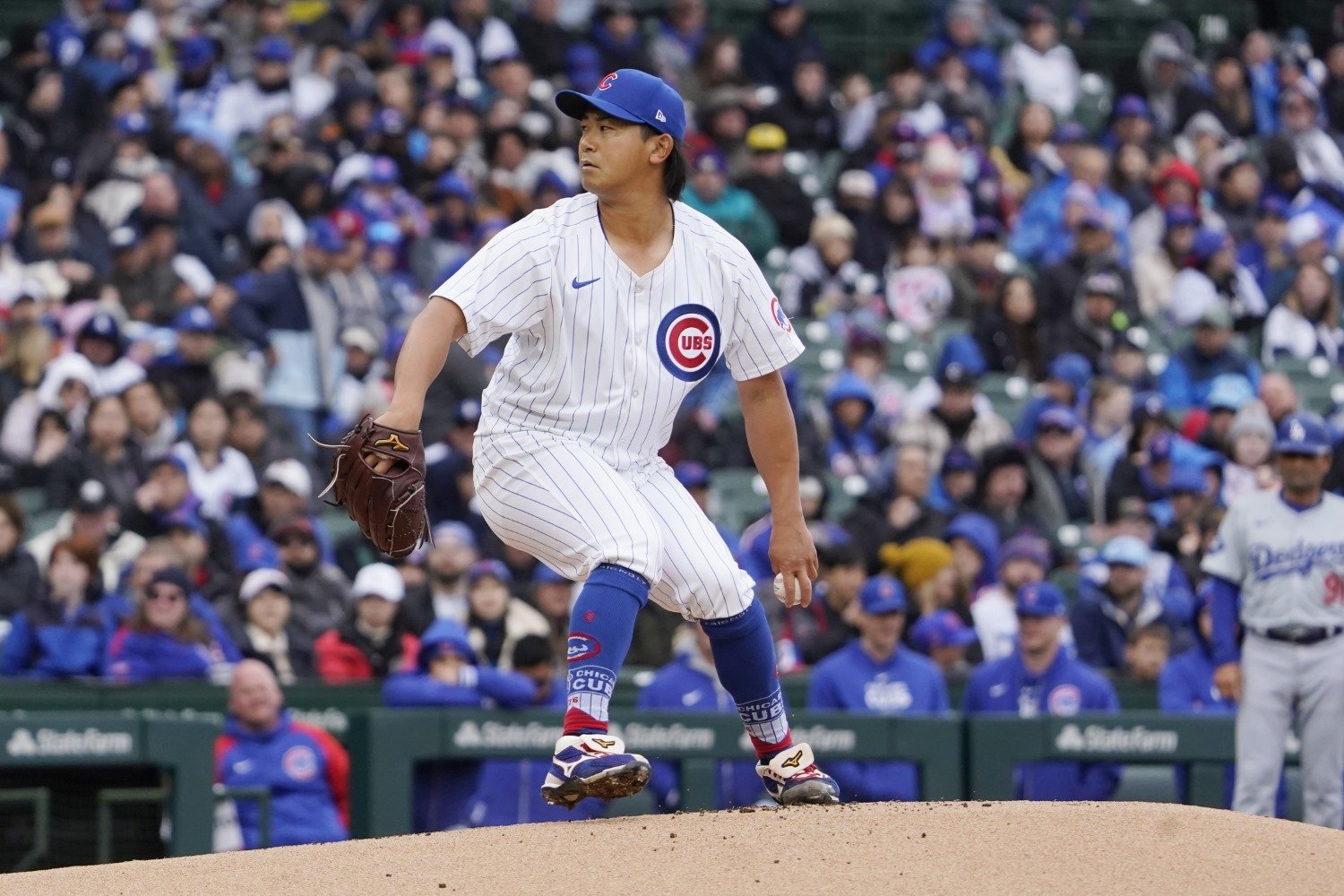 Shota Imanaga is off to a very strong start, but how long will it last? Imanaga has appeared in two games so far this season, both being at Wrigley Field. I’ve been present for both, and they were an absolute joy to watch. The first game was the Cubs' home opener, a 1:20 game against the Rockies. It was very cold, with the wind chill sitting around 36-42 degrees. The wind was blowing in at around 12 miles per hour. I was in the bleachers for this game (left field, of course), so I had no cover from the rain. While it was cold, I was ok with just a few layers on. However, it started to rain later in the game, which made the conditions much worse. My initial worry was how Imanaga would react to the cold weather, but he did just fine. He carried a no-hitter into the sixth inning, when Charlie Blackmon broke it up with a single. The reason I bring up the weather is that those conditions have major implications, for pitchers and for hitters. When it is cold, we normally see fewer runs scored. The wind was also blowing in, which helps prevent fly balls from becoming home runs. Imanaga is a pitcher who often gives up fly balls, so home runs were a worry for Cubs fans when he signed. He did, indeed, induce a lot of fly balls; the Rockies didn't put a ball on the ground against him all night. While there were some pop flies and line drives included, there were a couple of typically dangerous outfield flies, too. Sitting in the bleachers, a lot of fly balls look like home runs. One of the main reasons no home runs were hit was the wind. Without the wind, I’d predict as many as three of the fly outs leave the field. However, weather is part of a game, and he had nine strikeouts, without issuing a walk. The Cubs won the game 5-0, mainly because of a Nolan Jones error that allowed the Cubs to score three. Imanaga threw 92 pitches, and walked away with the win. Game Two for Imanaga was the rubber match against the Dodgers, with another day of poor weather. While it wasn’t as windy, I’d say it felt colder than his first start. I was covered this time, which was good: rain fell all game. Around the third inning, it started hailing, although that didn’t last long. Imanaga had a ground ball rate of 18.2%, so at least he is capable of getting those. He struck out three batters, but only threw four innings and 42 pitches. He only gave up two hits, and left the game after the three-hour rain delay. Due to not completing five innings, he was not eligible for the win. It’s disappointing, because he would have easily gotten through six or seven innings without the storms. While the strikeouts were lower, he was also facing an elite offense that is worlds better than the Rockies. He struck out Shohei Ohtani on a 94-mph fastball, which was a highlight for the fans and Japanese media. He is scheduled to pitch this Saturday in Seattle, where the weather will not affect him, due to the retractable roof there. As I have mentioned before, my main worry is that the weather was heavily aiding him in these starts. However, his xBA is .210, which is still very good. He is near the top of the league in chase and whiff rate, as well as his strikeout and walk percentages. Imanaga came to Chicago with moderate expectations, and has already become a fan favorite. It may be too early to fully analyze his performance, but we’ve seen a lot of positives so far.
 -
Yikes! Justin Steele Leaves Opening Day Game With Hamstring Injury
Jacob Zanolla posted an article in Cubs
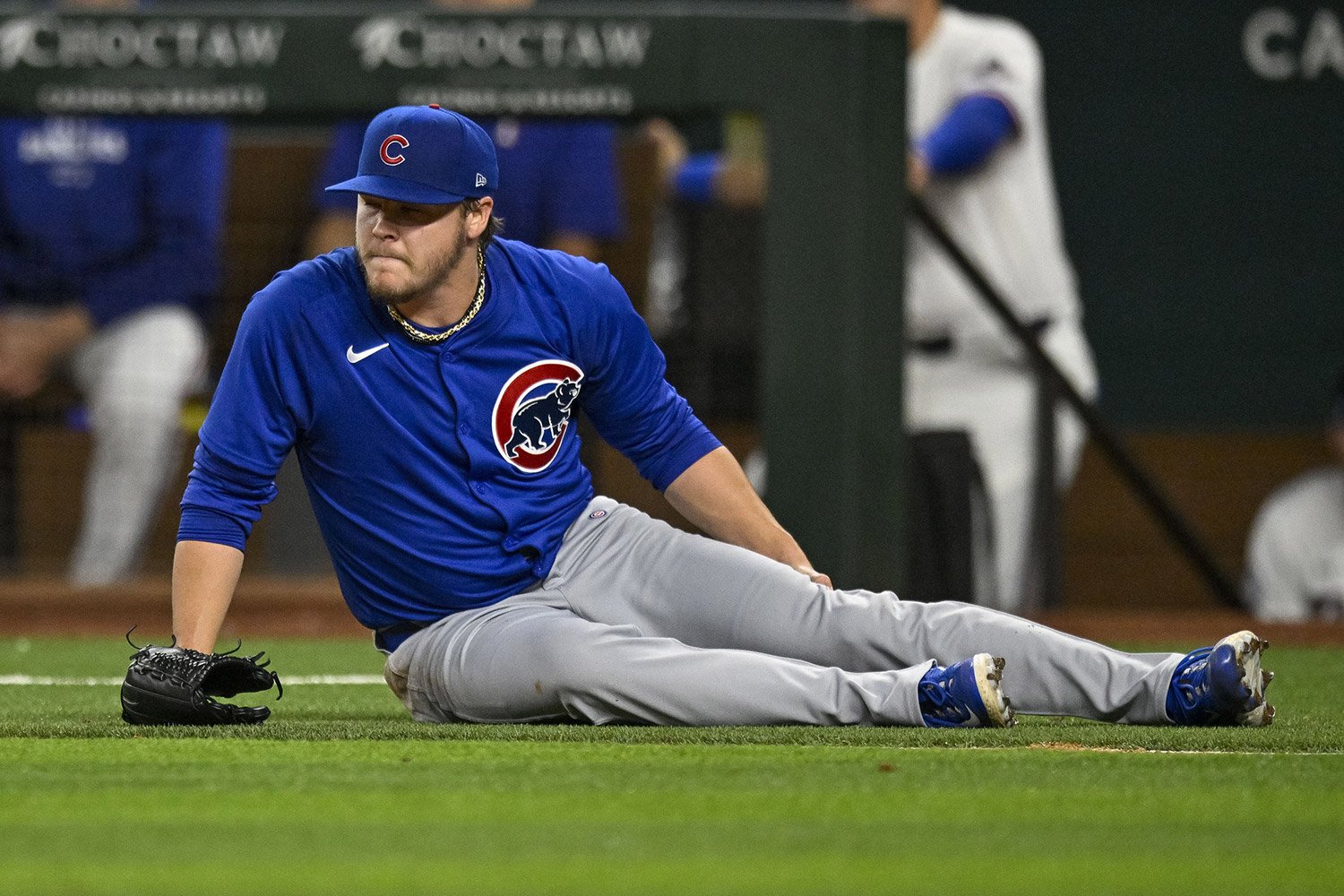 We aren't even a game into the season, and Cubs fans are already stressing over a massive injury. In the bottom of the fifth inning, Leody Taveras laid down an excellent bunt down the first base line. Justin Steele was able to stop it with his glove and flip it to Michael Busch at first base. While he did record the out, Steele immediately started rolling on the ground and grabbing his left leg. Steele got through 4.2 innings and was only responsible for one run. He struck out six Rangers batters and allowed only three hits total. As the tweet above says, it was a really good play by Steele. Fans were reading his lips, speculating that he said, "It was just a cramp." However, Buster Olney reported on the ESPN broadcast that Steele is dealing with "hamstring tightness." This isn't good at all. With Jameson Taillon already out to start the season, the last thing Counsell needs is for his rotation ace to be out for a significant period. Replacement-wise, there are a few options. The first two are already on the major league squad: Drew Smyly and Hayden Wesneski. If Jed decides to look at the minor leagues for help, Ben Brown is the pitcher I want to be chosen. Brown appeared in 14 innings this spring, allowing ten hits with a 0.64 ERA. Hopefully, Steele will only be out for a few starts, but I'd still like to see Brown get an opportunity to prove himself. More information will be published as it is available.
 -
Justin Steele had to leave his first start of the season early with an apparent hamstring injury. Image courtesy of © Jerome Miron-USA TODAY Sports We aren't even a game into the season, and Cubs fans are already stressing over a massive injury. In the bottom of the fifth inning, Leody Taveras laid down an excellent bunt down the first base line. Justin Steele was able to stop it with his glove and flip it to Michael Busch at first base. While he did record the out, Steele immediately started rolling on the ground and grabbing his left leg. Steele got through 4.2 innings and was only responsible for one run. He struck out six Rangers batters and allowed only three hits total. As the tweet above says, it was a really good play by Steele. Fans were reading his lips, speculating that he said, "It was just a cramp." However, Buster Olney reported on the ESPN broadcast that Steele is dealing with "hamstring tightness." This isn't good at all. With Jameson Taillon already out to start the season, the last thing Counsell needs is for his rotation ace to be out for a significant period. Replacement-wise, there are a few options. The first two are already on the major league squad: Drew Smyly and Hayden Wesneski. If Jed decides to look at the minor leagues for help, Ben Brown is the pitcher I want to be chosen. Brown appeared in 14 innings this spring, allowing ten hits with a 0.64 ERA. Hopefully, Steele will only be out for a few starts, but I'd still like to see Brown get an opportunity to prove himself. More information will be published as it is available. View full article
-
I didn't use a precise grading scale to give the overall grade. While I didn't write about every move, I am a fan of the Cooper signing. That helped bump it up a little. Another thing I liked is that he stayed away from a few players which we could have acquired, therefore bumping the grade up a little more.
-
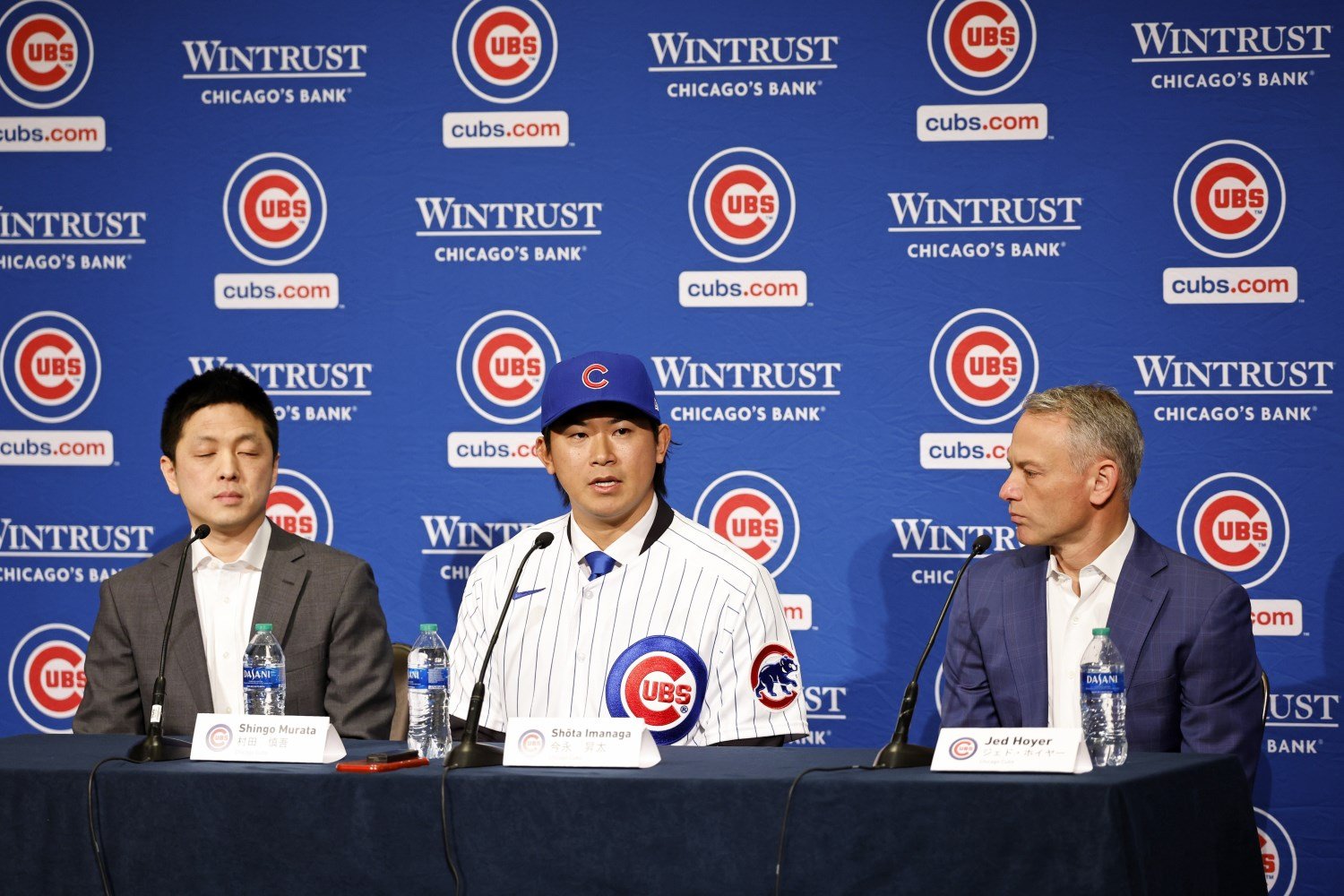 Things didn't start slowly. On the contrary, the Cubs made huge news almost immediately after the end of the World Series. Craig Counsell: 5 years, $40 Million We know that Jed Hoyer does deals in the dark, and lets minimal information leak before an agreement is made. While he showed this multiple times throughout the offseason, no transaction was a better example than the Counsell acquisition. There was a growing belief that Counsell would be leaving the Brewers, but the Cubs were not considered a contender for his services. Hoyer proved everyone wrong, making Counsell the highest-paid manager in all of baseball. It was clear last season that David Ross was not the answer. The fans knew it, and apparently, the front office did, too. Hoyer made it clear that this wasn’t a dig at Ross, but rather that a better option became available. Telling only a few select people, Hoyer got the go-ahead from Tom Ricketts to spend big money (by manager standards) on Counsell. He’s considered one of the best managers in baseball, constantly getting the most value out of his players. I will very confidently say that if Counsell was in charge instead of Ross last year, the Cubs would have made the playoffs. We will never know for sure, but he's a game-changer for the coming season. Grade: A+ Hoyer earned one A+ this offseason, and it is without a doubt the hiring of Counsell. As I said above, no one expected it, but everyone understood it. This season is going to be fun, and Counsell is a huge asset. Trade with the Los Angeles Dodgers: Michael Busch and Yency Almonte for Jackson Ferris and Zyhir Hope Let's start by breaking down the price Hoyer paid in his one major trade of the winter. The main piece Chicago gave away was lefthander Jackson Ferris, who is now the eighth-best prospect for the Dodgers. Ferris has tantalizing potential, but he's years away. So is Hope. Hoyer saw an opportunity to improve now, so he took it. Ferris is only 20 years old, with FanGraphs having his ETA to reach the majors in 2027. He was someone who a lot of fans didn’t want to lose, but clearly the linchpin of the swap for Andrew Friedman and the Dodgers. Zyhir Hope was sent to LA as well, although he was by no means the focus of the trade. A 19-year-old outfielder, he is projected to be called up in 2027 as well. The Dodgers have a lot of talent to take the field now, but Hope gives them more depth in their farm, and promise for the future. What was the return? Originally, when the trade news leaked, all the public knew to be involved was Yency Almonte. After Busch then became part of the conversation, you knew the Cubs would be giving up at least one player of high value. Busch is currently the 51st-best prospect in all of baseball and the fourth-best in the Cubs system per MLB Pipeline. He will start in the majors right away, most likely being the Opening Day first baseman for Craig Counsell. He’s done well in Spring Training, hitting two home runs for an .869 OPS. He tried stretching into a second or third baseman when he first entered pro ball, but that seems to have been scrapped when the Cubs landed him. He raked in the minors last year, posting a 1.049 OPS with a .323 average. Even though he didn’t produce in his short stint with the Dodgers, I expect him to put up strong numbers in his first full major-league season. Busch being left-handed also lends versatility handedness-wise, joining Cody Bellinger as a lefty power hitter hoping to hit bombs onto Sheffield. Almonte was the second player coming to Chicago. He’ll join a Cubs bullpen that needs help, especially after its collapse at the end of 2023. He had a really rough year in 2023, with a 5.06 ERA and 4.59 FIP. However, Almonte was a force in 2022, although his expected numbers were a bit worse than his actual statistics. Receiving him from Los Angeles adds a fresh face in the bullpen for Tommy Hottovy, one that comes with a ton of upside. Grade: B I like this trade. I was pleased with Almonte as a target, and ecstatic with getting Busch. The Cubs needed someone for the corner infield positions, and Busch fits perfectly. Giving up Ferris hurt, but this was a win-now type of move. As I mentioned above, Ferris won’t be ready for a few years. Busch can provide immediate impact, which helps the team succeed soon. Shota Imanaga–It’s complicated The Imanaga deal is very complex. It’s a four-year deal, worth $53 Million. After the second and third years, the Cubs can pick up a fifth-year option, which if they choose to exercise adds a fifth year and gives Imanaga a chance to earn a total of $80 Million. If Hoyer declines the option after either the second or third year, Imanaga can opt out. He already has limited no-trade rights, and would gain a full no-trade clause if the option is exercised. This was a perfect deal for the Cubs. Chicago has been a possible landing spot for Imanaga all offseason, although I didn’t think there was a real chance they would land him. After he signed, we learned that he had been in Chicago for a few weeks, making that his home base for free agency. Brave of him to choose Chicago in January, as this was right before a massive snowstorm shut down travel and hurt plans for the Cubs Convention. It’s even more impressive that Jed and company were able to convince him to stay in Chicago, explaining that it wouldn’t always be negative 20 degrees with snow and ice everywhere. Jokes aside, it was clear that Imanaga was very interested in the Cubs. This deal works for both sides. If he shoves, and is worth keeping, the Cubs can exercise the option and lock him in for an extra year. If he gets hurt or his strikeout stuff doesn't translate in his move to this side of the Pacific, they can decline and only have him for four years. He would then have the option to opt out, but that wouldn’t make much sense. If the Cubs don’t pay him that money, I’m not so sure another team would. Imanaga has already done very well this Spring Training. We knew the home run would be an issue, as we saw in his Cubs debut (Spring Training wise) as he gave up a long home run almost right away. However, strikeouts are also a big part of his game. In only 9 2/3 innings so far, he already has 19 strikeouts–good for an abnormal 46.3% strikeout rate. Spencer Strider and Ryan Weathers have a few more strikeouts but have also thrown quite a few more innings. Overall Grade: A The tough part with grading these is that the season hasn’t started yet. There is a reality where he doesn’t pitch well at all, and the Cubs overpaid. For now, he’s been just fine. Reports estimated he would get around $90 Million, with the possibility of earning north of $100 Million. Clearly, this didn’t happen. Other teams, most notably the Pittsburgh Pirates, were willing to pay him way more money. As a Cubs fan, this is neat, because it shows us that he wanted to play for the Cubs. No one expected him to sign for so little, meaning Hoyer shocked the league, again. He's always waiting for value, and he got what looks like an absolute steal to help his rotation. Héctor Neris: 1 year, $9 Million This was a signing I wasn’t expecting, but it makes a ton of sense. Neris was elite in 2023, appearing in 68.1 innings with a 1.71 ERA. His 28% hard-hit rate was one of the lowest in baseball, and was reinforced by an expected batting average of .196. The Cubs needed bullpen help. There were a few locks to be heavily used in the 2023 season, but there were also a lot of question marks. Neris not only provides a lot of talent but also brings a much-needed veteran presence to the bullpen. With one World Series championship under his belt (2022), he is entering his 10th year in baseball. Overall Grade: A- He’s 34 years old, which does create some concern injury-wise. The deal is very friendly, only costing the team $9 Million in 2023. There is a $9 Million club option for 2025, which will convert into a player option if Neris appears in 60 games or more. If Neris does appear in 60 games or more, the Cubs would be pleased; that would mean he performed well for them. Cody Bellinger: 3 Years, $80 Million There were rumors all winter that Bellinger would end up back in Chicago, and that’s exactly what happened. After a long holdout with Scott Boras, a deal was finally agreed upon. In the end, it was a fantastic deal for the team. Bellinger had weak batted-ball profiles, but the stats were incredible. Paired with Dustin Kelly, we saw Bellinger return to his MVP-level form. I don’t think this was a one-year thing, but there are many skeptics throughout Cubs fandom. Bringing him back not only helps the team statistically, but morale-wise as well. Bellinger was a clubhouse favorite, and many players advocated for his return throughout the offseason. With Bellinger back, there is no need to rush Pete Crow-Armstrong to the majors, giving him more time to develop. When you look at the leaderboards for hitters with two-strike counts, Cody Bellinger is near the top. He was fantastic at making contact and staying away from the strikeouts. He had a 15.6% strikeout rate, 87th percentile in all of baseball. This was a 12% decrease from his 2022 season, which leads me to believe that a change of scenery helped him feel more comfortable. Overall Grade: A This was about as perfect a deal as Hoyer was going to get. The first two years are worth $30 million each, with the third year at $20 Million. A big worry among Cubs fans was that Bellinger would be signed for seven or eight years, something we know the Cubs try to avoid. Instead, Bellinger agreed to a deal that is right in the front office’s wheelhouse: short-term, with multiple opt-outs (and of course a high average annual value (AAV)). If Bellinger plays like he did in 2023, this is a positive for both sides. The Cubs get another amazing year production-wise, which will translate to a lot of wins on the diamond. Bellinger, on the other hand, can opt out and earn even more money after showing that 2023 wasn’t a fluke. If for some reason Bellinger is not good, and last year was a fluke, the Cubs only have him for two more years. This isn’t like a Jason Heyward deal, where he was bad but stayed under contract for the next several years. This one is low-risk, but also offers a very high potential reward. Overall Offseason Grade: B- Overall, I would say the Cubs had a good offseason. Sure, we could focus on what Hoyer didn’t do. He didn’t sign someone like Shohei Ohtani, or Yoshinobu Yamamoto, or trade for Juan Soto. However, he added an arm to the rotation–one with high upside. He helped the bullpen with Almonte and Neris. He got Busch to play first base, solidifying the infield. And last but not least, he brought back Cody Bellinger. If you say he had a disappointing offseason, I get that. However, I’m choosing to believe they are saving for next offseason, when the free agent pool is massive. Scott Boras represents most of the big targets for next winter, but we’ll ignore that for now. The reason I put it at B- is because a C is too harsh, but a B+ seems too kind. When I step back and look at the offseason as a whole, it wasn’t too bad. A little average, sure. Way more waiting than we had wanted? Yes, very much so. The main positive takeaway that I have is that, while our team may not have significantly improved, I don’t think they got any worse. On paper, this was a team that should have won close to 90 games in 2023 (they had 92 Pythagorean wins!). Many things went wrong, including the pitching management, poor bullpen outings, and lack of clutch hitting–those are just a few examples. The September 2023 Cubs were brutal to watch. That’s the reason I am optimistic about this upcoming season: because with Craig Counsell, those extra wins might materialize this time. If the team “should have” won 92 games last season, how much do Counsell and Imanaga help? There are so many factors that go into a winning ballclub, which makes it all very hard to predict. Hoyer knows this, but I think he put the club in a decent position to at least win the NL Central. He missed on a few names I would have loved to see put on the pinstripes come Opening Day, but he stuck to his values and made sure to not spend over the market value. Is it Jed’s league? I guess we’ll find out.
 -
Jed Hoyer hibernated for most of the winter, becoming the basis for memes and an object of ridicule. When he finally woke up from his slumbers, Cubs fans rejoiced. Hoyer's reputation is that he always gets good value. Was this the case in 2024? With the offseason most likely over for the Cubs, let’s look back at the moves that were made. Image courtesy of © Kamil Krzaczynski-USA TODAY Sports Things didn't start slowly. On the contrary, the Cubs made huge news almost immediately after the end of the World Series. Craig Counsell: 5 years, $40 Million We know that Jed Hoyer does deals in the dark, and lets minimal information leak before an agreement is made. While he showed this multiple times throughout the offseason, no transaction was a better example than the Counsell acquisition. There was a growing belief that Counsell would be leaving the Brewers, but the Cubs were not considered a contender for his services. Hoyer proved everyone wrong, making Counsell the highest-paid manager in all of baseball. It was clear last season that David Ross was not the answer. The fans knew it, and apparently, the front office did, too. Hoyer made it clear that this wasn’t a dig at Ross, but rather that a better option became available. Telling only a few select people, Hoyer got the go-ahead from Tom Ricketts to spend big money (by manager standards) on Counsell. He’s considered one of the best managers in baseball, constantly getting the most value out of his players. I will very confidently say that if Counsell was in charge instead of Ross last year, the Cubs would have made the playoffs. We will never know for sure, but he's a game-changer for the coming season. Grade: A+ Hoyer earned one A+ this offseason, and it is without a doubt the hiring of Counsell. As I said above, no one expected it, but everyone understood it. This season is going to be fun, and Counsell is a huge asset. Trade with the Los Angeles Dodgers: Michael Busch and Yency Almonte for Jackson Ferris and Zyhir Hope Let's start by breaking down the price Hoyer paid in his one major trade of the winter. The main piece Chicago gave away was lefthander Jackson Ferris, who is now the eighth-best prospect for the Dodgers. Ferris has tantalizing potential, but he's years away. So is Hope. Hoyer saw an opportunity to improve now, so he took it. Ferris is only 20 years old, with FanGraphs having his ETA to reach the majors in 2027. He was someone who a lot of fans didn’t want to lose, but clearly the linchpin of the swap for Andrew Friedman and the Dodgers. Zyhir Hope was sent to LA as well, although he was by no means the focus of the trade. A 19-year-old outfielder, he is projected to be called up in 2027 as well. The Dodgers have a lot of talent to take the field now, but Hope gives them more depth in their farm, and promise for the future. What was the return? Originally, when the trade news leaked, all the public knew to be involved was Yency Almonte. After Busch then became part of the conversation, you knew the Cubs would be giving up at least one player of high value. Busch is currently the 51st-best prospect in all of baseball and the fourth-best in the Cubs system per MLB Pipeline. He will start in the majors right away, most likely being the Opening Day first baseman for Craig Counsell. He’s done well in Spring Training, hitting two home runs for an .869 OPS. He tried stretching into a second or third baseman when he first entered pro ball, but that seems to have been scrapped when the Cubs landed him. He raked in the minors last year, posting a 1.049 OPS with a .323 average. Even though he didn’t produce in his short stint with the Dodgers, I expect him to put up strong numbers in his first full major-league season. Busch being left-handed also lends versatility handedness-wise, joining Cody Bellinger as a lefty power hitter hoping to hit bombs onto Sheffield. Almonte was the second player coming to Chicago. He’ll join a Cubs bullpen that needs help, especially after its collapse at the end of 2023. He had a really rough year in 2023, with a 5.06 ERA and 4.59 FIP. However, Almonte was a force in 2022, although his expected numbers were a bit worse than his actual statistics. Receiving him from Los Angeles adds a fresh face in the bullpen for Tommy Hottovy, one that comes with a ton of upside. Grade: B I like this trade. I was pleased with Almonte as a target, and ecstatic with getting Busch. The Cubs needed someone for the corner infield positions, and Busch fits perfectly. Giving up Ferris hurt, but this was a win-now type of move. As I mentioned above, Ferris won’t be ready for a few years. Busch can provide immediate impact, which helps the team succeed soon. Shota Imanaga–It’s complicated The Imanaga deal is very complex. It’s a four-year deal, worth $53 Million. After the second and third years, the Cubs can pick up a fifth-year option, which if they choose to exercise adds a fifth year and gives Imanaga a chance to earn a total of $80 Million. If Hoyer declines the option after either the second or third year, Imanaga can opt out. He already has limited no-trade rights, and would gain a full no-trade clause if the option is exercised. This was a perfect deal for the Cubs. Chicago has been a possible landing spot for Imanaga all offseason, although I didn’t think there was a real chance they would land him. After he signed, we learned that he had been in Chicago for a few weeks, making that his home base for free agency. Brave of him to choose Chicago in January, as this was right before a massive snowstorm shut down travel and hurt plans for the Cubs Convention. It’s even more impressive that Jed and company were able to convince him to stay in Chicago, explaining that it wouldn’t always be negative 20 degrees with snow and ice everywhere. Jokes aside, it was clear that Imanaga was very interested in the Cubs. This deal works for both sides. If he shoves, and is worth keeping, the Cubs can exercise the option and lock him in for an extra year. If he gets hurt or his strikeout stuff doesn't translate in his move to this side of the Pacific, they can decline and only have him for four years. He would then have the option to opt out, but that wouldn’t make much sense. If the Cubs don’t pay him that money, I’m not so sure another team would. Imanaga has already done very well this Spring Training. We knew the home run would be an issue, as we saw in his Cubs debut (Spring Training wise) as he gave up a long home run almost right away. However, strikeouts are also a big part of his game. In only 9 2/3 innings so far, he already has 19 strikeouts–good for an abnormal 46.3% strikeout rate. Spencer Strider and Ryan Weathers have a few more strikeouts but have also thrown quite a few more innings. Overall Grade: A The tough part with grading these is that the season hasn’t started yet. There is a reality where he doesn’t pitch well at all, and the Cubs overpaid. For now, he’s been just fine. Reports estimated he would get around $90 Million, with the possibility of earning north of $100 Million. Clearly, this didn’t happen. Other teams, most notably the Pittsburgh Pirates, were willing to pay him way more money. As a Cubs fan, this is neat, because it shows us that he wanted to play for the Cubs. No one expected him to sign for so little, meaning Hoyer shocked the league, again. He's always waiting for value, and he got what looks like an absolute steal to help his rotation. Héctor Neris: 1 year, $9 Million This was a signing I wasn’t expecting, but it makes a ton of sense. Neris was elite in 2023, appearing in 68.1 innings with a 1.71 ERA. His 28% hard-hit rate was one of the lowest in baseball, and was reinforced by an expected batting average of .196. The Cubs needed bullpen help. There were a few locks to be heavily used in the 2023 season, but there were also a lot of question marks. Neris not only provides a lot of talent but also brings a much-needed veteran presence to the bullpen. With one World Series championship under his belt (2022), he is entering his 10th year in baseball. Overall Grade: A- He’s 34 years old, which does create some concern injury-wise. The deal is very friendly, only costing the team $9 Million in 2023. There is a $9 Million club option for 2025, which will convert into a player option if Neris appears in 60 games or more. If Neris does appear in 60 games or more, the Cubs would be pleased; that would mean he performed well for them. Cody Bellinger: 3 Years, $80 Million There were rumors all winter that Bellinger would end up back in Chicago, and that’s exactly what happened. After a long holdout with Scott Boras, a deal was finally agreed upon. In the end, it was a fantastic deal for the team. Bellinger had weak batted-ball profiles, but the stats were incredible. Paired with Dustin Kelly, we saw Bellinger return to his MVP-level form. I don’t think this was a one-year thing, but there are many skeptics throughout Cubs fandom. Bringing him back not only helps the team statistically, but morale-wise as well. Bellinger was a clubhouse favorite, and many players advocated for his return throughout the offseason. With Bellinger back, there is no need to rush Pete Crow-Armstrong to the majors, giving him more time to develop. When you look at the leaderboards for hitters with two-strike counts, Cody Bellinger is near the top. He was fantastic at making contact and staying away from the strikeouts. He had a 15.6% strikeout rate, 87th percentile in all of baseball. This was a 12% decrease from his 2022 season, which leads me to believe that a change of scenery helped him feel more comfortable. Overall Grade: A This was about as perfect a deal as Hoyer was going to get. The first two years are worth $30 million each, with the third year at $20 Million. A big worry among Cubs fans was that Bellinger would be signed for seven or eight years, something we know the Cubs try to avoid. Instead, Bellinger agreed to a deal that is right in the front office’s wheelhouse: short-term, with multiple opt-outs (and of course a high average annual value (AAV)). If Bellinger plays like he did in 2023, this is a positive for both sides. The Cubs get another amazing year production-wise, which will translate to a lot of wins on the diamond. Bellinger, on the other hand, can opt out and earn even more money after showing that 2023 wasn’t a fluke. If for some reason Bellinger is not good, and last year was a fluke, the Cubs only have him for two more years. This isn’t like a Jason Heyward deal, where he was bad but stayed under contract for the next several years. This one is low-risk, but also offers a very high potential reward. Overall Offseason Grade: B- Overall, I would say the Cubs had a good offseason. Sure, we could focus on what Hoyer didn’t do. He didn’t sign someone like Shohei Ohtani, or Yoshinobu Yamamoto, or trade for Juan Soto. However, he added an arm to the rotation–one with high upside. He helped the bullpen with Almonte and Neris. He got Busch to play first base, solidifying the infield. And last but not least, he brought back Cody Bellinger. If you say he had a disappointing offseason, I get that. However, I’m choosing to believe they are saving for next offseason, when the free agent pool is massive. Scott Boras represents most of the big targets for next winter, but we’ll ignore that for now. The reason I put it at B- is because a C is too harsh, but a B+ seems too kind. When I step back and look at the offseason as a whole, it wasn’t too bad. A little average, sure. Way more waiting than we had wanted? Yes, very much so. The main positive takeaway that I have is that, while our team may not have significantly improved, I don’t think they got any worse. On paper, this was a team that should have won close to 90 games in 2023 (they had 92 Pythagorean wins!). Many things went wrong, including the pitching management, poor bullpen outings, and lack of clutch hitting–those are just a few examples. The September 2023 Cubs were brutal to watch. That’s the reason I am optimistic about this upcoming season: because with Craig Counsell, those extra wins might materialize this time. If the team “should have” won 92 games last season, how much do Counsell and Imanaga help? There are so many factors that go into a winning ballclub, which makes it all very hard to predict. Hoyer knows this, but I think he put the club in a decent position to at least win the NL Central. He missed on a few names I would have loved to see put on the pinstripes come Opening Day, but he stuck to his values and made sure to not spend over the market value. Is it Jed’s league? I guess we’ll find out. View full article

