Jeff Ward
-
Posts
30 -
Joined
-
Last visited
Content Type
Profiles
Joomla Posts 1
Chicago Cubs Videos
Chicago Cubs Free Agent & Trade Rumors, Notes, & Tidbits
2026 Chicago Cubs Top Prospects Ranking
News
2023 Chicago Cubs Draft Picks
Guides & Resources
2024 Chicago Cubs Draft Picks
The Chicago Cubs Players Project
2025 Chicago Cubs Draft Pick Tracker
2026 Chicago Cubs Draft Tracker: Picks & Bonuses
Blogs
Events
Forums
Store
Gallery
Everything posted by Jeff Ward
-
Article: Why doesn’t Hack get any love?
Jeff Ward replied to Jeff Ward's topic in North Side Baseball Front Page News
Dear Champaign, Thank you for reading the column, and I always appreciate that kind of input. Jeff -
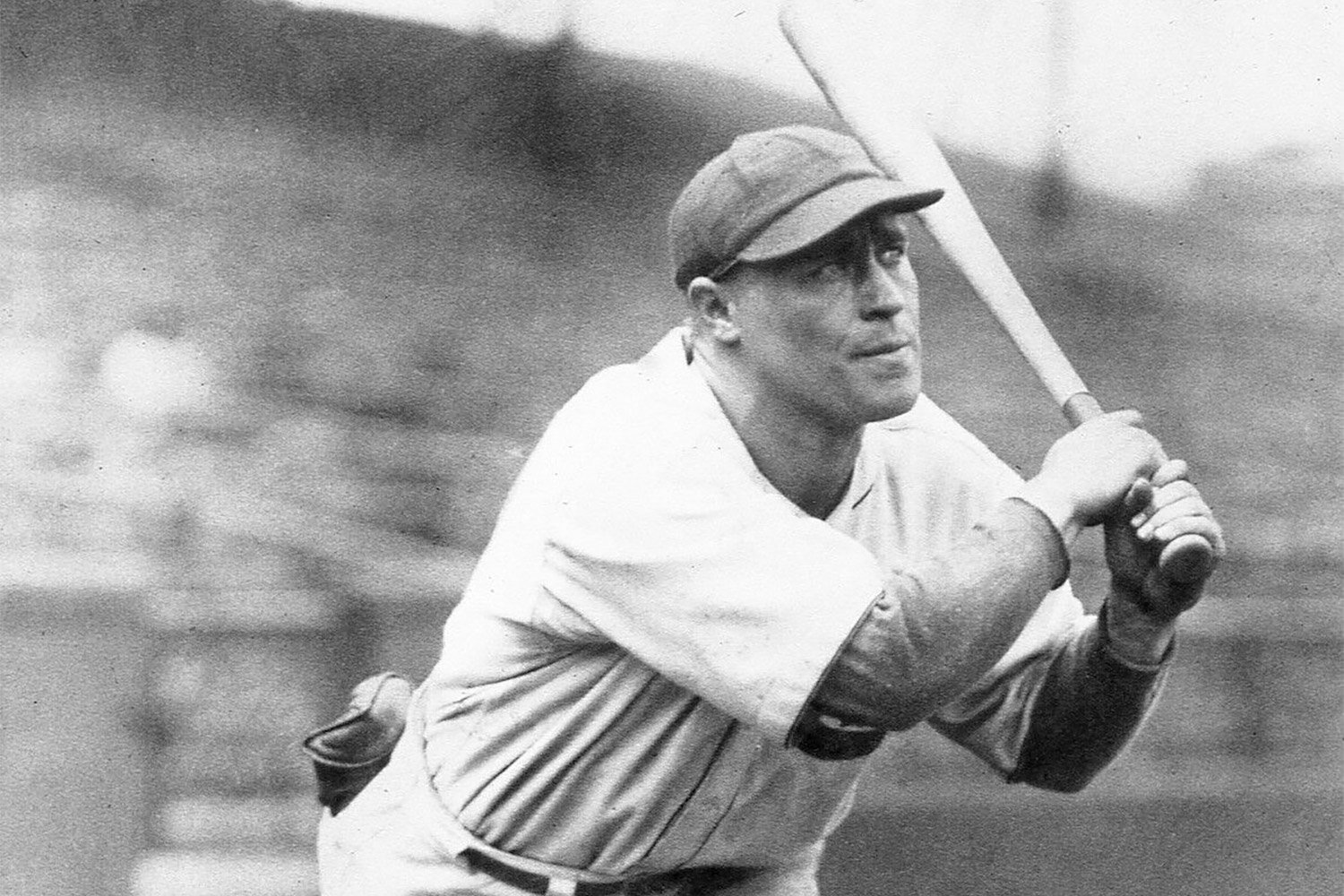 Considering my vast statistical bent, I’m a sucker for any column with a headline that starts something like, “The 20 most unbreakable sports records.” Not only is it perpetually fascinating to get someone else’s take on those possibilities, but it inevitably leads to an email to the author explaining the error of their ways. I suppose the attraction is a lot like the desire to be a part of those hilarious male-instigated Cheers conversations where Norm and the gang debated weighty topics like what was the sweatiest movie ever made. (Cool Hand Luke won, by the way.) But some sports records truly are beyond debate. Cy Young’s 511 wins are most impressive. Greg Maddux’s 355 victories are as close as it’s ever going to come in the modern era, where pitchers seem to get injured if they sneeze wrong. Walter Johnson’s 110 career shutouts are untouchable. No one’s likely to surpass Roger Clemens' 46, either, though he was purported to have had a little help in that regard. The Wizard of Westwood’s seven straight NCAA national basketball titles is right up there with Mr. Young’s amazing feat. Considering the vagaries of college sorts, I can’t, for the life of me, figure out how John Wooden managed to pull that one off. Bob Gibson’s 1.12 1968 ERA will similarly stand the test of time. Gibson was so unhittable - as were many pitchers in the league that year - that Major League Baseball lowered the mound by five inches in 1969. Wilt Chamberlain’s 1962 100-point game is good as gold. As dominating as MJ and Kobe could be, the game – and the population – has changed so dramatically that no single NBA player will ever be that dominant again. No NHL team will win five consecutive Stanley Cups like the Canadiens did from 1955 to 1959, and the same goes for the Celtics' eight straight NBA championships. With the stolen base having fallen out of favor, Rickey Henderson’s 1,406 thefts appear to be safe for baseball eternity, particularly when the active leader, Elvis Andrus, managed just 341 in 15 years. But the inexplicably disregarded record that’s right up there with those impregnable standards is Chicago Cub Hack Wilson’s 1930 191 RBI season – in 155 games, no less! (I’m offering a shiny new dime to anyone who can tell me why the Cubs played an extra game in 1930 because I can’t find an explanation for it anywhere.) For years we thought the record was 190 until baseball researchers discovered that one of Wilson’s RBIs was errantly attributed to Charlie Grimm. The closest any modern-era player has come is Manny Ramirez’s 165 RBIs for Cleveland in 1999, which is equally impressive when you consider Wilson didn’t have to contend with relief specialists, defensive shifts, and lights-out closers. But that’s still 27 short of breaking the record in a 162-game season where Manny may have also enjoyed some “chemical enhancement.” Alex Rodriguez knocked in 156 for the Bronx Bombers in the 2007 post-steroid ERA, but that’s a distant 35 RBIs short of tying the record. Even Barry Bonds could only muster 137 ribbies in his 2001 juice-induced 73-home run season. Considering its epic nature, let’s delve a little deeper into Hack’s astonishing feat: He drove in 30 percent of Cubs baserunners that season He hit 56 home runs, but none of them were grand slams 48 of his RBIs came from singles He had 53 RBIs in the month of August alone Though the hard-living Hack swears he never showed up to a game drunk, considering our opening quote, he was clearly hung over for a great many of them, which makes it that much more impressive. Sadly, for Cubs fans, Hack’s 191 RBIs, 56 home runs, .356 batting average, 146 runs, and incredible .723 slugging percentage may have been good enough for MVP. Still, they weren’t enough to keep the scurrilous Cardinals from taking the National League pennant by a scant two games. That was Hack’s final standout year, and he was traded to the Brooklyn Dodgers after a subpar 1931 season where he hit just 13 home runs in 112 games. He slowly drank his way out of baseball after that, ending his career with the Phillies in 1934. But the good news is the Veterans Committee inducted Wilson into Cooperstown in 1979, a long overdue honor. I realize he didn’t rack up true Hall of Fame numbers, but just like it is with Roger Maris, some single-season accomplishments are so impressive they deserve the ultimate baseball acknowledgment. So, here’s to Lewis Robert “Hack” Wilson, a man who thrilled Wrigley Field fans with what can only be described as a one-of-a-kind season. He may have faded far too soon, but no one will ever match those 191 RBIs, a mark that will stand the test of time.
 -
When I see three balls, I just swing at the middle one. – Hack Wilson Considering my vast statistical bent, I’m a sucker for any column with a headline that starts something like, “The 20 most unbreakable sports records.” Not only is it perpetually fascinating to get someone else’s take on those possibilities, but it inevitably leads to an email to the author explaining the error of their ways. I suppose the attraction is a lot like the desire to be a part of those hilarious male-instigated Cheers conversations where Norm and the gang debated weighty topics like what was the sweatiest movie ever made. (Cool Hand Luke won, by the way.) But some sports records truly are beyond debate. Cy Young’s 511 wins are most impressive. Greg Maddux’s 355 victories are as close as it’s ever going to come in the modern era, where pitchers seem to get injured if they sneeze wrong. Walter Johnson’s 110 career shutouts are untouchable. No one’s likely to surpass Roger Clemens' 46, either, though he was purported to have had a little help in that regard. The Wizard of Westwood’s seven straight NCAA national basketball titles is right up there with Mr. Young’s amazing feat. Considering the vagaries of college sorts, I can’t, for the life of me, figure out how John Wooden managed to pull that one off. Bob Gibson’s 1.12 1968 ERA will similarly stand the test of time. Gibson was so unhittable - as were many pitchers in the league that year - that Major League Baseball lowered the mound by five inches in 1969. Wilt Chamberlain’s 1962 100-point game is good as gold. As dominating as MJ and Kobe could be, the game – and the population – has changed so dramatically that no single NBA player will ever be that dominant again. No NHL team will win five consecutive Stanley Cups like the Canadiens did from 1955 to 1959, and the same goes for the Celtics' eight straight NBA championships. With the stolen base having fallen out of favor, Rickey Henderson’s 1,406 thefts appear to be safe for baseball eternity, particularly when the active leader, Elvis Andrus, managed just 341 in 15 years. But the inexplicably disregarded record that’s right up there with those impregnable standards is Chicago Cub Hack Wilson’s 1930 191 RBI season – in 155 games, no less! (I’m offering a shiny new dime to anyone who can tell me why the Cubs played an extra game in 1930 because I can’t find an explanation for it anywhere.) For years we thought the record was 190 until baseball researchers discovered that one of Wilson’s RBIs was errantly attributed to Charlie Grimm. The closest any modern-era player has come is Manny Ramirez’s 165 RBIs for Cleveland in 1999, which is equally impressive when you consider Wilson didn’t have to contend with relief specialists, defensive shifts, and lights-out closers. But that’s still 27 short of breaking the record in a 162-game season where Manny may have also enjoyed some “chemical enhancement.” Alex Rodriguez knocked in 156 for the Bronx Bombers in the 2007 post-steroid ERA, but that’s a distant 35 RBIs short of tying the record. Even Barry Bonds could only muster 137 ribbies in his 2001 juice-induced 73-home run season. Considering its epic nature, let’s delve a little deeper into Hack’s astonishing feat: He drove in 30 percent of Cubs baserunners that season He hit 56 home runs, but none of them were grand slams 48 of his RBIs came from singles He had 53 RBIs in the month of August alone Though the hard-living Hack swears he never showed up to a game drunk, considering our opening quote, he was clearly hung over for a great many of them, which makes it that much more impressive. Sadly, for Cubs fans, Hack’s 191 RBIs, 56 home runs, .356 batting average, 146 runs, and incredible .723 slugging percentage may have been good enough for MVP. Still, they weren’t enough to keep the scurrilous Cardinals from taking the National League pennant by a scant two games. That was Hack’s final standout year, and he was traded to the Brooklyn Dodgers after a subpar 1931 season where he hit just 13 home runs in 112 games. He slowly drank his way out of baseball after that, ending his career with the Phillies in 1934. But the good news is the Veterans Committee inducted Wilson into Cooperstown in 1979, a long overdue honor. I realize he didn’t rack up true Hall of Fame numbers, but just like it is with Roger Maris, some single-season accomplishments are so impressive they deserve the ultimate baseball acknowledgment. So, here’s to Lewis Robert “Hack” Wilson, a man who thrilled Wrigley Field fans with what can only be described as a one-of-a-kind season. He may have faded far too soon, but no one will ever match those 191 RBIs, a mark that will stand the test of time. View full article
-
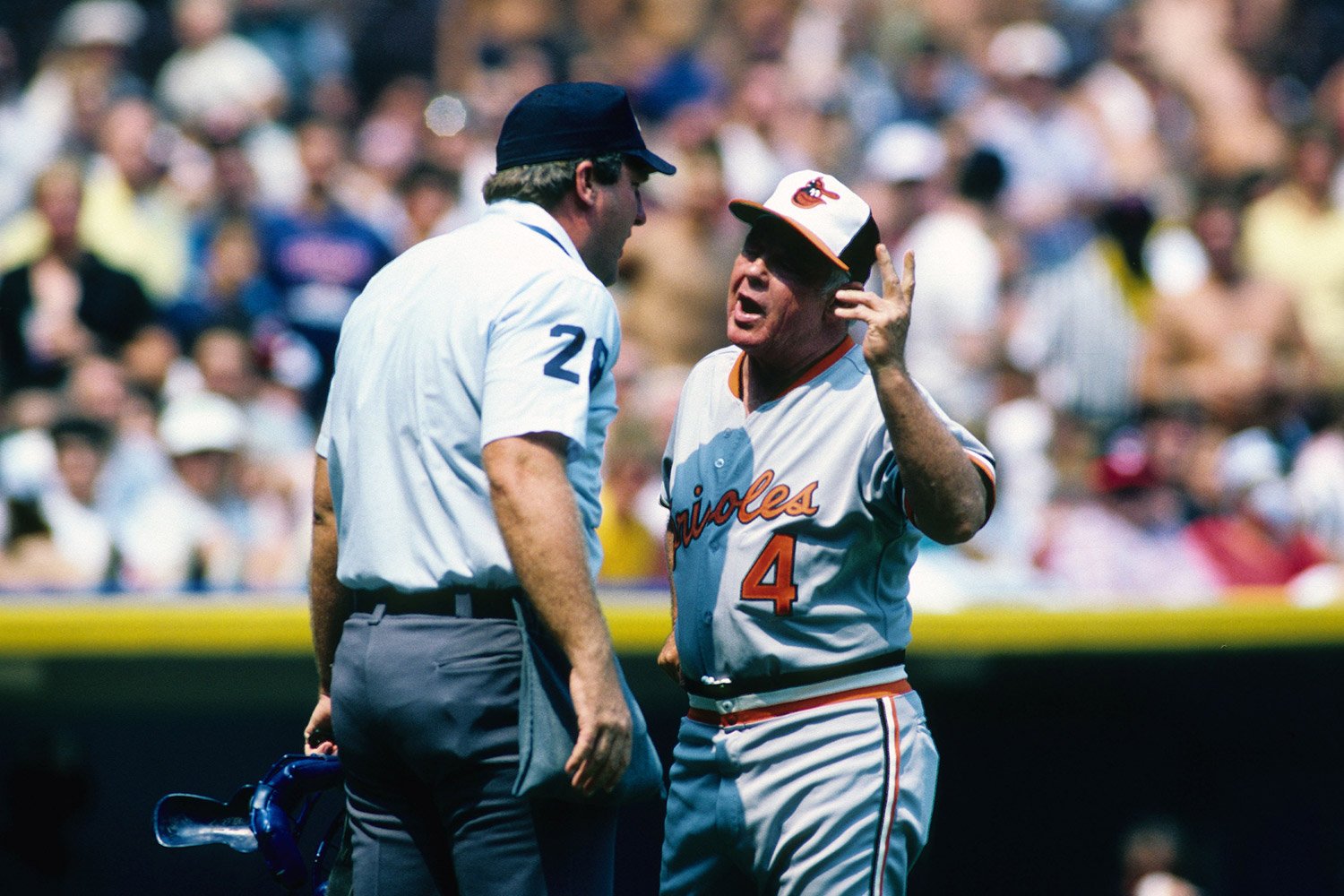 Please don’t get your partisan underwear in a bundle because my reference to “Plan B” isn’t what you think it is. (If you’re brave enough to read my more politically oriented columns, please proceed to The First Ward, but do so only at your own risk.) No! I’m referring to my long-held post-2005 baseball belief that, particularly for medium to small market teams, the key to that World Series euphoria is a combination of home-grown talent combined with a liberal sprinkling of “B-level” players brought in through trades and free agency. “Why B level players,” you ask? Because they’re cheaper, there’s less pressure on them, and whether we like it or not, that oft-dismissed statistical notion of regression to the mean holds sway over every aspect of our lives, particularly sports. That means, whenever you stack a team with A-level free agents, as the Mets, Yankees, and Padres are wont to do, those players have nowhere to go but down – a frequent occurrence when faced with those lofty major metropolitan expectations. Ah! But when you sign or trade for B-level players, you can count on one-third of them progressing to A’s, one-third staying the same, and one-third dropping to the C-level or lower. And the 2005 White Sox successfully parlayed that postulate right into a world championship. You see, while all of the other teams were courting Carlos Beltran, Adrian Beltre, Pedro Martinez, Roger Clemens, J.D. Drew, and Jeff Kent, the Sox were quietly signing the likes of Scott Podsednick (via trade), A.J. Pierzynski, Jermaine Dye, Tadahito Iguchi, Carl Everet (via trade), Jose Contreras (via trade), and Dustin Hermanson. Add those key pieces to homegrown talent like Joe Crede, Mark Buehrle, Aaron Rowand, Frank Thomas, Neal Cotts, and a few others, and not only do you get the best record in the American League, but a World Series champion. I cannot, for the life of me, understand why more mid-market GM’s don’t make a real effort to emulate Kenny Williams’ brilliant concept. Which brings us right back to Mr. Weaver and our Chicago Cubs. As Earl so aptly noted, you really do have to be an optimist to root for those Wrigley Field denizens and I fervently believe they may have stumbled into 2023 plan B heaven, further abetted by a rather weak division. Chicago acquired the requisite B players like Marcus Stroman, Jameson Taillon, Cody Bellinger, Seiya Suzuki, Dansby Swanson, Mike Tauchman, and Yan Gomes. Eric Hosmer and Troy Mancini may not have worked out, but the Cubs have certainly excelled in the homegrown talent arena with players like Chris Morel, Ian Happ, Nico Hoerner, Miguel Amaya, Justin Steele, Kyle Hendricks, Javier Assad, Hayden Wesneski, Adbert Alzolay, and Mark Leiter, Jr. As Mr. Trueblood so presciently noted here, Jeimer Candelario is yet another brilliant B-level player trade – though he also qualifies as homegrown talent. Why am I so optimistic about this season despite more than 55 years of often-depressing North Side fandom desperation? Because if the Cubs were on the New York Stock Exchange, they’d be one of the most highly undervalued stocks. Why? Because the pundits are finally catching on to the only NL Central team with a positive run differential, and that current +67 mark (as of Wednesday morning) bests the Orioles, Phillies, Blue Jays, Yankees, Twins, Astros, Giants, and Diamondbacks. Better yet, going into Tuesday’s game, the North Siders sit squarely in 12th place in team ERA, an amazing 5th place in on base percentage, and they’re 9th in runs scored. Contrary to popular wisdom, the Cubs are also tied for 7th place in fewest blown leads with just 21. Now add the Rossy managerial propensity to do much better in the second half and it all bodes well going into the final two months of any season. But if the genie in Harry’s Bud bottle gave me just one wish, it would be for Mr. Hoyer to wrangle a post-trade deadline slam-the-door-shut Rod Beck-esque closer deal. It’s not that Mr. Alzolay’s done a bad job, though defensive replacement Mike Tauchman did save his hide against the Cards last week. It’s that he’s still quite new to the role at a time when one or two blown saves can make the difference between cleaning out your locker on October 2 and preparing for the next game. That savvy move would also allow Adbert to move into the desperately needed middle reliever “holder” slot, for which the former starter is far better suited. Regardless, I’m thrilled that the Cubs shifted from sellers to buyers because, per our plan B theory and a reasonable statistical analysis, I’m convinced they can make a real run at this thing. And with Steele, Stroman, and a rejuvenated Hendaillon on the playoff mound, you never know what might happen. Growing up in south Evanston doomed Jeff Ward to a lifetime of Cub fandom. His proudest accomplishments include surviving the 1969 season as well as the 2016 World Series without becoming homicidal. He was an 8-year opinion columnist for the then suburban Sun-Times newspapers and he persists in publishing twice weekly on The First Ward. Jeff is the author of So You Want to Win a Local Election available on Amazon and his hobbies include running, annoying the neighbors, swearing, and yelling at the Cubs on TV.
 -
I became an optimist when I discovered that I wasn't going to win any more games by being anything else. – Earl Weaver Image courtesy of © Tony Tomsic-USA TODAY Sports Please don’t get your partisan underwear in a bundle because my reference to “Plan B” isn’t what you think it is. (If you’re brave enough to read my more politically oriented columns, please proceed to The First Ward, but do so only at your own risk.) No! I’m referring to my long-held post-2005 baseball belief that, particularly for medium to small market teams, the key to that World Series euphoria is a combination of home-grown talent combined with a liberal sprinkling of “B-level” players brought in through trades and free agency. “Why B level players,” you ask? Because they’re cheaper, there’s less pressure on them, and whether we like it or not, that oft-dismissed statistical notion of regression to the mean holds sway over every aspect of our lives, particularly sports. That means, whenever you stack a team with A-level free agents, as the Mets, Yankees, and Padres are wont to do, those players have nowhere to go but down – a frequent occurrence when faced with those lofty major metropolitan expectations. Ah! But when you sign or trade for B-level players, you can count on one-third of them progressing to A’s, one-third staying the same, and one-third dropping to the C-level or lower. And the 2005 White Sox successfully parlayed that postulate right into a world championship. You see, while all of the other teams were courting Carlos Beltran, Adrian Beltre, Pedro Martinez, Roger Clemens, J.D. Drew, and Jeff Kent, the Sox were quietly signing the likes of Scott Podsednick (via trade), A.J. Pierzynski, Jermaine Dye, Tadahito Iguchi, Carl Everet (via trade), Jose Contreras (via trade), and Dustin Hermanson. Add those key pieces to homegrown talent like Joe Crede, Mark Buehrle, Aaron Rowand, Frank Thomas, Neal Cotts, and a few others, and not only do you get the best record in the American League, but a World Series champion. I cannot, for the life of me, understand why more mid-market GM’s don’t make a real effort to emulate Kenny Williams’ brilliant concept. Which brings us right back to Mr. Weaver and our Chicago Cubs. As Earl so aptly noted, you really do have to be an optimist to root for those Wrigley Field denizens and I fervently believe they may have stumbled into 2023 plan B heaven, further abetted by a rather weak division. Chicago acquired the requisite B players like Marcus Stroman, Jameson Taillon, Cody Bellinger, Seiya Suzuki, Dansby Swanson, Mike Tauchman, and Yan Gomes. Eric Hosmer and Troy Mancini may not have worked out, but the Cubs have certainly excelled in the homegrown talent arena with players like Chris Morel, Ian Happ, Nico Hoerner, Miguel Amaya, Justin Steele, Kyle Hendricks, Javier Assad, Hayden Wesneski, Adbert Alzolay, and Mark Leiter, Jr. As Mr. Trueblood so presciently noted here, Jeimer Candelario is yet another brilliant B-level player trade – though he also qualifies as homegrown talent. Why am I so optimistic about this season despite more than 55 years of often-depressing North Side fandom desperation? Because if the Cubs were on the New York Stock Exchange, they’d be one of the most highly undervalued stocks. Why? Because the pundits are finally catching on to the only NL Central team with a positive run differential, and that current +67 mark (as of Wednesday morning) bests the Orioles, Phillies, Blue Jays, Yankees, Twins, Astros, Giants, and Diamondbacks. Better yet, going into Tuesday’s game, the North Siders sit squarely in 12th place in team ERA, an amazing 5th place in on base percentage, and they’re 9th in runs scored. Contrary to popular wisdom, the Cubs are also tied for 7th place in fewest blown leads with just 21. Now add the Rossy managerial propensity to do much better in the second half and it all bodes well going into the final two months of any season. But if the genie in Harry’s Bud bottle gave me just one wish, it would be for Mr. Hoyer to wrangle a post-trade deadline slam-the-door-shut Rod Beck-esque closer deal. It’s not that Mr. Alzolay’s done a bad job, though defensive replacement Mike Tauchman did save his hide against the Cards last week. It’s that he’s still quite new to the role at a time when one or two blown saves can make the difference between cleaning out your locker on October 2 and preparing for the next game. That savvy move would also allow Adbert to move into the desperately needed middle reliever “holder” slot, for which the former starter is far better suited. Regardless, I’m thrilled that the Cubs shifted from sellers to buyers because, per our plan B theory and a reasonable statistical analysis, I’m convinced they can make a real run at this thing. And with Steele, Stroman, and a rejuvenated Hendaillon on the playoff mound, you never know what might happen. Growing up in south Evanston doomed Jeff Ward to a lifetime of Cub fandom. His proudest accomplishments include surviving the 1969 season as well as the 2016 World Series without becoming homicidal. He was an 8-year opinion columnist for the then suburban Sun-Times newspapers and he persists in publishing twice weekly on The First Ward. Jeff is the author of So You Want to Win a Local Election available on Amazon and his hobbies include running, annoying the neighbors, swearing, and yelling at the Cubs on TV. View full article