


Matthew Trueblood
-
Posts
2,427 -
Joined
-
Last visited
-
Days Won
2
Content Type
Profiles
Joomla Posts 1
Chicago Cubs Videos
Chicago Cubs Free Agent & Trade Rumors, Notes, & Tidbits
2026 Chicago Cubs Top Prospects Ranking
News
2023 Chicago Cubs Draft Picks
Guides & Resources
2024 Chicago Cubs Draft Picks
The Chicago Cubs Players Project
2025 Chicago Cubs Draft Pick Tracker
2026 Chicago Cubs Draft Tracker: Picks & Bonuses
Blogs
Events
Forums
Store
Gallery
Everything posted by Matthew Trueblood
-
Isn't it a bit of a problem that you really can't find Mound Visits Remaining anywhere, outside an in-stadium scoreboard? Both teams are gonna use their full six tonight. It could well end up mattering, somewhat, when that happens. But we're flying blind. I really want little tick marks added to scorebugs, the way NBA and NFL broadcasts have.
-
This is incredible. Did not expect to be hollering that much this early in the season,
-
Elias does make the most sense, and I think finding a 40-man spot could be as easy as cutting Torrens in favor of him. But I, too, think he gets another start, and probably straightens this out. The specter of Kilian (and how many guys like this over the last 30 years?) is there, but I don't think Wesneski is the same as him, in several ways. (Maybe that's the copium talking.)
-
Well, look, bright side: I bet we get to see what kind of sinker Miles Mastrobuoni has before the night is out.
-
I'm in favor of junking the error as a stat anyway, but ESPECIALLY if they're gonna keep scoring games the way they now do. That can't be a hit, man.
-
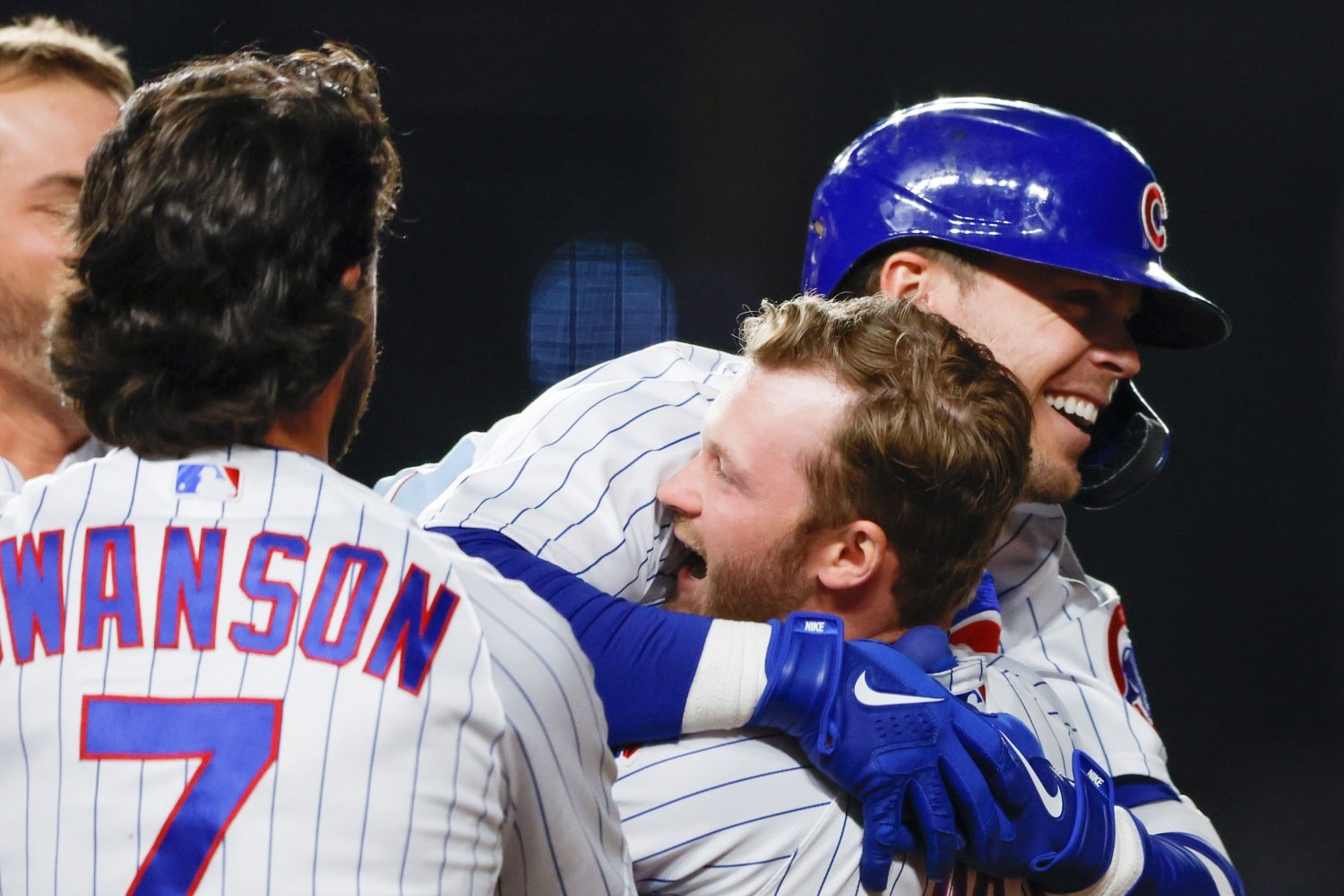 As a reminder, our premise here is the old cliché that every team will win 54 games and lose 54 games in an MLB season, and that success or failure over that long season depends on how a club does in the other 54. After dropping the first two games that felt like real Bucket Three contests this year, the Cubs got their first win in that bucket in walkoff style. After a disquieting spring training and a discouraging season debut in Cincinnati, Drew Smyly got back into his groove on Monday night. The key was throttling back on his sinker and relying more on his curve and cutter. Against the Reds, 48 of his 93 pitches were sinkers. Monday against the Mariners, only 33 of 76 were. That’s the ratio he needs to shoot for. His curve doesn’t need to constitute the majority of his pitches, but it needs to claim the plurality, and the cutter is a pitch he could stand to throw even more than he currently does. With the curve yielding some whiffs, Smyly gave the team five innings of one-run ball, and that looked like it might be all the team needed. We’ve all understood, since even before Opening Day, that this team will need to win some 2-1 games in order to be better than .500 for the season, let alone in the playoff hunt. Their offense is not going to morph into a juggernaut at any point, and right now, it’s not even an average group, but they pushed across two runs with a sequence that should be typical of this offense when things are going well: walk, double, single, single. Adbert Alzolay, Mark Leiter, Jr., and Brad Boxberger formed a solid bridge from Smyly to Michael Fulmer. They needed a little help and survived a few tense moments along the way, as one line drive hit off Leiter just happened to hang up enough for Miles Mastrobuoni in right field and Dansby Swanson made a heads-up throw to cut down a lead runner for Boxberger, but the stage was set. Fulmer made a bad mistake on a 1-0 count. Sometimes, the game is that simple. When Jarred Kelenic laid into a cutter that had spun right into his bat path and sat in the middle of the plate, the only question was whether he’d stayed back well enough to keep it fair. He had, and the game was tied, and the kind of loss the Cubs just can’t afford suddenly loomed as a real possibility. All night, the Cubs were just missing adding onto their lead at the plate. Swanson drove a ball to the wall in right field in the third. Patrick Wisdom had three well-hit fly balls on the night, but got too far under each. Between those misses and the blown save, losing would have been a gut punch. That’s what made the 10th inning such a rollercoaster, and the finale so cathartic. Keegan Thompson continues to battle control problems, which is a troubling trend, but he managed to work out of the jam that the automatic runner creates and free passes exacerbate. Then, Nick Madrigal nearly gave away the automatic runner for free to open the 10th, but the Mariners didn’t execute a pickoff and he was able to steal third instead. All of that set up Nico Hoerner. Whatever else has happened already this year, and however unclear many things about this team remain, Hoerner increasingly feels like the heart of the team, and the guy whose energy fuels it. He had hard-hit balls in his first three plate appearances Monday night, and his rate of hard contact is up this year overall. He stole his fourth base of the season during the game. There’s much more to discuss with Hoerner, but in the moment, when he stepped to the plate with a runner on third base and one out, everything about the situation favored him. It was possible to see what Hoerner wanted to do on that first slider. He saw lots of potential hits on the field in front of him, with the infield pulled in tight, and he wasn't going to get big or try to pull the ball. On the high fastball on a 1-1 count, he tried to stay on top of the ball, and he made contact, which invited Matt Brash to try another slider to expand the zone. That played right into Hoerner's plan, though. He was looking away. He wanted to go to right field. Though not a strike, that 1-2 slider was the pitch Hoerner needed. Already, we've seen and felt the impact of Seiya Suzuki and Brandon Hughes opening the season on the injured list. Those things were on display even in this win. The 2023 Cubs are not yet a finished product, so being competitive and winning five of their first nine is enough to increase our hope a bit. Winning Monday night, specifically, was not a make-or-break thing, but that type of game is one the team needs to prove it can win, and to get it from the man in whom the front office just made a long-awaited (if small) investment was especially exciting.
 -
The Cubs are over .500 after nine games, thanks (once again) to their dynamic middle infield. This team will have to win many close and difficult games to make noise in the NL, and for the first time this year, they did so. As a reminder, our premise here is the old cliché that every team will win 54 games and lose 54 games in an MLB season, and that success or failure over that long season depends on how a club does in the other 54. After dropping the first two games that felt like real Bucket Three contests this year, the Cubs got their first win in that bucket in walkoff style. After a disquieting spring training and a discouraging season debut in Cincinnati, Drew Smyly got back into his groove on Monday night. The key was throttling back on his sinker and relying more on his curve and cutter. Against the Reds, 48 of his 93 pitches were sinkers. Monday against the Mariners, only 33 of 76 were. That’s the ratio he needs to shoot for. His curve doesn’t need to constitute the majority of his pitches, but it needs to claim the plurality, and the cutter is a pitch he could stand to throw even more than he currently does. With the curve yielding some whiffs, Smyly gave the team five innings of one-run ball, and that looked like it might be all the team needed. We’ve all understood, since even before Opening Day, that this team will need to win some 2-1 games in order to be better than .500 for the season, let alone in the playoff hunt. Their offense is not going to morph into a juggernaut at any point, and right now, it’s not even an average group, but they pushed across two runs with a sequence that should be typical of this offense when things are going well: walk, double, single, single. Adbert Alzolay, Mark Leiter, Jr., and Brad Boxberger formed a solid bridge from Smyly to Michael Fulmer. They needed a little help and survived a few tense moments along the way, as one line drive hit off Leiter just happened to hang up enough for Miles Mastrobuoni in right field and Dansby Swanson made a heads-up throw to cut down a lead runner for Boxberger, but the stage was set. Fulmer made a bad mistake on a 1-0 count. Sometimes, the game is that simple. When Jarred Kelenic laid into a cutter that had spun right into his bat path and sat in the middle of the plate, the only question was whether he’d stayed back well enough to keep it fair. He had, and the game was tied, and the kind of loss the Cubs just can’t afford suddenly loomed as a real possibility. All night, the Cubs were just missing adding onto their lead at the plate. Swanson drove a ball to the wall in right field in the third. Patrick Wisdom had three well-hit fly balls on the night, but got too far under each. Between those misses and the blown save, losing would have been a gut punch. That’s what made the 10th inning such a rollercoaster, and the finale so cathartic. Keegan Thompson continues to battle control problems, which is a troubling trend, but he managed to work out of the jam that the automatic runner creates and free passes exacerbate. Then, Nick Madrigal nearly gave away the automatic runner for free to open the 10th, but the Mariners didn’t execute a pickoff and he was able to steal third instead. All of that set up Nico Hoerner. Whatever else has happened already this year, and however unclear many things about this team remain, Hoerner increasingly feels like the heart of the team, and the guy whose energy fuels it. He had hard-hit balls in his first three plate appearances Monday night, and his rate of hard contact is up this year overall. He stole his fourth base of the season during the game. There’s much more to discuss with Hoerner, but in the moment, when he stepped to the plate with a runner on third base and one out, everything about the situation favored him. It was possible to see what Hoerner wanted to do on that first slider. He saw lots of potential hits on the field in front of him, with the infield pulled in tight, and he wasn't going to get big or try to pull the ball. On the high fastball on a 1-1 count, he tried to stay on top of the ball, and he made contact, which invited Matt Brash to try another slider to expand the zone. That played right into Hoerner's plan, though. He was looking away. He wanted to go to right field. Though not a strike, that 1-2 slider was the pitch Hoerner needed. Already, we've seen and felt the impact of Seiya Suzuki and Brandon Hughes opening the season on the injured list. Those things were on display even in this win. The 2023 Cubs are not yet a finished product, so being competitive and winning five of their first nine is enough to increase our hope a bit. Winning Monday night, specifically, was not a make-or-break thing, but that type of game is one the team needs to prove it can win, and to get it from the man in whom the front office just made a long-awaited (if small) investment was especially exciting. View full article
-
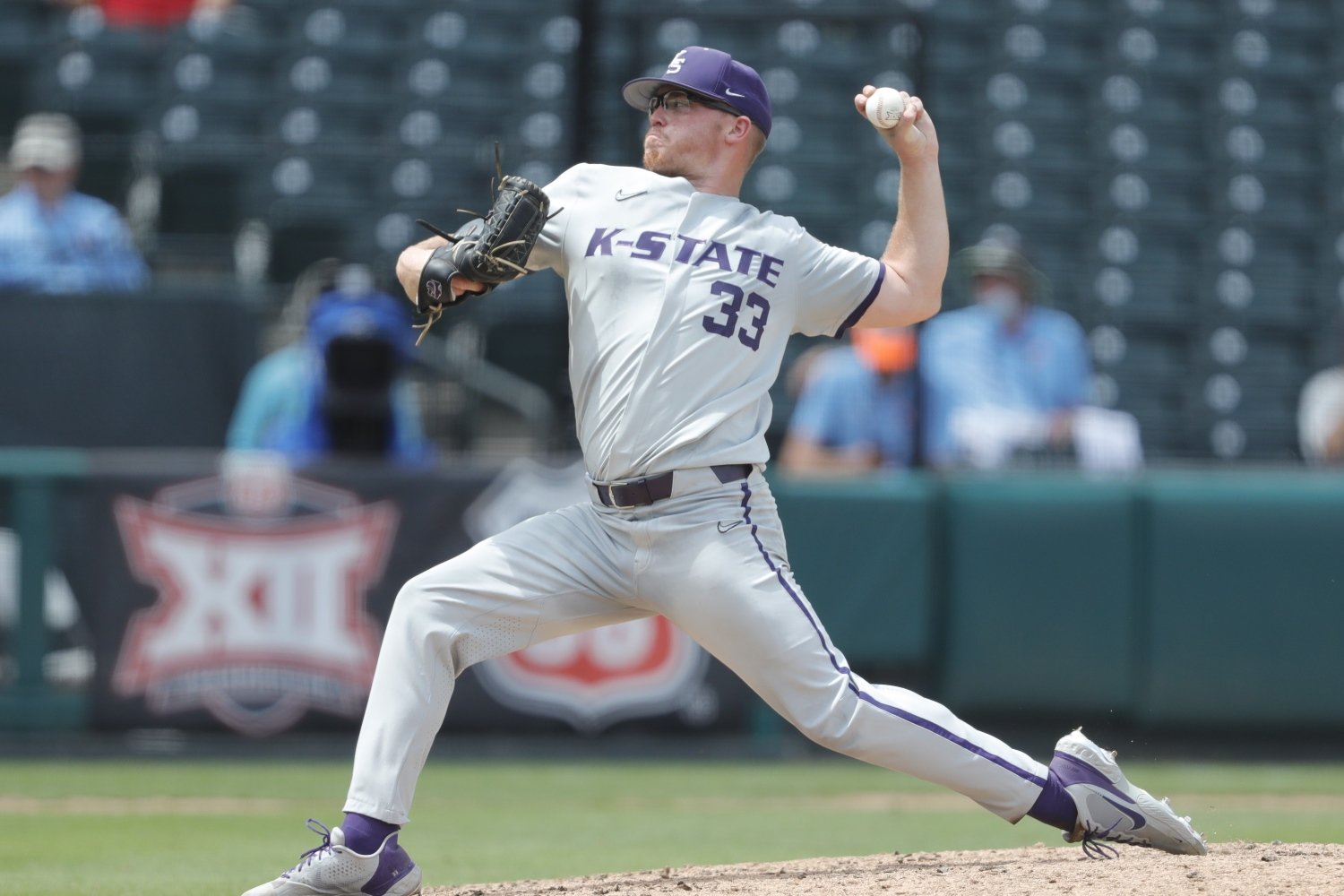 5. Jordan Wicks - LHP Age: 23 2022 Stats (A+/AA): 24 G, 94 ⅔ IP, 3.80 ERA, 1.25 WHIP, 30.1% K, 8.5% BB, 10 HR The Cubs were pleased and excited when Jordan Wicks fell to them at the 21st overall pick in the 2021 Draft. A good blend of polish and upside, Wicks dominated college ball at Kansas State, though without the high-end velocity that gets collegiate aces drafted near the top of the first round. He’s a lefty with average velocity, and the primary tool he brought with him to pro ball was a plus changeup. Obviously, any lefty starter in MLB is going to see a whole lot of tough right-handed batters, so starting a repertoire with a good change is very valuable. The risk involved is significant, though, because what works at the amateur level–even a high level of competition like the Big 12–will absolutely not work in MLB. The challenge in scouting a player like Wicks lies in looking at that changeup and knowing it will have to be reinvented, or at least tweaked, along with all the other improvements an organization has to ask of a young hurler. The scouts, player-development analysts, and key decision-makers have to figure out how much they can trust a young person to hang onto what has made them special, even as they have to undergo an overhaul. Wicks has repaid that trust rather impressively, so far. The job isn’t done, but he made a great head start on it last year, adding a slider that should miss bats against lefties without losing feel for either his fastball or that changeup. That gives him, more or less, two pitches for each type of batter: the fastball and changeup against righties, and the fastball and slider against lefties. There’s a lot of work left, of course. His changeup really is stellar, and he might even be able to throw it left-on-left a bit in the big leagues, but it’s not going to miss bats in the majors at the same rate as it has in the minors thus far. Without those whiffs, his control could become more of an issue, because although he’s athletic and repeats his delivery well, his initial arm action creates just enough noise to make pinpoint command elusive. To make up for that, even as he works to tweak either the usage of the change or the interaction between it and his fastball, Wicks could work on sequencing and feel for his curveball. That pitch is never going to be a major part of his arsenal, but he could steal strikes with it early in counts, as long as he avoids making that a predictable tack. There are some scouts who think he could benefit from adding a cutter, which would complement the fastball and changeup against righties and help him tone down some of the hard contact he projects to give up with his current arsenal. The danger there lies in adding too much and complicating his profile more than his development can handle. A much simpler prototype for Wicks is right in front of us, although there are obviously some important differences. Justin Steele does just fine with (more or less) a two-pitch arsenal, relying on a fastball with some cut to it and a big-breaking slider. Wicks has the changeup instead of Steele’s slider, and Steele’s is the more versatile weapon. Wicks’s fastball has more riding action but less gloveside movement than Steele’s, which can work to his advantage because of the movement profile on the changeup but makes the fastball itself less dominant than Steele’s. The last thing to consider, then, is whether a bit of continued mechanical refinement and some training focused on velocity could get Wicks working more into the mid-90s with his fastball. If he could find a couple more miles per hour, everything could play up, even without unique or devastating movement. As Wicks opens the season in Double-A Tennessee, our main focus can and should be on his results. He needs to learn to work deep into games; to sequence and spot his stuff; and to work out of trouble. When he gets closer to making his debut with the parent club, though, it will be time to hone in on the questions we’ve raised here. Wicks could be a No. 2 starter. That’s an extraordinarily valuable player, and would take some pressure off the Cubs as they try to round out their roster over the next few seasons. He’s more likely to settle into the middle of the rotation, though. That, too, has substantial value. If he doesn’t succeed in adding more pitches or velocity, he can still be fine. He just needs more innings in the high minors to tighten everything up.
 -
We’ve reached the top five in our countdown of the Cubs’ top 20 prospects, as voted on by the North Side Baseball community, which means each player from here onward gets their own full post and deeper breakdown. 5. Jordan Wicks - LHP Age: 23 2022 Stats (A+/AA): 24 G, 94 ⅔ IP, 3.80 ERA, 1.25 WHIP, 30.1% K, 8.5% BB, 10 HR The Cubs were pleased and excited when Jordan Wicks fell to them at the 21st overall pick in the 2021 Draft. A good blend of polish and upside, Wicks dominated college ball at Kansas State, though without the high-end velocity that gets collegiate aces drafted near the top of the first round. He’s a lefty with average velocity, and the primary tool he brought with him to pro ball was a plus changeup. Obviously, any lefty starter in MLB is going to see a whole lot of tough right-handed batters, so starting a repertoire with a good change is very valuable. The risk involved is significant, though, because what works at the amateur level–even a high level of competition like the Big 12–will absolutely not work in MLB. The challenge in scouting a player like Wicks lies in looking at that changeup and knowing it will have to be reinvented, or at least tweaked, along with all the other improvements an organization has to ask of a young hurler. The scouts, player-development analysts, and key decision-makers have to figure out how much they can trust a young person to hang onto what has made them special, even as they have to undergo an overhaul. Wicks has repaid that trust rather impressively, so far. The job isn’t done, but he made a great head start on it last year, adding a slider that should miss bats against lefties without losing feel for either his fastball or that changeup. That gives him, more or less, two pitches for each type of batter: the fastball and changeup against righties, and the fastball and slider against lefties. There’s a lot of work left, of course. His changeup really is stellar, and he might even be able to throw it left-on-left a bit in the big leagues, but it’s not going to miss bats in the majors at the same rate as it has in the minors thus far. Without those whiffs, his control could become more of an issue, because although he’s athletic and repeats his delivery well, his initial arm action creates just enough noise to make pinpoint command elusive. To make up for that, even as he works to tweak either the usage of the change or the interaction between it and his fastball, Wicks could work on sequencing and feel for his curveball. That pitch is never going to be a major part of his arsenal, but he could steal strikes with it early in counts, as long as he avoids making that a predictable tack. There are some scouts who think he could benefit from adding a cutter, which would complement the fastball and changeup against righties and help him tone down some of the hard contact he projects to give up with his current arsenal. The danger there lies in adding too much and complicating his profile more than his development can handle. A much simpler prototype for Wicks is right in front of us, although there are obviously some important differences. Justin Steele does just fine with (more or less) a two-pitch arsenal, relying on a fastball with some cut to it and a big-breaking slider. Wicks has the changeup instead of Steele’s slider, and Steele’s is the more versatile weapon. Wicks’s fastball has more riding action but less gloveside movement than Steele’s, which can work to his advantage because of the movement profile on the changeup but makes the fastball itself less dominant than Steele’s. The last thing to consider, then, is whether a bit of continued mechanical refinement and some training focused on velocity could get Wicks working more into the mid-90s with his fastball. If he could find a couple more miles per hour, everything could play up, even without unique or devastating movement. As Wicks opens the season in Double-A Tennessee, our main focus can and should be on his results. He needs to learn to work deep into games; to sequence and spot his stuff; and to work out of trouble. When he gets closer to making his debut with the parent club, though, it will be time to hone in on the questions we’ve raised here. Wicks could be a No. 2 starter. That’s an extraordinarily valuable player, and would take some pressure off the Cubs as they try to round out their roster over the next few seasons. He’s more likely to settle into the middle of the rotation, though. That, too, has substantial value. If he doesn’t succeed in adding more pitches or velocity, he can still be fine. He just needs more innings in the high minors to tighten everything up. View full article
-
North Side Baseball's 2023 Top 20 Cubs Prospects: #6-10
Matthew Trueblood posted an article in Minor Leagues
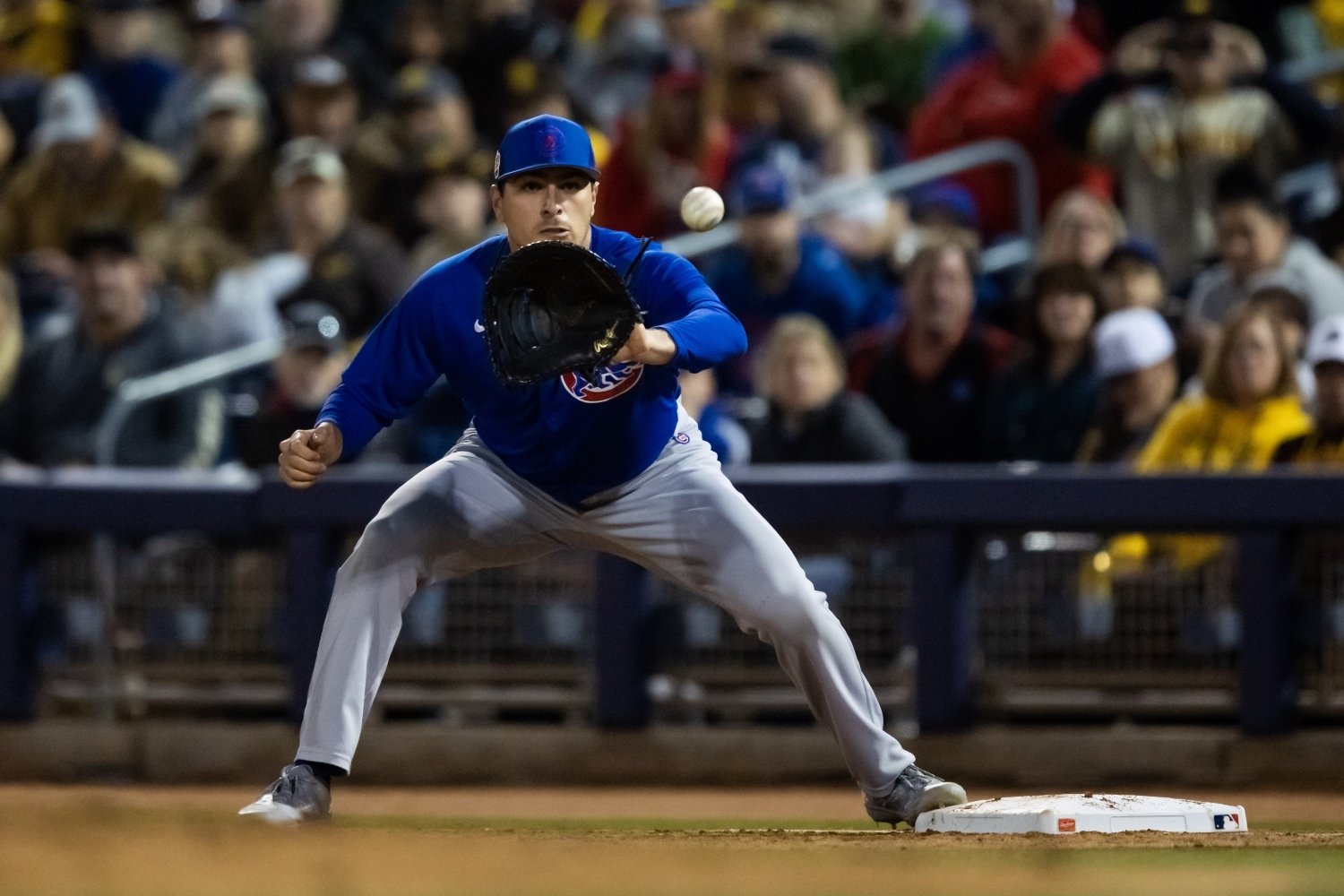 It’s hard to draw distinctions like those between tiers in the Cubs’ pipeline right now. There’s no question that their strength lies in quantity, rather than extraordinary quality at the top of the list. Still, there are some players even in the second half of our top 20, revealed and discussed last week, that have higher ceilings even than some of those we’ll tackle today. By and large, though, these guys have fewer questions to answer between where they are and their career destination, be that the heart of a batting order or the top of a rotation, than their slightly less esteemed co-workers. 10. Daniel Palencia - RHP Age: 23 2022 Stats (A+): 21 G, 75 ⅓ IP, 3.94 ERA, 1.21 WHIP, 31.1% K, 13.0% BB, 7 HR There’s some chance, remote though it might be, that the Andrew Chafin trade is remembered as one of the great ones in Cubs history, right alongside the one that sent Scott Feldman to the Orioles and brought back Jake Arrieta. Palencia was almost an afterthought in that deal, which felt like little more than an afterthought itself, but his sheer stuff has opened an eye for every hitter it has utterly overpowered in the low minors–which means it’s opened many eyes. In all likelihood, we’re looking at a relief pitcher here. Palencia is powerfully built, but he stands just shy of six feet tall. He’s 23 years old, but his entire pro track record consists of 34 appearances and fewer than 120 innings. He’s eligible for the Rule 5 Draft after this season, so the Cubs have no reason not to bring him to the parent club if he becomes the best potential addition to their bullpen at some point this summer, and it’s pretty easy to envision that happening. Even if it’s just in relief, though, Palencia could have immense value. If he cleans up his mechanics, improves his extension and his changeup, and can cut it as a starter, he could be an ace. His fastball can touch 102 miles per hour, and sits very comfortably in the high 90s. Thanks to his short stature, he creates a flat approach angle when he attacks the top of the zone with that pitch, and he’s going to rack up strikeouts on that, alone. If he cuts it as a starter, Palencia will do so by finding a mix of breaking stuff that can supplement that heater more effectively. He has a potentially plus slider already, but needs to show more consistency with it, and his knuckle curve (or, perhaps, a sweeping slider that complements but doesn’t replace the current version) needs to come along if he’s going to start. If not, he just has to throw enough strikes to dominate with the four-seamer and the slider. Because of his strange amateur arc and the odd circumstances of his early professional tenure, he’s a good candidate to come up as a short-term, short-relief weapon, only to eventually mature into a good starter. 9. Ben Brown - RHP Age: 23 2022 Stats (A+/AA): 23 G, 104 IP, 3.38 ERA, 1.17 WHIP, 34.3% K, 9.4% BB, 10 HR That Brown and Palencia are both starting 2023 in Tennessee’s starting rotation is mildly hilarious. Brown is a head taller and looks about twice Palencia’s size on the mound. He still seems a bit on the thin side, but he’s generating plenty of power with his long levers and his clean delivery. Also unlike Palencia, Brown can fill up the strike zone. The questions about his future revolve more around finding the right mix of stuff to complement his mid-90s fastball than around mechanics or command, and that’s a great place to start. It’s hard to maintain two distinct breaking balls. One has to learn to keep them separate, to sequence them correctly, and how to calibrate their use based on the handedness of opponents. Brown can probably manage that, though, given the success he’s already had at Double A and on his command profile. His range of potential outcomes remains wide, but a solid mid-rotation starter seems like the best individual bet. That would be a huge win for the Cubs, given that they got Brown for just three months of relief signee David Robertston’s time. 8. Owen Caissie - OF Age: 20 2022 Stats (A+) (incl. postseason): 111 G, 460 PA, .254/.346/.409, 12 HR, 12.2% BB, 29.0% K Barring something unforeseen, Caissie will be the only meaningful return the Cubs realize on the trade that sent Yu Darvish to San Diego after 2020. That’s less than ideal, but Caissie has a chance to be pretty darn good. Tall, sturdy and with power upside beyond what he showed as a teenager in High A, he profiles as a slugging corner outfielder who won’t hurt the team defensively in either right or left field. To get to that pop, though, he’ll need to make more contact. Even given his tender age for such a challenging assignment, he looked overmatched early last year. He started the campaign with 12 straight games in which he struck out at least once, and he went 5-48 during those contests. Thereafter, though, he slightly toned down the whiff rate and found his punch. He batted .273/.367/.444 after that first game without a punchout. Thus, we can wait a bit before being overly concerned about the eight strikeouts he’s registered in his first 13 plate appearances at Double A. 7. Cade Horton - RHP Age: 21 No professional stats For a player on whom the Cubs gambled so boldly, Horton is still very much a black box. The big upside in taking a collegiate pitcher near the top of the draft is that they have already proven their durability and their dominance against high-level competition, and can therefore be put on the fast track to the big leagues. Instead, for the moment, Horton has yet to make his debut in official action, and he’s been assigned to Low-A Myrtle Beach to open the season. That doesn’t make the selection a bad one. It’s just fraught with an unusual degree of risk. Horton showed an exceptional slider late in the season for the University of Oklahoma, ahead of the 2022 Draft. The pitch is more than an out-getter; it could be an ace-maker. In order for that to happen, though, he has to flesh out what is mostly a two-pitch mix, and he has to prove he can throw strikes, turn over the lineup card, and hold up to the rigors of a long season. All of that is possible, though, and because Horton is such a remarkable athlete, it could come together shockingly fast. If it does, he should be pitching in Tennessee or even Iowa by the end of the season. In the meantime, he should have a lot of success against hitters in A-ball, where his fastball and slider are enough to overwhelm most opponents. 6. Matt Mervis - 1B Age: 24 2022 Stats (A+/AA/AAA): 137 G, 578 PA, .309/.379/.606, 36 HR, 10.2% BB, 18.6% K Questions still abound about Mervis. Plenty of people believe his swing will never be able to generate real power against MLB-caliber fastballs, especially on the inner half of the plate. Plenty of people believe he’ll struggle against left-handed pitchers, and a platoon player with no defensive value–even in the era of the universal DH–is unlikely ever to be mistaken for a star. His swing does have a little bit of a sweep to it. He’s reminiscent of Logan Morrison, another thick left-handed hitter with a balance of pure hit tool and power. Morrison eventually grew into substantial power, but that took time and forced him to trade more contact than would have been ideal. There are some early signs that Mervis is different. Perplexingly, as he climbed the ladder of the minors last year, he became less dependent upon power and controlled the strike zone better. He’s kept his strikeout rate in check and walked at a very healthy clip. His power didn’t suffer from that dedication to his approach last year, and in the early going of 2023, he’s still generating some impressive top-end exit velocities. In the final analysis, though, hitting the ball hard especially often is more valuable than hitting it especially hard occasionally. Mervis will get a look with the parent club before this season ends, and then (if not sooner) we’ll start to find out whether he can do the former well enough to be a first-division first baseman.
 -
Our community has voted on the top 20 prospects in the Chicago Cubs farm system, and in our rollout of all 20, we’ve now reached the top 10. This is where the Cubs’ depth starts to give way to real star-caliber upside, mixed with some proximity to the majors. It’s hard to draw distinctions like those between tiers in the Cubs’ pipeline right now. There’s no question that their strength lies in quantity, rather than extraordinary quality at the top of the list. Still, there are some players even in the second half of our top 20, revealed and discussed last week, that have higher ceilings even than some of those we’ll tackle today. By and large, though, these guys have fewer questions to answer between where they are and their career destination, be that the heart of a batting order or the top of a rotation, than their slightly less esteemed co-workers. 10. Daniel Palencia - RHP Age: 23 2022 Stats (A+): 21 G, 75 ⅓ IP, 3.94 ERA, 1.21 WHIP, 31.1% K, 13.0% BB, 7 HR There’s some chance, remote though it might be, that the Andrew Chafin trade is remembered as one of the great ones in Cubs history, right alongside the one that sent Scott Feldman to the Orioles and brought back Jake Arrieta. Palencia was almost an afterthought in that deal, which felt like little more than an afterthought itself, but his sheer stuff has opened an eye for every hitter it has utterly overpowered in the low minors–which means it’s opened many eyes. In all likelihood, we’re looking at a relief pitcher here. Palencia is powerfully built, but he stands just shy of six feet tall. He’s 23 years old, but his entire pro track record consists of 34 appearances and fewer than 120 innings. He’s eligible for the Rule 5 Draft after this season, so the Cubs have no reason not to bring him to the parent club if he becomes the best potential addition to their bullpen at some point this summer, and it’s pretty easy to envision that happening. Even if it’s just in relief, though, Palencia could have immense value. If he cleans up his mechanics, improves his extension and his changeup, and can cut it as a starter, he could be an ace. His fastball can touch 102 miles per hour, and sits very comfortably in the high 90s. Thanks to his short stature, he creates a flat approach angle when he attacks the top of the zone with that pitch, and he’s going to rack up strikeouts on that, alone. If he cuts it as a starter, Palencia will do so by finding a mix of breaking stuff that can supplement that heater more effectively. He has a potentially plus slider already, but needs to show more consistency with it, and his knuckle curve (or, perhaps, a sweeping slider that complements but doesn’t replace the current version) needs to come along if he’s going to start. If not, he just has to throw enough strikes to dominate with the four-seamer and the slider. Because of his strange amateur arc and the odd circumstances of his early professional tenure, he’s a good candidate to come up as a short-term, short-relief weapon, only to eventually mature into a good starter. 9. Ben Brown - RHP Age: 23 2022 Stats (A+/AA): 23 G, 104 IP, 3.38 ERA, 1.17 WHIP, 34.3% K, 9.4% BB, 10 HR That Brown and Palencia are both starting 2023 in Tennessee’s starting rotation is mildly hilarious. Brown is a head taller and looks about twice Palencia’s size on the mound. He still seems a bit on the thin side, but he’s generating plenty of power with his long levers and his clean delivery. Also unlike Palencia, Brown can fill up the strike zone. The questions about his future revolve more around finding the right mix of stuff to complement his mid-90s fastball than around mechanics or command, and that’s a great place to start. It’s hard to maintain two distinct breaking balls. One has to learn to keep them separate, to sequence them correctly, and how to calibrate their use based on the handedness of opponents. Brown can probably manage that, though, given the success he’s already had at Double A and on his command profile. His range of potential outcomes remains wide, but a solid mid-rotation starter seems like the best individual bet. That would be a huge win for the Cubs, given that they got Brown for just three months of relief signee David Robertston’s time. 8. Owen Caissie - OF Age: 20 2022 Stats (A+) (incl. postseason): 111 G, 460 PA, .254/.346/.409, 12 HR, 12.2% BB, 29.0% K Barring something unforeseen, Caissie will be the only meaningful return the Cubs realize on the trade that sent Yu Darvish to San Diego after 2020. That’s less than ideal, but Caissie has a chance to be pretty darn good. Tall, sturdy and with power upside beyond what he showed as a teenager in High A, he profiles as a slugging corner outfielder who won’t hurt the team defensively in either right or left field. To get to that pop, though, he’ll need to make more contact. Even given his tender age for such a challenging assignment, he looked overmatched early last year. He started the campaign with 12 straight games in which he struck out at least once, and he went 5-48 during those contests. Thereafter, though, he slightly toned down the whiff rate and found his punch. He batted .273/.367/.444 after that first game without a punchout. Thus, we can wait a bit before being overly concerned about the eight strikeouts he’s registered in his first 13 plate appearances at Double A. 7. Cade Horton - RHP Age: 21 No professional stats For a player on whom the Cubs gambled so boldly, Horton is still very much a black box. The big upside in taking a collegiate pitcher near the top of the draft is that they have already proven their durability and their dominance against high-level competition, and can therefore be put on the fast track to the big leagues. Instead, for the moment, Horton has yet to make his debut in official action, and he’s been assigned to Low-A Myrtle Beach to open the season. That doesn’t make the selection a bad one. It’s just fraught with an unusual degree of risk. Horton showed an exceptional slider late in the season for the University of Oklahoma, ahead of the 2022 Draft. The pitch is more than an out-getter; it could be an ace-maker. In order for that to happen, though, he has to flesh out what is mostly a two-pitch mix, and he has to prove he can throw strikes, turn over the lineup card, and hold up to the rigors of a long season. All of that is possible, though, and because Horton is such a remarkable athlete, it could come together shockingly fast. If it does, he should be pitching in Tennessee or even Iowa by the end of the season. In the meantime, he should have a lot of success against hitters in A-ball, where his fastball and slider are enough to overwhelm most opponents. 6. Matt Mervis - 1B Age: 24 2022 Stats (A+/AA/AAA): 137 G, 578 PA, .309/.379/.606, 36 HR, 10.2% BB, 18.6% K Questions still abound about Mervis. Plenty of people believe his swing will never be able to generate real power against MLB-caliber fastballs, especially on the inner half of the plate. Plenty of people believe he’ll struggle against left-handed pitchers, and a platoon player with no defensive value–even in the era of the universal DH–is unlikely ever to be mistaken for a star. His swing does have a little bit of a sweep to it. He’s reminiscent of Logan Morrison, another thick left-handed hitter with a balance of pure hit tool and power. Morrison eventually grew into substantial power, but that took time and forced him to trade more contact than would have been ideal. There are some early signs that Mervis is different. Perplexingly, as he climbed the ladder of the minors last year, he became less dependent upon power and controlled the strike zone better. He’s kept his strikeout rate in check and walked at a very healthy clip. His power didn’t suffer from that dedication to his approach last year, and in the early going of 2023, he’s still generating some impressive top-end exit velocities. In the final analysis, though, hitting the ball hard especially often is more valuable than hitting it especially hard occasionally. Mervis will get a look with the parent club before this season ends, and then (if not sooner) we’ll start to find out whether he can do the former well enough to be a first-division first baseman. View full article
-
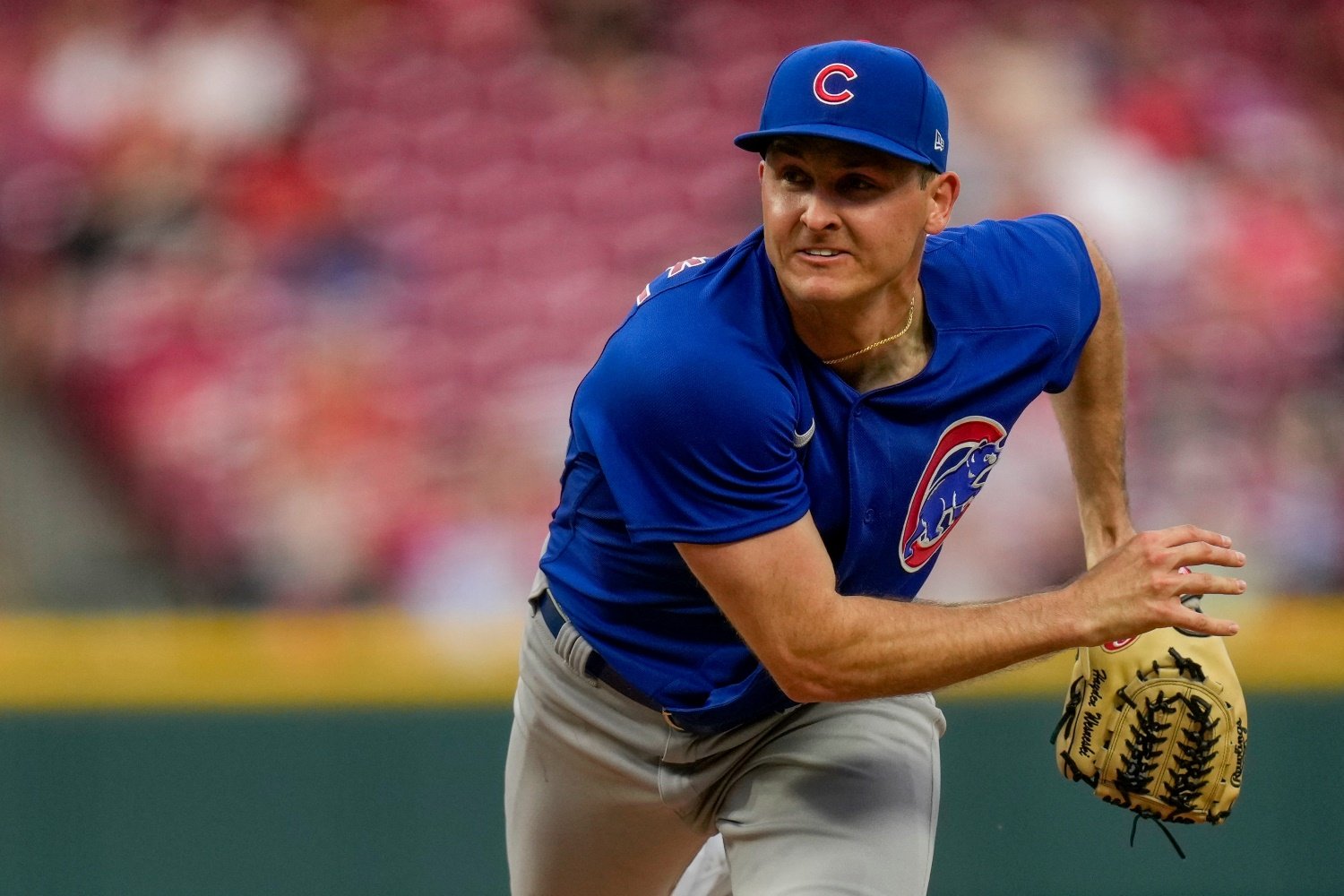 In all likelihood, Hayden Wesneski will always be a sinker-slider guy. That’s his primary game. His slider is a two-plane, multi-speed weapon, and his command of the offering is good enough that it can essentially be his primary weapon, even in a starting role. Opponents whiff on about 35 percent of their swings against it, but that’s only part of the story. Of 330 pitchers who have allowed at least 25 batted balls on sliders and sweepers since the start of 2022, Wesneski has induced a lower average exit velocity on those pitches than all but 30. Even when batters don’t swing at all, they’re in trouble. Of 423 pitchers who have thrown at least 50 sliders and sweepers at which batters didn’t swing over the last year-plus, Wesneski has the 15th-highest called strike rate on them. Whiffs. Weak contact when he doesn’t get whiffs. Called strikes when batters try to wait him out. That’s the trifecta; that’s the dream. Wesneski’s slider is a miraculous weapon–a career-maker. That’s the good news. The bad news is that everything in baseball, as in life, comes at some kind of cost. Last season, Wesneski showed five total pitches: that supernal slider, a great sinker, a changeup, a cutter, and a four-seam fastball. That’s a full and delightfully varied arsenal, Alas, there was a problem with it: Wesneski had two different arm slots from which he threw those pitches. That compromises the effectiveness of even the sexiest arsenal. When hitters can start keying in on a release point and eliminating possible pitches, they gain the upper hand, and it was too easy to distinguish Wesneski's four-seamer and cutter from the sinker, slider, and changeup in 2022. This spring, Wesneski and the Cubs talked about the possibility that he could turn a corner this year by using his four-seamer more. If that was going to work, though, he would need to solve the two-slot problem. He needed to stop hitters from seeing the four-seamer as a different pitch from his sinker or slider just based on his motion. He's done it. That's one problem solved! (The cutter is another fascinating element of Wesneski's story, but one we should discuss another time.) Wesneski identified the arm slot issue and moved to correct it, and now, his four-seamer comes from the same slot as the sinker, slider, and changeup. Now we're getting to the cost of that unique, devastating slider, though. Taking the slot from which he threw the slider and adjusting it to meet the four-seamer was never going to work. That pitch can only come from a certain type of arm action. Thus, Wesneski accommodated the slider by moving the four-seamer down to its level, but a four-seamer can't move the same way from that slider-friendly slot. He's lost an inch of vertical movement on that heater, and it now runs almost three more inches to Wesneski's arm side. The four-seamer is still distinct from the sinker, but the difference in movement between the two has been roughly halved, which will probably cost him some whiffs. Now that Wesneski has made the sacrifice of losing hop on the heat, however, he's able to move forward with the rest of his improvement and evolution. He's added a little over 1.5 miles per hour of velocity to each of his fastballs, in the early going, which makes up for the dampened movement. He's able to use the four-seamer as his primary fastball against lefties, without always having to pair it with his cutter. Moving the four-seamer's slot to that of the slider has allowed him to unleash that bigger breaker more often against lefties so far. Against righties, having the two fastballs that work in different areas of the zone has made him less reliant on the slider, and in the long run, that's a good thing. He can get through an opposing lineup two or three times much more easily this way. Wesneski knows that the slider carries his profile, and he's committed to it. Now, he just has to piece together the rest of the picture. Obviously, that does involve the cutter, and that remains a thorny issue. With two fastballs and that glorious sweeping wiffleball, though, he's closer to having both right- and left-handed batters guessing at all times. There might be growing pains, but the price has been paid, and the rewards will come as he gets comfortable with this new state of things.
 -
When Hayden Wesneski came up to the Cubs at the end of the 2022 season, he showed mid-rotation starting potential. To finish converting that potential into real success and production, though, he needed to make a couple of changes. He’s made them. Now, the question is how much it cost him to do so. In all likelihood, Hayden Wesneski will always be a sinker-slider guy. That’s his primary game. His slider is a two-plane, multi-speed weapon, and his command of the offering is good enough that it can essentially be his primary weapon, even in a starting role. Opponents whiff on about 35 percent of their swings against it, but that’s only part of the story. Of 330 pitchers who have allowed at least 25 batted balls on sliders and sweepers since the start of 2022, Wesneski has induced a lower average exit velocity on those pitches than all but 30. Even when batters don’t swing at all, they’re in trouble. Of 423 pitchers who have thrown at least 50 sliders and sweepers at which batters didn’t swing over the last year-plus, Wesneski has the 15th-highest called strike rate on them. Whiffs. Weak contact when he doesn’t get whiffs. Called strikes when batters try to wait him out. That’s the trifecta; that’s the dream. Wesneski’s slider is a miraculous weapon–a career-maker. That’s the good news. The bad news is that everything in baseball, as in life, comes at some kind of cost. Last season, Wesneski showed five total pitches: that supernal slider, a great sinker, a changeup, a cutter, and a four-seam fastball. That’s a full and delightfully varied arsenal, Alas, there was a problem with it: Wesneski had two different arm slots from which he threw those pitches. That compromises the effectiveness of even the sexiest arsenal. When hitters can start keying in on a release point and eliminating possible pitches, they gain the upper hand, and it was too easy to distinguish Wesneski's four-seamer and cutter from the sinker, slider, and changeup in 2022. This spring, Wesneski and the Cubs talked about the possibility that he could turn a corner this year by using his four-seamer more. If that was going to work, though, he would need to solve the two-slot problem. He needed to stop hitters from seeing the four-seamer as a different pitch from his sinker or slider just based on his motion. He's done it. That's one problem solved! (The cutter is another fascinating element of Wesneski's story, but one we should discuss another time.) Wesneski identified the arm slot issue and moved to correct it, and now, his four-seamer comes from the same slot as the sinker, slider, and changeup. Now we're getting to the cost of that unique, devastating slider, though. Taking the slot from which he threw the slider and adjusting it to meet the four-seamer was never going to work. That pitch can only come from a certain type of arm action. Thus, Wesneski accommodated the slider by moving the four-seamer down to its level, but a four-seamer can't move the same way from that slider-friendly slot. He's lost an inch of vertical movement on that heater, and it now runs almost three more inches to Wesneski's arm side. The four-seamer is still distinct from the sinker, but the difference in movement between the two has been roughly halved, which will probably cost him some whiffs. Now that Wesneski has made the sacrifice of losing hop on the heat, however, he's able to move forward with the rest of his improvement and evolution. He's added a little over 1.5 miles per hour of velocity to each of his fastballs, in the early going, which makes up for the dampened movement. He's able to use the four-seamer as his primary fastball against lefties, without always having to pair it with his cutter. Moving the four-seamer's slot to that of the slider has allowed him to unleash that bigger breaker more often against lefties so far. Against righties, having the two fastballs that work in different areas of the zone has made him less reliant on the slider, and in the long run, that's a good thing. He can get through an opposing lineup two or three times much more easily this way. Wesneski knows that the slider carries his profile, and he's committed to it. Now, he just has to piece together the rest of the picture. Obviously, that does involve the cutter, and that remains a thorny issue. With two fastballs and that glorious sweeping wiffleball, though, he's closer to having both right- and left-handed batters guessing at all times. There might be growing pains, but the price has been paid, and the rewards will come as he gets comfortable with this new state of things. View full article
-
In modern, high-level soccer, teams are not only constrained in the number of substitutions they can make in a game, but also in the timing of those moves. It’s an off-the-wall idea, but MLB should test out a version of the same limitations in the minor leagues. Over the last half-decade, we’ve seen MLB turn its affiliated minor-league clubs into laboratories. The restrictions on fielder positioning, the pitch timer, the altered size and location of the bases, the three-batter minimum for relief pitchers, and the automatic runner in extra innings all got their kinks out by first being used far from the bright lights of big-league stadia. There are some valid ethical questions to raise about that pattern, but now that the precedent exists, the league will keep testing tweaks and hopeful innovations to its product in the minors. I have a recommendation for the next batch. Unlike basketball, football and hockey, soccer is a sport spiritually in league with baseball on the question of substitutions. The very flow and structure of the games themselves discourage using them much, but each has also codified its distaste for swapping players in and out by making that illegal. You can’t bring a player back to the game in either sport. Unlike baseball, though, soccer has always been quite strict even about the substitutions that do happen. Teams are only allowed a specified number of subs, and even as that number has crept up in recent years, it’s been constrained in another way: teams are only permitted to make their allotted changes within certain windows. Subs made at halftime or at the end of regulation (when the game goes into extra time) don’t count against the limit, but beyond that, there are a limited number of opportunities, and you’re incentivized to make multiple moves at once if you want to use all of your available substitutions at all. It has felt, for some time now, like what MLB most wanted to achieve via rules changes was the resurrection of the traditional starting pitcher–the workhorse who piles up 240 innings a season, and who might pitch a handful of complete games for a while. Largely, though, the changes they’ve been able or willing to make have failed to arrest the momentum toward heavy and committee-style bullpen use. This, at last, would be a way to change that. Imagine a rule allowing a team to make just five total substitutions throughout the game, in three windows. The seventh-inning stretch is already conveniently treated as some analog of halftime, and teams would get an extra opportunity to sub if the game went to extra innings, but basically, you’d see the bullpen game go the way of the opener. Teams might, alas, just stop using pinch-hitters, pinch-runners, and defensive substitutions, so they could make as many of their substitutions as possible be pitching changes, but they’d finally have to pay a real price for thinking that way. It’s more likely that, in the long run, reams would start seeking and shaping starters who could pitch six or seven innings on a regular basis, giving them more capacity for other moves throughout the contest. It would probably also foster the development of more multi-inning relievers, and it would increase the value of position players who contribute both offensively and defensively, hit same- and opposite-handed pitchers, and run the bases well, since they wouldn’t need to be subbed out as often as more limited players. That would make it a two-pronged attack on the problem people most often cite about baseball, relative to its rivals for the primary attention of American sports fans: the relatively low value of stars, compared with depth. What do you think? Are the potential pitfalls to this idea that I’m missing? Would it change the game in any meaningful way, or just add a wearisome and ineffectual rule to the books? Maybe the rule would need to be more restrictive than I propose here to have a noticeable effect. That would be the benefit of using the minors as a testing ground: calibration. In any case, I think it makes for a fun thought exercise, as we savor the return of baseball and continue to think about how it could be even better in future springs. View full article
-
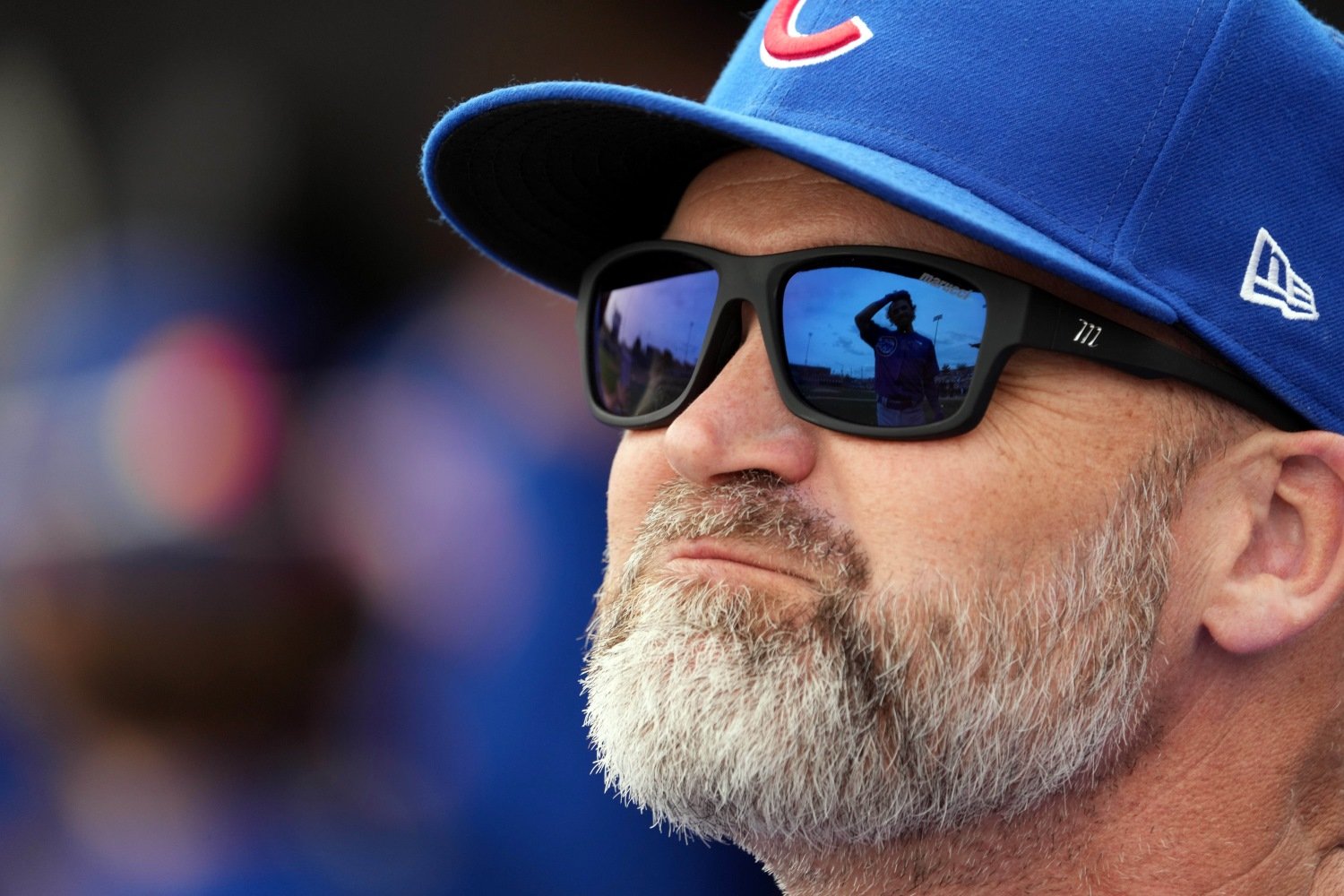 Over the last half-decade, we’ve seen MLB turn its affiliated minor-league clubs into laboratories. The restrictions on fielder positioning, the pitch timer, the altered size and location of the bases, the three-batter minimum for relief pitchers, and the automatic runner in extra innings all got their kinks out by first being used far from the bright lights of big-league stadia. There are some valid ethical questions to raise about that pattern, but now that the precedent exists, the league will keep testing tweaks and hopeful innovations to its product in the minors. I have a recommendation for the next batch. Unlike basketball, football and hockey, soccer is a sport spiritually in league with baseball on the question of substitutions. The very flow and structure of the games themselves discourage using them much, but each has also codified its distaste for swapping players in and out by making that illegal. You can’t bring a player back to the game in either sport. Unlike baseball, though, soccer has always been quite strict even about the substitutions that do happen. Teams are only allowed a specified number of subs, and even as that number has crept up in recent years, it’s been constrained in another way: teams are only permitted to make their allotted changes within certain windows. Subs made at halftime or at the end of regulation (when the game goes into extra time) don’t count against the limit, but beyond that, there are a limited number of opportunities, and you’re incentivized to make multiple moves at once if you want to use all of your available substitutions at all. It has felt, for some time now, like what MLB most wanted to achieve via rules changes was the resurrection of the traditional starting pitcher–the workhorse who piles up 240 innings a season, and who might pitch a handful of complete games for a while. Largely, though, the changes they’ve been able or willing to make have failed to arrest the momentum toward heavy and committee-style bullpen use. This, at last, would be a way to change that. Imagine a rule allowing a team to make just five total substitutions throughout the game, in three windows. The seventh-inning stretch is already conveniently treated as some analog of halftime, and teams would get an extra opportunity to sub if the game went to extra innings, but basically, you’d see the bullpen game go the way of the opener. Teams might, alas, just stop using pinch-hitters, pinch-runners, and defensive substitutions, so they could make as many of their substitutions as possible be pitching changes, but they’d finally have to pay a real price for thinking that way. It’s more likely that, in the long run, reams would start seeking and shaping starters who could pitch six or seven innings on a regular basis, giving them more capacity for other moves throughout the contest. It would probably also foster the development of more multi-inning relievers, and it would increase the value of position players who contribute both offensively and defensively, hit same- and opposite-handed pitchers, and run the bases well, since they wouldn’t need to be subbed out as often as more limited players. That would make it a two-pronged attack on the problem people most often cite about baseball, relative to its rivals for the primary attention of American sports fans: the relatively low value of stars, compared with depth. What do you think? Are the potential pitfalls to this idea that I’m missing? Would it change the game in any meaningful way, or just add a wearisome and ineffectual rule to the books? Maybe the rule would need to be more restrictive than I propose here to have a noticeable effect. That would be the benefit of using the minors as a testing ground: calibration. In any case, I think it makes for a fun thought exercise, as we savor the return of baseball and continue to think about how it could be even better in future springs.
 -
That's a good thought on Elías, and I'm interested to see what they do with him, too. DJ Herz seems like he could end up doing some of this, if he has a strong first half and the team is in contention at all by July. For that matter, now that he's on the 40-man, I think we have to assume Ryan Jensen is a candidate for this role, too, though obviously that's not another lefty.
-
Are the Cubs the New Kings of the Multi-Inning Fireman Role?
Matthew Trueblood posted an article in Cubs
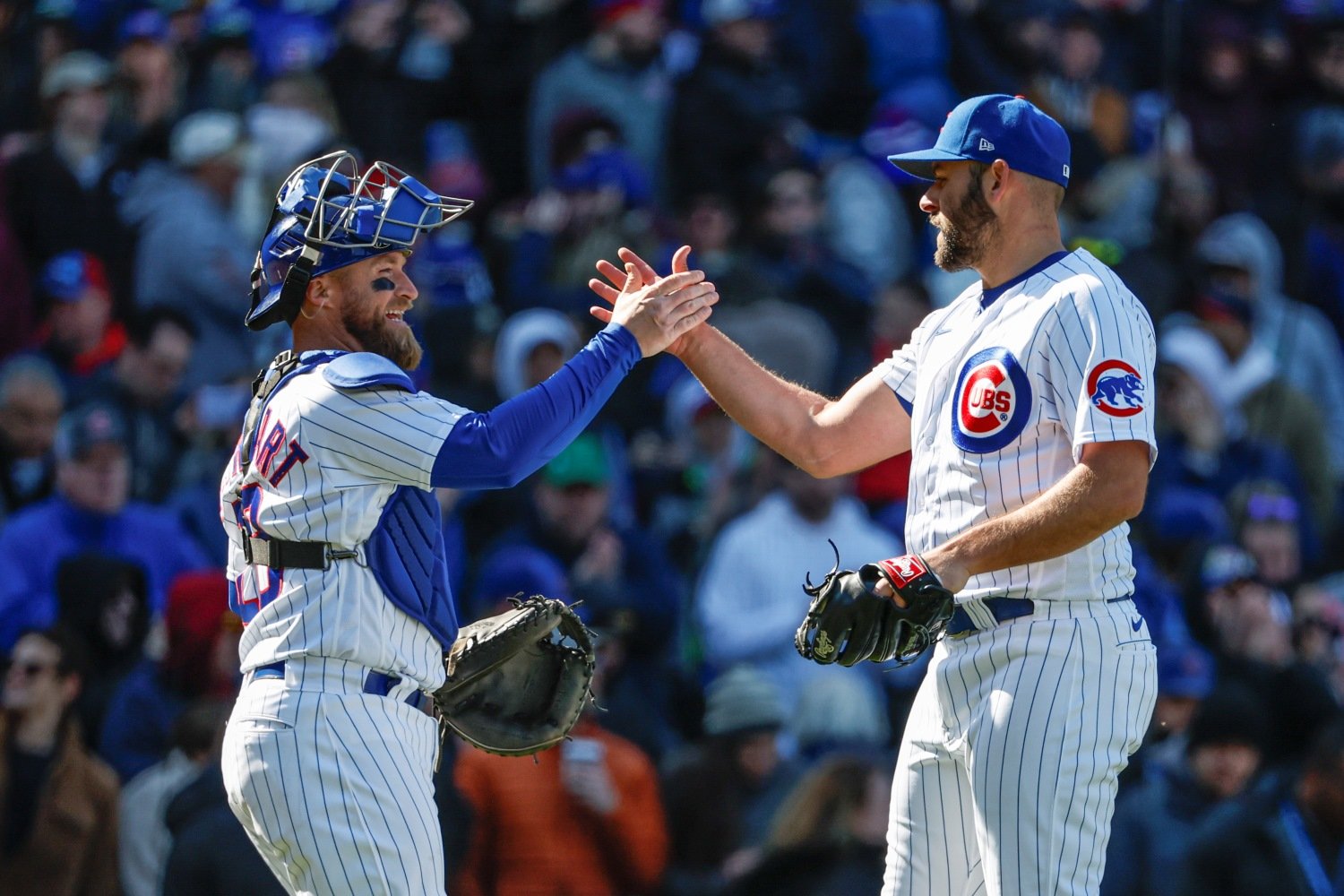 Michael Fulmer’s was the sixth relief appearance lasting more than three outs by a Cub this season, in their sixth game. That’s not close to being the league=leading total in this small sample, but it’s right in line with last year. The 2022 Cubs had 168 relief appearances of at least four outs, a figure topped only by the Pirates, Orioles, and Cardinals. This is a trademark of the Cubs under David Ross and Jed Hoyer. If you filter down to appearances with an average Leverage Index of at least 1.3 (meaning that the appearance is in an important situation, not someone doing mop-up duty in a blowout), only the Rays, Yankees, and Orioles have more than the Cubs since the start of 2021. Lengthen the minimum outing by a reliever in those pressure situations to two full frames, and only the Rays do it more than the Cubs. Heck, while we’re at it, we might as well note that a handful of qualifying games for Tampa each year are really starters working behind “openers”. The Cubs are the kings of the true multi-inning fireman role in the modern game. It was a bit of a surprise to see Fulmer used that way, but maybe it shouldn’t have been. He did want to return to starting this winter, before realizing he had a market only as a reliever in free agency. He only made four appearances lasting four or more outs in 2022, and none that stretched to six, but he still works from the windup when there’s no one on base, and is effectively using five pitches so far this year. That might be the key to David Ross’s bullpen strategy for the whole season. He has a bunch of guys out there who are just barely unable to be starters, and he wants to use them in ways that maximize the value of the skills they have that most relievers lack. This helps explain his decision to bring Javier Assad back out for a second inning of work in the second game of the season, too. If Fulmer, Assad, Keegan Thompson, Adbert Alzolay, and even Michael Rucker and Mark Leiter, Jr. can give him six outs from time to time, it will be much easier to avoid using guys on zero days’ rest. All of these hurlers have deeper arsenals than your average reliever, and all of them have at least some proficiency against opposite-handed hitters. When Brandon Hughes returns to the bullpen, he fits right in with this usage pattern. He had 15 appearances of at least four outs last year, including going two full innings four times. Do you remember the 1980 Cubs? Actuarially and anecdotally, you probably don't. They went 64-98, one of the worst teams in one of the darkest stretches in the franchise's history. The one bright spot, though, was their bullpen. Three of their five best players that season were relievers, and they added Lee Smith to the mix as a fourth fireman late in the year. The trio of Bruce Sutter, Bill Caudill, and Dick Tidrow combined not only for 216 appearances, but for 346 innings pitched. Team Pitching Rk Pos Name Age W L W-L% ERA G GS GF CG SHO SV IP H R ER HR BB IBB SO HBP BK WP BF ERA+ FIP WHIP H9 HR9 BB9 SO9 SO/W 5 CL Bruce Sutter 27 5 8 .385 2.64 60 0 43 0 0 28 102.1 90 35 30 5 34 8 76 1 4 2 423 150 2.93 1.212 7.9 0.4 3.0 6.7 2.24 6 RP Bill Caudill 23 4 6 .400 2.19 72 2 27 0 0 1 127.2 100 37 31 10 59 12 112 1 4 2 528 181 3.43 1.245 7.0 0.7 4.2 7.9 1.90 7 RP Dick Tidrow 33 6 5 .545 2.79 84 0 38 0 0 6 116.0 97 44 36 10 53 16 97 5 0 1 495 141 3.70 1.293 7.5 0.8 4.1 7.5 1.83 12 Lee Smith 22 2 0 1.000 2.91 18 0 6 0 0 0 21.2 21 9 7 0 14 5 17 0 0 0 97 138 3.12 1.615 8.7 0.0 5.8 7.1 1.21 Provided by Baseball-Reference.com: View Original Table Generated 4/8/2023. In 2023, it's unlikely that any reliever will throw 100 innings, and unthinkable that three on any one team will do so. If Ross continues to use them this way, though, this corps of relievers can do the modern version of that. Depending on health and performance, three or four of these guys could top 80 innings out of the bullpen. Working 30 pitches in relief requires a couple of days off, but if one gets five or six outs with those 30 pitches, even pitching every third day can get them close to 85 innings. If it works, this is also a really nice fit to the Cubs' rotation, both tactically and in terms of roster-building. Drew Smyly and Hayden Wesneski will need to be lifted relatively early in games fairly often this year, so having guys who can stretch beyond three outs behind them is helpful. In a different but equally important way, it's also helpful to have that kind of pitcher available behind Marcus Stroman, Jameson Taillon, and Justin Steele, whom the team hopes will work deep into most games. There's one more potential benefit, too. If Kyle Hendricks returns by early summer, or if one of the team's high-level pitching prospects pushes the envelope by then, the ability to get multiple innings from multiple relievers on any given day gives the team the option of shortening up the bullpen and using a six-man starting rotation. It's unlikely that it ever comes to that, since we'd need to see the incumbents stay healthy and Hendricks get that way at the same time, but it adds an option to the team's menu. As I've already written here a few times, it seems clear that this team was not constructed to be a definitive favorite, or even a co-favorite for an NL playoff berth this year. Rather, the front office set out to give themselves more options and more paths to success than they have had during the last two years. To whatever extent that's true, they did well. Six games into the season, there's a lot of fluidity and a lot of glaring deficiency, but there are also some fascinating and exciting things happening. Especially creative and smart bullpen management could be a game-changer for this team.
 -
Michael Fulmer collected a two-inning save for the Cubs Friday. Little by little, we’re starting to get an idea of what the Cubs think they have in the bullpen, and how they want to utilize it all. Michael Fulmer’s was the sixth relief appearance lasting more than three outs by a Cub this season, in their sixth game. That’s not close to being the league=leading total in this small sample, but it’s right in line with last year. The 2022 Cubs had 168 relief appearances of at least four outs, a figure topped only by the Pirates, Orioles, and Cardinals. This is a trademark of the Cubs under David Ross and Jed Hoyer. If you filter down to appearances with an average Leverage Index of at least 1.3 (meaning that the appearance is in an important situation, not someone doing mop-up duty in a blowout), only the Rays, Yankees, and Orioles have more than the Cubs since the start of 2021. Lengthen the minimum outing by a reliever in those pressure situations to two full frames, and only the Rays do it more than the Cubs. Heck, while we’re at it, we might as well note that a handful of qualifying games for Tampa each year are really starters working behind “openers”. The Cubs are the kings of the true multi-inning fireman role in the modern game. It was a bit of a surprise to see Fulmer used that way, but maybe it shouldn’t have been. He did want to return to starting this winter, before realizing he had a market only as a reliever in free agency. He only made four appearances lasting four or more outs in 2022, and none that stretched to six, but he still works from the windup when there’s no one on base, and is effectively using five pitches so far this year. That might be the key to David Ross’s bullpen strategy for the whole season. He has a bunch of guys out there who are just barely unable to be starters, and he wants to use them in ways that maximize the value of the skills they have that most relievers lack. This helps explain his decision to bring Javier Assad back out for a second inning of work in the second game of the season, too. If Fulmer, Assad, Keegan Thompson, Adbert Alzolay, and even Michael Rucker and Mark Leiter, Jr. can give him six outs from time to time, it will be much easier to avoid using guys on zero days’ rest. All of these hurlers have deeper arsenals than your average reliever, and all of them have at least some proficiency against opposite-handed hitters. When Brandon Hughes returns to the bullpen, he fits right in with this usage pattern. He had 15 appearances of at least four outs last year, including going two full innings four times. Do you remember the 1980 Cubs? Actuarially and anecdotally, you probably don't. They went 64-98, one of the worst teams in one of the darkest stretches in the franchise's history. The one bright spot, though, was their bullpen. Three of their five best players that season were relievers, and they added Lee Smith to the mix as a fourth fireman late in the year. The trio of Bruce Sutter, Bill Caudill, and Dick Tidrow combined not only for 216 appearances, but for 346 innings pitched. Team Pitching Rk Pos Name Age W L W-L% ERA G GS GF CG SHO SV IP H R ER HR BB IBB SO HBP BK WP BF ERA+ FIP WHIP H9 HR9 BB9 SO9 SO/W 5 CL Bruce Sutter 27 5 8 .385 2.64 60 0 43 0 0 28 102.1 90 35 30 5 34 8 76 1 4 2 423 150 2.93 1.212 7.9 0.4 3.0 6.7 2.24 6 RP Bill Caudill 23 4 6 .400 2.19 72 2 27 0 0 1 127.2 100 37 31 10 59 12 112 1 4 2 528 181 3.43 1.245 7.0 0.7 4.2 7.9 1.90 7 RP Dick Tidrow 33 6 5 .545 2.79 84 0 38 0 0 6 116.0 97 44 36 10 53 16 97 5 0 1 495 141 3.70 1.293 7.5 0.8 4.1 7.5 1.83 12 Lee Smith 22 2 0 1.000 2.91 18 0 6 0 0 0 21.2 21 9 7 0 14 5 17 0 0 0 97 138 3.12 1.615 8.7 0.0 5.8 7.1 1.21 Provided by Baseball-Reference.com: View Original Table Generated 4/8/2023. In 2023, it's unlikely that any reliever will throw 100 innings, and unthinkable that three on any one team will do so. If Ross continues to use them this way, though, this corps of relievers can do the modern version of that. Depending on health and performance, three or four of these guys could top 80 innings out of the bullpen. Working 30 pitches in relief requires a couple of days off, but if one gets five or six outs with those 30 pitches, even pitching every third day can get them close to 85 innings. If it works, this is also a really nice fit to the Cubs' rotation, both tactically and in terms of roster-building. Drew Smyly and Hayden Wesneski will need to be lifted relatively early in games fairly often this year, so having guys who can stretch beyond three outs behind them is helpful. In a different but equally important way, it's also helpful to have that kind of pitcher available behind Marcus Stroman, Jameson Taillon, and Justin Steele, whom the team hopes will work deep into most games. There's one more potential benefit, too. If Kyle Hendricks returns by early summer, or if one of the team's high-level pitching prospects pushes the envelope by then, the ability to get multiple innings from multiple relievers on any given day gives the team the option of shortening up the bullpen and using a six-man starting rotation. It's unlikely that it ever comes to that, since we'd need to see the incumbents stay healthy and Hendricks get that way at the same time, but it adds an option to the team's menu. As I've already written here a few times, it seems clear that this team was not constructed to be a definitive favorite, or even a co-favorite for an NL playoff berth this year. Rather, the front office set out to give themselves more options and more paths to success than they have had during the last two years. To whatever extent that's true, they did well. Six games into the season, there's a lot of fluidity and a lot of glaring deficiency, but there are also some fascinating and exciting things happening. Especially creative and smart bullpen management could be a game-changer for this team. View full article
-
Reports have him up to 98 this spring, and he sat 94-95 in a couple of late starts last year. Trending up, for sure. There are people who’d have him even higher than this, but I’m pleased that our voting is hedging a *little*. I do want to see how much of that velo bump materializes over full starts as he gets into the season a bit.
-
The least coherent Cubs podcast on the internet rumbles on, interested in the return of baseball but not confined by it. With Tom on assignment this week, Matt, Todd, and DJ tackle the early action around the NL Central. There's discussion of the Cardinals' delicious internal drama; the surprisingly fun and dangerous Brewers; and the Cubs' many ups and downs through just five games. After that, they engage in the usual nonsense, with a random Cub of the week, a great tip for those who need to file extensions ahead of Tax Day, and a recommendation you can't miss if you're looking for a book that will help you finally get your garden right this spring. It's the Pete LaCock Episode (yes! Again!) of This is Not a Rebuild. Links to the show: Apple Podcasts: https://podcasts.apple.com/au/podcast/this-is-not-a-rebuild/id1648757358 Spotfy: View full article
-
PODCAST: This is Not a Rebuild, Episode 25: The Worst Kind of Tourist
Matthew Trueblood posted an article in Cubs
 With Tom on assignment this week, Matt, Todd, and DJ tackle the early action around the NL Central. There's discussion of the Cardinals' delicious internal drama; the surprisingly fun and dangerous Brewers; and the Cubs' many ups and downs through just five games. After that, they engage in the usual nonsense, with a random Cub of the week, a great tip for those who need to file extensions ahead of Tax Day, and a recommendation you can't miss if you're looking for a book that will help you finally get your garden right this spring. It's the Pete LaCock Episode (yes! Again!) of This is Not a Rebuild. Links to the show: Apple Podcasts: https://podcasts.apple.com/au/podcast/this-is-not-a-rebuild/id1648757358 Spotfy:
 -
We’re back, with the second batch of prospects in our countdown of the top 20 youngsters on the Cubs’ farm. This group might have more risk than the bunch just below them, but the upside is higher, too. Though they have many more players with credible big-league futures than most other systems, the Cubs lack clear and unblemished future stars. This set of five players illustrates that point. There’s ample potential here. Between injury concerns and flaws that will need to be addressed as they ascend, though, there’s no real floor for most of them. They could be anything from All-Stars to non-MLB players. 15. James Triantos - 3B Age: 20 2022 Stats (A+): 113 G, 504 PA, .272/.335/.386, 7 HR, 8.9% BB, 16.1% K If he were a hair more of a quick-twitch athlete, Triantos would be a much more highly-regarded prospect, because he would either project as a shortstop or as an above-average third baseman. As it is, he’s likely to stick at the hot corner, but not to add much value there with his glove, and his offensive profile is a bit shy of star-caliber for that position. That said, he’s not by any means a low-ceiling guy. The numbers you see above are more impressive than they look. At 19, he played the whole season in Class A, and handled not only that challenging assignment but the difficulties of hitting at Myrtle Beach gorgeously. After a brutal start, he made fast adjustments and attacked the ball better during the summer. He stole 20 bases in 23 tries. His frame could carry a bit more good weight without costing him anything in the field, and his swing could generate 20 homers some day if he adds that little bit of strength. Because of all that, Triantos probably would have ranked a spot or two higher as recently as mid-March. Alas, he tore the meniscus in his right knee and underwent surgery to fix it on March 21st. He could be back in action, in some form, by mid-May, but he could just as easily be out a month longer, and whether he’ll be as mobile or if he’ll be able to find his rhythm at the plate when he gets back is impossible to know. Get used to that exact type of uncertainty, with this group. 14. Jackson Ferris - LHP Age: 19 No Professional Stats Ferris has tremendous potential, but he’s miles away. That’s a cliché line about a teenaged pitching prospect, isn’t it? It’s such an important and inexorable fact that we sometimes let it remain abstract. Let’s try to get more concrete with this one. At 6-foot-4 and with room to fill out, Ferris could mature into a fireballer who sits in the mid-90s and threatens 100 miles per hour with his fastball. At present, he’s usually at 93 or 94, but his youth and his frame imply that growth and good instruction can carry him up a few ticks. His delivery is clean and powerful, but the Cubs have already begun working to tighten it up and help him repeat it better. Scouts look for those physical rudiments, because much of the rest of the player will have to be torn down and rebuilt, anyway. That’s not just true of Ferris; it’s how being a pro prospect works. He showed a pretty curveball throughout his draft year in amateur ball, but the pitch needs to be overhauled in order to work against advanced hitters. The Cubs made sure they saw a good feel for spinning the ball and getting his hand around it to create the direction of a curve, and now, they’ll work with him to engineer a sweeper, slider, or knuckle curve that much better suits his arm slot and his fastball shape. His changeup isn’t anything yet. All one can say of it is that Ferris has shown some feel for the arm action required for that pitch, and that he could throw a good one out of the slot he already uses for his fastball. Add all of these things together, and it’s easy to see how much uncertainty there is around Ferris, even before accounting for the risk of injuries and the way they might shake up the profile sketched above. Ferris has all the building blocks of a star southpaw. There’s just a lot of construction work ahead. 13. Porter Hodge - RHP Age: 22 2022 Stats (A/A+): 25 G, 109 ⅓ IP, 2.63 ERA, 1.24 WHIP, 30.2% K, 13.9% BB, 4 HR That Hodge got an immediate assignment to Double-A Tennessee underscores the strides he’s made even this spring, and the faith that the organization has gained in him. He’s already a fully filled-out power pitcher, but his velocity has steadily climbed, and it looks like he’ll be able to work in the mid-90s with his fastball even as a starter. Pair that with a two-plane slider and you have the start of what could be a front-of-the-rotation profile. Neither his more vertical curveball nor his changeup are as polished as that slider right now, and one of them will need to take a step forward for him to realize his full potential. He’s also about to face a very stern test of his control and command, which weren’t as good as one would have hoped even against A-ball guys last year. Barring injury, though, his floor looks something like Jeremiah Estrada’s median outcome: a relief ace who helps the team shorten games. 12. Alexander Canario - OF Age: 22 2022 Stats (A+/AA/AAA): 125 G, 534 PA, .252/.343/.556, 37 HR, 12.2% BB, 27.6% K It’s hard to say exactly where Canario would land on this list if he hadn’t suffered a ghastly double injury during winter ball, but it’d be somewhere in the top 10. The risk that his strikeout rate scrapes 30 percent and stunts his production against MLB pitching is real, and so is the possibility that his walk rate will dry up in the face of those hurlers’ ability to relentlessly throw strikes with multiple offerings. As he proved in 2022, though, his tools are too good to be totally negated by even these noteworthy weaknesses. Canario stole 23 bases in 26 attempts, in addition to the phenomenal power he displayed, and he profiles either as a plus corner outfielder or as a tenable short-term center fielder. All of that is on hold and in question at the moment, though, while we wait to see whether those big tools have survived the surgeries on both his ankle and his shoulder. 11. Cristian Hernández - SS Age: 19 2022 Stats (Rookie): 44 G, 175 PA, .261/.320/.357, 3 HR, 7.4% BB, 30.3% K The stat line means basically nothing for a player this young, at a level so far remote from MLB. As it happens, though, what jumps out in Hernández’s numbers above is exactly what will most determine whether or not he gets back into the conversation as one of the top prospects in the system, where he stood a year ago: strikeout rate. It isn’t and needn’t be a finished product at this stage, but Hernández has a swing with natural power and balance that would be the envy of many a more polished hitter. He’s long-levered and has shown good hand-eye coordination. He has fluid athleticism, and should be an eventual fit for the left side of the infield. It all only matters, though, if he learns to make more contact. It’s very hard to predict whether that will happen from here, even given the impressive maturity of his swing mechanics. Getting everything started earlier, while still giving himself time to see the ball clearly and make good swing decisions, will be the big challenge. View full article
- 1 reply
-
- 1
-

-
- porter hodge
- alexander canario
- (and 3 more)
-
North Side Baseball's 2023 Top 20 Cubs Prospects: #11-15
Matthew Trueblood posted an article in Minor Leagues
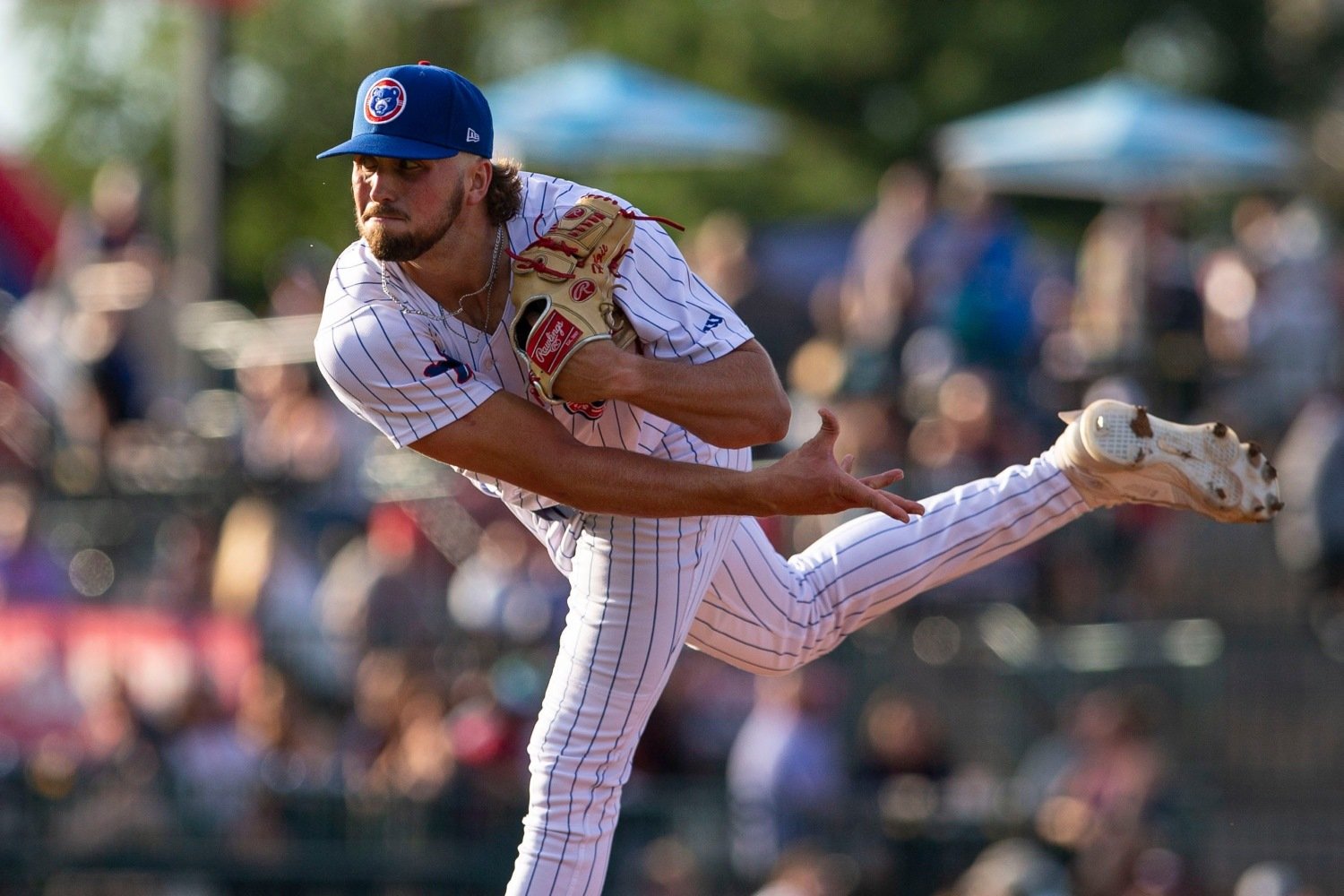 Though they have many more players with credible big-league futures than most other systems, the Cubs lack clear and unblemished future stars. This set of five players illustrates that point. There’s ample potential here. Between injury concerns and flaws that will need to be addressed as they ascend, though, there’s no real floor for most of them. They could be anything from All-Stars to non-MLB players. 15. James Triantos - 3B Age: 20 2022 Stats (A+): 113 G, 504 PA, .272/.335/.386, 7 HR, 8.9% BB, 16.1% K If he were a hair more of a quick-twitch athlete, Triantos would be a much more highly-regarded prospect, because he would either project as a shortstop or as an above-average third baseman. As it is, he’s likely to stick at the hot corner, but not to add much value there with his glove, and his offensive profile is a bit shy of star-caliber for that position. That said, he’s not by any means a low-ceiling guy. The numbers you see above are more impressive than they look. At 19, he played the whole season in Class A, and handled not only that challenging assignment but the difficulties of hitting at Myrtle Beach gorgeously. After a brutal start, he made fast adjustments and attacked the ball better during the summer. He stole 20 bases in 23 tries. His frame could carry a bit more good weight without costing him anything in the field, and his swing could generate 20 homers some day if he adds that little bit of strength. Because of all that, Triantos probably would have ranked a spot or two higher as recently as mid-March. Alas, he tore the meniscus in his right knee and underwent surgery to fix it on March 21st. He could be back in action, in some form, by mid-May, but he could just as easily be out a month longer, and whether he’ll be as mobile or if he’ll be able to find his rhythm at the plate when he gets back is impossible to know. Get used to that exact type of uncertainty, with this group. 14. Jackson Ferris - LHP Age: 19 No Professional Stats Ferris has tremendous potential, but he’s miles away. That’s a cliché line about a teenaged pitching prospect, isn’t it? It’s such an important and inexorable fact that we sometimes let it remain abstract. Let’s try to get more concrete with this one. At 6-foot-4 and with room to fill out, Ferris could mature into a fireballer who sits in the mid-90s and threatens 100 miles per hour with his fastball. At present, he’s usually at 93 or 94, but his youth and his frame imply that growth and good instruction can carry him up a few ticks. His delivery is clean and powerful, but the Cubs have already begun working to tighten it up and help him repeat it better. Scouts look for those physical rudiments, because much of the rest of the player will have to be torn down and rebuilt, anyway. That’s not just true of Ferris; it’s how being a pro prospect works. He showed a pretty curveball throughout his draft year in amateur ball, but the pitch needs to be overhauled in order to work against advanced hitters. The Cubs made sure they saw a good feel for spinning the ball and getting his hand around it to create the direction of a curve, and now, they’ll work with him to engineer a sweeper, slider, or knuckle curve that much better suits his arm slot and his fastball shape. His changeup isn’t anything yet. All one can say of it is that Ferris has shown some feel for the arm action required for that pitch, and that he could throw a good one out of the slot he already uses for his fastball. Add all of these things together, and it’s easy to see how much uncertainty there is around Ferris, even before accounting for the risk of injuries and the way they might shake up the profile sketched above. Ferris has all the building blocks of a star southpaw. There’s just a lot of construction work ahead. 13. Porter Hodge - RHP Age: 22 2022 Stats (A/A+): 25 G, 109 ⅓ IP, 2.63 ERA, 1.24 WHIP, 30.2% K, 13.9% BB, 4 HR That Hodge got an immediate assignment to Double-A Tennessee underscores the strides he’s made even this spring, and the faith that the organization has gained in him. He’s already a fully filled-out power pitcher, but his velocity has steadily climbed, and it looks like he’ll be able to work in the mid-90s with his fastball even as a starter. Pair that with a two-plane slider and you have the start of what could be a front-of-the-rotation profile. Neither his more vertical curveball nor his changeup are as polished as that slider right now, and one of them will need to take a step forward for him to realize his full potential. He’s also about to face a very stern test of his control and command, which weren’t as good as one would have hoped even against A-ball guys last year. Barring injury, though, his floor looks something like Jeremiah Estrada’s median outcome: a relief ace who helps the team shorten games. 12. Alexander Canario - OF Age: 22 2022 Stats (A+/AA/AAA): 125 G, 534 PA, .252/.343/.556, 37 HR, 12.2% BB, 27.6% K It’s hard to say exactly where Canario would land on this list if he hadn’t suffered a ghastly double injury during winter ball, but it’d be somewhere in the top 10. The risk that his strikeout rate scrapes 30 percent and stunts his production against MLB pitching is real, and so is the possibility that his walk rate will dry up in the face of those hurlers’ ability to relentlessly throw strikes with multiple offerings. As he proved in 2022, though, his tools are too good to be totally negated by even these noteworthy weaknesses. Canario stole 23 bases in 26 attempts, in addition to the phenomenal power he displayed, and he profiles either as a plus corner outfielder or as a tenable short-term center fielder. All of that is on hold and in question at the moment, though, while we wait to see whether those big tools have survived the surgeries on both his ankle and his shoulder. 11. Cristian Hernández - SS Age: 19 2022 Stats (Rookie): 44 G, 175 PA, .261/.320/.357, 3 HR, 7.4% BB, 30.3% K The stat line means basically nothing for a player this young, at a level so far remote from MLB. As it happens, though, what jumps out in Hernández’s numbers above is exactly what will most determine whether or not he gets back into the conversation as one of the top prospects in the system, where he stood a year ago: strikeout rate. It isn’t and needn’t be a finished product at this stage, but Hernández has a swing with natural power and balance that would be the envy of many a more polished hitter. He’s long-levered and has shown good hand-eye coordination. He has fluid athleticism, and should be an eventual fit for the left side of the infield. It all only matters, though, if he learns to make more contact. It’s very hard to predict whether that will happen from here, even given the impressive maturity of his swing mechanics. Getting everything started earlier, while still giving himself time to see the ball clearly and make good swing decisions, will be the big challenge.
 -
I think it still matters, a lot! Especially because he’s not a huge dude and that might ultimately cap his power. But I also think so much about catching and our valuations of it will change between now and when he’s ready for MLB that it’s too early to say either way, even setting aside his own actual development.
-
I know. I sat and stared at the screen a minute after writing it, then made the most morose cup of coffee of my entire life.
- 7 replies
-
- 3
-
-

-
- jeremiah estrada
- kevin made
- (and 3 more)
