Matthew Trueblood
-
Posts
2,546 -
Joined
-
Last visited
-
Days Won
2
Content Type
Profiles
Chicago Cubs Videos
Chicago Cubs Trade & Free Agent Rumors
2026 Chicago Cubs Top Prospect Rankings
Chicago Cubs News, Rumors & Analysis
2023 Chicago Cubs Draft Picks & Signing Bonuses
Chicago Cubs Fan Guides & Resources
2024 Chicago Cubs Draft Picks & Signing Bonuses
2025 Chicago Cubs Draft Picks & Signing Bonuses
2026 Chicago Cubs Draft Picks & Signing Bonuses
Blogs
Events
Forums
Store
Gallery
Everything posted by Matthew Trueblood
-
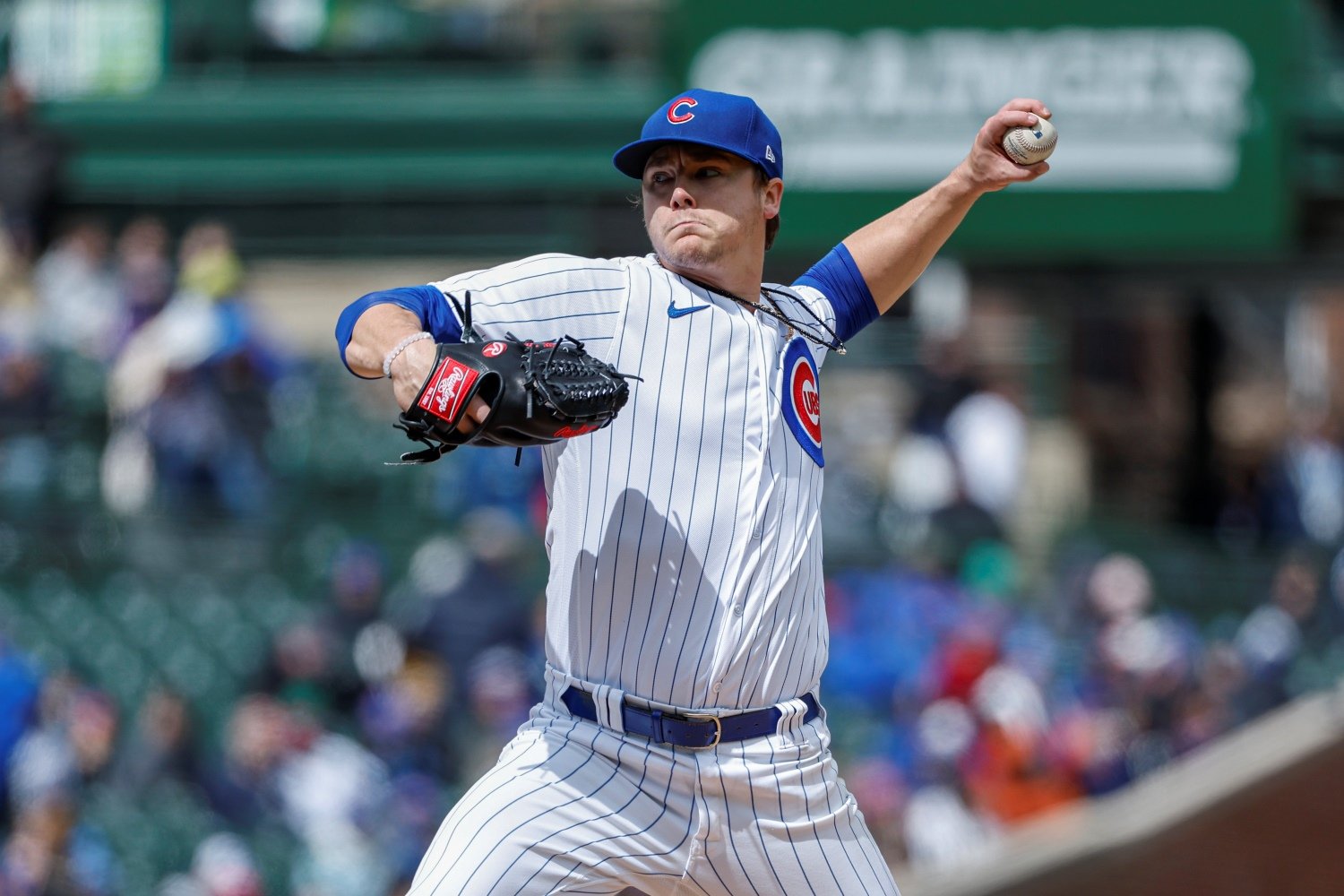 My favorite baseball truism is that every team wins 54 games, and every team loses 54 games. It’s what you do with the other 54 games that matters. That framework can be the best way to balance the twin dangers of a long baseball season, which are either minimizing the impact of a single game and overreacting to the same thing. With a little perspective and introspection, we can identify the games that fall into the third bucket of 54 games. Those are the only ones worth worrying much about. A team should have 54 wins every year you treat as essentially routine, without getting especially excited. They should have 54 losses you treat as routine, without getting upset. If a game falls into the third bucket, though, it’s worth your emotion. It’s not like your favorite team losing a key game in the NFL, because mathematically, even every game in the third bucket only constitutes a little less than two percent of the decisive segment of the team’s season. Still, it should sit with you a bit. Thursday’s win was a great one, with the vibes of Opening Day and the excitement of the four-run rally the Cubs cobbled together in the third inning. That was clearly a first-bucket game, though. By contrast, Saturday’s loss was a third-bucket game. That one could easily have gone either way, and the Cubs lost because they put together a dysfunctional roster to open the season and deployed it wrong. Justin Steele delivered everything the Cubs could have wanted. He put them in a position to win by shutting down the Brewers for six innings, while allowing just four baserunners and striking out eight. He’s an exemplar of something I increasingly believe about the nature of what we call command: that it’s less about pinpoint location than about consistent execution. Steele often seems to miss his spot by a significant amount, but his pitches have action, life, and deception to them even when that happens. That didn’t mean he didn’t need the support of his defense, of course, and he got it, in a gorgeous way. Dansby Swanson has exceeded reasonable expectations and lived up to every hope of Cubs fans so far. On Saturday, that meant quashing a Brewers rally with another beautiful double play off the bat of William Contreras, then robbing Contreras of a hit his next time up with a diving play to his right and a lightning-quick release. Thanks to both Steele and the fielders behind him, the Cubs were able to take a 1-0 lead into the seventh inning. Ross went to Javier Assad at that point, which was pretty reasonable. Assad had a great spring, after all, and looked especially good in relief in the World Baseball Classic. That’s how he made the roster, and it’s a solid reason to have him act as a bridge to the back end of the bullpen. Assad looked good in his first inning of work, too. The fatal flaw here is that I had to write the words between “good” and “too” in that sentence. With a fully fresh (albeit inexperienced and less-than-terrifying) bullpen from which to draw someone for the eighth, Ross instead had Assad come back. That led, in quick succession, to a hard-hit single and a bad walk, the latter issued over the desperate attempts of Garrett Mitchell to give the team an out by bunting the runner over. The seeing-eye single that then tied the game was a bit unlucky, but it was bad luck to which Ross exposed the team by not taking out Assad sooner. A few batters later, Michael Fulmer let the game get away from the Cubs for good, as he allowed Contreras to hit it away from Swanson and drive in the go-ahead runs with a single to right field. That single wouldn’t have fallen against a truly competent right fielder, but alas, the Cubs had Miles Mastrobuoni out there instead of one. That error, however, goes to the front office, not to Ross. So, for that matter, does some of the blame for Assad’s being left on the mound to make a mess of things. The Cubs only have two true outfielders on their roster right now, in Ian Happ and Cody Bellinger. Because they’re letting Nick Madrigal take up a spot on their 26-man roster and Eric Hosmer take up one on their 40-man at all, they’re consigned to using Mastrobuoni, Patrick Wisdom, and Trey Mancini in right field and praying for the best. Wrigley Field doesn’t go easy on right fielders, especially when they’re not yet familiar with it. I’m not sure whether Mike Tauchman or Christopher Morel would have caught Contreras’s hit, but it wasn’t entirely uncatchable, and Mastrobuoni never even looked comfortable in pursuit of it. Nelson Velázquez, whatever his other flaws, would have caught it easily. Relatedly, if the team had a left-handed reliever at all, it’s unlikely that Ross would have left Assad in to face Mitchell and Jesse Winker. They don’t, so he elected to roll with his young righthander. He paid for it. The Cubs didn’t build this roster to win in the short term, but we don’t have to accept that as a sound plan. They spent too much money this winter, and (from ownership to the front office to Ross himself) have talked too much about winning again this year to then hope to be graded on a gentle curve again. They had their first chance to win a third-bucket game Saturday, and they blew it. We don't need to freak out on every such occasion, because there will be 53 more such games. Still, it's a loss that should rankle.
-
The Cubs collapsed after late June 2021, and the rebuild that dare not speak its name began right then. That makes this the third season of the project, and if we’re that far into it, losses like Saturday’s can’t be treated as excusable moral victories. With an assist from Jed Hoyer, David Ross blew it. That didn’t mean he didn’t need the support of his defense, of course, and he got it, in a gorgeous way. Dansby Swanson has exceeded reasonable expectations and lived up to every hope of Cubs fans so far. On Saturday, that meant quashing a Brewers rally with another beautiful double play off the bat of William Contreras, then robbing Contreras of a hit his next time up with a diving play to his right and a lightning-quick release. Thanks to both Steele and the fielders behind him, the Cubs were able to take a 1-0 lead into the seventh inning. Ross went to Javier Assad at that point, which was pretty reasonable. Assad had a great spring, after all, and looked especially good in relief in the World Baseball Classic. That’s how he made the roster, and it’s a solid reason to have him act as a bridge to the back end of the bullpen. Assad looked good in his first inning of work, too. The fatal flaw here is that I had to write the words between “good” and “too” in that sentence. With a fully fresh (albeit inexperienced and less-than-terrifying) bullpen from which to draw someone for the eighth, Ross instead had Assad come back. That led, in quick succession, to a hard-hit single and a bad walk, the latter issued over the desperate attempts of Garrett Mitchell to give the team an out by bunting the runner over. The seeing-eye single that then tied the game was a bit unlucky, but it was bad luck to which Ross exposed the team by not taking out Assad sooner. A few batters later, Michael Fulmer let the game get away from the Cubs for good, as he allowed Contreras to hit it away from Swanson and drive in the go-ahead runs with a single to right field. That single wouldn’t have fallen against a truly competent right fielder, but alas, the Cubs had Miles Mastrobuoni out there instead of one. That error, however, goes to the front office, not to Ross. So, for that matter, does some of the blame for Assad’s being left on the mound to make a mess of things. The Cubs only have two true outfielders on their roster right now, in Ian Happ and Cody Bellinger. Because they’re letting Nick Madrigal take up a spot on their 26-man roster and Eric Hosmer take up one on their 40-man at all, they’re consigned to using Mastrobuoni, Patrick Wisdom, and Trey Mancini in right field and praying for the best. Wrigley Field doesn’t go easy on right fielders, especially when they’re not yet familiar with it. I’m not sure whether Mike Tauchman or Christopher Morel would have caught Contreras’s hit, but it wasn’t entirely uncatchable, and Mastrobuoni never even looked comfortable in pursuit of it. Nelson Velázquez, whatever his other flaws, would have caught it easily. Relatedly, if the team had a left-handed reliever at all, it’s unlikely that Ross would have left Assad in to face Mitchell and Jesse Winker. They don’t, so he elected to roll with his young righthander. He paid for it. The Cubs didn’t build this roster to win in the short term, but we don’t have to accept that as a sound plan. They spent too much money this winter, and (from ownership to the front office to Ross himself) have talked too much about winning again this year to then hope to be graded on a gentle curve again. They had their first chance to win a third-bucket game Saturday, and they blew it. We don't need to freak out on every such occasion, because there will be 53 more such games. Still, it's a loss that should rankle. View full article
- 4 replies
-
- 1
-

-
- justin steele
- miles mastrobuoni
- (and 3 more)
-
He's never had an oppo swing and I'm not sure how I'd even design one for him, given his setup and bat path, but it's a PROBLEM, man.
-
I am not enjoying The Cody Bellinger Experience.
-
EXACTLY what I was thinking. Close call.
-
Well, at least we all got to see the venerated "most hits by a shortstop in their first two games with the Cubs since 1920" record broken.
-
JD telling us all very hopefully that Matt Bush has had trouble with home runs, as Nick Madrigal, Luis Torrens, and Nico Hoerner come to bat...
-
I guess I'm not even sure why it was Fulmer who came in for Assad, since you had guys you ostensibly trust in those spots who DIDN'T pitch Thursday? But I guess that's fine. It's the Assad of it all that Ross really flubbed. I dunno, man. I don't know if he can get them over the hump.
-
Walk, strikeout, single. 3
-
Mastro does, uh, not look a lot like a right fielder.
-
This is one of those times you wish you had a bullpen ace that strikes out 33 percent of his opponents, instead of choosing among a bunch of guys where it's a 26-percent chance on a good day.
-
I mentioned this in a comment thread on a piece earlier this week. I just do not like Ross's bullpen management, man. And it's gonna be annoying if that's what stands in the way of this team being really good, rather than talent.
-
Assad, man. That was beautiful. In addition to the better velo, the re-planed slider and the changeup are both more intense out of the pen. https://baseballsavant.mlb.com/player-scroll/game?gamePk=718758&player_id=665871#pitch_movement
-
Not looking forward to the feeling I just got in my stomach every time Nick Madrigal has to field a grounder near the line all year. Ah well.
-
Only 97 off the bat too. Backspun it.
-
IAN!!!!
-
Steele is down about 150 RPMs on each of his main pitches today, but velo is constant. Wonder if he'd been stickying up a little as the enforcement of that got more lax last year and is now having to work without it. Encouraging, if so, considering how good he's looked.
-
So far in this game, Swanson has fielded the two hardest-hit balls and turned them into three outs, and has two of the next three hardest-hit balls himself.
-
Or even see it, apparently. That was a strike all the way.
-
Righties have gotten much better swings than lefties against Woodruff so far. (Still, Ian, we need you to move the ball there.)
-
Can’t wait for the clock to become familiar enough that the broadcast doesn’t have to talk about it constantly..
-
The Cubs' New Identity Was on Full Display on Opening Day
Matthew Trueblood posted an article in Cubs
 There’s a little extra anxiety in following a team built on run prevention. On some level, one always knows that there will be moments, innings, and entire games in which the luck dragons will roar and even the best defense in baseball can’t vanquish them. Baseball is unlike every other major American sport in that way. Blocked shots don’t go into the hoop with any meaningful frequency. Nor do forced fumbles tend to lead to big gains for the offense. In baseball, though, a broken-bat blooper can be just as dangerous as a scalded line drive, and that makes building a team around anything short of a dominant pitching staff scary. On Opening Day, though, the Cubs did their very best to eliminate all of that worry. Marcus Stroman, who will usually generate lots of weak contact but not as many whiffs, struck out eight, thanks (in part) to a strike zone that neatly fit his stuff and location profile. Keegan Thompson, Brad Boxberger, and Michael Fulmer picked up right where he left off, fanning four in three innings of relief. Obviously, no team can count on 12 strikeouts every day, but the Cubs are an especially unlikely club to do so. FanGraphs’s Depth Charts project them to have the fourth-lowest strikeout rate by starters this year, and they’re only slightly higher than that in the bullpen. If they meaningfully outstrip that projection, a lot of things change for the better, so we can mark that as something to watch, but it’s unlikely that this one game tells us that such a thing will happen. In the meantime, then, there will be pressure on the fielders who come into play when the pitching staff doesn’t strike out 12 opponents. They passed all their early tests Thursday. Patrick Wisdom made a nice play ranging to his left, sliding to stop his momentum, and made a strong and accurate throw across the diamond for an out. Dansby Swanson had a similar play going toward the hole, the play I most wanted to see him make in this post-shift world, and (just as you’d hope) his extremely quick exchange and release made up for an arm that is no better than average. The play of the afternoon, though, was in the top of the third inning. The game was still scoreless, but the Brewers had loaded the bases and Stroman was getting wild. The entire contest could have tipped in Milwaukee’s favor at that moment. I was watching on TV, but I can only assume that Pat Hughes told radio listeners that things had reached an early turning point. What happened next is, for my money, the most aesthetically pleasing thing in baseball. c5cf196d-96a6-4fd8-a07f-d993c6222fad.mp4 The long 4-6-3, with the second baseman having to make a fairly long throw to the covering shortstop to start things, is gorgeous. The play seems to develop slowly, which can make you momentarily despair that the turn can be made. Often, that’s true, which is why it’s especially exciting when the defense does manage it. In this case, it helped that Rowdy Tellez was getting down the line, but there was still no margin for error. Nico Hoerner was lightning-quick on the pick and throw. Swanson was at the bag in time to set himself and fire the ball across, and Eric Hosmer made the slight stretch to sew things up. The emotion of that moment–the stop of the heart when Tellez put it in play in such a critical situation, the elastic stretch and swivel of one’s attention as the play unfolded right to left to right, the eruption from Stroman and from the crowd when the play was made–is the kind of magic good defense can deliver. It’s the payoff for all the anxiety of being built around that attribute, instead of having the lineup to blow people out. It might not work 90 times this year, and the Cubs will have to do more on offense than they did Thursday in order to make a surprise run to the playoffs, but the opener was a proof of concept.
-
- 1
-
-
- marcus stroman
- nico hoerner
- (and 2 more)
-
Though Jed Hoyer kicked off the offseason by stating an intention to build a powerful offense, the Cubs ended up with exactly the opposite identity. Their victories will come via pitching, defense, and timely, aggressive offense. On Thursday, we saw what that looks like. Image courtesy of © Kamil Krzaczynski-USA TODAY Sports Though Jed Hoyer kicked off the offseason by stating an intention to build a powerful offense, the Cubs ended up with exactly the opposite identity. Their victories will come via pitching, defense, and timely, aggressive offense. On Thursday, we saw what that looks like. There’s a little extra anxiety in following a team built on run prevention. On some level, one always knows that there will be moments, innings, and entire games in which the luck dragons will roar and even the best defense in baseball can’t vanquish them. Baseball is unlike every other major American sport in that way. Blocked shots don’t go into the hoop with any meaningful frequency. Nor do forced fumbles tend to lead to big gains for the offense. In baseball, though, a broken-bat blooper can be just as dangerous as a scalded line drive, and that makes building a team around anything short of a dominant pitching staff scary. On Opening Day, though, the Cubs did their very best to eliminate all of that worry. Marcus Stroman, who will usually generate lots of weak contact but not as many whiffs, struck out eight, thanks (in part) to a strike zone that neatly fit his stuff and location profile. Keegan Thompson, Brad Boxberger, and Michael Fulmer picked up right where he left off, fanning four in three innings of relief. Obviously, no team can count on 12 strikeouts every day, but the Cubs are an especially unlikely club to do so. FanGraphs’s Depth Charts project them to have the fourth-lowest strikeout rate by starters this year, and they’re only slightly higher than that in the bullpen. If they meaningfully outstrip that projection, a lot of things change for the better, so we can mark that as something to watch, but it’s unlikely that this one game tells us that such a thing will happen. In the meantime, then, there will be pressure on the fielders who come into play when the pitching staff doesn’t strike out 12 opponents. They passed all their early tests Thursday. Patrick Wisdom made a nice play ranging to his left, sliding to stop his momentum, and made a strong and accurate throw across the diamond for an out. Dansby Swanson had a similar play going toward the hole, the play I most wanted to see him make in this post-shift world, and (just as you’d hope) his extremely quick exchange and release made up for an arm that is no better than average. The play of the afternoon, though, was in the top of the third inning. The game was still scoreless, but the Brewers had loaded the bases and Stroman was getting wild. The entire contest could have tipped in Milwaukee’s favor at that moment. I was watching on TV, but I can only assume that Pat Hughes told radio listeners that things had reached an early turning point. What happened next is, for my money, the most aesthetically pleasing thing in baseball. c5cf196d-96a6-4fd8-a07f-d993c6222fad.mp4 The long 4-6-3, with the second baseman having to make a fairly long throw to the covering shortstop to start things, is gorgeous. The play seems to develop slowly, which can make you momentarily despair that the turn can be made. Often, that’s true, which is why it’s especially exciting when the defense does manage it. In this case, it helped that Rowdy Tellez was getting down the line, but there was still no margin for error. Nico Hoerner was lightning-quick on the pick and throw. Swanson was at the bag in time to set himself and fire the ball across, and Eric Hosmer made the slight stretch to sew things up. The emotion of that moment–the stop of the heart when Tellez put it in play in such a critical situation, the elastic stretch and swivel of one’s attention as the play unfolded right to left to right, the eruption from Stroman and from the crowd when the play was made–is the kind of magic good defense can deliver. It’s the payoff for all the anxiety of being built around that attribute, instead of having the lineup to blow people out. It might not work 90 times this year, and the Cubs will have to do more on offense than they did Thursday in order to make a surprise run to the playoffs, but the opener was a proof of concept. View full article
-
- 1
-
-
- marcus stroman
- nico hoerner
- (and 2 more)
-
 In the Jerry Morales Episode of the podcast, Matt Trueblood, Todd Trueblood, and Tom Nurse discuss the 2023 Cubs, but also Manny Alexander; whether Bill James's whole career was an accident, basically; a fake Kyle Hendricks trade story that freaked us out; and the dearly departed (to the Tigers) Zach McKinstry. It's a great time jump aboard this unstoppable podcast train. Here's the link to listen on Spotify: And here's the one for Apple Podcasts: https://podcasts.apple.com/au/podcast/bill-james-was-just-dead-ass-wrong/id1648757358?i=1000606540809 Let us know what you think, and subscribe to the show on your favorite podcatcher.