Brock Beauchamp
-
Posts
2,997 -
Joined
-
Last visited
-
Days Won
9
Content Type
Profiles
Joomla Posts 1
Chicago Cubs Videos
Chicago Cubs Free Agent & Trade Rumors, Notes, & Tidbits
2026 Chicago Cubs Top Prospects Ranking
News
2023 Chicago Cubs Draft Picks
Guides & Resources
2024 Chicago Cubs Draft Picks
The Chicago Cubs Players Project
2025 Chicago Cubs Draft Pick Tracker
2026 Chicago Cubs Draft Tracker: Picks & Bonuses
Blogs
Events
Forums
Store
Gallery
Everything posted by Brock Beauchamp
-
 Exciting pitching matchup today!
-
Welcome to NSBB!
-
Welcome to NSBB!
-
Vote For Your Top Cubs Prospects!
Brock Beauchamp replied to Brock Beauchamp's topic in Cubs Minor League Talk
Done! -
The Cubs added depth by signing 32-year-old right-handed pitcher Spencer Turnbull. He will be assigned to the minor leagues to ramp back up after being released by Toronto in late June. In 2024 with Philadelphia, Turnbull threw 54 1/3 innings of 2.65 ERA/3.85 FIP baseball, with a career-best 26.1% strikeout rate. Last season, Turnbull leaned on his new sweeper (about one-third usage), which held hitters to .145 AVG/.226 SLG and a 30.8% whiff rate. In very limited 2025 use (only 28 sweepers thrown), the results were poor. Things have unraveled for Turnbull in 2025, with his brief stop in Toronto showing negative run value on almost all of his pitches. Turnbull, once a starter with decent velocity (93.8 mph fastball in 2021 with the Tigers), has seen his velo drop consistently and sat at just 90.9 mph with the Blue Jays early this year. View full rumor
-
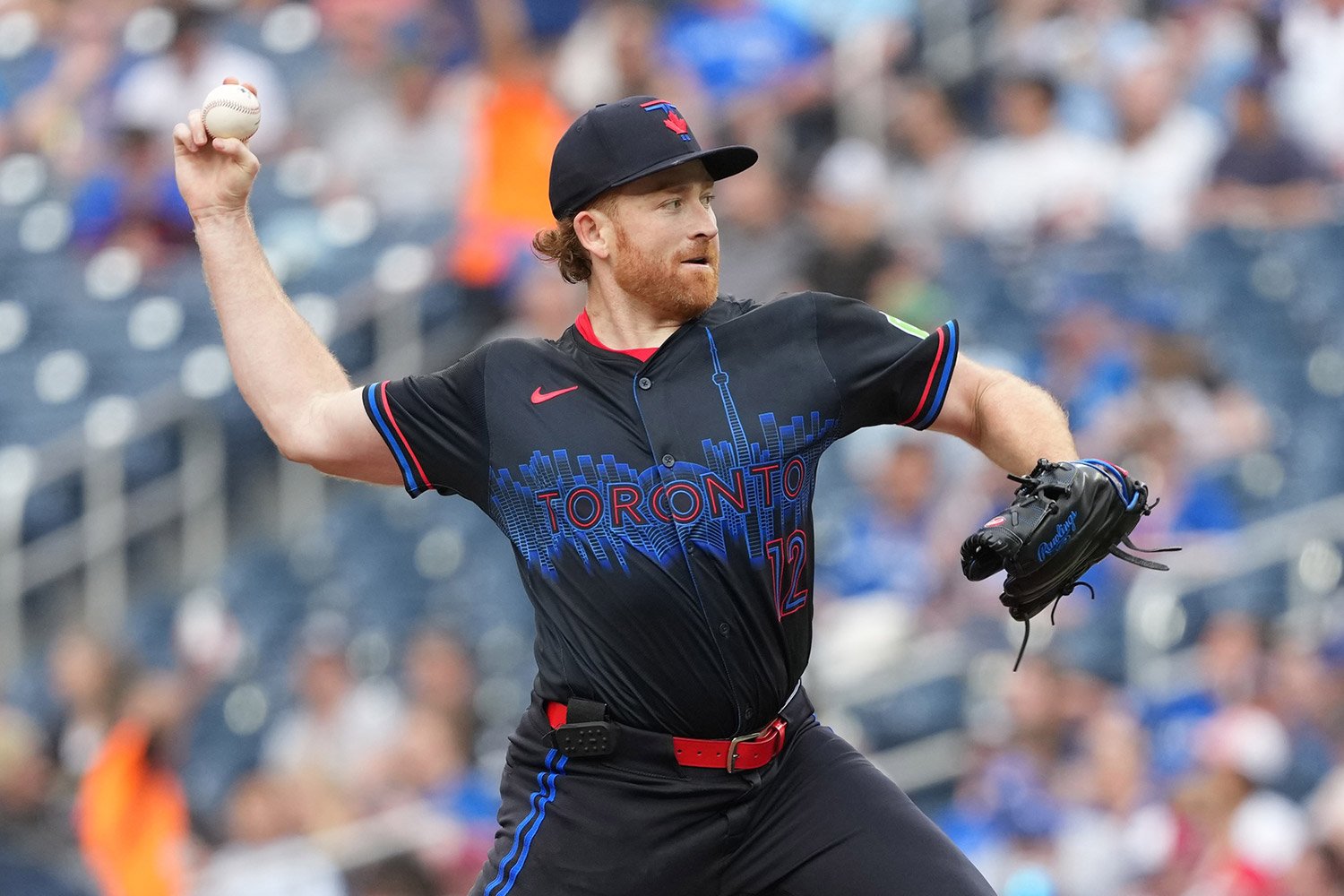 The Cubs added depth by signing 32-year-old right-handed pitcher Spencer Turnbull. He will be assigned to the minor leagues to ramp back up after being released by Toronto in late June. In 2024 with Philadelphia, Turnbull threw 54 1/3 innings of 2.65 ERA/3.85 FIP baseball, with a career-best 26.1% strikeout rate. Last season, Turnbull leaned on his new sweeper (about one-third usage), which held hitters to .145 AVG/.226 SLG and a 30.8% whiff rate. In very limited 2025 use (only 28 sweepers thrown), the results were poor. Things have unraveled for Turnbull in 2025, with his brief stop in Toronto showing negative run value on almost all of his pitches. Turnbull, once a starter with decent velocity (93.8 mph fastball in 2021 with the Tigers), has seen his velo drop consistently and sat at just 90.9 mph with the Blue Jays early this year.
 -
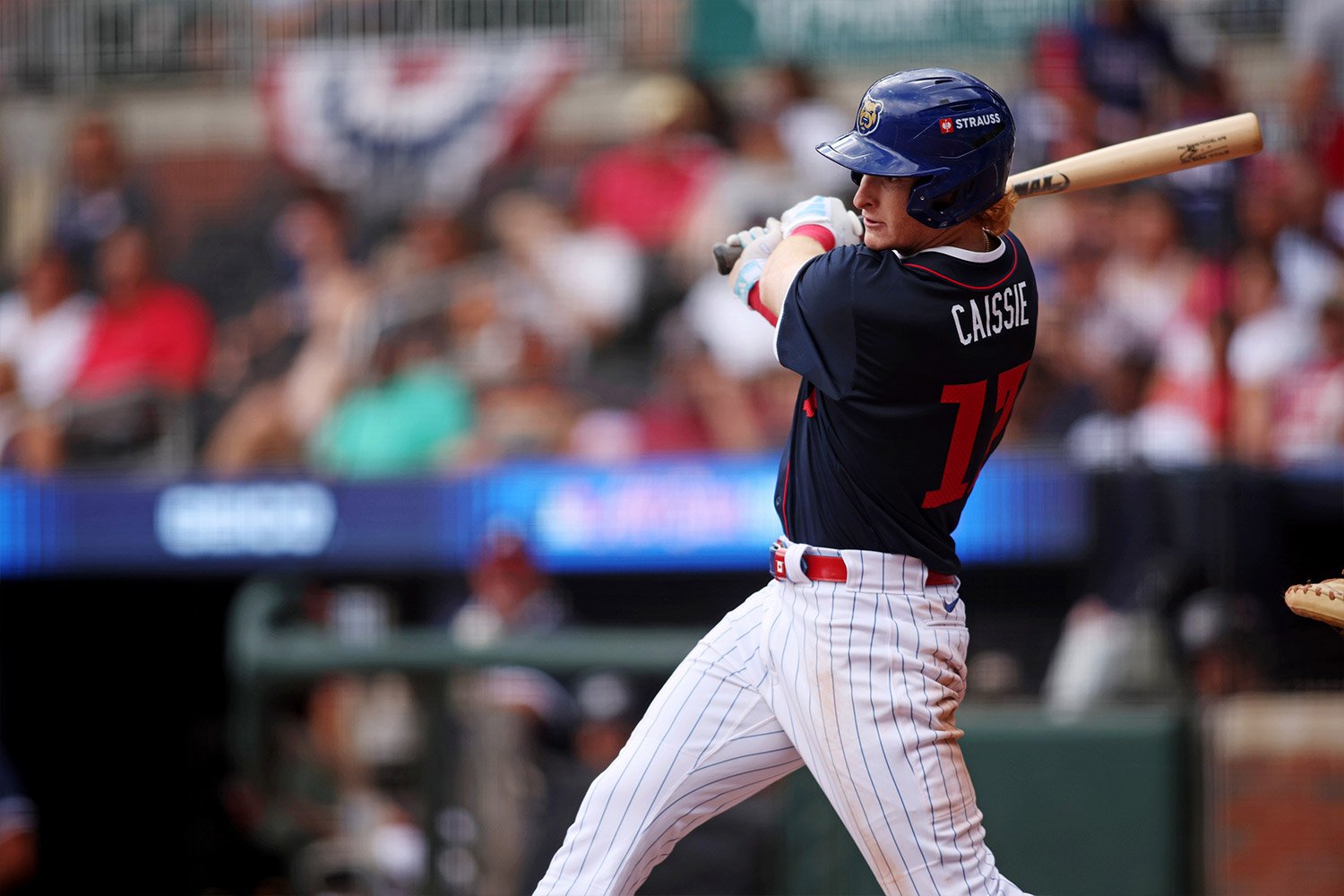 Unlike other publications, North Side Baseball enables all users to contribute to our top prospect rankings. Anyone with a North Side Baseball account can participate and give their input on who they think should be in the Cubs' top prospects list. Before you vote, you can hit our top prospects page for the latest stats and news on Cubs prospects, while on the voting page, every name is a clickable link that brings up their current stat card. Voting is simple, just follow the instructions below! Here's the rundown on how to participate: 1. You must have an account and be logged in to vote. If you don't have an account, click here. It literally requires 60 seconds to create an account. 2. Review our current top 20 prospect list, catch up on stats, rankings, etc. (you can do so from the voting page link below) 3. Have your prospect list in your filthy little paws? Then flip on over to the new prospect voting page (after reading the rest of this, please). https://northsidebaseball.com/prospect-voting 4. Voting is super simple; you drag and drop players in the order you wish them to be. After you move a prospect, the list automatically renumbers so you don't lose track of the order. This works on mobile devices, but it's a *vastly* better experience on desktop. Sorry, that's just how this kind of thing works. There's no excellent way to make something like this as awesome on a phone screen. 5. Each prospect has a comment section where you can add any commentary you have on that player. At the bottom of the list, there is a general comment section to explain over-arching things you'd like to mention. 6. Don't see a prospect you want to put on the list? Just pop back here and give me a mention (in a comment, start typing @Brock Beauchamp and select my name after it appears). Please mention the prospect you would like added, and I will do so as soon as possible. 7. Once you're done with all of it, click Save. You've now voted! 8. When the voting closes, a new thread will automatically generate in this forum with all of your rankings and comments for everyone to read and talk about. 9. You can only vote once. If you have voted in error, pop back here and tag Brock, asking to have your vote deleted. It will be removed, and you can vote again. Voting closes Tuesday, July 22nd.
 -
Jax is definitely a starting option; there's a pretty vocal segment of Twins fans that would like to see it happen. The problem is that the Twins rotation is already in very good shape, so it's unlikely to happen in Minnesota.
-
Jax doesn't become a free agent until after the 2027 season. It's going to cost a fortune to pry him away from Minnesota. If you asked me whether I'd prefer Jax or Duran as a bullpen piece for 2+ seasons, I take Jax and don't think about it too hard.
-
Vote For Your Top Cubs Prospects!
Brock Beauchamp replied to Brock Beauchamp's topic in Cubs Minor League Talk
Done! -
It's a little more complicated than that, but it's interesting. It improves both teams, though it would take more than Castro to get the deal done. Chicago Cubs, Minnesota Twins Should Match Up on This Low-Wattage Trade - Twins - Twins Daily TWINSDAILY.COM The Cubs have one of the more tempting farm systems in baseball, and the Twins might be in position to trade one or more impending free agents this month. One prospect from...
-
Image courtesy of © Brett Davis-Imagn Images Unlike other publications, North Side Baseball enables all users to contribute to our top prospect rankings. Anyone with a North Side Baseball account can participate and give their input on who they think should be in the Cubs' top prospects list. Before you vote, you can hit our top prospects page for the latest stats and news on Cubs prospects, while on the voting page, every name is a clickable link that brings up their current stat card. Voting is simple, just follow the instructions below! Here's the rundown on how to participate: 1. You must have an account and be logged in to vote. If you don't have an account, click here. It literally requires 60 seconds to create an account. 2. Review our current top 20 prospect list, catch up on stats, rankings, etc. (you can do so from the voting page link below) 3. Have your prospect list in your filthy little paws? Then flip on over to the new prospect voting page (after reading the rest of this, please). https://northsidebaseball.com/prospect-voting 4. Voting is super simple; you drag and drop players in the order you wish them to be. After you move a prospect, the list automatically renumbers so you don't lose track of the order. This works on mobile devices, but it's a *vastly* better experience on desktop. Sorry, that's just how this kind of thing works. There's no excellent way to make something like this as awesome on a phone screen. 5. Each prospect has a comment section where you can add any commentary you have on that player. At the bottom of the list, there is a general comment section to explain over-arching things you'd like to mention. 6. Don't see a prospect you want to put on the list? Just pop back here and give me a mention (in a comment, start typing @Brock Beauchamp and select my name after it appears). Please mention the prospect you would like added, and I will do so as soon as possible. 7. Once you're done with all of it, click Save. You've now voted! 8. When the voting closes, a new thread will automatically generate in this forum with all of your rankings and comments for everyone to read and talk about. 9. You can only vote once. If you have voted in error, pop back here and tag Brock, asking to have your vote deleted. It will be removed, and you can vote again. Voting closes Tuesday, July 22nd. View full article
-
As a draftee signs, drop a link to the news here!
-
Shota vs the Evil Empire.
-
Just pretend yesterday didn't happen. Great matchup today to the start the series.
-
Ugh, the Yankees. Gross.
-
I hope he's screaming at St Peter right now.
-
No one really knows what the Twins are going to do, probably especially the Twins. They're a middling contender, just far enough out of the WC race to consider selling, but close enough to still be in it. As you Cubs fans have seen, they're a pretty good team when things are clicking. But they're also on the verge of being sold - maybe...? - and no one knows what they're thinking. Ryan has quietly become one of the best pitchers in baseball and still has 2.5 years of control. He hasn't really been a workhorse but none of his injuries have been concerning, either. He had a weird shoulder/back thing last year that knocked him out, but had no lingering effects and did not involve his elbow or the important part of the shoulder. The year before, the injury was a hamstring, or groin, or something else equally benign. Could the Twins Trade Joe Ryan? 6 Suitors to Watch if Minnesota Sells High on Their Ace - Twins - Twins Daily TWINSDAILY.COM He’s been the team’s best pitcher and one of the most reliable arms in the AL. But with contenders circling, could Joe Ryan net the Twins a franchise-altering return?
-
The ABS challenge system will get in front of the most fans in the game that matters the least. It's a pretty good combo to demonstrate this technology. What do you think of the challenge system? https://brewerfanatic.com/news-rumors/milwaukee-brewers/the-abs-challenge-system-is-the-newest-addition-to-this-years-mlb-all-star-roster-r3574/
-
I'm horsefeathers frustrated. I'm constantly scouring YouTube for good team-specific coverage but 95% of it is utter crap. Just terrible stuff. So I'm farming for suggestions! I'm pivoting my approach now. Do any of you follow general MLB content? I'm looking for something that has the following qualifications: Covers lots of teams Is good, analytically-based content that really dives into a topic Not hyperbolic nonsense that is all-too-typical of YouTube (eg. "You won't BELIEVE what the Padres did!") Posts regularly Has a relatively low subscriber count, let's say under 6,000 Any recommendations are greatly appreciated. The process of finding videographers is absolutely effing agonizing.
-
Over time, what was once a platform that contained three elements (news, forums, blogs) has slowly grown to have a dozen or more aspects to it. I've never really sat down to better lay out the site options in menus and navigation. Last week, I completely restructured the hamburger menu (top right, three horizontal bars). In it, I've split the resources into four major groups: team, minor leagues, draft, and history. From each of those options, there is a submenu that will take you to various aspects of the site that might be buried. Additionally, I reworked the forum index navigation (main forum page, near the top) and also split it into four distinct groups: team, minor leagues, draft, and interactive. If you have ways to improve the navigation of the site, please share it here! This is just a starting point, I'm very open to changing things around.
-
A month ago, it seemed like a foregone conclusion, but a mediocre month from the Cubs and a surging Brewers team puts the division back in play. Will the Cubs pull it off?
-
Kyle Tucker has earned his fourth All‑Star nod—but this time as a National League starter, joining the Cubs after a blockbuster offseason trade. This season he’s slashing an impressive .290/.393/.533, with 17 homers, 20 steals, and a .923 OPS. Although Tucker has been one of the best players in the game for years, this marks his first All‑Star start, coming after three previous reserve selections with Houston. Pete Crow‑Armstrong, the 23‑year‑old Cubs center fielder, has turned heads this season and is the first All‑Star selection as an NL starting outfielder. Offensively, he’s recording a .265/.301/.537 line with 21 home runs and 25 steals, ranking first in NL bWAR (4.5) and second in fWAR (4.0). His defense has been equally elite, leading NL outfielders in defensive runs saved. Crow-Armstrong has quickly become a fan favorite, and this is the first time he has been voted into the starting lineup for the All‑Star Game. View full rumor
-
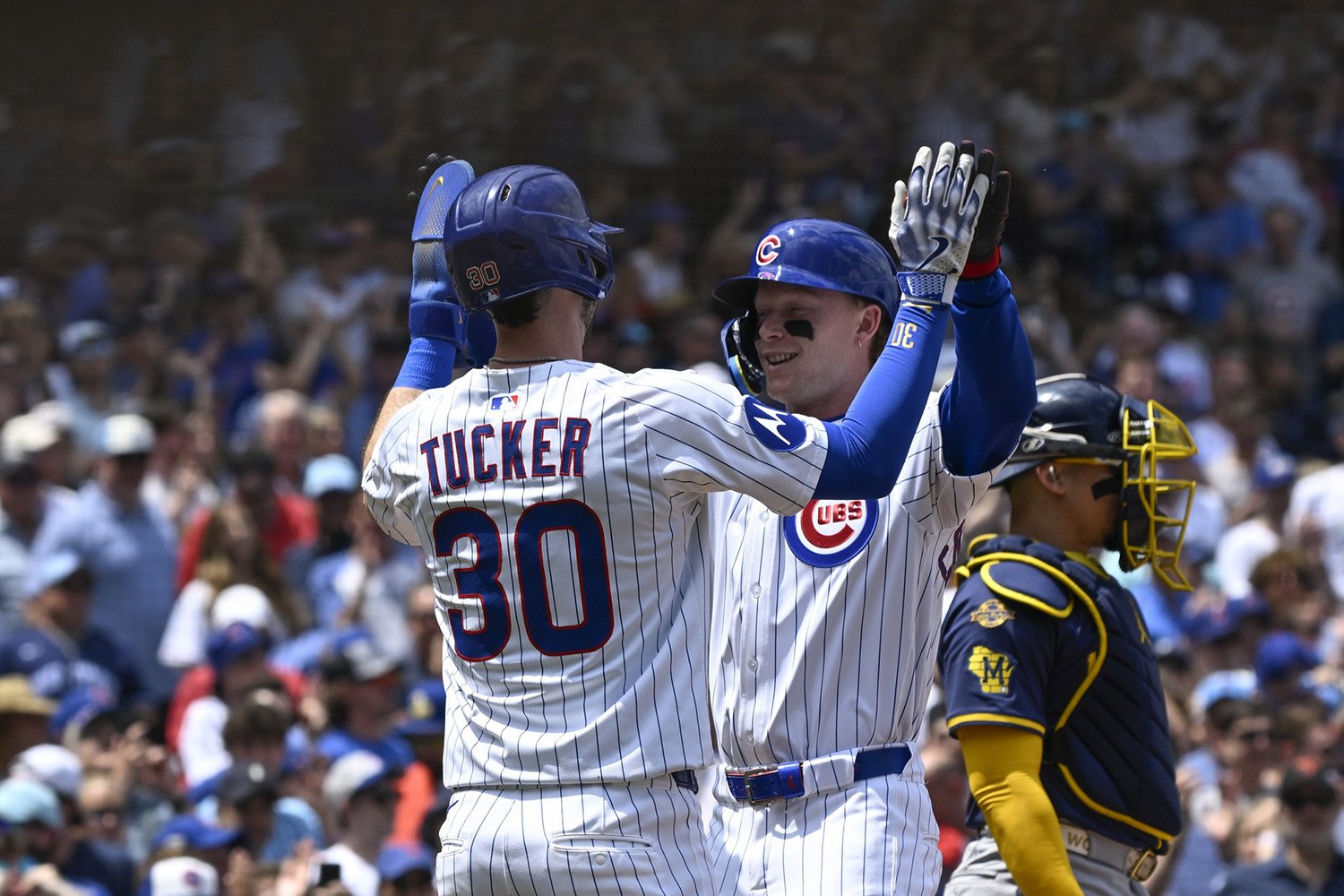 Kyle Tucker has earned his fourth All‑Star nod—but this time as a National League starter, joining the Cubs after a blockbuster offseason trade. This season he’s slashing an impressive .290/.393/.533, with 17 homers, 20 steals, and a .923 OPS. Although Tucker has been one of the best players in the game for years, this marks his first All‑Star start, coming after three previous reserve selections with Houston. Pete Crow‑Armstrong, the 23‑year‑old Cubs center fielder, has turned heads this season and is the first All‑Star selection as an NL starting outfielder. Offensively, he’s recording a .265/.301/.537 line with 21 home runs and 25 steals, ranking first in NL bWAR (4.5) and second in fWAR (4.0). His defense has been equally elite, leading NL outfielders in defensive runs saved. Crow-Armstrong has quickly become a fan favorite, and this is the first time he has been voted into the starting lineup for the All‑Star Game.
 -
 Every offseason, we offer our You’re The GM! tool (formerly the Payroll Blueprint) to build your ideal Cubs roster. This year, we’ve updated the tool to include the trade deadline! The idea behind this feature is to give fans a chance to play the role of General Manager (or CBO or PoBO… you get the idea) for their favorite team, the Cubs. It’s meant to allow fans to discuss (and, let’s be honest, argue) how they would approach the MLB trade deadline on July 31st. This tool is intended to be informal and fun, so we’ve left it as open as possible. There is a payroll “budget” that loosely resembles the Cubs' 2025 payroll, but there is no penalty for going over that number. It’s a guideline, nothing more. Second, you can submit as many blueprints as you like up through the deadline. As the deadline landscape changes, users can return and create a new blueprint. Before we delve into the breakdown of the tool, you can save your blueprint and return to it at any time. The only restriction is that you must register an account on the site to create a blueprint (so we can save a draft for you and also post the blueprint for others to discuss). Let’s get into the tool itself. It has four quadrants that work best if addressed in a counter-clockwise order (this tool works much better on desktops and large tablets due to its complexity, but will work on phones if need be). Top Left: The 26-Man Roster We have created a rough guideline for what the Cubs' 26-man roster will look like in late July, assuming no trades are made. The roster is flexible; any player can be added or removed as needed. We’ve also included player salaries. This section is where you build your roster and make changes based on the following two sections. As you make changes to players and salaries, the total payroll number (right side of the screen) will change, allowing you to track your budget on the fly. The bottom field in both columns is for any dead money you assume during the course of wheeling and dealing. Acquiring dead money should be rather uncommon, but we want to present users with the opportunity to take on dead salary if it suits their purposes. Bottom Left: Top Prospects & Internal Options If you decide to be a buyer, we’ve listed the team’s top 20 prospects you can use in trade. We’ve also included some internal options that could be traded or fill in your 26-man roster; most of these players are on the 40-man roster but are no longer considered prospects due to performance or losing prospect status. We’ve also included links in this section: one to our top prospects list, another for building trades on Baseball Trade Values. While BTV is far from a perfect solution for building trades, it can guide you in properly valuing a prospect within an organization. Bottom Right: Trade Deadline Options The Athletic has released their big board of trade candidates; it’s a top-30 list of MLB players who have a decent chance of being traded this July. We’ve listed them in order of position, along with their contract earnings in 2025. If you’re looking to research prospects in another team’s system, we’ve also included a link to an article that contains links to MLB Pipeline’s top-30 prospect rankings for all 30 MLB teams. Top Right: Dead Money, Your Total Payroll, & Commentary The only unalterable field on the page is Dead Money; it is players to whom the team has committed money but has no reasonable way to get out of the contract. Below that, you will see the recommended budget, your current total, and the percentage you are over or under that budget. Again, keep in mind that the budget is only a guideline, and you can exceed it as much as you like… But defend your choices, coward! The following field is 'Title', which gives other users an idea of what to expect from your blueprint (e.g., ‘Trade For Alex Bregman, Damn the Consequences'). When your blueprint posts for other users, it will read, “Your Username’s 2025 Trade Deadline Blueprint: Trade For Alex Bregman, Damn the Consequences.” The following field is Your Comments & Explanation, a long-form field meant to type out the rationale behind your decisions. Here is the place to fully explain your trades (including which players are leaving the team to bring in new players), why you traded for specific players, and any promotions from the minors you advocate. This is often multiple paragraphs; you can write up as much detail as you desire. That’s it, you’re done! At this point, you can either publish your blueprint to the forums or save it for later if you feel it’s incomplete. Thank you for joining us at North Side Baseball. I hope you enjoy playing the role of general manager, at least for a moment! Start Your Trade Deadline Blueprint