


Cubs Video
For decades, Cubs fans have been conditioned to believe that any appearance in the playoffs constitutes a successful season. I can remember all the playoff teams from my childhood—though, granted, only 1984 and 1989 apply, so it isn't hard. Even the collapse years of 1969, 1973 and 2004 hold fond places in some fans' memories. Any year in which they avoided that kind of embarrassment was automatically a winner.
At long last, this seems to have shifted. The team has made the playoffs seven times since 2015, which is one more trip they booked from 1984 to 2014. Obviously, it's gotten much easier to make the playoffs over that time, but still, the fans now consider reaching the postseason to be a bare minimum—the first criterion of a successful year, but not a final or sufficient one.
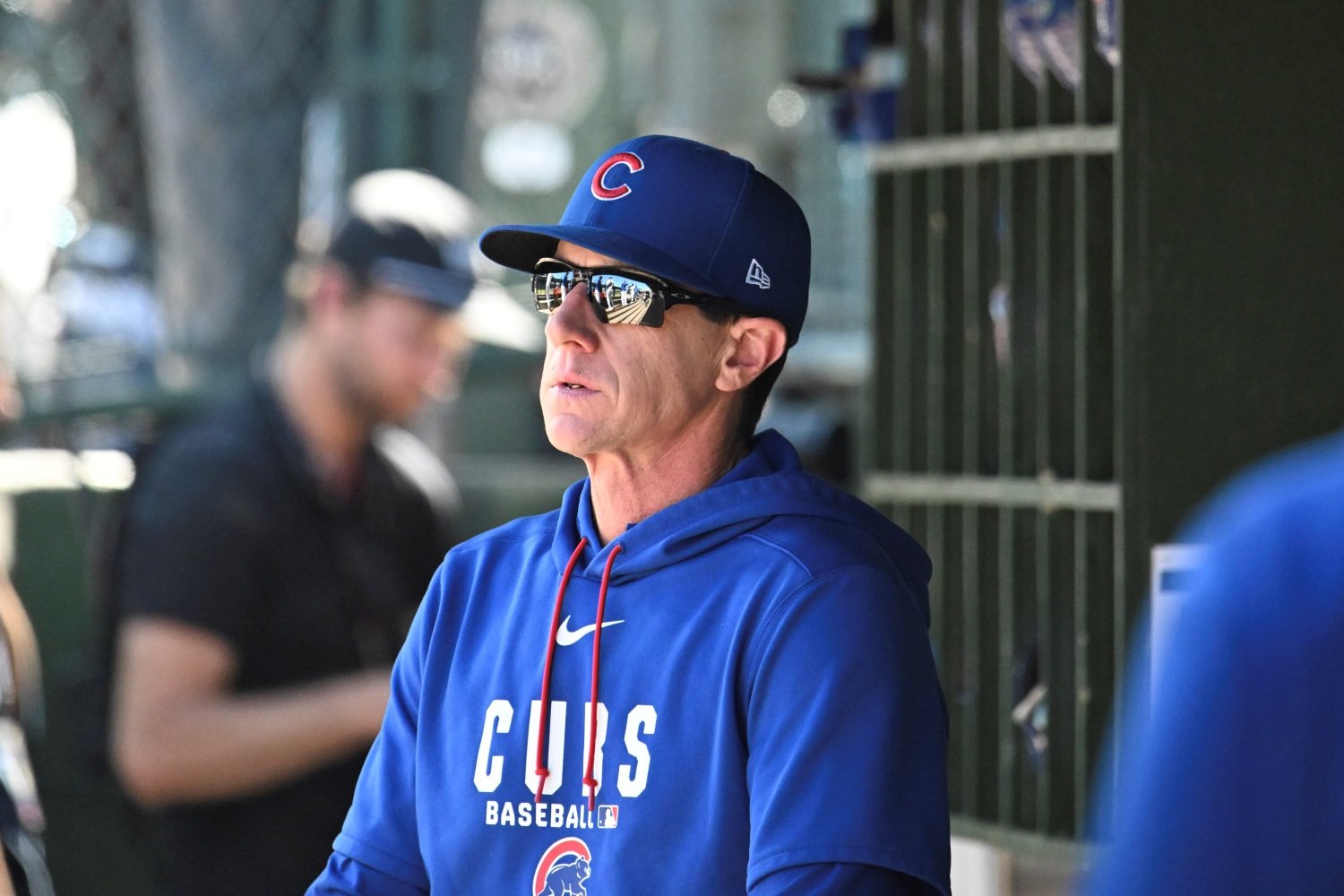
So, was the entire 2026 season a failure? If so, for whom? Was it Craig Counsell's folly? Can Jed Hoyer build a true contender? Is it that cheap billionaire, Tom Ricketts?
All I know is that it's no longer a success to just get in the playoffs. That should have been clearly true beginning in the late 1990s, but it finally seems to have become true since 2016. Fans expect not only to reach October, but to succeed there. Of course, as the team was forcefully reminded in each of the last two years, there's no simple formula for winning in the playoffs. The only reliable way to do so is to get there a lot, in as strong a seeded position as possible. That they've only gone to the tournament at all in two of the last seven seasons is the biggest problem; that they haven't made it with an intact starting rotation or as a division winner with home-field advantage on their side in the Division Series is the second-biggest.
Jed Hoyer did his best work this year, despite his admission of failure in constructing the bullpen. This was his masterclass, and it wasn't enough. The spending was there, led by a hefty investment in Alex Bregman. He tried to be more proactive about the pen, and he traded for Edwin Cabrera. Three top-100 prospects were moved in attempts to bolster the team for this season. His best effort? Eighty-nine wins, and another distant second-place finish in the NL Central.
The season was both a success and a failure. For the players on the field, there really can be no quibbles. They were a perfectly fine, entertaining team to watch. It didn't take much watching of other games to recognize just how good the Cubs' defense was, and many drops of water have cooled internet servers writing about the incredible season that Pete Crow-Armstrong submitted. They were successful in the roles they were placed in.
The failure is on the front office. They quite simply have not achieved their goals. They spent a lot of money to build this team initially and supplemented it with trade deadline acquisitions. Their spot in the playoffs was never in jeopardy. But even before they arrived in San Diego, it seemed clear they would run out of steam before reaching the World Series.
Once they were in, they didn't have the ammunition to do anything. Their pitching had no chance of holding up through the Wild Card and two other NL Series, let alone the Fall Classic. With the lowest pitching WAR in baseball, they ran out of quality arms in August.
It's time to ask if Jed Hoyer is the man to run the Cubs. As he admitted Friday in his end-of-year press conference, the organization needs to completely overhaul the way it scouts, acquires and develops pitchers, as well as how it tries to keep them healthy. Meanwhile, they also have to replace three key departing position players and virtually their whole pitching staff—not philosophically, but actually, and quickly, in an offseason that will be complicated by a work stoppage.
It's going to be a huge job for Hoyer to replace everything, and it's fair to question if he should be able to do it. The Cubs are in a tougher situation going forward than most people have realized. Theo Epstein took four years and had a contender; Hoyer has had six and seems to be running out of runway, while still trying to get his team off the ground.
Celebrate the players, but hold the front office's feet to the fire. It's not been what was promised: sustained contention. In fact, that feels a long way off—especially given the way Cubs fans now demand to define that phrase.





Recommended Comments
Create an account or sign in to comment
You need to be a member in order to leave a comment
Create an account
Sign up for a new account in our community. It's easy!
Register a new accountSign in
Already have an account? Sign in here.
Sign In Now