


Cubs Video
The Cubs needed a close win like Saturday's desperately, but they were trending toward yet another close loss, instead. The bullpen hadn't cracked, this time; it was the Dansby Swanson-less defense (a Nico Hoerner error opened the door for the Pirates in the top of the sixth) and a terribly timed hanger from Clay Holmes. How it happened mattered little, though. It was 3-2 Pittsburgh, and Chicago needed to flip that score somehow.
Pedro Ramírez got the rally started. He led off the bottom of the eighth with a line-drive double, on the latest beautiful piece of hitting from the rookie. Tyrone Taylor flied out, though, and Pete Crow-Armstrong struck out looking. Suddenly, after having the tying run in scoring position with nobody out, the Cubs needed a hit to push it home.
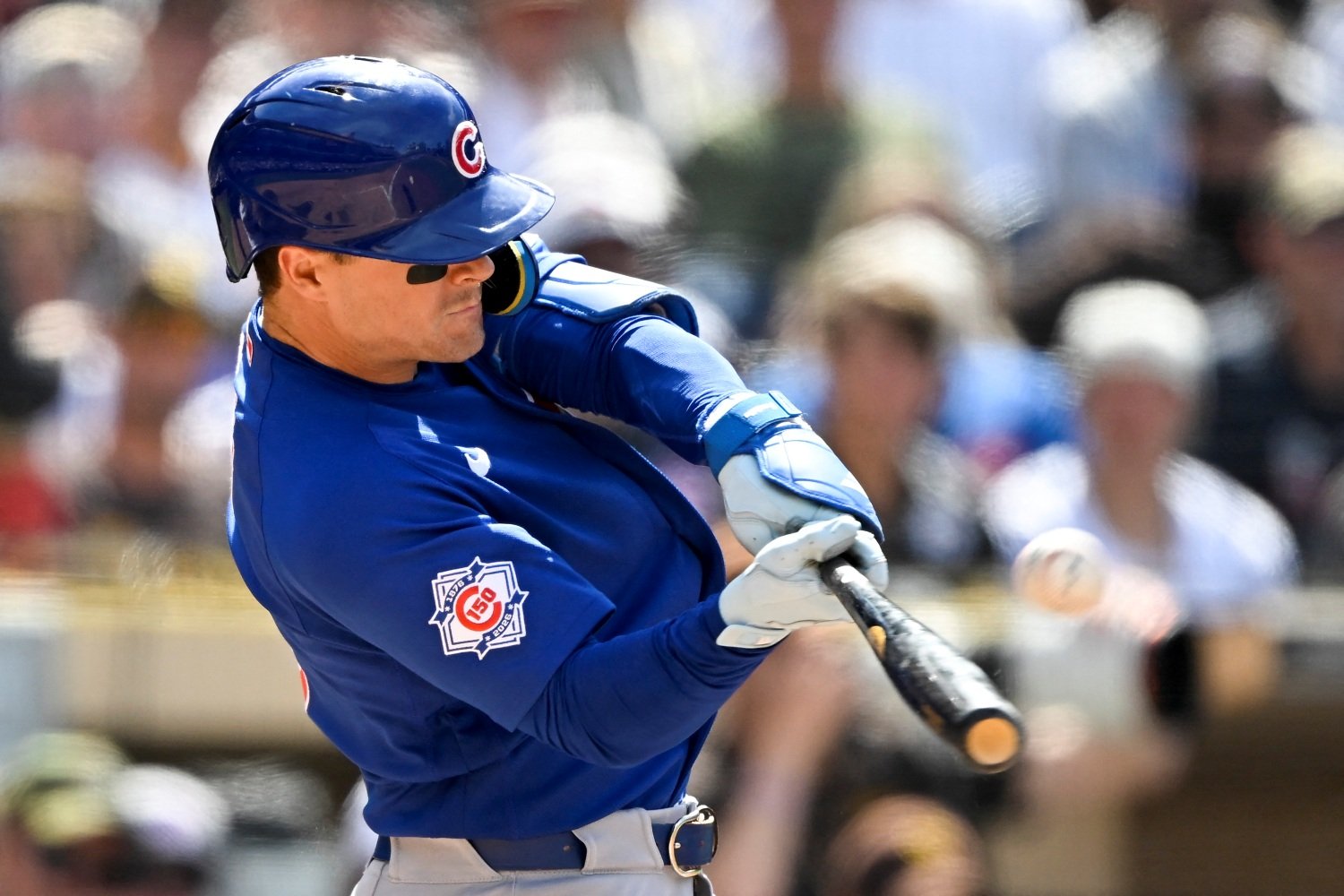
Or did they? Alex Bregman was hit by a pitch. Seiya Suzuki pinch-hit for Michael Busch against the left-handed Gregory Soto and drew a walk. The bases were loaded. Due next, however, was Ian Happ, whose helplessness against left-handed pitchers this season has been a source of constant trouble for the team. Craig Counsell pulled the trigger on a second straight pinch-hit move, calling upon Matt Shaw.
It was the right move, but hardly an inspiring one. Shaw stepped in batting a solid .237/.324/.428 on the season, but without a truly big hit all season. Since returning from the injured list in late August, he was batting .182, with a home run off position player Andrew Vaughn last week but little evidence that he can handle real pitchers.
The ensuing plate appearance turned out to be, by far, Shaw's biggest single contribution to the team all season. According to Baseball Reference's Win Probability Added, the RBI walk he drew to tie the game increased the Cubs' chances of winning by 0.269. He's only had one other at-bat that produced a WPA over .200—a sixth-inning go-ahead triple against the Rockies in mid-June, on a ball I'm still not sure was correctly ruled fair.
A five-pitch walk is an unsexy signature plate appearance in a season; Shaw is a very unsexy player right now. He was called up too soon last March, to a team that hadn't adequately addressed their lineup depth after trading Cody Bellinger and failing in their first effort to land Alex Bregman. He's been a mess ever since, trying to manage multiple changes to his stance, mechanics and timing at the plate and getting comfortable at new defensive positions along the way.
A certain amount of talent is obvious when you watch Shaw play. He's made some unexpectedly good plays in the outfield last year, after becoming a plus defender at third on the fly last year. He's fast. He had a short but intriguing power binge last summer. On the whole, though, he's a mess of a player: still very much a project, two full seasons into his big-league career.
What the Cubs needed in that moment, though, was a player who would make the right swing decisions and come through. Against the erratic Soto, that meant being patient. It also meant not letting him lure Shaw out of the zone with his good breaking ball. The stern test came on a 1-1 pitch, when Soto successfully executed a back-foot slider.
Shaw's biggest play of the year was not swinging at that pitch—though he almost did. That, interestingly, is characteristic. Early last month, Daine Medlock of Sports Info Solutions published a study of checked-swing behavior among batters, using proprietary data kept by SIS on checked swings. At that time, Shaw ranked second in the majors in the frequency with which he started his swing, but checked it, doing so on 6.9% of all pitches he saw. Only Cleveland's Daniel Schneemann did it more often.
Medlock's study is worth your time; the findings are nuanced but compelling. In short, batters broadly tend to produce checked swings (whether they're successful at holding up or not) more often if:
- They're aggressive within the strike zone
- They're disciplined when it comes to pitches outside the zone
- They don't make much contact on their out-of-zone swings
That makes sense. For most players, even takes are active moments. A big-league batter will rarely see a pitch on which they don't get their lower half and their hands started. If the hitting supercomputers that are their eyes and brains think the pitch will be in their hitting zone, they use those preliminary movements to generate a full swing. If they quickly perceive that it's not what they're looking for, they hit the kill switch and stop their momentum. A checked swing (successful or otherwise) is, of course, what happens when something in between those two options happens. Two things produce them:
- A hitter with a lot of early movement in their swing—what batters call the "load"; and
- Late recognition of a pitch type, spin direction or speed difference that takes them from wanting to swing to not wanting to.
Those two things are related, of course. While a good swing needs early momentum (and some players need bigger movements than others to produce a competitive hack), big moves tend to make it harder to recognize a pitch early. One way or another, though, the hitter who starts a swing by letting their bat get out from behind their body but stops it before following through has been at least slightly fooled.
Hitters who are patient within the zone will do this rarely; they're later in pulling the trigger than others. They don't let the hands really get moving until they're pretty sure they have their pitch, and thus, when they do, they're likely to swing all the way through. For the opposite reasons, the same is true of guys who often chase outside the zone. Those are hitters who cut it loose without making especially precise calculations of pitch location; they're hungry. They're swinging to produce damage, and that means swinging with such conviction that a checked swing is almost impossible, and not worth attempting. If checked swings are mainly the demesne of guys who swing a lot within the zone and little outside it, then it shouldn't surprise us much to learn that they don't make much contact on out-of-zone swings, either. You check your swing when you think a pitch isn't a strike because you realize that, if that's true, you're not very likely to touch it.
What's peculiar is, Shaw really doesn't fit these descriptors. His in-zone swing rate is lower than the league average; his out-of-zone swing rate is higher. He makes contact on more of his out-of-zone swings than most hitters, not fewer. That he shows up so near the top of the leaderboard, then, tells us there's something to his game (and to the nature of checked swings) that defies simple pairings of variables. As I've already said, part of that unexplained departure is the fact that Shaw is still searching for comfort and an identity in the big-league batter's box.
The study found (unsurprisingly, if you think about the rest of the work) that checked swings have a negative correlation with overall offensive value. Good hitters check their swings less often; bad hitters check it more often. Shaw's raw numbers this year look fine, but he's still not a good hitter, by any means. However, on the biggest pitch he's seen this year, the skill the moment needed was the ability to check a swing and earn an advantage in the count. Shaw did it. From here, his development needs to take him in a direction where he can win games in more convincing ways, and where checked swings are less prominent parts of his approach. For one game, though, he made the most of the tendency and came up huge.





Recommended Comments
There are no comments to display.
Create an account or sign in to comment
You need to be a member in order to leave a comment
Create an account
Sign up for a new account in our community. It's easy!
Register a new accountSign in
Already have an account? Sign in here.
Sign In Now