


Cubs Video
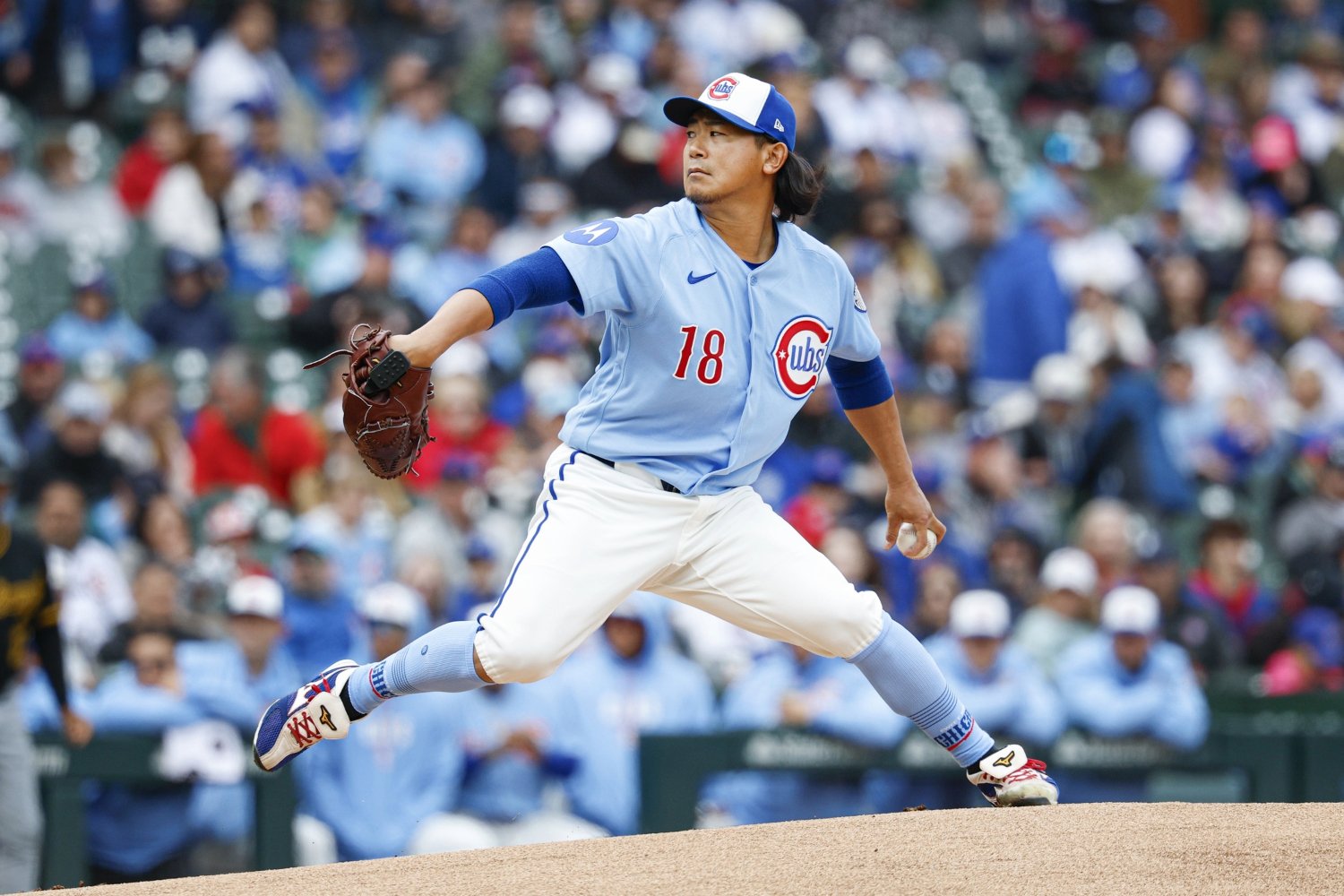
Shota Imanaga is back. Both literally, since he signed a qualifying offer this past offseason to remain with the Chicago Cubs, and performance-wise, as he has 2.81 ERA through his first three starts in 2026.
Of course, the same caveat that comes with every piece of baseball analysis in mid-April exists here: it’s early. After all, this is the same guy that the Cubs passed over in Game Five of last year’s Division Series after he got rocked in Game Two. Or is it?
A look at some of the under-the-hood numbers might give us an idea. [All stats courtesy of FanGraphs.]
|
Year |
xERA |
FIP |
K% |
BB% |
|
2024 |
3.36 |
3.72 |
25.1% |
4.0% |
|
2025 |
3.73 |
4.86 |
20.6% |
4.6% |
|
2026 |
2.68 |
2.18 |
33.3% |
6.7% |
Well, okay! All four metrics here would suggest that Imanaga is as good as he has ever been in a Cubs uniform after taking a step back last season. The walk rate is a bit elevated, but if that is coming along with the jump in strikeout rate, the Cubs, and their fans, probably take that trade off.
To help understand how repeatable this is for the lefty going forward, we’re going to have to take this a step further. He’s still allowing a ton of fly balls, however, he is allowing less loud contact, as well as more fly balls to the opposite field, where they tend to do less damage. That, plus the increase in strikeout rate, is what is helping to keep those advanced numbers like his xERA and his FIP so low.
Let’s get the raw stuff out of the way first: Imanaga’s velocity is up this season. After throwing his four-seam fastball at an average of 90.8 mph last season, that figure is up to 92.2 mph this season, according to Baseball Savant. That might feel like a small difference, but it is a meaningful one.
This rise in velocity, plus a higher arm angle (up to 40 degrees this season after sitting at 36 degrees, on average, last year), has resulted in less drop and less arm-side movement on the four-seam fastball, two massive developments for a pitcher who tends to live up in the zone.
Combine those two things and we’re seeing a massive increase in quality from Imanaga’s four-seamer. Per FanGraphs, the Stuff+ rating on his four-seam fastball is at 110, which is up from 99 last season and 105 from his rookie year in 2024.
The actual results on the four-seam fastball, which plagued him last season, have rebounded accordingly. After hitters slugged .567 on the pitch last year, that number is down to just .217 this year.
We can also utilize Location+ to help us evaluate how well a pitcher is locating a pitch. Location plus is measured based on where a pitch should be thrown to based on the count. For example, a fastball is most effective when thrown to certain places in a 2-0 count, but also most effective when thrown to a different place in an 0-2 count. Just like stuff plus, higher is better, and Imanaga is certainly trending in that direction this year.
|
Year |
Location+ Fastball |
Location+ Splitter |
Overall Location+ |
|
2024 |
111 |
109 |
109 |
|
2025 |
108 |
109 |
108 |
|
2026 |
126 |
117 |
116 |
Woah! Location plus is suggesting that Imanaga is spotting both his fastball, and his splitter, in much more effective spots this season than he ever has been.
Of course, our next step has to be to take a look at where Imanaga is throwing his fastball and his splitter. Thanks to the handy dandy new heat maps pivot feature over at FanGraphs, we can do just that. Here are heat maps for the location of his four-seamer, with 2025 on the left and 2026 on the right. First is against left-handed hitters, and second is against right-handed hitters, with the perspective being from behind home plate.

Imanaga is making an effort to keep the ball both up and outside, rather than just up. This is helping him stay off barrels and avoid some of the loud contact in the air that we saw last season. It would also explain the jump we’ve seen in fly balls to the opposite field.
Here are the same charts for his splitters:

The veteran is staying on the outside part of the plate, just like he is with his fastball; however, his splitter is much further down, and in a lot of cases, even further outside of the strike zone than it was previously. As a result, hitters are chasing more than they ever have against Imanaga. Per Baseball Savant, his 40.5 percent chase rate would be a career high, and that is in the 96th percentile of pitchers this season.
There is risk in doing that, of course. That is explained by the bloated walk rate. Throwing more pitches outside of the strike zone is going to result in more walks. Plus, hitters will likely adjust to seeing splitters that low more often, but then again, a splitter properly located down there is just so tough to lay off of when paired with a fastball on the high and outside corner of the strike zone.
All of this suggests that while it may be early, Shota Imanaga is either currently as good as he was in the 2024 season, or perhaps even better. The jump in his velocity, as well as better and different execution of both his four-seamer and his splitter, have resulted in a jump in his strikeout rate and less loud contact when hitters do put the ball in play. With Cade Horton’s early season injury bogging down the rotation, this is great news for the Cubs, because they just might need this version of Shota Imanaga for the rest of the season.
Do you approve of the job the Cubs front office is doing?

Follow North Side Baseball For Chicago Cubs News & Analysis



-
 1
1

.thumb.JPG.19c99ddd60a76edf810c77d321439828.JPG)



Recommended Comments
There are no comments to display.
Create an account or sign in to comment
You need to be a member in order to leave a comment
Create an account
Sign up for a new account in our community. It's easy!
Register a new accountSign in
Already have an account? Sign in here.
Sign In Now