


Cubs Video
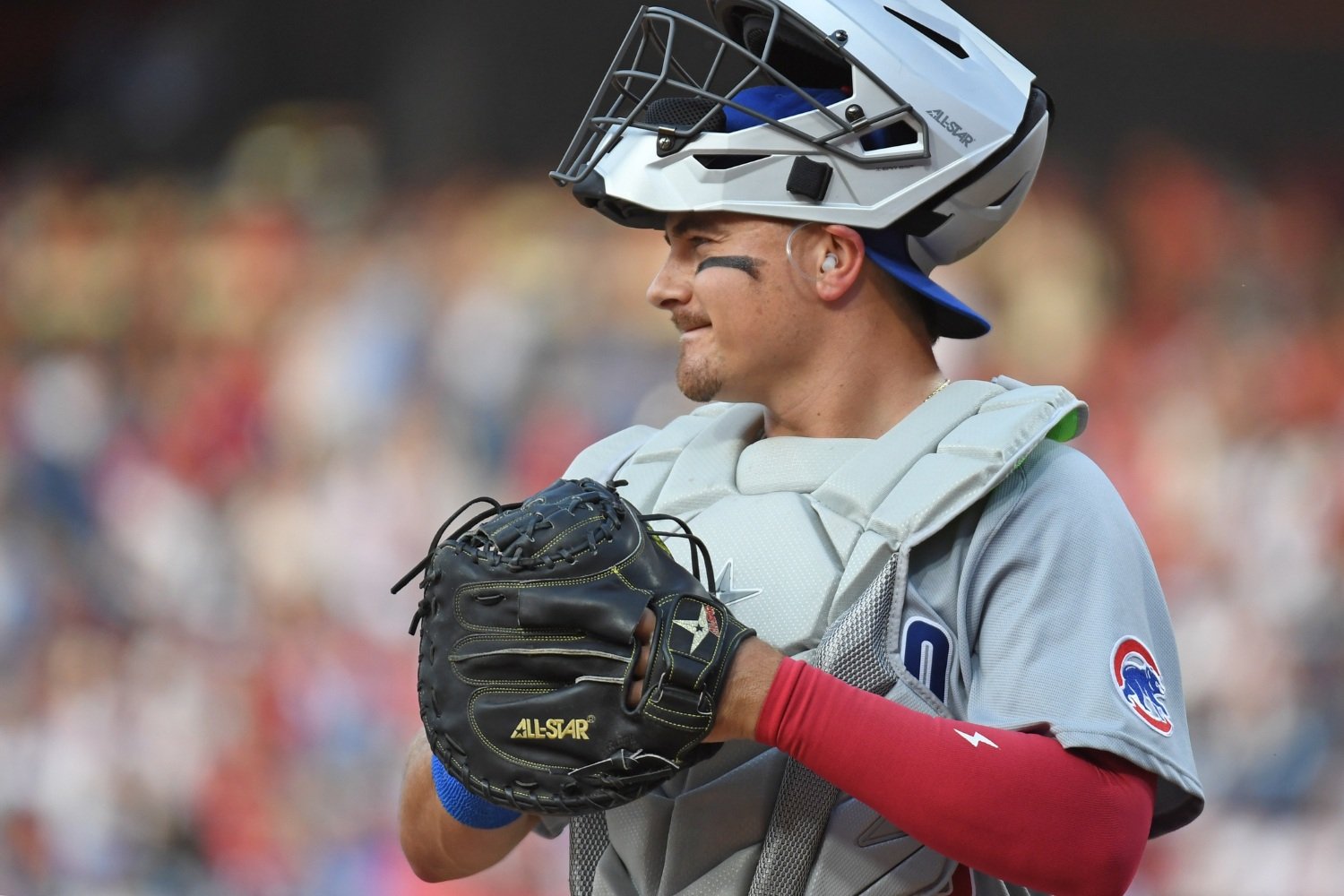
Though losing Miguel Amaya for two months to an oblique strain was a major blow to the Cubs, they've been very, very lucky. Plugged in to fill the gap left by Amaya, Reese McGuire has been everything they might have fairly hoped he would be. He's only running a .246 on-base percentage in his limited playing time, but he's run into five homers—and, much more importantly, he's been a defensive stalwart.
In fact, he's been a revelation behind the plate. McGuire has played relatively little—some 60 catchers have been behind the plate for more opponent plate appearances—but made a huge impact. Runners have 12 steals against him, but have been caught seven times. In total, McGuire has 11 Runner Kills, adding a few plays like this one to those thwarted thieves.
That was the third Guardians runner McGuire had thrown out in that game, alone. The first came in the heels of a leadoff single by Steven Kwan in the first inning:
And the second via disguised pitchout in a key spot with runners on the corners in the fifth.
His arm has been plus. So have his blocking skills been, behind home plate, such that his pitchers know they can afford to bury one even with a key runner on third base.
Give him special credit, on that one, for the awareness it took to keep the ball in front of him, then force the runner back to the base—then still turn and make the throw in time to convert the strikeout. Later in that same game against Pittsburgh, he called (and Drew Pomeranz had the conviction to throw) another ball in the dirt, which he blocked with aplomb.
The Cubs still lost that game, of course, but they had a chance to win it in the bottom half of the frame, thanks to the double play Oneil Cruz hit into on the pitch right after this one. McGuire's presence behind the plate has meant fewer bases gained for opponents, in addition to more outs. And finally, he's also been the only Cubs catcher who's framed pitches with above-average aptitude this year. Here are the numbers, according to Baseball Prospectus. (Statcast is even more in favor of McGuire, relative to the other two.)
- McGuire: 0.6 FrmR
- Amaya: 0.0
- Carson Kelly: -3.5
Combine his good framing with the ability to stifle the running game and the confidence he inspires in his batterymates, and Cubs pitchers have a 3.60 ERA with McGuire behind the plate this season. That's better than either Amaya (4.37) or Kelly (3.72). Opponents' OPS (.672 with McGuire back there; .710 for Amaya; .729 for Kelly) throws their effects on run prevention into equally stark relief.
Thus, while McGuire's offensive contributions have been relatively limited, he's a key cog in the team's machine; he makes them better at run prevention. That makes for an uncomfortable looming decision. When Amaya does return from the injured list, the team will have to make room on their 26-man roster for him. The natural way to do so is to designate McGuire for assignment, because he's their current backup catcher and the nature of the modern bench is such that carrying three backstops is virtually impossible. McGuire can't be sent to the minors without being offered to the rest of the league via waivers, and could elect free agency even if he clears—which, at this point, is unlikely.
Picking McGuire over Amaya certainly isn't a viable path, with Amaya also being out of options and having both youth and longer-term team control on his side. He's a better offensive player than McGuire, too. If nothing else changes, the Cubs will have to waive (and surely lose) McGuire. That comes with its own problems, though. To wit: they'd be down to two trustworthy big-league catchers in their organization, and would have no good way to backfill if either Amaya or Kelly got hurt later in the campaign. This is why teams are always hunting catching depth, and especially catching depth that can be sent to the minors without being exposed to the other 29 teams.
Chicago does, of course, have Moisés Ballesteros, who came up briefly earlier this year to fill in as the DH and who has continued to catch in about two-thirds of his games since returning to Triple-A Iowa. However, if they really trusted Ballesteros behind the dish, he'd have come back when Amaya went down. He didn't. Ballesteros will still be (will have to be) a sufficient emergency option for the final two months, if and when Amaya returns and McGuire goes elsewhere. Since the Cubs plainly feel he needs more seasoning (or that his future is as a DH, anyway), though, they won't sleep especially well on any day that includes a hard foul tip off the mask or the bare hand of either Kelly or Amaya. It might also be that, because Ballesteros is important as their only real catching depth at this stage, they feel unable to pull the trigger even on an otherwise strong trade offer that would include sending him elsewhere.
That's the bad news. The good news is, given how good he's been behind the plate and the fact that he still has one year of team control remaining, the Cubs might be able to include McGuire in a trade somewhere right as Amaya returns. Sure, his offense has been lousy, but that's been in limited playing time, and he's showing the well-rounded defensive competence teams crave from their catchers for two years running. He wouldn't fetch any major piece, of course, but he could be thrown in to sweeten a deal with a team in need of some stability beyond 2025 at the catcher spot—or in a swap with a club who could send the Cubs a less accomplished or helpful spare catcher, but one who can be optioned to Iowa unless and until needed. The downside of that strategy is that unless it's the second type of move, you're ensuring the loss of McGuire and merely hoping to either stay healthy or survive with Ballesteros late in the season. It's possible the team will feel obligated to simply pick a moment of roster bloat for other teams at which to bring Amaya back, and try to sneak him through waivers—the risk of losing him being worth the chance that they wouldn't, as opposed to taking any action that guaranteed the former.
McGuire has added significant value for the Cubs over the last two months, giving their run-prevention some needed help. His days in the organization are likely dwindling, but hopefully, the team will find a way to maintain some depth behind the plate—and perhaps even extract one final drop of value from a very successful minor-league signing.





Recommended Comments
Create an account or sign in to comment
You need to be a member in order to leave a comment
Create an account
Sign up for a new account in our community. It's easy!
Register a new accountSign in
Already have an account? Sign in here.
Sign In Now