


Cubs Video
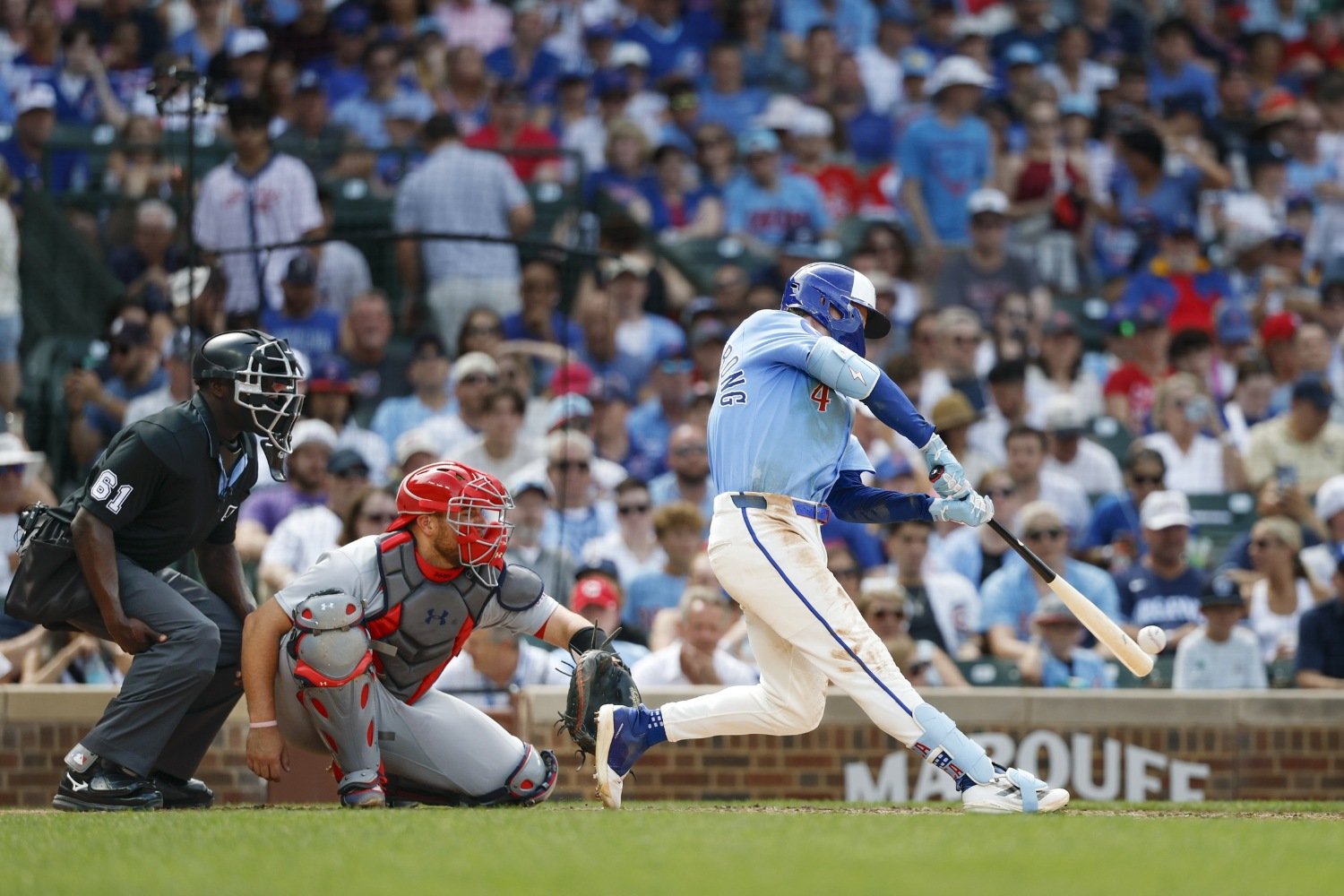
The power binge that has turned Pete Crow-Armstrong from a glove-first player into the starting center fielder for the National League All-Stars certainly didn't catch him by surprise.
"I always knew it was in there," he said Tuesday, inside the visitors' clubhouse at Target Field in Minneapolis. "Maybe not before I got drafted. In high school, I did not know how to move properly. But even the first couple years in the minor leagues, I saw some power and whatnot. I would attribute that to just reps. And now we’re definitely learning how to pull the ball in the air—true spin, not so much topspin, sidespin. Yeah, I’m definitely surprised at the amount in the timeframe, but I always knew it would come."
Having the tools for power production—his bat speed, which is still increasing almost week by week, and the natural uppercut plane in his swing—is one thing, but weaponizing it and being able to access it is another. Crow-Armstrong's breakout has been defined by the latter, and fueled by his self-knowledge as a hitter. It's also been a product of the team's coaching staff finding good ways to communicate with Crow-Armstrong (and several others on the team) about the value of catching the ball farther out front and creating that true spin, in the air to the pull field.
Batted-ball spin is one of the (few) things the public still doesn't get to see on websites like Baseball Savant or Statcast clips via the MLB app. Teams do have it, though, and while it's not a primary focus for most hitters, spin off the bat can be used to reverse-engineer some insight into the swing. Are you on time, and on plane? Are you catching the ball squarely, with the head out around it just so? Often, if you are, the spin will be what Crow-Armstrong referred to as "true". That's not only good for carry on the ball (backspin keeps it in the air longer, so it can fly farther before it lands), but a good sign that your swing is working. As Crow-Armstrong alluded to, sidespun, sliced liners or topspin one-hoppers to the pull side can tell a hitter they're slightly missing their target in terms of timing or barrel accuracy.
Lately, Crow-Armstrong and Cubs coaches have used another indicator to spot trouble in his swing, proactively working to solve it before a long slump could ensue. Around the middle of June, he got a bit more upright in the box and brought his feet closer together in his stance—but that's led to a longer stride that was not intentional, and has not been beneficial.
"I was absolutely overstriding," Crow-Armstrong said. "We looked at numbers, we broke it all down. The stride was actually eight inches longer. And that creates some disconnection."
He's right, of course. To take as clean a snapshot as possible, here's Crow-Armstrong's stance and stride pattern from May.

Here, by contrast, is the same visual for July, entering Tuesday night's game (in which he went 0-for-4).

That is, indeed, a big change in stride length, and it hasn't been good for him. It's a sign of how well he's been living at the plate that, even if you take the least flattering snippet of his recent run you can (his last 17 games, dating to June 20), Crow-Armstrong still has a .265/.292/.485 batting line. At this point, though, he and the team want to aim higher than that. He was out doing early work five hours before Tuesday night's game, along with some teammates.
"I can still be moving on time, but I’d end up backing the ball up a lot," Crow-Armstrong said of his swing when the stride is too long. "The goal is to always hit behind the front side, and if you’re overstriding, then you’ve gotta really fight to get through there. So you were seeing a lot of deep-caught, jammed ground balls. Not working under my front side."
When he talks it through, you can picture what Crow-Armstrong is hunting, and what's frustrating him when he can't connect on time. Overstriding, in effect, lengthens and flattens his swing. Indeed, his swing tilt is the flattest it's been all year thus far in July, so despite his bat speed being better than ever he's been late on fastballs. His attack angle and direction on the sinker and four-seamer show him not catching it while working uphill as much, and pushing it to the opposite field more. He also articulated why it hurts to overstride both on the fastball and on spinning or offspeed stuff.
"I think, if anything, the overstriding is just a disservice to the visual, for me as a hitter," he said, "The depth perception just changes. If you’re overstriding, heaters probably look a little harder and the spin probably presents itself better when it normally wouldn’t, and I could probably shut down."
In other words, because he knows he has to rush his barrel to get out around the longer frame he's made of himself by striding long, he's more prone to chasing non-fastballs, even while fastballs can still beat him.
Crow-Armstrong did say he and the team have worked some of that problem out, and that "it's felt better" for about the last week. He still went 0-for-4 Tuesday night, but he had a great weekend against St. Louis. Having identified the problem and acted on it, he feels confident about returning to the level of production he so enjoyed prior to the recent downturn. It's easier said than done, but if nothing else, Crow-Armstrong's intimate understanding of his swing and what it's meant to accomplish provides reason for optimism that he can do it. As he noted, there's no longer any doubt that the power is there.





Recommended Comments
Create an account or sign in to comment
You need to be a member in order to leave a comment
Create an account
Sign up for a new account in our community. It's easy!
Register a new accountSign in
Already have an account? Sign in here.
Sign In Now