


Cubs Video
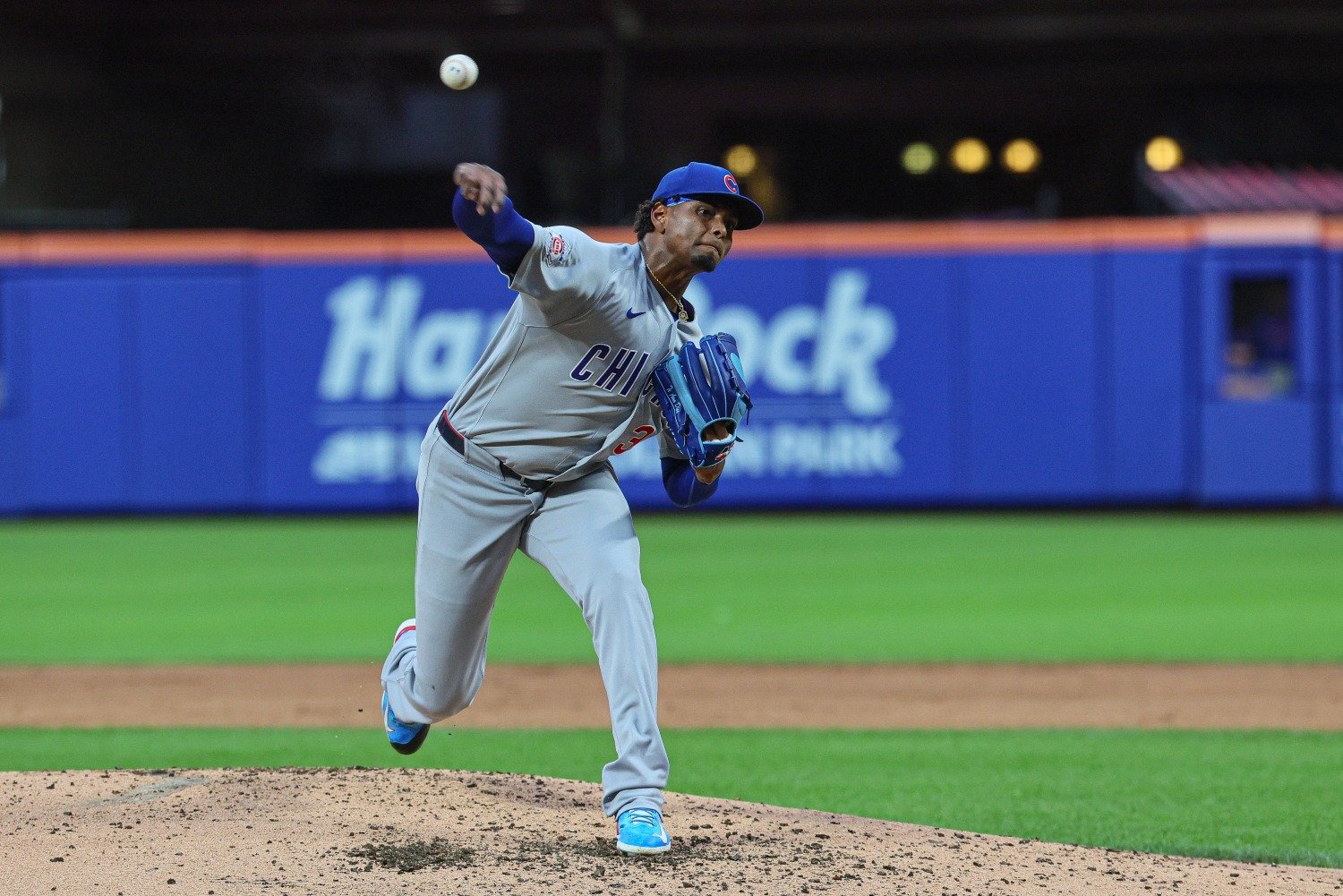
Edward Cabrera came to the Cubs with some well-known warts. His injury history is long and frightening, and there were lurking concerns about his elbow even entering last offseason. He also has shaky control, and neither his four-seam fastball nor his sinker has ever maintained a shape that allowed the heater to lead his arsenal. Instead, he's always had to lean on his changeup and curveball, which is part of why he's always had issues with walks.
By trading top prospect Owen Caissie to land Cabrera, the Cubs made a forceful statement of their belief in themselves. They were betting on their pitching infrastructure, in which they take considerable (though not always earned) pride, to both keep Cabrera healthy and foster the development that saw him turn the corner in 2025. Caissie has hardly been a superstar in his rookie season with Miami, but nonetheless, it feels like the Cubs lost their gamble. They needed the Cabrera who pitched like a strong mid-rotation starter last year and showed the potential to be a true frontliner. Instead, recurring blister problems and a severe hamstring strain have limited Cabrera 78 1/3 innings—and he's been disastrously bad when he has been on the mound.
Several things are happening at once within Cabrera's game. It's hard to tell which are products of the team's tinkering, and which are the result of Cabrera scrambling to fix what has repeatedly gone wrong or of him trying to protect himself from injuries. Whatever the causes, though, the following things have changed:
- He's throwing a bit less hard; his four-seamer has averaged 96.3 MPH, down from 97 in 2025.
- His four-seamer and changeup have become more prominent; he's reduced his usage of both of his breaking balls.
- Both breaking pitches, when he does throw them, are firmer and move less than they did last year.
- His arm slot, which he significantly lowered in 2025 en route to his best campaign, has gotten even lower; and
- As a result, his four-seamer has gotten more similar to his sinker, with more arm-side run but less carry. The sinker, meanwhile, has changed hardly at all.
.png.0d056899e18aa53ac483b25fbf310320.png)
These changes haven't worked, but you already knew that. It's interesting, too, to note that it was never likely to work, according to pitch-modeling data. Cabrera's PitchingBot, Stuff+ and StuffPro have each gotten worse, on a pitch-by-pitch basis and in the grades for his overall arsenal. That he's missing fewer bats and still running right into barrels is no surprise.
If these degradations had been mitigated by compensatory improvements in command and durability, it would be easy to understand and accept the changes. As it is, there's been no such tradeoff. Cabrera has just gotten worse at almost everything under the Cubs' stewardship. He's the highest-profile, highest-ceiling pitching acquisition the team has made since Marcus Stroman, and so far, he's a total bust.
At this point, there's little hope for Cabrera helping the Cubs in 2026. He throws hard, but that's the only nice thing you can say about him without lying, and it's not enough—not nearly enough—to make up for all of the things he does poorly right now. The team will almost certainly change pitching coaches and shake some things up this winter; being this lousy has to cost someone their job. Cabrera is under team control through 2028, as long as the Cubs are willing to pay him escalating salaries via the arbitration process. It's too early to give up on him in any long-term sense. However long they play this fall, though, the team will have to look elsewhere for help on the mound—which is a glaring indictment of their front office and coaching staff, no matter how you slice it.





Recommended Comments
There are no comments to display.
Create an account or sign in to comment
You need to be a member in order to leave a comment
Create an account
Sign up for a new account in our community. It's easy!
Register a new accountSign in
Already have an account? Sign in here.
Sign In Now