


Cubs Video
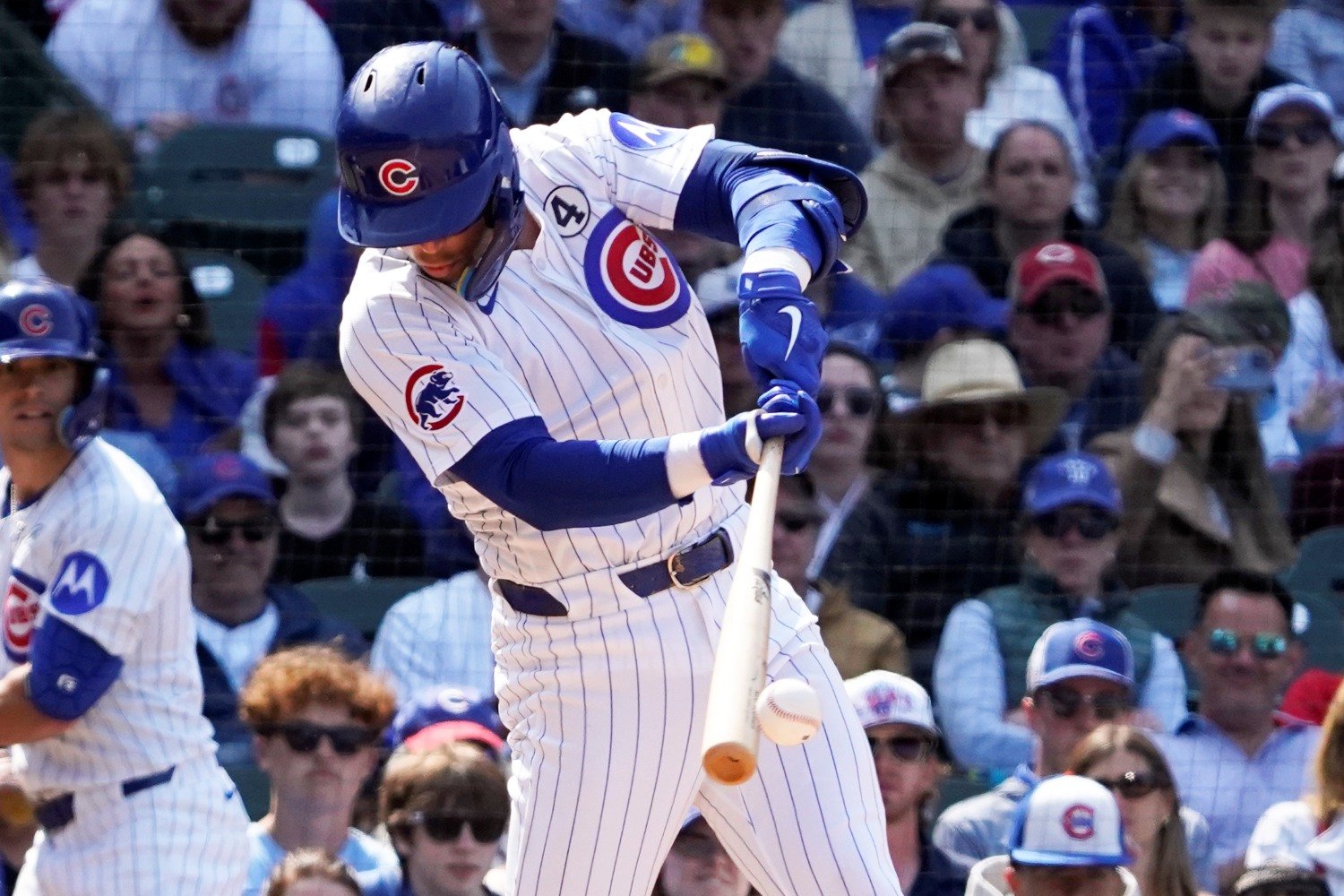
Give Nico Hoerner credit. He's a consistent hitter, not just from year to year but from week to week and month to month. Right now, many hitters in the Cubs lineup every day are in fairly severe slumps, but Hoerner can't be thus accused. He's batting .293/.340/.376 for the season, and a hilariously similar .293/.340/.380 since June 1. He's batting .330 (although virtually without power) since the All-Star break.
Many fans will also be tempted to heap an extra layer of praise on Hoerner for one column on his stat sheet, in particular: his strikeout rate. Hoerner has been an elite contact hitter for almost his whole career, but he's taking that to a new level this year. He's fanned just 36 times in 477 plate appearances, a 7.5% clip that only Luis Arraez has outdone. When Hoerner swings at pitches in the zone, he makes contact 94.5% of the time, an eye-popping career-best number, and he also touches the ball almost 75% of the time when he chases outside the zone, according to Statcast.
Here's the thing: at a certain point, there are diminishing returns on that level of contact skill. Unlike Arraez (who averages 62.6 mph on his swings), Hoerner (68.4 mph bat speed) is capable of creating some measure of damage when he swings. As long as he remains this locked in on simply meeting the ball, though, he's taking that danger away from himself.
Hoerner swings at the first pitch in about 25% of his plate appearances. That's reasonably patient, but he could (and should) be even more so. He goes to a more tilted, defensive swing when he gets to two strikes, and fouls the ball off a lot in those counts, but before then, he's one of the least likely hitters in the league to hit a foul ball. Only three players put a higher percentage of their zero- and one-strike swings in play than does Hoerner: Chandler Simpson, Ernie Clement, and Mookie Betts. Simpson is the fastest player in baseball, which is why that approach (at least kind of) works for him. Clement hits the ball in the air a lot, especially to the pull field, so it works for him, too. Betts is having a rough season, weakened by a virus he contracted in the spring. When he's right, though, he, too, gets lots of value out of making so much contact because so much of it is toward the wall to his pull field.
That's not Hoerner. He sprays the ball, and he hits grounders and line drives. Thus, his contact rate (and especially his in-play rate) is too high, at least for his current approach. If he's going to put the ball in play this reliably when he swings, he needs to swing less.
The Brewers' Sal Frelick is a great model. He's batting .296/.358/.416 this year, on largely similar underlying numbers (contact rate within and outside the zone; chase rate; bat speed and exit velocities) to Hoerner's. What's the difference? Frelick swings at about 44% of pitches; Hoerner swings at almost 49% of them. Frelick only swings at the first pitch 20% of the time. In other words, he's giving himself chances to draw walks, or to get mistakes he can hammer. Hoerner, more anxious to avoid the strikeout, is making more outs instead of fewer; they're just outs on balls in play. He's also losing access to power, even if his power is fairly limited, anyway.
This has been a perennial problem for Hoerner, and it's hard to harbor much hope that it will change at age 28, roughly 2,700 plate appearances into his big-league career. However, if Hoerner wants to earn the trust of Craig Counsell at the top of the batting order (and if he wants to be a better engine for the Chicago offense, there or elsewhere on the lineup card), this is what has to change. He's swinging too much, given how often those swings result in underwhelming contact. He's been a useful hitter, but he can be a much better one by being more willing to whiff—or just by forcing opposing pitchers to throw him an extra strike or two.






Recommended Comments
Create an account or sign in to comment
You need to be a member in order to leave a comment
Create an account
Sign up for a new account in our community. It's easy!
Register a new accountSign in
Already have an account? Sign in here.
Sign In Now