


Cubs Video
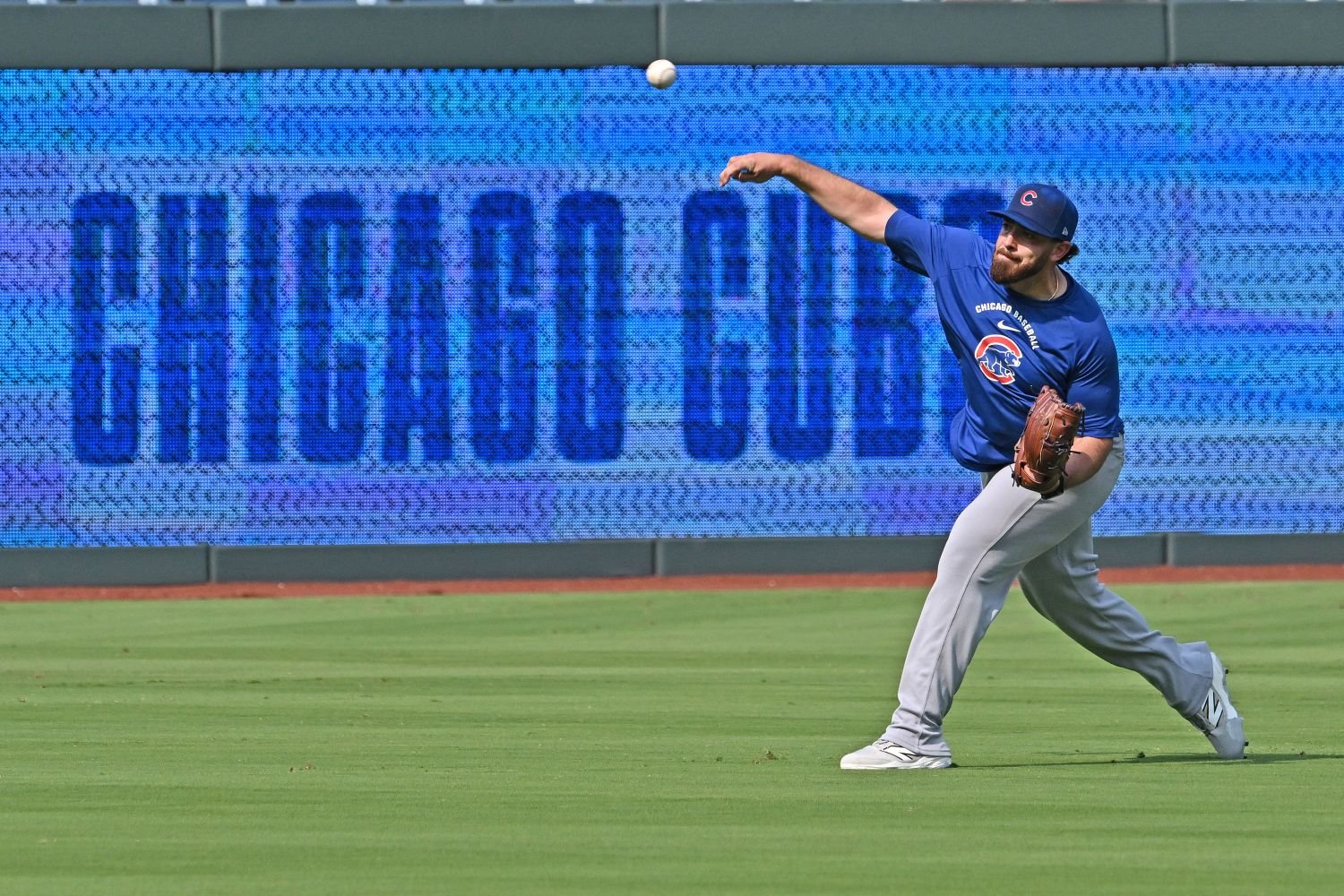
What are the Cubs doing differently—and what had they already done in 2025—that allows Aaron Civale’s best weapons to work again? The answer lies in two things the Cubs have done differently than the Athletics: how and when to use him, and which pitches to put at the center of his repertoire.
In his 12 relief appearances with the Cubs over the last two seasons, Civale has posted 0.5 WAR with a 2.28 ERA. In that small sample, he has produced a surprising 14.00 strikeout-to-walk ratio, nearly five times higher than his 3.23 career mark. It’s not hard to understand how the Cubs are getting the best version of Civale again. Much of that performance is only possible because of the role they have given him. With a lower workload, his arsenal tends to be less exposed, and Civale has been able to match up better against certain opponents.
Civale’s profile in both roles this season allows us to analyze the time he spent as a starter with the Athletics and his return to the Cubs’ bullpen.
| TTO | TBF | xERA | xFIP | SqUpCon% | BlastCon% | HardHit% | wOBA | K-BB% | EV |
|---|---|---|---|---|---|---|---|---|---|
| 1st Through Order as SP | 135 | 5.76 | 4.59 | 37.9% | 18.0% | 42.3% | .389 | 13.3% | 90.0 |
| 1st Through Order as RP | 59 | 2.50 | 3.48 | 33.3% | 13.0% | 31.7% | .263 | 25.4% | 85.9 |
| 2nd Through Order as SP | 135 | 4.97 | 5.04 | 40.7% | 19.2% | 47.2% | .393 | 9.6% | 90.9 |
| 2nd Through Order as RP | 17 | 8.00 | 5.24 | 47.6% | 33.3% | 53.8% | .566 | 0.0% | 92.2 |
| 3rd Through Order as SP | 57 | 4.63 | 6.27 | 38.4% | 20.5% | 47.8% | .346 | 1.8% | 90.2 |
Civale’s best version is pretty clear. It only appears when he faces opponents for the first time as a reliever, not only safe from batter familiarity but knowing he doesn't need to pace himself for a long outing. In those situations, he has an excellent xFIP, strikes out more batters, walks fewer, and is less vulnerable to hard contact. Hitters’ best swings are finding his pitches less often, which translates to a lower average exit velocity.
What that report doesn’t show are the adjustments the Cubs have been working on with Civale in terms of his actual pitches. All of this has to do with Civale’s three biggest problems in his starts with the Athletics: hitters were destroying his fastball. His rate of allowed fly balls rose to dangerous levels, which created plenty of trouble, especially when he pitched in Sacramento. From all that came a .311/.371/.538 offensive line, with a .909 OPS and .391 wOBA, his worst numbers in a season against left-handed hitters.
With the Athletics, Civale’s sinker and four-seam fastball were making up 24.8% of his repertoire and, contrary to the encouraging results he posted in 2025, hitters were feasting on those pitches. The difference is clear in the heat maps from the last two seasons.
Civale’s opponents vs. sinkers and four-seam fastballs in 2025

Civale’s opponents vs. sinkers and four-seam fastballs in 2026

Without enough power to frequently generate swings and misses with his sinker and fastball mix, Civale became more exposed, especially when he tried to attack the corners. With the Athletics, his opponents' xSLG jumped from .443 in 2025 to .615 this season. His HardHit% shot up, too, from 40.8% to 61.1%.
Since arriving in Chicago, Civale’s adjustments have been put into motion. He's drastically reduced his sinker usage from 19.2% to 6.6%, which is becoming the most important repertoire adjustment. He's distributed those 12.6 percentage points by giving more time to his cutter (4.1%), four-seam fastball (3.1%), slider (1.4%) and curveball (2.3%). After all, we can already see some encouraging results.
| Split | Athletics | Cubs | Differences% |
|---|---|---|---|
| O-Contact% | 74.0% | 62.5% | 11.5% |
| Z-Swing% | 62.5% | 73.0% | 10.5% |
| Contact% | 82.5% | 76.6% | 5.9% |
| SwStr% | 8.0% | 12.0% | 4.0% |
| O-Swing% | 33.7% | 36.7% | 3.0% |
| Z-Contact% | 88.9% | 87.0% | 1.9% |
Hitters are taking many more swings, and Civale has been taking advantage, reducing contact against pitches outside the zone by 11.5%. The improvements in SwStr% and Z-Contact% are small in percentage terms, but they have been key to limiting contact by 5.9%. Civale has also slightly increased the velocity on all of his pitches, although that figure may be influenced by his new role with fewer pitches per outing. He has also recovered his ground-ball rate, bumping it from 27.0% to 40.0%.
In his repertoire, the curveball and cutter remain Civale’s most reliable pitches. If we combine them into a single core, we can see the big differences compared with the rest of his arsenal.
- Cutter and curveball: .384 xSLG, 38.3 HardHit%, 25.7 Whiffs%, 21.3 K%, 2.3 Miss Distance (in).
- Sinker and four-seam fastball: .598 xSLG, 58.3 HardHit%, 13.2 Whiffs%, 15.4 K%, 1.1 Miss Distance (in).
This strengthens the point we made about Civale’s adjustments in the distribution of his pitches, reducing his sinker usage by 12.6 percentage points. With the cutter and curveball having more presence in his arsenal, the greater probability of generating more swings and misses and making hitters less comfortable in the batter’s box is influencing Civale’s performance with the Cubs. Of course, Chicago is taking advantage of these more frequent appearances and lower workload from Civale, but a couple of inconsistent relief outings could change the outcome of his peripheral numbers. Now, regardless of that, the credit the Cubs deserve is undeniable for finding a way to make a pitcher who seemed finished rise again.
Sometimes, the biggest changes aren’t just about redefining a pitcher’s strategy, but about finding the balance to get the best version of him. So far, that’s what the Cubs have done with Civale, and his tools are working again.





Recommended Comments
Create an account or sign in to comment
You need to be a member in order to leave a comment
Create an account
Sign up for a new account in our community. It's easy!
Register a new accountSign in
Already have an account? Sign in here.
Sign In Now