


Cubs Video
Next month, as the offseason ramps up (before, in all likelihood, ramping right back down at the end of November), the Cubs will have to make a large number of decisions in a short time. We've already talked about their decision points on qualifying offers and on their existing contract options. Now, let's weigh their choices with regard to each of the 11 players who enter the offseason as arbitration-eligible, making their salaries uncertain (but relatively predictable) for 2027.
The best approach here is probably to sort everyone into buckets. There are three things you can do (barring a trade) with a player due for a raise via arbitration in the forthcoming season: non-tender them (making them a free agent), tender them a contract (pushing down the path toward a one-year deal), or extend them (locking in their salary for multiple seasons, to gain cost certainty and/or longer team control). The team has at least one candidate for each of these paths this fall.
Cubs Non-Tender Candidates
Two players are almost no-brainer non-tenders for the Cubs. They picked up Gabriel Arias as emergency infield depth after Dansby Swanson strained his oblique in August, but that made them just the latest franchise to which Arias has bounced via waivers. He's been so available because he's been unproductive, and has now exhausted his minor-league options. He's a bench player on any team with serious aspirations to contend, and though he plays good enough defense all the way around the infield, he's never found a way to turn good bat speed into consistent pop, and his approach is ragged. He's in line to make roughly $1.3 million in 2027 if tendered a contract, according to MLB Trade Rumors's projections. That's not much, but 'not much' is also what he's worth. He can't be sent to the minors without being exposed to the other 29 teams. It's not worth using a roster spot on him all winter.
Almost all of that also applies to Ethan Roberts, even though Roberts (unlike Arias) has been part of the Cubs organization for years. He's never showed the ability to stay healthy or to get many outs even when he is, and he's now out of options. His ability to spin the ball and create glove-side movement has bought him time with the Cubs, who love that profile. MLB Trade Rumors only projects him to earn $800,000 via arbitration, so he's essentially a league-minimum guy, even as he hits the phase of his career at which he's supposed to start gaining earning power. In theory, as with Arias, there are three years of team control left here. Roberts just isn't good, though, and if he can't be shuttled to the minors when needed, he's not worth keeping around.
Easy One-Year Sign-Ups
Most arbitration-eligible players don't inspire particularly interesting action. You just tender them a deal, agree on terms, and move on. That's what the Cubs will hope to do with the majority of their class this year. Michael Busch and Miguel Amaya are arbitration-eligible for the first time this year. Each is older than your average player with just three-plus years of service time, so the team doesn't stand to gain great value from considering a longer-term arrangement with either of them. Nor did either have a good enough year to merit that kind of heavy investment. Each easily clears the bar for keeping them around, though, given the affordable salaries ($1.7 million for Amaya; $5.4 million for Busch) MLBTR projects for each. (For what it's worth, I think Busch will come in under that number, one way or another.)
The same is all true, in fact, of reliever Ryan Rolison, whom MLBTR thinks will earn $1.1 million in his first trip through arbitration. Keeping those three requires no difficult decision; the front office will gladly pay what each is likely to get via the system they're moving through. None of the three firmed up long-term jobs with the team this season, but all three did enough to ensure that they'll be asked back in 2027.
Pitchers to Roll the Dice On
Four inexpensive pitchers who still have multiple seasons of club control left are candidates for very low-wattage multi-year deals, if the team is particularly excited about any of their futures. Daniel Palencia and Ben Brown will both qualify for arbitration as Super Two players, meaning they can begin to get raises despite being just shy of three years of service. They're under team control through 2030, but they'll start getting seven-figure salaries (albeit just barely: $1.2 million for Palencia, $1.3 million for Brown, according to MLBTR) in 2027.
The upside on both hurlers is obvious. Brown has flashed the ability to pitch at the front end of the team's rotation. There are major injury red flags in his file, but if the Cubs want to avoid seeing his salary spike as he moves through arbitration (should he get past the neck issue that has plagued him the last two years), they might seek an extension with him. These tend to be just two-year pacts, with the second year often being a club option. They're just ways, again, to keep arbitration costs down. Those can escalate quickly, especially for guys who achieve Super Two status and go through it four times, rather than three.
Much of the same applies to Palencia. There's a bit less cause for deep concern about his health than with Brown, but the ceiling is also lower, since he's purely a reliever. On the other hand, closers' salaries rise disproportionately via arbitration, because that system still rewards the accumulation of saves. If the Cubs view Palencia as a closer candidate again in 2027, they would do well to lock him up for two or three years (at a cheap price, with an option in the mix) and eschew multiple trips through arbitration. In so doing, they'd give Palencia more guaranteed money than signing him for one year would require, but get their value from cost certainty and a flatter increase in his salary from 2027 to the subsequent years than is otherwise likely.
Javier Assad signed a deal like this last offseason. He made $1.8 million in 2026, as a Super Two guy in his own right, but the Cubs also got a $3.3-million option for 2027 in the deal. Since MLBTR is projecting just $2.3 million in earnings for him in 2027, Chicago will probably decline that option, but they might re-up with Assad on another deal that gives him some guaranteed money and preserves their upside by capping what he can earn in 2028. Assad can still be optioned to the minors next year, and might actually spend part of the year in Iowa yet again, if the team is sufficiently aggressive over the winter. Either way, though, he'll be valuable depth, and adding a second year to a deal with him makes sense.
In the least-heralded trade they made on deadline day, the team also snagged lefty starter Braxton Garrett, from Miami. Garrett still has two more years of team control remaining, though he used his last minor-league option this year. Next season, he'll be roster-locked, but the Cubs like him, so they're very likely to at least tender him a contract. He's only set to make $1.6 million in 2027, but since he'll have to be on the big-league roster all season, his salary could shoot up quite a bit in his final year of eligibility in 2028. To dodge that risk, the team could look to sign him to a two-year deal. Unfortunately, they didn't gain enough information about him down the stretch to consider a longer-term deal that actually extends their team control.
The Very Uncomfortable Calls
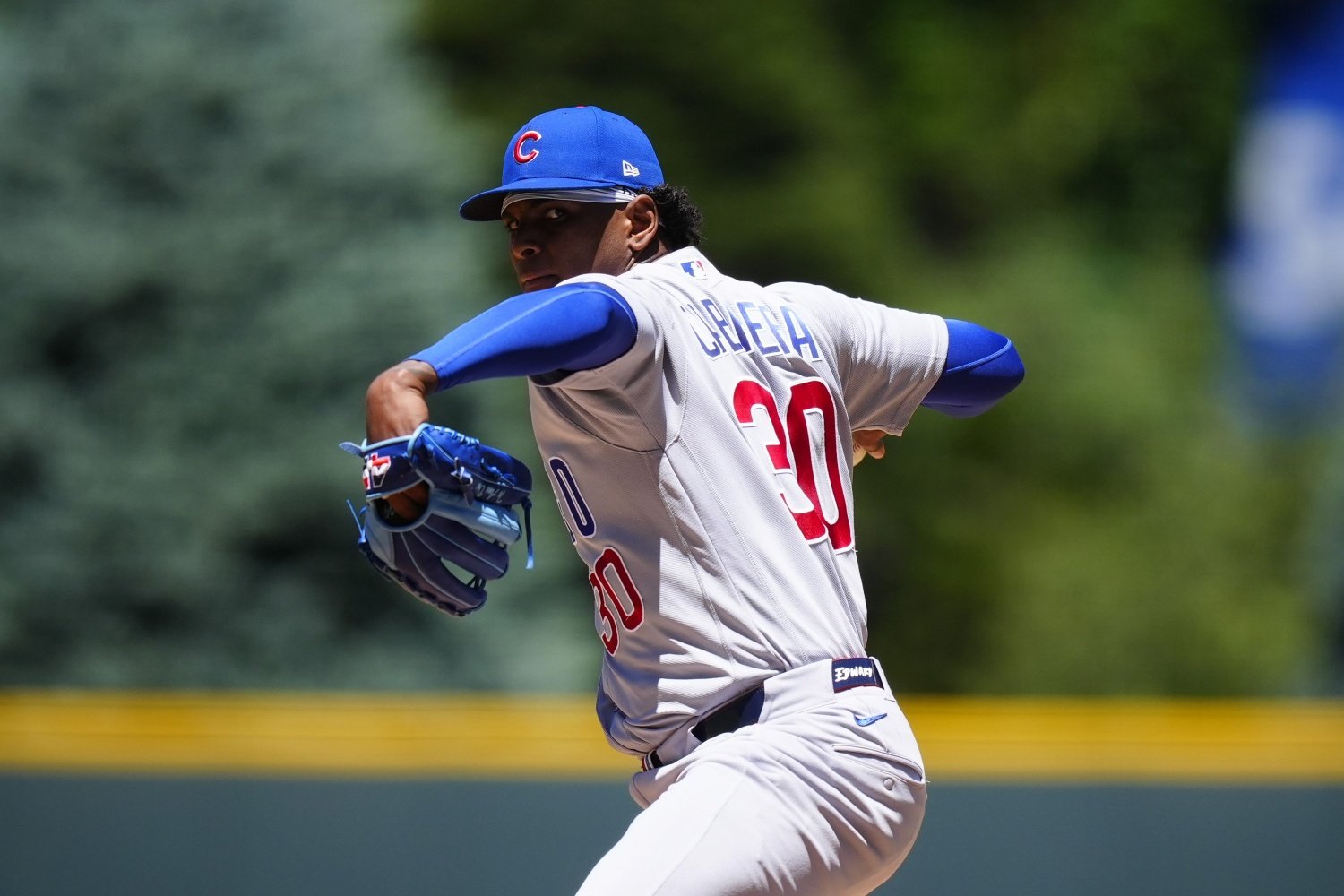
There's no realistic chance that the Cubs non-tender Edward Cabrera, and almost none that they do so with Justin Steele. After trading a top prospect to acquire Cabrera over the winter, they're invested in him, and he still has two seasons of club control left. Steele, a beloved part of the organization for over 12 years, only has one year of club control left, but parting with him before using it would be painful for all parties.
That said, Cabrera's 2026 campaign was a nightmare, and the reclamation project the team will have to accomplish to get value from him next year is daunting. He's set to make $4.8 million or so via arbitration, by MLBTR's reckoning, so it won't be a cheap remodel, either. To make their predicament a bit less painful, the team might try to strike a two-year deal with Cabrera, capping what he can earn in his final year of arbitration eligibility in 2028. There's no way they can commit to him long-term, but they also can't cut the cord on one of the few arms in their organization who has good enough raw stuff to consistently get out big-league hitters. They'll just have to hope they can get him to actually do so next season.
Steele is a different case. Given the setbacks that prevented him from getting back to the big leagues the year after his April 2025 Tommy John surgery, his $6.8-million projected salary is like a baby albatross. His stuff didn't look good at all in his late-season rehab starts for Triple-A Iowa. He's not guaranteed to be a big-league-caliber starter in 2027, let alone one a team can confidently pay almost $7 million.
The path forward for player and team is most likely to involve a multi-year deal. Steele can give up some earning power for 2027 by agreeing to a lower salary (maybe $5 million or so; maybe less), while preserving a high ceiling via incentives. Meanwhile, the Cubs would either guarantee a second year or offer Steele a club option for 2028 at a high salary, with a substantial buyout. If structured correctly, a deal whereby Steele could earn even more than his projected salary next year and then become a free agent could still be favorable to the Cubs. They can't afford to just hand him the same amount he made in 2026, though, knowing there's at least some chance that he becomes dead money again.
This arbitration class isn't especially expensive. That's good news, in a way, for a team with hefty obligations to multiple veteran position players and a desperate need to add pitching via free agency and/or trade. In a much more important sense, though, it's very bad news. The Cubs would be happy to be paying $10-15 million more to this group than they'll end up paying. That would mean that Brown, Steele and/or Palencia stayed healthy; that Busch built upon his breakout 2025; and that Amaya and/or Cabrera took the steps forward the team hoped for from them. Instead, they'll get a good deal on several of these players for 2027, but only because almost all of them underachieved.





Recommended Comments
There are no comments to display.
Create an account or sign in to comment
You need to be a member in order to leave a comment
Create an account
Sign up for a new account in our community. It's easy!
Register a new accountSign in
Already have an account? Sign in here.
Sign In Now