


Cubs Video
By all rights, Emmanuel Ramírez should be out of professional baseball. The game has told him he's not good enough—and even that it was functionally done with him—more times than most players can bear. Signed out of his native Dominican Republic back in 2012, Ramírez was released by the Padres at the end of the 2020 season. He then spent single seasons in the Atlanta and Yankees systems, cut loose again at the end of each. He became a minor-league free agent three times, and the third time, he ended up spending a year (2023) in the Mexican League. The Marlins liked what they saw there (and in last winter's Dominican Winter League) enough to bring him back into affiliated ball, and he finally made it to the big leagues for the first time, at age 29. After 15 ugly appearances with an ERA near 7.00, though, Miami waived him. The Blue Jays claimed him, but never brought him to the big leagues, and then they released him earlier this month.
In nearly 900 professional innings, Ramírez has only gotten one taste of the majors, and the cup of coffee was a bitter one. His ERA isn't even good in the 101 innings he's pitched in parts of four seasons in Triple A. Quite simply, he's on the fringes of the MLB apparatus, over 30 years old and seemingly hanging on desperately to his last shot. He's back down in the Dominican, pitching winter ball again.
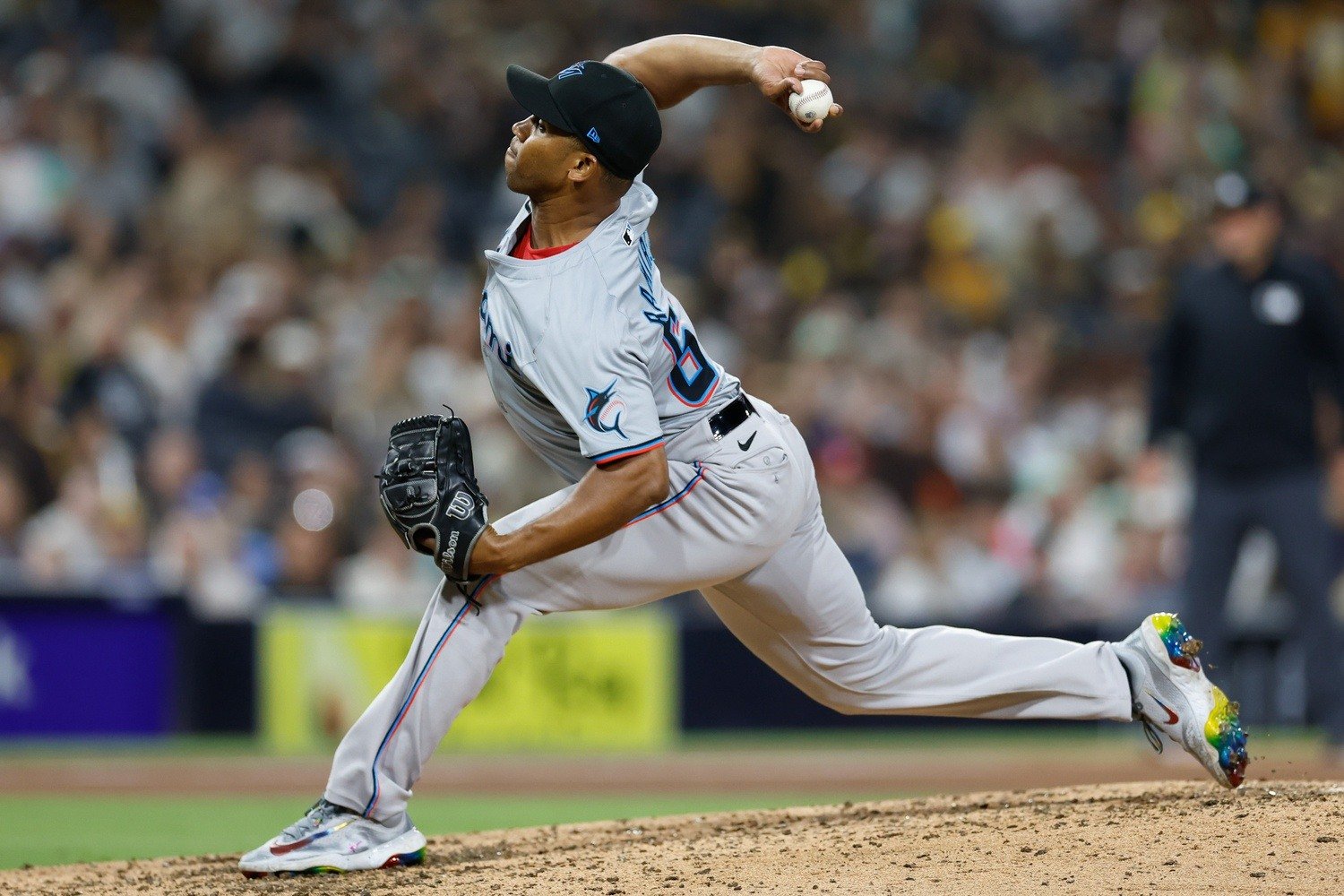
That's not the résumé of a highly appealing free-agent target, but that's just what Ramírez ought to be, on a minor-league deal this winter. The gawky right-hander bears a passing resemblance to Carlos Marmol, but that's not why Marmol's former team should want him. He has redeveloped himself as a pitcher, and his stuff and his funky delivery are perfect fits for the Cubs.
The mix is very simple, two pitches with a vague tertiary option. Ramírez throws a fastball that sits 94, with good cut-ride action. As I hope you've gleaned from me by now, the Cubs adore that fastball shape. It's what Porter Hodge, Justin Steele, and top prospects Cade Horton and Brandon Birdsell (among others) do, and the team targets it wherever they can find it. They also love a good splitter, and Ramírez has just that, too. It's almost the only pitch he throws as a complement to the heater.

That splitter has variable movement, but the velocity gap it achieves from his fastball—10 miles per hour, on average—makes it a potential bat-misser even when it doesn't fall off the table as steeply as one might like. Most of the time, there's plenty of movement differential between the two pitches, too. For that reason, hitters whiffed on over 47% of their swings against the splitter last year, between Triple A and the majors.
Ramírez's breaking ball is coded as a slider but really acts more like a curveball. It's not a very good pitch, and isn't of great use to him. Maybe the Cubs could help him firm it up into a truer slider, or a Death Ball-style curve, but the thrust of Ramírez's arsenal is the rising heater and the diving splitter. When it's right, it's plenty.
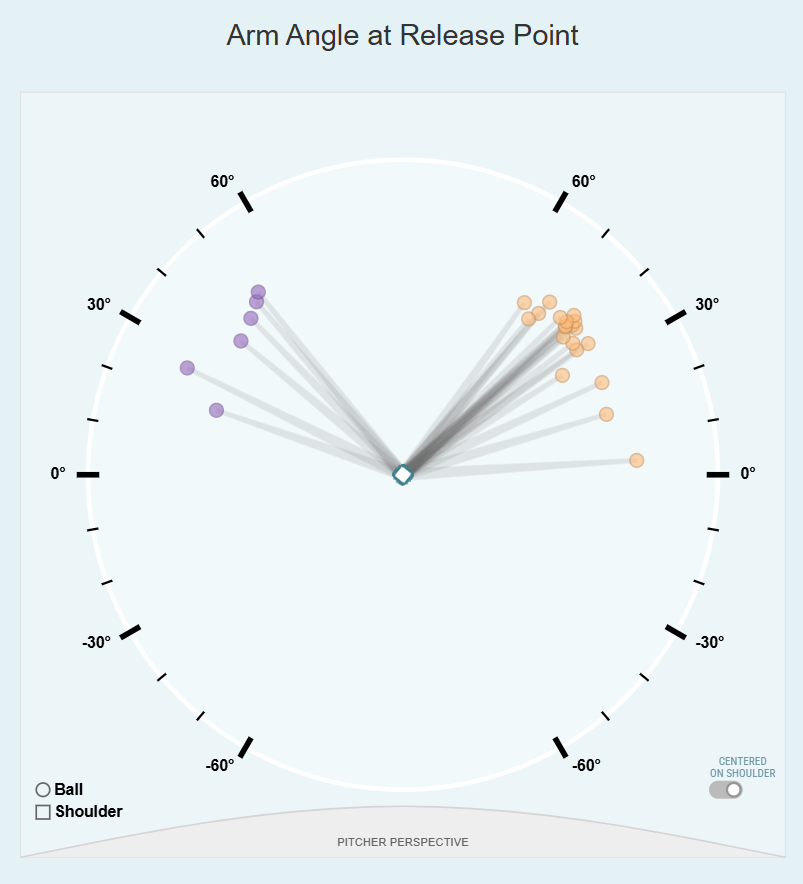
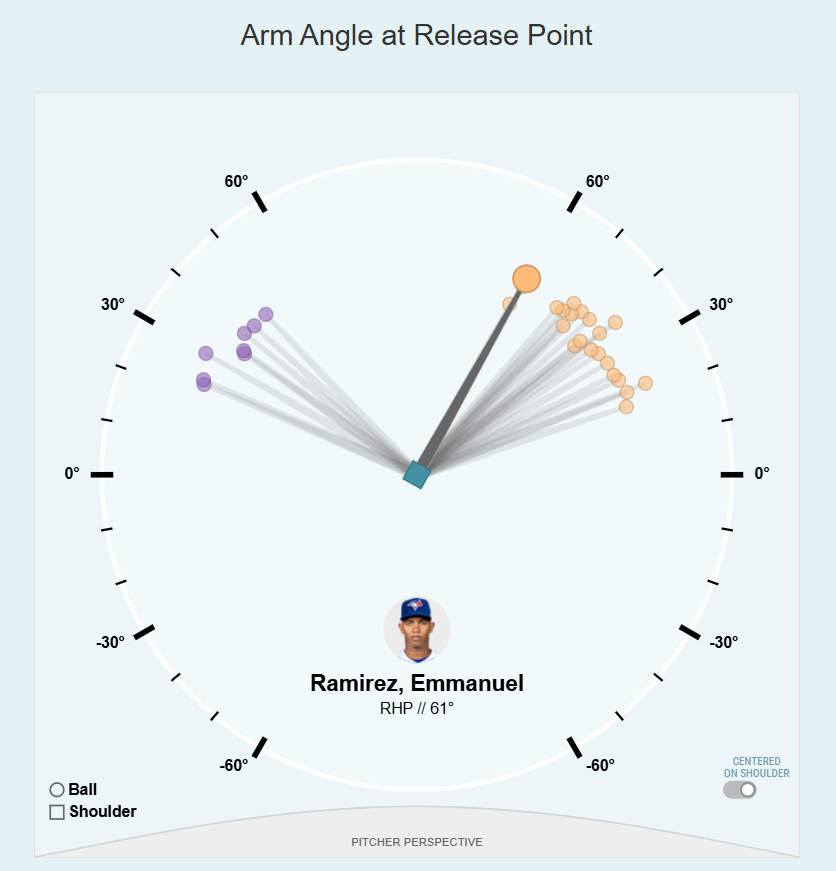
As you can see, Ramírez's splitter works just fine even against righties, thanks to an extreme overhand slot. That delivery is also where the backspin on his fastball comes from. He struck out 32.1% of the right-handed batters he saw last year; he can dominate them even at the highest levels of the game. The splitter pulls a string on them; his fastball is almost untouchable at the top of the zone.
You've already seen his stats, though, and I'm telling you he'll be available on a minor-league deal. Why? Because lefties tend to bash his head in, especially by taking advantage of mistakes on his fastball. The slot Ramírez employs begets misses along a vertical line, rather than a horizontal one. He doesn't miss in when he's aiming away; he misses down when he's aiming up. That's always trouble.
The difference in results against a pitcher's four-seam fastball based on vertical location tends to be fairly stark. For Ramírez, it's downright extreme. He just can't work effectively at the bottom edge of the zone with that pitch, so every miss has a chance of becoming very costly.

Why should the Cube still be interested? Beyond the nice fit of the traits they seek (that fastball shape, for one) and the things they coach well (a sharper breaking ball from just this kind of pitch mix, for better results and platoon matchup insulation), there's one more thing: the Cubs don't have anyone else who throws like Ramírez. A great bullpen gives opposing teams an endlessly changing set of varied looks. The Cubs lean heavily toward lower arm slots; Ramírez would bring their only true overhand arm to the mix.
By no means should Ramírez prevent the Cubs from landing anyone else this winter. He doesn't even need to take up a spot on their 40-man roster, initially. He has impressive enough stuff and is a good enough fit for the organization, though, to make him worthy of a close look as the team collects insurance policies to help make it through the long season ahead.






Recommended Comments
There are no comments to display.
Create an account or sign in to comment
You need to be a member in order to leave a comment
Create an account
Sign up for a new account in our community. It's easy!
Register a new accountSign in
Already have an account? Sign in here.
Sign In Now