


Cubs Video
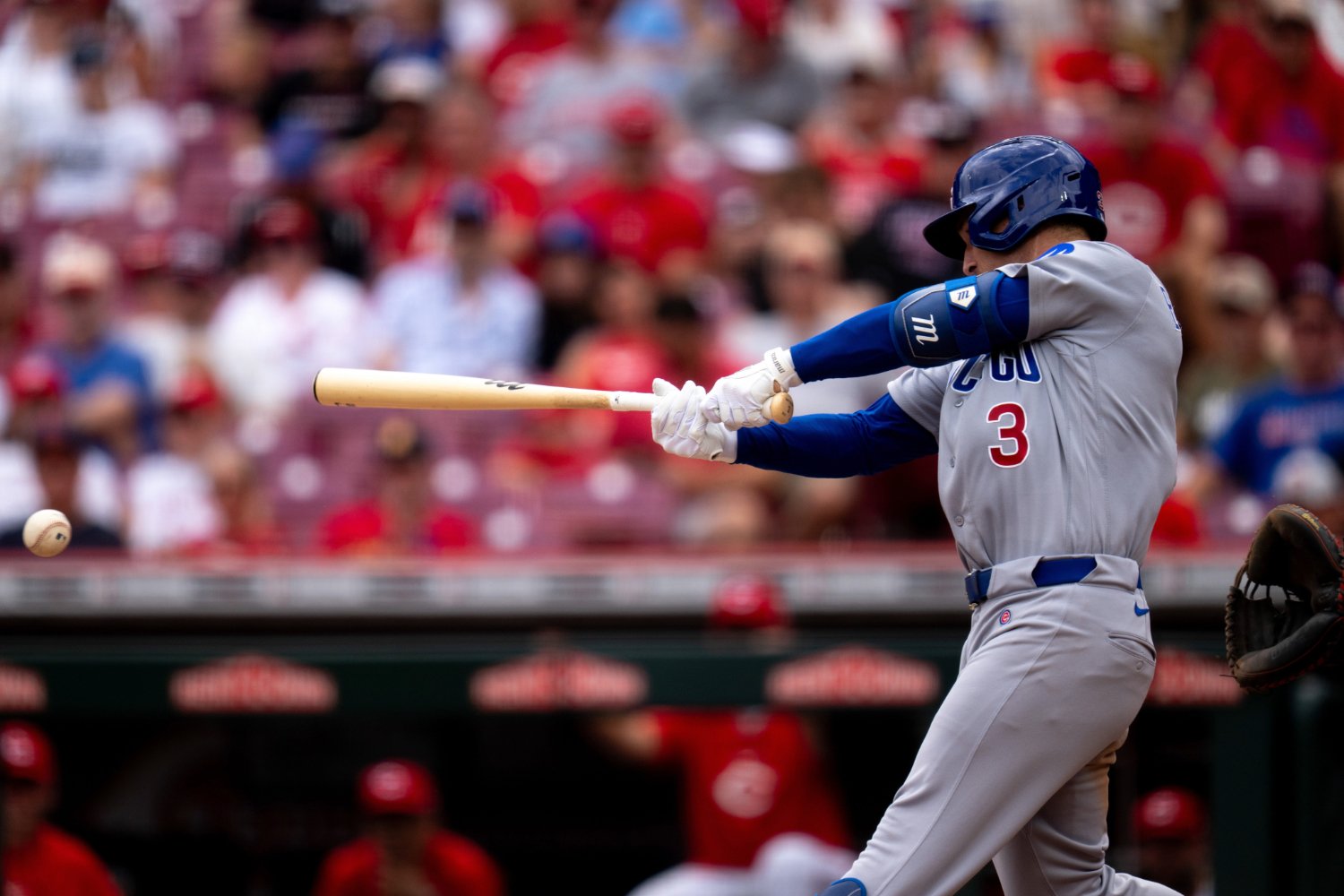
Shortly after Gold Glove shortstop Dansby Swanson had a 10-game stretch for the history books, his left-side counterpart in third baseman Alex Bregman showed signs of heating up heading into the All-Star Break. The veteran corner infielder is still on track to have a down season by his standards, but let’s dive into what metrics could imply that he’s capable of salvaging a promising first year in the Friendly Confines.
Alex Bregman's First-Half Struggles and Second-Half Hopes
For starters, Bregman is a 32-year-old veteran who is on his third team in as many seasons. After being a pivotal part of the Houston Astros for nine years, he spent a season with the Boston Red Sox before joining the Cubs for the first time in 2026.
Heading into the second half, he has nine home runs, 41 runs batted in and is slashing .241/.336/.359 with a .696 OPS, a mark that would be the lowest of his career to date. To make matters worse, Bregman is in the first year of a five-year, $175 million contract with Chicago. It’s a deal that pays out $35 million per year on average, and he simply hasn’t provided the offensive firepower the Cubs were expecting for most of the season so far.
A Rough June
Bregman experienced his fair share of peaks and valleys to start the year, but he struggled mightily in the month of June. The veteran infielder slashed .200/.348/.300 with two home runs and 12 runs batted in over 90 at-bats. He got on base a decent amount, but the slugging percentage took a huge hit and has stayed in the .300s for the majority of this season.
Advanced Power Numbers
Bregman’s power numbers have been the most glaring issue for him so far, and it isn’t just because he’s yet to hit his 10th home run. Most of the power-hitting analytics imply that he simply isn’t a “thumper” anymore. Let’s start with his bat speed; Bregman’s stick gets through the zone at just 69.8 miles per hour, putting him in the 17th percentile among big league hitters (per Baseball Savant).
Other analytics follow as expected, with Bregman generating a below-average exit velocity of 87.9 miles per hour, placing him in the 27th percentile. His barrel percentage (4.2, 17th percentile) and hard-hit percentage (35.5, 28th percentile) all lead to a common denominator: Bregman is not the 25-homer threat he once was in Houston.
Mature Approach
That doesn't have to be a death knell for his value, though. He is still flexing one of the most mature approaches in all of baseball. Players who can walk almost as often as they strike out will have a future in this league, and much like last year’s huge acquisition in Kyle Tucker, Bregman is doing just that.
His strikeout rate of just 15.3 percent is one of the best in the game, slotting him in the 80th percentile. His walk rate, meanwhile, is well above average at 11.4 percent, putting him in the 76th percentile. This has been a trend for Bregman’s whole career, as he’s walked 676 times and struck out on 782 occasions in 5,758 plate appearances.
A Subtle, Key Adjustment
While the law of large numbers (i.e., sample size) will kick in, and Bregman should get closer to his career averages in the second half, he may be better suited trying to rope doubles in the gap instead of hitting for true home run power.
Bregman seems to be making that adjustment, as his average launch angle has gone down in back-to-back years and is a full 1.1 degrees shallower than his 18.2 degree mark in 2024. With his average exit velocity reading the second lowest number in his career, more line drives may could suit a slugger in the back half of his career. They'd also better suit Wrigley Field's generous alleyways, which are far more hitter-friendly than the dead-pull zone in left field Bregman has targeted since his days with the Astros.





Recommended Comments
Create an account or sign in to comment
You need to be a member in order to leave a comment
Create an account
Sign up for a new account in our community. It's easy!
Register a new accountSign in
Already have an account? Sign in here.
Sign In Now