


Cory Sparks
-
Posts
170 -
Joined
-
Last visited
Cory Sparks's Achievements




-
 Miguel Useche has a remarkable story. The 25-year-old backstop started last year in the Frontier League. Now, 13 homers, 51 RBI, and an 11.0% walk rate later, Useche not only helped the South Bend Cubs (High-A) to a playoff berth, he earned a Double-A promotion and hit .300 with the Knoxville Smokies. View full video
 -
Miguel Useche has a remarkable story. The 25-year-old backstop started last year in the Frontier League. Now, 13 homers, 51 RBI, and an 11.0% walk rate later, Useche not only helped the South Bend Cubs (High-A) to a playoff berth, he earned a Double-A promotion and hit .300 with the Knoxville Smokies.
-
Some prospects have flashy profiles, went to a college powerhouse like LSU, and have extensive reports written about them. Miguel Useche doesn’t have that kind of hype. He won't be topping any organizational prospect lists or making the global top 100 rankings. He's a great story, though, and he might yet turn out to be a good player, even in the big leagues. Let’s dive into one of the Chicago Cubs’ most underrated prospects, and why he may not be under the radar much longer. Miguel Useche’s Background Useche, 25, is a minor-league catcher in the Cubs system. He was born in Venezuela, but his family moved to Florida when he was a child; he went to high school in the Miami area. He wasn't a top prospect there, though, and initially signed on to play ball at College of Central Florida, before transferring to LSU-New Orleans. By the time he wrapped up his NCAA time in 2024, Useche had come into his own. At various points, he was named First Team All-Southland Conference, Second Team ABCA All-Region and Second Team All-Louisiana. Useche also finished his college career tied for the program record in doubles, with 54. He also spent time getting reps (and getting better) in wood-bat summer leagues, between his collegiate campaigns. He spent 2021 (Traverse City Pit Spitters) and 2023 (Kenosha Kingfish) in the Northwoods League. Useche hit .213 in 2023 with Kenosha, but he managed a .397 on-base percentage and walked (13) more than he struck out (6) in 22 contests. He also spent 2022 (Waynesboro Generals) in the Valley League. This meant that in those years, Useche was playing in upwards of 75 games, even though his college seasons were quite short. Undrafted? Doesn’t Matter After a successful run in both summer ball and college ball, Useche went undrafted and looked to independent leagues to extend his playing career. In 2025, he spent 14 games in the Frontier League (Tri-City Valley Cats), slashing .333/.412/.444, and made himself impossible to ignore. In the market to add some depth to their catching corps, the Cubs signed Useche to a minor-league contract and assigned him to South Bend to wrap up the 2025 season. That’s where he’d start his 2026 campaign, as the gritty sandlot star found a power surge and helped the Cubs’ High-A affiliate to a first half title and playoff appearance. Useche slashed .260/.369/.447 with seven home runs in 42 games before earning a promotion; his career-high in any college season was six long balls. He didn’t stop there, throttling six more homers (to go with a .300 batting average) with the Double-A Knoxville Smokies, impressing in 47 contests to wrap up a remarkable 2026 campaign. Overall, the surging prospect finished the year with 13 home runs (he had 14 in his college career), 53 RBIs, 31 extra-base hits and an impressive 11% walk rate. According to Prospect Savant, he also ranked in the top quartile of minor-league batters in strikeout rate (19.8%), chase rate (23.1%), swinging strike percentage (8.9%) and wRC+ (131). He's very aware of the strike zone, which has augmented his modest power. On to the Arizona Fall League Being the hard worker that he is, the Cubs’ up-and-coming catcher isn’t done playing baseball this year. He's representing the team as a member of the Salt River Rafters in the Arizona Fall League. In just four plate appearances, Useche already has a pair of walks, a pair of runs scored and an RBI. From Independent Baseball to an impact player at the Double-A level, this catcher is an example of resilience to the highest degree. He's still not a big-time prospect, but once you're a competent catcher in Double A, there's at least a chance you'll get a cup of big-league coffee someday—and there's plenty of room to carve out a career as a minor-league catcher and/or coach. View full article
-
Cubs Farmhand Miguel Useche is Surging, Against All Odds
Cory Sparks posted an article in North Side Baseball
 Some prospects have flashy profiles, went to a college powerhouse like LSU, and have extensive reports written about them. Miguel Useche doesn’t have that kind of hype. He won't be topping any organizational prospect lists or making the global top 100 rankings. He's a great story, though, and he might yet turn out to be a good player, even in the big leagues. Let’s dive into one of the Chicago Cubs’ most underrated prospects, and why he may not be under the radar much longer. Miguel Useche’s Background Useche, 25, is a minor-league catcher in the Cubs system. He was born in Venezuela, but his family moved to Florida when he was a child; he went to high school in the Miami area. He wasn't a top prospect there, though, and initially signed on to play ball at College of Central Florida, before transferring to LSU-New Orleans. By the time he wrapped up his NCAA time in 2024, Useche had come into his own. At various points, he was named First Team All-Southland Conference, Second Team ABCA All-Region and Second Team All-Louisiana. Useche also finished his college career tied for the program record in doubles, with 54. He also spent time getting reps (and getting better) in wood-bat summer leagues, between his collegiate campaigns. He spent 2021 (Traverse City Pit Spitters) and 2023 (Kenosha Kingfish) in the Northwoods League. Useche hit .213 in 2023 with Kenosha, but he managed a .397 on-base percentage and walked (13) more than he struck out (6) in 22 contests. He also spent 2022 (Waynesboro Generals) in the Valley League. This meant that in those years, Useche was playing in upwards of 75 games, even though his college seasons were quite short. Undrafted? Doesn’t Matter After a successful run in both summer ball and college ball, Useche went undrafted and looked to independent leagues to extend his playing career. In 2025, he spent 14 games in the Frontier League (Tri-City Valley Cats), slashing .333/.412/.444, and made himself impossible to ignore. In the market to add some depth to their catching corps, the Cubs signed Useche to a minor-league contract and assigned him to South Bend to wrap up the 2025 season. That’s where he’d start his 2026 campaign, as the gritty sandlot star found a power surge and helped the Cubs’ High-A affiliate to a first half title and playoff appearance. Useche slashed .260/.369/.447 with seven home runs in 42 games before earning a promotion; his career-high in any college season was six long balls. He didn’t stop there, throttling six more homers (to go with a .300 batting average) with the Double-A Knoxville Smokies, impressing in 47 contests to wrap up a remarkable 2026 campaign. Overall, the surging prospect finished the year with 13 home runs (he had 14 in his college career), 53 RBIs, 31 extra-base hits and an impressive 11% walk rate. According to Prospect Savant, he also ranked in the top quartile of minor-league batters in strikeout rate (19.8%), chase rate (23.1%), swinging strike percentage (8.9%) and wRC+ (131). He's very aware of the strike zone, which has augmented his modest power. On to the Arizona Fall League Being the hard worker that he is, the Cubs’ up-and-coming catcher isn’t done playing baseball this year. He's representing the team as a member of the Salt River Rafters in the Arizona Fall League. In just four plate appearances, Useche already has a pair of walks, a pair of runs scored and an RBI. From Independent Baseball to an impact player at the Double-A level, this catcher is an example of resilience to the highest degree. He's still not a big-time prospect, but once you're a competent catcher in Double A, there's at least a chance you'll get a cup of big-league coffee someday—and there's plenty of room to carve out a career as a minor-league catcher and/or coach.
 -
Alex Bregman has been through the wringer in 2026. After the 32-year-old put pen to paper on a 5-year, $175 million deal, he suffered a slow start that had many questioning if we were witnessing the twilight of the third baseman's career. Fast forward to now, and the two-time World Series champ has his highest home run total (28) since 2019, quite the display of toughness, and a pedigree that matters most in October.
-
Alex Bregman has been through the wringer in 2026. After the 32-year-old put pen to paper on a 5-year, $175 million deal, he suffered a slow start that had many questioning if we were witnessing the twilight of the third baseman's career. Fast forward to now, and the two-time World Series champ has his highest home run total (28) since 2019, quite the display of toughness, and a pedigree that matters most in October. View full video
-
Image courtesy of © Patrick Gorski-Imagn Images The Chicago Cubs are primed for another deep postseason run in 2026. They’re checking off plenty of boxes; among them are a superstar (Pete Crow-Armstrong), improved rotation (adding Clay Holmes, Kevin Gausman), an experienced manager in Craig Counsell, and a shutdown reliever. Yes, Jacob Webb has become a revelation out of the bullpen this season, emerging as the team's best high-leverage arm. Let's break down what makes him so remarkable. Jacob Webb’s Updated Cubs Scouting Report Webb is a 33-year-old right-handed reliever. The Atlanta Braves originally signed the veteran hurler in 2014, selecting him in the 18th round of the MLB Draft. The orthodox pitcher is a 6-foot-2, 210 pound pitcher who now has seven seasons under his belt. Webb is 22-16 with a 2.86 earned run average, striking out 307 hitters over 308 innings with a 1.20 WHIP. The Tabor College alum has played for the Braves, Baltimore Orioles, Los Angeles Angels, Texas Rangers and now the Cubs, and this is arguably his best season to date. Providing Stability In 2026 Just like any team, the Cubs have been blasted with injuries. Key arms like Daniel Palencia, Hoby Milner, Phil Maton, and just about everyone in the starting rotation have gone down at different points of the 2026 campaign. That created an insatiable demand for pitchers capable of handling pressure moments. Well, Webb has done what he can to quench that thirst. Over 55 appearances this season (five short of a career-high 60 set in 2024), he has tallied a 5-2 record and 2.29 ERA with 63 strikeouts over 55 innings of work. He's also locked down nine saves this season after entering the year with seven over his whole career. Having that level of stability has been key, and his production has spoken for itself. Elite Swing-And-Miss Stuff Webb has a remarkable swing-and-miss profile. The 33-year-old has a 33.9 percent whiff rate (95th percentile), showcasing an elite ability to miss barrels with a variety of pitches. As a result, his 27.6 percent strikeout rate (83rd percentile) and 35.4 percent chase rate (90th percentile) are both well above the league average, too. Webb is a unique case study, as he generates these metrics with below-average fastball velocity (94.2 miles per hour, 45th percentile). His 33-degree arm angle allows the ball to move horizontally (arm-side), gliding through and out of the zone to fill out his swing-and-miss profile. Varied Arsenal Another reason Webb has had so much success this year is that despite being a reliever, he operates with a five-pitch arsenal. He uses the four-seam fastball more than any other option (44 percent of the time), with the veteran right-handed pitcher overcoming a .274 expected batting average to allow just five extra-base hits across exactly 100 plate appearances. This is further shown in his ability to meander around quality contact, allowing a 6.3 percent barrel percentage (69th percentile) that’s far better than the league average. He uses his changeup nearly just as much, going with his secondary option 38 percent of the time. The pitch holds a similar shape to his fastball, yet it leaves his hand at a significant nine miles per hour slower (85.6 mph) . The slider (.188 BAA) and curveball (.167 BAA) are his two best pitches, What’s Webb’s Role? With Palencia on the 60-day IL and unlikely to be thrust into high-leverage action right away, there’s a great chance that Webb will be the closer entering the 2026 postseason. His combination of experience, poise, swing-and-miss breaking ball options, and overall production this year surely makes him qualified for those situations. View full article
-
Appreciating Jacob Webb's Invaluable Emergence As Cubs' Closer
Cory Sparks posted an article in Cubs
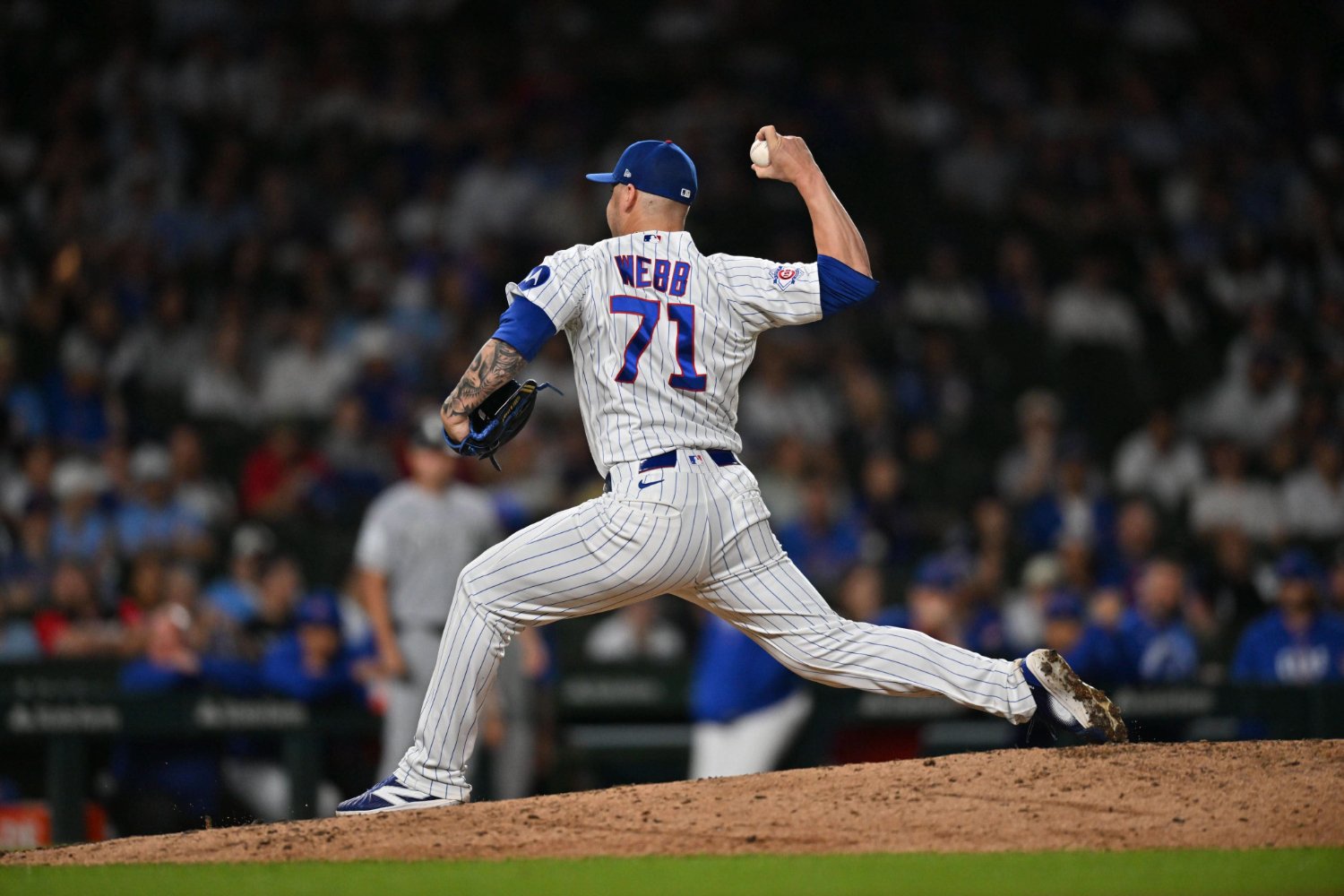 The Chicago Cubs are primed for another deep postseason run in 2026. They’re checking off plenty of boxes; among them are a superstar (Pete Crow-Armstrong), improved rotation (adding Clay Holmes, Kevin Gausman), an experienced manager in Craig Counsell, and a shutdown reliever. Yes, Jacob Webb has become a revelation out of the bullpen this season, emerging as the team's best high-leverage arm. Let's break down what makes him so remarkable. Jacob Webb’s Updated Cubs Scouting Report Webb is a 33-year-old right-handed reliever. The Atlanta Braves originally signed the veteran hurler in 2014, selecting him in the 18th round of the MLB Draft. The orthodox pitcher is a 6-foot-2, 210 pound pitcher who now has seven seasons under his belt. Webb is 22-16 with a 2.86 earned run average, striking out 307 hitters over 308 innings with a 1.20 WHIP. The Tabor College alum has played for the Braves, Baltimore Orioles, Los Angeles Angels, Texas Rangers and now the Cubs, and this is arguably his best season to date. Providing Stability In 2026 Just like any team, the Cubs have been blasted with injuries. Key arms like Daniel Palencia, Hoby Milner, Phil Maton, and just about everyone in the starting rotation have gone down at different points of the 2026 campaign. That created an insatiable demand for pitchers capable of handling pressure moments. Well, Webb has done what he can to quench that thirst. Over 55 appearances this season (five short of a career-high 60 set in 2024), he has tallied a 5-2 record and 2.29 ERA with 63 strikeouts over 55 innings of work. He's also locked down nine saves this season after entering the year with seven over his whole career. Having that level of stability has been key, and his production has spoken for itself. Elite Swing-And-Miss Stuff Webb has a remarkable swing-and-miss profile. The 33-year-old has a 33.9 percent whiff rate (95th percentile), showcasing an elite ability to miss barrels with a variety of pitches. As a result, his 27.6 percent strikeout rate (83rd percentile) and 35.4 percent chase rate (90th percentile) are both well above the league average, too. Webb is a unique case study, as he generates these metrics with below-average fastball velocity (94.2 miles per hour, 45th percentile). His 33-degree arm angle allows the ball to move horizontally (arm-side), gliding through and out of the zone to fill out his swing-and-miss profile. Varied Arsenal Another reason Webb has had so much success this year is that despite being a reliever, he operates with a five-pitch arsenal. He uses the four-seam fastball more than any other option (44 percent of the time), with the veteran right-handed pitcher overcoming a .274 expected batting average to allow just five extra-base hits across exactly 100 plate appearances. This is further shown in his ability to meander around quality contact, allowing a 6.3 percent barrel percentage (69th percentile) that’s far better than the league average. He uses his changeup nearly just as much, going with his secondary option 38 percent of the time. The pitch holds a similar shape to his fastball, yet it leaves his hand at a significant nine miles per hour slower (85.6 mph) . The slider (.188 BAA) and curveball (.167 BAA) are his two best pitches, What’s Webb’s Role? With Palencia on the 60-day IL and unlikely to be thrust into high-leverage action right away, there’s a great chance that Webb will be the closer entering the 2026 postseason. His combination of experience, poise, swing-and-miss breaking ball options, and overall production this year surely makes him qualified for those situations.
 -
Ethan Conrad is the Cubs' 2025 first-round draft pick, and he's 30 games into his professional baseball journey. In this video, we'll break down Conrad's approach, his remarkable hand-eye coordination, and how his trajectory can vastly improve with one key adjustment. View full video
-
Top Prospect Ethan Conrad Looks Legit
Cory Sparks posted a video in Chicago Cubs Minor League Videos
Ethan Conrad is the Cubs' 2025 first-round draft pick, and he's 30 games into his professional baseball journey. In this video, we'll break down Conrad's approach, his remarkable hand-eye coordination, and how his trajectory can vastly improve with one key adjustment. -
Image courtesy of Baseball America Ethan Conrad is the Chicago Cubs’ first-round pick from the 2025 MLB Draft, and we finally have a decent sample size of professional baseball to work with. Now that he’s healthy and back on the diamond, let’s dive into the early impressions of Conrad, who joined the team just over a year ago. Ethan Conrad's Updated Cubs Scouting Report Conrad is Chicago’s No. 4 prospect, per our updated prospect rankings. The 22-year-old Wake Forest alum was the 17th overall pick in last year’s draft, and he brings a well-rounded skillset to the table. Standing at 6-foot-2 and weighing 220 pounds, his hit and run tools hold the highest grades at 55 apiece. While he has a larger frame, the left-handed hitting outfielder can move, capturing headlines for leading NCAA Division I with 13 triples in his days with Marist. Injuries & Cubs' First-Round History It’s been a little over a year since the former Demon Deacon joined the organization, but a few injuries kept him off the field until he made his debut in June. The outfield prospect had both a torn left labrum and a shoulder dislocation that sidelined him for the majority of his final collegiate season, and a lower-back injury pushed his debut time back as well. The Cubs haven’t had the best luck with first rounders over the past few years. Jordan Wicks (2021) has floated back and forth between the big leagues and Triple-A Iowa, as the southpaw now possesses a 5.72 career ERA in the majors. As for their 2022 first round pick, Cade Horton made a case for National League Rookie of the Year last season. However, the Oklahoma alum is down with a UCL injury that took him out for the year. Matt Shaw was the team’s first round selection in 2023, and he has shown promise on both sides of the baseball through his first two MLB seasons. Cam Smith (2024) is now with the Astros, as the Cubs dealt him in the Kyle Tucker trade last season. This is all to say that there’s pressure on the North Siders to hit with a first round selection. Progress Up To Myrtle Beach Conrad is 30 games into his professional baseball career, and he’s slashing .257/.328/.451 (.779 OPS) over between rookie ball and Low-A Myrtle Beach. The outfielder has five homers, 22 runs batted and 11 extra-base hits, showing the potential to be a potent power bat. He's only managed to steal one base thus far, but he does also have a triple on the season. As he fills out his frame, it’ll be interesting to keep an eye on whether he prioritizes power, speed or can have the best of both worlds. Attacking Early It’s important not to gather too many conclusions from a 30-game sample size, but here are some early takeaways from Conrad’s first real look at Minor League Baseball. For one, he’s jumping on pitches in the zone. Not only does Conrad swing at 75.1% of pitches thrown in the zone (89th percentile), but he’s only whiffing 16.2 percent of the time (92nd percentile). MLB Pipeline describes him as an aggressive hitter who can make up for it with remarkable hand-eye coordination, and so far that has translated to the Low-A level. The Cubs’ rising star also doesn’t strike out a ton, just 20.8 percent of the time. The more he can put the ball in play, the easier it’ll be to justify an attack-oriented approach. Being Picky, Finding Speed Conrad has a long way to go, but seeing him be a little more selective would likely give him more pitches that he can do damage with. The first-year professional walks just 8.9 percent of the time (27th percentile). The more hitters counts he can get into, the greater likelihood he’ll either earn a free pass or see a more appetizing option over the plate. View full article
-
First Impressions From Ethan Conrad's First 30 Pro Games With Cubs
Cory Sparks posted an article in Cubs
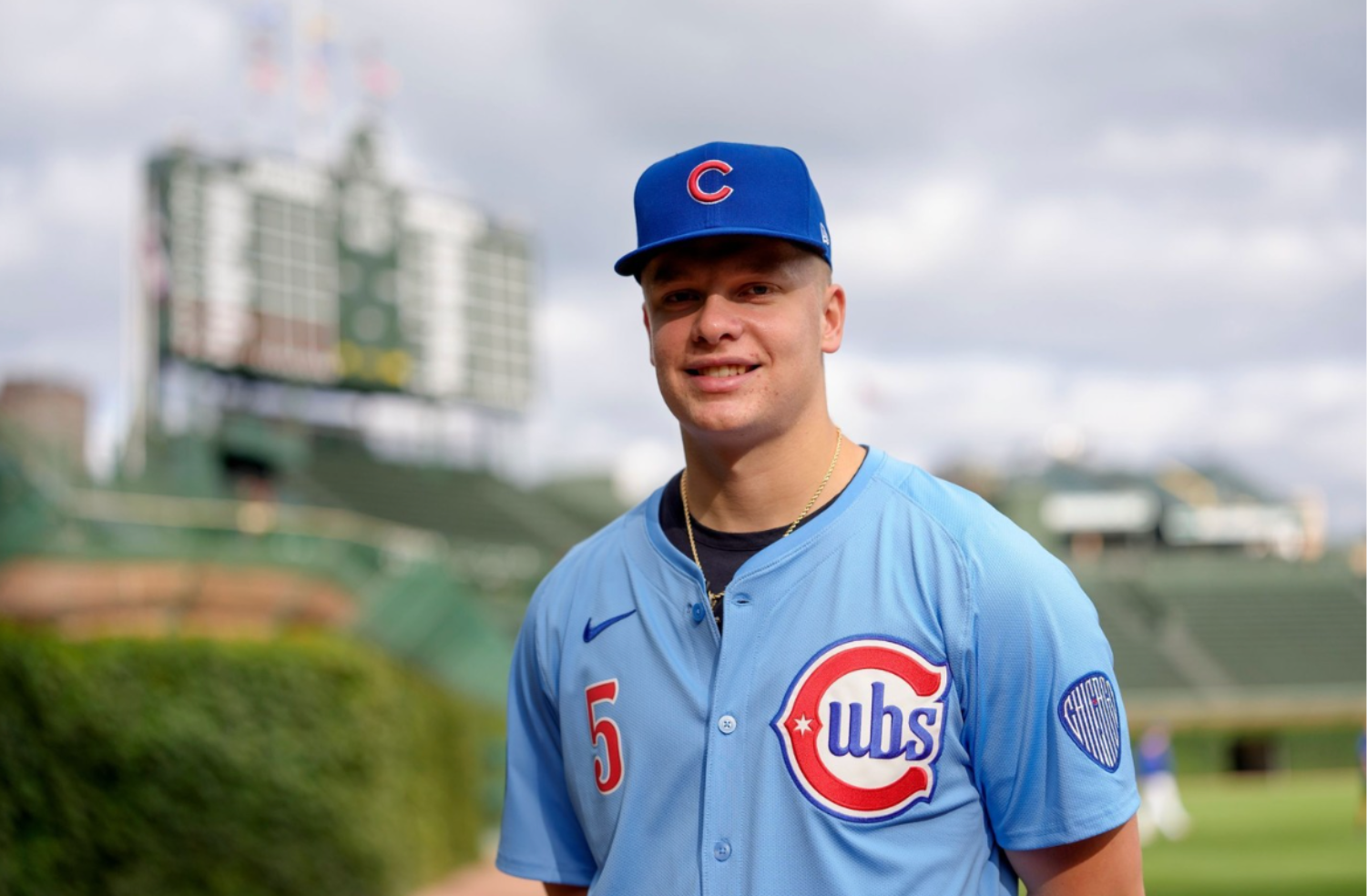 Ethan Conrad is the Chicago Cubs’ first-round pick from the 2025 MLB Draft, and we finally have a decent sample size of professional baseball to work with. Now that he’s healthy and back on the diamond, let’s dive into the early impressions of Conrad, who joined the team just over a year ago. Ethan Conrad's Updated Cubs Scouting Report Conrad is Chicago’s No. 4 prospect, per our updated prospect rankings. The 22-year-old Wake Forest alum was the 17th overall pick in last year’s draft, and he brings a well-rounded skillset to the table. Standing at 6-foot-2 and weighing 220 pounds, his hit and run tools hold the highest grades at 55 apiece. While he has a larger frame, the left-handed hitting outfielder can move, capturing headlines for leading NCAA Division I with 13 triples in his days with Marist. Injuries & Cubs' First-Round History It’s been a little over a year since the former Demon Deacon joined the organization, but a few injuries kept him off the field until he made his debut in June. The outfield prospect had both a torn left labrum and a shoulder dislocation that sidelined him for the majority of his final collegiate season, and a lower-back injury pushed his debut time back as well. The Cubs haven’t had the best luck with first rounders over the past few years. Jordan Wicks (2021) has floated back and forth between the big leagues and Triple-A Iowa, as the southpaw now possesses a 5.72 career ERA in the majors. As for their 2022 first round pick, Cade Horton made a case for National League Rookie of the Year last season. However, the Oklahoma alum is down with a UCL injury that took him out for the year. Matt Shaw was the team’s first round selection in 2023, and he has shown promise on both sides of the baseball through his first two MLB seasons. Cam Smith (2024) is now with the Astros, as the Cubs dealt him in the Kyle Tucker trade last season. This is all to say that there’s pressure on the North Siders to hit with a first round selection. Progress Up To Myrtle Beach Conrad is 30 games into his professional baseball career, and he’s slashing .257/.328/.451 (.779 OPS) over between rookie ball and Low-A Myrtle Beach. The outfielder has five homers, 22 runs batted and 11 extra-base hits, showing the potential to be a potent power bat. He's only managed to steal one base thus far, but he does also have a triple on the season. As he fills out his frame, it’ll be interesting to keep an eye on whether he prioritizes power, speed or can have the best of both worlds. Attacking Early It’s important not to gather too many conclusions from a 30-game sample size, but here are some early takeaways from Conrad’s first real look at Minor League Baseball. For one, he’s jumping on pitches in the zone. Not only does Conrad swing at 75.1% of pitches thrown in the zone (89th percentile), but he’s only whiffing 16.2 percent of the time (92nd percentile). MLB Pipeline describes him as an aggressive hitter who can make up for it with remarkable hand-eye coordination, and so far that has translated to the Low-A level. The Cubs’ rising star also doesn’t strike out a ton, just 20.8 percent of the time. The more he can put the ball in play, the easier it’ll be to justify an attack-oriented approach. Being Picky, Finding Speed Conrad has a long way to go, but seeing him be a little more selective would likely give him more pitches that he can do damage with. The first-year professional walks just 8.9 percent of the time (27th percentile). The more hitters counts he can get into, the greater likelihood he’ll either earn a free pass or see a more appetizing option over the plate.
 -
Image courtesy of © David Banks-Imagn Images The Chicago Cubs just went to battle with the Los Angeles Dodgers this week, and after being one of the more aggressive teams at this year’s trade deadline, their behavior begs the question: how close is Chicago to competing with the Dodgers to be the best team in the National League? Let’s dive into the Cubs’ post-trade-deadline makeup. Aggressive At The Deadline As things stand, the North Siders are well above .500 and have a stranglehold on the top spot in the National League Wild Card. The Cubs will likely have to face either the current division leaders in the Milwaukee Brewers or the Dodgers at some point in the playoff bracket, but the back-to-back World Series champions are the ultimate threat. Chicago went into the deadline swinging, acquiring starting pitchers Clay Holmes and Kevin Gausman as well as a nasty reliever in Ryan Zeferjahn. They also got Tyrone Taylor, a remarkable defender and speedy baserunner, for some extra support in the outfield. Star Power Baseball is a team game, and there’s no refuting that. Mike Trout and Shohei Ohtani were on the same team for years, and yet the Los Angeles Angels never even sniffed the World Series (let alone the playoffs). With that being said, having a superstar who other teams have to plan around helps. Ohtani took over the NLCS against the Brewers last year, helping elevate the options around him. Pete Crow-Armstrong is a candidate for the National League MVP award this year. He just had a 3-for-5 performance here he hit two home runs and drove four runs in to clinch a sweep against Los Angeles. He’s also above 7 WAR with two months of baseball to go before the playoffs. The Cubs’ center fielder is four homers shy of 30 on the season, and he's already reached 30 steals for the second consecutive year. This is somebody who can impact the game in all facets, as he’s in the top 10 percentile for fielding range (100th), arm value (97th percentile) and arm strength (90th percentile) while also posting impressive marks with his bat speed (81st percentile), hard-hit rate (88th percentile) and a much-improved walk percentage (84th percentile). An Improved Rotation The Cubs operated with some urgency at the deadline, and Gausman and Holmes are key additions for a couple of reasons. Gausman has a winning pedigree, as the veteran right-handed pitcher was on a Blue Jays squad that was mere outs from a title last year. The 35-year-old uses a three-pitch mix to generate an elite 34.4 percent chase rate (87th percentile), and he’s giving up a free pass just 6.7 percent of the time. Holmes, on the other hand, is one of the best groundball pitchers in baseball. The former Mets’ starter has earned a 55.3 percent ground ball rate, good enough for the 95th percentile. Put the best fielding team in the big leagues (.989 fielding percentage, T-1st) behind him, and the reliever-turned-starter should feel right at home. Playoff Experience While the Cubs didn’t win the ultimate prize in 2025, they did push the top-seeded Brewers to Game 5 in the NLDS. Every player on last year’s roster now has experience winning a series (the Wild Card Round over the Padres) and playing in a winner-take-all, emotional battle with the team’s bitter rivals. That counts for something as the team gets set to embark on another October journey. Add to that knowledge the fact that two of the team’s starting position players in Dansby Swanson and Alex Bregman have won a World Series title before, and you have a group that could be primed for a deep run. View full article
-
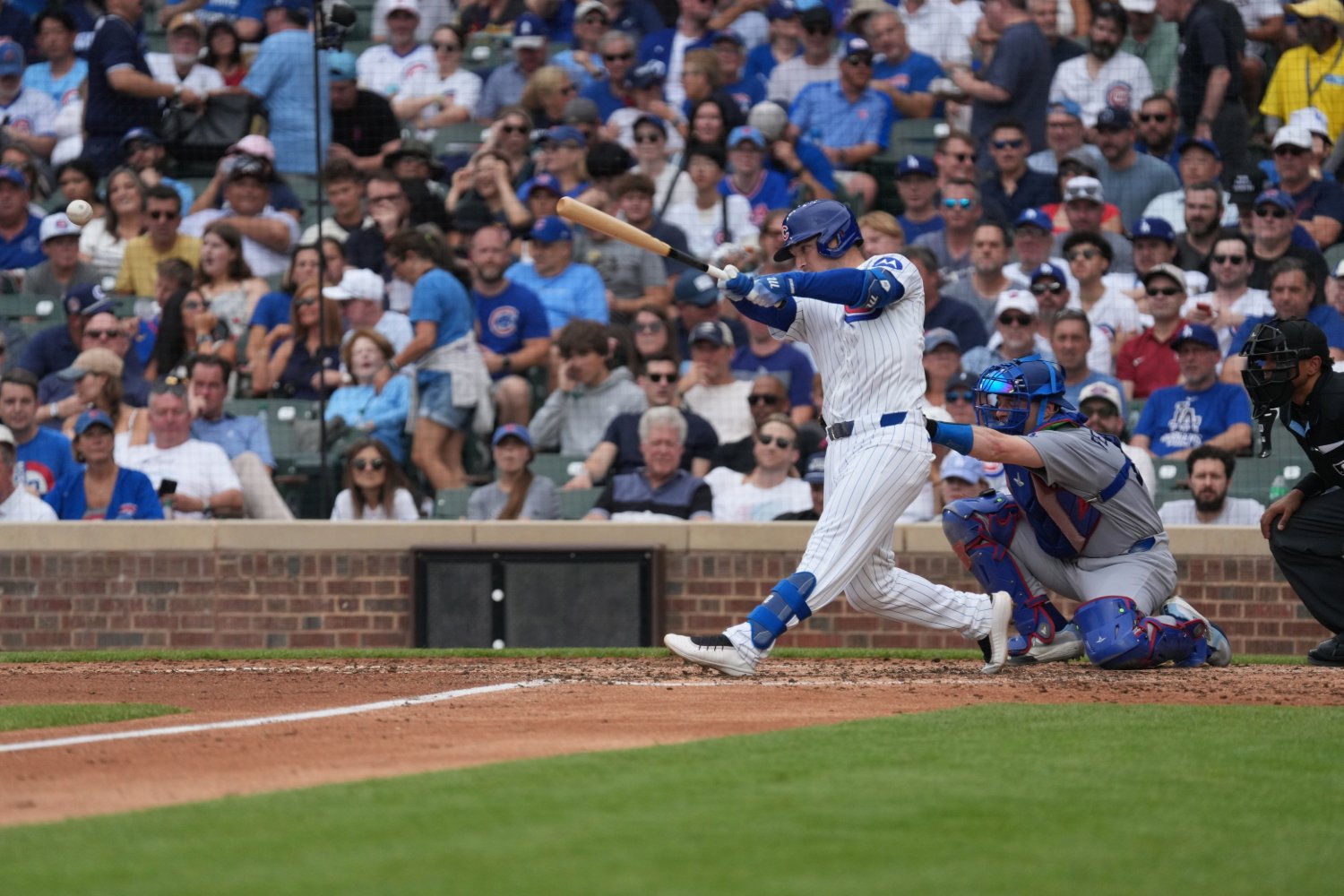 The Chicago Cubs just went to battle with the Los Angeles Dodgers this week, and after being one of the more aggressive teams at this year’s trade deadline, their behavior begs the question: how close is Chicago to competing with the Dodgers to be the best team in the National League? Let’s dive into the Cubs’ post-trade-deadline makeup. Aggressive At The Deadline As things stand, the North Siders are well above .500 and have a stranglehold on the top spot in the National League Wild Card. The Cubs will likely have to face either the current division leaders in the Milwaukee Brewers or the Dodgers at some point in the playoff bracket, but the back-to-back World Series champions are the ultimate threat. Chicago went into the deadline swinging, acquiring starting pitchers Clay Holmes and Kevin Gausman as well as a nasty reliever in Ryan Zeferjahn. They also got Tyrone Taylor, a remarkable defender and speedy baserunner, for some extra support in the outfield. Star Power Baseball is a team game, and there’s no refuting that. Mike Trout and Shohei Ohtani were on the same team for years, and yet the Los Angeles Angels never even sniffed the World Series (let alone the playoffs). With that being said, having a superstar who other teams have to plan around helps. Ohtani took over the NLCS against the Brewers last year, helping elevate the options around him. Pete Crow-Armstrong is a candidate for the National League MVP award this year. He just had a 3-for-5 performance here he hit two home runs and drove four runs in to clinch a sweep against Los Angeles. He’s also above 7 WAR with two months of baseball to go before the playoffs. The Cubs’ center fielder is four homers shy of 30 on the season, and he's already reached 30 steals for the second consecutive year. This is somebody who can impact the game in all facets, as he’s in the top 10 percentile for fielding range (100th), arm value (97th percentile) and arm strength (90th percentile) while also posting impressive marks with his bat speed (81st percentile), hard-hit rate (88th percentile) and a much-improved walk percentage (84th percentile). An Improved Rotation The Cubs operated with some urgency at the deadline, and Gausman and Holmes are key additions for a couple of reasons. Gausman has a winning pedigree, as the veteran right-handed pitcher was on a Blue Jays squad that was mere outs from a title last year. The 35-year-old uses a three-pitch mix to generate an elite 34.4 percent chase rate (87th percentile), and he’s giving up a free pass just 6.7 percent of the time. Holmes, on the other hand, is one of the best groundball pitchers in baseball. The former Mets’ starter has earned a 55.3 percent ground ball rate, good enough for the 95th percentile. Put the best fielding team in the big leagues (.989 fielding percentage, T-1st) behind him, and the reliever-turned-starter should feel right at home. Playoff Experience While the Cubs didn’t win the ultimate prize in 2025, they did push the top-seeded Brewers to Game 5 in the NLDS. Every player on last year’s roster now has experience winning a series (the Wild Card Round over the Padres) and playing in a winner-take-all, emotional battle with the team’s bitter rivals. That counts for something as the team gets set to embark on another October journey. Add to that knowledge the fact that two of the team’s starting position players in Dansby Swanson and Alex Bregman have won a World Series title before, and you have a group that could be primed for a deep run.
 -
Image courtesy of © Rick Scuteri-Imagn Images The Chicago Cubs made arguably their largest splash a few hours before the deadline, acquiring right-handed pitcher Clay Holmes in a package deal that also included outfielder Tyrone Taylor. It’s no secret that Chicago’s pitching staff (especially the rotation) has been decimated with injuries, but Holmes’ pitching was quite literally made for this team. Let’s break down who Holmes is and why this acquisition fits like a glove. Clay Holmes' Updated Cubs Scouting Report Clay Holmes is a 33-year-old right-handed pitcher and entered the deadline as one of the most sought-after rental arms in baseball. He was originally a ninth-round pick in the 2011 MLB Draft when the Pittsburgh Pirates selected him right out of high school. Holmes is in his ninth season, and he’s generated a career record of 40-34 with a 3.53 earned run average while striking out 534 hitters in 555.2 innings pitched. The Cubs will be his fourth team, as the veteran right-handed pitcher threw for the Pirates and New York Yankees before a brief stint under Carlos Mendoza (and Andy Green) in Queens. Transitioning Out Of The 'Pen Many aspiring pitchers who lack command end up going to the bullpen. The thought process is that their stuff will play for a few hitters as a change of tempo, but it’s not strong enough to be sustainable for multiple innings. Holmes actually transitioned in the other direction. He was primarily a bullpen arm from the 2018 season (his debut year) until 2024. In Holmes’ final year as a bullpen arm, he was the Yankees’ closer, logging 30 saves across 60 innings of work with a 3.14 ERA. The Mets then added Holmes to their rotation after signing him in free agency, and in his first real big-league opportunity, he immediately impressed. The team’s newest starter went 12-8 with a 3.53 ERA, striking out 129 hitters in 165.2 innings. Holmes’ 2026 So Far This makes 2026 his second season as a starter, and the newest Cub has seemingly picked up right where he left off. The 6-foot-5, 245 pound hurler is 4-4 with a 2.39 ERA and a 1.10 WHIP across nine starts. He just logged a High-A rehab start with the Brooklyn Cyclones last week, as the nine-year MLB veteran is coming back from a fractured right fibula injury that he sustained in May. Before that injury, Holmes was averaging just a tough below six innings per outing and looked steady yet again as a reliable member of the Mets’ rotation. Chase ‘Em Out Of Town! The North Siders' newest starter touts a five-pitch arsenal, leading the way with a 94 mile per hour sinker. Almost everything he throws moves laterally, and the sinker sits right around 18 inches of arm-side carry from a 41-degree release angle. One of his best attributes is the fact he can force mistakes out of the zone. The righty had a 32.9 percent chase rate (75th percentile, per Baseball Savant) before his injury. Holmes is also a master at mitigating solid contact, holding opposing hitters to just a 5.3 percent barrel rate (82nd percentile). The Cubs-ian Attribute What’s his best attribute, though? It’s far and away the fact that Holmes generates a sky-high ground ball rate of 55.3 percent (95th percentile), thanks to that heavy sinker. The Cubs are tied for the best fielding percentage in baseball at .989, and with Dansby Swanson, Nico Hoerner and Alex Bregman having five Gold Gloves between them, Holmes will be well protected by the infield behind him. There's no infield defense as good as this one, and Holmes will benefit as a result. The Cubs will hope to have other members of their rotation, like Justin Steele and Edward Cabrera, return. Before it’s time to build for 2027, though, this team gets to try out a steady arm who has quickly turned into one of the better starters in the game. He buries the ball in the ground and lets the defense get to work; could you conjure up a better marriage? View full article
