


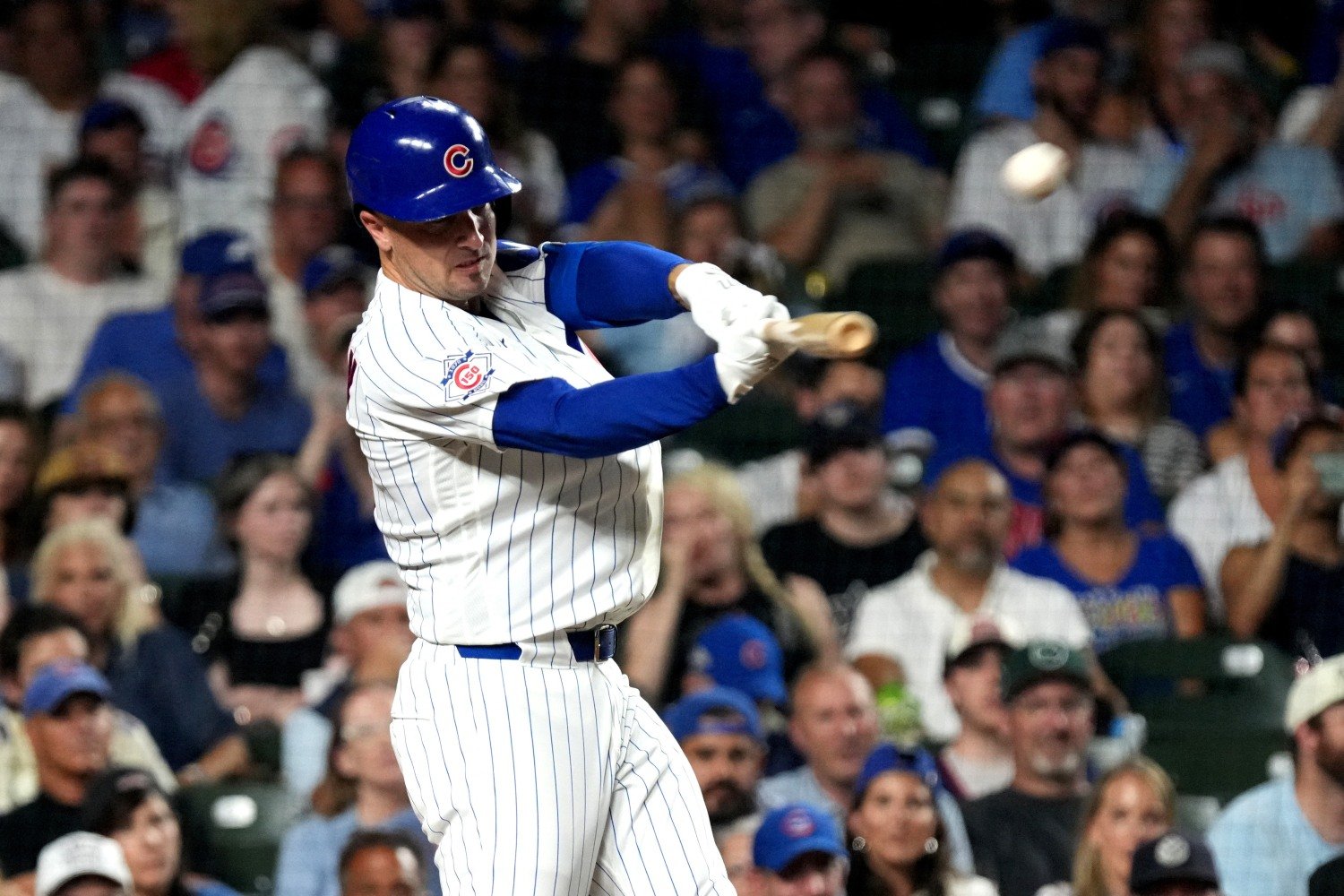
Cubs Video
When the Cubs signed Alex Bregman this winter, they talked at length about the influence he would have. No player is more famous among fellow players for their savvy, generosity with advice and insight, or dedication to the game than is Bregman, and the combination of intelligence and leadership Bregman brings to the table was nearly as important to Chicago as the combination of on-base skills and power that jump out when one studies his stat page.
For most of the first half, though, that influence was a bit too great a share of his value, for a simple reason: he wasn't hitting. Over the first 40% of the season (66 games), Bregman hit .243/.327/.342. In 297 plate appearances, he only hit five home runs. His bat speed was down. That on-base percentage is tolerable, and stood as a reminder of what a polished and smart hitter Bregman is, but it was fair to wonder whether he would never be the same. One of the risks of signing an aging player who never had elite bat speed or explosiveness is that they might be enduringly diminished; it seemed like Bregman might be just that kind of unfortunate case.
There was an off day in early June, during which the Cubs traveled from Chicago to Denver to begin a road trip to face the Rockies and Giants. Using feedback he cultivated from the team's analytics and hitting departments, Bregman made an adjustment at that point, and his season began to turn. From June 10 through the All-Star break, he batted a much more healthy .234/.358/.402. Those still aren't the numbers a team envisions when they shell out $175 million over five years to bring a player in, but again, Bregman was also delivering value off the field—and he might have soaked some up, too.
What happened, specifically, is that beginning in mid-June, Bregman has let the ball travel deeper into the hitting zone. Meanwhile, he's also moved slightly deeper in the batter's box. The combination of those two adjustments means that he's addressing the ball about three inches closer to the catcher than he was three months ago. That sounds like a very small change, but when you're making that extra bit of space, you're also making a bit of extra time.

Here's what that looks like in the stance-and-stride visualizaions generated by Statcast. Through that day off in June, Bregman set up and moved thusly in the box.

Since then, his average stance and stride starts deeper, and from a more closed setup. As you can also see, his average contact point has slid back to the front edge of home plate.

That's an essential change for Bregman, for multiple reasons. It's paid off in a massive way, too, especially since the All-Star break. In 189 trips to the plate since the break, Bregman is batting .296/.365/.615; he's gone from suspect back to superstar. But why are those few inches of extra space (and the time they represent) so important?
Firstly, it's because even as he's rediscovered his power, Bregman hasn't rediscovered his bat speed. Indeed, it's still trending downward.

Bregman has never been a guy who got his power primarily from bat speed, of course. Hitters realize power via four vectors:
- Swing decisions - getting a pitch they can drive
- Bat speed - swinging fast enough to produce a high exit velocity
- Hit tool - the better you are at finding the center of the barrel with your swing, the less raw bat speed you need to hit it hard
- Directionality - being able to pull the ball without rolling over it (and, in general, being able to hit the ball well in the air to the pull field) matters a great deal.
For Bregman, the other three elements have always been more important than bat speed. Still, when you lose a bit of that raw power, you have to make up for it somehow—not least because, when that bat speed goes, it can compromise the solidity and directionality of contact. For that matter, it can also ruin your swing decisions, because one solution to that degradation is to start your swing a bit earlier and sacrifice some of the time you have to recognize pitches and attack them.
By sliding as far back in the box as possible, Bregman is giving himself as much time as he can to deliver the barrel to the ball. He's not actually swinging with a deeper contact point in mind, but that's the result, because of his more closed stance. That change of orientation means his bat has to travel very slightly farther to get to the same spot, so the result is a deeper contact point, without a difference in the orientation of his barrel to the flight of the ball when contact comes. The ball getting deeper before he hits it means Bregman can attack with a bit more confidence, knowing his best contact to the pull field won't go foul. Indeed, 20.5% of his swings through June 8 produced pulled foul balls. Since June 9, that number is down to 15.9%. Meanwhile, his attack direction on fair balls has swung toward the pull field.
Changes to the way his lower half works have also helped all that happen, but Bregman first tapped into his power again by getting back to pulling and lifting the ball and making solid contact—and all of that began by closing his stance and moving very slightly deeper in the batter's box.
After Bregman followed Pete Crow-Armstrong's five-homer weekend with a three-homer night of his own Monday, MLB Network posted an intriguing tweet comparing the two players' swings.
They're right about the similarities there, and some of those similarities are new. Crow-Armstrong and Bregman have worked terrifically together this season, going all the way back to spring training. Crow-Armstrong owes some of the credit for his sudden corner-turn toward superstardom via better swing decisions to Bregman. In turn, Bregman might owe some of the credit for his mid-season change of fortunes to watching and learning from his younger teammate.
They don't get to power in the same way at all. Crow-Armstrong has leveled up twice in the last two seasons, by drastically upgrading his bat speed and by improving his swing decisions, but his feel for the sweet spot of the barrel is still merely average. Bregman's is superb, but the bat speed is far from special—making him the opposite of a Crow-Armstrong-style slugger, even though their actual swings have begun to mirror one another. He still gets his value from swing decisions, solidity of contact, and that sense of how to pull and lift the ball. He's just used his own advice to a young teammate and the model of that teammate's success as a template for his own adjustments, to thwart the ravages of age and sustain success at an improbable stage of his career.
Are you optimistic about the Cubs right now?

Follow North Side Baseball For Chicago Cubs News & Analysis



-
 1
1


Recommended Comments
There are no comments to display.
Create an account or sign in to comment
You need to be a member in order to leave a comment
Create an account
Sign up for a new account in our community. It's easy!
Register a new accountSign in
Already have an account? Sign in here.
Sign In Now