


Cubs Video
Today, we’re going to try something new. Last offseason, I wrote seven different Remember Some Cubs pieces on the following players: Mark DeRosa, Mike Fontenot, Mark Bellhorn, Steve Trachsel, Chris Coghlan, Carlos Marmol, and Matt Murton. All players who played on the Cubs in the 21st century, or, in Trachsel’s case, just before, if you exclude a brief appearance with the Cubs in 2007.
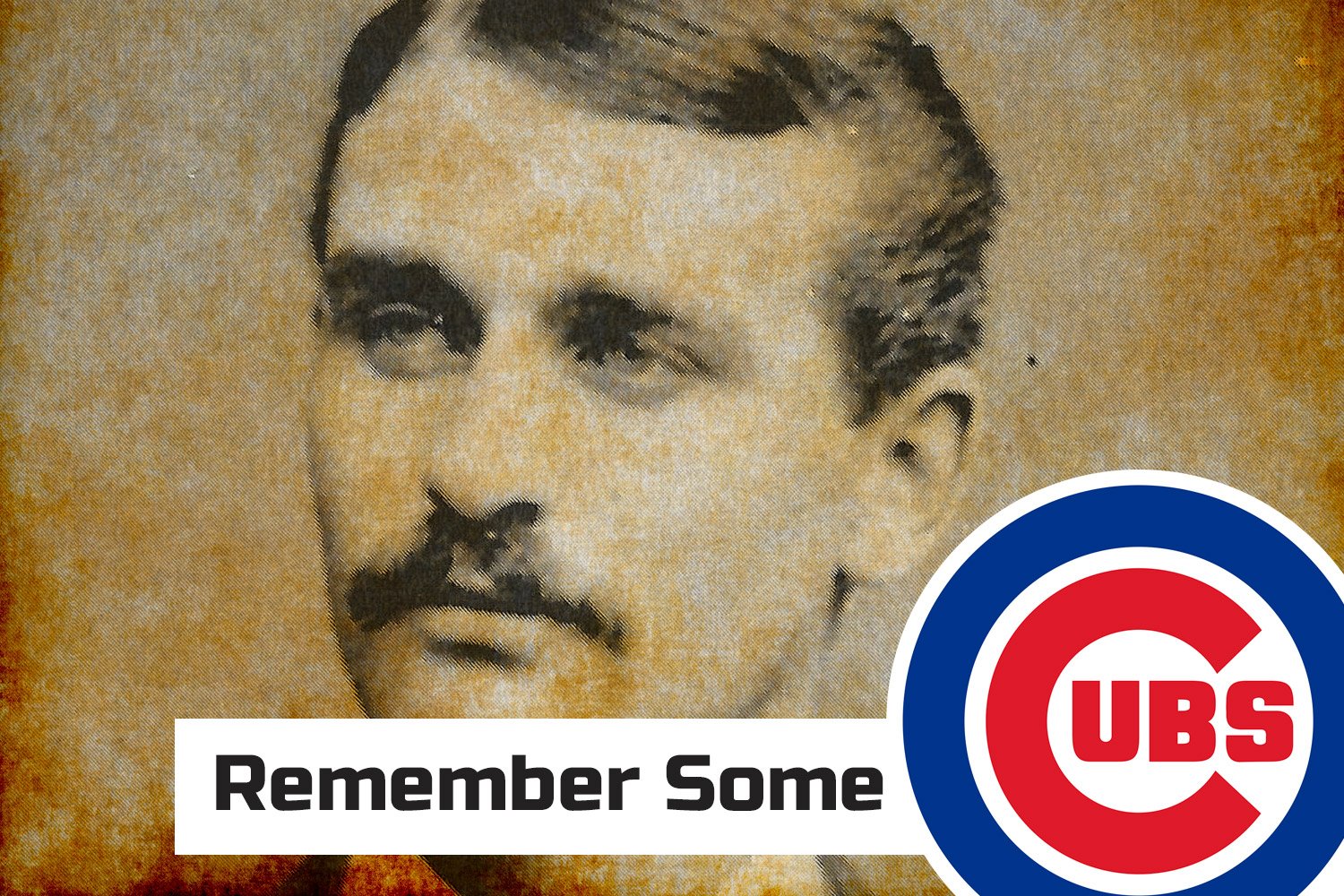
As someone born in 1995, I remember watching all those players except Trachsel. However, I have fond memories of taking the mound with him in Major League Baseball, Featuring Ken Griffey Jr. on the Nintendo 64, and getting crushed by my older brothers. We will go in the way back machine to kick off this offseason’s Remember Some Cubs series. So far back, we can rename the series to Remember Some White Stockings for today. We’re going to talk about Ross Barnes and his season for the 1876 Chicago White Stockings.
Charles Roscoe Barnes was born on May 8, 1850, in Mount Morris, New York, about 60 miles east of Buffalo. At 18, he started playing baseball with the Rockford Forest Citys. Barnes officially became a professional in 1871 when the Boston Red Stockings signed him to play. This was the inaugural season of the National Association, which is widely considered the first professional baseball league, as far back as FanGraphs logs stats.
In his five years with the Red Stockings, Barnes led all position players in FanGraphs WAR (20.8), batting average (.390), wRC+ (159), runs (459), and stolen bases (73). His signing with the Chicago White Stockings after the 1875 season prompted the formation of the National League. In the 1876 season, the second baseman had his best season.
Barnes led all position players in fWAR with 6.6. The next closest player, teammate Cap Anson, was at 4.0. He led the league in batting average, hitting .429, while the next closest person, George Hall, hit .366. He scored 126 runs, which, of course, led the league. George Wright finished second, and he scored 72 runs. According to a 2022 article by Jayson Stark in The Athletic, only four players in baseball history have led their league by 30 or more runs: Aaron Judge, Rickey Henderson, Babe Ruth, and Ross Barnes. Barnes' 54-run lead remains a record. The White Stockings, of course, won the first-ever National League pennant.
To avoid regurgitating his fantastic work, you should check out what Nate Silver wrote about Barnes in 2007. Silver created a method to examine how good a player’s sustained peak was, then compared that to the next best player in baseball at the time. Barnes was the best player in baseball for four of the top six seasons, and the gap between the best player and their next closest competitor was the largest.
How was Barnes so successful? According to his SABR profile, Barnes mastered the art of what is called the “fair-foul” hit. Back then, baseball had different rules, including that if a ball landed fair, no matter where on the field it landed, and then rolled into playing territory, it was a fair ball. Barnes was great at using this to his advantage to rack up hits.
This fact has caused some dispute over Barnes’ true baseball skill. The National League banned the fair-foul hit in 1877, and his batting average plummeted from .438 in 1876 to .272 in 1877 in just 99 plate appearances. His lack of playing time stemmed from, it would seem, an illness. The SABR profile quotes a Chicago Tribune article from May 19 that said Barnes was so sick that he was “physically incapable of exertion.” Rumors also surfaced via the Chicago Times that he was lying about the illness. Regardless, he was never the same. He didn’t play the 1878 season before signing with the Cincinnati Reds for the 1879 season and posting a .266 batting average. He then took another season off before rejoining the Red Stockings in 1881, where he hit .271. Illness or not, he was just never the same player.
Barnes still should be remembered whether or not he was overly reliant on the fair-foul hit. The hit was legal during his six-year run as the best player in baseball, and nobody else was able to utilize the success that he did despite everyone being free to do so. I’m confident that Ross Barnes is the best player I never even knew existed.
Do you approve of the job Craig Counsell is doing as Cubs manager?

Are you interested in Cubs history? Then check out the Chicago Cubs Players Project, a community-driven project to discover and collect great information on every player to wear a Cubs uniform!
View The Players Project



.thumb.JPG.19c99ddd60a76edf810c77d321439828.JPG)


Recommended Comments
There are no comments to display.
Create an account or sign in to comment
You need to be a member in order to leave a comment
Create an account
Sign up for a new account in our community. It's easy!
Register a new accountSign in
Already have an account? Sign in here.
Sign In Now