


ADHamley
-
Posts
6 -
Joined
-
Last visited
ADHamley's Achievements




-
Is Michael Busch's Breakout Real?
ADHamley replied to ADHamley's topic in North Side Baseball Front Page News
For sure, the luck has been there. I also think there's something about the way Busch strikes the ball that keeps him above stat rate where it looks like he should be. Some players just seem to have that -- Jose Altuve has made a heck of a career out of doing that (even without the garbage cans). Maybe Busch is just one of those guys. I find it interesting that 2 of his HRs have gone to dead left, and they weren't 330-ft wall scrapers -- he blasted those things. I'm hoping his ability to drive the ball to all fields is a good sign of things to come. -
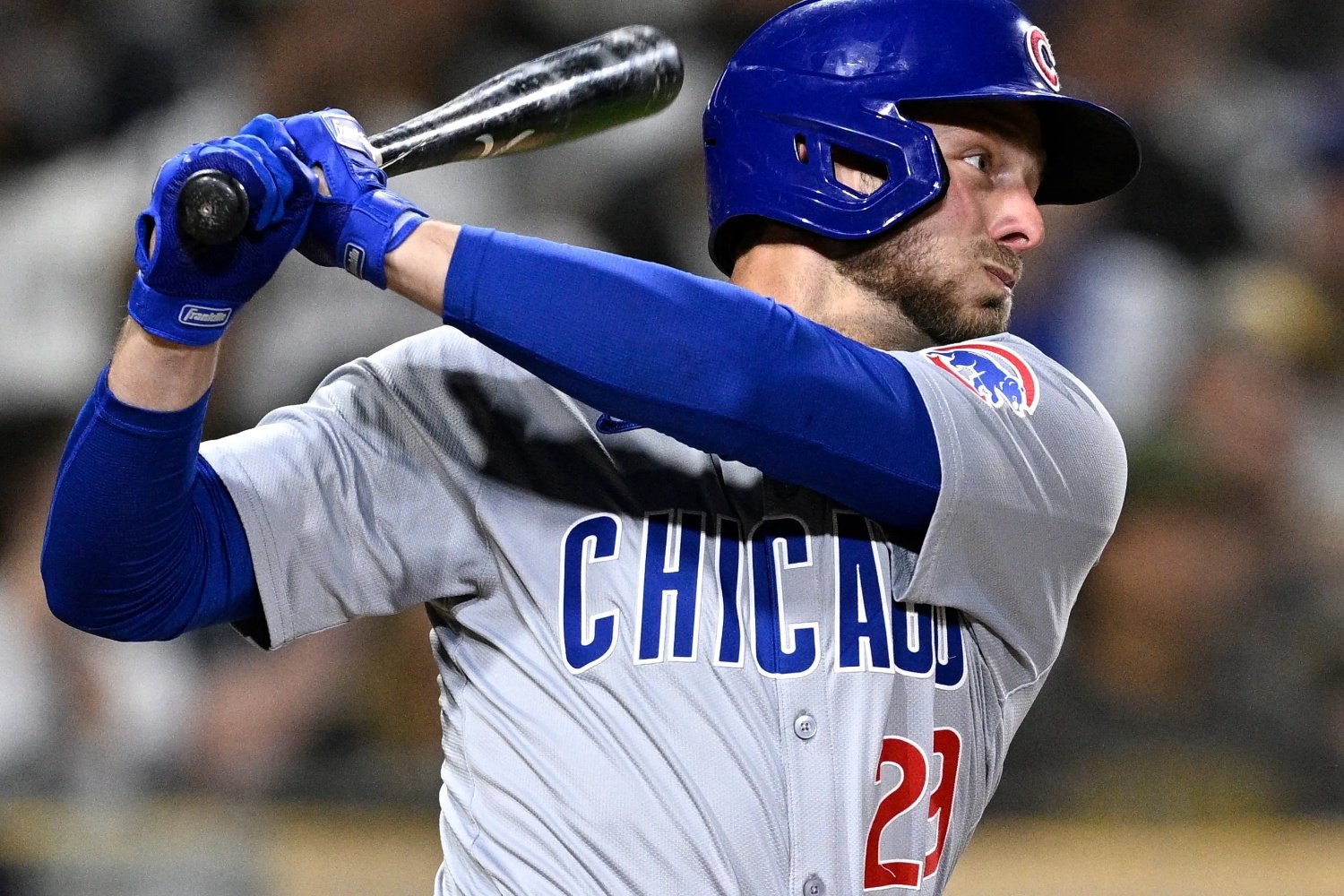 With Michael Busch’s torrid start to the season, it’s worth asking how much of what he is doing is real. There will be regression — his start is almost certainly not sustainable — but by how much will Busch regress? There are some important stats that suggest the Cubs might have a better first baseman than anyone thought. And for a good argument for why Busch should be allowed to face more lefties, check out Randy Holt’s deep dive on him. I will reference a couple of the stats also used in that article, but I’ll be framing them differently in this piece. Methodology: When doing analysis of a player’s potential breakout, the obvious question becomes: What stats are predictive of future performance, and are there meaningful changes in any of those stats? In general, some stats that tend to help us improve predictive value are ones like xBA, xOBP, xSLG, and xwOBA. They aren’t perfect, but they can help identify players who are changing for the better. In addition, other stats that I use to make decisions about players are power metric changes (such as exit velocity, barrel%, hard-hit%) and plate discipline stats (Contact%, Z-Contact% [which measures contact% in the strike zone], and O-Contact% [which measures contact% outside the zone]). When I look at plate discipline stats, I’m looking for positive changes; plate discipline is something that can be improved gradually and is far from linear. And young players in their often experience quite a bit of growth in that area as they get comfortable at the MLB level. Analysis: So, after looking at Michael Busch’s xStats, power metrics, and plate discipline stats, is the breakout real? The best answer I can give is: sort of, at least to a degree. There does appear to be measurable growth that will likely result in a noticeable progression this year. Why is that? Let’s take a look: First, let’s check out those stats I mentioned above that help us improve predictive value. Starting with xBA, Busch has gone from .217 in 2024 to .253 so far in 2025. It’s also worth noting that while last year’s xBA was only .217, he ended up hitting .248. His current .306 AVG is probably higher than we can expect, but he's long had a habit of outperforming the expectations in terms of average. Case in point: He's outperforming his xBA by .053 (roughly 21%) in 2025, which isn’t a massive step up from how he outperformed xBA (.031) last year (roughly 14%). Do I think Michael Busch is going to hit over .300 this year? No. Do I think he can and will improve from last year’s .248? Yes. His current BABIP is higher than last year’s and will probably level out closer to his .322 average of 2024, but that will simply bring Busch’s batting average down to the .260-.270 range. I think his current performance suggests that range is a real and sustainable possibility. His current .339 xOBP is well below his current OBP of .385, but is slightly above last year’s OBP of .335, which outperformed last season’s xOBP of .309. I’m seeing a pattern of Busch outperforming expected stats. And for the final two: his current xSLG is above his results from last year (.475 compared to .418) as is his xwOBA (expected weighted On-Base Average) compared to last year (.354 to .319). But it’s worth mentioning that, once again, Busch outperformed those 2024 expected stats, finishing with a .440 SLG and .336 wOBA. Undoubtedly, expected stats aren’t perfect, but the fact that he continues to outperform them makes it look like a possible feature of Busch’s game. So, let’s look at a few stats that don’t rely on expectations. Like last year, Busch is hitting the ball hard: a HardHit% of 38.7 is right in line with last year’s 39.9%, and his EV, maxEV, and Barrel% are all within 1.5 points of last year’s numbers. Again, he may be getting lucky, but Busch doesn't outperform the metrics purely thanks to dumb luck. This is supported by the fact that his O-Contact%, Z-Contact%, and overall Contact% are all comparable to last year’s numbers and above league-average. So, what, if anything, is different? Well, three things stand out to me. 1) His K%, CSW%, and CStr% are all down. What that means is he’s striking out less, and he’s getting into more hitters’ counts. Fewer strikes overall = good, as long as the O-Swing% doesn’t drastically increase. That would indicate he’s swinging and making contact with pitches he probably can’t do much damage on, but his O-Swing% has actually gone down by 2.4%. Patience is a good thing; being selectively aggressive is even better. Busch is starting to master the latter trait. 2) He is hitting the ball in the air more often — not significantly, but more than last year. More balls in the air naturally means a better chance of doing damage, especially when Pull% increases. And, wouldn't you know it, Busch is pulling the ball at 48.4%, compared to 42.9% last year. 3) He’s dropped his soft contact by 8%, which is significant. This ties back to the first point, but it's nice to see that the swings are more purposeful this year. Hitting the ball and hitting the ball with authority are two different skills. So, what does this all mean? It could be nothing — maybe Busch is just on one of his month-long heaters. However, while I may be looking through rose-colored glasses, these changes look to me like real growth. I don’t think Busch is about to have an MVP year, but I do think he’s about to have a markedly better year than 2024. Last season, he finished with a 119 wRC+, which ranked 42nd among all qualified hitters in the league. Not bad. This year, his 171 wRC+ has him at 14th. If he can become the Robin to Kyle Tucker's (187 wRC+) Batman, the Cubs lineup may be better than we thought.
 -
Prior to the 2024 season, the Dodgers offloaded Michael Busch onto the Cubs after he had failed to live up to his prospect hype in a crowded and stacked lineup. Perhaps surprisingly, Busch ended up making a significant contribution on the North Side, and this year, he's off to an even better start. Is this just another hot stretch, or a real breakout? Image courtesy of Orlando Ramirez/USA Today With Michael Busch’s torrid start to the season, it’s worth asking how much of what he is doing is real. There will be regression — his start is almost certainly not sustainable — but by how much will Busch regress? There are some important stats that suggest the Cubs might have a better first baseman than anyone thought. And for a good argument for why Busch should be allowed to face more lefties, check out Randy Holt’s deep dive on him. I will reference a couple of the stats also used in that article, but I’ll be framing them differently in this piece. Methodology: When doing analysis of a player’s potential breakout, the obvious question becomes: What stats are predictive of future performance, and are there meaningful changes in any of those stats? In general, some stats that tend to help us improve predictive value are ones like xBA, xOBP, xSLG, and xwOBA. They aren’t perfect, but they can help identify players who are changing for the better. In addition, other stats that I use to make decisions about players are power metric changes (such as exit velocity, barrel%, hard-hit%) and plate discipline stats (Contact%, Z-Contact% [which measures contact% in the strike zone], and O-Contact% [which measures contact% outside the zone]). When I look at plate discipline stats, I’m looking for positive changes; plate discipline is something that can be improved gradually and is far from linear. And young players in their often experience quite a bit of growth in that area as they get comfortable at the MLB level. Analysis: So, after looking at Michael Busch’s xStats, power metrics, and plate discipline stats, is the breakout real? The best answer I can give is: sort of, at least to a degree. There does appear to be measurable growth that will likely result in a noticeable progression this year. Why is that? Let’s take a look: First, let’s check out those stats I mentioned above that help us improve predictive value. Starting with xBA, Busch has gone from .217 in 2024 to .253 so far in 2025. It’s also worth noting that while last year’s xBA was only .217, he ended up hitting .248. His current .306 AVG is probably higher than we can expect, but he's long had a habit of outperforming the expectations in terms of average. Case in point: He's outperforming his xBA by .053 (roughly 21%) in 2025, which isn’t a massive step up from how he outperformed xBA (.031) last year (roughly 14%). Do I think Michael Busch is going to hit over .300 this year? No. Do I think he can and will improve from last year’s .248? Yes. His current BABIP is higher than last year’s and will probably level out closer to his .322 average of 2024, but that will simply bring Busch’s batting average down to the .260-.270 range. I think his current performance suggests that range is a real and sustainable possibility. His current .339 xOBP is well below his current OBP of .385, but is slightly above last year’s OBP of .335, which outperformed last season’s xOBP of .309. I’m seeing a pattern of Busch outperforming expected stats. And for the final two: his current xSLG is above his results from last year (.475 compared to .418) as is his xwOBA (expected weighted On-Base Average) compared to last year (.354 to .319). But it’s worth mentioning that, once again, Busch outperformed those 2024 expected stats, finishing with a .440 SLG and .336 wOBA. Undoubtedly, expected stats aren’t perfect, but the fact that he continues to outperform them makes it look like a possible feature of Busch’s game. So, let’s look at a few stats that don’t rely on expectations. Like last year, Busch is hitting the ball hard: a HardHit% of 38.7 is right in line with last year’s 39.9%, and his EV, maxEV, and Barrel% are all within 1.5 points of last year’s numbers. Again, he may be getting lucky, but Busch doesn't outperform the metrics purely thanks to dumb luck. This is supported by the fact that his O-Contact%, Z-Contact%, and overall Contact% are all comparable to last year’s numbers and above league-average. So, what, if anything, is different? Well, three things stand out to me. 1) His K%, CSW%, and CStr% are all down. What that means is he’s striking out less, and he’s getting into more hitters’ counts. Fewer strikes overall = good, as long as the O-Swing% doesn’t drastically increase. That would indicate he’s swinging and making contact with pitches he probably can’t do much damage on, but his O-Swing% has actually gone down by 2.4%. Patience is a good thing; being selectively aggressive is even better. Busch is starting to master the latter trait. 2) He is hitting the ball in the air more often — not significantly, but more than last year. More balls in the air naturally means a better chance of doing damage, especially when Pull% increases. And, wouldn't you know it, Busch is pulling the ball at 48.4%, compared to 42.9% last year. 3) He’s dropped his soft contact by 8%, which is significant. This ties back to the first point, but it's nice to see that the swings are more purposeful this year. Hitting the ball and hitting the ball with authority are two different skills. So, what does this all mean? It could be nothing — maybe Busch is just on one of his month-long heaters. However, while I may be looking through rose-colored glasses, these changes look to me like real growth. I don’t think Busch is about to have an MVP year, but I do think he’s about to have a markedly better year than 2024. Last season, he finished with a 119 wRC+, which ranked 42nd among all qualified hitters in the league. Not bad. This year, his 171 wRC+ has him at 14th. If he can become the Robin to Kyle Tucker's (187 wRC+) Batman, the Cubs lineup may be better than we thought. View full article
-
I love the Tucker fit, but yeah, this is probably going to end up being a brutal price in the end. Cam Smith has been inconsistent, but his potential is obvious for anyone to see. And I've been a Wesneski believer for year. The Astros seem good at enough at coaching pitching that they'll get a really valuable player from him. While the Cubs won't miss Paredes, he's a great fit with those Crawford boxes. Houston absolutely cleaned up on this deal. If the Cubs don't extend Tucker (and I doubt they will), the Tucker rental is going to be fun to watch, but probably not much else. If the F.O. had actually followed up with real attempts to improve the team after the Tucker trade, it's another discussion, but...
- 3 replies
-
- 1
-

-
- kyle tucker
- vladimir guerrero jr
- (and 5 more)
-
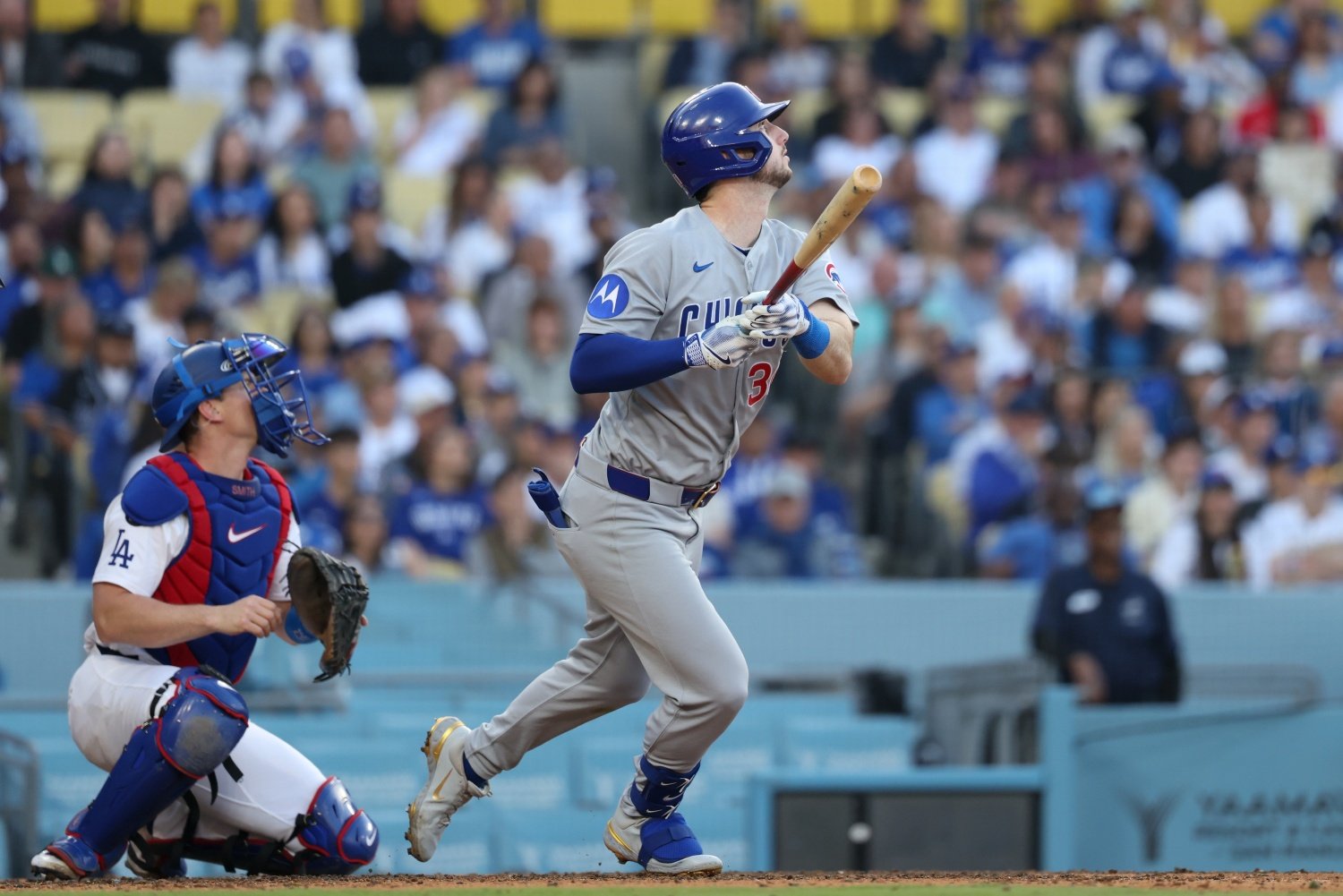 The December trade to acquire Kyle Tucker brought hope to Cubs fans everywhere. Having a player of Tucker’s caliber (acquired at the significant cost of Cam Smith, Isaac Paredes, and Hayden Wesneski) seemed to indicate the front office’s commitment to being some level of “all-in". But then there were no similarly bombastic follow-up moves, which muddied that messaging. Let’s face it: current ownership hasn’t exactly looked willing to sign big free agents. In the last few years, Dansby Swanson is the biggest fish reeled in, at seven years and $177 million. That’s good money for a good player, but it doesn’t compete with other big-market free-agent signings. Instead, the Cubs have opted for a collection of mid-level three- and four-year contracts, with the likes of Jameson Taillon, Marcus Stroman and Shota Imanaga, and a ton of 1-2 year deals to fill roster spots. Imanaga and Seiya Suzuki look like good moves, but each is, like Swanson, somewhere south of superstardom. Now that Vladimir Guerrero, Jr. has signed a 14-year, $500-million contract, it is reasonable to assume Tucker is in line for a massive payday. As impressed as I am with Guerrero as a hitter, my not-so-scientific “eyeball test” rates Tucker as a more impactful all-around player than Guerrero. He's older than Guerrero by an important margin, so he won't match Guerrero's money, but he'll come close. Will the Cubs pay that? Their recent free agency record suggests it’s a long shot. Cubs fans do have a glimmer of hope based on the recent rumor of a Cubs offer to Tucker, but we've heard rumors over recent years about other marquee players who never seem to end up signing in Chicago. And Tucker’s own words don’t indicate an extension is imminent. So let’s assume what is still probable: Tucker walks after the season and gets a nice, fat contract somewhere else. What do the Cubs do then? Here are 3 seemingly realistic options that may make sense for the Cubs to explore: Option 1: Josh Naylor The most notable hitter contracts that will expire (with no player or team options) at the end of the 2025 season are those of Bo Bichette, Josh Naylor, Kyle Schwarber, and Gleyber Torres. For a variety of reasons, neither Bichette nor Torres makes much sense. And while there would admittedly be something romantic about bringing Schwarber back to don Cubbie blue again, I have significant doubt whether Schwarber would even want to come back, five years after being non-tendered in favor of getting Joc Pederson and a $2.5-million discount. Even if Schwarber were open to a reunion, he also isn’t really the type of player Chicago seems to go after. There’s a great deal of power in his body type, but that body type isn’t one that ages particularly well, and the Cubs would have to move Suzuki back to right field to accommodate the DH-only Schwarber. The Naylor option could be interesting, though. While he plays first base, he doesn’t exactly play it well (-6 Defensive Runs Saved in 2024), so he probably poses no real threat to the playing time of the up-and-coming Michael Busch. Despite Naylor’s limitations as a fielder, his carrying skills fit well with the types of hitters the Cubs seem to value: good plate discipline, some (though not massive) power, solid walk rate, and an aptitude for RBIs. Naylor just might be an intriguing DH option at a reasonable price, with the ability to spell Busch or replace him in case of an injury. Option 2: Luis Robert, Jr. Another potentially big splash could come in the form of a trade for Luis Robert, Jr. He's having a terrible recent stretch on the South Side (and who can blame him, the way that whole organization is going?). But underneath the recent disappointing stats is a guy with real talent: Robert has a career hard-hit rate above 40%, with a Barrel rate over 10%. He has speed (29 ft/s in 2024), and when he’s right, he is capable of big numbers (.264 AVG, 38 HRs, 90 Rs, 80 RBIs, and 20 SBs in 2023). He is currently making $15 million, and his contract includes club options in 2026 and ‘27 for $20 million each. That kind of money isn’t prohibitive, especially for someone with Robert’s upside. Of course, his health history doesn’t inspire much confidence, but I wonder how much of that might be related to his team’s nutrition and health practices—or lack thereof. If Robert can stay healthy and motivated, he could be a consistent All-Star-level player. For what it would likely cost the Cubs both in prospects and money, it seems a risk worth taking. Option 3: Ha-Seong Kim Didn’t see this one coming, did you? Kim is currently on the IL and has yet to play a game for the Tampa Bay Rays. The question: Why would Tampa be interested in dealing him right after Kim signed a contract with them? The answer: Because that’s exactly the kind of thing Tampa does. Ha-Seong Kim isn’t going to be an MVP-caliber player, but he is a very solid player who has excellent plate discipline. His career contact rate in the States is 83.5%, and within the zone, that number is 87.6%. He simply doesn’t swing at pitches he can’t hit. His career swing rate outside the strike zone is a highly disciplined 21.8%. Even with those plate discipline metrics, Kim also contributes a handful of homers each year, and his speed also isn’t shabby (28.3 ft/s in 2024). Add this to his ability to field (only 2 DRS in an injury-plagued season last year, but 10 in his last full, healthy season), and Kim starts to look like someone who could contribute what the Cubs need. Although he has played the most often at shortstop (307 games) since coming to MLB, he has also played 127 games at second base and 79 games at the hot corner. Ideally, Matt Shaw will grow into his potential and take a secure hold of that spot in the coming years, but Kim provides an excellent safety net. Or, as with my suggestion for Josh Naylor, DH could be an option to add some flexibility. Why a Plan B Matters The hope, of course, is that Kyle Tucker signs an extension and retires in a Cubs uniform. But if he leaves, the front office needs to be ready to fill the gap however possible. Plainly, none of these guys do that, on their own, but they could each cover some of the ground needed to make up for his loss. Nor are they mutually exclusive. Signing Naylor and trading for either Kim or Robert might make the most sense. The team has a window of opportunity that may not be open much longer. Many of the team’s current core pieces are quickly approaching free agency (Suzuki, Ian Happ, and Nico Hoerner all hit free agency after 2026), so there is no guarantee the current collection of talent will be together much longer. If the front office and ownership want to compete, now is the time.
 -
If the unthinkable happens and Kyle Tucker isn't extended, what happens then? Here are 3 realistic and promising options that could serve as an effective back-up plan. Image courtesy of © Kiyoshi Mio-Imagn Images The December trade to acquire Kyle Tucker brought hope to Cubs fans everywhere. Having a player of Tucker’s caliber (acquired at the significant cost of Cam Smith, Isaac Paredes, and Hayden Wesneski) seemed to indicate the front office’s commitment to being some level of “all-in". But then there were no similarly bombastic follow-up moves, which muddied that messaging. Let’s face it: current ownership hasn’t exactly looked willing to sign big free agents. In the last few years, Dansby Swanson is the biggest fish reeled in, at seven years and $177 million. That’s good money for a good player, but it doesn’t compete with other big-market free-agent signings. Instead, the Cubs have opted for a collection of mid-level three- and four-year contracts, with the likes of Jameson Taillon, Marcus Stroman and Shota Imanaga, and a ton of 1-2 year deals to fill roster spots. Imanaga and Seiya Suzuki look like good moves, but each is, like Swanson, somewhere south of superstardom. Now that Vladimir Guerrero, Jr. has signed a 14-year, $500-million contract, it is reasonable to assume Tucker is in line for a massive payday. As impressed as I am with Guerrero as a hitter, my not-so-scientific “eyeball test” rates Tucker as a more impactful all-around player than Guerrero. He's older than Guerrero by an important margin, so he won't match Guerrero's money, but he'll come close. Will the Cubs pay that? Their recent free agency record suggests it’s a long shot. Cubs fans do have a glimmer of hope based on the recent rumor of a Cubs offer to Tucker, but we've heard rumors over recent years about other marquee players who never seem to end up signing in Chicago. And Tucker’s own words don’t indicate an extension is imminent. So let’s assume what is still probable: Tucker walks after the season and gets a nice, fat contract somewhere else. What do the Cubs do then? Here are 3 seemingly realistic options that may make sense for the Cubs to explore: Option 1: Josh Naylor The most notable hitter contracts that will expire (with no player or team options) at the end of the 2025 season are those of Bo Bichette, Josh Naylor, Kyle Schwarber, and Gleyber Torres. For a variety of reasons, neither Bichette nor Torres makes much sense. And while there would admittedly be something romantic about bringing Schwarber back to don Cubbie blue again, I have significant doubt whether Schwarber would even want to come back, five years after being non-tendered in favor of getting Joc Pederson and a $2.5-million discount. Even if Schwarber were open to a reunion, he also isn’t really the type of player Chicago seems to go after. There’s a great deal of power in his body type, but that body type isn’t one that ages particularly well, and the Cubs would have to move Suzuki back to right field to accommodate the DH-only Schwarber. The Naylor option could be interesting, though. While he plays first base, he doesn’t exactly play it well (-6 Defensive Runs Saved in 2024), so he probably poses no real threat to the playing time of the up-and-coming Michael Busch. Despite Naylor’s limitations as a fielder, his carrying skills fit well with the types of hitters the Cubs seem to value: good plate discipline, some (though not massive) power, solid walk rate, and an aptitude for RBIs. Naylor just might be an intriguing DH option at a reasonable price, with the ability to spell Busch or replace him in case of an injury. Option 2: Luis Robert, Jr. Another potentially big splash could come in the form of a trade for Luis Robert, Jr. He's having a terrible recent stretch on the South Side (and who can blame him, the way that whole organization is going?). But underneath the recent disappointing stats is a guy with real talent: Robert has a career hard-hit rate above 40%, with a Barrel rate over 10%. He has speed (29 ft/s in 2024), and when he’s right, he is capable of big numbers (.264 AVG, 38 HRs, 90 Rs, 80 RBIs, and 20 SBs in 2023). He is currently making $15 million, and his contract includes club options in 2026 and ‘27 for $20 million each. That kind of money isn’t prohibitive, especially for someone with Robert’s upside. Of course, his health history doesn’t inspire much confidence, but I wonder how much of that might be related to his team’s nutrition and health practices—or lack thereof. If Robert can stay healthy and motivated, he could be a consistent All-Star-level player. For what it would likely cost the Cubs both in prospects and money, it seems a risk worth taking. Option 3: Ha-Seong Kim Didn’t see this one coming, did you? Kim is currently on the IL and has yet to play a game for the Tampa Bay Rays. The question: Why would Tampa be interested in dealing him right after Kim signed a contract with them? The answer: Because that’s exactly the kind of thing Tampa does. Ha-Seong Kim isn’t going to be an MVP-caliber player, but he is a very solid player who has excellent plate discipline. His career contact rate in the States is 83.5%, and within the zone, that number is 87.6%. He simply doesn’t swing at pitches he can’t hit. His career swing rate outside the strike zone is a highly disciplined 21.8%. Even with those plate discipline metrics, Kim also contributes a handful of homers each year, and his speed also isn’t shabby (28.3 ft/s in 2024). Add this to his ability to field (only 2 DRS in an injury-plagued season last year, but 10 in his last full, healthy season), and Kim starts to look like someone who could contribute what the Cubs need. Although he has played the most often at shortstop (307 games) since coming to MLB, he has also played 127 games at second base and 79 games at the hot corner. Ideally, Matt Shaw will grow into his potential and take a secure hold of that spot in the coming years, but Kim provides an excellent safety net. Or, as with my suggestion for Josh Naylor, DH could be an option to add some flexibility. Why a Plan B Matters The hope, of course, is that Kyle Tucker signs an extension and retires in a Cubs uniform. But if he leaves, the front office needs to be ready to fill the gap however possible. Plainly, none of these guys do that, on their own, but they could each cover some of the ground needed to make up for his loss. Nor are they mutually exclusive. Signing Naylor and trading for either Kim or Robert might make the most sense. The team has a window of opportunity that may not be open much longer. Many of the team’s current core pieces are quickly approaching free agency (Suzuki, Ian Happ, and Nico Hoerner all hit free agency after 2026), so there is no guarantee the current collection of talent will be together much longer. If the front office and ownership want to compete, now is the time. View full article
