


Andrew Wright
-
Posts
138 -
Joined
-
Last visited
Content Type
Profiles
Joomla Posts 1
Chicago Cubs Videos
Chicago Cubs Free Agent & Trade Rumors, Notes, & Tidbits
2026 Chicago Cubs Top Prospects Ranking
News
2023 Chicago Cubs Draft Picks
Guides & Resources
2024 Chicago Cubs Draft Picks
The Chicago Cubs Players Project
2025 Chicago Cubs Draft Pick Tracker
2026 Chicago Cubs Draft Tracker: Picks & Bonuses
Blogs
Events
Forums
Store
Gallery
Everything posted by Andrew Wright
-
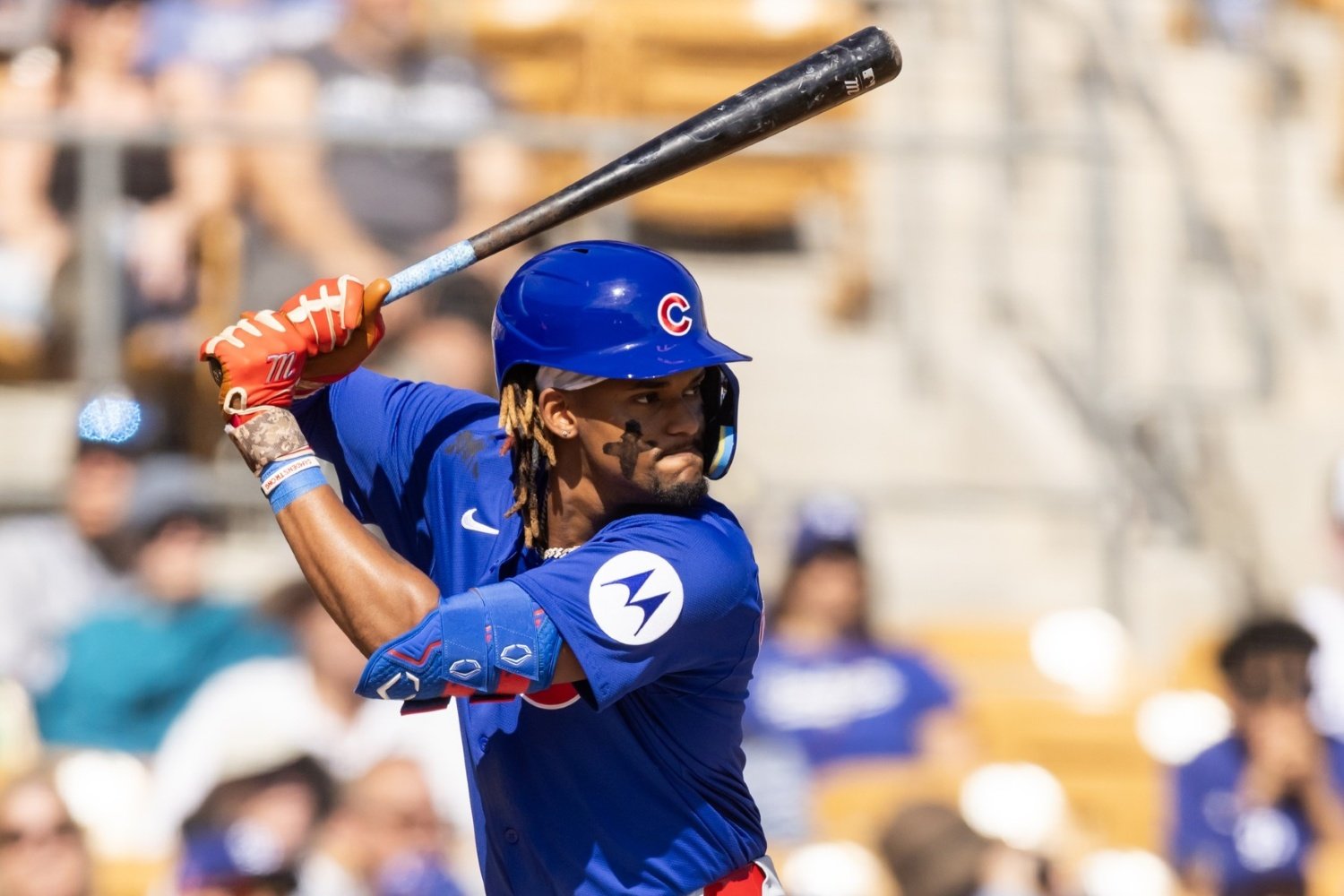 Kevin Alcántara made his MLB debut in 2024, but he collected just one hit in 10 at-bats. Spring training 2025 has been a much different story. In 11 at-bats so far this spring, Alcántara boasts a .545 batting average, with an OPS of 1.272 and four runs driven in. He has collected not only a hit, but also an RBI, in every single game. He's been everywhere, with two doubles, a stolen base, and four runs scored. A hot week in the desert won't be enough to knock down the door to the big leagues. The Cubs have a loaded outfield at the major-league level, with Ian Happ, Pete Crow-Armstrong and Kyle Tucker. Seiya Suzuki is technically the "fourth outfielder"; he will serve as the primary DH. Alcántara won't be placed on the roster to begin the season as a mere supplement to them; the reps he can get in Iowa are much more valuable to the team. Nonetheless, this laser show has been eye-opening. Alcántara took a high, two-strike fastball all the way to the right field fence in Monday's game against the Padres, with an exit velocity of 104.4 miles per hour. He hasn't come by his results cheaply, and if he keeps this up all spring, he'll force the issue for the team sooner than expected. MnJWTVBfWGw0TUFRPT1fQVFKVVZBSU1WRlFBRFZCVFZ3QUFWd0JXQUZnSEFWQUFVd1lGQWxVQVZ3VlJBVlpU.mp4 That still won't mean bringing him along to Tokyo for the season-opening series against the Dodgers. As the hype builds, though, so will the pressure to find a way to fit him into the roster picture soon. These aren't quite true big-league reps, but it can only benefit Alcántara to stay with the parent club and continue to build confidence in this preseason setting. Sometime this season, he'll return to the majors, and the Cubs need him to be ready. If he can do anything like what we've seen so far, he could have a transformational impact on the team's playoff odds.
 -
Did you know a jaguar's roar is called a "saw", because it sounds like the bite and sing of a blade through wood? Pretty soon, we're going to need a similarly evocative new name for the sound of the bite and sing of The Jaguar's bat through the baseball. Image courtesy of © Mark J. Rebilas-Imagn Images Kevin Alcántara made his MLB debut in 2024, but he collected just one hit in 10 at-bats. Spring training 2025 has been a much different story. In 11 at-bats so far this spring, Alcántara boasts a .545 batting average, with an OPS of 1.272 and four runs driven in. He has collected not only a hit, but also an RBI, in every single game. He's been everywhere, with two doubles, a stolen base, and four runs scored. A hot week in the desert won't be enough to knock down the door to the big leagues. The Cubs have a loaded outfield at the major-league level, with Ian Happ, Pete Crow-Armstrong and Kyle Tucker. Seiya Suzuki is technically the "fourth outfielder"; he will serve as the primary DH. Alcántara won't be placed on the roster to begin the season as a mere supplement to them; the reps he can get in Iowa are much more valuable to the team. Nonetheless, this laser show has been eye-opening. Alcántara took a high, two-strike fastball all the way to the right field fence in Monday's game against the Padres, with an exit velocity of 104.4 miles per hour. He hasn't come by his results cheaply, and if he keeps this up all spring, he'll force the issue for the team sooner than expected. MnJWTVBfWGw0TUFRPT1fQVFKVVZBSU1WRlFBRFZCVFZ3QUFWd0JXQUZnSEFWQUFVd1lGQWxVQVZ3VlJBVlpU.mp4 That still won't mean bringing him along to Tokyo for the season-opening series against the Dodgers. As the hype builds, though, so will the pressure to find a way to fit him into the roster picture soon. These aren't quite true big-league reps, but it can only benefit Alcántara to stay with the parent club and continue to build confidence in this preseason setting. Sometime this season, he'll return to the majors, and the Cubs need him to be ready. If he can do anything like what we've seen so far, he could have a transformational impact on the team's playoff odds. View full article
-
Miguel Amaya has reverse splits, so he is going to play against righties and Carson Kelly kills left-handed pitching so he will play against lefties. PCA needs to play every day to get as much experience and exposure as possible. Jon Berti should never be the leadoff hitter on a team trying to compete for and win a division title.
-
Predicting the Chicago Cubs' Daily Lineups After Acquiring Justin Turner
Andrew Wright posted an article in Cubs
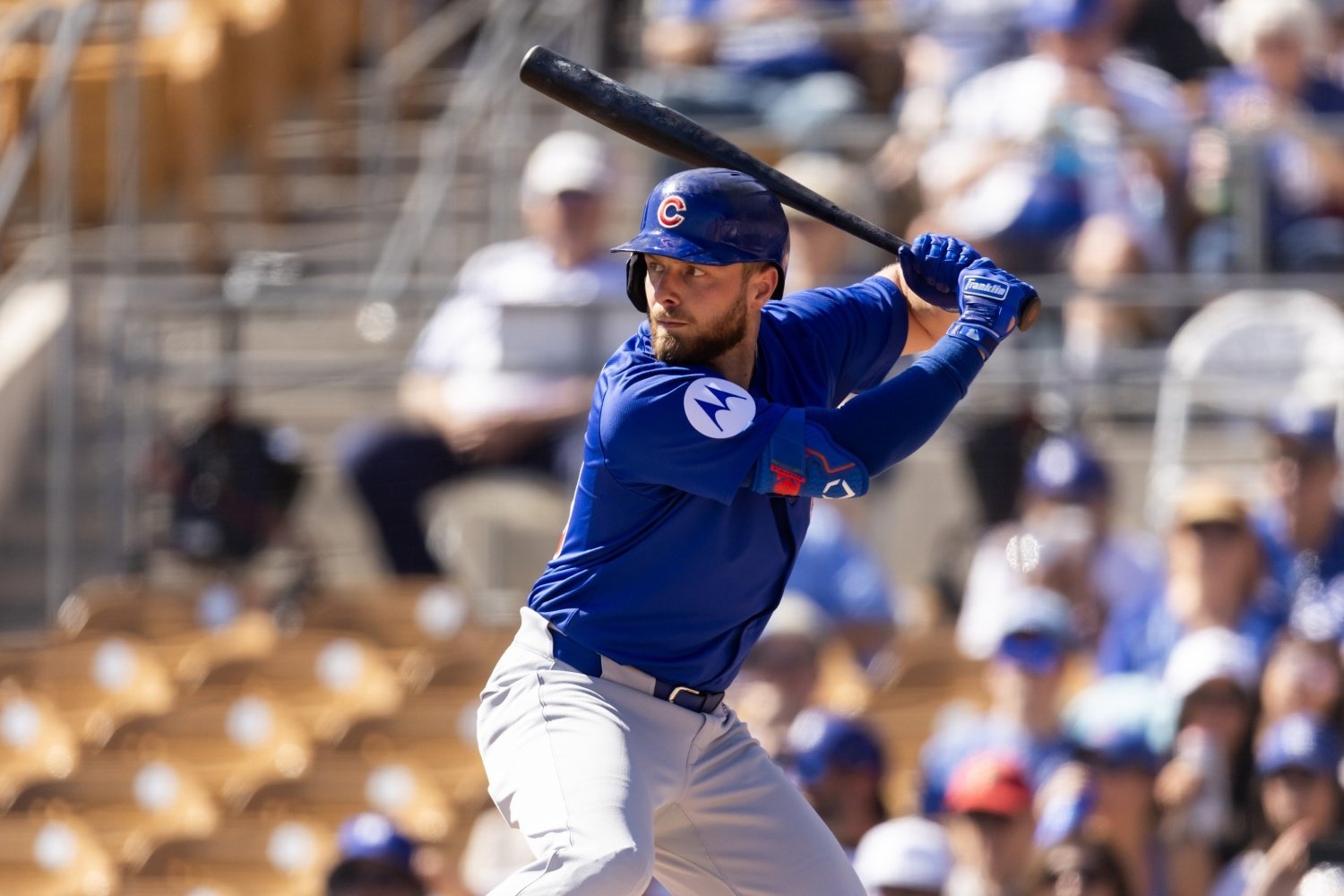 In response to losing out in the Alex Bregman sweepstakes, the Chicago Cubs signed Justin Turner to a one-year deal worth $6 million this week. It's expected that Turner will serve as the backup first baseman to Michael Busch, and may also get some occasional starts as the Cubs DH. With Turner presumably backing up Busch at first, it may turn into a platoon situation in which Busch plays against right-handed pitching and Turner plays against lefties. If that is the case, here is a look at what both of those starting lineups could look like for the Cubs. VS. RHP Ian Happ - LF Michael Busch - 1B Seiya Suzuki - DH Kyle Tucker - RF Dansby Swanson - SS Nico Hoerner - 2B Pete Crow-Armstrong - CF Matt Shaw - 3B Miguel Amaya - C The order of the players could be switched around in any variation that manager Craig Counsell thinks will work for his team, but those are the nine players who are expected to be in the lineup most days when facing a right-hander. The lineup against a lefty will look a bit different, VS. LHP Nico Hoerner - 2B Ian Happ - LF Seiya Suzuki - DH Kyle Tucker - RF Justin Turner - 1B Dansby Swanson - SS Pete Crow-Armstrong - CF Matt Shaw - 3B Carson Kelly - C Once again, the order of those nine can be switched around and maneuvered any different way you'd like, but the depth of the lineup with it being arranged the way it is looks extremely promising. Turner and Kelly are the two primary players expected to join the lineup against southpaws. Yes, we all want to see Michael Busch get an opportunity to play against left-handers sometimes, but it will be hard to keep Turner's career .275 average against lefties out of the mix. The most likely outcome for both Busch and Turner to be in the lineup together would be when Tucker or Happ needs a day off. That would see Suzuki going to the outfield, Turner at DH and Busch playing first base. That could happen against either a right-hander or a left-hander. Besides playing first base against a lefty, Turner will be Counsell's go-to pinch hitter late in games. Whether that be for Busch or even PCA, he will see plenty of pinch-hit appearances throughout the season. He is certainly no longer in his prime, but Turner is still a good baseball player, and he may very well help the 2025 Chicago Cubs get back to the postseason for the first time since 2020.
 -
Signing the hirsute veteran makes all the Cubs' likely combinations of positions and batting order slots a bit more appealing. How often will he play, though—and where will he best bolster the existing lineup? Image courtesy of © Mark J. Rebilas-Imagn Images In response to losing out in the Alex Bregman sweepstakes, the Chicago Cubs signed Justin Turner to a one-year deal worth $6 million this week. It's expected that Turner will serve as the backup first baseman to Michael Busch, and may also get some occasional starts as the Cubs DH. With Turner presumably backing up Busch at first, it may turn into a platoon situation in which Busch plays against right-handed pitching and Turner plays against lefties. If that is the case, here is a look at what both of those starting lineups could look like for the Cubs. VS. RHP Ian Happ - LF Michael Busch - 1B Seiya Suzuki - DH Kyle Tucker - RF Dansby Swanson - SS Nico Hoerner - 2B Pete Crow-Armstrong - CF Matt Shaw - 3B Miguel Amaya - C The order of the players could be switched around in any variation that manager Craig Counsell thinks will work for his team, but those are the nine players who are expected to be in the lineup most days when facing a right-hander. The lineup against a lefty will look a bit different, VS. LHP Nico Hoerner - 2B Ian Happ - LF Seiya Suzuki - DH Kyle Tucker - RF Justin Turner - 1B Dansby Swanson - SS Pete Crow-Armstrong - CF Matt Shaw - 3B Carson Kelly - C Once again, the order of those nine can be switched around and maneuvered any different way you'd like, but the depth of the lineup with it being arranged the way it is looks extremely promising. Turner and Kelly are the two primary players expected to join the lineup against southpaws. Yes, we all want to see Michael Busch get an opportunity to play against left-handers sometimes, but it will be hard to keep Turner's career .275 average against lefties out of the mix. The most likely outcome for both Busch and Turner to be in the lineup together would be when Tucker or Happ needs a day off. That would see Suzuki going to the outfield, Turner at DH and Busch playing first base. That could happen against either a right-hander or a left-hander. Besides playing first base against a lefty, Turner will be Counsell's go-to pinch hitter late in games. Whether that be for Busch or even PCA, he will see plenty of pinch-hit appearances throughout the season. He is certainly no longer in his prime, but Turner is still a good baseball player, and he may very well help the 2025 Chicago Cubs get back to the postseason for the first time since 2020. View full article
-
For the first time since 2011, the Chicago Cubs will begin their season without a member of the 2016 World Series team on the Opening Day roster. Thus, this spring will mark a transition to a new era. As we venture into it, let's check in on the whereabouts of the Curse-breaker diaspora. Image courtesy of © Charles LeClaire-Imagn Images AL East: Aroldis Chapman (BOS), Rob Zastryzny (NYY) Chapman has bounced around MLB the last two seasons, spending time with the Royals and Rangers in 2023 and the Pirates in 2024. He signed a one-year deal worth $10.75 million with the Red Sox this offseason and will join the seventh team of his MLB career. Zastryzny was the last hope, in a way, having been claimed on waivers after a meander through a few other rosters—up until last week, when he was claimed off waivers by the New York Yankees. There was never really a world where Zastryzny would make the Opening Day roster, so it was good to see him go try and earn an opportunity elsewhere, AL Central: Javier Báez (DET) The downfall of Báez since his arrival in Detroit has been upsetting for most Cubs fans, who remember the electric player he was in his time in a Cubs uniform. His energy and charisma are unmatched. Hopefully (though not probably), he will be able to turn it around in 2025 and have a solid season. AL West: Kyle Hendricks (LAA), Jorge Soler (LAA) Hendricks was the last remaining member of the World Series roster to spend time with the Chicago. A rough stretch over the last few years made it easy to move on and allow him to seek out other opportunities, in hopes of finishing his career on the right note. Soler has done quite a bit over his career, including winning the 2021 World Series MVP with the team who plays in suburban Cobb County, Ga. A solid season in Anaheim will make him a prime trade candidate come late July (for about the hundredth time). NL East: Kyle Schwarber (PHI), Albert Almora Jr. (MIA) Schwarber has long been considered the "one that got away" from Chicago. He's been phenomenal since leaving, with his blend of power and patience adding up to make him one of the best leadoff men in baseball. Almora has not seen a pitch in the majors since 2022, but he will have an opportunity to change that, after signing with the Miami Marlins on a minor-league deal with an invitation to spring training. A good spring for Almora could see him make the Opening Day roster for a very bad Marlins team. NL Central: Willson Contreras (STL) Contreras will begin his third season in St. Louis in 2025, and it will come at a new position. After years of frustration with his defense, the Cardinals have decided to move Contreras to first base full-time. There have been trade talks surrounding Contreras his entire Cardinals career, so a solid season and a down year for St. Louis may mean they will look to move off of Contreras's contract. For that matter, they offered him that chance in the fall, but he elected to stay put for now. NL West: Kris Bryant (COL), Jason Heyward (SDP) Much like Báez, Bryant's time with his new team has been extremely unfortunate. Bryant has appeared in just 159 of a possible 486 games in his Rockies career. When he is on the field, he's not producing, finishing with batting averages of .233 and .218 in the last two seasons. Heyward, on the other hand, has bounced around a bit the last couple years, spending time with the Dodgers and Astros before signing with San Diego just last week. Heyward is certainly nearing the end of his career, and a good season with San Diego may see him call it a career after the season. A bad season might take the choice out of his hands. Free Agents: Anthony Rizzo Rizzo is still looking for a place to call home in 2025, and here's to hoping he finds one and rejuvenates his career after an injury-riddled stint with the Yankees. Most of the rest of the team (David Ross, John Lackey, Jon Lester, Jake Arrieta, Jason Hammel, Pedro Strop, Ben Zobrist, Chris Coghlan, Dexter Fowler, Miguel Montero and more) are now retired. It's a stark reminder: that season was a long time ago, already. The Cubs haven't mounted any serious threat to return to the Fall Classic since 2017. Maybe this season will change that. View full article
-
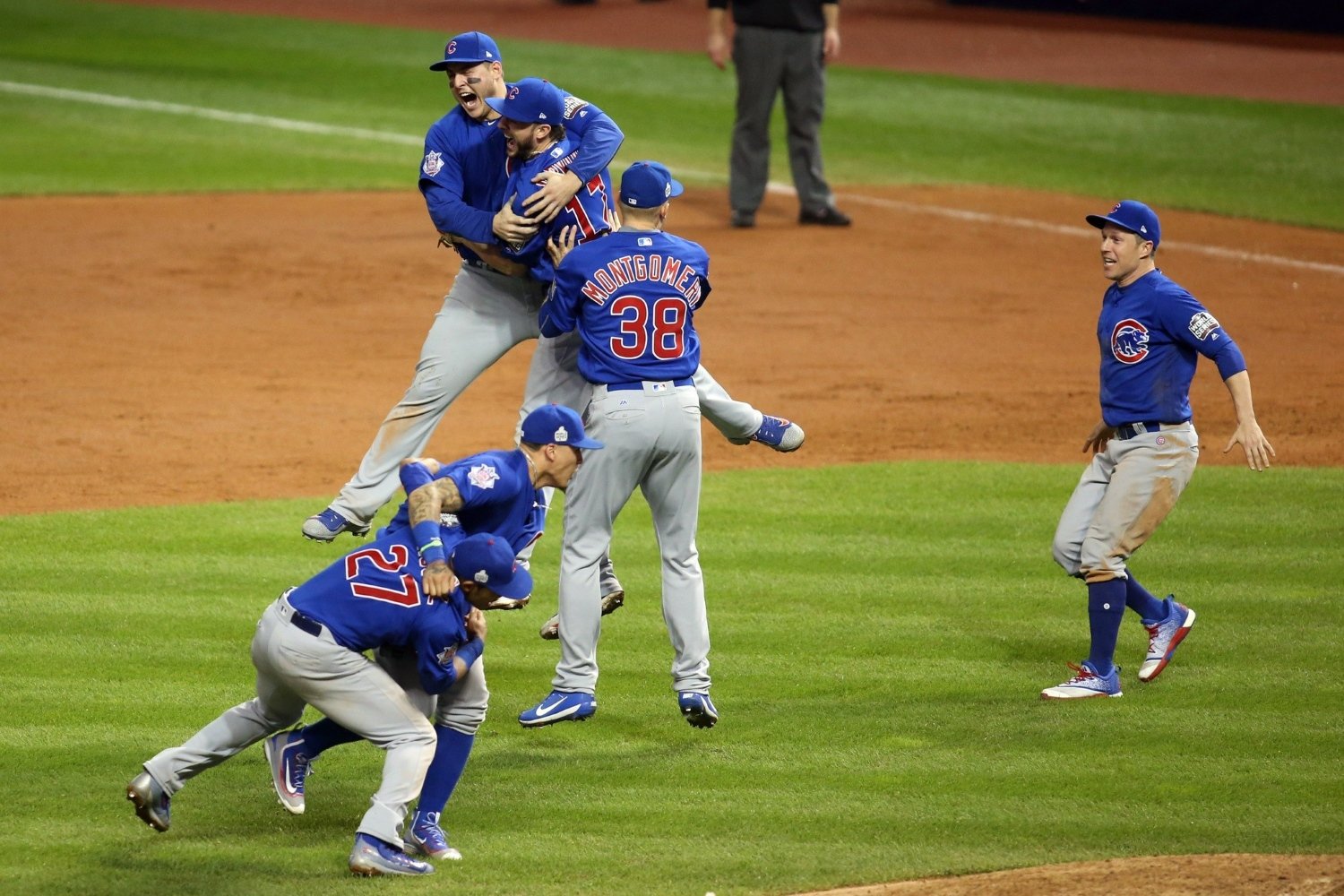 AL East: Aroldis Chapman (BOS), Rob Zastryzny (NYY) Chapman has bounced around MLB the last two seasons, spending time with the Royals and Rangers in 2023 and the Pirates in 2024. He signed a one-year deal worth $10.75 million with the Red Sox this offseason and will join the seventh team of his MLB career. Zastryzny was the last hope, in a way, having been claimed on waivers after a meander through a few other rosters—up until last week, when he was claimed off waivers by the New York Yankees. There was never really a world where Zastryzny would make the Opening Day roster, so it was good to see him go try and earn an opportunity elsewhere, AL Central: Javier Báez (DET) The downfall of Báez since his arrival in Detroit has been upsetting for most Cubs fans, who remember the electric player he was in his time in a Cubs uniform. His energy and charisma are unmatched. Hopefully (though not probably), he will be able to turn it around in 2025 and have a solid season. AL West: Kyle Hendricks (LAA), Jorge Soler (LAA) Hendricks was the last remaining member of the World Series roster to spend time with the Chicago. A rough stretch over the last few years made it easy to move on and allow him to seek out other opportunities, in hopes of finishing his career on the right note. Soler has done quite a bit over his career, including winning the 2021 World Series MVP with the team who plays in suburban Cobb County, Ga. A solid season in Anaheim will make him a prime trade candidate come late July (for about the hundredth time). NL East: Kyle Schwarber (PHI), Albert Almora Jr. (MIA) Schwarber has long been considered the "one that got away" from Chicago. He's been phenomenal since leaving, with his blend of power and patience adding up to make him one of the best leadoff men in baseball. Almora has not seen a pitch in the majors since 2022, but he will have an opportunity to change that, after signing with the Miami Marlins on a minor-league deal with an invitation to spring training. A good spring for Almora could see him make the Opening Day roster for a very bad Marlins team. NL Central: Willson Contreras (STL) Contreras will begin his third season in St. Louis in 2025, and it will come at a new position. After years of frustration with his defense, the Cardinals have decided to move Contreras to first base full-time. There have been trade talks surrounding Contreras his entire Cardinals career, so a solid season and a down year for St. Louis may mean they will look to move off of Contreras's contract. For that matter, they offered him that chance in the fall, but he elected to stay put for now. NL West: Kris Bryant (COL), Jason Heyward (SDP) Much like Báez, Bryant's time with his new team has been extremely unfortunate. Bryant has appeared in just 159 of a possible 486 games in his Rockies career. When he is on the field, he's not producing, finishing with batting averages of .233 and .218 in the last two seasons. Heyward, on the other hand, has bounced around a bit the last couple years, spending time with the Dodgers and Astros before signing with San Diego just last week. Heyward is certainly nearing the end of his career, and a good season with San Diego may see him call it a career after the season. A bad season might take the choice out of his hands. Free Agents: Anthony Rizzo Rizzo is still looking for a place to call home in 2025, and here's to hoping he finds one and rejuvenates his career after an injury-riddled stint with the Yankees. Most of the rest of the team (David Ross, John Lackey, Jon Lester, Jake Arrieta, Jason Hammel, Pedro Strop, Ben Zobrist, Chris Coghlan, Dexter Fowler, Miguel Montero and more) are now retired. It's a stark reminder: that season was a long time ago, already. The Cubs haven't mounted any serious threat to return to the Fall Classic since 2017. Maybe this season will change that.
 -
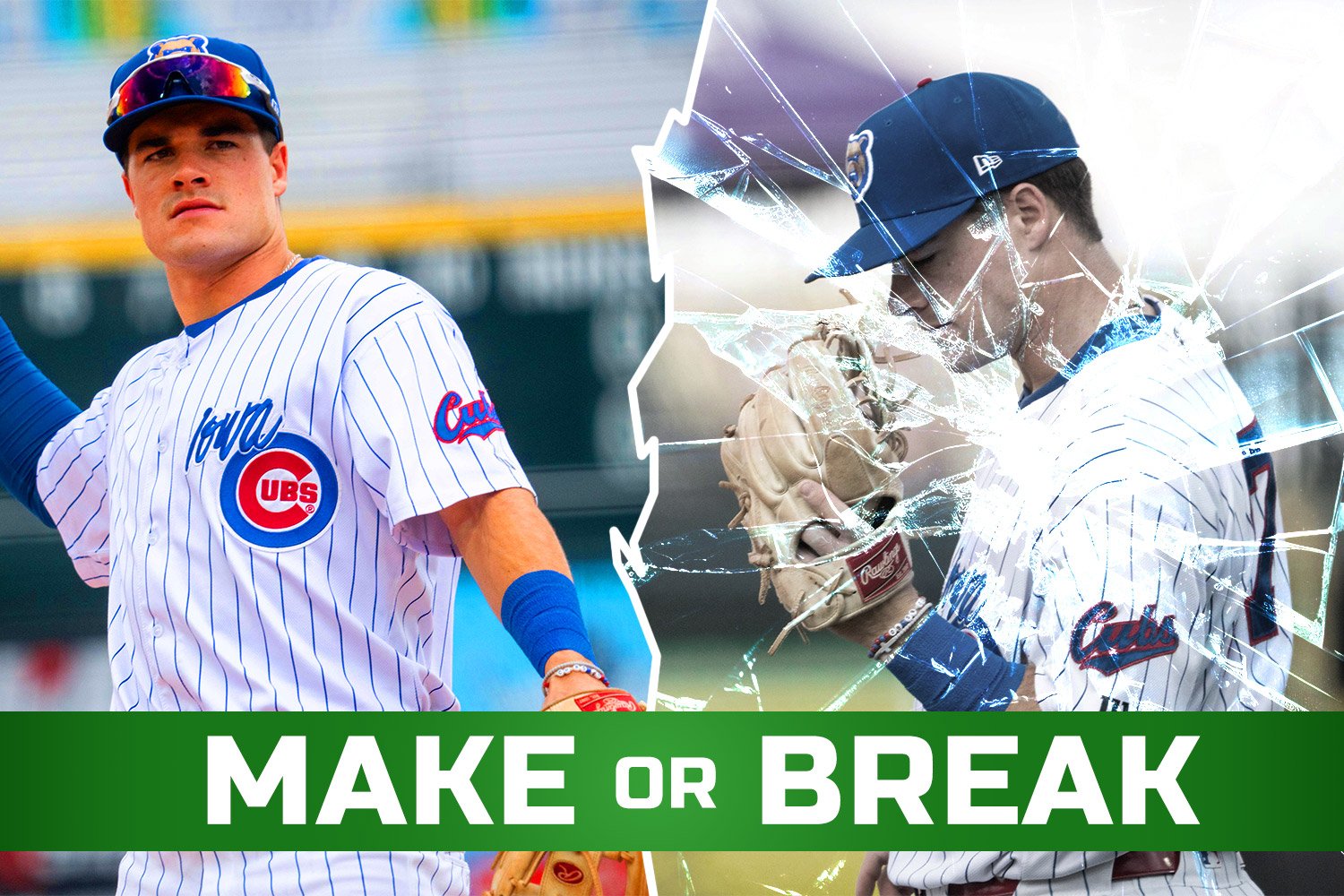 Yes, it may seem like a lot to put the team's success on the back of Matt Shaw, a player who will probably make his MLB debut in just over a month, but he is a bit of an outlier. The hype around Shaw's emergence is extremely real, and the expectations will be higher than normal for the beginning of an MLB career. To understand why, it's important to remember that Shaw is a career .303 hitter in the minor leagues, with an OBP of .384 and a .522 slugging average. Shaw has socked 29 home runs in 693 plate appearances across all minor-league levels. In his 2024 season, he hit 21 homers, stole 31 bases and played solid defense around the infield, with over 550 innings at third base and over 200 apiece at each middle-infield spot. He also dominated the Premier12 tournament as a member of Team USA this fall, with a 1.206 OPS in nine games. That he went there instead of creating a more traditional showcase for himself in the Arizona Fall League is a testament to his willingness to get out of his comfort zone, and he drew rave reviews for his eagerness to soak up new information during the one-month international sojourn. Since the departure of Kris Bryant (and even prior thereto, at times), Chicago has struggled with production from third basemen. Just think about some names that have spent time at the hot corner since 2020: Isaac Paredes, Patrick Wisdom, Christopher Morel, Nick Madrigal, David Bote, Jonathan Villar, and many more. It's a position that has lacked productivity and stability, and Shaw will have the opportunity to provide for 2025 and beyond. With moves made throughout the offseason, the Cubs signaled that they believed in Shaw and his ability to produce right away in the big leagues. They dealt Paredes, and were ready to trade Nico Hoerner in response to the possibility of signing Alex Bregman—although that would have been fueled as much by financial constraints as by faith in their top prospect. The signs have been out in the open air all offseason. Shaw will be on the big-league roster fairly soon, if not right away, and he's expected to be a major contributor to the 2025 Chicago Cubs. Though the need for big adjustments looms, Shaw does have two-way upside. He might be a sufficiently adroit hitter to be above-average at the plate right away, and he might just be an above-average third baseman, despite only moving to that position in earnest last year. With the Cubs trying to get to the 90-win mark for the first time since 2018, Shaw's production will be enormously important. If the top prospect in the Chicago system can put together a solid rookie season, we may very well be watching playoff baseball at Wrigley Field for the first time in what has felt like forever.
 -
With a strong top half of the lineup set and a veteran pitching staff reinforced with better depth, the 2025 Cubs have undeniable upside—more than they've had in years. Much of that rising hope, however, rests on the high-stakes bet the team has semi-accidentally placed on their rookie third baseman. Image courtesy of © Cody Scanlan / USA TODAY NETWORK via Imagn Images / © Cody Scanlan/The Register / USA TODAY NETWORK Yes, it may seem like a lot to put the team's success on the back of Matt Shaw, a player who will probably make his MLB debut in just over a month, but he is a bit of an outlier. The hype around Shaw's emergence is extremely real, and the expectations will be higher than normal for the beginning of an MLB career. To understand why, it's important to remember that Shaw is a career .303 hitter in the minor leagues, with an OBP of .384 and a .522 slugging average. Shaw has socked 29 home runs in 693 plate appearances across all minor-league levels. In his 2024 season, he hit 21 homers, stole 31 bases and played solid defense around the infield, with over 550 innings at third base and over 200 apiece at each middle-infield spot. He also dominated the Premier12 tournament as a member of Team USA this fall, with a 1.206 OPS in nine games. That he went there instead of creating a more traditional showcase for himself in the Arizona Fall League is a testament to his willingness to get out of his comfort zone, and he drew rave reviews for his eagerness to soak up new information during the one-month international sojourn. Since the departure of Kris Bryant (and even prior thereto, at times), Chicago has struggled with production from third basemen. Just think about some names that have spent time at the hot corner since 2020: Isaac Paredes, Patrick Wisdom, Christopher Morel, Nick Madrigal, David Bote, Jonathan Villar, and many more. It's a position that has lacked productivity and stability, and Shaw will have the opportunity to provide for 2025 and beyond. With moves made throughout the offseason, the Cubs signaled that they believed in Shaw and his ability to produce right away in the big leagues. They dealt Paredes, and were ready to trade Nico Hoerner in response to the possibility of signing Alex Bregman—although that would have been fueled as much by financial constraints as by faith in their top prospect. The signs have been out in the open air all offseason. Shaw will be on the big-league roster fairly soon, if not right away, and he's expected to be a major contributor to the 2025 Chicago Cubs. Though the need for big adjustments looms, Shaw does have two-way upside. He might be a sufficiently adroit hitter to be above-average at the plate right away, and he might just be an above-average third baseman, despite only moving to that position in earnest last year. With the Cubs trying to get to the 90-win mark for the first time since 2018, Shaw's production will be enormously important. If the top prospect in the Chicago system can put together a solid rookie season, we may very well be watching playoff baseball at Wrigley Field for the first time in what has felt like forever. View full article
-
It's that time of year again when the MLB begins to release its Top 100 Players List across social media platforms, getting the baseball world talking about who is ranked too high, too low, or just right. The Chicago Cubs were a popular team to appear on the graphics, with six players ranked on the list. Let's do a quick breakdown of who they were and where they were ranked. Image courtesy of © Jay Biggerstaff-Imagn Images Here is the complete list of MLB's Top 100 Players. Dansby Swanson: Rank - 93 Swanson has fallen out of good graces with the folks who make this list, as he was ranked No. 39 just two seasons ago, and he now finds himself almost entirely off the list. Swanson has struggled with injuries since joining the Cubs, but he is highly optimistic and confident that 2025 is the healthiest he's been in a long time, and he is primed for a career season. Ian Happ: Rank - 92 Happ joins the Top 100 list for the first time in his career, one spot above his teammate. Happ's career highs in home runs (25) and RBI (86) had an impact on him joining the list. His third consecutive gold glove in 2024 also played a part in being considered a Top 100 player in the game. Justin Steele: Rank - 88 Steele was No. 64 before last season and fell 24 spots after a confusing 2024 campaign. He finished with a 5-5 record but had an ERA of just 3.07. Steele threw the ball extremely well, but he could just not get the winning decision. He earned his first win of the season in July when he threw a complete game against the Angels. Steele will certainly look to bounce back and have a Cy-Young-type season like the one he had in 2023. Seiya Suzuki: Rank - 73 Suzuki is the first member of the list to make a jump upward from last season, climbing 11 spots. He hit a career-high 21 home runs and had a career-high OPS of .848. 2025 will be an important season for the slugger out of Japan, as he will transition from an everyday right fielder to an everyday designated hitter. Shota Imanaga: Rank - 64 Imanaga may have very well been Chicago's best player in 2024. His first season in MLB went much better than anyone could've thought, and he has a chance in 2025 to cement himself as the new ace of the Cubs pitching staff. A 1-2 punch of Imanaga and Steele at the top of the rotation could be a scary sight for any team in the regular season and postseason. Kyle Tucker: Rank - 14 Finally, the Cubs have their superstar and a Top 20 player in baseball. Tucker is the highest-ranked Cubs player on the list; the last time Chicago had a top-25 talent on the list, Javier Baez was No. 23 prior to the 2020 season. Tucker will be the third-ranked right fielder, behind only Juan Soto and Aaron Judge. If Tucker produces the way everyone hopes he will, the Cubs will need to do everything in their power to ensure he is in Chicago for the long term. View full article
-
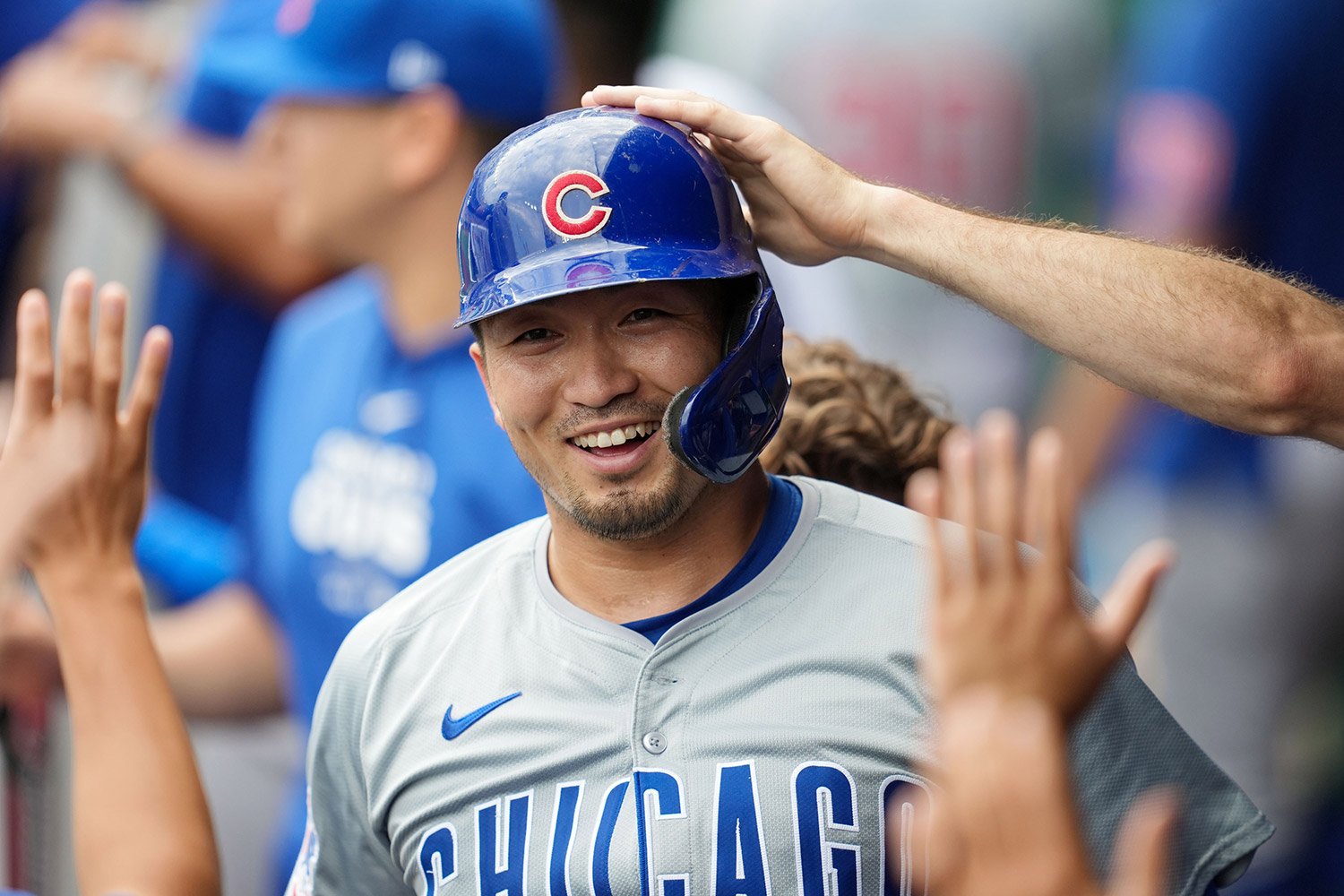 Here is the complete list of MLB's Top 100 Players. Dansby Swanson: Rank - 93 Swanson has fallen out of good graces with the folks who make this list, as he was ranked No. 39 just two seasons ago, and he now finds himself almost entirely off the list. Swanson has struggled with injuries since joining the Cubs, but he is highly optimistic and confident that 2025 is the healthiest he's been in a long time, and he is primed for a career season. Ian Happ: Rank - 92 Happ joins the Top 100 list for the first time in his career, one spot above his teammate. Happ's career highs in home runs (25) and RBI (86) had an impact on him joining the list. His third consecutive gold glove in 2024 also played a part in being considered a Top 100 player in the game. Justin Steele: Rank - 88 Steele was No. 64 before last season and fell 24 spots after a confusing 2024 campaign. He finished with a 5-5 record but had an ERA of just 3.07. Steele threw the ball extremely well, but he could just not get the winning decision. He earned his first win of the season in July when he threw a complete game against the Angels. Steele will certainly look to bounce back and have a Cy-Young-type season like the one he had in 2023. Seiya Suzuki: Rank - 73 Suzuki is the first member of the list to make a jump upward from last season, climbing 11 spots. He hit a career-high 21 home runs and had a career-high OPS of .848. 2025 will be an important season for the slugger out of Japan, as he will transition from an everyday right fielder to an everyday designated hitter. Shota Imanaga: Rank - 64 Imanaga may have very well been Chicago's best player in 2024. His first season in MLB went much better than anyone could've thought, and he has a chance in 2025 to cement himself as the new ace of the Cubs pitching staff. A 1-2 punch of Imanaga and Steele at the top of the rotation could be a scary sight for any team in the regular season and postseason. Kyle Tucker: Rank - 14 Finally, the Cubs have their superstar and a Top 20 player in baseball. Tucker is the highest-ranked Cubs player on the list; the last time Chicago had a top-25 talent on the list, Javier Baez was No. 23 prior to the 2020 season. Tucker will be the third-ranked right fielder, behind only Juan Soto and Aaron Judge. If Tucker produces the way everyone hopes he will, the Cubs will need to do everything in their power to ensure he is in Chicago for the long term.
 -
I think Steele is certainly still an "ace" I do agree that this collective group should be able to cut down on the bullpen meltdowns of last season and this team could very well get to 90 wins.
-
It has been almost a month since we made our first roster projection for the 2025 Cubs' Opening Day roster, and there have been a few moves that will both minorly and majorly impact the roster. With the team playing their first spring training game in just 10 days, here is the second version of a 2025 roster projection. Image courtesy of © Rick Scuteri-Imagn Images Obviously, many Cubs fans are still hoping for further reinforcements of the current roster. Even as things stand, though, they look poised to contend. Here's the group most likely to break camp and head to Japan next month, if nothing changes between now and then. Pitchers (13) SP: Justin Steele SP: Shota Imanaga SP: Jameson Taillon SP: Matthew Boyd SP: Colin Rea RP: Ryan Brasier RP: Ryan Pressly RP: Porter Hodge RP: Tyson Miller RP: Caleb Thielbar RP: Julian Merryweather RP: Eli Morgan RP: Nate Pearson Chicago has an absurd amount of pitching depth, making it tough to leave off guys such as Jordan Wicks, Javier Assad, Luke Little and Ben Brown. All of those pitchers will more than likely start the year in Iowa, where the Iowa Cubs will have one of the most loaded pitching staffs in all of Minor League Baseball—although Assad has no sooner reported to camp than headed for an MRI on his oblique. This list could fluctuate and change with performances by certain guys this spring, but as for now, this is our best guess as to who will be on the Opening Day pitching staff. Catchers (2) Miguel Amaya Carson Kelly Nothing has changed at the catcher position since our first roster projection. It is still expected that Amaya will start games behind the plate when the Cubs are facing most righties, and Kelly will get the nod when facing a lefty. Infielders (6) 1B: Michael Busch 2B: Nico Hoerner SS: Dansby Swanson 3B: Matt Shaw UTL: Jon Berti UTL: Gage Workman The rumors surrounding Alex Bregman signing with Chicago have been swirling since last week, but since he has still not made a decision, he can't be put on this roster projection. If you recall, in late December, Chicago acquired utility man Vidal Bruján from the Marlins in exchange for once-promising prospect Matt Mervis. With the addition of Berti in free agency and Workman having to be returned to the Tigers if he does not start the season on the roster, though, it feels like Bruján will be waived. Outfielders (5) LF: Ian Happ CF: Pete Crow-Armstrong RF: Kyle Tucker DH/OF: Seiya Suzuki OF: Alexander Canario Nothing has changed in the outfield landscape for Chicago. Manager Craig Counsell has made it known publicly that Suzuki will spend most of his 2025 season as the Cubs' designated hitter. Canario is still expected to start on the major-league roster, as he is out of minor-league options and the team lacks another clear option for that roster spot. A Bregman signing in the coming days could reshape the roster, if Chicago were to reel him in and/or move on from Hoerner. There may be tweaks to the pitching staff, but as of now, this is our best guess at the 26-man Opening Day roster for the Cubs. View full article
-
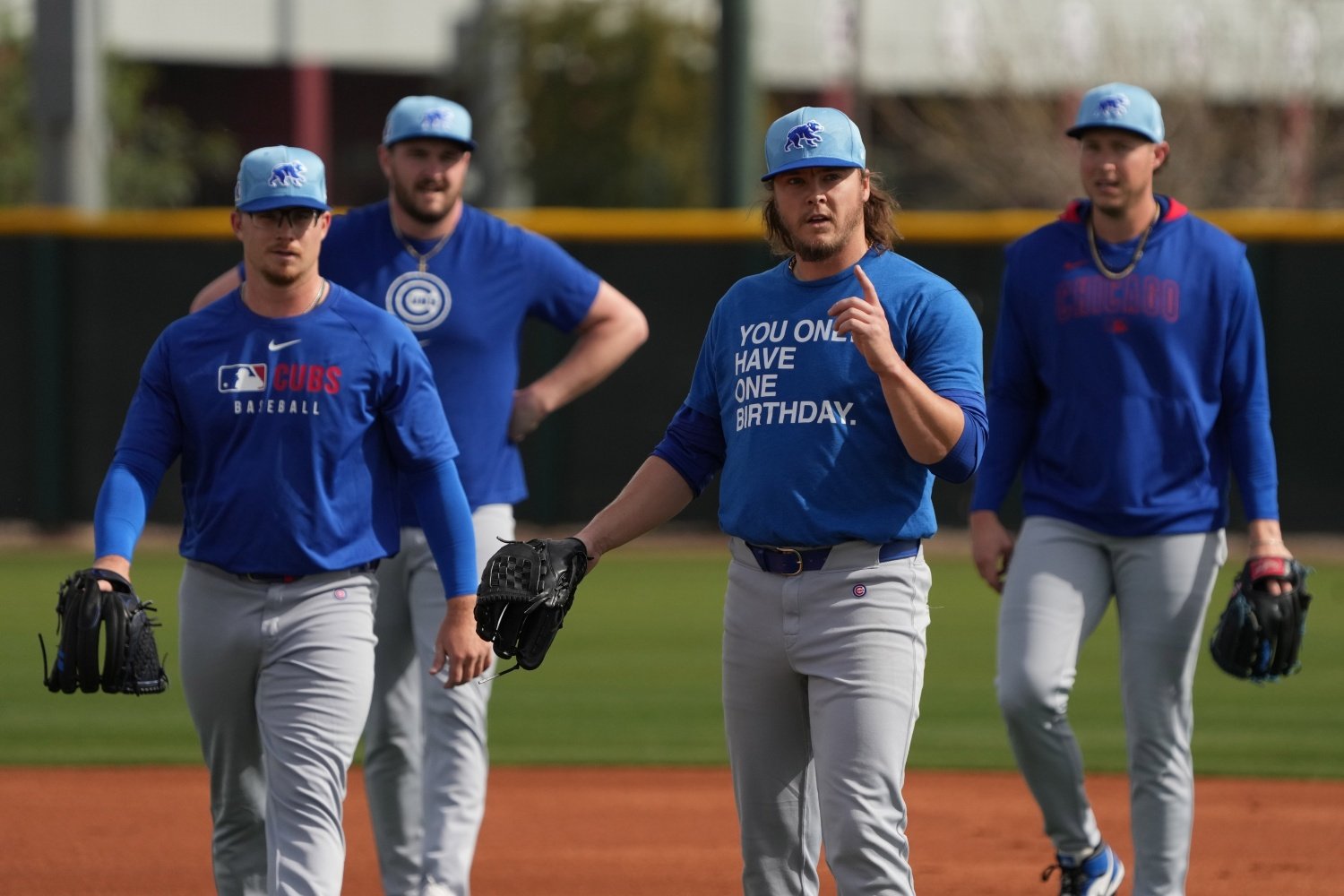 Obviously, many Cubs fans are still hoping for further reinforcements of the current roster. Even as things stand, though, they look poised to contend. Here's the group most likely to break camp and head to Japan next month, if nothing changes between now and then. Pitchers (13) SP: Justin Steele SP: Shota Imanaga SP: Jameson Taillon SP: Matthew Boyd SP: Colin Rea RP: Ryan Brasier RP: Ryan Pressly RP: Porter Hodge RP: Tyson Miller RP: Caleb Thielbar RP: Julian Merryweather RP: Eli Morgan RP: Nate Pearson Chicago has an absurd amount of pitching depth, making it tough to leave off guys such as Jordan Wicks, Javier Assad, Luke Little and Ben Brown. All of those pitchers will more than likely start the year in Iowa, where the Iowa Cubs will have one of the most loaded pitching staffs in all of Minor League Baseball—although Assad has no sooner reported to camp than headed for an MRI on his oblique. This list could fluctuate and change with performances by certain guys this spring, but as for now, this is our best guess as to who will be on the Opening Day pitching staff. Catchers (2) Miguel Amaya Carson Kelly Nothing has changed at the catcher position since our first roster projection. It is still expected that Amaya will start games behind the plate when the Cubs are facing most righties, and Kelly will get the nod when facing a lefty. Infielders (6) 1B: Michael Busch 2B: Nico Hoerner SS: Dansby Swanson 3B: Matt Shaw UTL: Jon Berti UTL: Gage Workman The rumors surrounding Alex Bregman signing with Chicago have been swirling since last week, but since he has still not made a decision, he can't be put on this roster projection. If you recall, in late December, Chicago acquired utility man Vidal Bruján from the Marlins in exchange for once-promising prospect Matt Mervis. With the addition of Berti in free agency and Workman having to be returned to the Tigers if he does not start the season on the roster, though, it feels like Bruján will be waived. Outfielders (5) LF: Ian Happ CF: Pete Crow-Armstrong RF: Kyle Tucker DH/OF: Seiya Suzuki OF: Alexander Canario Nothing has changed in the outfield landscape for Chicago. Manager Craig Counsell has made it known publicly that Suzuki will spend most of his 2025 season as the Cubs' designated hitter. Canario is still expected to start on the major-league roster, as he is out of minor-league options and the team lacks another clear option for that roster spot. A Bregman signing in the coming days could reshape the roster, if Chicago were to reel him in and/or move on from Hoerner. There may be tweaks to the pitching staff, but as of now, this is our best guess at the 26-man Opening Day roster for the Cubs.
 -
The talk of the Cubs world the last three days has been the possibility of signing former Astros third baseman Alex Bregman. If they do complete the blockbuster signing, can they also find a way to keep their stalwart second baseman? Image courtesy of Norm Hall/Getty Images Rumors have been swirling regarding what they Cubs have offered Alex Bregman, which other teams are in the mix, and what Bregman and his camp prefer in a contract. Another rumor that has gained steam is that the Cubs will be looking to move off of second baseman Nico Hoerner if they do sign Bregman. Trading Hoerner after a Bregman signing would be a mistake and here's a few reasons why. The first reason for needing to keep Hoerner is that he brings too much value to too many places to just ship away and let a prospect play over him. Hoerner is a career .278 hitter with a .338 career on-base percentage. Hoerner is in the 99th percentile in strikeout rate, striking out in just 10.3% of his plate appearances last season. The Cubs were 17th in offensive strikeouts in 2024, and that would more than likely be worse with the departure of Hoerner. Hoerner had a bit of a down season in 2024, when he posted his worst OPS since 2020 (.708), but there is little reason to believe that a bounce back is not on the horizon. Defensively, Hoerner won a Gold Glove award in 2023, and finished fourth among second basemen in both Defensive Runs Saved (eight) and Outs Above Average (11). Their middle-of-the-field defense with him, Dansby Swanson, and Pete Crow-Armstrong may be the best in all of baseball. The second reason is that Matt Shaw may not be ready for the Major Leagues. Yes, all the talks from front offices and scouts and experts say that Shaw is more than ready to play at the big-league level, but wasn't the same said about Matt Mervis? The first baseman was supposed to be a "high floor" slugger with a refined plate approach, and now he is no longer with the organization after being traded to the Marlins earlier in the offseason. Shaw is a higher quality prospect now than Mervis ever was, but the point remains: trusting Shaw to immediately replace an established veteran like Hoerner could be a fool's errand. If Shaw comes up and doesn't produce and needs to be sent down, then who do you insert into the lineup in his spot? Vidal Brujan? Jon Berti? Gage Workman? None of those options are remotely close to the best one, which would be keeping Hoerner and letting Shaw be a utility man, rather than coming up to the big leagues and starting every single day right away. It gives him an opportunity to get his feet wet and if he begins to outproduce Hoerner, then you make a move. Finally, the last reason to keep Hoerner is that it just makes sense logically. If your goal as a team is to win as many baseball games as you possibly can, then it makes sense to keep as many good players on your team as you can. You don't have to sign a really good player in Bregman and then give away a good player in Hoerner, even if the Cubs want you to think they're working with limited money. It's pretty sensible to argue that signing Bregman and trading Hoerner is much worse of an option than keeping both of them. Shaw's bat may have more potential than Hoerner's down the road, but the latter is a sterling defender and baserunner on top of his offensive utility. Nothing is finalized yet and it appears that the Bregman situation is dragging out longer than expected, but if the Cubs are able to sign him, they'd be foolish to trade Hoerner in response. View full article
- 8 replies
-
- 1
-

-
- nico hoerner
- alex bregman
- (and 1 more)
-
The Cubs Should Keep Nico Hoerner Even If They Sign Alex Bregman
Andrew Wright posted an article in Cubs
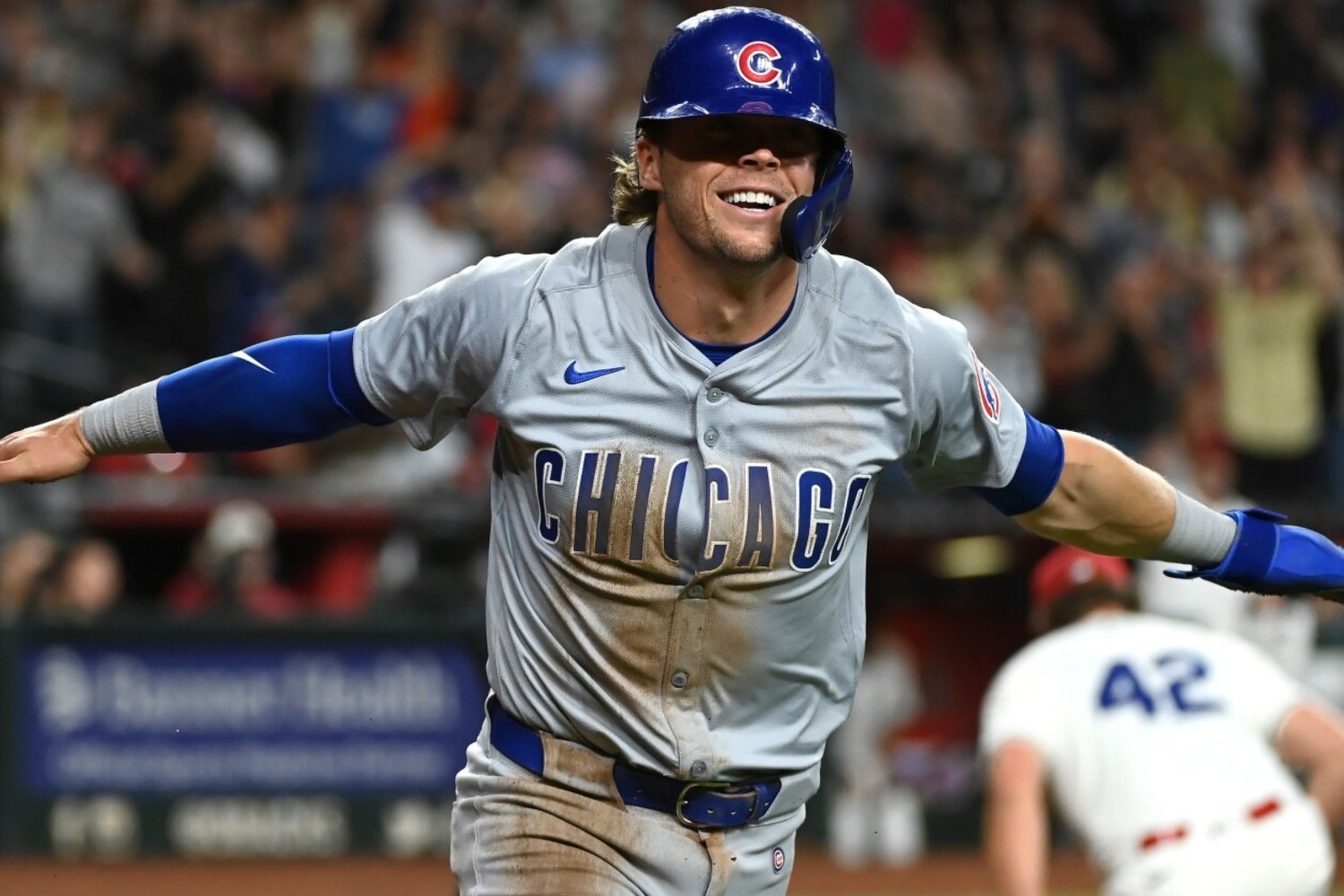 Rumors have been swirling regarding what they Cubs have offered Alex Bregman, which other teams are in the mix, and what Bregman and his camp prefer in a contract. Another rumor that has gained steam is that the Cubs will be looking to move off of second baseman Nico Hoerner if they do sign Bregman. Trading Hoerner after a Bregman signing would be a mistake and here's a few reasons why. The first reason for needing to keep Hoerner is that he brings too much value to too many places to just ship away and let a prospect play over him. Hoerner is a career .278 hitter with a .338 career on-base percentage. Hoerner is in the 99th percentile in strikeout rate, striking out in just 10.3% of his plate appearances last season. The Cubs were 17th in offensive strikeouts in 2024, and that would more than likely be worse with the departure of Hoerner. Hoerner had a bit of a down season in 2024, when he posted his worst OPS since 2020 (.708), but there is little reason to believe that a bounce back is not on the horizon. Defensively, Hoerner won a Gold Glove award in 2023, and finished fourth among second basemen in both Defensive Runs Saved (eight) and Outs Above Average (11). Their middle-of-the-field defense with him, Dansby Swanson, and Pete Crow-Armstrong may be the best in all of baseball. The second reason is that Matt Shaw may not be ready for the Major Leagues. Yes, all the talks from front offices and scouts and experts say that Shaw is more than ready to play at the big-league level, but wasn't the same said about Matt Mervis? The first baseman was supposed to be a "high floor" slugger with a refined plate approach, and now he is no longer with the organization after being traded to the Marlins earlier in the offseason. Shaw is a higher quality prospect now than Mervis ever was, but the point remains: trusting Shaw to immediately replace an established veteran like Hoerner could be a fool's errand. If Shaw comes up and doesn't produce and needs to be sent down, then who do you insert into the lineup in his spot? Vidal Brujan? Jon Berti? Gage Workman? None of those options are remotely close to the best one, which would be keeping Hoerner and letting Shaw be a utility man, rather than coming up to the big leagues and starting every single day right away. It gives him an opportunity to get his feet wet and if he begins to outproduce Hoerner, then you make a move. Finally, the last reason to keep Hoerner is that it just makes sense logically. If your goal as a team is to win as many baseball games as you possibly can, then it makes sense to keep as many good players on your team as you can. You don't have to sign a really good player in Bregman and then give away a good player in Hoerner, even if the Cubs want you to think they're working with limited money. It's pretty sensible to argue that signing Bregman and trading Hoerner is much worse of an option than keeping both of them. Shaw's bat may have more potential than Hoerner's down the road, but the latter is a sterling defender and baserunner on top of his offensive utility. Nothing is finalized yet and it appears that the Bregman situation is dragging out longer than expected, but if the Cubs are able to sign him, they'd be foolish to trade Hoerner in response.
- 8 comments
-
- 2
-
-
- nico hoerner
- alex bregman
- (and 1 more)
-
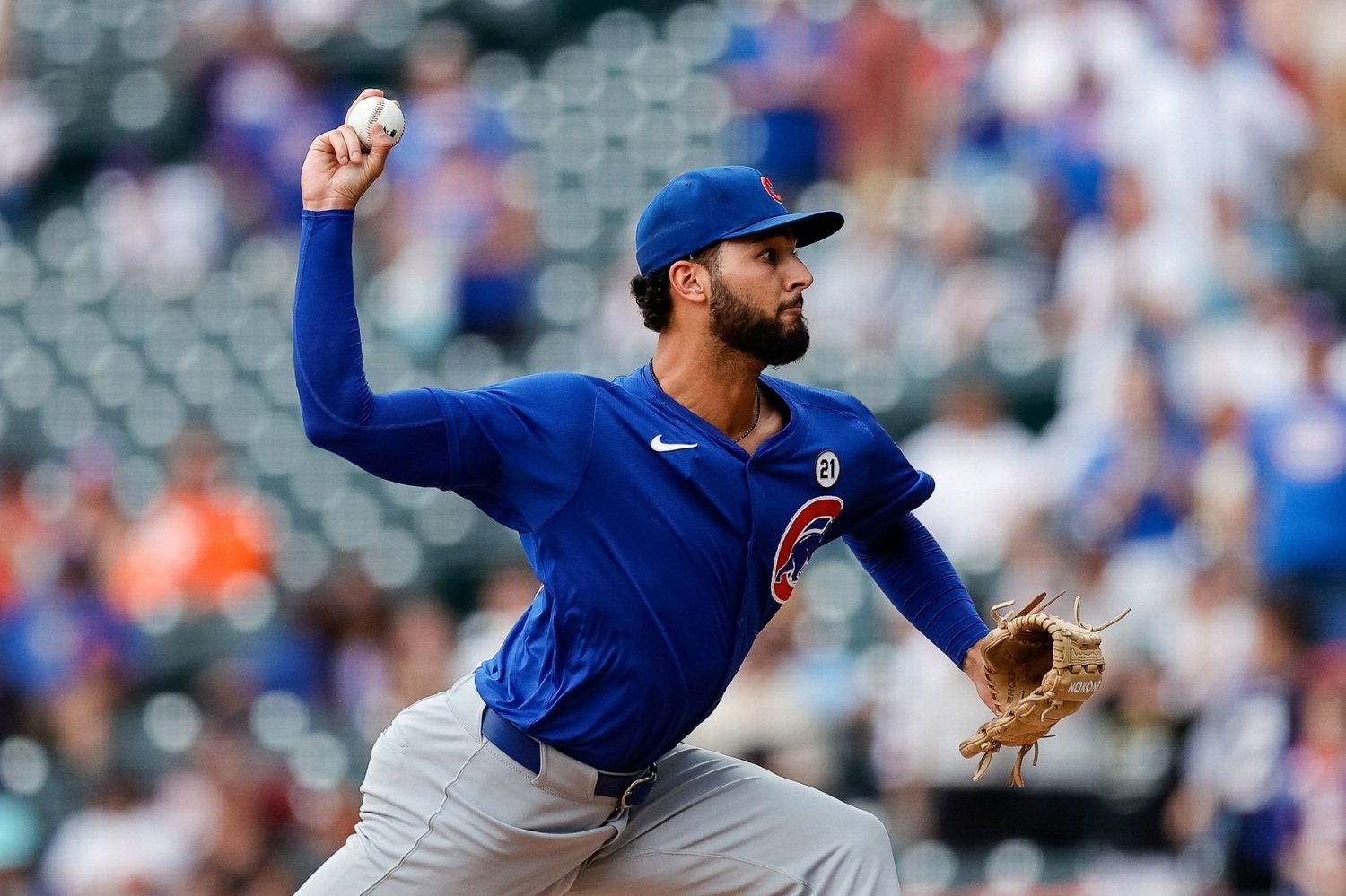 Ryan Brasier brings the Cubs bullpen pleasingly close to full. They can only carry 13 pitchers at a time during the season, so depending on whether they use five or six starters in the rotation, they could have seven or eight relievers on the roster on any given day. For now, let's assume they stick with five regular starters, in Shota Imanaga, Justin Steele, Jameson Taillon, Matthew Boyd, and Colin Rea. Given those assumptions, who would fill in the remainder of the pitching staff? We know that the 8th and 9th innings will be patrolled by Porter Hodge and the recently acquired Ryan Pressly, respectively. There might be days when Pressly gets more than three outs or when Hodge slides back and takes the save, based on usage and matchups, but however you rank them, those two are the team's relief aces. Brasier, Tyson Miller and Caleb Thielbar are just as locked into their jobs as Pressly, and arguably even more so than Hodge. The Cubs have spent money on each of the aged veterans this winter, and neither can be optioned to the minors; neither can Miller. That means five spots in the pen can be written in with ink. The team also proactively chose to keep Julian Merryweather, another out-of-options relief arm, so we can call it six. That leaves just two slots for: Long reliever: Javier Assad Long reliever: Ben Brown Long reliever: Cody Poteet Long reliever: Jordan Wicks Long reliever: Caleb Kilian Long reliever: Nate Pearson Middle reliever: Eli Morgan Middle reliever: Luke Little Middle reliever: Jack Neely Middle reliever: Daniel Palencia Middle reliever: Ethan Roberts Middle reliever: Gavin Hollowell Middle reliever: Keegan Thompson That's 12 names for two jobs, and it only includes pitchers already on the 40-man roster, which means it leaves out top prospects Cade Horton and Brandon Birdsell, plus minor-league signees Brad Keller, Ben Heller, Trevor Richards, Phil Bickford, Brooks Kriske, and Brandon Hughes. Those guys coming to camp on minor-league deals pitched a combined 144 2/3 innings in the majors last year—not over their careers, just in 2024. Right now, you could say that none of them are in the top 10 for any spot on the roster. That's how much depth the Cubs have amassed. Of the gaudy list above, the only pitcher out of options is the bottom one, Thompson. Thus, if the Cubs don't make a trade that consolidates their pitching this month or next, they could start their season with Triple-A Iowa's pitching staff stuffed to the gills with MLB-quality arms—even accounting for an injury or two. We should assume they will, but for now, let's pick out the two arms who seem most likely to make it. Clearly, those are Morgan and Pearson, two guys the team has acquired in the last seven months and who spent virtually all of 2024 in the big leagues. That leaves us with a projected group of: Closer: Pressly Setup: Hodge Setup: Brasier Setup: Miller Setup: Thielbar Middle relief: Merryweather Middle relief: Morgan Long relief: Pearson Injuries are sure to shake up the Etch-a-Sketch, but barring them, it's hard to envision a roster without any of these names on it unless one of them has an awful spring. This would give the I-Cubs a rotation of Horton, Birdsell, Brown, Assad, Wicks and Poteet to begin the season, with Little, Neely, Palencia, Roberts and Hollowell headlining the bullpen. In this scenario, it's hard to imagine that Keller and one or two of the minor-league reliever signees wouldn't opt out of their deals and go looking for better opportunities, but if it comes to that, the Cubs will gladly take it. It's much more likely that they make a couple of trades in the next month, for any of several possible reasons. It's also possible that Merryweather either gets hurt again or pitches so poorly in spring training that they elect to cut bait with him. For now, however, pitching depth has emerged as an extraordinary strength for this team, and the Cubs could be set up better to weather the long season than they have been in any season in recent memory.
- 2 comments
-
- 1
-
-
- tyson miller
- nate pearson
- (and 5 more)
-
In an offseason in which the Cubs have prioritized rotation and bullpen depth, they continued that trend Tuesday night with yet another addition to their relief corps. That will mean someone is either being shipped out in a trade, starting in the minor leagues or being released. Let's try and piece together what the Cubs bullpen will look like. Image courtesy of © Isaiah J. Downing-Imagn Images Ryan Brasier brings the Cubs bullpen pleasingly close to full. They can only carry 13 pitchers at a time during the season, so depending on whether they use five or six starters in the rotation, they could have seven or eight relievers on the roster on any given day. For now, let's assume they stick with five regular starters, in Shota Imanaga, Justin Steele, Jameson Taillon, Matthew Boyd, and Colin Rea. Given those assumptions, who would fill in the remainder of the pitching staff? We know that the 8th and 9th innings will be patrolled by Porter Hodge and the recently acquired Ryan Pressly, respectively. There might be days when Pressly gets more than three outs or when Hodge slides back and takes the save, based on usage and matchups, but however you rank them, those two are the team's relief aces. Brasier, Tyson Miller and Caleb Thielbar are just as locked into their jobs as Pressly, and arguably even more so than Hodge. The Cubs have spent money on each of the aged veterans this winter, and neither can be optioned to the minors; neither can Miller. That means five spots in the pen can be written in with ink. The team also proactively chose to keep Julian Merryweather, another out-of-options relief arm, so we can call it six. That leaves just two slots for: Long reliever: Javier Assad Long reliever: Ben Brown Long reliever: Cody Poteet Long reliever: Jordan Wicks Long reliever: Caleb Kilian Long reliever: Nate Pearson Middle reliever: Eli Morgan Middle reliever: Luke Little Middle reliever: Jack Neely Middle reliever: Daniel Palencia Middle reliever: Ethan Roberts Middle reliever: Gavin Hollowell Middle reliever: Keegan Thompson That's 12 names for two jobs, and it only includes pitchers already on the 40-man roster, which means it leaves out top prospects Cade Horton and Brandon Birdsell, plus minor-league signees Brad Keller, Ben Heller, Trevor Richards, Phil Bickford, Brooks Kriske, and Brandon Hughes. Those guys coming to camp on minor-league deals pitched a combined 144 2/3 innings in the majors last year—not over their careers, just in 2024. Right now, you could say that none of them are in the top 10 for any spot on the roster. That's how much depth the Cubs have amassed. Of the gaudy list above, the only pitcher out of options is the bottom one, Thompson. Thus, if the Cubs don't make a trade that consolidates their pitching this month or next, they could start their season with Triple-A Iowa's pitching staff stuffed to the gills with MLB-quality arms—even accounting for an injury or two. We should assume they will, but for now, let's pick out the two arms who seem most likely to make it. Clearly, those are Morgan and Pearson, two guys the team has acquired in the last seven months and who spent virtually all of 2024 in the big leagues. That leaves us with a projected group of: Closer: Pressly Setup: Hodge Setup: Brasier Setup: Miller Setup: Thielbar Middle relief: Merryweather Middle relief: Morgan Long relief: Pearson Injuries are sure to shake up the Etch-a-Sketch, but barring them, it's hard to envision a roster without any of these names on it unless one of them has an awful spring. This would give the I-Cubs a rotation of Horton, Birdsell, Brown, Assad, Wicks and Poteet to begin the season, with Little, Neely, Palencia, Roberts and Hollowell headlining the bullpen. In this scenario, it's hard to imagine that Keller and one or two of the minor-league reliever signees wouldn't opt out of their deals and go looking for better opportunities, but if it comes to that, the Cubs will gladly take it. It's much more likely that they make a couple of trades in the next month, for any of several possible reasons. It's also possible that Merryweather either gets hurt again or pitches so poorly in spring training that they elect to cut bait with him. For now, however, pitching depth has emerged as an extraordinary strength for this team, and the Cubs could be set up better to weather the long season than they have been in any season in recent memory. View full article
-
 One very important thing to remember is that Dylan Cease is in the final year of his contract and will be just a one-year rental. He seems inclined to head to free agency, and likely to command a truly humongous contract when he does so. That should knock down the price of Cease a little, but then again, Padres president of baseball operations A.J. Preller has been known to stick firmly to his asking price when he's engaged in a trade negotiation. So, after saying all that, here are two potential trade packages. Cubs Receive: RHP Dylan Cease Padres Receive: RF Alexander Canario, LHP Jordan Wicks, IF/OF James Triantos, OF Kevin Alcántara Wicks and Canario have sort of become odd men out on the Cubs roster, and could both benefit from more playing time on a new team. Triantos is a bit blocked by Nico Hoerner and Dansby Swanson controlling the middle infield for Chicago, and Alcantara has slowly fallen in prospect rankings. That package feels steep, but it's one way to get the deal done. This second trade one is an even bigger pill to gulp down, but it will also include another piece coming from San Diego to Chicago. Cubs Receive: RHP Dylan Cease, RHP Robert Suarez, cash Padres Receive: LHP Jordan Wicks, RHP Ben Brown, RF Alexander Canario, IF/OF James Triantos, OF Kevin Alcántara The addition of Brown would certainly entice San Diego, as he has several years of team control left and showed promise during his first season in the majors. He's a more valuable trade chip than Suarez, who's fairly expensive for a reliever and has a player-friendly contract with two player options after 2025. The Padres could send along a little cash to make this deal work for the Cubs, ensuring they have a cushion beneath the competitive-balance tax threshold—which they certainly won't exceed this year. Still, the idea of adding Brown to secure Suarez is that with both Cease and Suarez in place, the Cubs could be something like a lock for the NL Central. They'd become serious threats to the Dodgers, Mets, and Phillies, and surely surpass the Padres for 2025. Trading both Canario and Alcántara would force the team to sign a backup outfielder, which they might already be trying to do. They'd have to do it on the cheap, too, because Cease and Suarez will make a combined $23.75 million this year. This feels like an overpay, but trades like these often must. The good news is that the Cubs would still have Javier Assad, Cade Horton, and Brandon Birdsell as rotation depth; Owen Caissie as outfield depth; Vidal Bruján, Gage Workman, Jon Berti, and Benjamin Cowles as infield depth; and two new open 40-man roster spots, to be used on any of their minor-league signings or on adding Matt Shaw when he wins the third-base job in March. Ultimately, the second deal probably shoves too many chips in on 2025. Maybe the first one does, too. As the rumors continue to swirl, though, it's hard not to keep pining. Cease and Suarez both have transformative potential for a playoff hopeful's pitching staff.
 -
Amid the recent rumors of the Cubs being interested in San Diego right-hander Dylan Cease, there are many different trade packages being thrown together by media outlets and media members. Let's take our own stab at what a Cease trade could look like for Chicago. Image courtesy of © Geoff Burke-Imagn Images One very important thing to remember is that Dylan Cease is in the final year of his contract and will be just a one-year rental. He seems inclined to head to free agency, and likely to command a truly humongous contract when he does so. That should knock down the price of Cease a little, but then again, Padres president of baseball operations A.J. Preller has been known to stick firmly to his asking price when he's engaged in a trade negotiation. So, after saying all that, here are two potential trade packages. Cubs Receive: RHP Dylan Cease Padres Receive: RF Alexander Canario, LHP Jordan Wicks, IF/OF James Triantos, OF Kevin Alcántara Wicks and Canario have sort of become odd men out on the Cubs roster, and could both benefit from more playing time on a new team. Triantos is a bit blocked by Nico Hoerner and Dansby Swanson controlling the middle infield for Chicago, and Alcantara has slowly fallen in prospect rankings. That package feels steep, but it's one way to get the deal done. This second trade one is an even bigger pill to gulp down, but it will also include another piece coming from San Diego to Chicago. Cubs Receive: RHP Dylan Cease, RHP Robert Suarez, cash Padres Receive: LHP Jordan Wicks, RHP Ben Brown, RF Alexander Canario, IF/OF James Triantos, OF Kevin Alcántara The addition of Brown would certainly entice San Diego, as he has several years of team control left and showed promise during his first season in the majors. He's a more valuable trade chip than Suarez, who's fairly expensive for a reliever and has a player-friendly contract with two player options after 2025. The Padres could send along a little cash to make this deal work for the Cubs, ensuring they have a cushion beneath the competitive-balance tax threshold—which they certainly won't exceed this year. Still, the idea of adding Brown to secure Suarez is that with both Cease and Suarez in place, the Cubs could be something like a lock for the NL Central. They'd become serious threats to the Dodgers, Mets, and Phillies, and surely surpass the Padres for 2025. Trading both Canario and Alcántara would force the team to sign a backup outfielder, which they might already be trying to do. They'd have to do it on the cheap, too, because Cease and Suarez will make a combined $23.75 million this year. This feels like an overpay, but trades like these often must. The good news is that the Cubs would still have Javier Assad, Cade Horton, and Brandon Birdsell as rotation depth; Owen Caissie as outfield depth; Vidal Bruján, Gage Workman, Jon Berti, and Benjamin Cowles as infield depth; and two new open 40-man roster spots, to be used on any of their minor-league signings or on adding Matt Shaw when he wins the third-base job in March. Ultimately, the second deal probably shoves too many chips in on 2025. Maybe the first one does, too. As the rumors continue to swirl, though, it's hard not to keep pining. Cease and Suarez both have transformative potential for a playoff hopeful's pitching staff. View full article
-
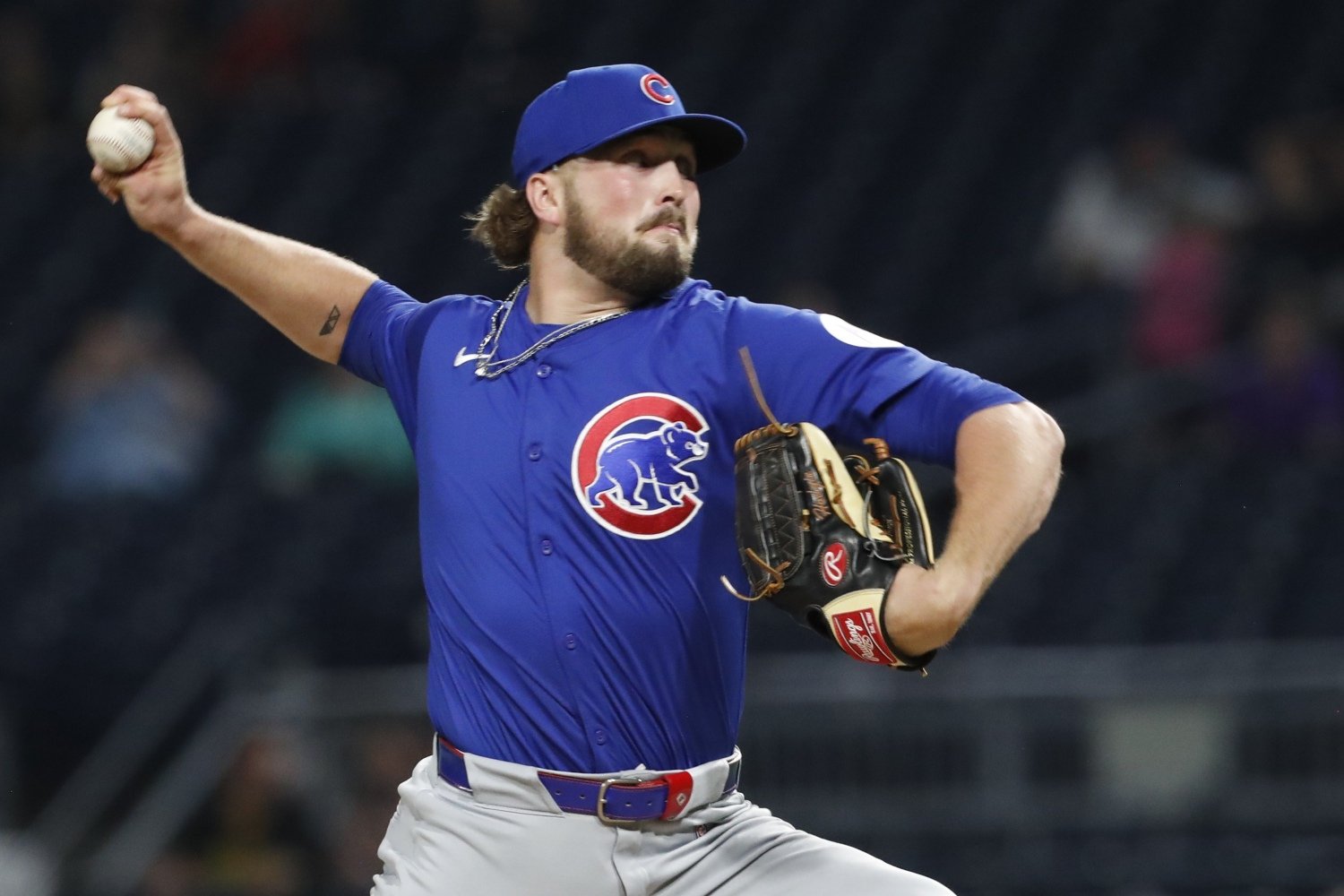 After the recent acquisition of former Astros closer Ryan Pressly, it is widely assumed that he will become the closer for the Cubs. If that is the case, it will knock Porter Hodge out of that spot, where he collected nine saves in 12 opportunities and finished his rookie season with a stellar 1.88 ERA. With the addition of Pressly and rumors swirling of Chicago still being interested in both David Robertson and Ryne Stanek, what, exactly, is Hodge's role in 2025? After coming up on May 22, Hodge had a breakout rookie season in 2024. Over 43 innings, he struck out 52 batters and walked just 19. He allowed multiple runs in an outing just four times. He instantly became an electric arm out of the Chicago bullpen, averaging 95.5 mph on his fastball and allowing just a .132 average to opposing hitters. Hodge turned into a reliable and high-strikeout arm, in a season wherein there weren't enough of those in the Chicago bullpen. Manager Craig Counsell had high praise for Hodge along the way. "His stuff has been so good. He's a talented kid and he's doing it with really good pitches. The experience part of it, he's getting it every time out there," he told Tony Andracki of Marquee Sports Network. The "stuff" Counsell referred to was the sweeper and splitter combo that he featured with his fastball. Opponents struggled big-time with those pitches, hitting just .074 against the sweeper and failing to collect a hit against the splitter. If the Cubs were to call their roster complete as of today, Hodge would undoubtedly be the eighth-inning setup man to get the ball to Pressly in the ninth. However, if Chicago were to sign one of Robertson or Stanek (or add some other, similar arm, perhaps via trade), Hodge's role could morph into more of a true middle reliever. The depth of Chicago's bullpen would certainly increase with Hodge entering games as early as the sixth or seventh inning, and he would serve as the closer on days when the more accomplished arms are not available out of the bullpen. With just one year remaining on Pressly's contract, another excellent season from Hodge could put him in line to be the Cubs closer for 2026 and beyond. In the meantime, he just needs to prove he can throw strikes and keep getting outs with his intense cut-ride heater and that killer breaking pitch.
 -
Ready for a big sophomore season, the Cubs' righty reliever now has a more comfortable prospective role—though a bit less of a clear one. Image courtesy of © Charles LeClaire-Imagn Images After the recent acquisition of former Astros closer Ryan Pressly, it is widely assumed that he will become the closer for the Cubs. If that is the case, it will knock Porter Hodge out of that spot, where he collected nine saves in 12 opportunities and finished his rookie season with a stellar 1.88 ERA. With the addition of Pressly and rumors swirling of Chicago still being interested in both David Robertson and Ryne Stanek, what, exactly, is Hodge's role in 2025? After coming up on May 22, Hodge had a breakout rookie season in 2024. Over 43 innings, he struck out 52 batters and walked just 19. He allowed multiple runs in an outing just four times. He instantly became an electric arm out of the Chicago bullpen, averaging 95.5 mph on his fastball and allowing just a .132 average to opposing hitters. Hodge turned into a reliable and high-strikeout arm, in a season wherein there weren't enough of those in the Chicago bullpen. Manager Craig Counsell had high praise for Hodge along the way. "His stuff has been so good. He's a talented kid and he's doing it with really good pitches. The experience part of it, he's getting it every time out there," he told Tony Andracki of Marquee Sports Network. The "stuff" Counsell referred to was the sweeper and splitter combo that he featured with his fastball. Opponents struggled big-time with those pitches, hitting just .074 against the sweeper and failing to collect a hit against the splitter. If the Cubs were to call their roster complete as of today, Hodge would undoubtedly be the eighth-inning setup man to get the ball to Pressly in the ninth. However, if Chicago were to sign one of Robertson or Stanek (or add some other, similar arm, perhaps via trade), Hodge's role could morph into more of a true middle reliever. The depth of Chicago's bullpen would certainly increase with Hodge entering games as early as the sixth or seventh inning, and he would serve as the closer on days when the more accomplished arms are not available out of the bullpen. With just one year remaining on Pressly's contract, another excellent season from Hodge could put him in line to be the Cubs closer for 2026 and beyond. In the meantime, he just needs to prove he can throw strikes and keep getting outs with his intense cut-ride heater and that killer breaking pitch. View full article
-
The Cubs Should Start The Season With A Six-Man Rotation, It's All The Rage
Andrew Wright posted an article in Cubs
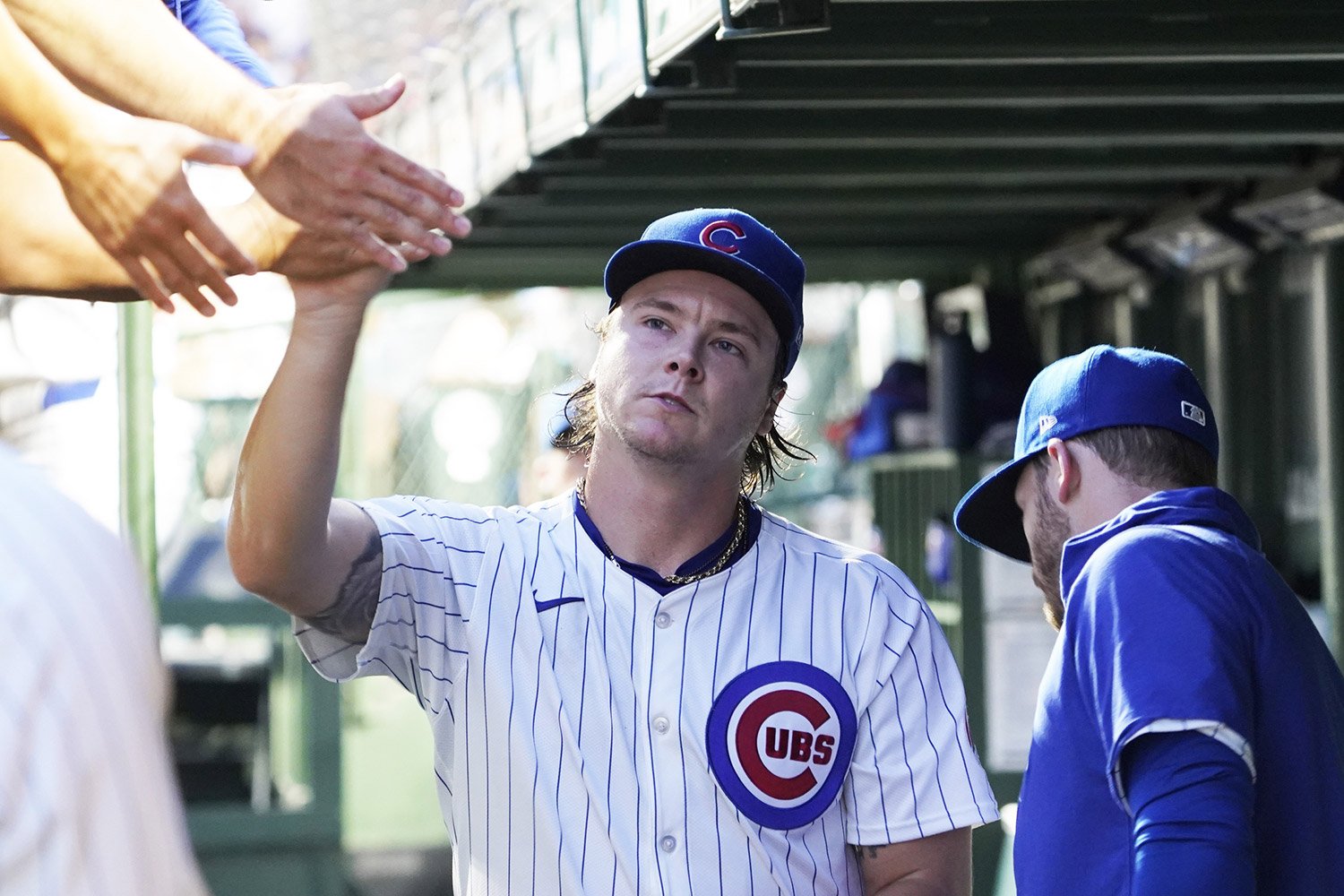 There are several reasons why a six-man rotation would benefit Chicago, with the main one being that it will be extremely important to keep arms fresh for the back half of the season. Here is what a six-man rotation could look like for the Cubs. 1. Justin Steele 2. Shota Imanaga 3. Jameson Taillon 4. Javier Assad 5. Matthew Boyd 6. Colin Rea After the top two of Steele and Imanaga, you could arrange the rest of the names in whatever order you want, but those are the six arms that should be considered for starting games in the first one to two months of the season. The six names here would leave Jordan Wicks as the swingman/long reliever in the Chicago bullpen, a role that seems to work well for his pitching style. He could come out of the bullpen and give Chicago length on days when they need it, or he could be inserted right into the rotation in case of an injury. With the excess pitching and the ability to roll out this rotation, the Cubs can significantly reduce Steele, Imanaga, and Taillon's early-season workloads. Having those three arms ready to make a run down the stretch will be crucial for the team's success in 2025. Focusing on Imanaga specifically, the worst two months of his outstanding 2024 season were June (5.67 ERA) and August (3.68 ERA). It is well documented that the standard pitching rotation overseas, and in Japan specifically, is pitchers making a start every six days. Imanaga was able to adapt to every fifth day in the States, but Chicago did find ways to work around that and allowed him to pitch every sixth day when they could. Now, with the signings of Rea and Boyd, the Cubs have the flexibility not to alter a rotation for a series to allow an extra day of rest for anyone. This strategy may and may not work, but it would not be a bad idea for Chicago to use it to begin the season and save arms and innings for what will hopefully be a deep postseason run in 2025.
 -
The focus for the remainder of the offseason is on bullpen and bench pieces, so it seems that the Cubs' rotation is set. Given the surplus of starting pitching arms, Chicago would benefit from starting the season with a six-man rotation. Image courtesy of © David Banks-Imagn Images There are several reasons why a six-man rotation would benefit Chicago, with the main one being that it will be extremely important to keep arms fresh for the back half of the season. Here is what a six-man rotation could look like for the Cubs. 1. Justin Steele 2. Shota Imanaga 3. Jameson Taillon 4. Javier Assad 5. Matthew Boyd 6. Colin Rea After the top two of Steele and Imanaga, you could arrange the rest of the names in whatever order you want, but those are the six arms that should be considered for starting games in the first one to two months of the season. The six names here would leave Jordan Wicks as the swingman/long reliever in the Chicago bullpen, a role that seems to work well for his pitching style. He could come out of the bullpen and give Chicago length on days when they need it, or he could be inserted right into the rotation in case of an injury. With the excess pitching and the ability to roll out this rotation, the Cubs can significantly reduce Steele, Imanaga, and Taillon's early-season workloads. Having those three arms ready to make a run down the stretch will be crucial for the team's success in 2025. Focusing on Imanaga specifically, the worst two months of his outstanding 2024 season were June (5.67 ERA) and August (3.68 ERA). It is well documented that the standard pitching rotation overseas, and in Japan specifically, is pitchers making a start every six days. Imanaga was able to adapt to every fifth day in the States, but Chicago did find ways to work around that and allowed him to pitch every sixth day when they could. Now, with the signings of Rea and Boyd, the Cubs have the flexibility not to alter a rotation for a series to allow an extra day of rest for anyone. This strategy may and may not work, but it would not be a bad idea for Chicago to use it to begin the season and save arms and innings for what will hopefully be a deep postseason run in 2025. View full article
-
You could look all over the Chicago Cubs roster and pinpoint certain players who need to step up and lead the charge in 2025. Ultimately, though, the health and production of star shortstop Dansby Swanson will carry this team as far as it goes. Image courtesy of © Isaiah J. Downing-Imagn Images After signing with Chicago prior to the 2023 season, Dansby Swanson hasn't quite lived up to the $177-million contract he was given. He posted batting averages of .244 in 2023 and .242 in 2024. Swanson has also started to miss time, something he hadn't done since very early in his career. The dip in batting average isn't nearly as concerning as the missed games are. Swanson is just a career .252 hitter. His best season in the average department (and really overall) was 2022, his last season in Atlanta. Swanson hit .277 with 25 homers that season, prompting Chicago to pay him the big bucks over seven seasons. The 28 missed games over the last two seasons are part of a growing concern. Swanson played 147 games in 2023 and 149 in 2024. Those were his lowest totals in a season since he played just 127 games for the Braves in 2019. Manager Craig Counsell acknowledged that Swanson has dealt with injuries over the last two seasons but expects him to be as healthy as ever headed into the 2025 season. Another low number for Swanson in 2024 was his home run total. Once again, the lack of pop could be influenced by the nagging injury, but 16 homers were his fewest in a non-shortened season since 2018, when he hit 14 in his first full campaign for Atlanta. Swanson's .390 slugging percentage was the second-lowest of his career, with the lowest coming in 2017, his second year in MLB and a much smaller sample. The previous two seasons for Swanson resulted in an All-Star Game appearance, Gold Glove awards, and even a few MVP votes. The 2024 season contained none of that. So, what exactly must he do differently in 2025? Staying healthy is the first step, Swanson being available for the 154-162 games that were his former custom will be huge for Chicago. That will provide not only stability on defense, but a chance for Swanson to stay in a rhythm and routine at the plate. In the 28 games missed over the last two seasons from Swanson, the Cubs have a record of 11-17. For a team that has struggled to get above 85 wins in the last few seasons, having Swanson on the field every day will be a necessity. If he is able to stay healthy and be available every day over the course of 162 games, Swanson's leadership and skill set will be crucial for the Cubs, who are looking to capture their first real division title since 2017. View full article
