


RavenCub30
-
Posts
324 -
Joined
-
Last visited
Content Type
Profiles
Joomla Posts 1
Chicago Cubs Videos
Chicago Cubs Free Agent & Trade Rumors, Notes, & Tidbits
2026 Chicago Cubs Top Prospects Ranking
News
2023 Chicago Cubs Draft Picks
Guides & Resources
2024 Chicago Cubs Draft Picks
The Chicago Cubs Players Project
2025 Chicago Cubs Draft Pick Tracker
2026 Chicago Cubs Draft Tracker: Picks & Bonuses
Blogs
Events
Forums
Store
Gallery
Everything posted by RavenCub30
-
Though he hasn't quite pulled into the station, Pete Crow-Armstrong is arriving on schedule. Find yourself at Wrigley for just about any game in 2024 and you're likely to witness fans walking out of shops like Sports World, Wrigleyville Sports, and others, donning the number 52 on the back of their brand new blue-pinstriped jersey. Good for them, because with the upward trajectory of the Cubs' young centerfielder, he figures to be cemented in Craig Counsell's everyday lineup for years to come. Image courtesy of © Kamil Krzaczynski-Imagn Images Not far removed from being an offensive liability for his club, Pete Crow-Armstrong now provides this squad confidence, versatility, and an indelible, super-charged positive attitude, which emanates from both his offensive and defensive roles on the field. There will come a time in the near future when Crow-Armstrong will be considered the Cubs' most dangerous player, and not just for the obvious reasons. For the first few months of the season, it was difficult--if not impossible--to tell what Crow-Armstrong's value was, outside of his impressive speed and flashy glove. Now, that almost seems like an "Inception"-style illusion, compared to what the Cub's outfielder is transforming into since the All-Star break. At the time of this writing, he has 26 stolen bases, and he takes off almost automatically if and when he reaches base. He's often able to reach base, too. With his swift stride, Crow-Armstrong has restored some of the magic lost from the days of Javier Báez, on the bases and in the way a ball in play off his bat seems to promise chaos. He's a wonder to watch. I don't know the reason for Crow-Armstrong's emergence boiled down to one metric, just as I don't know why Three Floyd's Gumball Head beer tastes better at Murphy's than anywhere else. But what I do know is that, with a rapid growth in confidence, the Crow-Armstrong this organization has been waiting for is showing up. At the last game I attended, with the sun glistening off the outfield ivy, I must have exclaimed "Let's go Pete!" upwards of a dozen times. This is for many reasons, not the least of which being that I want him to help my favorite team win, but it's also because he's the most exciting player on the field. Watching him play is the opportunity to witness one of the best spectacles in baseball. What bodes well for the 22-year-old is his ability to hit the cut fastball, which he wallops at a .387 rate; his proficiency with this particular pitch is yielding more success across the board. If you don't believe me, check out his stat line from his last visit to PNC Park. Just hours before I wrote this, the Cubs inducted Kerry Wood into the franchise's Hall of Fame. For reasons well beyond just his 20-strikeout game, Wood earned this prestigious honor. I'm not in any way saying that Crow-Armstrong will enjoy a similar accolade one day--though perhaps he will. What I am saying is that he is a remarkably special player. More importantly, he's a Cub. View full article
-
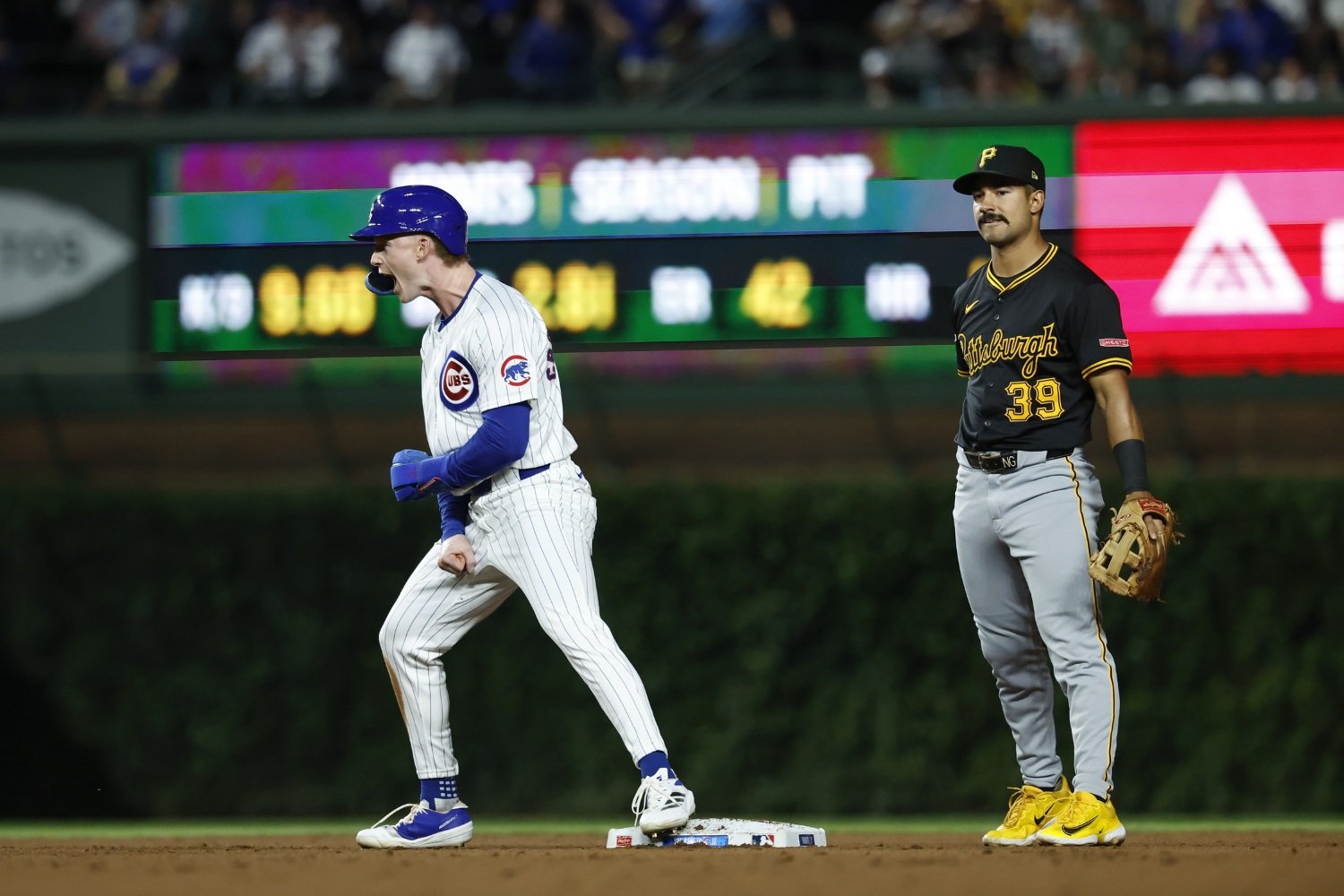 Not far removed from being an offensive liability for his club, Pete Crow-Armstrong now provides this squad confidence, versatility, and an indelible, super-charged positive attitude, which emanates from both his offensive and defensive roles on the field. There will come a time in the near future when Crow-Armstrong will be considered the Cubs' most dangerous player, and not just for the obvious reasons. For the first few months of the season, it was difficult--if not impossible--to tell what Crow-Armstrong's value was, outside of his impressive speed and flashy glove. Now, that almost seems like an "Inception"-style illusion, compared to what the Cub's outfielder is transforming into since the All-Star break. At the time of this writing, he has 26 stolen bases, and he takes off almost automatically if and when he reaches base. He's often able to reach base, too. With his swift stride, Crow-Armstrong has restored some of the magic lost from the days of Javier Báez, on the bases and in the way a ball in play off his bat seems to promise chaos. He's a wonder to watch. I don't know the reason for Crow-Armstrong's emergence boiled down to one metric, just as I don't know why Three Floyd's Gumball Head beer tastes better at Murphy's than anywhere else. But what I do know is that, with a rapid growth in confidence, the Crow-Armstrong this organization has been waiting for is showing up. At the last game I attended, with the sun glistening off the outfield ivy, I must have exclaimed "Let's go Pete!" upwards of a dozen times. This is for many reasons, not the least of which being that I want him to help my favorite team win, but it's also because he's the most exciting player on the field. Watching him play is the opportunity to witness one of the best spectacles in baseball. What bodes well for the 22-year-old is his ability to hit the cut fastball, which he wallops at a .387 rate; his proficiency with this particular pitch is yielding more success across the board. If you don't believe me, check out his stat line from his last visit to PNC Park. Just hours before I wrote this, the Cubs inducted Kerry Wood into the franchise's Hall of Fame. For reasons well beyond just his 20-strikeout game, Wood earned this prestigious honor. I'm not in any way saying that Crow-Armstrong will enjoy a similar accolade one day--though perhaps he will. What I am saying is that he is a remarkably special player. More importantly, he's a Cub.
 -
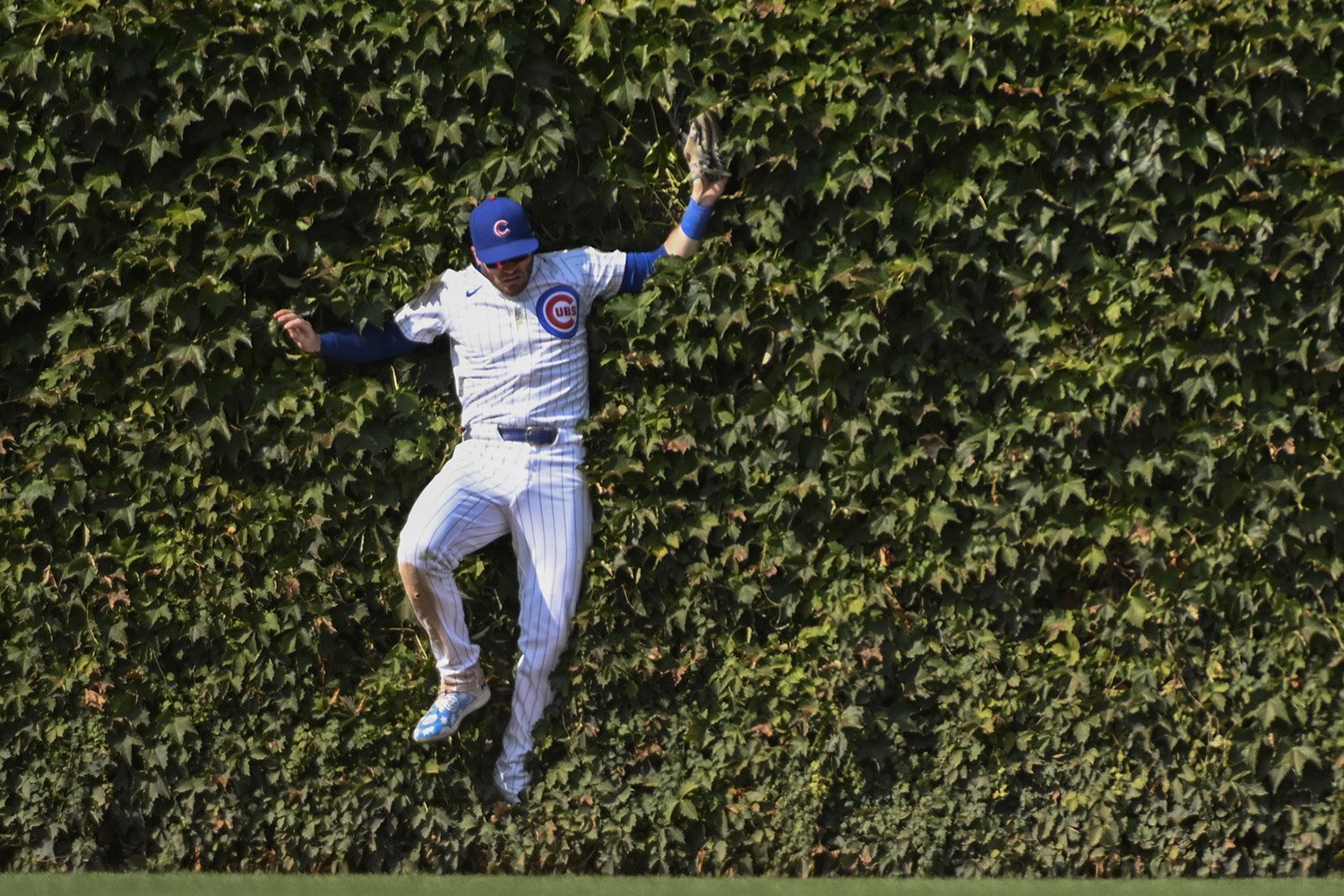 If familiarity breeds contempt, the Cubs and Pirates must really hate each other by now. This past Monday, the Cubs squared off with the Pittsburgh Pirates again for the first of a three-game set at Wrigley Field. The Cubs cranked the vibes to an all-time high and held a 3-0 lead through seven scoreless innings provided by Jameson Taillon. Then, the final two innings happened. Varying levels of outstanding since becoming a Cub, Jorge Lopez suffered his worst outing for Chicago's North Side club. Not only did he relinquish the lead, he did it by getting knocked around by guys like Andrew McCutchen, who was last relevant when Netflix still mailed physical discs to its subscribers. Shawn Armstrong also worked an inning and gave up an additional run, but the damage was done. Final Score: 5-3 Pirates The Cubs were knocked down in game one of this series and stayed down in game two. A late scratch to Justin Steele put the inconsistent veteran Kyle Hendricks on the mound in this one. To put it bluntly, he was everything Cubs fans have grown fearful of this season with the 34-year-old right-hander. The Bucs tallied five runs on eight hits and to make things so much worse, the Cubs stranded nine baserunners, squandering multiple bases-loaded scenarios in the early innings. There was a lot not to like about this game, and with the stakes still so high, it felt like the end of something. Final Score 5-0 Pirates I could not be happier to write this: The Chicago Cubs threw a combined no-hitter in the series finale versus the Pirates. Shota Imanaga is known to dazzle, but this was something special. Going seven innings before Craig Counsell controversially pulled him (the pitch count was quite high), Imanaga deftly escaped trouble in the few times he faced any. Nate Pearson and Porter Hodge certified the historical night with an inning each of clean work. Leaving little doubt for their brothers on the mound, the Cubs put forth an offensive onslaught, including long balls from Pete Crow-Armstrong, Dansby Swanson, and Cody Bellinger. What a memorable night at the Friendly Confines. Final Score: 12-0 Cubs In last week's recap, I said the Cubs' unlikely road to the playoffs was in danger of being obscured by the New York Yankees. Well, game one versus the Bronx Bombers proved me right. Though the 3-0 loss hurt, the real story in this one was legendary Cubs' first baseman Anthony Rizzo making his emotional first trip back to Wrigley since his infamous trade in 2021. With his former walk-up song "Intoxicated" blaring over the speakers, the South Florida native showed his appreciation to over 40,000 thankful fans, who had vivid memories of the Cubs' 2016 World Series triumph come flooding back to them. Unfortunately, his new club took the day. Yankees' starting pitcher Luis Gil held the Cubbies to just one hit, and the Cubs left five runners on base—a far too generous welcome-back gift from Rizzo's former club on this day. Final Score: 3-0 Yankees I love it when the Yankees lose, so I'd love to tell you that the Cubs set up a game three rubber match in this one, but they didn't. Getting only one runner in scoring position the whole game, the Cubs made things unnecessarily hard on themselves and their starter, Javier Assad, who grows more consistent with each appearance. He went 5.2 innings and surrendered only two runs, but his offense's disappearing act let the effort be in vain. Final Score: 2-0 Yankees After going scoreless in two straight games, the Cubs salvaged the final contest of their three-game tilt with the Yanks. With Jameson Taillon toeing the rubber, the Cubbies showed how frustratingly close they are in quality to some of the league's best. A clutch two-out knock to left field by Isaac Paredes drove in two runs for the North Side club, which proved sufficient in this one. Though he's been maligned by this fanbase and various radio personalities, it's important to point out how reliable Jameson Taillon has been for the Cubs. This marked his tenth victory of the year, and his ERA of 3.57 is more than respectable. Final Score: 2-1 Cubs With the playoffs implausible at best, the time has come just to enjoy the ride. There is still plenty in play for the Cubs down the final stretch, including securing a winning record. There are some nice pieces in the organization that will prove fruitful for the Cubs' future, which most certainly has to employ a "playoffs or bust" mentality in 2025. For now, we've been handed a jump start on pondering visions of what could have been.
 -
With as good as the Cubs have been since the start of August, and they've been great, the other teams they're chasing in this break-neck race for the playoffs are better. Some of my fellow colleagues here at North Side Baseball had previously pointed out that winning games by scoring football-like numbers is not sustainable for the long haul, and this past week proved why that's the case. Barring unspeakable collapses from the Braves and Mets, the Cubs are almost certainly standing at the outset of their last few weeks of baseball in 2024. Let's dive in to see how it all went down... Image courtesy of © Matt Marton-Imagn Images If familiarity breeds contempt, the Cubs and Pirates must really hate each other by now. This past Monday, the Cubs squared off with the Pittsburgh Pirates again for the first of a three-game set at Wrigley Field. The Cubs cranked the vibes to an all-time high and held a 3-0 lead through seven scoreless innings provided by Jameson Taillon. Then, the final two innings happened. Varying levels of outstanding since becoming a Cub, Jorge Lopez suffered his worst outing for Chicago's North Side club. Not only did he relinquish the lead, he did it by getting knocked around by guys like Andrew McCutchen, who was last relevant when Netflix still mailed physical discs to its subscribers. Shawn Armstrong also worked an inning and gave up an additional run, but the damage was done. Final Score: 5-3 Pirates The Cubs were knocked down in game one of this series and stayed down in game two. A late scratch to Justin Steele put the inconsistent veteran Kyle Hendricks on the mound in this one. To put it bluntly, he was everything Cubs fans have grown fearful of this season with the 34-year-old right-hander. The Bucs tallied five runs on eight hits and to make things so much worse, the Cubs stranded nine baserunners, squandering multiple bases-loaded scenarios in the early innings. There was a lot not to like about this game, and with the stakes still so high, it felt like the end of something. Final Score 5-0 Pirates I could not be happier to write this: The Chicago Cubs threw a combined no-hitter in the series finale versus the Pirates. Shota Imanaga is known to dazzle, but this was something special. Going seven innings before Craig Counsell controversially pulled him (the pitch count was quite high), Imanaga deftly escaped trouble in the few times he faced any. Nate Pearson and Porter Hodge certified the historical night with an inning each of clean work. Leaving little doubt for their brothers on the mound, the Cubs put forth an offensive onslaught, including long balls from Pete Crow-Armstrong, Dansby Swanson, and Cody Bellinger. What a memorable night at the Friendly Confines. Final Score: 12-0 Cubs In last week's recap, I said the Cubs' unlikely road to the playoffs was in danger of being obscured by the New York Yankees. Well, game one versus the Bronx Bombers proved me right. Though the 3-0 loss hurt, the real story in this one was legendary Cubs' first baseman Anthony Rizzo making his emotional first trip back to Wrigley since his infamous trade in 2021. With his former walk-up song "Intoxicated" blaring over the speakers, the South Florida native showed his appreciation to over 40,000 thankful fans, who had vivid memories of the Cubs' 2016 World Series triumph come flooding back to them. Unfortunately, his new club took the day. Yankees' starting pitcher Luis Gil held the Cubbies to just one hit, and the Cubs left five runners on base—a far too generous welcome-back gift from Rizzo's former club on this day. Final Score: 3-0 Yankees I love it when the Yankees lose, so I'd love to tell you that the Cubs set up a game three rubber match in this one, but they didn't. Getting only one runner in scoring position the whole game, the Cubs made things unnecessarily hard on themselves and their starter, Javier Assad, who grows more consistent with each appearance. He went 5.2 innings and surrendered only two runs, but his offense's disappearing act let the effort be in vain. Final Score: 2-0 Yankees After going scoreless in two straight games, the Cubs salvaged the final contest of their three-game tilt with the Yanks. With Jameson Taillon toeing the rubber, the Cubbies showed how frustratingly close they are in quality to some of the league's best. A clutch two-out knock to left field by Isaac Paredes drove in two runs for the North Side club, which proved sufficient in this one. Though he's been maligned by this fanbase and various radio personalities, it's important to point out how reliable Jameson Taillon has been for the Cubs. This marked his tenth victory of the year, and his ERA of 3.57 is more than respectable. Final Score: 2-1 Cubs With the playoffs implausible at best, the time has come just to enjoy the ride. There is still plenty in play for the Cubs down the final stretch, including securing a winning record. There are some nice pieces in the organization that will prove fruitful for the Cubs' future, which most certainly has to employ a "playoffs or bust" mentality in 2025. For now, we've been handed a jump start on pondering visions of what could have been. View full article
-
Cubs Week In Review: The Cubs Are Rolling & A Playoff Berth Is Within Reach
RavenCub30 posted an article in Cubs
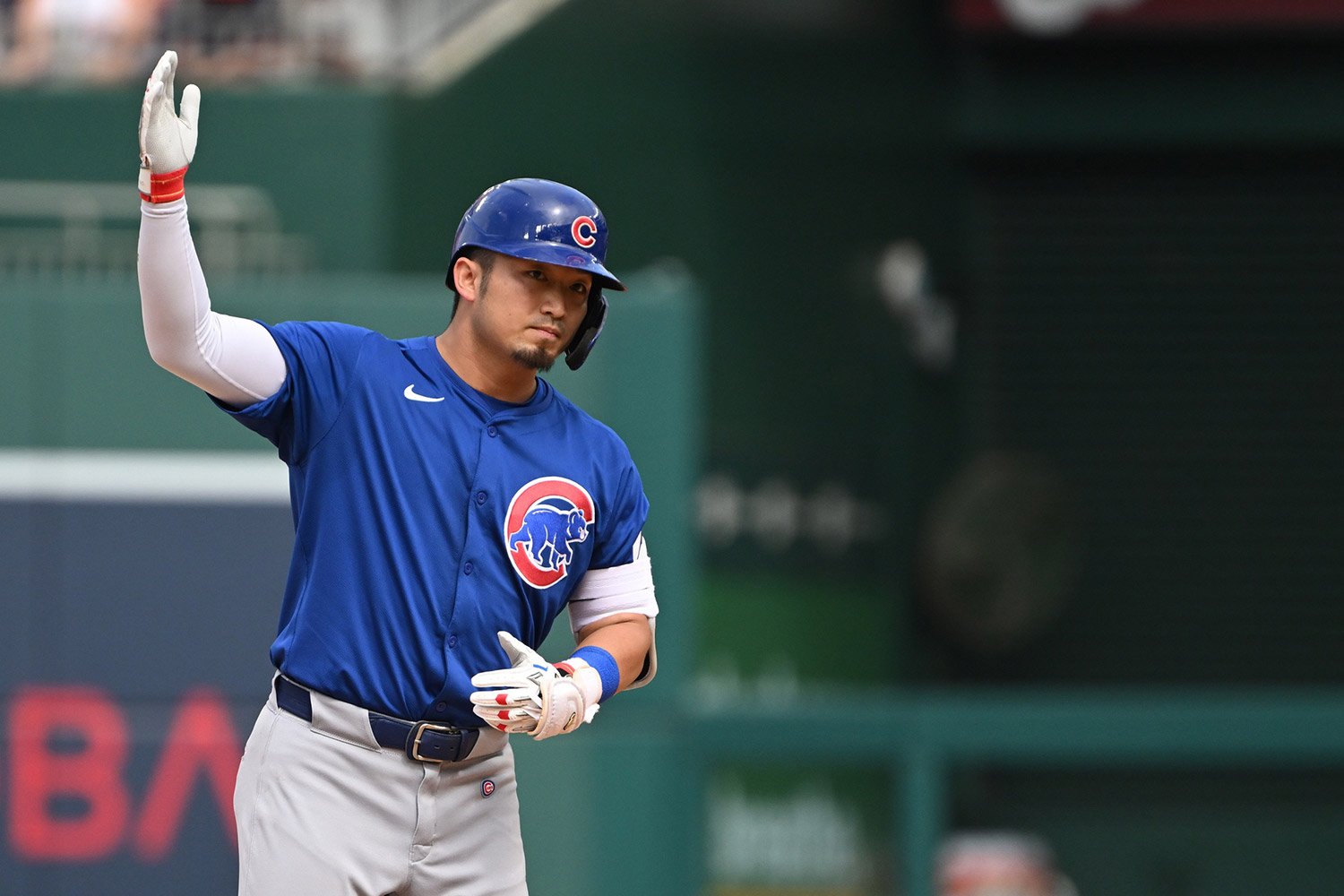 There was a point in this season when April was frequently looked to as evidence that the Cubs could score runs. In the last nine games, the North Side ball club has scored an almost unfathomable 89 runs. In game one of a three-game series versus the Pittsburgh Pirates, the baseball world got a crash course in just how scorching hot this team's offense is right now. Opposite his counterpart Mitch Keller, the Cubs' righty Jameson Taillon took the bump in this one. Going 6.2 innings, giving up four runs on eight hits, Taillon put forth a performance that would have resulted in a crushing loss were it played this past May or June, but with the Cubby bats cruising the way they are, it was more than enough. The Cubs put traffic on the base pads throughout the game. The revelatory shortstop Dansby Swanson assaulted a two-out grand slam, which proved the exclamation mark as part of an eight-run sixth inning. Elsewhere, the Cubs' middle of the order appeared unstoppable, with Suzuki, Bellinger, and Paredes all recording multi-hit games. Final Score: 18-8 Cubs Though not as dominant as last season, Justin Steele is a starting pitcher no opposing team's manager wants to deal with. After giving up two first-inning runs, the Mississippi bulldog delivered 5.0 innings pitched, striking out six and walking just two. The Cubs got key offensive production from Seiya Suzuki and Dansby Swanson, who accounted for five of the club's nine runs. Surprise slugger Miguel Amaya, now batting well above the Mendoza Line, went 2-4 and drove in two runs in this series-clinching contest. Final Score: 9-5 Cubs Claiming what was undoubtedly their biggest win of the season to date, the Cubs erased a seven-run deficit against Paul Skene's Pirates to earn the most implausible sweep of the season. Scoring eleven unanswered runs, Craig Counsell's team employed Cole Wright's motto: "If you've got a 1% chance, you've got a 100% chance". Chipping away at Pittsburgh's lead in the sixth, seventh, and eighth innings, Chicago used a six-run ninth to complete the remarkable comeback. The fight this team showed in this one was awe-inspiring, especially that of catcher Christian Bethancourt, who drove in seven runs. Cubs fans who stuck around long enough at home and in person were treated to pure theater. Final Score: 14-10 Cubs After Eddie Vedder and Pearl Jam turned up the volume at Wrigley in their first of a two-night engagement, Shota Imanaga and the Cubs banded together in game one against the Washington Nationals for yet another vital win. The Cubs' rookie sensation set down eight Nats batters and got through an impressive six innings of work. Offensively, the Cubbies continued to rake, with critical run production from Cody Bellinger, Pete Crow-Armstrong, and a surging Dansby Swanson. Final Score: 7-6 Cubs The Cubs used timely hitting and even more timely pitching to propel themselves over the .500 this week. That formula didn't change in game two versus the Nats. Though he gave up all three of Washington's runs, Javier Assad worked through an admirable six innings in which he struck out only four, but more importantly, kept his squad in the game. The North Siders used a four-run fifth inning to get out in front and give Assad his seventh win of the season. The win ensured the Cubbies' fifth-consecutive series win and was something of a return to form for the Cubs' bullpen. Final Score: 5-3 Cubs The series finale versus the Nats allowed the Cubs to earn their second straight sweep and climb to five games over the .500 mark. They made the most of that chance. On the eve of Labor Day, the freshly healthy Jordan Wicks and his club crushed Dave Martinez's squad. Having just returned from the 60-Day IL, we haven't seen much from Wicks in some time, but he was reasonably satisfying in this one. Going five innings, Wicks looked resilient, allowing just one earned run on four hits. His name has come up a lot in this article, but what Dansby Swanson is doing right now can't even be called vintage because it's hard to say he's ever been as good as he's been during this current run. He went 4-6 and came around to score twice. If the Cubs do find a way into the postseason, it will be mainly because they never want to be out of a game and can pour it on when it's a romp such as it was today. Final Score: 14-1 Cubs The Cubs are a good baseball team. Not just right now but on the whole. If this club had played even close to this level in the early summer months, we'd be talking about a Cubs team that probably would have already clinched a playoff spot at this point. Up next for the Cubbies, it's back to Wrigley, where they will take on the Pittsburgh Pirates for three games. After that, this postseason push gets exponentially more difficult as the Yankees come calling to close out the six-game homestand. Securing the right to call this season a success will be a tough task, but that's a good problem to have right now.
 -
Out of seemingly nowhere, the Chicago Cubs are playing their best baseball of the year and, by the looks of it, are a playoff-caliber team. With twenty-five games left and only 3.5 games back of the final NL Wild Card spot, Craig Counsell's squad is firmly planted in the conversation for postseason contention and has excited fans about this club's potential future. There's a lot to take in from this past week, so let's dive in to see how it all went down. Image courtesy of © Rafael Suanes-USA TODAY Sports There was a point in this season when April was frequently looked to as evidence that the Cubs could score runs. In the last nine games, the North Side ball club has scored an almost unfathomable 89 runs. In game one of a three-game series versus the Pittsburgh Pirates, the baseball world got a crash course in just how scorching hot this team's offense is right now. Opposite his counterpart Mitch Keller, the Cubs' righty Jameson Taillon took the bump in this one. Going 6.2 innings, giving up four runs on eight hits, Taillon put forth a performance that would have resulted in a crushing loss were it played this past May or June, but with the Cubby bats cruising the way they are, it was more than enough. The Cubs put traffic on the base pads throughout the game. The revelatory shortstop Dansby Swanson assaulted a two-out grand slam, which proved the exclamation mark as part of an eight-run sixth inning. Elsewhere, the Cubs' middle of the order appeared unstoppable, with Suzuki, Bellinger, and Paredes all recording multi-hit games. Final Score: 18-8 Cubs Though not as dominant as last season, Justin Steele is a starting pitcher no opposing team's manager wants to deal with. After giving up two first-inning runs, the Mississippi bulldog delivered 5.0 innings pitched, striking out six and walking just two. The Cubs got key offensive production from Seiya Suzuki and Dansby Swanson, who accounted for five of the club's nine runs. Surprise slugger Miguel Amaya, now batting well above the Mendoza Line, went 2-4 and drove in two runs in this series-clinching contest. Final Score: 9-5 Cubs Claiming what was undoubtedly their biggest win of the season to date, the Cubs erased a seven-run deficit against Paul Skene's Pirates to earn the most implausible sweep of the season. Scoring eleven unanswered runs, Craig Counsell's team employed Cole Wright's motto: "If you've got a 1% chance, you've got a 100% chance". Chipping away at Pittsburgh's lead in the sixth, seventh, and eighth innings, Chicago used a six-run ninth to complete the remarkable comeback. The fight this team showed in this one was awe-inspiring, especially that of catcher Christian Bethancourt, who drove in seven runs. Cubs fans who stuck around long enough at home and in person were treated to pure theater. Final Score: 14-10 Cubs After Eddie Vedder and Pearl Jam turned up the volume at Wrigley in their first of a two-night engagement, Shota Imanaga and the Cubs banded together in game one against the Washington Nationals for yet another vital win. The Cubs' rookie sensation set down eight Nats batters and got through an impressive six innings of work. Offensively, the Cubbies continued to rake, with critical run production from Cody Bellinger, Pete Crow-Armstrong, and a surging Dansby Swanson. Final Score: 7-6 Cubs The Cubs used timely hitting and even more timely pitching to propel themselves over the .500 this week. That formula didn't change in game two versus the Nats. Though he gave up all three of Washington's runs, Javier Assad worked through an admirable six innings in which he struck out only four, but more importantly, kept his squad in the game. The North Siders used a four-run fifth inning to get out in front and give Assad his seventh win of the season. The win ensured the Cubbies' fifth-consecutive series win and was something of a return to form for the Cubs' bullpen. Final Score: 5-3 Cubs The series finale versus the Nats allowed the Cubs to earn their second straight sweep and climb to five games over the .500 mark. They made the most of that chance. On the eve of Labor Day, the freshly healthy Jordan Wicks and his club crushed Dave Martinez's squad. Having just returned from the 60-Day IL, we haven't seen much from Wicks in some time, but he was reasonably satisfying in this one. Going five innings, Wicks looked resilient, allowing just one earned run on four hits. His name has come up a lot in this article, but what Dansby Swanson is doing right now can't even be called vintage because it's hard to say he's ever been as good as he's been during this current run. He went 4-6 and came around to score twice. If the Cubs do find a way into the postseason, it will be mainly because they never want to be out of a game and can pour it on when it's a romp such as it was today. Final Score: 14-1 Cubs The Cubs are a good baseball team. Not just right now but on the whole. If this club had played even close to this level in the early summer months, we'd be talking about a Cubs team that probably would have already clinched a playoff spot at this point. Up next for the Cubbies, it's back to Wrigley, where they will take on the Pittsburgh Pirates for three games. After that, this postseason push gets exponentially more difficult as the Yankees come calling to close out the six-game homestand. Securing the right to call this season a success will be a tough task, but that's a good problem to have right now. View full article
-
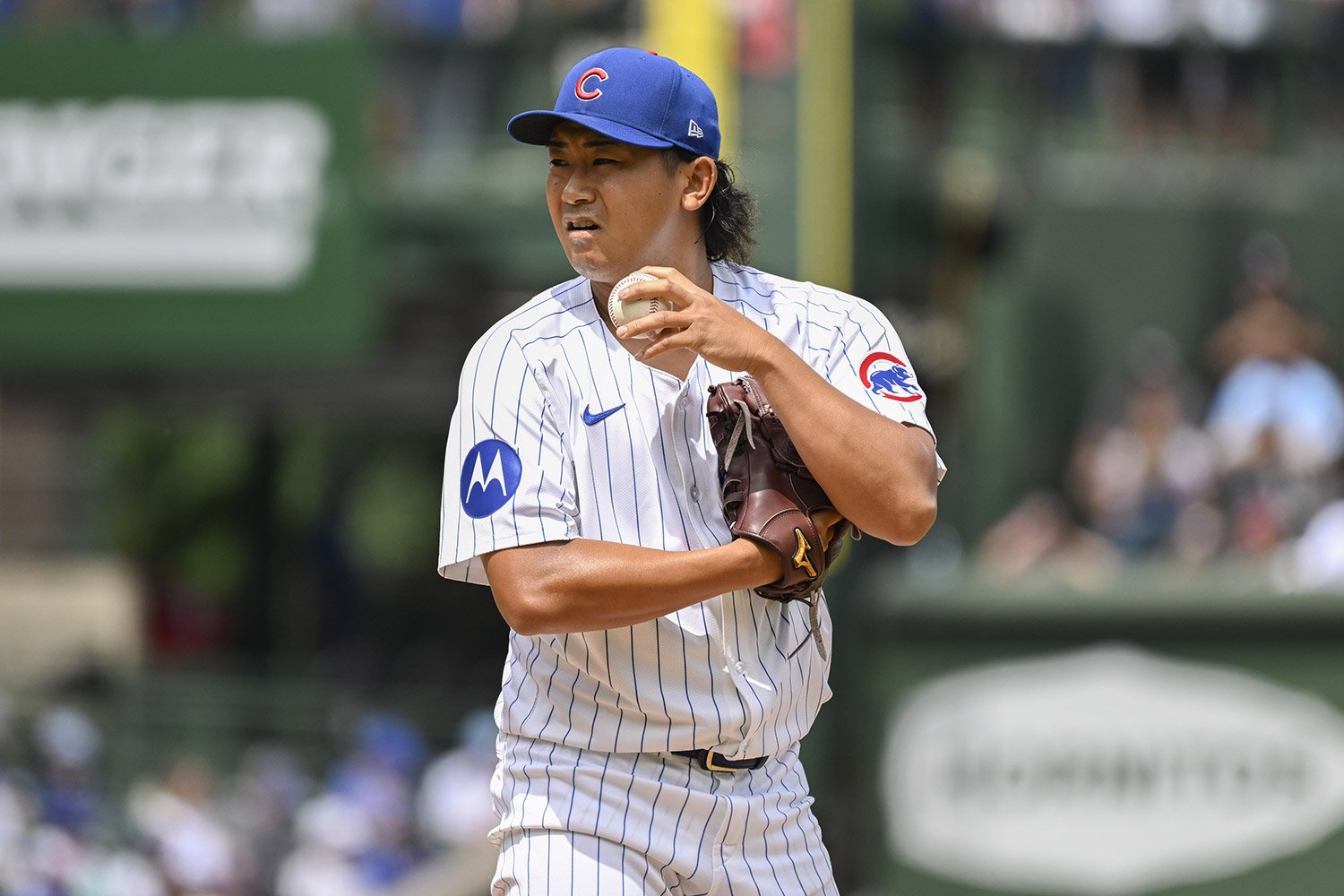 Every year, Wrigley Field plays host to some of the most iconic bands in the world; it's no wonder that with those types of shows coming up, the Cubs started the week off with a three-game set versus the cats from Motown, the Detroit Tigers. Chicago and Detroit have a lot in common: great food, iconic architecture, and statistical mirrors of one another when it comes to these two ball clubs. The Cubs and Tigers are virtually identical in more than a handful of categories, including overall record. Game one in this series saw the Cubs performing in the image of a team much better than they are. With Javier Assad assuming the starting duties in this one, the Cubs managed a win against Drew Smyly's former club with seriously timely hitting. Cody Bellinger, the club's two-strike specialist, came through with a pair of clutch hits. Meanwhile, newly anointed closer Porter Hodge slammed the door on AJ Hinch's club with a pair of strikeouts and allowed just one hit in the final frame. Final Score: 3-2 Cubs It takes a specific kind of pitcher to bounce back from surrendering a devastating long ball. In game two of this series, Jameson Taillon was not that kind of pitcher, which loomed even more disastrous on a day when Craig Counsell's bullpen put some of its old warts on full display. Stranding base runners is perhaps one of the Cubs' biggest bugaboos this season, and that wasn't any different on this day as they would leave six on base and delivered a meager 1-6 with RISP. The Tigers didn't get a chance to show off their future AL Cy Young winner, Tarik Skubal, in this series, but they got considerable pop from two of their young talents, Kerry Carpenter and Riley Greene. Maybe this was some kind of weird payback for keeping Isaiah Thomas off the Dream Team. Final Score: 8-2 Tigers Miguel Amaya and Pete Crow-Armstrong could have been the worst thing to happen to the Tigers since Jim Joyce robbed Armando Galarraga of a perfect game in 2010. Amaya and PCA were electric, driving in seven combined runs and showing signs of thrilling future promise. If that wasn't enough, Justin Steele cruised to his fourth win of the season. He fanned ten Tigers batters, allowing only two runs on four hits. Cubs take the win, the series, and in all likelihood, will be treated to free Detroit-style coney dogs the next time they're in town. Final Score: 10-2 Cubs Home runs are not a viable offensive strategy, but they sure are fun. In game one versus the Miami Marlins, Pete Crow-Armstrong provided the most exhilarating example of this to date. Trailing 1-0 in the top half of the third inning, Crow-Armstrong drilled a ball off the rightfield wall; 14.08 seconds later, PCA got the Cubs on the board with an inside-the-park home run. The Cubs are in business if this kid is as good as he has looked for the last several weeks. The Cubbies got solid bullpen work after Kyle Hendricks got through 4.2 largely trouble-free innings. Final Score: 6-3 Cubs On any given day, Chicagoans are presented with seventy-seven different neighborhoods of possibilities, but watching a Shota Imanaga start is about as good a usage of our time as it gets. Notching his 10th win of the year, Imanaga refused to let the fish off the hook, surrendering just two runs on four hits. Just like he did in his advertisement for Marquee Network, outfielder Seiya Suzuki stole the show in this one with two homers and four RBI. The Cubs' offensive showcase would also see a more conventional home run from Pete Crow-Armstrong, launching an absolute bomb into the second deck of right field. With the win putting the club back at the elusive .500 mark, it was a total romp for the Counsell's squad. Final Score: 14-2 Cubs Your question is: Did the Cubs sweep the Marlins? No, they did not. With a chance to push themselves over .500 for the first time since late May, a dizzying number of the club's worst habits resurfaced. Chicago left nine on base, wasting a pretty serviceable seven-inning performance from starter Javier Assad. Still a winnable game heading into the home half of the eighth inning, Julian Merryweather absolutely imploded. The Marlins hung a four-run inning on the Cubs' reliever to seal the deal and again put the Cubbies on the wrong side of .500 with a crucial week of baseball forthcoming. School is back in session across the Chicagoland area, and we have already learned a lot. Those majoring in Cubology now know, if they didn't already, that this club possesses some surprisingly nice pieces for future contention. However, the team is still incomplete, like starting a movie and not finishing it. Up next, the Cubs are set to square off with division for Pittsburg for three against the Bucs before a weekend rendezvous in D.C. with the Nationals. The Cubs must use the last month of the season to finish above .500 to be awarded the "Shows Improvement" mark on their report card. Can they do it?
 -
Stakeholders of big market teams all too often let good be the enemy of great. What I mean by this is that even in a week where the Cubs won four out of six games, we don't necessarily register the triumphs as anything more than what we should have gotten all along. Allow me to submit this week of North Side baseball as proof positive of this theory's legitimacy. This week was fun, novel, and even a little encouraging, though as it pertains to the Cubs' desperate playoff push, it accomplished nothing. Let's dive in to see how it all went down... Every year, Wrigley Field plays host to some of the most iconic bands in the world; it's no wonder that with those types of shows coming up, the Cubs started the week off with a three-game set versus the cats from Motown, the Detroit Tigers. Chicago and Detroit have a lot in common: great food, iconic architecture, and statistical mirrors of one another when it comes to these two ball clubs. The Cubs and Tigers are virtually identical in more than a handful of categories, including overall record. Game one in this series saw the Cubs performing in the image of a team much better than they are. With Javier Assad assuming the starting duties in this one, the Cubs managed a win against Drew Smyly's former club with seriously timely hitting. Cody Bellinger, the club's two-strike specialist, came through with a pair of clutch hits. Meanwhile, newly anointed closer Porter Hodge slammed the door on AJ Hinch's club with a pair of strikeouts and allowed just one hit in the final frame. Final Score: 3-2 Cubs It takes a specific kind of pitcher to bounce back from surrendering a devastating long ball. In game two of this series, Jameson Taillon was not that kind of pitcher, which loomed even more disastrous on a day when Craig Counsell's bullpen put some of its old warts on full display. Stranding base runners is perhaps one of the Cubs' biggest bugaboos this season, and that wasn't any different on this day as they would leave six on base and delivered a meager 1-6 with RISP. The Tigers didn't get a chance to show off their future AL Cy Young winner, Tarik Skubal, in this series, but they got considerable pop from two of their young talents, Kerry Carpenter and Riley Greene. Maybe this was some kind of weird payback for keeping Isaiah Thomas off the Dream Team. Final Score: 8-2 Tigers Miguel Amaya and Pete Crow-Armstrong could have been the worst thing to happen to the Tigers since Jim Joyce robbed Armando Galarraga of a perfect game in 2010. Amaya and PCA were electric, driving in seven combined runs and showing signs of thrilling future promise. If that wasn't enough, Justin Steele cruised to his fourth win of the season. He fanned ten Tigers batters, allowing only two runs on four hits. Cubs take the win, the series, and in all likelihood, will be treated to free Detroit-style coney dogs the next time they're in town. Final Score: 10-2 Cubs Home runs are not a viable offensive strategy, but they sure are fun. In game one versus the Miami Marlins, Pete Crow-Armstrong provided the most exhilarating example of this to date. Trailing 1-0 in the top half of the third inning, Crow-Armstrong drilled a ball off the rightfield wall; 14.08 seconds later, PCA got the Cubs on the board with an inside-the-park home run. The Cubs are in business if this kid is as good as he has looked for the last several weeks. The Cubbies got solid bullpen work after Kyle Hendricks got through 4.2 largely trouble-free innings. Final Score: 6-3 Cubs On any given day, Chicagoans are presented with seventy-seven different neighborhoods of possibilities, but watching a Shota Imanaga start is about as good a usage of our time as it gets. Notching his 10th win of the year, Imanaga refused to let the fish off the hook, surrendering just two runs on four hits. Just like he did in his advertisement for Marquee Network, outfielder Seiya Suzuki stole the show in this one with two homers and four RBI. The Cubs' offensive showcase would also see a more conventional home run from Pete Crow-Armstrong, launching an absolute bomb into the second deck of right field. With the win putting the club back at the elusive .500 mark, it was a total romp for the Counsell's squad. Final Score: 14-2 Cubs Your question is: Did the Cubs sweep the Marlins? No, they did not. With a chance to push themselves over .500 for the first time since late May, a dizzying number of the club's worst habits resurfaced. Chicago left nine on base, wasting a pretty serviceable seven-inning performance from starter Javier Assad. Still a winnable game heading into the home half of the eighth inning, Julian Merryweather absolutely imploded. The Marlins hung a four-run inning on the Cubs' reliever to seal the deal and again put the Cubbies on the wrong side of .500 with a crucial week of baseball forthcoming. School is back in session across the Chicagoland area, and we have already learned a lot. Those majoring in Cubology now know, if they didn't already, that this club possesses some surprisingly nice pieces for future contention. However, the team is still incomplete, like starting a movie and not finishing it. Up next, the Cubs are set to square off with division for Pittsburg for three against the Bucs before a weekend rendezvous in D.C. with the Nationals. The Cubs must use the last month of the season to finish above .500 to be awarded the "Shows Improvement" mark on their report card. Can they do it? View full article
-
Cubs Signal Desire for Stability in Closer Role. Who Can Provide It?
RavenCub30 posted an article in Cubs
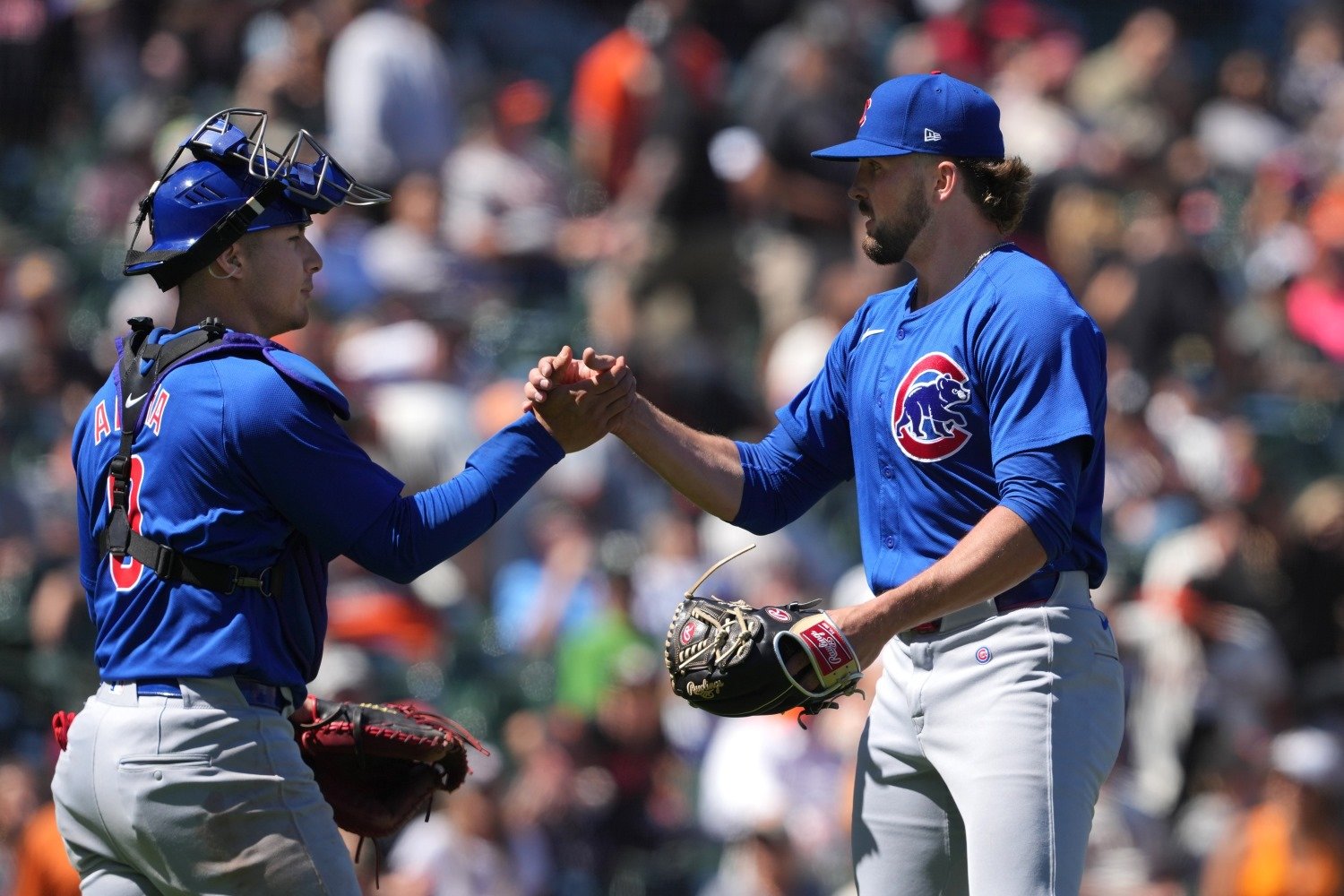 Bullpen depth, health, and reliability have eluded Craig Counsell’s squad at some critical junctures of the 2024 campaign. Yet, amid a late-season renaissance from the unit, the North Siders’ next long-term shutdown closer just might already be on the roster. Let’s take a look at the standout candidates. Porter Hodge Splashing onto the scene earlier this summer, the sturdy 23-year-old righthander wields a terse but effective pitch arsenal, featuring a nasty fastball employed 66.2% of the time. With his penchant for throwing strikes and an ERA of 2.08, Hodge can blow it by opposing batters as well as anyone on the team this season, but his youth is what could make him a serious threat for years to come. It’s probably too early to tell, but the possibilities are tantalizing. Tyson Miller Don't mess with the Chicken Man. Since coming over from the Mariners, Miller has more than impressed. Though he is just over half a decade older than Hodge, Miller is elite when it comes to keeping other teams’ batters from reaching base, ranking in the 98th percentile. Versus Miller, opposing hitters have only managed an average exit velocity of 87.5 MPH, and a barrel rate of 7.0%. When Adbert Alzolay was at his best, he forced a ton of ground balls and got hitters out faster than the Old Style kegs run out at Bernie’s. Albeit with quirkier, less overpowering stuff, Miller can do much of the same. Jorge López Far from being a “horrible teammate”, Lopez has been a revelation since moving to the “City of Broad Shoulders”. With an ERA of 2.44 and a WHIP of 1.25, López looks inspired right now. His off-speed stuff dazzles, set up by a sinker he deploys 37.7% of the time. He is a longer shot for this role, especially considering his past performances, impending free agency, and age (31), when compared to his fellow closer candidates, but he touts a level of maturity and consistency that piques your interest. Honorable Mention Drew Smyly Smyly is not a viable candidate to be the Cubs’ closer of the future, but, he’s delivered a striking number of quality, low-stress appearances for the Cubs in 2024. This year, in 50 innings of work, Smyly lays claim to 43 punchouts, and is yet another Cubs’ pitcher with a sub-3 ERA of 2.88. His veteran presence and steadiness are an example of the confidence and stability needed in the Cubs’ next elite closer. The fact that Héctor Neris is no longer a Cub feels like one of the biggest wins of the season, purely from the standpoint that increasingly disgruntled fans wanted him gone--and so, too, did the Cubs’ brass, evidently. The Cubs need a closer who can get the final three outs better than anyone else in their division, and hopefully, better than the whole rest of the league. Is he already on the team, or will a winter shopping spree be the remedy?
 -
Cubs Week In Review: Breakthrough Stretch, Followed By A Belly Flop
RavenCub30 posted an article in Cubs
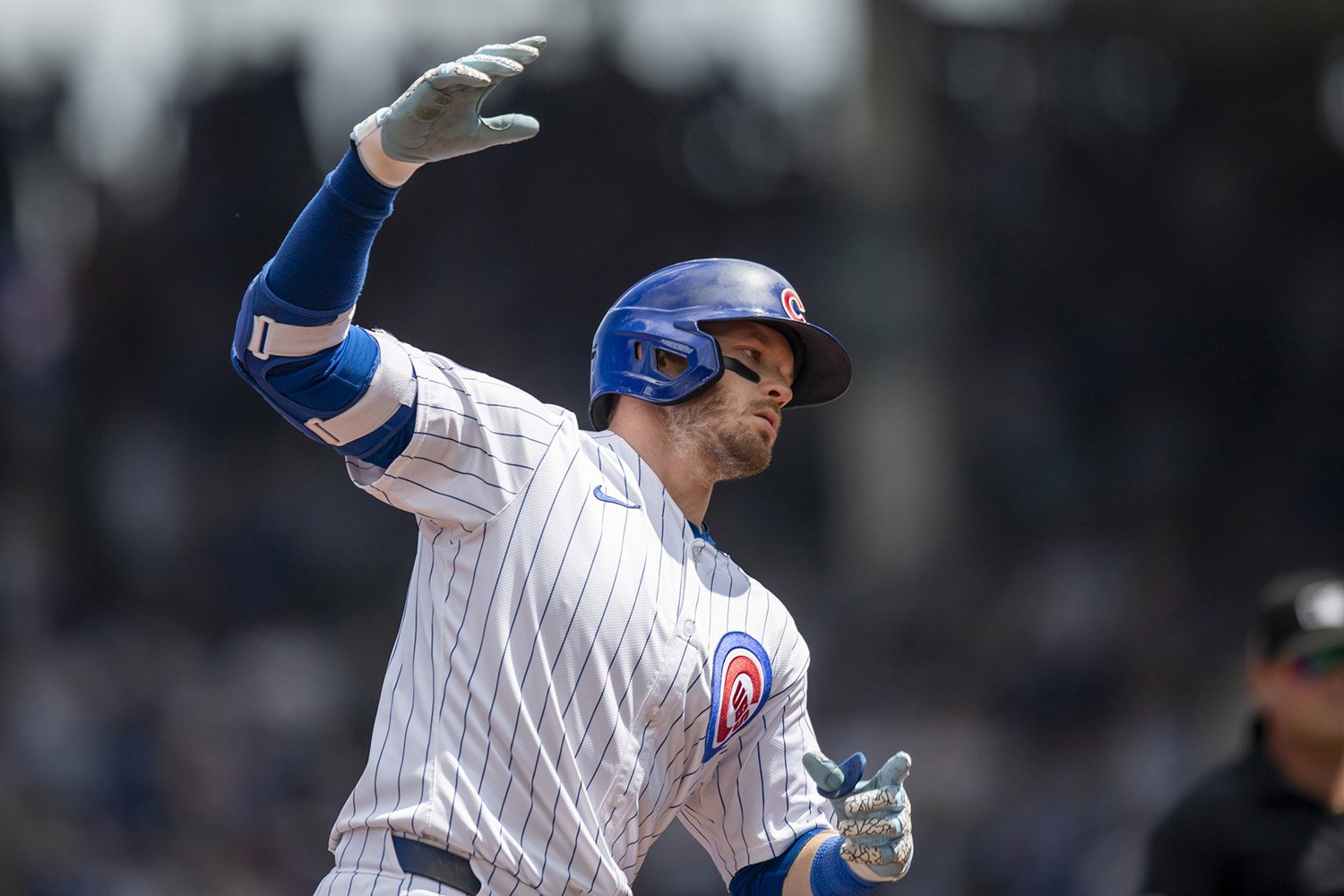 Depending on when you decided to check your phone, the Cubs drew as close as 2.5 games back of the third and final Wild Card spot a week ago. With a chance to claw their way back to the .500 mark for the first time since mid-June, the Cubs took off for Cleveland, and it did not rock. A Shota Imanaga start has been the Cubs’ closest thing to a “Get Out of Jail Free” card this season. The team is 17-6 in his starts, and he possesses an almost supernatural ability to calm things down for his club, not on this day. Despite an eight-run output from the Cubs, including production from the growingly consistent Dansby Swanson, the Guardians used a splashy, four-run fourth inning to shift the momentum in this one. JhonKensy Noel, the man locally known as “Big Christmas,” took advantage of questionable umpiring and hammered a two-out, two-run shot off Imanaga. The Guards added three more in the 5th inning, proving sufficient enough to survive a late-game rally from Craig Counsell’s club. Final Score: 9-8 Cleveland One of the more unpleasant trends of this Cubs’ season is not knowing when a start from a typically reliable pitcher, like Javier Assad, will transform into a kinda-sorta bullpen day. Though the Guardians were largely kept off the scoreboard at Progressive Field, so were the Cubbies. The North Side club struck first in this one with an RBI knock from the Cubs’ shortstop, Dansby Swanson, and that was it. The day belonged to former Detroit Tiger Matthew Boyd, who cruised through 5.1 innings of work, striking out six Cubby batters. Tough losses spiral into other tough losses, which happened here. Final Score: 2-1 Cleveland Like an underrated Fall Out Boy deep cut, the Cubs were “Dead On Arrival” in the series finale versus the Guardians. Let’s get right to it: The Cubs didn't show up in a game featuring the mostly steady Jameson Taillon toeing the rubber. Scrounging up just one run on a measly five hits, the Guardians caught the Cubs with their guard down. Last week, we spoke about a Cubs offense that has produced at a much more impressive clip since just before and after the All-Star break (over 4.5 runs per game), but the team masquerading as a professional baseball team on this day went 0-6 with RISP. In Chicago, as the Bears get ready to kick off the regular season, one can feel a certain “passing of the torch” from baseball to football; it felt like a Brian Urlacher sack in this one. Final Score: 6-1 Guardians With the Cubs largely playing better baseball in the last few weeks, the narrative centered around how easy the squad’s remaining schedule is when compared to the other clubs vying for a postseason berth. Considering that, the North Side ball club hosted the similarly mediocre Toronto Blue Jays for a three-game set. The Cubs used Craig Counsell’s favorite play, the home run, to generate most of their offense in game one of this tilt. With long balls from Cody Bellinger, Pete Crow-Armstrong, and Miguel Amaya, the Cubs resuscitated its dormant offense from the previous two contests. Nothing came easy as the Cubbies survived a late rally from the Jays, taking the game on a clutch walk-off single from Seiya Suzuki in extra innings. Final Score:6-5 Cubs The only thing better than a home run is a first-pitch lead-off home run from one of your squad’s most trusted veterans. Enter Ian Happ, who did exactly that on a hot Saturday afternoon at Wrigley Field, on a day when Chicago-native Stephen Colbert stopped by to serenade the Bleacher Bums and everyone else at 1060 West Addison with the seventh inning stretch. Excellent fielding and even more excellent bullpen play kept things in check for the Cubs after a greatly curtailed outing for Justin Steele, who managed just 2.0IP. Cubs take the series. Final Score: 3-2 Cubs I don’t know a better way to say this, so here goes: The Cubs got flipped the bird by the Blue Jays in the closer of this three-game series. In turn, the loss screwed over Cubs fans' hopes of warding off the Sunday scaries with a sweep for the home team and not meant to be. It’s hard to fault Shota Imanaga for much, even in a season where everyone in the clubhouse deserves a portion of the blame for how this season has played out. He pitched five innings and surrendered four hits, including a round-tripper to Jays’ center fielder Joey Loperfido. From there, the Cubs’ previously notoriously anemic offense made a surprise return; they managed a scant four hits, no runs, left six on base, and went 0-6 with RISP. Willy Mays Hays put on better hitting displays when trying out for this same Cleveland organization. Final Score: 1-0 Blue Jays As fans, journalists, enthusiasts, or general followers of the ball club, we’ve endured a lot this season. In my prior recaps, I’ve referred to the Cubs as disappointing, underachieving, even hopeful at times, but never disappointing. In no uncertain terms, this week was disappointing. Saddled with a record of 61-64 and a full five games back in the Wild Card, the team must press on and fight. Up next, the Cubs host the Detroit Tigers for three before heading to Miami Beach for a weekend series with the Marlins. I’ve always been more of a Motown guy than a Pitbull guy, but here, once again, is a chance for the Cubs to make some memorable music before the house lights come on.
 -
All of us have that one surprising fact in our back pocket that others always seem surprised is true: a tomato is actually a fruit, not a vegetable. Regarding the Cubs, you can pick and choose all kinds of (mostly bad) surprises from this season, but none more so than this: last week, the Chicago Cubs were swept for the first time all year. Image courtesy of © Patrick Gorski-USA TODAY Sports Depending on when you decided to check your phone, the Cubs drew as close as 2.5 games back of the third and final Wild Card spot a week ago. With a chance to claw their way back to the .500 mark for the first time since mid-June, the Cubs took off for Cleveland, and it did not rock. A Shota Imanaga start has been the Cubs’ closest thing to a “Get Out of Jail Free” card this season. The team is 17-6 in his starts, and he possesses an almost supernatural ability to calm things down for his club, not on this day. Despite an eight-run output from the Cubs, including production from the growingly consistent Dansby Swanson, the Guardians used a splashy, four-run fourth inning to shift the momentum in this one. JhonKensy Noel, the man locally known as “Big Christmas,” took advantage of questionable umpiring and hammered a two-out, two-run shot off Imanaga. The Guards added three more in the 5th inning, proving sufficient enough to survive a late-game rally from Craig Counsell’s club. Final Score: 9-8 Cleveland One of the more unpleasant trends of this Cubs’ season is not knowing when a start from a typically reliable pitcher, like Javier Assad, will transform into a kinda-sorta bullpen day. Though the Guardians were largely kept off the scoreboard at Progressive Field, so were the Cubbies. The North Side club struck first in this one with an RBI knock from the Cubs’ shortstop, Dansby Swanson, and that was it. The day belonged to former Detroit Tiger Matthew Boyd, who cruised through 5.1 innings of work, striking out six Cubby batters. Tough losses spiral into other tough losses, which happened here. Final Score: 2-1 Cleveland Like an underrated Fall Out Boy deep cut, the Cubs were “Dead On Arrival” in the series finale versus the Guardians. Let’s get right to it: The Cubs didn't show up in a game featuring the mostly steady Jameson Taillon toeing the rubber. Scrounging up just one run on a measly five hits, the Guardians caught the Cubs with their guard down. Last week, we spoke about a Cubs offense that has produced at a much more impressive clip since just before and after the All-Star break (over 4.5 runs per game), but the team masquerading as a professional baseball team on this day went 0-6 with RISP. In Chicago, as the Bears get ready to kick off the regular season, one can feel a certain “passing of the torch” from baseball to football; it felt like a Brian Urlacher sack in this one. Final Score: 6-1 Guardians With the Cubs largely playing better baseball in the last few weeks, the narrative centered around how easy the squad’s remaining schedule is when compared to the other clubs vying for a postseason berth. Considering that, the North Side ball club hosted the similarly mediocre Toronto Blue Jays for a three-game set. The Cubs used Craig Counsell’s favorite play, the home run, to generate most of their offense in game one of this tilt. With long balls from Cody Bellinger, Pete Crow-Armstrong, and Miguel Amaya, the Cubs resuscitated its dormant offense from the previous two contests. Nothing came easy as the Cubbies survived a late rally from the Jays, taking the game on a clutch walk-off single from Seiya Suzuki in extra innings. Final Score:6-5 Cubs The only thing better than a home run is a first-pitch lead-off home run from one of your squad’s most trusted veterans. Enter Ian Happ, who did exactly that on a hot Saturday afternoon at Wrigley Field, on a day when Chicago-native Stephen Colbert stopped by to serenade the Bleacher Bums and everyone else at 1060 West Addison with the seventh inning stretch. Excellent fielding and even more excellent bullpen play kept things in check for the Cubs after a greatly curtailed outing for Justin Steele, who managed just 2.0IP. Cubs take the series. Final Score: 3-2 Cubs I don’t know a better way to say this, so here goes: The Cubs got flipped the bird by the Blue Jays in the closer of this three-game series. In turn, the loss screwed over Cubs fans' hopes of warding off the Sunday scaries with a sweep for the home team and not meant to be. It’s hard to fault Shota Imanaga for much, even in a season where everyone in the clubhouse deserves a portion of the blame for how this season has played out. He pitched five innings and surrendered four hits, including a round-tripper to Jays’ center fielder Joey Loperfido. From there, the Cubs’ previously notoriously anemic offense made a surprise return; they managed a scant four hits, no runs, left six on base, and went 0-6 with RISP. Willy Mays Hays put on better hitting displays when trying out for this same Cleveland organization. Final Score: 1-0 Blue Jays As fans, journalists, enthusiasts, or general followers of the ball club, we’ve endured a lot this season. In my prior recaps, I’ve referred to the Cubs as disappointing, underachieving, even hopeful at times, but never disappointing. In no uncertain terms, this week was disappointing. Saddled with a record of 61-64 and a full five games back in the Wild Card, the team must press on and fight. Up next, the Cubs host the Detroit Tigers for three before heading to Miami Beach for a weekend series with the Marlins. I’ve always been more of a Motown guy than a Pitbull guy, but here, once again, is a chance for the Cubs to make some memorable music before the house lights come on. View full article
-
Due to what sometimes feels like oppressive negativity in sports journalism, and just because of who I am, I ardently try to keep a positive outlook. After the Cubs bagged an impressive series win over the Minnesota Twins this past week, I DM'd one of my fellow Cubby buddies, "This is the team we've been waiting on." Unless you find yourself deeply entrenched in ancient rituals of masochism, this was a hard week. The Cubs played good baseball this week and thrust themselves back into the conversation. Here's how it went down... Image courtesy of © Kamil Krzaczynski-USA TODAY Sports Embarking on a week of baseball in which the North Side club enjoyed an extraordinarily rare two days off, wins as if they weren't already, were weighted at an immensely high premium. Craig Counsell's squad is hitting harder these days than Matt Cameron of Pearl Jam on a snare drum. The Cubs are in the midst of a lengthy stretch of playing their best ball of the year, though as they kicked this week off with their week facing an interleague adversary in the Minnesota Twins, you wouldn't know it. In the final series of a seven-game homestand, the Cubs arrived flat as can be in game one versus the the Twinkies. Without run support, a Kyle Hendricks start is transformed into an auto-loss. That's exactly what happened on a day when the Cubs were shut out despite only conceding three runs. Twins starter David Festa enjoyed the winning fiesta, blanking the Cubs over five sneaky strong innings. He gave up not a single run and fanned nine Cubs batters. There's a plethora of reasons to begrudge Mondays; this was one of them. Final Score: 3-0 Twins In joyfully unlikely fashion, the Cubbies bounced back in game two of the series. As one of the team's leaders, Shota Imanaga grasps the magnitude of the moment better than anyone else in baseball. The Pitching Philosopher simply dazzled in this one, pitching seven innings, allowing only two hits, and striking out ten Twins. Since he arrived back in Chicago, we've been waiting patiently for Isaac Paredes, who had gone 3-27 as a Cub before this game, to show up. Patience rewarded. He launched his first homer as a Cubbie, a three-run bomb that got the Cubs out to an early lead. The Cubs collected eleven hits and left five on base, which is one of the club's more balanced performances all year. Final Score: 7-3 Cubs With designs on securing their second-straight series win, the Cubs pinned their hopes on Javier Assad to help get them there. Though Assad largely fell short of that goal, the Cubbies' increasingly shutdown bullpen did exactly that with quality work from Drew Smyly, Porter Hodge, Julian Merryweather, and Jorge Lopez, all of whom combined for five scoreless innings of work. From the offensive side, the Cubs got key contributions from Christian Betancourt, Dansby Swanson, and newly minted offensive weapon Pete Crow-Armstrong. Strong offensive production has proven crucial as they claw their way back into Wild Card contention. Once perpetually sinking through the middle of the season in the batter's box, the Cubs' offensive out more closely resembles their early-season numbers, as they score over 4.5 runs per game. Final Score: 8-2 Cubs For those familiar, the Cubs have this cosmic penchant for beating their South Side rivals by a score of 7-6 in 2024. In game one of this two-game micro-series, it happened again, though not in the way you'd maybe want or expect. Racing an early 7-0 lead, the Cubbies completely ambushed White Sox ace Garrett Crochet with a barrage of dingers. Nico Hoerner, Cody Bellinger, Isaac Paredes, and Ian Happ delivered souvenirs to the seats at Guaranteed Rate Field. That sounds great, but with the Sox able to cut the lead to 7-6, it was up to the bullpen once again to bail the Cubs out of trouble. Culminating in a pulse-pounding relief effort from Hector Neris, the Cubs managed to take the game, giving Cubs Nation a cathartic sigh of relief. Final Score: 7-6 Cubs Not to spoil anything, but the Cubs wanted to use the conclusion of this year's Crosstown Classic to draw within one game of .500, and they did. The Cubs and Sox locked themselves in a pretty tense pitchers duel, sending Justin Steele to the mound opposite Chris Flexen of the Sox. Despite the virtually nonexistent margin for error, the Cubs pulled out a late game rally, a two-run double from Isaac Paredes, to win the game and hope skyrocketing to an all-time high this season. Final Score: 3-1 Cubs After witnessing what unfolded this week, I am convinced my text was accurate: This is the team we have been waiting on all year. With a record of 59-60, just 3.0 games back of the third and final NL Wild Card spot, the Cubs have a chance to do something special. The squad is playing its most sound baseball of the year. To secure the storybook ending, the Cubs will first deviate to Cleveland to play a three-game set with the Guardians; after that, it's back home for a weekend series with the Toronto Blue Jays. If we're gathered here talking about an over .500 Cubs team next week, I feel compelled to say we're back in business. View full article
-
Week In Review: The Cubs 'Stack Wins' and Find Consistency in Eye-Opening Week
RavenCub30 posted an article in Cubs
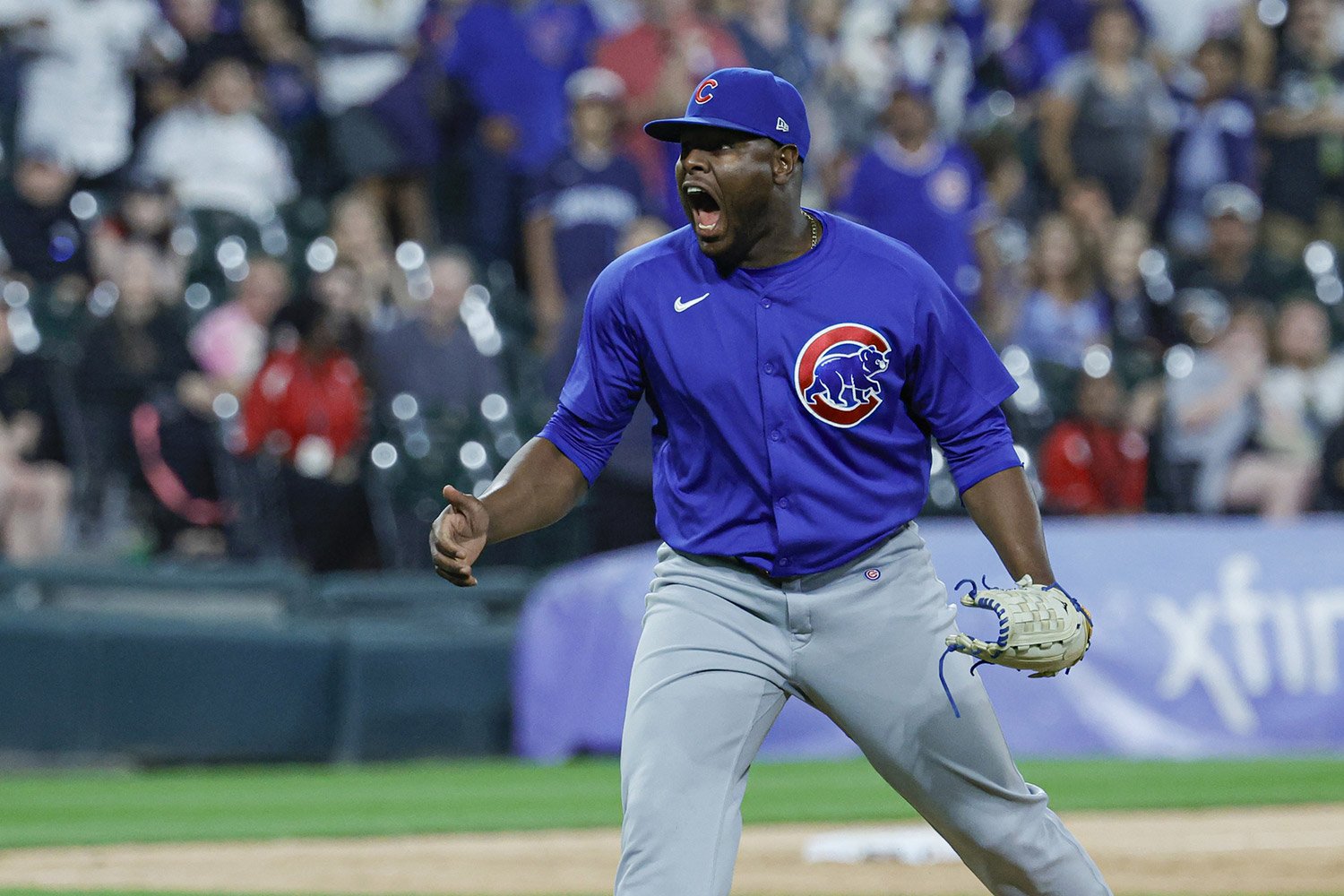 Embarking on a week of baseball in which the North Side club enjoyed an extraordinarily rare two days off, wins as if they weren't already, were weighted at an immensely high premium. Craig Counsell's squad is hitting harder these days than Matt Cameron of Pearl Jam on a snare drum. The Cubs are in the midst of a lengthy stretch of playing their best ball of the year, though as they kicked this week off with their week facing an interleague adversary in the Minnesota Twins, you wouldn't know it. In the final series of a seven-game homestand, the Cubs arrived flat as can be in game one versus the the Twinkies. Without run support, a Kyle Hendricks start is transformed into an auto-loss. That's exactly what happened on a day when the Cubs were shut out despite only conceding three runs. Twins starter David Festa enjoyed the winning fiesta, blanking the Cubs over five sneaky strong innings. He gave up not a single run and fanned nine Cubs batters. There's a plethora of reasons to begrudge Mondays; this was one of them. Final Score: 3-0 Twins In joyfully unlikely fashion, the Cubbies bounced back in game two of the series. As one of the team's leaders, Shota Imanaga grasps the magnitude of the moment better than anyone else in baseball. The Pitching Philosopher simply dazzled in this one, pitching seven innings, allowing only two hits, and striking out ten Twins. Since he arrived back in Chicago, we've been waiting patiently for Isaac Paredes, who had gone 3-27 as a Cub before this game, to show up. Patience rewarded. He launched his first homer as a Cubbie, a three-run bomb that got the Cubs out to an early lead. The Cubs collected eleven hits and left five on base, which is one of the club's more balanced performances all year. Final Score: 7-3 Cubs With designs on securing their second-straight series win, the Cubs pinned their hopes on Javier Assad to help get them there. Though Assad largely fell short of that goal, the Cubbies' increasingly shutdown bullpen did exactly that with quality work from Drew Smyly, Porter Hodge, Julian Merryweather, and Jorge Lopez, all of whom combined for five scoreless innings of work. From the offensive side, the Cubs got key contributions from Christian Betancourt, Dansby Swanson, and newly minted offensive weapon Pete Crow-Armstrong. Strong offensive production has proven crucial as they claw their way back into Wild Card contention. Once perpetually sinking through the middle of the season in the batter's box, the Cubs' offensive out more closely resembles their early-season numbers, as they score over 4.5 runs per game. Final Score: 8-2 Cubs For those familiar, the Cubs have this cosmic penchant for beating their South Side rivals by a score of 7-6 in 2024. In game one of this two-game micro-series, it happened again, though not in the way you'd maybe want or expect. Racing an early 7-0 lead, the Cubbies completely ambushed White Sox ace Garrett Crochet with a barrage of dingers. Nico Hoerner, Cody Bellinger, Isaac Paredes, and Ian Happ delivered souvenirs to the seats at Guaranteed Rate Field. That sounds great, but with the Sox able to cut the lead to 7-6, it was up to the bullpen once again to bail the Cubs out of trouble. Culminating in a pulse-pounding relief effort from Hector Neris, the Cubs managed to take the game, giving Cubs Nation a cathartic sigh of relief. Final Score: 7-6 Cubs Not to spoil anything, but the Cubs wanted to use the conclusion of this year's Crosstown Classic to draw within one game of .500, and they did. The Cubs and Sox locked themselves in a pretty tense pitchers duel, sending Justin Steele to the mound opposite Chris Flexen of the Sox. Despite the virtually nonexistent margin for error, the Cubs pulled out a late game rally, a two-run double from Isaac Paredes, to win the game and hope skyrocketing to an all-time high this season. Final Score: 3-1 Cubs After witnessing what unfolded this week, I am convinced my text was accurate: This is the team we have been waiting on all year. With a record of 59-60, just 3.0 games back of the third and final NL Wild Card spot, the Cubs have a chance to do something special. The squad is playing its most sound baseball of the year. To secure the storybook ending, the Cubs will first deviate to Cleveland to play a three-game set with the Guardians; after that, it's back home for a weekend series with the Toronto Blue Jays. If we're gathered here talking about an over .500 Cubs team next week, I feel compelled to say we're back in business.
 -
Dansby Swanson and Nico Hoerner Are A Dynamic Infield Duo, Leaders For Cubs
RavenCub30 posted an article in Cubs
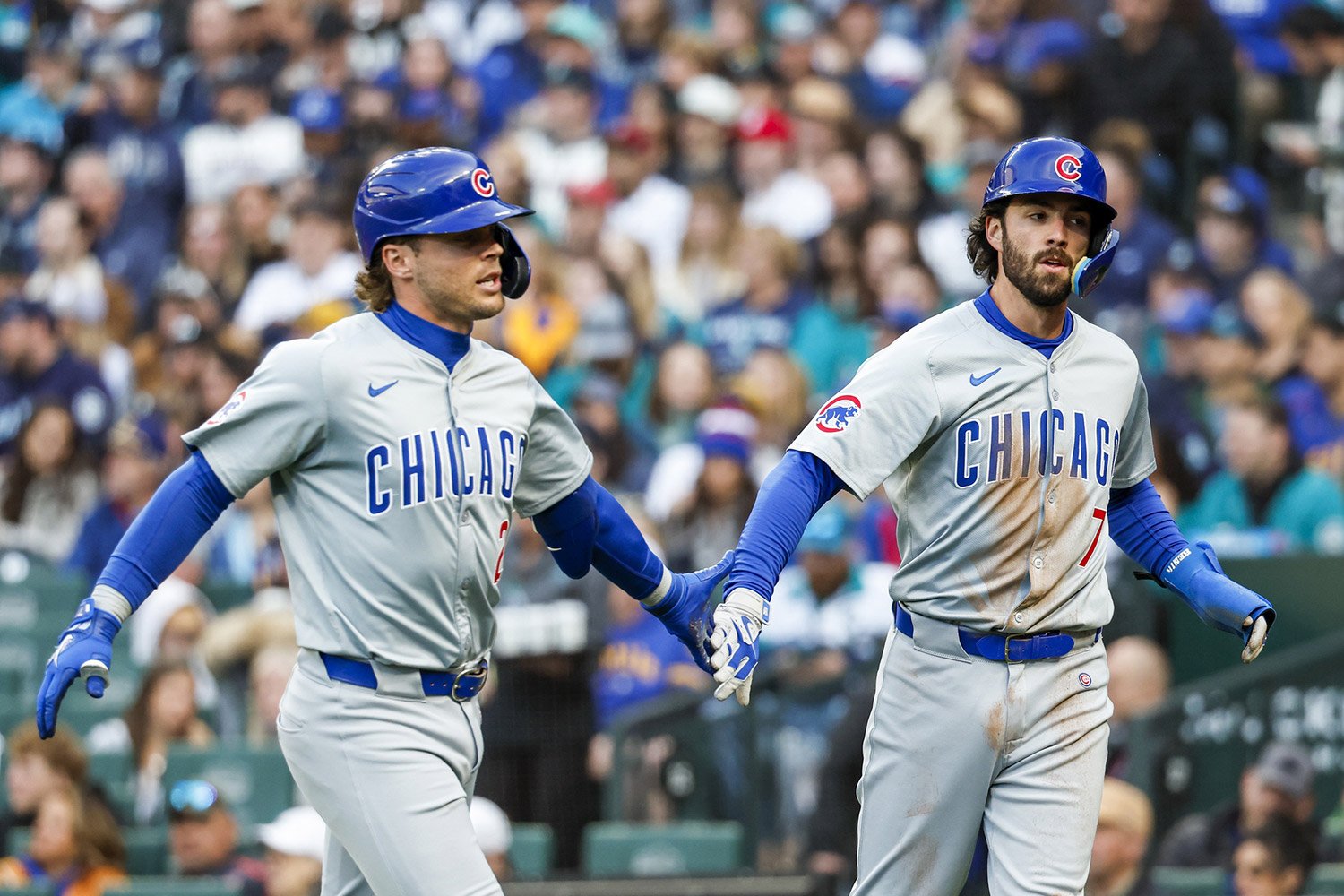 What’s better than winning? Winning in style, and that’s what, along with intangible leadership, Cubs’ Middle infielders Nico Hoerner and Dansby Swanson provide. Every time you watch a game on Marquee, Jim Deshaies breaks down the defensive alignment for the Cubs. If you notice, and I know you do, this duo has gold glove icons next to their names, signifying being awarded that honor for their defensive prowess at their respective positions. Despite some extreme fielding woes this year, both players easily rank in the 90th percentile for their positions. Will they win them again this season? No, but when they’re at their best, this dazzling tandem is the two best in the majors, not just for the reasons you might think. The best teams in the business have a middle infield, making it tougher to get a ball to the outfield than getting into Wakanda in the first Black Panther movie. It hasn’t necessarily equated to wins, but the Cubs’ dynamic pair is that kind of middle infield. As incomprehensible as it sounds, given the team’s station, the team’s middle infield tandem as leaders are indispensable to the Cubs organization. When things are rolling, the party is on. You can picture what I’m talking about: As early as this past Sunday, when the Cubs’ offense fires on all cylinders, it creates an atmosphere unlike anything else in baseball. The hit count rises, and so do the vibes. But, when things go wrong, and they often do, the club needs a voice or voices of reason to make sense of the hardships and keep things steady. Hoerner and Swanson provide that through their demeanor and perseverance, yet are two of the most chastised players on the team. No one is beyond criticism, and this tandem certainly absorbs their fair share of it on social media, blogs, and other media outlets, claiming that their offensive droughts hurt the team’s performance more than other factors. The critique that aligns with this sentiment is fair, but it fails to consider their defensive mastery. At 14 OAA, Swanson ranks just outside the Top 5 in the majors in outs above average. His colleague at second base ranks in the Top 30 in this category, and 7 OAA through that elite defense stopped six runs from scoring. Scant few are on par with what these two do, and if their counterparts on other clubs get more praise, like Anthony Volpe (13 OAA, NYY) and Andres Gimenez (12 OAA, CLE), they have better records. Nico Hoerner and Dansby Swanson, on some nights, sink the Cubs’ chances of winning through their meager offensive output. However, their elite defensive play cements them as fixtures in the squad’s lineup now and in the long term. They get to baseballs, make spectacular defensive plays, stop the other team from scoring, and are fun to watch. This year, we’ve talked a lot about this team’s identity and being a Chicago Cub. Through grit and top-tier play, the Cubs’ duo of middle infielders provides about as good a template as you’re likely to find. They’re great players, and they deserve to be on this team for years to come.
 -
Every successful team needs a middle infield to keep opposing offenses off the base pads and off the scoreboard. Image courtesy of © Joe Nicholson-USA TODAY Sports What’s better than winning? Winning in style, and that’s what, along with intangible leadership, Cubs’ Middle infielders Nico Hoerner and Dansby Swanson provide. Every time you watch a game on Marquee, Jim Deshaies breaks down the defensive alignment for the Cubs. If you notice, and I know you do, this duo has gold glove icons next to their names, signifying being awarded that honor for their defensive prowess at their respective positions. Despite some extreme fielding woes this year, both players easily rank in the 90th percentile for their positions. Will they win them again this season? No, but when they’re at their best, this dazzling tandem is the two best in the majors, not just for the reasons you might think. The best teams in the business have a middle infield, making it tougher to get a ball to the outfield than getting into Wakanda in the first Black Panther movie. It hasn’t necessarily equated to wins, but the Cubs’ dynamic pair is that kind of middle infield. As incomprehensible as it sounds, given the team’s station, the team’s middle infield tandem as leaders are indispensable to the Cubs organization. When things are rolling, the party is on. You can picture what I’m talking about: As early as this past Sunday, when the Cubs’ offense fires on all cylinders, it creates an atmosphere unlike anything else in baseball. The hit count rises, and so do the vibes. But, when things go wrong, and they often do, the club needs a voice or voices of reason to make sense of the hardships and keep things steady. Hoerner and Swanson provide that through their demeanor and perseverance, yet are two of the most chastised players on the team. No one is beyond criticism, and this tandem certainly absorbs their fair share of it on social media, blogs, and other media outlets, claiming that their offensive droughts hurt the team’s performance more than other factors. The critique that aligns with this sentiment is fair, but it fails to consider their defensive mastery. At 14 OAA, Swanson ranks just outside the Top 5 in the majors in outs above average. His colleague at second base ranks in the Top 30 in this category, and 7 OAA through that elite defense stopped six runs from scoring. Scant few are on par with what these two do, and if their counterparts on other clubs get more praise, like Anthony Volpe (13 OAA, NYY) and Andres Gimenez (12 OAA, CLE), they have better records. Nico Hoerner and Dansby Swanson, on some nights, sink the Cubs’ chances of winning through their meager offensive output. However, their elite defensive play cements them as fixtures in the squad’s lineup now and in the long term. They get to baseballs, make spectacular defensive plays, stop the other team from scoring, and are fun to watch. This year, we’ve talked a lot about this team’s identity and being a Chicago Cub. Through grit and top-tier play, the Cubs’ duo of middle infielders provides about as good a template as you’re likely to find. They’re great players, and they deserve to be on this team for years to come. View full article
-
Week In Review: Mistakes, Frustration, Signal Beginning of the End
RavenCub30 posted an article in Cubs
 The game of baseball is loaded with rituals and superstitions. Most famous is the collective effort made by teams, fans, and broadcasters when one of their own is tossing a no-hitter or perfect game. There are probably several good reasons for this, but one simple one: We don’t want to screw it up. Regarding the 2024 Chicago Cubs, a similarly mute strategy is employable for this team’s enduring mediocrity; in other words, don’t ask if things can get worse. They can, and they did. With some new faces and familiar ones on board, this week was undeniable proof of this supernatural rule. As tough as this season is to stomach at times, this week was even tougher. Let’s look at how it went down… The week they commenced at the house Skyline Chili built as the Cubs took on division foe Cincinnati for three games. The guy people thought wouldn’t be a Cub anymore, Jameson Taillon, took the bump opposite the Reds’ right-hander Carson Spiers. Jamo was dead on arrival, surrendering six earned runs, one walk, and two round-trippers in 4.1 innings pitched. With the Cubs’ offense floundering from the start, Spiers didn’t need to be too sharp, but was anyway, going 5.0 innings pitched, allowing just one hit and no runs. If, for some reason, you were waiting for proof that ejections don’t mean anything, this one was for you as the Cubs’ new reliever Nate Pearson and his skipper both got ejected after Pearson drilled Reds’ batter Tyler Stephenson with an errant pitch in the eighth inning. Final Score: 7-1 Reds The aces of your staff are supposed to calm things down and right the ship after a tough loss. Unfortunately for Justin Steele, that was not the case in this one. All season long, run support has plagued the Cubs’ former All-Star. Though he managed to get through five innings of work, Steele struggled to induce the soft-hit ground balls he’s known for, getting hit hard early and often by Reds’ batters. For their part, the Cubs’ offense continued to come up empty when it mattered most, going 1-9 with RISP. Their futility handed the series win to the Reds and raised even more red flags regarding whether or not Chicago did enough of the right things at the trade deadline. Final Score: 6-3 Reds Proving they’re quite possibly the league’s most prolific team in not getting swept, the Cubs didn’t get swept in the series finale. The Cubs’ bats temporarily arose from their slumber, delivering a pleasantly productive day. With the much-maligned Kyle Hendricks getting the start in this one, it’s probably what the team needed. Hendo looked vintage sharp and rode his club’s offensive tidal wave to five strong innings in the victory. On a day when the Cubbies raked, Ian Happ and Seiya Suzuki, outstanding of late, went a combined 5-9 and drove in five runs between them. As a team, and this is as far-fetched as it gets, the Cubs went 9-16 with RISP. Let’s start doing that more often. Final Score: 13-4 Cubs After salvaging a win at Great American Ballpark, the Cubs kicked off the take it or leave it (I wish to leave it) Motorola patch era with a four-game mega series versus the Saint Louis Cardinals. Lollapalooza was in town this weekend, and game one of this showdown was worth putting on repeat. In arguably the Cubs’ best and most thrilling win of the season, the team played with a touch of magic in their bats. Trailing the Cards 4-2 heading in the bottom of the 9th, the Cubbies rallied in a way we’ve rarely seen this year. 0-41 in games trailing by more than one run in the 9th, Cody Bellinger started the improbable rally with a two-out, two-strike solo shot to right field, cutting the deficit to one. Nico Hoerner and Dansby Swanson kept the momentum going with a couple of two-strike knocks. The stage was set for Mike Tauchman to deliver the dramatic walk-off win in front of his home crowd, and he did, lacing a two-run walk-off double down the left field line to complete the comeback. The Palatine Pounder pulled through again. Final Score: 5-4 Cubs Continuing a trend in which the Cubs seem to play up to superior opponents and down to weaker ones, the North Side club gave its fans who decided to skip work this past Friday the validation they needed. Javier Assad got the call as a starter, and he is still trying to find his groove. Assad made it through just four innings and gave way to a pretty stellar bullpen day. Drew Smyly, Tyson Miller, and even Hector Neris picked up the slack to keep Paul Goldschmidt and other dangerous Cardinals in check. Michael Busch and Christian Bethancourt did the bulk of the damage for the Cubs, cashing in game-changing homers. With it, the Cubs’ winning streak stretched to three on about as feel-good a day as you can ask for at Wrigley Field. Could the Cubs run their win streak to four with the energy building and take the series from their bitter rival? No. Crashing back down to earth after achieving a euphoric high the day prior, the Cubs’ worst habits, specifically the shaky bullpen, were on full display in a game they let get away. Jameson encouragingly erased the stench of his previous outing, clocking in six innings of one-run ball. Quality at-bats from Michael Busch, Pete Crow-Armstrong, and Miguel Amaya gave the Cubs an early 4-1 lead, which should have held up but didn’t. Hector Neris’ unreliability aside, poor communication between the outfield and infield, namely Nico Hoerner and Crow-Armstrong, blew the game for the Cubbies—lost opportunity. This was the perfect week for the Chicago Cubs: They showed flashes of brilliance pointing towards what the club could be and had the warts of who they are and why things need to change, exposed in grand fashion. Up next, the Cubs get to play at both major league ballparks in the city of Chicago. First, they welcome the Minnesota Twins to town for three games. They’ll then use an off-day Thursday to travel to the south side and face off against the worst team in baseball, the Chicago White Sox. With the book on this season drawing morosely near its end, the objective of the remainder of this club’s schedule is clear: Try some things out, hit the drawing board, and enjoy summertime in Chicago while you can.
 -
It's not that this Cubs team is terrible, they're just uninspiring. Image courtesy of © David Banks-USA TODAY Sports The game of baseball is loaded with rituals and superstitions. Most famous is the collective effort made by teams, fans, and broadcasters when one of their own is tossing a no-hitter or perfect game. There are probably several good reasons for this, but one simple one: We don’t want to screw it up. Regarding the 2024 Chicago Cubs, a similarly mute strategy is employable for this team’s enduring mediocrity; in other words, don’t ask if things can get worse. They can, and they did. With some new faces and familiar ones on board, this week was undeniable proof of this supernatural rule. As tough as this season is to stomach at times, this week was even tougher. Let’s look at how it went down… The week they commenced at the house Skyline Chili built as the Cubs took on division foe Cincinnati for three games. The guy people thought wouldn’t be a Cub anymore, Jameson Taillon, took the bump opposite the Reds’ right-hander Carson Spiers. Jamo was dead on arrival, surrendering six earned runs, one walk, and two round-trippers in 4.1 innings pitched. With the Cubs’ offense floundering from the start, Spiers didn’t need to be too sharp, but was anyway, going 5.0 innings pitched, allowing just one hit and no runs. If, for some reason, you were waiting for proof that ejections don’t mean anything, this one was for you as the Cubs’ new reliever Nate Pearson and his skipper both got ejected after Pearson drilled Reds’ batter Tyler Stephenson with an errant pitch in the eighth inning. Final Score: 7-1 Reds The aces of your staff are supposed to calm things down and right the ship after a tough loss. Unfortunately for Justin Steele, that was not the case in this one. All season long, run support has plagued the Cubs’ former All-Star. Though he managed to get through five innings of work, Steele struggled to induce the soft-hit ground balls he’s known for, getting hit hard early and often by Reds’ batters. For their part, the Cubs’ offense continued to come up empty when it mattered most, going 1-9 with RISP. Their futility handed the series win to the Reds and raised even more red flags regarding whether or not Chicago did enough of the right things at the trade deadline. Final Score: 6-3 Reds Proving they’re quite possibly the league’s most prolific team in not getting swept, the Cubs didn’t get swept in the series finale. The Cubs’ bats temporarily arose from their slumber, delivering a pleasantly productive day. With the much-maligned Kyle Hendricks getting the start in this one, it’s probably what the team needed. Hendo looked vintage sharp and rode his club’s offensive tidal wave to five strong innings in the victory. On a day when the Cubbies raked, Ian Happ and Seiya Suzuki, outstanding of late, went a combined 5-9 and drove in five runs between them. As a team, and this is as far-fetched as it gets, the Cubs went 9-16 with RISP. Let’s start doing that more often. Final Score: 13-4 Cubs After salvaging a win at Great American Ballpark, the Cubs kicked off the take it or leave it (I wish to leave it) Motorola patch era with a four-game mega series versus the Saint Louis Cardinals. Lollapalooza was in town this weekend, and game one of this showdown was worth putting on repeat. In arguably the Cubs’ best and most thrilling win of the season, the team played with a touch of magic in their bats. Trailing the Cards 4-2 heading in the bottom of the 9th, the Cubbies rallied in a way we’ve rarely seen this year. 0-41 in games trailing by more than one run in the 9th, Cody Bellinger started the improbable rally with a two-out, two-strike solo shot to right field, cutting the deficit to one. Nico Hoerner and Dansby Swanson kept the momentum going with a couple of two-strike knocks. The stage was set for Mike Tauchman to deliver the dramatic walk-off win in front of his home crowd, and he did, lacing a two-run walk-off double down the left field line to complete the comeback. The Palatine Pounder pulled through again. Final Score: 5-4 Cubs Continuing a trend in which the Cubs seem to play up to superior opponents and down to weaker ones, the North Side club gave its fans who decided to skip work this past Friday the validation they needed. Javier Assad got the call as a starter, and he is still trying to find his groove. Assad made it through just four innings and gave way to a pretty stellar bullpen day. Drew Smyly, Tyson Miller, and even Hector Neris picked up the slack to keep Paul Goldschmidt and other dangerous Cardinals in check. Michael Busch and Christian Bethancourt did the bulk of the damage for the Cubs, cashing in game-changing homers. With it, the Cubs’ winning streak stretched to three on about as feel-good a day as you can ask for at Wrigley Field. Could the Cubs run their win streak to four with the energy building and take the series from their bitter rival? No. Crashing back down to earth after achieving a euphoric high the day prior, the Cubs’ worst habits, specifically the shaky bullpen, were on full display in a game they let get away. Jameson encouragingly erased the stench of his previous outing, clocking in six innings of one-run ball. Quality at-bats from Michael Busch, Pete Crow-Armstrong, and Miguel Amaya gave the Cubs an early 4-1 lead, which should have held up but didn’t. Hector Neris’ unreliability aside, poor communication between the outfield and infield, namely Nico Hoerner and Crow-Armstrong, blew the game for the Cubbies—lost opportunity. This was the perfect week for the Chicago Cubs: They showed flashes of brilliance pointing towards what the club could be and had the warts of who they are and why things need to change, exposed in grand fashion. Up next, the Cubs get to play at both major league ballparks in the city of Chicago. First, they welcome the Minnesota Twins to town for three games. They’ll then use an off-day Thursday to travel to the south side and face off against the worst team in baseball, the Chicago White Sox. With the book on this season drawing morosely near its end, the objective of the remainder of this club’s schedule is clear: Try some things out, hit the drawing board, and enjoy summertime in Chicago while you can. View full article
-
A common sentiment echoed by millions is that you can’t truly appreciate the sweet things in life until you’ve endured the sour. If that’s true, I feel Cubs fans deserve a little more sugar by now. Image courtesy of © Nathan Ray Seebeck-USA TODAY Sports The 2024 trade deadline has come and gone, and with it, the Cubs’ front office has set a course, albeit a confusing one, for this club’s future. Though several were pining for the team to do more, Isaac Paredes and a batch of prospects are in, and Christopher Morel and Mark Leiter Jr. are out. Regarding the latter, his absence will more terminally impact the direction of this ball club. The North Side of Chicago is where, once a player earns a nickname, his departure, or even the notion of his departure, hurts a little bit more. I don’t need to rehash this club’s recent past to prove this point. Make no mistake about it: On their climb back up, the Cubs will need to uncover another reliever like Mark “Leit Show” Leiter Jr. I know some of you are here for stats, so I won’t make you wait any longer: In this season as a Cub, Mark Leiter Jr. clocked in 36.1 innings of work with over 50 strikeouts. For those uninitiated in the ways of relief pitching, that’s quite good. An often unspoken but no less true rule of relief pitching is that you absolutely must throw strikes to be effective. Before switching from Cubs pinstripes to Yankees pinstripes, Leiter did exactly that with a nasty combination of his sinker and split-finger fastball. By comparison, a reliever like, say, Hector Neris walks a ton of batters and often loses control early, leading to blown saves and heartbreak in the myriad of close games the Cubs have been in this year. Throw strikes and get batters out. That’s the formula for relief pitching, even in extended situations, which the Cubs’ have experienced plenty of this season. Leiter now brings that efficiency and a clean-shaven mug to the Yankees, who look destined for postseason glory with their acquisition of Jazz Chisholm. I’m not saying that the Cubs let one get away; Leiter is 33 years old and was on a team going nowhere, but I will say that the Cubbies need a strike-throwing, shutdown guy. You’d be hard-pressed to identify that guy in the Cubs’ bullpen right now. The Leit is out in Chicago, now, with things in a state of transition in Chicago. Who will shed light on the path forward? View full article
-
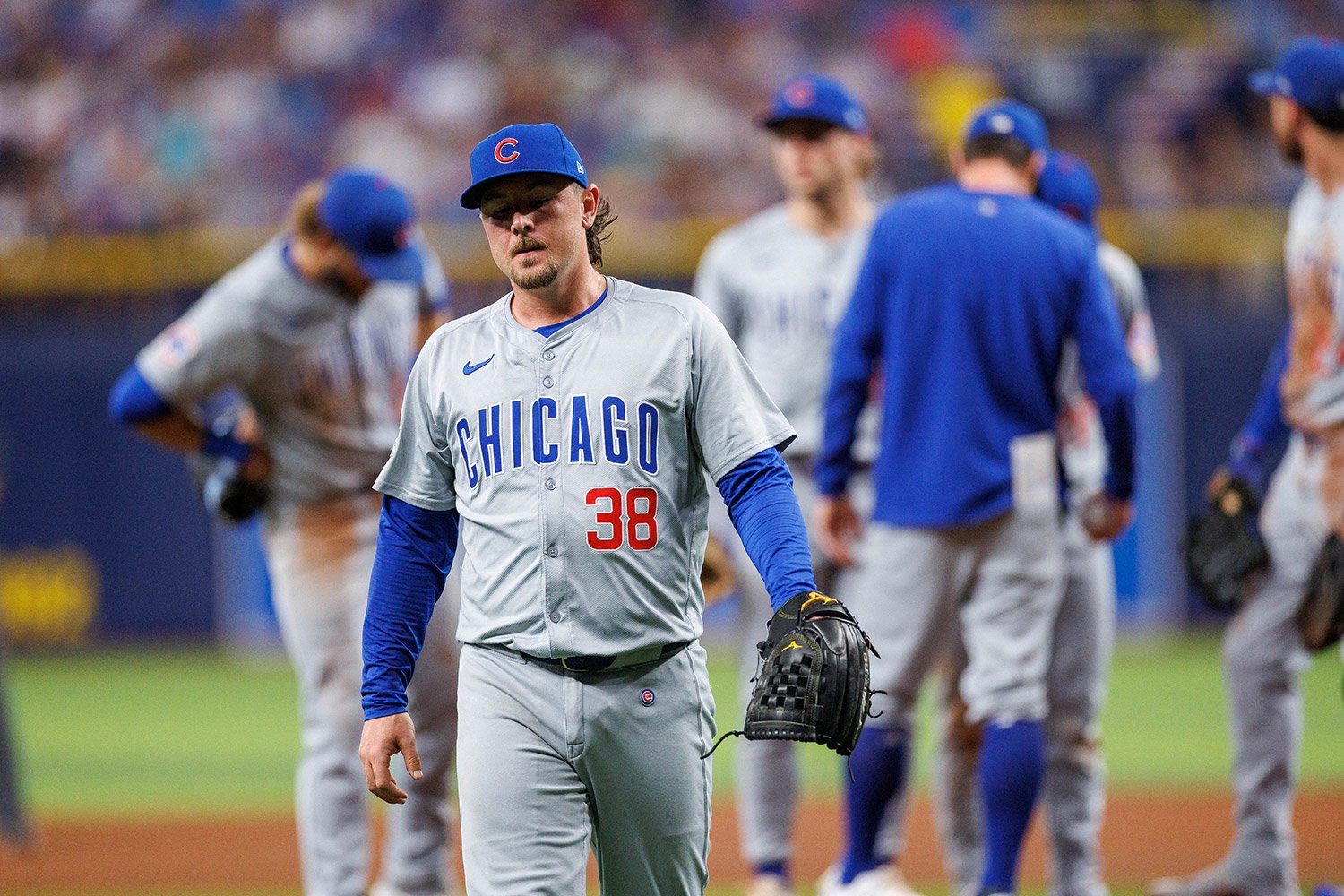 The 2024 trade deadline has come and gone, and with it, the Cubs’ front office has set a course, albeit a confusing one, for this club’s future. Though several were pining for the team to do more, Isaac Paredes and a batch of prospects are in, and Christopher Morel and Mark Leiter Jr. are out. Regarding the latter, his absence will more terminally impact the direction of this ball club. The North Side of Chicago is where, once a player earns a nickname, his departure, or even the notion of his departure, hurts a little bit more. I don’t need to rehash this club’s recent past to prove this point. Make no mistake about it: On their climb back up, the Cubs will need to uncover another reliever like Mark “Leit Show” Leiter Jr. I know some of you are here for stats, so I won’t make you wait any longer: In this season as a Cub, Mark Leiter Jr. clocked in 36.1 innings of work with over 50 strikeouts. For those uninitiated in the ways of relief pitching, that’s quite good. An often unspoken but no less true rule of relief pitching is that you absolutely must throw strikes to be effective. Before switching from Cubs pinstripes to Yankees pinstripes, Leiter did exactly that with a nasty combination of his sinker and split-finger fastball. By comparison, a reliever like, say, Hector Neris walks a ton of batters and often loses control early, leading to blown saves and heartbreak in the myriad of close games the Cubs have been in this year. Throw strikes and get batters out. That’s the formula for relief pitching, even in extended situations, which the Cubs’ have experienced plenty of this season. Leiter now brings that efficiency and a clean-shaven mug to the Yankees, who look destined for postseason glory with their acquisition of Jazz Chisholm. I’m not saying that the Cubs let one get away; Leiter is 33 years old and was on a team going nowhere, but I will say that the Cubbies need a strike-throwing, shutdown guy. You’d be hard-pressed to identify that guy in the Cubs’ bullpen right now. The Leit is out in Chicago, now, with things in a state of transition in Chicago. Who will shed light on the path forward?
 -
As one of his most prominent supporters, this sentence brings me no great joy: Christopher Morel is a Tampa Bay Ray, and power-hitting third baseman Isaac Paredes is a Chicago Cub. Image courtesy of © Nick Turchiaro-USA TODAY Sports Considering the calm before the July 30th trade deadline storm, Jed Hoyer and Carter Hawkins are orchestrating the old switcheroo from their earlier proclaimed “seller” status. In scooping up the career .734 OPS slugger Isaac Paredes, the Cubs’ brass boldly reneged on packing it in for this season, holding only an eye for the future. The Cubs are going for it, even though Paredes factors into the team’s long-term future at twenty-five years old. The second great sell-off since the franchise-changing 2021 season is (probably) nothing more than an educated guess now that Isaac Paredes and former Blue Jays reliever Nate Pearson are en route to the North Side of Chicago to boost the team’s postseason hopes. I can’t believe this is happening, but I guess the powers that be were as disgusted by last season's ending as I was. And with all that, Craig Counsell’s team still had pivotal games to play on the field, producing mixed, if not eyebrow-raising results. Let’s dive in… This week, the on-field action kicked off with the Cubbies notching what at the time was a heartening victory versus division rival Milwaukee. Still settling in after a lengthy stay on the IL, Javier Assad labored through 3.1 innings of one-hit baseball. Though he managed to keep the Crew off the board, Assad racked up a high pitch count early, issuing six walks and tiptoeing through some serious traffic on the base pads. The recently resurgent bullpen sparkled in relief of Assad, delivering quick innings and frustrating the Brewers’ frequently potent lineup. With key at-bats from Ian Happ, Michael Busch, and Mike Tauchhman, the Cubbies did enough of the little things to earn a win in the series opener. Final Score: 3-1 Cubs Game two in the series brought back the familiar sinking feeling the Cubs and their fans have come to know all season long: a one-run loss. What lingered about this defeat was the brilliant performance from Cubs’ starter Jameson Taillon. He dealt 7.1 efficient innings of work in which he would allow just one run on four hits and three free passes, striking out three batters as well. It's something to remember him by, should he be hurling for a new team next week. If Paredes had brought the power and offensive charge he’d promised to have, the Cubbies could have used it in this one. Zero runs won’t win you too many ball games, and it didn’t in this case. Scattering seven hits (the same as the Brewers), the Cubs went a putrid 0-5 with RISP. Final Score: 1-0 Brewers After getting blanked the previous day, could the Cubs tally a series win against their division rival before hitting the road to Kansas City? No. This one hurt a little extra in a season teeming with one-run losses. Justin Steele often yields nearly unimpeachable results on the mound for his squad, but not on this day. Going 5.1 shaky innings, the Cubs’ offense once again left their starting pitcher with almost zero margin for error. It’s hard to be worse than nothing, but the Cubs stranded five base runners in this one, going one for four with RISP. They wasted opportunities and a devastating series loss. Final Score: 3-2 Brewers. After a day off for travel, the Cubs arrived in Kansas City to take on the respectable Royals of the AL Central. The wildly inconsistent veteran Kyle Hendricks took the mound for the Cubs in this one. Decent through four innings of work, the Professor got shelled in the fifth inning, getting touched up for a staggering six runs. That would be more than enough as the Cubs again got shut out, and though they collected only four hits, they left five on base and went 0-7 with RISP. On this night, in this game, it looked as if the team had given up for the year. Final Score: 6-0 Royals They all count as one, and in game two of the series, the Cubs proved this fact. Scoring consistently throughout, the Cubs’ offense somehow resurrected itself and, in doing so, made a statement that they’re not done with this season yet. Pinch-hitter Patrick Wisdom was anything but conventional in the seventh inning, in which he absolutely obliterated a game-changing grand slam to left field at Kauffman Stadium. Julian Merryweather recorded the win in relief after valiant efforts from fellow bullpen arms Porter Hodge and Hector Neris. Shota Imanaga recorded 5.1 innings of work as the starter. Final Score: 9-4 Cubs After an improbable bounce-back win, the Cubbies set their sights on dethroning the Royals again to earn the series win. And they did. I love it when a starting pitcher can bookend a let-down performance with a redemptive one. That’s exactly what Javier Assad managed to do in this rubber match. The Cubs’ new Javy sparkled in 6.0 innings of work in which he allowed only three runs and punched out five batters. Offensively, the Cubs got clutch hits from Pete Crow-Armstrong and the Boat Show himself, David Bote. It’s games like this that urge me to keep watching for what this soon-to-be new-look Cubs team can do when they play to their potential. Hope sprang eternal on an emotional swan song day for Christopher Morel. Final Score: 7-3 Cubs So here we go: The new-look Cubs, who could be even newer-look Cubs by the time you read this, are set for a critical week of games that could vastly change their fortunes in the division. First up, the North Side ball club takes to Great American Ballpark to battle Elly De La Cruz and the Cincinnati Reds for three games. They’ll start August back at Wrigley, welcoming the Saint Louis Cardinals to town for a four-game set. With the dust settling on moves geared to shake things up for the Cubs’ organization, the team figures to keep our attention, if not thrill us, as the season's final two months get underway. View full article
-
 Considering the calm before the July 30th trade deadline storm, Jed Hoyer and Carter Hawkins are orchestrating the old switcheroo from their earlier proclaimed “seller” status. In scooping up the career .734 OPS slugger Isaac Paredes, the Cubs’ brass boldly reneged on packing it in for this season, holding only an eye for the future. The Cubs are going for it, even though Paredes factors into the team’s long-term future at twenty-five years old. The second great sell-off since the franchise-changing 2021 season is (probably) nothing more than an educated guess now that Isaac Paredes and former Blue Jays reliever Nate Pearson are en route to the North Side of Chicago to boost the team’s postseason hopes. I can’t believe this is happening, but I guess the powers that be were as disgusted by last season's ending as I was. And with all that, Craig Counsell’s team still had pivotal games to play on the field, producing mixed, if not eyebrow-raising results. Let’s dive in… This week, the on-field action kicked off with the Cubbies notching what at the time was a heartening victory versus division rival Milwaukee. Still settling in after a lengthy stay on the IL, Javier Assad labored through 3.1 innings of one-hit baseball. Though he managed to keep the Crew off the board, Assad racked up a high pitch count early, issuing six walks and tiptoeing through some serious traffic on the base pads. The recently resurgent bullpen sparkled in relief of Assad, delivering quick innings and frustrating the Brewers’ frequently potent lineup. With key at-bats from Ian Happ, Michael Busch, and Mike Tauchhman, the Cubbies did enough of the little things to earn a win in the series opener. Final Score: 3-1 Cubs Game two in the series brought back the familiar sinking feeling the Cubs and their fans have come to know all season long: a one-run loss. What lingered about this defeat was the brilliant performance from Cubs’ starter Jameson Taillon. He dealt 7.1 efficient innings of work in which he would allow just one run on four hits and three free passes, striking out three batters as well. It's something to remember him by, should he be hurling for a new team next week. If Paredes had brought the power and offensive charge he’d promised to have, the Cubbies could have used it in this one. Zero runs won’t win you too many ball games, and it didn’t in this case. Scattering seven hits (the same as the Brewers), the Cubs went a putrid 0-5 with RISP. Final Score: 1-0 Brewers After getting blanked the previous day, could the Cubs tally a series win against their division rival before hitting the road to Kansas City? No. This one hurt a little extra in a season teeming with one-run losses. Justin Steele often yields nearly unimpeachable results on the mound for his squad, but not on this day. Going 5.1 shaky innings, the Cubs’ offense once again left their starting pitcher with almost zero margin for error. It’s hard to be worse than nothing, but the Cubs stranded five base runners in this one, going one for four with RISP. They wasted opportunities and a devastating series loss. Final Score: 3-2 Brewers. After a day off for travel, the Cubs arrived in Kansas City to take on the respectable Royals of the AL Central. The wildly inconsistent veteran Kyle Hendricks took the mound for the Cubs in this one. Decent through four innings of work, the Professor got shelled in the fifth inning, getting touched up for a staggering six runs. That would be more than enough as the Cubs again got shut out, and though they collected only four hits, they left five on base and went 0-7 with RISP. On this night, in this game, it looked as if the team had given up for the year. Final Score: 6-0 Royals They all count as one, and in game two of the series, the Cubs proved this fact. Scoring consistently throughout, the Cubs’ offense somehow resurrected itself and, in doing so, made a statement that they’re not done with this season yet. Pinch-hitter Patrick Wisdom was anything but conventional in the seventh inning, in which he absolutely obliterated a game-changing grand slam to left field at Kauffman Stadium. Julian Merryweather recorded the win in relief after valiant efforts from fellow bullpen arms Porter Hodge and Hector Neris. Shota Imanaga recorded 5.1 innings of work as the starter. Final Score: 9-4 Cubs After an improbable bounce-back win, the Cubbies set their sights on dethroning the Royals again to earn the series win. And they did. I love it when a starting pitcher can bookend a let-down performance with a redemptive one. That’s exactly what Javier Assad managed to do in this rubber match. The Cubs’ new Javy sparkled in 6.0 innings of work in which he allowed only three runs and punched out five batters. Offensively, the Cubs got clutch hits from Pete Crow-Armstrong and the Boat Show himself, David Bote. It’s games like this that urge me to keep watching for what this soon-to-be new-look Cubs team can do when they play to their potential. Hope sprang eternal on an emotional swan song day for Christopher Morel. Final Score: 7-3 Cubs So here we go: The new-look Cubs, who could be even newer-look Cubs by the time you read this, are set for a critical week of games that could vastly change their fortunes in the division. First up, the North Side ball club takes to Great American Ballpark to battle Elly De La Cruz and the Cincinnati Reds for three games. They’ll start August back at Wrigley, welcoming the Saint Louis Cardinals to town for a four-game set. With the dust settling on moves geared to shake things up for the Cubs’ organization, the team figures to keep our attention, if not thrill us, as the season's final two months get underway.
 -
There’s nothing like a day at Wrigley. But the Cubs experience could be better. Image courtesy of © Patrick Gorski-USA TODAY Sports Whether driving in from Lombard or stepping off the 22 bus at Clark and Waveland, a Cubs baseball game harnesses the power to change your mood, maybe even your life. And that’s even in a year like this, with the product on the field as bad as it is. Estimated at over $4.2 billion, The Chicago Cubs are one of the most valuable franchises in all sports. Represented worldwide, the blue pinstripe jersey, or the blue cap with a red “C” emblazoned on it, unites a global fan base and brand. From a business standpoint, Tom Ricketts finds himself at the helm of an absolute money-printing factory. But, with the performance on the field so lackluster, careening toward another finish without postseason baseball, what does it all mean? What is the state of the Cubs brand? Don’t take my or Bill Murray’s word for it, but Wrigley Field possesses a classic baseball beauty you must see in person to appreciate truly. Around every turn, from the iconic marquee to the even more iconic ivy that adorns the outfield walls. It truly is a magnificent place and offers an experience that should be for everyone, but dig just a bit under the surface, and you’ll find that it’s becoming less so. In the days of P.K. Wrigley, when the baseball played on the diamond was similarly underwhelming to what we’re witnessing today, the experience at the stadium was all about entertainment value. I don’t even P.K. could’ve imagined the entertainment brand the Cubs would blossom into. With quality competition certainly removed from the equation (hopefully just for now), amusement and spectacle reign supreme inside the Friendly Confines. I attended the game where Anthony Rizzo hit his last home run as a Chicago Cub. “Whoomp! (There It Is)” blared over the speakers, high fives abounded, and the place shook more than an earthquake brought on by the San Andreas Fault. Short of having yet attended a playoff game at Wrigley, that was the finest example of what the park can be at its best: good entertainment AND good baseball. Nowadays, fans still erupt in such a fashion, but more so for beer bats filled to the brim with Michelob Ultra, AI-generated artwork for kids, and the smooth voice of public address announcer Jeremiah Paprocki. The brand is in great shape. What’s more, it’s as widespread as it has ever been. Just last season, the Cubs participated in the “MLB World Tour” London Series, squaring off against the Saint Louis Cardinals. It led to great exposure and a gathering of both franchises, Mount Rushmores of legendary players. Next spring that global expansion will continue as the Cubbies face off against the Los Angeles Dodgers in Tokyo, Japan, in the league’s opening series. It’s exciting; it’s a mammoth opportunity to feature the club at its best, but it’s also a prime example of the vast chasm between the Cubs as a brand and the Cubs as a baseball team. The time to marry brand health and e-baseball is now. People scan their tickets in droves because of the history, ranking in the top ten in attendance, Wrigley is routine. However, with experiences veering more towards premium clubs and suites, the typical fan is threatened to be priced out of enjoying the game and the team they love. Conceding that the cost of almost everything comes at a premium these days, Cubs baseball is too beloved a brand to price out real fans, chomping down on the hand that feeds in the process. Whatever this team looks like on August 1st, they need to improve. Bring in power bats, supercharge this offense, and start doing things the right way from the perspective of baseball operations. Is the Cubs brand too big to fail? Probably. But, for things to get going, we need better baseball. View full article
-
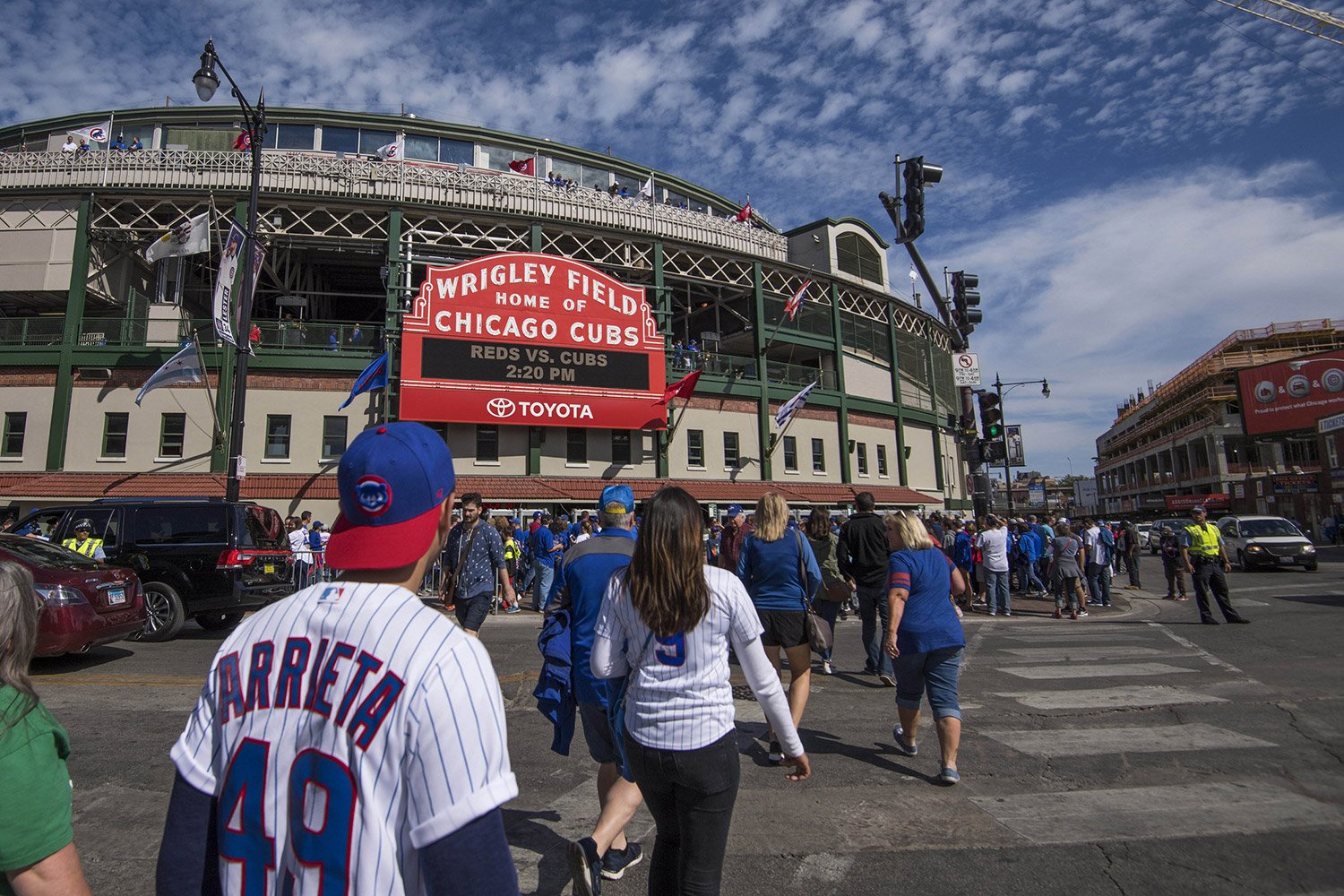 Whether driving in from Lombard or stepping off the 22 bus at Clark and Waveland, a Cubs baseball game harnesses the power to change your mood, maybe even your life. And that’s even in a year like this, with the product on the field as bad as it is. Estimated at over $4.2 billion, The Chicago Cubs are one of the most valuable franchises in all sports. Represented worldwide, the blue pinstripe jersey, or the blue cap with a red “C” emblazoned on it, unites a global fan base and brand. From a business standpoint, Tom Ricketts finds himself at the helm of an absolute money-printing factory. But, with the performance on the field so lackluster, careening toward another finish without postseason baseball, what does it all mean? What is the state of the Cubs brand? Don’t take my or Bill Murray’s word for it, but Wrigley Field possesses a classic baseball beauty you must see in person to appreciate truly. Around every turn, from the iconic marquee to the even more iconic ivy that adorns the outfield walls. It truly is a magnificent place and offers an experience that should be for everyone, but dig just a bit under the surface, and you’ll find that it’s becoming less so. In the days of P.K. Wrigley, when the baseball played on the diamond was similarly underwhelming to what we’re witnessing today, the experience at the stadium was all about entertainment value. I don’t even P.K. could’ve imagined the entertainment brand the Cubs would blossom into. With quality competition certainly removed from the equation (hopefully just for now), amusement and spectacle reign supreme inside the Friendly Confines. I attended the game where Anthony Rizzo hit his last home run as a Chicago Cub. “Whoomp! (There It Is)” blared over the speakers, high fives abounded, and the place shook more than an earthquake brought on by the San Andreas Fault. Short of having yet attended a playoff game at Wrigley, that was the finest example of what the park can be at its best: good entertainment AND good baseball. Nowadays, fans still erupt in such a fashion, but more so for beer bats filled to the brim with Michelob Ultra, AI-generated artwork for kids, and the smooth voice of public address announcer Jeremiah Paprocki. The brand is in great shape. What’s more, it’s as widespread as it has ever been. Just last season, the Cubs participated in the “MLB World Tour” London Series, squaring off against the Saint Louis Cardinals. It led to great exposure and a gathering of both franchises, Mount Rushmores of legendary players. Next spring that global expansion will continue as the Cubbies face off against the Los Angeles Dodgers in Tokyo, Japan, in the league’s opening series. It’s exciting; it’s a mammoth opportunity to feature the club at its best, but it’s also a prime example of the vast chasm between the Cubs as a brand and the Cubs as a baseball team. The time to marry brand health and e-baseball is now. People scan their tickets in droves because of the history, ranking in the top ten in attendance, Wrigley is routine. However, with experiences veering more towards premium clubs and suites, the typical fan is threatened to be priced out of enjoying the game and the team they love. Conceding that the cost of almost everything comes at a premium these days, Cubs baseball is too beloved a brand to price out real fans, chomping down on the hand that feeds in the process. Whatever this team looks like on August 1st, they need to improve. Bring in power bats, supercharge this offense, and start doing things the right way from the perspective of baseball operations. Is the Cubs brand too big to fail? Probably. But, for things to get going, we need better baseball.
 -
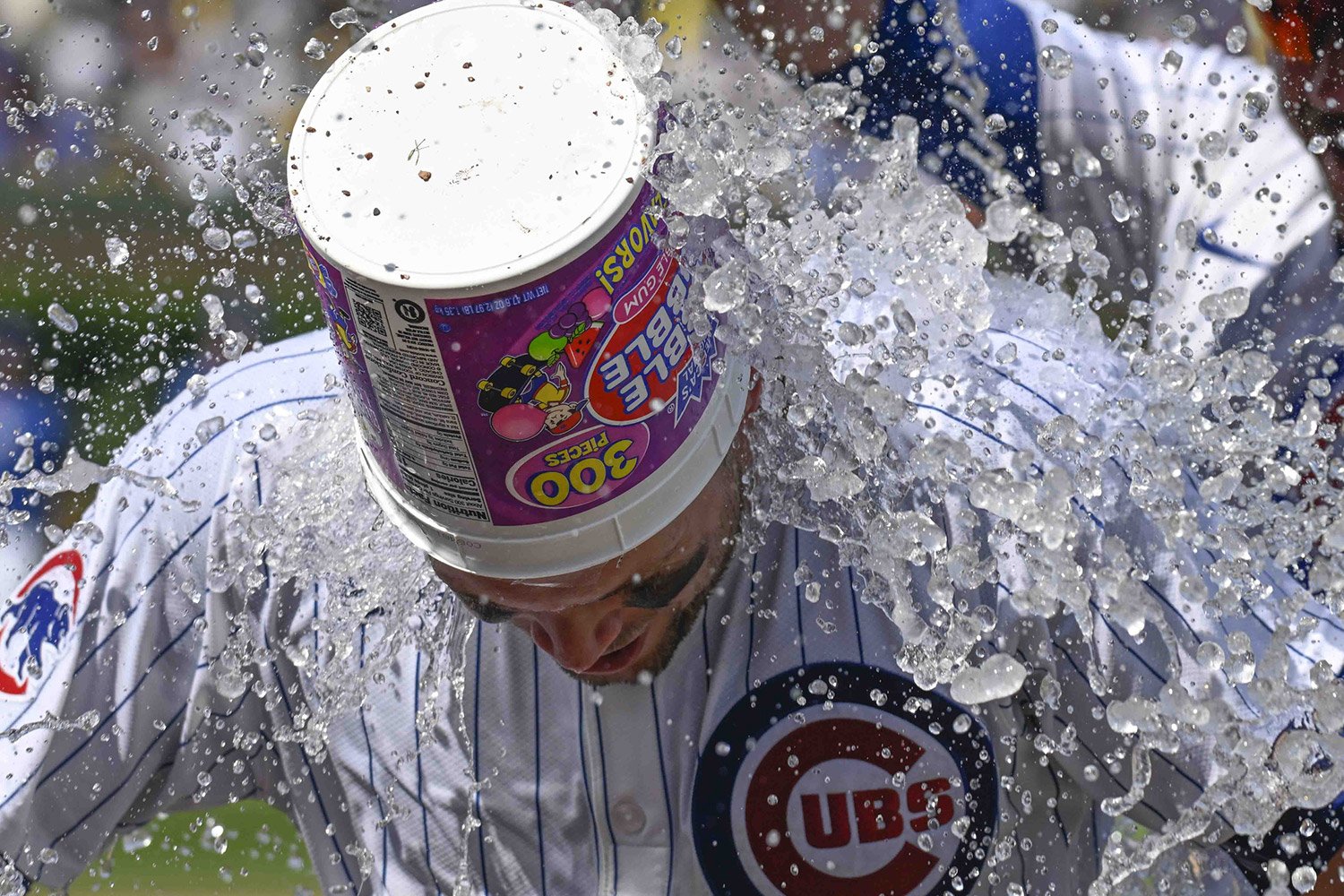 We had a slim week, so strap in for a slim recap. I’m in. Let’s sell whatever we can and get back the cornerstone building blocks to secure the next great Cubs team. Cubs fans deserve it. The city of Chicago deserves it. And whatever current players remain with the club after the trade deadline deserve it. There is not much to say, but what went down in one weekend series versus fellow Wild Card hopeful Arizona spoke volumes about who the Cubs are. This team possesses a litany of issues, most of which are on offense. Let’s jump in. Hoping to get scorching hot in a hurry, the Cubs kicked off the second half from the Friendly Confines with what was on paper, some very favorable pitching match-ups. In game one of this three-game contest, staff ace Justin Steele was snake-bitten by the D-Backs. The often untouchable Cubs’ starter got roughed in this one, giving up five earned runs on nine hits. He walked two batters and struck out six before getting pulled after four and two-thirds innings of work. The Cubs put up a fight late but again succumbed to their penchant for stranding base runners in scoring position. Final Score: 5-2 Diamondbacks. Kyle Hendricks assumed starting pitching duties for game two, and the fading veteran showed why his services are best suited to a bullpen capacity. Not that his offense did the 34-year-old pitcher any favors, failing to score even one run, but a pair of fifth-inning homers for the Snakes sealed the Cubs’ fate. We know that for many reasons, not the least of which is the eventual return of Ben Brown, Hendricks is not long for this starting rotation, but this performance further emphasized that notion. Final Score: 3-0 Diamondbacks With designs on salvaging one in front of 40,000+ Wrigley faithful, Shota “Sho Time” Imanaga was magnificent on Sunday afternoon. Easily looking the part of an MLB All-Star, Imanaga took a no-hit bid into the sixth inning before giving up a ground ball single into center field off the bat of Arizona’s Randal Grichuk. The pitching Philosopher went seven strong and struck out a career-high ten batters, but it took a ninth-inning rally to set up extra innings drama for the Cubs. The tenth inning would see the Cubbies take the series finale in the most thrilling fashion: a walk-off walk to Nico Hoerner. Final Score: 2-1 Cubs After seemingly being the last to jump on board, I am ready for the Cubs to sell. This team needs a shot in the arm more than Jeff Tweedy and Wilco. I just want to see winning baseball. With the month of July drawing to a close, the Cubs host the NL Central-leading Milwaukee Brewers for a three-game set that should all but close the book on any faint postseason hopes this team possessed. The Cubs need to get back to winning ways. It’s time for a clean slate.
 -
Can we go back to the All Star break? We had a slim week, so strap in for a slim recap. I’m in. Let’s sell whatever we can and get back the cornerstone building blocks to secure the next great Cubs team. Cubs fans deserve it. The city of Chicago deserves it. And whatever current players remain with the club after the trade deadline deserve it. There is not much to say, but what went down in one weekend series versus fellow Wild Card hopeful Arizona spoke volumes about who the Cubs are. This team possesses a litany of issues, most of which are on offense. Let’s jump in. Hoping to get scorching hot in a hurry, the Cubs kicked off the second half from the Friendly Confines with what was on paper, some very favorable pitching match-ups. In game one of this three-game contest, staff ace Justin Steele was snake-bitten by the D-Backs. The often untouchable Cubs’ starter got roughed in this one, giving up five earned runs on nine hits. He walked two batters and struck out six before getting pulled after four and two-thirds innings of work. The Cubs put up a fight late but again succumbed to their penchant for stranding base runners in scoring position. Final Score: 5-2 Diamondbacks. Kyle Hendricks assumed starting pitching duties for game two, and the fading veteran showed why his services are best suited to a bullpen capacity. Not that his offense did the 34-year-old pitcher any favors, failing to score even one run, but a pair of fifth-inning homers for the Snakes sealed the Cubs’ fate. We know that for many reasons, not the least of which is the eventual return of Ben Brown, Hendricks is not long for this starting rotation, but this performance further emphasized that notion. Final Score: 3-0 Diamondbacks With designs on salvaging one in front of 40,000+ Wrigley faithful, Shota “Sho Time” Imanaga was magnificent on Sunday afternoon. Easily looking the part of an MLB All-Star, Imanaga took a no-hit bid into the sixth inning before giving up a ground ball single into center field off the bat of Arizona’s Randal Grichuk. The pitching Philosopher went seven strong and struck out a career-high ten batters, but it took a ninth-inning rally to set up extra innings drama for the Cubs. The tenth inning would see the Cubbies take the series finale in the most thrilling fashion: a walk-off walk to Nico Hoerner. Final Score: 2-1 Cubs After seemingly being the last to jump on board, I am ready for the Cubs to sell. This team needs a shot in the arm more than Jeff Tweedy and Wilco. I just want to see winning baseball. With the month of July drawing to a close, the Cubs host the NL Central-leading Milwaukee Brewers for a three-game set that should all but close the book on any faint postseason hopes this team possessed. The Cubs need to get back to winning ways. It’s time for a clean slate. View full article
