


Josh Illes
-
Posts
46 -
Joined
-
Last visited
Content Type
Profiles
Joomla Posts 1
Chicago Cubs Videos
Chicago Cubs Free Agent & Trade Rumors, Notes, & Tidbits
2026 Chicago Cubs Top Prospects Ranking
News
2023 Chicago Cubs Draft Picks
Guides & Resources
2024 Chicago Cubs Draft Picks
The Chicago Cubs Players Project
2025 Chicago Cubs Draft Pick Tracker
2026 Chicago Cubs Draft Pick Tracker
Blogs
Events
Forums
Store
Gallery
Everything posted by Josh Illes
-
Chicago Cubs Top Prospect Rankings, 2024 Preseason: #6-10
Josh Illes posted an article in Minor Leagues
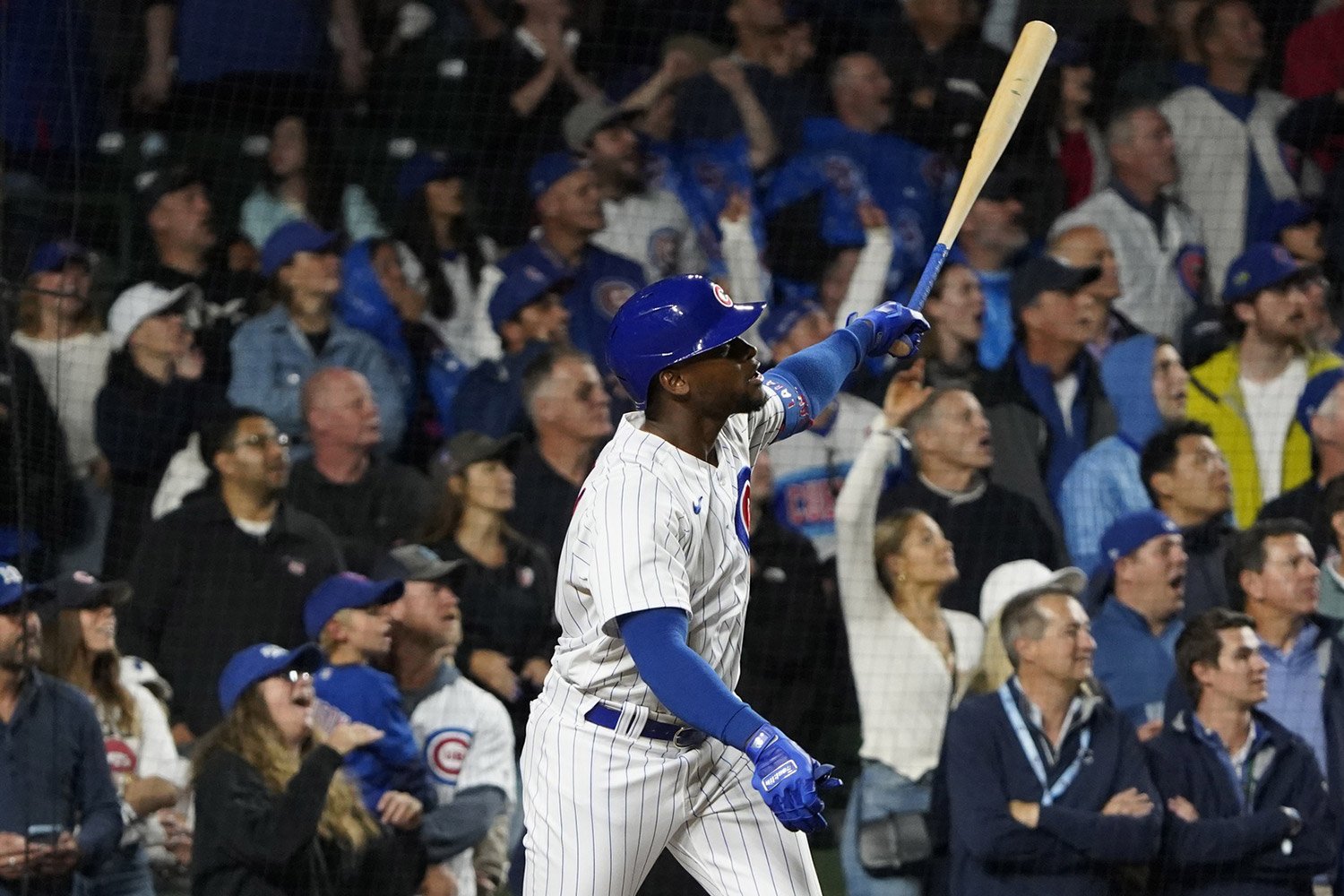 This is the third part of my roundtable on the state of the Cubs' minor league system with @1908_Cubs. We've already released prospects 11-20 earlier, and we're heading into our top 10. Make sure you're all caught up before checking out who we have ranked 10th through 6th! Jason's 10th Ranked Prospect: Ben Brown, SP/RP Ben Brown is the prospect I struggled most to find a home for. His stuff is incredible: you can argue that his fastball-slider/curveball combination is on par with Cade Horton, and his slider/curveball is as good as anything in the entire system. But what comes with excellent stuff is the inability to control it; with Ben Brown, it’s night and day. Brown struggled in Triple A to consistently throw strikes (though he also spent some time injured). There’s a ton of reliever risk here, so I tried to split the difference between the guaranteed relievers in Little/Palencia and the guaranteed start in Jordan Wicks. I don’t think Brown will make many starts for the Cubs in 2024, though I wouldn’t rule out a few token ones; it could be a leverage/impact call-up for the team in case of injury in the bullpen. The Cubs may use Brown like they did with Steele and Thompson before him, giving him a multi-inning role before transitioning him back to the rotation in a year or so. Regardless, he’s a fun prospect who has some real concerns. Even if he’s just a reliever, the stuff is good enough that he remains a tantalizing talent and the type of prospect you rarely find with nine better talents in a given system. Josh's 10th Ranked Prospect: Jefferson Rojas, SS Rojas came out of nowhere to raise prospect rankings last year. He’s still 18 but plays much older, never getting too high or too low emotionally in what can be an emotional position in an emotional sport. That even-keeled approach has allowed him to make serious adjustments in his hitting approach, where he has made contact at an almost unprecedented level for someone his age. That, along with superior defense, has vaulted him past other prospects like Cristian Hernandez into the top 10 in most Cubs' prospects lists. The next step for him will be to add some power to his profile, but given his ability to find barrels, that step seems likely. More simply put, Rojas plays excellent defense and hits a lot of line drives. Those two things are what I’m looking for with a prospect his age. This upcoming year will test him, but he has passed every test he’s been given. If he continues his progression at the same pace he has shown, he will easily be a top-three prospect in the Cubs system next year and probably a top-50 prospect in all of baseball. Jason's 9th Ranked Prospect: Jefferson Rojas, SS I know some people will see what Rojas did in 2023 and think this is just Kevin Made 2: Electric Boogaloo, but the hope here is that where Made stagnated after Myrtle Beach, Rojas continues to grow. Bursting onto the scene in 2023, Rojas finished with a 115 wRC+ at 18. Even more impressive, at least to me, is the advanced approach in a hard-to-hit environment like Myrtle can be. If there’s some polish, it’d be seeing him hit more home runs, but I think it’s a good reminder…he’s just 18 years old, and he’s already 15% better than average in Low A. I think the swing is geared for some more power, and while I suspect his listed height/weight of 5'10" 150 pounds is outdated, he can probably grow a bit more, too. Whether or not he can stick long-term at shortstop is probably a fair question to propose for someone who’s probably more of a 50-grade fielder (currently), but there’s a lot of time to go before I start worrying about that. Josh's 9th Ranked Prospect: Jordan Wicks, SP Wicks holds almost every Kansas State pitching record when it comes to strikeouts. That ability to miss bats is why the Cubs took him in the first round of the 2021 draft. At the professional level, he has been impressive. He progressed so much that he warranted a call-up to the big league team on August 26th last season. At that point in their season, the Cubs were still thinking about a playoff push. I don’t want to rehash how the rest of the season went down, but I do want to note that Wicks was emphatically not part of the reason for the collapse. He did what was expected of him or anyone else in that situation, going 4-1 in seven starts. He still has a lot of room for improvement, however. For instance, he needs to keep improving his slider or scrap it for a new pitch. But his ceiling remains high, and he should be able to continue contributing as a viable member of the big league rotation in 2024. Jason's 8th Ranked Prospect: Jordan Wicks, SP I admit: when the Cubs took Jordan Wicks in the first round of the 2021 draft, I was pretty bummed out. At the time, I saw a changeup-specialist left-handed pitcher with limited upside. Since then, however, I’ve really appreciated the left-hander, and I think he’s more than just a control/changeup bottom-rotation arm. It’d be easy to point to his lack of swings and misses once he jumped to the MLB. Still, as I stated in another article, I believe Wicks is going to be pretty okay in that department: he was well above the Triple-A average in that category, and while I doubt he’s ever going to be a K-monster, once he gains a bit more confidence in himself and his position in the Cubs, I think they’ll come more often. While I think Jordan Wicks has a lot of Jon Lester in him, especially his mound presence, I doubt he’s got that kind of upside. Ultimately, I think he’ll settle in as a pitcher who’s more than just the sum of his parts, as an FIP-beating #4 with a low-#3 ceiling. That’s always a win. Josh's 8th Ranked Prospect: Alexander Canario, OF I want to rank Canario even higher than this, even though having him at eight is a bit of a reach compared to where most people think he is among Cubs prospects. I’ve seen him play in person exactly one time, in late 2022, and he hit two mammoth home runs that game. He was amid a breakout that year, blasting 37 long balls over 125 games between High A and Double A. Two months after I saw him play, disaster struck when Canario suffered major injuries to his left ankle and left shoulder while playing in the Dominican Winter League. He made it back and then some last season, though, getting up to Chicago for a few at-bats with the big league club in September. I understand why the injury resulted in his stock dipping a bit, but I also want to give him credit for the resilience it takes to fight back in a relatively short period. That says a lot about his discipline and work ethic, making me think he’s more capable of reaching a 90th percentile outcome of his ceiling. I will keep him firmly in my top ten for now, and I can’t wait to watch him play this season. Jason's 7th Ranked Prospect: Moises Ballesteros, C Is he a catcher? Is he a DH? Do I care? I don’t know the answer to any of these questions, but I do know that Moises Ballesteros can hit, and he can hit really well. I talk a lot about advanced approaches, but Big Mo probably has the best age/approach combination in the entire system, and just how it continues to evolve and mature gets me excited. I want to start to see some doubles turn into home runs, and I think they probably will down the road as he grows into himself a bit more. There have been mixed reviews on his receiving, but I still think he can become a long-time catcher despite his awkward body, which causes people to downplay his long-term position more than his current ability behind the plate. The good news is that he might still hit enough that being a designated hitter may still be a viable path to the MLB for Mo. It’d be better for everyone involved if he’s genuinely a catcher, but like I said…I’m not sure I care. I like the bat that much. Josh's 7th Ranked Prospect: James Triantos, INF The 20-year-old Triantos was the Cubs 2nd round pick 2021 out of high school in Virginia. He reclassified in high school in the hopes of getting his college career started a year early, but the Cubs gave him 2.1 million reasons to tell North Carolina thanks but no thanks, and so he did. A second baseman by trade, Triantos will remain at that position. Still, he also has the arm to play third base and the outfield, so while I would have difficulty ranking a player limited to 2B this high, I’m more comfortable doing it with the right-handed hitting Triantos. He had a great 2023 season at High-A South Bend, slashing .285/.363/.390 while stealing 20 bases. That got the attention of the Cubs' front office, who then placed him in the Arizona Fall League following the season, where he got everyone's attention. He had 35 hits in 84 at-bats, with an OPS of 1.174. Coming out of the AFL, he had many scouts talking about his power potential, and if he can add that to his more contact-oriented profile, he could be a name to watch over the next few years. Jason's 6th Ranked Prospect: Kevin Alcantara, OF I needed help determining where to put Kevin Alcantara on my list. There’s so much to like in his game: he’s genuinely a unicorn in that players his size don’t play centerfield well, and yet, you can easily see a 55 glove in center field. Added to that easy 30-homer power and a wonderful swing…it’s easy to dream of the potential. With that potential, however, come some flaws and flags. As Alcantara is sometimes called, the Jaguar can be beaten up and in, attacking his long levers. How well he’ll adjust to getting around on high velocity will be a big talking point. Despite almost leading the Arizona Fall League in home runs, he also was among the leaders for swings and misses; this is concerning because the AFL isn’t usually known for its depth of quality pitching. With Pete Crow-Armstrong ahead of Alcantara, both on my list and in my timeline, the powerful righty may end up in a corner spot, where he’d be a legitimate gold glove caliber player. I wouldn’t blame anyone for putting him higher on their list, but I remain a bit more concerned about his ability to make the kind of contact he would need to. With that said, if push comes to shove, he’s probably still the highest ceiling prospect in the system, regardless of the risk involved. Josh's 6th Ranked Prospect: Owen Caissie, OF Please help us, Owen Caissie; you’re our only hope (of getting anything out of the Yu Darvish trade). Much like the protagonist of that original sentiment, I believe Caissie will deliver on that hope. Having Caissie at six and not even higher on my list says more about the top 5 than it says about Caissie. The left-handed, power-hitting outfielder has shown absolute studliness since being promoted to High-A South Bend to start the 2022 season at 19. After a month of growing pains at that level, he thrived, putting together a monster year that earned him the Cubs Minor League Player of the Year that season. Looking at his profile, the thing that sticks out to me is that he has likely always played “up,” as it were. Having a July 2002 birthday and being drafted in 2020 means he was only 17 when he was drafted. Many youth players with July birthdays end up either playing with the grade below them and dominating or playing with their grade as one of the youngest players and struggling sometimes. Caissie chose the latter, which you can see by how he is comfortable playing below age level in the minors so far. As a 20/21-year-old last season at Double-A Tennessee, he slashed .289/.389/.519 with 22 homers and 31 doubles. This year, as a 21/22-year-old, he will get a shot at Triple A. He will be one of the younger players in the International League, but, hey, what else is new? At some point, I expect he will be in Chicago, where someone will point out that he is one of the youngest players in the Major Leagues, but I don’t expect that to faze Caissie. Who do you think we've got ranked as our number 1 prospect? Is someone on this list who would belong in the top-5 conversation? Please drop us a comment below and let us know!
 -
We're rounding second and heading to third as our prospect round table moves into our personal top 10s. With only ten prospects remaining, who will make our top-5 and barely miss out? Image courtesy of © David Banks-USA TODAY Sports This is the third part of my roundtable on the state of the Cubs' minor league system with @1908_Cubs. We've already released prospects 11-20 earlier, and we're heading into our top 10. Make sure you're all caught up before checking out who we have ranked 10th through 6th! Jason's 10th Ranked Prospect: Ben Brown, SP/RP Ben Brown is the prospect I struggled most to find a home for. His stuff is incredible: you can argue that his fastball-slider/curveball combination is on par with Cade Horton, and his slider/curveball is as good as anything in the entire system. But what comes with excellent stuff is the inability to control it; with Ben Brown, it’s night and day. Brown struggled in Triple A to consistently throw strikes (though he also spent some time injured). There’s a ton of reliever risk here, so I tried to split the difference between the guaranteed relievers in Little/Palencia and the guaranteed start in Jordan Wicks. I don’t think Brown will make many starts for the Cubs in 2024, though I wouldn’t rule out a few token ones; it could be a leverage/impact call-up for the team in case of injury in the bullpen. The Cubs may use Brown like they did with Steele and Thompson before him, giving him a multi-inning role before transitioning him back to the rotation in a year or so. Regardless, he’s a fun prospect who has some real concerns. Even if he’s just a reliever, the stuff is good enough that he remains a tantalizing talent and the type of prospect you rarely find with nine better talents in a given system. Josh's 10th Ranked Prospect: Jefferson Rojas, SS Rojas came out of nowhere to raise prospect rankings last year. He’s still 18 but plays much older, never getting too high or too low emotionally in what can be an emotional position in an emotional sport. That even-keeled approach has allowed him to make serious adjustments in his hitting approach, where he has made contact at an almost unprecedented level for someone his age. That, along with superior defense, has vaulted him past other prospects like Cristian Hernandez into the top 10 in most Cubs' prospects lists. The next step for him will be to add some power to his profile, but given his ability to find barrels, that step seems likely. More simply put, Rojas plays excellent defense and hits a lot of line drives. Those two things are what I’m looking for with a prospect his age. This upcoming year will test him, but he has passed every test he’s been given. If he continues his progression at the same pace he has shown, he will easily be a top-three prospect in the Cubs system next year and probably a top-50 prospect in all of baseball. Jason's 9th Ranked Prospect: Jefferson Rojas, SS I know some people will see what Rojas did in 2023 and think this is just Kevin Made 2: Electric Boogaloo, but the hope here is that where Made stagnated after Myrtle Beach, Rojas continues to grow. Bursting onto the scene in 2023, Rojas finished with a 115 wRC+ at 18. Even more impressive, at least to me, is the advanced approach in a hard-to-hit environment like Myrtle can be. If there’s some polish, it’d be seeing him hit more home runs, but I think it’s a good reminder…he’s just 18 years old, and he’s already 15% better than average in Low A. I think the swing is geared for some more power, and while I suspect his listed height/weight of 5'10" 150 pounds is outdated, he can probably grow a bit more, too. Whether or not he can stick long-term at shortstop is probably a fair question to propose for someone who’s probably more of a 50-grade fielder (currently), but there’s a lot of time to go before I start worrying about that. Josh's 9th Ranked Prospect: Jordan Wicks, SP Wicks holds almost every Kansas State pitching record when it comes to strikeouts. That ability to miss bats is why the Cubs took him in the first round of the 2021 draft. At the professional level, he has been impressive. He progressed so much that he warranted a call-up to the big league team on August 26th last season. At that point in their season, the Cubs were still thinking about a playoff push. I don’t want to rehash how the rest of the season went down, but I do want to note that Wicks was emphatically not part of the reason for the collapse. He did what was expected of him or anyone else in that situation, going 4-1 in seven starts. He still has a lot of room for improvement, however. For instance, he needs to keep improving his slider or scrap it for a new pitch. But his ceiling remains high, and he should be able to continue contributing as a viable member of the big league rotation in 2024. Jason's 8th Ranked Prospect: Jordan Wicks, SP I admit: when the Cubs took Jordan Wicks in the first round of the 2021 draft, I was pretty bummed out. At the time, I saw a changeup-specialist left-handed pitcher with limited upside. Since then, however, I’ve really appreciated the left-hander, and I think he’s more than just a control/changeup bottom-rotation arm. It’d be easy to point to his lack of swings and misses once he jumped to the MLB. Still, as I stated in another article, I believe Wicks is going to be pretty okay in that department: he was well above the Triple-A average in that category, and while I doubt he’s ever going to be a K-monster, once he gains a bit more confidence in himself and his position in the Cubs, I think they’ll come more often. While I think Jordan Wicks has a lot of Jon Lester in him, especially his mound presence, I doubt he’s got that kind of upside. Ultimately, I think he’ll settle in as a pitcher who’s more than just the sum of his parts, as an FIP-beating #4 with a low-#3 ceiling. That’s always a win. Josh's 8th Ranked Prospect: Alexander Canario, OF I want to rank Canario even higher than this, even though having him at eight is a bit of a reach compared to where most people think he is among Cubs prospects. I’ve seen him play in person exactly one time, in late 2022, and he hit two mammoth home runs that game. He was amid a breakout that year, blasting 37 long balls over 125 games between High A and Double A. Two months after I saw him play, disaster struck when Canario suffered major injuries to his left ankle and left shoulder while playing in the Dominican Winter League. He made it back and then some last season, though, getting up to Chicago for a few at-bats with the big league club in September. I understand why the injury resulted in his stock dipping a bit, but I also want to give him credit for the resilience it takes to fight back in a relatively short period. That says a lot about his discipline and work ethic, making me think he’s more capable of reaching a 90th percentile outcome of his ceiling. I will keep him firmly in my top ten for now, and I can’t wait to watch him play this season. Jason's 7th Ranked Prospect: Moises Ballesteros, C Is he a catcher? Is he a DH? Do I care? I don’t know the answer to any of these questions, but I do know that Moises Ballesteros can hit, and he can hit really well. I talk a lot about advanced approaches, but Big Mo probably has the best age/approach combination in the entire system, and just how it continues to evolve and mature gets me excited. I want to start to see some doubles turn into home runs, and I think they probably will down the road as he grows into himself a bit more. There have been mixed reviews on his receiving, but I still think he can become a long-time catcher despite his awkward body, which causes people to downplay his long-term position more than his current ability behind the plate. The good news is that he might still hit enough that being a designated hitter may still be a viable path to the MLB for Mo. It’d be better for everyone involved if he’s genuinely a catcher, but like I said…I’m not sure I care. I like the bat that much. Josh's 7th Ranked Prospect: James Triantos, INF The 20-year-old Triantos was the Cubs 2nd round pick 2021 out of high school in Virginia. He reclassified in high school in the hopes of getting his college career started a year early, but the Cubs gave him 2.1 million reasons to tell North Carolina thanks but no thanks, and so he did. A second baseman by trade, Triantos will remain at that position. Still, he also has the arm to play third base and the outfield, so while I would have difficulty ranking a player limited to 2B this high, I’m more comfortable doing it with the right-handed hitting Triantos. He had a great 2023 season at High-A South Bend, slashing .285/.363/.390 while stealing 20 bases. That got the attention of the Cubs' front office, who then placed him in the Arizona Fall League following the season, where he got everyone's attention. He had 35 hits in 84 at-bats, with an OPS of 1.174. Coming out of the AFL, he had many scouts talking about his power potential, and if he can add that to his more contact-oriented profile, he could be a name to watch over the next few years. Jason's 6th Ranked Prospect: Kevin Alcantara, OF I needed help determining where to put Kevin Alcantara on my list. There’s so much to like in his game: he’s genuinely a unicorn in that players his size don’t play centerfield well, and yet, you can easily see a 55 glove in center field. Added to that easy 30-homer power and a wonderful swing…it’s easy to dream of the potential. With that potential, however, come some flaws and flags. As Alcantara is sometimes called, the Jaguar can be beaten up and in, attacking his long levers. How well he’ll adjust to getting around on high velocity will be a big talking point. Despite almost leading the Arizona Fall League in home runs, he also was among the leaders for swings and misses; this is concerning because the AFL isn’t usually known for its depth of quality pitching. With Pete Crow-Armstrong ahead of Alcantara, both on my list and in my timeline, the powerful righty may end up in a corner spot, where he’d be a legitimate gold glove caliber player. I wouldn’t blame anyone for putting him higher on their list, but I remain a bit more concerned about his ability to make the kind of contact he would need to. With that said, if push comes to shove, he’s probably still the highest ceiling prospect in the system, regardless of the risk involved. Josh's 6th Ranked Prospect: Owen Caissie, OF Please help us, Owen Caissie; you’re our only hope (of getting anything out of the Yu Darvish trade). Much like the protagonist of that original sentiment, I believe Caissie will deliver on that hope. Having Caissie at six and not even higher on my list says more about the top 5 than it says about Caissie. The left-handed, power-hitting outfielder has shown absolute studliness since being promoted to High-A South Bend to start the 2022 season at 19. After a month of growing pains at that level, he thrived, putting together a monster year that earned him the Cubs Minor League Player of the Year that season. Looking at his profile, the thing that sticks out to me is that he has likely always played “up,” as it were. Having a July 2002 birthday and being drafted in 2020 means he was only 17 when he was drafted. Many youth players with July birthdays end up either playing with the grade below them and dominating or playing with their grade as one of the youngest players and struggling sometimes. Caissie chose the latter, which you can see by how he is comfortable playing below age level in the minors so far. As a 20/21-year-old last season at Double-A Tennessee, he slashed .289/.389/.519 with 22 homers and 31 doubles. This year, as a 21/22-year-old, he will get a shot at Triple A. He will be one of the younger players in the International League, but, hey, what else is new? At some point, I expect he will be in Chicago, where someone will point out that he is one of the youngest players in the Major Leagues, but I don’t expect that to faze Caissie. Who do you think we've got ranked as our number 1 prospect? Is someone on this list who would belong in the top-5 conversation? Please drop us a comment below and let us know! View full article
-
Chicago Cubs Top Prospect Rankings, 2024 Preseason: #11-15
Josh Illes posted an article in Minor Leagues
 If you haven't already, please check out the previous lists written alongside @1908_Cubs, introducing you to our honorable mentions and the prospects we ranked 16-20 by reading the first part of the series! Today, we'll continue making our way to our top 10, as we round out the prospects in the back half of our lists, looking at the players we ranked 11-15 in the Cubs system. Jason's 15th Ranked Prospect: Alexander Canario, OF Canario is very boom-or-bust, to me. There’s a ton of power in the profile; that’s undeniable. Similar to Matt Mervis, however, there are serious contact rate concerns. Canario’s contact rate in Triple A last season was just over 67%. While he did damage against fastballs, he did almost nothing against sliders, changeups, and curveballs, whiffing at alarming rates. This is a serious flaw that Canario would have to fix in order to become a valuable MLB hitter. I give him an edge on Mervis due to the positional flexibility of being a decent outfielder, but I don’t have much faith in his profile of being fastball or flail right now. It’s fair to suggest that part of this may be rust: Statcast data on swing rates like this are brand new to 2023, and his 2022 may have been significantly better. But I have a hard time being confident in his overall profile, as well. Josh's 15th Ranked Prospect: BJ Murray, 3B Like Haydn McGeary, Murray appears to be a bargain the Cubs found in the 15th round of a draft, this time in 2021. Also like McGeary, all he has done is hit. This past year, he hit a .199 ISO at Double-A Tennessee, while hitting a career-best 16 home runs, and there is no reason to think he won’t carry that over into 2024. The switch-hitter plays a capable third base, but will need to prove himself defensively at the hot corner to elevate his prospect status. I don’t believe he will ever have the power required to be an everyday MLB first baseman. If he can sustain his success in 2023, though, he could be a quick riser in 2024. Jason's 14th Ranked Prospect: BJ Murray, 3B Murray has a good approach at the plate and makes a lot of contact with the baseball. There seems to be a belief in the industry that his glove has progressed far enough to be a capable third baseman. Murray has posted back-to-back seasons of 127 and 128 wRC+, respectively, and has put himself on the map as a potential bat to crack the MLB roster at some point in 2024. I hesitate to put him higher right now, as I don’t know how much I believe in his power… yet. That’s not to say it’s imaginary; I want to see him show that he can carry the nearly .200 ISO into Iowa. The biggest knock was that he didn’t hit enough home runs to be exciting, at a position where his bat needed to carry him a bit more, and I want to see him repeat and build upon what he did last year. While I don’t think Murray is a star player, I think there’s probably a player who’s a capable 2.5-fWAR third baseman here. The floor is high enough that he’s sure to make the majors at some point, and the ceiling is high enough that I wouldn’t project him simply as a second-division starter. I’m interested in seeing how he handles advanced pitching. While I’m not sure he’ll be able to leapfrog a few prospects on the list, Murray, especially with a promotion or two, could be a top-half prospect for the Cubs in just a few months. The ordinal ranking has less to do with Murray and more with how much I think of the top 13 players. Josh's 14th Ranked Prospect: Luke Little, RP Little made a big jump last year in his overall development. Starting the year in High A, he made it to Chicago by season’s end, with stops in Tennessee and Iowa. That’s impressive for anyone, but especially for a hard-throwing lefty who is equally capable of striking batters out or getting them to ground out. He’s 6-foot-8 and throws his fastball in the upper 90s, which is daunting enough for hitters, but Little also has a shallow arm slot, which makes picking up that fastball even harder. Hitters have a hard time barreling the ball off of him, which is what you want to see in a high-leverage lefty reliever, something I believe Little is and will be for quite some time. Jason's 13th Ranked Prospect: Daniel Palencia, RP I had a hard time deciding which of Daniel Palencia or Luke Little to rank higher, so this could be seen as “12 A and 12 B." Palencia has absolute wipeout stuff, but has struggled to maintain consistency. Despite this, he shot up a few levels last year and made a handful of appearances over two stints with the parent team. What interests me is that his walk rate went down over his last handful of appearances, and he maintained that juice, posting an impressive 3.23 xFIP over his final 17 innings. There was a blowup or two preceding that, but 17 innings isn’t a pure fluke. Some legitimate tweaks and changes may have been made. It may not be a guarantee he makes the Opening Day roster. Still, with an injury or two and with a manager who prefers to see his arms go one inning and has no problem going with young pitchers with stuff, I expect Palencia to make an impact on the 2024 Cubs. It’s not a guarantee the control sticks, but there’s a real chance he’s an impact-level reliever, and with a good season, could take over the Héctor Neris eighth-inning role if the Cubs decline his option at season's end. The stuff is just that good. He’ll need to be the guy the Cubs saw over his last 17 innings in 2023 to do that and over a larger sample, but the upside is there. It's a pretty good get for a half-season of Andrew Chafin. Josh's 13th Ranked Prospect: Moisés Ballesteros, C It seems I’m a little low on Ballesteros compared to everyone else. After all, he was recently named the Cubs' Minor League Player of the Year, so he is doing many things well. Specifically, the 20-year-old catcher can hit. He slashed .285/.374/.449 over two levels in 2023. He hit 14 home runs in 117 games while striking out less than 16 percent of the time. Those numbers, for a catcher, are elite. I haven’t jumped him into my top 10 because I’m not sure if he will be able to stick at catcher long-term. At 5-foot-7, I’m not sure that first base is the best place for him, which could leave him without a position. That said, “If you can hit, they’ll find a position for you” is a phrase that gets used often, and I think it applies to Ballesteros. I’m looking forward to his 2024 season to see if he can sustain his hitting metrics while improving defensively. Jason's 12th Ranked Prospect: Luke Little, RP Why did I give Little the edge on someone like Daniel Palencia? He’s left-handed, and guys who throw 98 mph from the left side are rarer and more valuable than those who throw from the right side. With Little’s size, left-handed throwing, and fastball velocity, you can argue this pitch is a 70 to 75 grade. The two relievers have similar questions to answer, though, such as: how often will they throw strikes? Little did begin to answer that question with a jump to Triple A and some improved walk rates, so the arrow is pointing in the right direction. On top of the strikeouts, Little gets a ton of ground balls, with an over-50% ground ball rate throughout his career, giving him ample double play opportunities, especially with the Cubs' current middle infield. Coupled with the strikeout potential, he’s likely to survive a few more walks. As of writing this, the Cubs have little competition for the tall left-handed pitcher, and unless they want Drew Smyly to be the only left-handed arm in the entire pen, he has a great chance to break camp with the team. There’s leverage reliever-type upside, and I’m excited to see him in Wrigley. Josh's 12th Ranked Prospect: Matt Mervis, 1B I realize it’s a bit of an unpopular opinion these days, but I still really like Mervis. Or, at least, I’m willing to give him more of the benefit of the doubt that he was ever set up for success during his short stay in Chicago last season. It sounds shocking, but I don’t believe David Ross was very good at handling young prospects making their major-league debuts. When you listen to Mervis talk about himself, the one thing that has always stood out is his belief in himself--his unfettered confidence. I think he lost some of that during his struggles last season, but I wouldn’t be surprised if an offseason (and manager change) later, he can recover some of what made him special in 2022 and return to being the Mash Mervis of old. Jason's 11th Ranked Prospect: James Triantos, INF Triantos is an interesting case, because there remain a wide variety of possible outcomes for him. If you’re optimistic about him, the upside is something around Alex Bregman: an extremely low strikeout, high-contact, 15-20 home run power infielder. The downside is something like “Nick Madrigal, but he can’t field.” You could probably argue B.J. Murray in this slot over Triantos, but I’ll give a slight nod to Triantos, despite the lack of a defensive home right now. Triantos has some extra helium after impressive performances in the Arizona Fall League (though in the AFL, quality pitching is always sparse). There’s enough arm and athleticism that it wouldn’t be surprising to see him eventually figure out third, second, or somewhere in the outfield. I’d also be willing to let James trade a few strikeouts for a little more power. This season won’t see Triantos get any time with the major-league team, but his emergence could impact the team around the deadline if they feel he’s become superfluous. Josh's 11th Ranked Prospect: Ben Brown, SP/RP Brown was traded to the Cubs on Aug. 1, 2022. I was lucky enough to watch him pitch 20 days later with the Tennessee Smokies when they visited Birmingham, where I live. His stuff was as good as advertised--a terrific slider, good curve, electric fastball--but what I saw that day was him throwing the ball over the plate a little too often, allowing hitters to stay on balance and ready to swing. The outing wasn’t bad overall, but he gave up a couple of loud doubles and almost looked overmatched. Fast-forward a year later, and I would argue he isn’t throwing the ball over the plate *enough*. It seems that he’s still trying to find his sweet spot when it comes to location, but I think he’ll ultimately be able to figure it out, maybe as soon as this year. If he needs to start limiting his pitch mix, he may become a reliever, but either way, he has the stuff to contribute at the MLB level. Is there someone you think belongs in the top 10 we listed outside of it? Is Jason too high on someone? Is Josh too low? Let us know in the comments section!
-
- 1
-

-
- alexander canario
- bj murray jr
- (and 5 more)
-
We’re five prospects deep into our roundtable, looking at our favorite 20 prospects in the Cubs system. We’ve already had a few surprises, but will there be a few more to come? Image courtesy of © Darren Yamashita-USA TODAY Sports If you haven't already, please check out the previous lists written alongside @1908_Cubs, introducing you to our honorable mentions and the prospects we ranked 16-20 by reading the first part of the series! Today, we'll continue making our way to our top 10, as we round out the prospects in the back half of our lists, looking at the players we ranked 11-15 in the Cubs system. Jason's 15th Ranked Prospect: Alexander Canario, OF Canario is very boom-or-bust, to me. There’s a ton of power in the profile; that’s undeniable. Similar to Matt Mervis, however, there are serious contact rate concerns. Canario’s contact rate in Triple A last season was just over 67%. While he did damage against fastballs, he did almost nothing against sliders, changeups, and curveballs, whiffing at alarming rates. This is a serious flaw that Canario would have to fix in order to become a valuable MLB hitter. I give him an edge on Mervis due to the positional flexibility of being a decent outfielder, but I don’t have much faith in his profile of being fastball or flail right now. It’s fair to suggest that part of this may be rust: Statcast data on swing rates like this are brand new to 2023, and his 2022 may have been significantly better. But I have a hard time being confident in his overall profile, as well. Josh's 15th Ranked Prospect: BJ Murray, 3B Like Haydn McGeary, Murray appears to be a bargain the Cubs found in the 15th round of a draft, this time in 2021. Also like McGeary, all he has done is hit. This past year, he hit a .199 ISO at Double-A Tennessee, while hitting a career-best 16 home runs, and there is no reason to think he won’t carry that over into 2024. The switch-hitter plays a capable third base, but will need to prove himself defensively at the hot corner to elevate his prospect status. I don’t believe he will ever have the power required to be an everyday MLB first baseman. If he can sustain his success in 2023, though, he could be a quick riser in 2024. Jason's 14th Ranked Prospect: BJ Murray, 3B Murray has a good approach at the plate and makes a lot of contact with the baseball. There seems to be a belief in the industry that his glove has progressed far enough to be a capable third baseman. Murray has posted back-to-back seasons of 127 and 128 wRC+, respectively, and has put himself on the map as a potential bat to crack the MLB roster at some point in 2024. I hesitate to put him higher right now, as I don’t know how much I believe in his power… yet. That’s not to say it’s imaginary; I want to see him show that he can carry the nearly .200 ISO into Iowa. The biggest knock was that he didn’t hit enough home runs to be exciting, at a position where his bat needed to carry him a bit more, and I want to see him repeat and build upon what he did last year. While I don’t think Murray is a star player, I think there’s probably a player who’s a capable 2.5-fWAR third baseman here. The floor is high enough that he’s sure to make the majors at some point, and the ceiling is high enough that I wouldn’t project him simply as a second-division starter. I’m interested in seeing how he handles advanced pitching. While I’m not sure he’ll be able to leapfrog a few prospects on the list, Murray, especially with a promotion or two, could be a top-half prospect for the Cubs in just a few months. The ordinal ranking has less to do with Murray and more with how much I think of the top 13 players. Josh's 14th Ranked Prospect: Luke Little, RP Little made a big jump last year in his overall development. Starting the year in High A, he made it to Chicago by season’s end, with stops in Tennessee and Iowa. That’s impressive for anyone, but especially for a hard-throwing lefty who is equally capable of striking batters out or getting them to ground out. He’s 6-foot-8 and throws his fastball in the upper 90s, which is daunting enough for hitters, but Little also has a shallow arm slot, which makes picking up that fastball even harder. Hitters have a hard time barreling the ball off of him, which is what you want to see in a high-leverage lefty reliever, something I believe Little is and will be for quite some time. Jason's 13th Ranked Prospect: Daniel Palencia, RP I had a hard time deciding which of Daniel Palencia or Luke Little to rank higher, so this could be seen as “12 A and 12 B." Palencia has absolute wipeout stuff, but has struggled to maintain consistency. Despite this, he shot up a few levels last year and made a handful of appearances over two stints with the parent team. What interests me is that his walk rate went down over his last handful of appearances, and he maintained that juice, posting an impressive 3.23 xFIP over his final 17 innings. There was a blowup or two preceding that, but 17 innings isn’t a pure fluke. Some legitimate tweaks and changes may have been made. It may not be a guarantee he makes the Opening Day roster. Still, with an injury or two and with a manager who prefers to see his arms go one inning and has no problem going with young pitchers with stuff, I expect Palencia to make an impact on the 2024 Cubs. It’s not a guarantee the control sticks, but there’s a real chance he’s an impact-level reliever, and with a good season, could take over the Héctor Neris eighth-inning role if the Cubs decline his option at season's end. The stuff is just that good. He’ll need to be the guy the Cubs saw over his last 17 innings in 2023 to do that and over a larger sample, but the upside is there. It's a pretty good get for a half-season of Andrew Chafin. Josh's 13th Ranked Prospect: Moisés Ballesteros, C It seems I’m a little low on Ballesteros compared to everyone else. After all, he was recently named the Cubs' Minor League Player of the Year, so he is doing many things well. Specifically, the 20-year-old catcher can hit. He slashed .285/.374/.449 over two levels in 2023. He hit 14 home runs in 117 games while striking out less than 16 percent of the time. Those numbers, for a catcher, are elite. I haven’t jumped him into my top 10 because I’m not sure if he will be able to stick at catcher long-term. At 5-foot-7, I’m not sure that first base is the best place for him, which could leave him without a position. That said, “If you can hit, they’ll find a position for you” is a phrase that gets used often, and I think it applies to Ballesteros. I’m looking forward to his 2024 season to see if he can sustain his hitting metrics while improving defensively. Jason's 12th Ranked Prospect: Luke Little, RP Why did I give Little the edge on someone like Daniel Palencia? He’s left-handed, and guys who throw 98 mph from the left side are rarer and more valuable than those who throw from the right side. With Little’s size, left-handed throwing, and fastball velocity, you can argue this pitch is a 70 to 75 grade. The two relievers have similar questions to answer, though, such as: how often will they throw strikes? Little did begin to answer that question with a jump to Triple A and some improved walk rates, so the arrow is pointing in the right direction. On top of the strikeouts, Little gets a ton of ground balls, with an over-50% ground ball rate throughout his career, giving him ample double play opportunities, especially with the Cubs' current middle infield. Coupled with the strikeout potential, he’s likely to survive a few more walks. As of writing this, the Cubs have little competition for the tall left-handed pitcher, and unless they want Drew Smyly to be the only left-handed arm in the entire pen, he has a great chance to break camp with the team. There’s leverage reliever-type upside, and I’m excited to see him in Wrigley. Josh's 12th Ranked Prospect: Matt Mervis, 1B I realize it’s a bit of an unpopular opinion these days, but I still really like Mervis. Or, at least, I’m willing to give him more of the benefit of the doubt that he was ever set up for success during his short stay in Chicago last season. It sounds shocking, but I don’t believe David Ross was very good at handling young prospects making their major-league debuts. When you listen to Mervis talk about himself, the one thing that has always stood out is his belief in himself--his unfettered confidence. I think he lost some of that during his struggles last season, but I wouldn’t be surprised if an offseason (and manager change) later, he can recover some of what made him special in 2022 and return to being the Mash Mervis of old. Jason's 11th Ranked Prospect: James Triantos, INF Triantos is an interesting case, because there remain a wide variety of possible outcomes for him. If you’re optimistic about him, the upside is something around Alex Bregman: an extremely low strikeout, high-contact, 15-20 home run power infielder. The downside is something like “Nick Madrigal, but he can’t field.” You could probably argue B.J. Murray in this slot over Triantos, but I’ll give a slight nod to Triantos, despite the lack of a defensive home right now. Triantos has some extra helium after impressive performances in the Arizona Fall League (though in the AFL, quality pitching is always sparse). There’s enough arm and athleticism that it wouldn’t be surprising to see him eventually figure out third, second, or somewhere in the outfield. I’d also be willing to let James trade a few strikeouts for a little more power. This season won’t see Triantos get any time with the major-league team, but his emergence could impact the team around the deadline if they feel he’s become superfluous. Josh's 11th Ranked Prospect: Ben Brown, SP/RP Brown was traded to the Cubs on Aug. 1, 2022. I was lucky enough to watch him pitch 20 days later with the Tennessee Smokies when they visited Birmingham, where I live. His stuff was as good as advertised--a terrific slider, good curve, electric fastball--but what I saw that day was him throwing the ball over the plate a little too often, allowing hitters to stay on balance and ready to swing. The outing wasn’t bad overall, but he gave up a couple of loud doubles and almost looked overmatched. Fast-forward a year later, and I would argue he isn’t throwing the ball over the plate *enough*. It seems that he’s still trying to find his sweet spot when it comes to location, but I think he’ll ultimately be able to figure it out, maybe as soon as this year. If he needs to start limiting his pitch mix, he may become a reliever, but either way, he has the stuff to contribute at the MLB level. Is there someone you think belongs in the top 10 we listed outside of it? Is Jason too high on someone? Is Josh too low? Let us know in the comments section! View full article
-
I could not agree more with that last part. As someone who wants the team to just insert PCA into the lineup in CF on Opening Day and just leave him there and let him take his lumps, I was hoping for a more stable solution at 3B to counter that instability. That's why I've been on the Chapman train for much of the offseason. He makes the most sense on a team that is relying on good defense, which seems to be what the Cubs plan is as of right now. His bat is average, but he can hit the ball hard at least. He's like the very definition of stable. As much as I'd like to see Shaw, I'm simply more interested in seeing PCA when it comes right down to it.
-
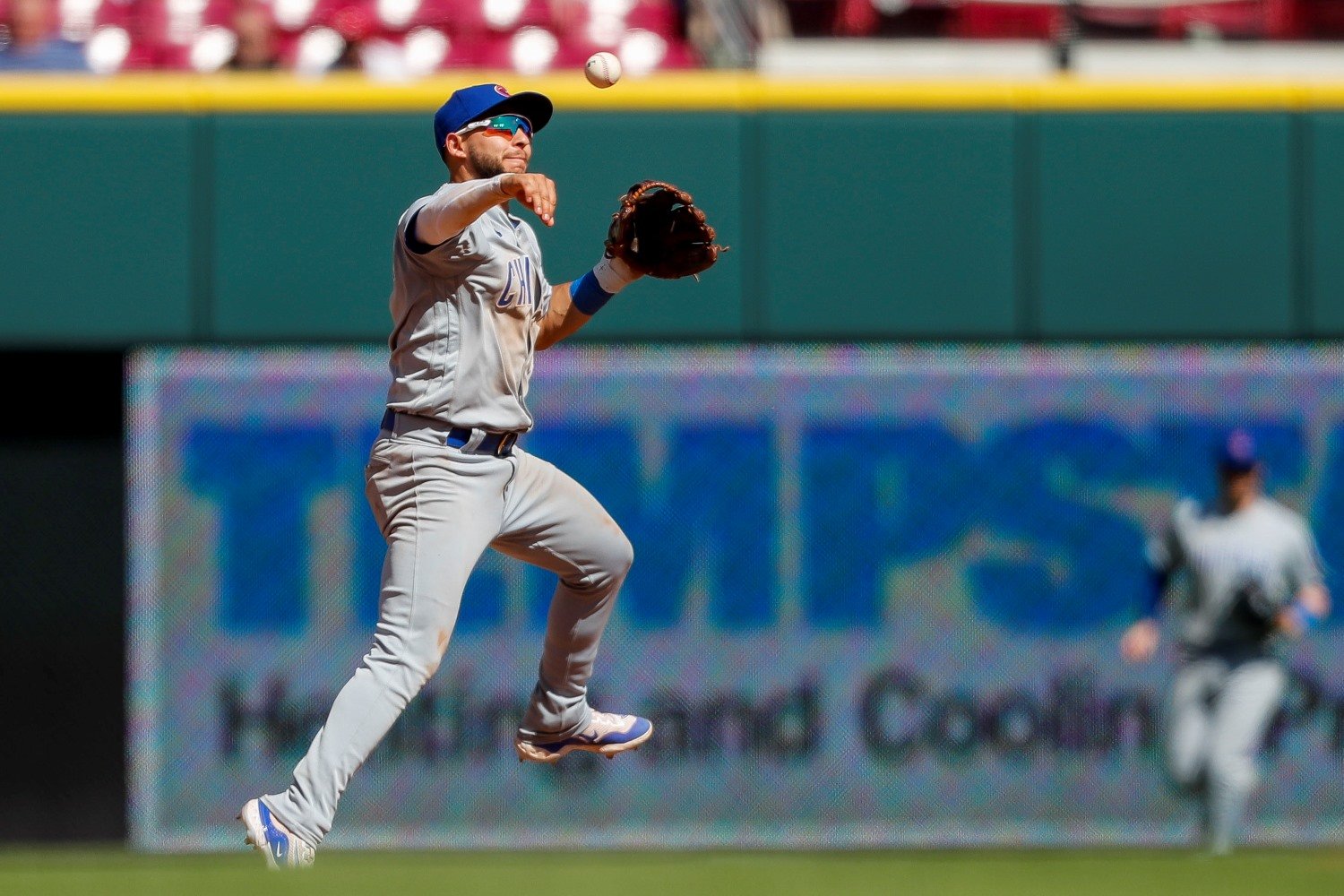 The Cubs began last season with Patrick Wisdom as their starting third baseman on Opening Day. They gave Nick Madrigal his first ever start at the hot corner for game two. Those two players ended up combining to start 133 games at the position for the team last season, with Madrigal getting the majority of those. It may or may not go without saying that this gave the Cubs a glaring hole, at least offensively, at this position all season long. If you expected that this hole would have been filled by now heading into the 2024 season…well, you would be incorrect. Let’s break it down. The Leader in the Clubhouse: Nick Madrigal 2023 Stats: 92 G, 294 PA, .263/.311/.352. 2 HR, 10 SB, 3.4% BB, 8.2% K. 0.9 fWAR, 1.2 bWaR, 1.1 WARP 2024 Projected Stats: ZiPS: 99 G, 365 PA, .285/.335/.386, 2 HR, 7 SB, 1.7 fWAR; PECOTA: 364 PA, .283/.337/.381, 4 HR, 5 SB, 1.7 WARP Those offensive numbers are simply not going to cut it--not at third, and honestly, probably not even at second, where Madrigal is so much more intuitive a fit. If there is one thing that he does well with the bat, it’s that he rarely strikes out. He has one of the lowest strikeout rates in all of baseball. A player who can put the ball in play certainly has some value, but that value is ideally best utilized in a pinch-hitting role, especially given that a better version of Madrigal already plays second every day for the Cubs. Defensively, Madrigal deserves the strongest pat on the back for even learning how to play the hot corner between the 2022 and 2023 seasons. A prototypical keystone sacker, the middle infield is all he had ever played prior to last season. The Cubs have Nico Hoerner and Dansby Swanson up the middle, though, and they represent one of baseball's best double play combos, so Madrigal needed to learn some position flexibility on the fly just to get a chance to earn some playing time. And earn it he did. Looking at the defensive metrics, Madrigal played above-average defense at the hot corner last season, and an argument could be made that what he lacked with his bat, he made up for with his glove. He ran up 10 Outs Above Average, sixth-best among all third basemen, despite playing there only part of the time. Looking at Defensive Runs Saved (DRS), he posted 8, good for fifth-best at the position. On a rate basis, he was the best defender in the league at the position. Again, for a prototypical second baseman, Madrigal played great defense at the hot corner, which is why (as of this moment) he is the favorite to open the year as the starter. The Contenders There is no doubt that, while the Cubs were satisfied with the way Madrigal played as a stop gap, they can’t be happy with that lack of offensive output at a position that really requires at least some amount of thump. So, while it may still be Madrigal’s job to lose, one would think that there will be plenty of opportunities for someone to take the job from him this spring. Let’s look at the players who may be vying for the job, placed into separate categories. The True Backups: Patrick Wisdom, Miles Mastrobuoni Wisdom brings a lot more power than Madrigal, but also a lot more swing-and-miss and much worse defense. I think the fact that the team was looking at Madrigal to take the job from Wisdom says everything that needs to be said about the likelihood of Wisdom taking the job back. Mastrobuoni is a very competent major-league bench infielder. He isn’t good enough to be an everyday player, but he does his job very well. Let’s not overcomplicate his role. Potential Starting Options: Christopher Morel, Michael Busch Two big bats who need a place to play on this 2024 Cubs team. If either of them could show any semblance of being able to play the position at even a passable level, the job would be theirs in a heartbeat. The likelihood of that skill is low, however. Morel simply lacks the consistency to be trusted there every day, but to his credit, he has been working there this offseason, so he could theoretically show up to spring training and wow everyone with his improvement. The newly acquired Busch has mostly played first and second base in the Dodgers farm system, but he played shortstop in high school and has plenty of arm strength. He’s one to keep an eye on in Arizona, if the team gives him a chance. Free Agent Who Will Immediately Seize Control of the Position If Signed: Matt Chapman By far the best third baseman still available in free agency, Chapman is one of the best defensive third basemen in all of baseball, and one of the best of his generation. He also hits the ball very hard, and were he to sign with the club, he would immediately be penciled into the lineup every day. If the front office can get him on a two- or three-year deal, I really think they would do it. And if they did, he would immediately transform the already-stellar Cubs infield defense into the best in all of baseball. That’s a pretty good reason to sign him, honestly. Minor League Players Who Could Matter: Matt Shaw, Luis Vázquez Vázquez is a defensive whiz on the left side of the infield. The 24-year-old profiles primarily as a shortstop, but he is a more than capable third baseman as well. There's no doubt that he could handle playing the position at the major-league level right now, if need be. For Vázquez, the questions are more about his bat. Although he displayed more power last year than at any previous point in his career, he still doesn’t have quite the pop you want to see out of a big-league third baseman. He also has a very high strikeout rate, and probably doesn’t draw enough walks to make up for it. That said, what he brings to the table looks pretty good considering the other options, so I don’t want to completely rule him out. I really want to highlight Shaw, the Cubs' first-round draft pick in 2023. A shortstop at Maryland, Shaw has just enough experience at third that it has warranted a fair amount of chatter that he may be given a shot to win the position on the Cubs as soon as the team feels he is ready, which could be as soon as, well, now. If he gets a shot, he could very easily take it and never look back. He's spent most of the winter getting reps at the position, with an eye toward that very possibility. Conclusion Much of this conversation has centered around the crazy fact that the team appears likely to repeat the same mistake they made last season, in deciding to play Madrigal rather than finding an above-average option. That leads me to believe that they think the answer is Shaw, and they are simply waiting for him to grab the job. However, if they have already decided that Shaw is a year or two away from being able to contribute, I’d be surprised if they didn’t sign Chapman. When all is said and done, I think one of those two players will end up winning this battle. What's your level of confidence in each of the Cubs' options at third base, entering camp? Are you similarly down on Madrigal as a semi-regular? Join the conversation with a comment below.
 -
With spring training underway, it's time to dig into the questions that will burn throughout the Cubs' time in Arizona. Today, we have the first in a series of pieces about the position battles that will unfold during camp. Image courtesy of © Katie Stratman-USA TODAY Sports The Cubs began last season with Patrick Wisdom as their starting third baseman on Opening Day. They gave Nick Madrigal his first ever start at the hot corner for game two. Those two players ended up combining to start 133 games at the position for the team last season, with Madrigal getting the majority of those. It may or may not go without saying that this gave the Cubs a glaring hole, at least offensively, at this position all season long. If you expected that this hole would have been filled by now heading into the 2024 season…well, you would be incorrect. Let’s break it down. The Leader in the Clubhouse: Nick Madrigal 2023 Stats: 92 G, 294 PA, .263/.311/.352. 2 HR, 10 SB, 3.4% BB, 8.2% K. 0.9 fWAR, 1.2 bWaR, 1.1 WARP 2024 Projected Stats: ZiPS: 99 G, 365 PA, .285/.335/.386, 2 HR, 7 SB, 1.7 fWAR; PECOTA: 364 PA, .283/.337/.381, 4 HR, 5 SB, 1.7 WARP Those offensive numbers are simply not going to cut it--not at third, and honestly, probably not even at second, where Madrigal is so much more intuitive a fit. If there is one thing that he does well with the bat, it’s that he rarely strikes out. He has one of the lowest strikeout rates in all of baseball. A player who can put the ball in play certainly has some value, but that value is ideally best utilized in a pinch-hitting role, especially given that a better version of Madrigal already plays second every day for the Cubs. Defensively, Madrigal deserves the strongest pat on the back for even learning how to play the hot corner between the 2022 and 2023 seasons. A prototypical keystone sacker, the middle infield is all he had ever played prior to last season. The Cubs have Nico Hoerner and Dansby Swanson up the middle, though, and they represent one of baseball's best double play combos, so Madrigal needed to learn some position flexibility on the fly just to get a chance to earn some playing time. And earn it he did. Looking at the defensive metrics, Madrigal played above-average defense at the hot corner last season, and an argument could be made that what he lacked with his bat, he made up for with his glove. He ran up 10 Outs Above Average, sixth-best among all third basemen, despite playing there only part of the time. Looking at Defensive Runs Saved (DRS), he posted 8, good for fifth-best at the position. On a rate basis, he was the best defender in the league at the position. Again, for a prototypical second baseman, Madrigal played great defense at the hot corner, which is why (as of this moment) he is the favorite to open the year as the starter. The Contenders There is no doubt that, while the Cubs were satisfied with the way Madrigal played as a stop gap, they can’t be happy with that lack of offensive output at a position that really requires at least some amount of thump. So, while it may still be Madrigal’s job to lose, one would think that there will be plenty of opportunities for someone to take the job from him this spring. Let’s look at the players who may be vying for the job, placed into separate categories. The True Backups: Patrick Wisdom, Miles Mastrobuoni Wisdom brings a lot more power than Madrigal, but also a lot more swing-and-miss and much worse defense. I think the fact that the team was looking at Madrigal to take the job from Wisdom says everything that needs to be said about the likelihood of Wisdom taking the job back. Mastrobuoni is a very competent major-league bench infielder. He isn’t good enough to be an everyday player, but he does his job very well. Let’s not overcomplicate his role. Potential Starting Options: Christopher Morel, Michael Busch Two big bats who need a place to play on this 2024 Cubs team. If either of them could show any semblance of being able to play the position at even a passable level, the job would be theirs in a heartbeat. The likelihood of that skill is low, however. Morel simply lacks the consistency to be trusted there every day, but to his credit, he has been working there this offseason, so he could theoretically show up to spring training and wow everyone with his improvement. The newly acquired Busch has mostly played first and second base in the Dodgers farm system, but he played shortstop in high school and has plenty of arm strength. He’s one to keep an eye on in Arizona, if the team gives him a chance. Free Agent Who Will Immediately Seize Control of the Position If Signed: Matt Chapman By far the best third baseman still available in free agency, Chapman is one of the best defensive third basemen in all of baseball, and one of the best of his generation. He also hits the ball very hard, and were he to sign with the club, he would immediately be penciled into the lineup every day. If the front office can get him on a two- or three-year deal, I really think they would do it. And if they did, he would immediately transform the already-stellar Cubs infield defense into the best in all of baseball. That’s a pretty good reason to sign him, honestly. Minor League Players Who Could Matter: Matt Shaw, Luis Vázquez Vázquez is a defensive whiz on the left side of the infield. The 24-year-old profiles primarily as a shortstop, but he is a more than capable third baseman as well. There's no doubt that he could handle playing the position at the major-league level right now, if need be. For Vázquez, the questions are more about his bat. Although he displayed more power last year than at any previous point in his career, he still doesn’t have quite the pop you want to see out of a big-league third baseman. He also has a very high strikeout rate, and probably doesn’t draw enough walks to make up for it. That said, what he brings to the table looks pretty good considering the other options, so I don’t want to completely rule him out. I really want to highlight Shaw, the Cubs' first-round draft pick in 2023. A shortstop at Maryland, Shaw has just enough experience at third that it has warranted a fair amount of chatter that he may be given a shot to win the position on the Cubs as soon as the team feels he is ready, which could be as soon as, well, now. If he gets a shot, he could very easily take it and never look back. He's spent most of the winter getting reps at the position, with an eye toward that very possibility. Conclusion Much of this conversation has centered around the crazy fact that the team appears likely to repeat the same mistake they made last season, in deciding to play Madrigal rather than finding an above-average option. That leads me to believe that they think the answer is Shaw, and they are simply waiting for him to grab the job. However, if they have already decided that Shaw is a year or two away from being able to contribute, I’d be surprised if they didn’t sign Chapman. When all is said and done, I think one of those two players will end up winning this battle. What's your level of confidence in each of the Cubs' options at third base, entering camp? Are you similarly down on Madrigal as a semi-regular? Join the conversation with a comment below. View full article
-
Time to take a step back and look forward. Time to look things up so we can drill down. Time to take a 30,000-foot view of the situation. On second thought… that’s too far. Let’s scale it back to a more friendly level and get a 368-foot view of what is happening this week in Cubs baseball. About two weeks shy of the report date for pitchers and catchers, the Cubs are rounding out their roster of camp invitees and backups to their backups. Everyone else is, too, and thus, we can start to see how the league is projected to shake out in the coming season. A Champion and a Trio of 28-Year-Olds The Cubs announced the signings of four pitchers to minor-league deals over the last four days, three of whom are 28 years of age. The other is forever etched in Cubs history. In some order: Carl Edwards Jr. An old friend has returned, and he brings with him a 2016 World Series ring and an invite to spring training. Edwards appeared in 32 games for Washington last season, sporting a 3.69 ERA and a lofty 1.516 WHIP. The 32-year-old right-hander struck out 24 batters while walking 17 in his second season with the Nationals. He last pitched for the Cubs in 2019, and struggled to mimic the success he had in his Chicago tenure until the Nationals picked him up prior to the 2022 season. That year, he threw 62 innings with a 2.76 ERA. Blake Weiman An 8th-round pick of the Pirates in 2017, the left-handed Weiman has had a modicum of success at the lower levels of the minor leagues over his five years of professional baseball, but his success has hit massive roadblocks at the Triple A level. He’s been training at Driveline this offseason, though, and the Cubs must have seen something they liked, because they snagged him following his pro day at Driveline on Friday. Sam McWilliams A 2014 Phillies 8th-rounder out of high school in Tennessee, this righty came up through the Phillies and Rays organizations, progressing up to Triple A before the pandemic non-season of 2020 halted his development. He bounced around the minors in 2021 and 2022, before retiring briefly following the latter season. Since then, he has mounted a comeback in the Mexican League, and in the Dominican Winter League, where Cubs scouts saw him and decided they wanted to see more. Richard Lovelady A southpaw, Lovelady was originally selected in the 10th round of the 2016 draft, by Kansas City. Unlike Weiman and McWilliams, Lovelady has pitched in the majors. The Royals called him up in 2019 and he appeared in 46 games for them over the course of the next three seasons, totaling 40 strikeouts over 41.2 innings pitched while tallying a 5.62 ERA. During the 2021 season, he blew out his elbow and was forced to undergo Tommy John surgery. In 2023, his comeback with Oakland was cut short after 27 appearances when he suffered a pronator strain in his forearm. Like Weiman, he turned to Driveline this offseason to work out and ultimately showcase his skills to pro scouts. The Cubs bit on the two-for-one Driveline special and snagged both of them. Obviously, the team also signed Héctor Neris to a contract with the big league club this past week. So the bullpen is definitely getting the attention it sorely deserved. Time will tell if any of these minor-league signings will bear fruit, but if even one of them contributes to the Cubs' major-league bullpen this year, it would be a huge coup for the Cubs scouting department. We like to talk about bullpen depth in terms of what we can see on the 26-man roster, or the 40-man, or even in terms of high-level prospect depth, but often seasons are won and lost based on the lottery card guys teams sign in December or January, from whom nobody expects anything. Think Trevor Cahill in 2016, for instance. Jed Hoyer recently said that the Cubs embrace a small-market mentality. In some cases, that is very true. They avoid signing players to long-term contracts if possible. They have shown a penchant for trading away their star players before they reach free agency. They have a renewed focus, since the departure of Theo Epstein, on developing homegrown pitchers. They put an emphasis on having a farm system full of blue-chip prospects. Signing multiple relief pitchers to minor-league contracts in the hopes that one of them hits is yet another example of this approach. This is the plan, folks. Build from within. Build from a place of depth. Learn from past mistakes. Last season, the bullpen went from a major strength in July to a major weakness in September. Why? Not enough depth. Not enough arms that David Ross could actually trust in high-leverage situations, of which there were many. It’s possible that the Cubs were caught flat-footed from a bullpen depth standpoint because they just didn’t expect to contend, and therefore didn’t envision almost every game for the last three months of the season being a high-leverage game. Hopefully, what we are seeing now is a sign that 2024 will be different. They will be set up for success, if not because of these four signings then simply because of a renewed mindset to be better prepared for the long season. DraftKings Win Totals and Other Futures Betting sites have begun unveiling props, futures, and odds for the 2024 season. I decided to look at DraftKings to see if there were any interesting takeaways, and I was pleasantly surprised at what I found. The Cubs have the 11th-best odds to win the World Series. The Dodgers are the clear favorite in the category, but the Cubs are much closer to the top than the bottom, sliding in just behind the Twins, Mariners, and Blue Jays, and just ahead of the Cardinals. The Cubs' win total is set at 84.5. I probably don’t need to tell you this, but the Cubs won only 83 games last season, so having the over/under set at a higher number than last season’s actual win total (even without Cody Bellinger currently on the team) seems like a good sign. By the way, the Cardinals' win total is also set at 84.5, so it could be one of those years. Speaking of that, the Cubs are at +180 to win the National League Central, just ahead of those wretched Cardinals, who come in at +200. The rest of the division is as follows: Reds +390 Brewers +500 Pirates +2000 Three Cubs are in the top 10 in Rookie of the Year odds. Shota Imanaga, Pete Crow-Armstrong, and Michael Busch are all considered legitimate candidates. So, for those of us who really want to see what Craig Counsell can do with young players adjusting to the major leagues, it looks like we should get that chance. This is not an endorsement of placing any wagers on any of these props. Although… There are some sites out there that aren’t as optimistic on the Cubs chances this year, if you are inclined to find a better value. Do you agree with the notion that the Cubs will win the Central this year? And what do you make of the flurry of bullpen signings as of late? Let me know in the comments. View full article
-
The 368 Foot View: Minor League Pitching Depth and Major League Win Totals
Josh Illes posted an article in Cubs
 About two weeks shy of the report date for pitchers and catchers, the Cubs are rounding out their roster of camp invitees and backups to their backups. Everyone else is, too, and thus, we can start to see how the league is projected to shake out in the coming season. A Champion and a Trio of 28-Year-Olds The Cubs announced the signings of four pitchers to minor-league deals over the last four days, three of whom are 28 years of age. The other is forever etched in Cubs history. In some order: Carl Edwards Jr. An old friend has returned, and he brings with him a 2016 World Series ring and an invite to spring training. Edwards appeared in 32 games for Washington last season, sporting a 3.69 ERA and a lofty 1.516 WHIP. The 32-year-old right-hander struck out 24 batters while walking 17 in his second season with the Nationals. He last pitched for the Cubs in 2019, and struggled to mimic the success he had in his Chicago tenure until the Nationals picked him up prior to the 2022 season. That year, he threw 62 innings with a 2.76 ERA. Blake Weiman An 8th-round pick of the Pirates in 2017, the left-handed Weiman has had a modicum of success at the lower levels of the minor leagues over his five years of professional baseball, but his success has hit massive roadblocks at the Triple A level. He’s been training at Driveline this offseason, though, and the Cubs must have seen something they liked, because they snagged him following his pro day at Driveline on Friday. Sam McWilliams A 2014 Phillies 8th-rounder out of high school in Tennessee, this righty came up through the Phillies and Rays organizations, progressing up to Triple A before the pandemic non-season of 2020 halted his development. He bounced around the minors in 2021 and 2022, before retiring briefly following the latter season. Since then, he has mounted a comeback in the Mexican League, and in the Dominican Winter League, where Cubs scouts saw him and decided they wanted to see more. Richard Lovelady A southpaw, Lovelady was originally selected in the 10th round of the 2016 draft, by Kansas City. Unlike Weiman and McWilliams, Lovelady has pitched in the majors. The Royals called him up in 2019 and he appeared in 46 games for them over the course of the next three seasons, totaling 40 strikeouts over 41.2 innings pitched while tallying a 5.62 ERA. During the 2021 season, he blew out his elbow and was forced to undergo Tommy John surgery. In 2023, his comeback with Oakland was cut short after 27 appearances when he suffered a pronator strain in his forearm. Like Weiman, he turned to Driveline this offseason to work out and ultimately showcase his skills to pro scouts. The Cubs bit on the two-for-one Driveline special and snagged both of them. Obviously, the team also signed Héctor Neris to a contract with the big league club this past week. So the bullpen is definitely getting the attention it sorely deserved. Time will tell if any of these minor-league signings will bear fruit, but if even one of them contributes to the Cubs' major-league bullpen this year, it would be a huge coup for the Cubs scouting department. We like to talk about bullpen depth in terms of what we can see on the 26-man roster, or the 40-man, or even in terms of high-level prospect depth, but often seasons are won and lost based on the lottery card guys teams sign in December or January, from whom nobody expects anything. Think Trevor Cahill in 2016, for instance. Jed Hoyer recently said that the Cubs embrace a small-market mentality. In some cases, that is very true. They avoid signing players to long-term contracts if possible. They have shown a penchant for trading away their star players before they reach free agency. They have a renewed focus, since the departure of Theo Epstein, on developing homegrown pitchers. They put an emphasis on having a farm system full of blue-chip prospects. Signing multiple relief pitchers to minor-league contracts in the hopes that one of them hits is yet another example of this approach. This is the plan, folks. Build from within. Build from a place of depth. Learn from past mistakes. Last season, the bullpen went from a major strength in July to a major weakness in September. Why? Not enough depth. Not enough arms that David Ross could actually trust in high-leverage situations, of which there were many. It’s possible that the Cubs were caught flat-footed from a bullpen depth standpoint because they just didn’t expect to contend, and therefore didn’t envision almost every game for the last three months of the season being a high-leverage game. Hopefully, what we are seeing now is a sign that 2024 will be different. They will be set up for success, if not because of these four signings then simply because of a renewed mindset to be better prepared for the long season. DraftKings Win Totals and Other Futures Betting sites have begun unveiling props, futures, and odds for the 2024 season. I decided to look at DraftKings to see if there were any interesting takeaways, and I was pleasantly surprised at what I found. The Cubs have the 11th-best odds to win the World Series. The Dodgers are the clear favorite in the category, but the Cubs are much closer to the top than the bottom, sliding in just behind the Twins, Mariners, and Blue Jays, and just ahead of the Cardinals. The Cubs' win total is set at 84.5. I probably don’t need to tell you this, but the Cubs won only 83 games last season, so having the over/under set at a higher number than last season’s actual win total (even without Cody Bellinger currently on the team) seems like a good sign. By the way, the Cardinals' win total is also set at 84.5, so it could be one of those years. Speaking of that, the Cubs are at +180 to win the National League Central, just ahead of those wretched Cardinals, who come in at +200. The rest of the division is as follows: Reds +390 Brewers +500 Pirates +2000 Three Cubs are in the top 10 in Rookie of the Year odds. Shota Imanaga, Pete Crow-Armstrong, and Michael Busch are all considered legitimate candidates. So, for those of us who really want to see what Craig Counsell can do with young players adjusting to the major leagues, it looks like we should get that chance. This is not an endorsement of placing any wagers on any of these props. Although… There are some sites out there that aren’t as optimistic on the Cubs chances this year, if you are inclined to find a better value. Do you agree with the notion that the Cubs will win the Central this year? And what do you make of the flurry of bullpen signings as of late? Let me know in the comments.
 -
Article: What Did Jed Hoyer Mean By That?
Josh Illes replied to Josh Illes's topic in North Side Baseball Front Page News
I would think Moore has the edge here due to his low walk rate in 2023, but if the Cubs do not believe that walk rate is sustainable then I'm not sure they would sign either Moore or Chapman unless the price dropped to a certain point, which it might at this point. -
 Call him Chef Hoyer-dee, because he is cooking. Wait... no, don’t actually call him that. It’s weird. Just let him cook. After a bevy of activity (by Cubs standards anyway) over the past week, Hoyer admitted during Cubs Convention on Friday night that the team is “in the fourth or fifth inning of our offseason.” It’s a good line, and if it came from anyone other than the very secretive Hoyer, I might be willing to dismiss it as just that--a fun thing to say at a fun event. But when it comes to putting information out there, Hoyer rarely admits anything publicly that he doesn’t want out there. Add in the fact that Craig Counsell referenced that line during his stage time at the convention on Saturday, and I think we should look at it as something of a reference point, and try to figure out what it means. First of all, there is a pretty big difference between being in the fourth inning or being in the fifth inning. Being in the fourth means that we’ve only completed a third of the game, whereas being in the fifth means that the argument could be made that the game is half over. Big difference, right? This is part of the reason why I believe that Hoyer used this exact phrase: it leaves some leeway if some things don’t go the way he hopes they might go. If he only makes, say, one more signing and one or two more minor trades, he could argue that’s enough to constitute finishing the analogous nine innings. My guess is that he’s wanting to do more than that, though, and therein lies the disparity. The First Three (or Four) Innings I think we should approach this quite literally, and try to do so by looking at it from Hoyer’s point of view. What do we think he considers to be the moves made so far--inning by inning, as it were? 1st inning: The firing of David Ross and the hiring of Craig Counsell The first move was not player-related. Some would argue it was bigger than that. I may or may not have argued that before Saturday, but I think I would definitely argue it now, after hearing Counsell field a question about bunting and answer it expertly, saying that history shows that he doesn't like to bunt, mainly because bunting is harder than people think. “We love the word 'sacrifice' and we all want to sacrifice for the team, that’s true, but if the sacrifice isn’t successful, it doesn’t help the team,” Counsell explained. He went on to note that one possible exception for this year’s team may come in the form of Pete Crow-Armstrong, explaining that he is fast and left-handed, two key priorities for even being considered to lay down a bunt. Honestly, my favorite part of that little tidbit is that it shows that Counsell has been thinking about how to properly use PCA, so he’s already done more with him than Ross ever did. But I digress… 2nd inning: The Signing of Shota Imanaga The arrival of The Pitching Philosopher. If you missed his introduction, you should check it out. Imanaga is already a fan favorite after this epic start to his Cubs career: To read up some more on Imanaga, check out some of the great work done by Matt Trueblood right here on North Side Baseball: NEWS: Cubs Sign Starting Pitcher Shota Imanaga - Cubs - North Side Baseball Shota Imanaga Cubs Deal Will Include Club Options, Opt-Outs, Incentives - Cubs - North Side Baseball Bottom line, I think we are all very excited to see how Imanaga will use his imaginative approach to pitching to benefit the Cubs rotation. Whether he fits in as the second or third arm there, he makes the unit better, overall. 3rd inning: The Trade with the Dodgers for Michael Busch and Yency Almonte If we want to read Jed’s comment extremely literally, we may say that this move involves acquiring two players, and therefore, each one represents a separate inning. But maybe the deal itself represents one inning. Maybe Jed isn’t sure, and that’s why he doesn’t know if he’s in the fourth inning or the fifth. It remains a mystery. The trade itself, though, is less mysterious. The Cubs traded away two promising 19-year-olds, in Jackson Ferris and Zyhir Hope, for two major league-ready players in Busch and Almonte. This trade makes perfect sense for both teams, as the Dodgers needed to make room on their 40-man roster, and the Cubs needed to add better players to their 40-man roster. The acquisition of Busch is one of the more intriguing trades that the Cubs have made in years. He just isn’t the type of player that is typically available: a major league-ready talent who has somewhat aged out in the minor leagues, because there was simply nowhere for the Dodgers to play him. That scenario doesn’t occur very often, if ever. One other thing of note when it comes to Busch is that my belief is that his addition precludes the Cubs from signing Rhys Hoskins at this point. I think there was a need for a first baseman or designated hitter type that Hoskins would have filled, but they filled that need with Busch, instead. For more on Busch, I would again invite you to read some of the great work done on this site in recent days. This piece by Randy Holt, on Busch’s defensive value and limitations, is excellent: The Defensive Past, Present, and Future of Michael Busch - Cubs - North Side Baseball And this article by Jason Ross really gets down to the nitty-gritty on what makes Busch such a good hitter: What to Expect from Michael Busch at the Plate - Cubs - North Side Baseball Almonte is a nice addition to the bullpen, a 29-year-old righty with over 200 innings of big-league work, including some postseason experience in 2022. The Cubs needed some bullpen depth, and Almonte fits the bill nicely. 4th-9th Innings: What Should We Expect? Technically, again, we may be in the fifth inning, but I don’t want to seem tedious so I won't go there again. Let’s explore what the Cubs could do from here on out. Sign Cody Bellinger It remains priority one. He was arguably the biggest topic of conversation at Cubs Con, being referenced by Hoyer, Dansby Swanson, Bruce Levine, and roughly a billion or so convention-goers. At this point, it would be shocking to me if the Cubs were to allow Bellinger to sign elsewhere. It reminds me a lot of early 2016, when Cubs fans were clamoring for Dexter Fowler to be re-signed. Ultimately, the team agreed, and a one-year deal got done. The big difference with Bellinger is that this will not be a one-year deal. Signing Bellinger gets us to the fifth inning, with a really good idea of what the Cubs still need. They would have added two left-handed bats to the lineup in him and Busch--something they desperately needed to do. Both of them can also play first base, another need. Busch is also potentially a third baseman, while Bellinger is also a center fielder, two more positions where they entered the offseason with huge uncertainty. A lot of needs met, basically, but also a decent amount of remaining doubt. We don’t know if Busch can thrive at the major-league level. We don’t know if Christopher Morel or Busch can play the hot corner well enough to stick there. We don’t know if PCA will be ready. On the pitching side, we don’t know if Justin Steele is a true ace. We don’t know who the fifth (and/or sixth) starter will be. We don’t know if Adbert Alzolay is a lockdown closer. Even if he is, we don’t know if anyone else can step up to fill the eighth-inning role. Let’s look at these last four (or five) moves through two different lenses. In the first case, let’s pretend the Cubs stay pretty conservative, and just do what they need to do to get to spring training. In the second, let’s get a little wild and dream a bit about what they could do if they decide it’s time to throw caution to the wind. Conservative Approach Sign an affordable free-agent left-handed reliever Sign or trade for an experienced third baseman/utility player Sign or trade for an under-the-radar high-end reliever Trade some prospect depth for a quality swing starter While this isn’t necessarily the bare minimum, it’s pretty close. If they were to do all of these moves, including Bellinger, they’d go into 2024 in much better shape than they left 2023. At the end of the day, that is important. WILD Approach Sign Josh Hader Trade for Pete Alonso Trade for Dylan Cease Sign Matt Chapman Trade for Shane Bieber and Emmanuel Clase What? I made it very clear I was going to throw caution to the wind. To be very, very clear though, I do not think the Cubs should do all of this. I don’t think anyone reading this thinks they should, either. But it’s interesting to realize that they probably could do this, if they wanted to completely gut their farm system and just go for it. They can afford Hader. They can afford Chapman. Those are the easy parts of this crazy scenario. The more difficult thing would be the trades. Alonso and Bieber are entering their walk years. Cease and Clase have been mentioned in plenty of trade rumors. They are all technically available, but at what cost? In no particular order, it would probably mean parting with most of the following players: PCA, Morel, Cade Horton, Owen Caissie, and Kevin Alcantara. I’m sorry but… no. So what do I think will happen? I think it will be something closer to the conservative approach, but with some caution thrown in. I don’t think they will trade for Cease, but I think they may trade for Bieber. If they think the price tag for Bieber is too high, they may choose to wait until closer to the trade deadline and add a starter then. I’ve also noticed the rumors surrounding the Cubs and Jordan Montgomery haven't really abated since the signing of Imanaga, so there may be some smoke there. I don’t think they will sign Chapman, for reasons I’ve outlined in the past. The potential of Morel, Shaw, and now Busch are high enough that adding someone to block all three of them just doesn’t make sense to me. I still think there is a chance they sign Hader, just due to Counsell’s familiarity with him. The interesting thing left here is the potential to trade for Alonso. To me, that’s the “all-in” move that actually makes sense. It would cost a lot to get him: maybe Alcantara, maybe Caissie, maybe more than either of them alone. That price is obviously steep for a one-year rental, but Alonso in this lineup really works. He would bring more power to a lineup that desperately needs more power. It would allow Bellinger to play center field until PCA is ready. It would give them a very robust batting order that would look something like this: 1. Nico Hoerner, 2B (R) 2. Ian Happ, LF (S) 3. Cody Bellinger, CF (L) 4. Pete Alonso, 1B (R) 5. Seiya Suzuki, RF (R) 6. Dansby Swanson, SS (R) 7. Christopher Morel, 3B (R) 8. Michael Busch, DH (L) 9. Yan Gomes, C (R) Not bad, right? I could definitely talk myself into that lineup (with a strong pitching staff) being a contender this season. But I could also talk myself into holding onto most of these prospects until the team is slightly closer to contention for a World Series. Either way, I look forward to the next four or five innings of the offseason, and I also look forward to myself remaining as tedious as ever. What do you think, though? How would you like to see Jed finish out this offseason?
 -
Cubs President of Baseball Operations Jed Hoyer let loose--kind of. During Cubs Convention, Hoyer had some interesting things to say about the current state of the ballclub. One remark really stood out to me, and I figured, why not get to the bottom of it? Image courtesy of © Charles LeClaire-USA TODAY Sports Call him Chef Hoyer-dee, because he is cooking. Wait... no, don’t actually call him that. It’s weird. Just let him cook. After a bevy of activity (by Cubs standards anyway) over the past week, Hoyer admitted during Cubs Convention on Friday night that the team is “in the fourth or fifth inning of our offseason.” It’s a good line, and if it came from anyone other than the very secretive Hoyer, I might be willing to dismiss it as just that--a fun thing to say at a fun event. But when it comes to putting information out there, Hoyer rarely admits anything publicly that he doesn’t want out there. Add in the fact that Craig Counsell referenced that line during his stage time at the convention on Saturday, and I think we should look at it as something of a reference point, and try to figure out what it means. First of all, there is a pretty big difference between being in the fourth inning or being in the fifth inning. Being in the fourth means that we’ve only completed a third of the game, whereas being in the fifth means that the argument could be made that the game is half over. Big difference, right? This is part of the reason why I believe that Hoyer used this exact phrase: it leaves some leeway if some things don’t go the way he hopes they might go. If he only makes, say, one more signing and one or two more minor trades, he could argue that’s enough to constitute finishing the analogous nine innings. My guess is that he’s wanting to do more than that, though, and therein lies the disparity. The First Three (or Four) Innings I think we should approach this quite literally, and try to do so by looking at it from Hoyer’s point of view. What do we think he considers to be the moves made so far--inning by inning, as it were? 1st inning: The firing of David Ross and the hiring of Craig Counsell The first move was not player-related. Some would argue it was bigger than that. I may or may not have argued that before Saturday, but I think I would definitely argue it now, after hearing Counsell field a question about bunting and answer it expertly, saying that history shows that he doesn't like to bunt, mainly because bunting is harder than people think. “We love the word 'sacrifice' and we all want to sacrifice for the team, that’s true, but if the sacrifice isn’t successful, it doesn’t help the team,” Counsell explained. He went on to note that one possible exception for this year’s team may come in the form of Pete Crow-Armstrong, explaining that he is fast and left-handed, two key priorities for even being considered to lay down a bunt. Honestly, my favorite part of that little tidbit is that it shows that Counsell has been thinking about how to properly use PCA, so he’s already done more with him than Ross ever did. But I digress… 2nd inning: The Signing of Shota Imanaga The arrival of The Pitching Philosopher. If you missed his introduction, you should check it out. Imanaga is already a fan favorite after this epic start to his Cubs career: To read up some more on Imanaga, check out some of the great work done by Matt Trueblood right here on North Side Baseball: NEWS: Cubs Sign Starting Pitcher Shota Imanaga - Cubs - North Side Baseball Shota Imanaga Cubs Deal Will Include Club Options, Opt-Outs, Incentives - Cubs - North Side Baseball Bottom line, I think we are all very excited to see how Imanaga will use his imaginative approach to pitching to benefit the Cubs rotation. Whether he fits in as the second or third arm there, he makes the unit better, overall. 3rd inning: The Trade with the Dodgers for Michael Busch and Yency Almonte If we want to read Jed’s comment extremely literally, we may say that this move involves acquiring two players, and therefore, each one represents a separate inning. But maybe the deal itself represents one inning. Maybe Jed isn’t sure, and that’s why he doesn’t know if he’s in the fourth inning or the fifth. It remains a mystery. The trade itself, though, is less mysterious. The Cubs traded away two promising 19-year-olds, in Jackson Ferris and Zyhir Hope, for two major league-ready players in Busch and Almonte. This trade makes perfect sense for both teams, as the Dodgers needed to make room on their 40-man roster, and the Cubs needed to add better players to their 40-man roster. The acquisition of Busch is one of the more intriguing trades that the Cubs have made in years. He just isn’t the type of player that is typically available: a major league-ready talent who has somewhat aged out in the minor leagues, because there was simply nowhere for the Dodgers to play him. That scenario doesn’t occur very often, if ever. One other thing of note when it comes to Busch is that my belief is that his addition precludes the Cubs from signing Rhys Hoskins at this point. I think there was a need for a first baseman or designated hitter type that Hoskins would have filled, but they filled that need with Busch, instead. For more on Busch, I would again invite you to read some of the great work done on this site in recent days. This piece by Randy Holt, on Busch’s defensive value and limitations, is excellent: The Defensive Past, Present, and Future of Michael Busch - Cubs - North Side Baseball And this article by Jason Ross really gets down to the nitty-gritty on what makes Busch such a good hitter: What to Expect from Michael Busch at the Plate - Cubs - North Side Baseball Almonte is a nice addition to the bullpen, a 29-year-old righty with over 200 innings of big-league work, including some postseason experience in 2022. The Cubs needed some bullpen depth, and Almonte fits the bill nicely. 4th-9th Innings: What Should We Expect? Technically, again, we may be in the fifth inning, but I don’t want to seem tedious so I won't go there again. Let’s explore what the Cubs could do from here on out. Sign Cody Bellinger It remains priority one. He was arguably the biggest topic of conversation at Cubs Con, being referenced by Hoyer, Dansby Swanson, Bruce Levine, and roughly a billion or so convention-goers. At this point, it would be shocking to me if the Cubs were to allow Bellinger to sign elsewhere. It reminds me a lot of early 2016, when Cubs fans were clamoring for Dexter Fowler to be re-signed. Ultimately, the team agreed, and a one-year deal got done. The big difference with Bellinger is that this will not be a one-year deal. Signing Bellinger gets us to the fifth inning, with a really good idea of what the Cubs still need. They would have added two left-handed bats to the lineup in him and Busch--something they desperately needed to do. Both of them can also play first base, another need. Busch is also potentially a third baseman, while Bellinger is also a center fielder, two more positions where they entered the offseason with huge uncertainty. A lot of needs met, basically, but also a decent amount of remaining doubt. We don’t know if Busch can thrive at the major-league level. We don’t know if Christopher Morel or Busch can play the hot corner well enough to stick there. We don’t know if PCA will be ready. On the pitching side, we don’t know if Justin Steele is a true ace. We don’t know who the fifth (and/or sixth) starter will be. We don’t know if Adbert Alzolay is a lockdown closer. Even if he is, we don’t know if anyone else can step up to fill the eighth-inning role. Let’s look at these last four (or five) moves through two different lenses. In the first case, let’s pretend the Cubs stay pretty conservative, and just do what they need to do to get to spring training. In the second, let’s get a little wild and dream a bit about what they could do if they decide it’s time to throw caution to the wind. Conservative Approach Sign an affordable free-agent left-handed reliever Sign or trade for an experienced third baseman/utility player Sign or trade for an under-the-radar high-end reliever Trade some prospect depth for a quality swing starter While this isn’t necessarily the bare minimum, it’s pretty close. If they were to do all of these moves, including Bellinger, they’d go into 2024 in much better shape than they left 2023. At the end of the day, that is important. WILD Approach Sign Josh Hader Trade for Pete Alonso Trade for Dylan Cease Sign Matt Chapman Trade for Shane Bieber and Emmanuel Clase What? I made it very clear I was going to throw caution to the wind. To be very, very clear though, I do not think the Cubs should do all of this. I don’t think anyone reading this thinks they should, either. But it’s interesting to realize that they probably could do this, if they wanted to completely gut their farm system and just go for it. They can afford Hader. They can afford Chapman. Those are the easy parts of this crazy scenario. The more difficult thing would be the trades. Alonso and Bieber are entering their walk years. Cease and Clase have been mentioned in plenty of trade rumors. They are all technically available, but at what cost? In no particular order, it would probably mean parting with most of the following players: PCA, Morel, Cade Horton, Owen Caissie, and Kevin Alcantara. I’m sorry but… no. So what do I think will happen? I think it will be something closer to the conservative approach, but with some caution thrown in. I don’t think they will trade for Cease, but I think they may trade for Bieber. If they think the price tag for Bieber is too high, they may choose to wait until closer to the trade deadline and add a starter then. I’ve also noticed the rumors surrounding the Cubs and Jordan Montgomery haven't really abated since the signing of Imanaga, so there may be some smoke there. I don’t think they will sign Chapman, for reasons I’ve outlined in the past. The potential of Morel, Shaw, and now Busch are high enough that adding someone to block all three of them just doesn’t make sense to me. I still think there is a chance they sign Hader, just due to Counsell’s familiarity with him. The interesting thing left here is the potential to trade for Alonso. To me, that’s the “all-in” move that actually makes sense. It would cost a lot to get him: maybe Alcantara, maybe Caissie, maybe more than either of them alone. That price is obviously steep for a one-year rental, but Alonso in this lineup really works. He would bring more power to a lineup that desperately needs more power. It would allow Bellinger to play center field until PCA is ready. It would give them a very robust batting order that would look something like this: 1. Nico Hoerner, 2B (R) 2. Ian Happ, LF (S) 3. Cody Bellinger, CF (L) 4. Pete Alonso, 1B (R) 5. Seiya Suzuki, RF (R) 6. Dansby Swanson, SS (R) 7. Christopher Morel, 3B (R) 8. Michael Busch, DH (L) 9. Yan Gomes, C (R) Not bad, right? I could definitely talk myself into that lineup (with a strong pitching staff) being a contender this season. But I could also talk myself into holding onto most of these prospects until the team is slightly closer to contention for a World Series. Either way, I look forward to the next four or five innings of the offseason, and I also look forward to myself remaining as tedious as ever. What do you think, though? How would you like to see Jed finish out this offseason? View full article
-
REALLY good stuff here. I'm hoping that Merryweather can be our Ryan Brasier or Brusdar Graterol this season. Someone that can lock down the 7th or 8th
-
Some rumors flying around yesterday that Belt may retire. Otherwise, yeah absolutely. I like it
-
Like a confident chess player who wants to survey the whole board before making a move, the Cubs waited until the second week of January before signing their first major-league free agent. It’s a solid opening move for Jed Hoyer, but how will he follow it up? Let’s check in on who is still available and, of those players, who would most help this Cubs team win. Image courtesy of © Charles LeClaire-USA TODAY Sports First, who is still available? Quite a few players are still available via free agency, including (but not limited to) the following: 1B/OF Cody Bellinger LHP Blake Snell LHP Jordan Montgomery 3B Matt Chapman LHP Josh Hader (RP) DH/OF Jorge Soler RHP Marcus Stroman DH J.D. Martinez RHP Jordan Hicks (RP) 1B Rhys Hoskins RHP Robert Stephenson (RP) RHP Yariel Rodriguez RHP Mike Clevinger LHP Aroldis Chapman (RP) RHP Michael Lorenzen 3B/1B Gio Urshela 2B/OF Whit Merrifield 3B/1B Justin Turner 1B Brandon Belt RP Hector Neris Now, for me, there is one name there that stands out above the rest, and we will get to him in a bit, but first let’s take a broader look at where the three facets of the roster--the rotation, the bullpen, and the lineup--currently stand. STARTING ROTATION The signing of Imanaga fills the hole in the Cubs rotation left by the departure of Stroman, who is currently a free agent. Stroman pitched 136 2/3 innings for the Cubs last season, and those innings needed to be replaced. Enter Imanaga, who pitched 159 innings last season in Japan. Slotting him in for Stroman makes the Cubs rotation look something like this: Justin Steele Jameson Taillon Shota Imanaga Kyle Hendricks Jordan Wicks Rotation depth: Javier Assad, Hayden Wesneski, Drew Smyly, Caleb Kilian, Ben Brown, Cade Horton Do they need to add another starting pitcher? Looking at those names, I’m tempted to say yes, just given all the unknown there. Is it a MUST? Not necessarily. The depth is there. The one thing I will point out is that, after adding Imanaga to the mix, I think it’s at least a possibility that the Cubs will experiment with a six-man rotation. Teams in Japan play six games a week, and each starting pitcher throws one day a week. Thus, Imanaga will have to make the same adjustment that other Japanese pitchers have had to make, as he goes into a five-man rotation. The Mets briefly flirted with the idea of using a six-man rotation last year to help Kodai Senga’s adjustment to MLB go more smoothly, but ultimately decided against it. This Cubs team may have more of an incentive, though, especially if they don’t add another veteran starter. A lot of these guys have not pitched a ton of innings. You would expect everyone not named Hendricks and Taillon to at least have their innings monitored to a degree. If the Cubs were to sign (or trade for) another starting pitcher, that would probably dismiss any notion of the six-man group, but for now, I wouldn't rule it out. BULLPEN Bullpens are tricky to figure out in January. For the most part, I think we have to wait and see who sticks in the rotation before we make a confident judgment on the depth of the pen. We do know at least some of the players who are likely to have roles on this year’s team though. In no particular order: Adbert Alzolay Jose Cuas Mark Leiter Jr. Luke Little Julian Merryweather Daniel Palencia Michael Rucker Keegan Thompson Colten Brewer Those players, in addition to the guys in the section above who don’t end up in the rotation, constitute the likely arms available to Craig Counsell when he raises either his left or right hand. Is that enough? Not even close. As a reminder, Tommy Hottovy mentioned that he needed one starter and two relievers. Well… he got his starter, but by my math, he’s still two relievers short. I guess the real question is: Should they allocate vast sums of money or prospect capital to acquire an expensive bullpen arm? Probably not, but it kind of makes sense. I could see them signing Hader, for instance. It makes a lot of sense if the Cubs want to win right now. It makes even more sense if Counsell signs off on it. Whether it happens or not is another question entirely. Even if Hader is off the table, though, there are plenty of available options, and I would expect the Cubs to go after a few of them. Neris would make a lot of sense. I've mentioned Hicks before, but he comes with some questions. One name that keeps popping up is Brent Suter. I’d love to see a deal get done there. Regardless, I definitely expect some activity in this department over the next month or so. LINEUP Ok. Let's do it. Let's talk about Cody Bellinger. This lineup just doesn’t look the same without him. To prove it, I’m going to show you what it would look like if the season started today: C Yan Gomes 1B Patrick Wisdom 2B Nico Hoerner SS Dansby Swanson 3B Nick Madrigal RF Seiya Suzuki CF Pete Crow-Armstrong LF Ian Happ DH Christopher Morel Bench: Mike Tauchman, Miguel Amaya, Miles Mastrobuoni Honestly, that lineup isn’t terrible. It would certainly be a step back from last year’s team, but there’s some potential there, with guys like Morel, PCA, Suzuki, and Happ getting another season under their belts. So… do the Cubs need to make a move here? Absolutely. Probably a couple moves, but definitely at least one. They need to sign Bellinger. I think we all probably agree on that, so let’s look at the more interesting names available--specifically the other two names that keep being linked to the Cubs: Rhys Hoskins and Matt Chapman. First, with Hoskins, it’s difficult to tell whether the Cubs are being linked to him as a fallback option to Bellinger or as someone they could sign even if they also sign Bellinger. As a fallback option, it makes a lot of sense. Hoskins’s career has been derailed by the knee injury that robbed him of his walk year, and he’s looking for a chance to prove that he’s healthy. It’s a very similar scenario to what Bellinger was looking for last offseason, although Hoskins has never put up MVP-caliber numbers like Bellinger has. As a tandem signing with Bellinger, I understand it but I don’t feel the *need* to do it as much as some others do. For some, the allure of having Hoskins as a proven commodity trumps their desire to see some of the younger players get their shot at everyday playing time. Hoskins would either have to play DH, or he would play first base, which would move Bellinger to center. Right there, you are taking at-bats away from either PCA or Morel, or just clogging the DH spot and forcing Morel to play third base. That may very well work out great, but it also may work out better the other way around, where the young players get big-league reps and respond positively. Chapman, to me, is a different story altogether. He is looking for a long-term deal. He plays one position, third, and he plays it well. Signing him means locking up the hot corner for at least five years or so. That could be great. He would bring Gold Glove defense to an infield that already prides itself on defense, making the strength of the team even stronger. The downside is his bat. He does hit for power--he is in the 98th percentile in MLB in average exit velocity and barrel rate, per Statcast--but he has a lot of miss in his swing. He strikes out around 27.8% of the time. To me, when you factor in his age, the amount of money he costs that could be spent elsewhere, the internal options the Cubs have for that spot, and the presence of prospect Matt Shaw, I just don’t see them signing him. But if they do sign him, I will sit back and enjoy one of the greatest defensive infields ever assembled, so it’s not all bad. What about you? Who do you think the Cubs need to sign? Who did I miss? Let me know. View full article
- 5 replies
-
- 1
-
-
- cody bellinger
- shota imanaga
- (and 2 more)
-
The Cubs Have Made Their Opening Move. What Should They Do Next?
Josh Illes posted an article in Cubs
 First, who is still available? Quite a few players are still available via free agency, including (but not limited to) the following: 1B/OF Cody Bellinger LHP Blake Snell LHP Jordan Montgomery 3B Matt Chapman LHP Josh Hader (RP) DH/OF Jorge Soler RHP Marcus Stroman DH J.D. Martinez RHP Jordan Hicks (RP) 1B Rhys Hoskins RHP Robert Stephenson (RP) RHP Yariel Rodriguez RHP Mike Clevinger LHP Aroldis Chapman (RP) RHP Michael Lorenzen 3B/1B Gio Urshela 2B/OF Whit Merrifield 3B/1B Justin Turner 1B Brandon Belt RP Hector Neris Now, for me, there is one name there that stands out above the rest, and we will get to him in a bit, but first let’s take a broader look at where the three facets of the roster--the rotation, the bullpen, and the lineup--currently stand. STARTING ROTATION The signing of Imanaga fills the hole in the Cubs rotation left by the departure of Stroman, who is currently a free agent. Stroman pitched 136 2/3 innings for the Cubs last season, and those innings needed to be replaced. Enter Imanaga, who pitched 159 innings last season in Japan. Slotting him in for Stroman makes the Cubs rotation look something like this: Justin Steele Jameson Taillon Shota Imanaga Kyle Hendricks Jordan Wicks Rotation depth: Javier Assad, Hayden Wesneski, Drew Smyly, Caleb Kilian, Ben Brown, Cade Horton Do they need to add another starting pitcher? Looking at those names, I’m tempted to say yes, just given all the unknown there. Is it a MUST? Not necessarily. The depth is there. The one thing I will point out is that, after adding Imanaga to the mix, I think it’s at least a possibility that the Cubs will experiment with a six-man rotation. Teams in Japan play six games a week, and each starting pitcher throws one day a week. Thus, Imanaga will have to make the same adjustment that other Japanese pitchers have had to make, as he goes into a five-man rotation. The Mets briefly flirted with the idea of using a six-man rotation last year to help Kodai Senga’s adjustment to MLB go more smoothly, but ultimately decided against it. This Cubs team may have more of an incentive, though, especially if they don’t add another veteran starter. A lot of these guys have not pitched a ton of innings. You would expect everyone not named Hendricks and Taillon to at least have their innings monitored to a degree. If the Cubs were to sign (or trade for) another starting pitcher, that would probably dismiss any notion of the six-man group, but for now, I wouldn't rule it out. BULLPEN Bullpens are tricky to figure out in January. For the most part, I think we have to wait and see who sticks in the rotation before we make a confident judgment on the depth of the pen. We do know at least some of the players who are likely to have roles on this year’s team though. In no particular order: Adbert Alzolay Jose Cuas Mark Leiter Jr. Luke Little Julian Merryweather Daniel Palencia Michael Rucker Keegan Thompson Colten Brewer Those players, in addition to the guys in the section above who don’t end up in the rotation, constitute the likely arms available to Craig Counsell when he raises either his left or right hand. Is that enough? Not even close. As a reminder, Tommy Hottovy mentioned that he needed one starter and two relievers. Well… he got his starter, but by my math, he’s still two relievers short. I guess the real question is: Should they allocate vast sums of money or prospect capital to acquire an expensive bullpen arm? Probably not, but it kind of makes sense. I could see them signing Hader, for instance. It makes a lot of sense if the Cubs want to win right now. It makes even more sense if Counsell signs off on it. Whether it happens or not is another question entirely. Even if Hader is off the table, though, there are plenty of available options, and I would expect the Cubs to go after a few of them. Neris would make a lot of sense. I've mentioned Hicks before, but he comes with some questions. One name that keeps popping up is Brent Suter. I’d love to see a deal get done there. Regardless, I definitely expect some activity in this department over the next month or so. LINEUP Ok. Let's do it. Let's talk about Cody Bellinger. This lineup just doesn’t look the same without him. To prove it, I’m going to show you what it would look like if the season started today: C Yan Gomes 1B Patrick Wisdom 2B Nico Hoerner SS Dansby Swanson 3B Nick Madrigal RF Seiya Suzuki CF Pete Crow-Armstrong LF Ian Happ DH Christopher Morel Bench: Mike Tauchman, Miguel Amaya, Miles Mastrobuoni Honestly, that lineup isn’t terrible. It would certainly be a step back from last year’s team, but there’s some potential there, with guys like Morel, PCA, Suzuki, and Happ getting another season under their belts. So… do the Cubs need to make a move here? Absolutely. Probably a couple moves, but definitely at least one. They need to sign Bellinger. I think we all probably agree on that, so let’s look at the more interesting names available--specifically the other two names that keep being linked to the Cubs: Rhys Hoskins and Matt Chapman. First, with Hoskins, it’s difficult to tell whether the Cubs are being linked to him as a fallback option to Bellinger or as someone they could sign even if they also sign Bellinger. As a fallback option, it makes a lot of sense. Hoskins’s career has been derailed by the knee injury that robbed him of his walk year, and he’s looking for a chance to prove that he’s healthy. It’s a very similar scenario to what Bellinger was looking for last offseason, although Hoskins has never put up MVP-caliber numbers like Bellinger has. As a tandem signing with Bellinger, I understand it but I don’t feel the *need* to do it as much as some others do. For some, the allure of having Hoskins as a proven commodity trumps their desire to see some of the younger players get their shot at everyday playing time. Hoskins would either have to play DH, or he would play first base, which would move Bellinger to center. Right there, you are taking at-bats away from either PCA or Morel, or just clogging the DH spot and forcing Morel to play third base. That may very well work out great, but it also may work out better the other way around, where the young players get big-league reps and respond positively. Chapman, to me, is a different story altogether. He is looking for a long-term deal. He plays one position, third, and he plays it well. Signing him means locking up the hot corner for at least five years or so. That could be great. He would bring Gold Glove defense to an infield that already prides itself on defense, making the strength of the team even stronger. The downside is his bat. He does hit for power--he is in the 98th percentile in MLB in average exit velocity and barrel rate, per Statcast--but he has a lot of miss in his swing. He strikes out around 27.8% of the time. To me, when you factor in his age, the amount of money he costs that could be spent elsewhere, the internal options the Cubs have for that spot, and the presence of prospect Matt Shaw, I just don’t see them signing him. But if they do sign him, I will sit back and enjoy one of the greatest defensive infields ever assembled, so it’s not all bad. What about you? Who do you think the Cubs need to sign? Who did I miss? Let me know.
 -
For those attending Cubs Con, those thinking about attending Cubs Con, and maybe even for those who would like to attend Cubs Con but live in Alabama (oh wait.. that's just me), the Cubs just released a cool new app to help navigate the festivities. As of now it appears to only be available via iOS, but I would have to assume that it will be dropped for Android soon. Here's the link for those interested: https://apps.apple.com/us/app/cubs-con/id6474138784
-
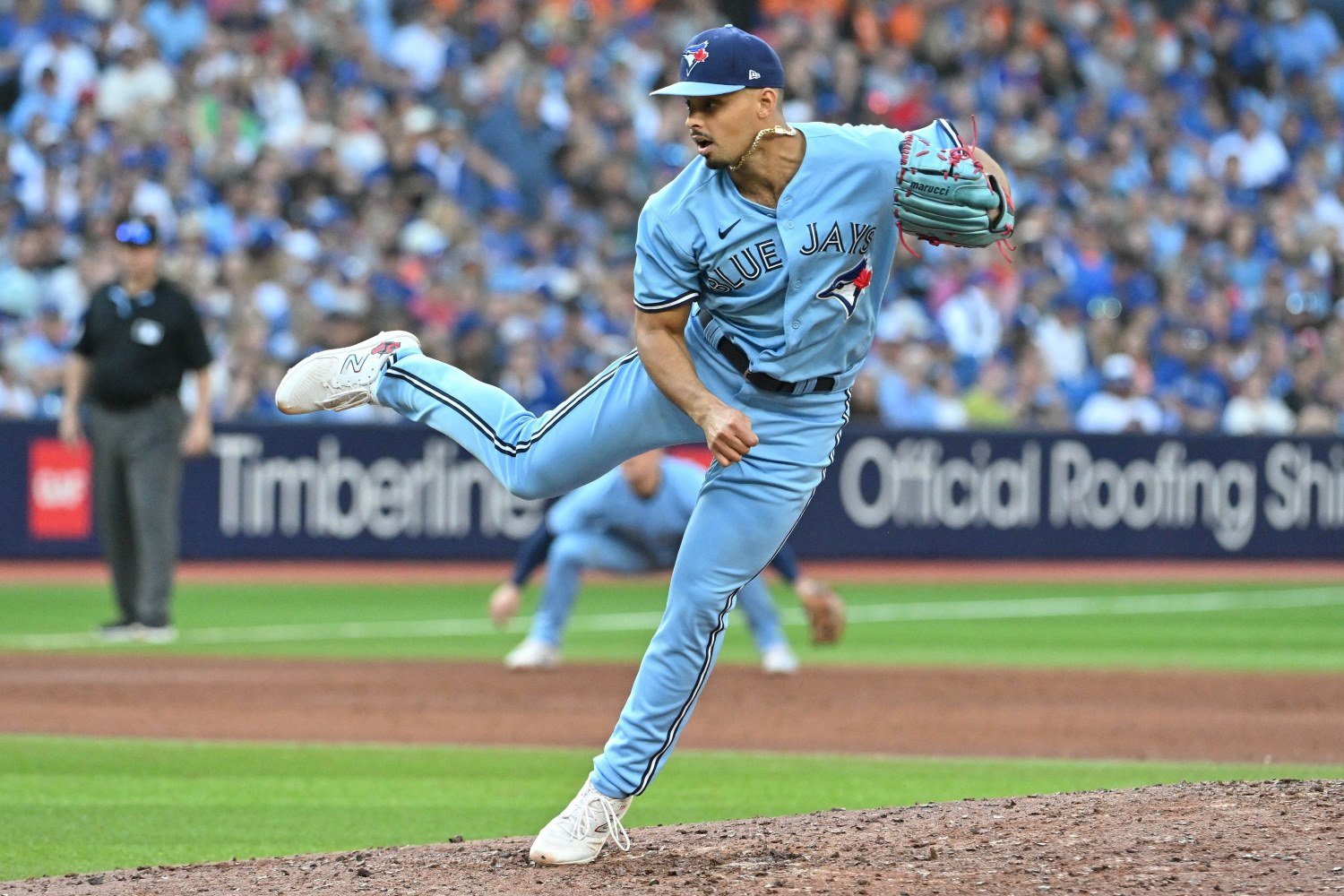 Yesterday, I wrote a short blog post highlighting something that Brewers podcaster Ryan Topp tweeted, alluding to the fact that the list of the top 50 free agents for the 2023/24 offseason via MLB Trade Rumors, has officially reached the point where nearly half of them have been signed by MLB teams. That Top 50 is now a Top 26. In case you are blissfully unaware, the Cubs have signed exactly zero of these players. Is it time to panic? No, I don’t believe so. Instead, I think the culling of names provides ample opportunity to peer through the clutter and see the landscape as it lays out in front of the Cubs front office more clearly. Even a meticulous spender such as Jed Hoyer is probably getting a little restless, knowing that at some point, he will need to sign somebody. Now that some names have come off the board, he’s probably looking at a list of names very similar to what everyone else is studying. As has been noted, the remaining free agents are spread out in a way that is neither top-heavy nor bottom-heavy. If you look at the list cited above in tiers of 1-9, 10-20, 21-30, and 31-50, each of the four tiers has at least five players available. Let’s assume that Jed would like to spread out his expenditures by acquiring one player from each of these tiers. He’s looking for a certain type of contract, and a certain type of player. The fit, as it were, matters. Each player will be graded in terms of two types of fit: Front Office Fit. Will they sign a shorter deal with a higher AAV? Do they have statistical upside? Do they have a high statistical floor? Are they healthy? Do they sell tickets? On-Field Fit. Do they fill current roster needs? Do they have positional diversity? Let’s also assume that these players make sense in concert with one another. Let’s try to connect four of them together and see what we can come up with. Tier One Cody Bellinger I could get a little wild here and try to tie the Cubs to a high-profile pitcher like Blake Snell or Josh Hader. Cubs pitching coach Tommy Hottovy has been publicly clamoring for one starter and two relievers, and the need is certainly there. As the days and months have gone by, though, it seems more and more likely that the one name here who is most likely to sign with the Cubs is Cody Bellinger. If he and his agent Scott Boras were looking for a team to lock him up at an inflated rate, that window looks like it is closed. We are now closer to the window in which the Cubs operate. We have obviously seen Bellinger perform well with this Cubs team. We have seen the team perform well with him on it. While it would be nice if he could recapture some of the pop that he had in his bat circa his MVP-caliber years in LA, even the more modest power numbers he put up last year need to be filled by someone. Power is a glaring weakness on this team as currently constituted. Bellinger is still only 28. He is a Gold Glove-caliber player at both first base and center field, at least short-term. The fans clearly want him back. So let’s grade him. Front Office Fit: B Positive points for most of the statistical outputs, the decrease in his apex of power notwithstanding. Positive points as far as ticket sales. As far as health, the fact that he was mostly healthy last year and is still relatively young has to count in his favor. The downside, if there is one, is that he wants the type of contract that the Cubs don’t like to give out. He wants more more years with a lower AAV, whereas the Cubs have shown they like shorter deals with a higher AAV. In the end, I think they meet in the middle and both sides are satisfied. On-Field Fit: A- This would be an A+ if not for the presence of Pete Crow-Armstrong. The Cubs' top prospect seems likely to be the everyday center fielder at the big-league level at some point this upcoming season. With the corner spots also locked up with Ian Happ and Seiya Suzuki, that leaves the cold corner as the most likely position for Bellinger. Which is fine. More than fine, actually. He’s great there. There are some minor issues, though. One would be that Bellinger’s outfield defense (a skill, presumably, the Cubs would be paying for to some degree) would be of little use. Another would be that Bellinger has indicated that he’d like to continue to play the outfield. Seeing as though PCA could easily not quite be ready, though, those problems could be mitigated in the short term, so the grade only goes down slightly. Tier Two J.D. Martinez Did I mention that power is a glaring weakness on this Cubs team? I did? Ok good, because power is a glaring weakness on this Cubs team. Sure, it’s possible that Happ and Suzuki take their power numbers up a notch. The upside is there. It’s also possible that someone like Christopher Morel could take a huge step forward in 2024. In the meantime, let’s assume they’ve (re-)acquired some left-handed power, in the form of Bellinger. Now, let’s shore up some power from the right side by signing J.D. Martinez. How’s that for a 1-2 punch? Martinez is obviously a little older, but he’s not as old as you may think. He’s 36 and, like Bellinger, coming off a strong one-year prove-it deal, having spent last season hitting 33 home runs with a 135 wRC+ for the Dodgers. He could slide right into the DH role for the Cubs, allowing Morel to take over full-time at third base, something that Cubs manager Craig Counsell has suggested he’d like to see work out. Front Office Fit: A Martinez may want a multi-year deal. He might get one from someone. He might even get one from the Cubs, but if the stars align in a perfect Jed Hoyer sky, Martinez could be looking at another one-year deal, albeit with a higher value than the one he signed last offseason. Even if he requires a two-year commitment or a deal with a player option, he still won’t be commanding anything long-term, which is really what the Cubs are trying to avoid. He certainly has a high statistical floor, having been well above league average as a hitter every season other than 2020--which I personally think should be mostly ignored, especially in the cases where it exists as the sole outlier. I could probably cite health as a concern here, but considering his age, I’m only going to give him the slightest of slight knocks, from an A+ to an A. On-Field Fit: A- As noted, this move really works in conjunction with the Bellinger signing. Power from the left. Power from the right. Done and done. I don’t know if locking up the DH spot is something that Counsell wants, however. Managers like to have some flexibility to rest guys and move the lineup around. For the majority of his managerial career, Counsell hasn’t had the luxury of the DH, having managed exclusively in the NL. When he has had it at his disposal, he has used it both as a way to alternate catchers while still keeping them in the lineup (a.k.a. the David Ross Special), but has also used it for everyday sluggers like Rowdy Tellez and Daniel Vogelbach. In that way, he at least knows how his lineup will be affected. Tier Three Jordan Hicks Let’s get away from the offense with our last two selections. Last year, the Cubs fell out of playoff contention late in the season for one primary reason: they could not hold on to leads. The bullpen was overworked and simply could not sustain their summer success into September. This problem absolutely has to be addressed. Enter the flamethrowing Hicks. His average fastball speed is 100.3 MPH and, although he has some command issues, that is something I’m sure the vaunted Cubs pitch lab would love to work with. Maybe even more interestingly, though, Baseball Savant has him in the 96th percentile for ground ball rate. Any team that signs Hicks is going to want to have exceptional infield defense. Luckily for the Cubs, they have the best middle infield on the planet, in Nico Hoerner and Dansby Swanson. Front Office Fit: A+ Upside. Upside. Upside. That’s probably enough to warrant this grade. He also won’t cost much. MLBTR has him projected at four years and $40 million, but that price has certainly dropped, and will continue to do so the longer he remains on the market. On-Field Fit: B It remains to be seen what, exactly, Counsell is looking for in regard to building a bullpen. My guess is that he enjoys having some velo at the back end, having had both Josh Hader and Devin Williams available to him throughout the past few seasons. But Hicks doesn’t miss bats like those two, so it’s hard to project a comfort level here. Tier Four Sean Manaea I don’t want to say we’re getting desperate here, but I will point out that shopping for Jed Hoyer requires making some very hard decisions. If you want to maintain frugality, sacrifices must be made. Or, more to the point, fringe positions must be filled. Manaea certainly doesn’t have the perceived upside he once had, when he was acquired by the Padres from the A’s in 2022. At various times from 2019 through 2021, he could rightly be described as anything from a potential workhorse to someone with a shaky walk rate, and everything in between. What he is now is a very capable long reliever, with a bunch of upside and an eye on moving back to the rotation full-time. Going back to the discussion regarding the need for Hicks and bullpen help in general, if the Cubs had Manaea available to them last September, he could have very easily made a positive impact and a real difference. To me, this is the type of MLB arm that could make a real difference on this roster, if they miss out on their higher-priced pitching targets. Front Office Fit: A+ If the Cubs can sign him for two years and less than $25 million, they would be crazy not to do it. If it doesn’t work, it doesn’t work, and that is an amount they can eat even in the worst-case scenario. That said, the upside is certainly there for it to work out and then some. On-Field Fit: A This, in conjunction with Hicks, would at the very least give the Cubs some sorely needed bullpen depth. It also provides some insurance in the rotation, should they need that. The only real downside is... well, that it doesn’t work at all, but as a wise man once said, you miss 100% of the shots you don’t take. Who are your four tiered targets left on the market? What do you think of these selections? Jump into the comment section and let us know.
 -
The slow-moving market means that, despite the Cubs' inactivity, there are several remaining free agents whom the team could profitably target. Let's break down the market and identify the best candidates in each segment thereof. That Top 50 is now a Top 26. In case you are blissfully unaware, the Cubs have signed exactly zero of these players. Is it time to panic? No, I don’t believe so. Instead, I think the culling of names provides ample opportunity to peer through the clutter and see the landscape as it lays out in front of the Cubs front office more clearly. Even a meticulous spender such as Jed Hoyer is probably getting a little restless, knowing that at some point, he will need to sign somebody. Now that some names have come off the board, he’s probably looking at a list of names very similar to what everyone else is studying. As has been noted, the remaining free agents are spread out in a way that is neither top-heavy nor bottom-heavy. If you look at the list cited above in tiers of 1-9, 10-20, 21-30, and 31-50, each of the four tiers has at least five players available. Let’s assume that Jed would like to spread out his expenditures by acquiring one player from each of these tiers. He’s looking for a certain type of contract, and a certain type of player. The fit, as it were, matters. Each player will be graded in terms of two types of fit: Front Office Fit. Will they sign a shorter deal with a higher AAV? Do they have statistical upside? Do they have a high statistical floor? Are they healthy? Do they sell tickets? On-Field Fit. Do they fill current roster needs? Do they have positional diversity? Let’s also assume that these players make sense in concert with one another. Let’s try to connect four of them together and see what we can come up with. Tier One Cody Bellinger I could get a little wild here and try to tie the Cubs to a high-profile pitcher like Blake Snell or Josh Hader. Cubs pitching coach Tommy Hottovy has been publicly clamoring for one starter and two relievers, and the need is certainly there. As the days and months have gone by, though, it seems more and more likely that the one name here who is most likely to sign with the Cubs is Cody Bellinger. If he and his agent Scott Boras were looking for a team to lock him up at an inflated rate, that window looks like it is closed. We are now closer to the window in which the Cubs operate. We have obviously seen Bellinger perform well with this Cubs team. We have seen the team perform well with him on it. While it would be nice if he could recapture some of the pop that he had in his bat circa his MVP-caliber years in LA, even the more modest power numbers he put up last year need to be filled by someone. Power is a glaring weakness on this team as currently constituted. Bellinger is still only 28. He is a Gold Glove-caliber player at both first base and center field, at least short-term. The fans clearly want him back. So let’s grade him. Front Office Fit: B Positive points for most of the statistical outputs, the decrease in his apex of power notwithstanding. Positive points as far as ticket sales. As far as health, the fact that he was mostly healthy last year and is still relatively young has to count in his favor. The downside, if there is one, is that he wants the type of contract that the Cubs don’t like to give out. He wants more more years with a lower AAV, whereas the Cubs have shown they like shorter deals with a higher AAV. In the end, I think they meet in the middle and both sides are satisfied. On-Field Fit: A- This would be an A+ if not for the presence of Pete Crow-Armstrong. The Cubs' top prospect seems likely to be the everyday center fielder at the big-league level at some point this upcoming season. With the corner spots also locked up with Ian Happ and Seiya Suzuki, that leaves the cold corner as the most likely position for Bellinger. Which is fine. More than fine, actually. He’s great there. There are some minor issues, though. One would be that Bellinger’s outfield defense (a skill, presumably, the Cubs would be paying for to some degree) would be of little use. Another would be that Bellinger has indicated that he’d like to continue to play the outfield. Seeing as though PCA could easily not quite be ready, though, those problems could be mitigated in the short term, so the grade only goes down slightly. Tier Two J.D. Martinez Did I mention that power is a glaring weakness on this Cubs team? I did? Ok good, because power is a glaring weakness on this Cubs team. Sure, it’s possible that Happ and Suzuki take their power numbers up a notch. The upside is there. It’s also possible that someone like Christopher Morel could take a huge step forward in 2024. In the meantime, let’s assume they’ve (re-)acquired some left-handed power, in the form of Bellinger. Now, let’s shore up some power from the right side by signing J.D. Martinez. How’s that for a 1-2 punch? Martinez is obviously a little older, but he’s not as old as you may think. He’s 36 and, like Bellinger, coming off a strong one-year prove-it deal, having spent last season hitting 33 home runs with a 135 wRC+ for the Dodgers. He could slide right into the DH role for the Cubs, allowing Morel to take over full-time at third base, something that Cubs manager Craig Counsell has suggested he’d like to see work out. Front Office Fit: A Martinez may want a multi-year deal. He might get one from someone. He might even get one from the Cubs, but if the stars align in a perfect Jed Hoyer sky, Martinez could be looking at another one-year deal, albeit with a higher value than the one he signed last offseason. Even if he requires a two-year commitment or a deal with a player option, he still won’t be commanding anything long-term, which is really what the Cubs are trying to avoid. He certainly has a high statistical floor, having been well above league average as a hitter every season other than 2020--which I personally think should be mostly ignored, especially in the cases where it exists as the sole outlier. I could probably cite health as a concern here, but considering his age, I’m only going to give him the slightest of slight knocks, from an A+ to an A. On-Field Fit: A- As noted, this move really works in conjunction with the Bellinger signing. Power from the left. Power from the right. Done and done. I don’t know if locking up the DH spot is something that Counsell wants, however. Managers like to have some flexibility to rest guys and move the lineup around. For the majority of his managerial career, Counsell hasn’t had the luxury of the DH, having managed exclusively in the NL. When he has had it at his disposal, he has used it both as a way to alternate catchers while still keeping them in the lineup (a.k.a. the David Ross Special), but has also used it for everyday sluggers like Rowdy Tellez and Daniel Vogelbach. In that way, he at least knows how his lineup will be affected. Tier Three Jordan Hicks Let’s get away from the offense with our last two selections. Last year, the Cubs fell out of playoff contention late in the season for one primary reason: they could not hold on to leads. The bullpen was overworked and simply could not sustain their summer success into September. This problem absolutely has to be addressed. Enter the flamethrowing Hicks. His average fastball speed is 100.3 MPH and, although he has some command issues, that is something I’m sure the vaunted Cubs pitch lab would love to work with. Maybe even more interestingly, though, Baseball Savant has him in the 96th percentile for ground ball rate. Any team that signs Hicks is going to want to have exceptional infield defense. Luckily for the Cubs, they have the best middle infield on the planet, in Nico Hoerner and Dansby Swanson. Front Office Fit: A+ Upside. Upside. Upside. That’s probably enough to warrant this grade. He also won’t cost much. MLBTR has him projected at four years and $40 million, but that price has certainly dropped, and will continue to do so the longer he remains on the market. On-Field Fit: B It remains to be seen what, exactly, Counsell is looking for in regard to building a bullpen. My guess is that he enjoys having some velo at the back end, having had both Josh Hader and Devin Williams available to him throughout the past few seasons. But Hicks doesn’t miss bats like those two, so it’s hard to project a comfort level here. Tier Four Sean Manaea I don’t want to say we’re getting desperate here, but I will point out that shopping for Jed Hoyer requires making some very hard decisions. If you want to maintain frugality, sacrifices must be made. Or, more to the point, fringe positions must be filled. Manaea certainly doesn’t have the perceived upside he once had, when he was acquired by the Padres from the A’s in 2022. At various times from 2019 through 2021, he could rightly be described as anything from a potential workhorse to someone with a shaky walk rate, and everything in between. What he is now is a very capable long reliever, with a bunch of upside and an eye on moving back to the rotation full-time. Going back to the discussion regarding the need for Hicks and bullpen help in general, if the Cubs had Manaea available to them last September, he could have very easily made a positive impact and a real difference. To me, this is the type of MLB arm that could make a real difference on this roster, if they miss out on their higher-priced pitching targets. Front Office Fit: A+ If the Cubs can sign him for two years and less than $25 million, they would be crazy not to do it. If it doesn’t work, it doesn’t work, and that is an amount they can eat even in the worst-case scenario. That said, the upside is certainly there for it to work out and then some. On-Field Fit: A This, in conjunction with Hicks, would at the very least give the Cubs some sorely needed bullpen depth. It also provides some insurance in the rotation, should they need that. The only real downside is... well, that it doesn’t work at all, but as a wise man once said, you miss 100% of the shots you don’t take. Who are your four tiered targets left on the market? What do you think of these selections? Jump into the comment section and let us know. View full article
-
Earlier today on Twitter, the MLB Trade Rumors account retweeted a post from someone who noted that exactly half of the 50 top Free Agents have been signed so far this off-season. Basically, they noted that 5 of the top 10, 10 of the top 20, 15 of the top 30, and 27 of the top 50 free agents remain unsigned. Free agency has hit the midway point. It should be pointed out that in the short time since that note was posted that the number 36 player on that list, Harrison Bader, has come off the board to the Mets for one year and $10.5M. But still the premise remains. So what does that mean for the Cubs, who are one of only a handful of teams who haven't signed a single major league free agent this off-season? Optimistically, it means there are still plenty of players available, even in the uppermost tier. Pessimistically, it means that half of the best potential free agent pickups have been claimed by other clubs. Realistically, it means that the "race" is halfway over and the Cubs are absolutely playing the role of the tortoise, trailing the field at this point. And from the Cubs fans' point of view, it probably does seem as though the sky is falling, but maybe those fans should look up who (usually) ends up winning the race.


