


Jamie Cameron
-
Posts
214 -
Joined
-
Last visited
Content Type
Profiles
Joomla Posts 1
Chicago Cubs Videos
Chicago Cubs Free Agent & Trade Rumors, Notes, & Tidbits
2026 Chicago Cubs Top Prospects Ranking
News
2023 Chicago Cubs Draft Picks
Guides & Resources
2024 Chicago Cubs Draft Picks
The Chicago Cubs Players Project
2025 Chicago Cubs Draft Pick Tracker
2026 Chicago Cubs Draft Tracker: Picks & Bonuses
Blogs
Events
Forums
Store
Gallery
Everything posted by Jamie Cameron
-
Owen Ayers is proving to be a late-round steal by the Cubs. A catcher with a good blend of hit and power and strong on-base skills to prop up his offensive profile. What's the superpower pushing his production? View full video
-
Owen Ayers is proving to be a late-round steal by the Cubs. A catcher with a good blend of hit and power and strong on-base skills to prop up his offensive profile. What's the superpower pushing his production?
-
Josiah Hartshorn put up eye-popping production in his age-19 season, showcasing a hit/power blend, backed by strong swing decisions, culminating in finishing his season at AA. What might his major-league ETA be?
-
Josiah Hartshorn put up eye-popping production in his age-19 season, showcasing a hit/power blend, backed by strong swing decisions, culminating in finishing his season at AA. What might his major-league ETA be? View full video
-
Despite being diminutive in stature, Kane Kepley packed a punch in the Cubs system in 2026. The second-year pro out of North Carolina established himself as a speed and defense threat with some of the best contact in the minor leagues.
-
Despite being diminutive in stature, Kane Kepley packed a punch in the Cubs system in 2026. The second-year pro out of North Carolina established himself as a speed and defense threat with some of the best contact in the minor leagues. View full video
-
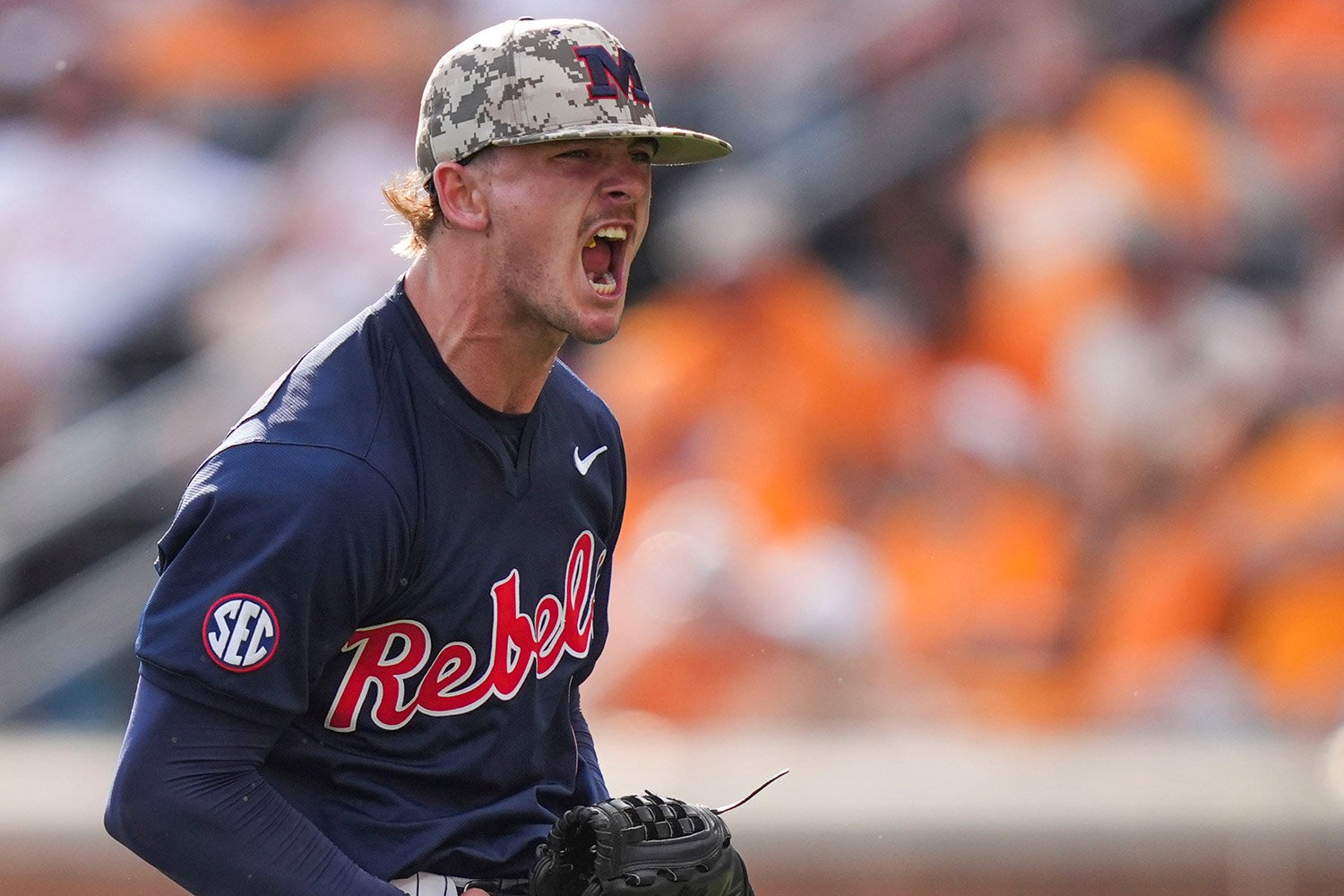 I take MLB mock draft rankings from major industry outlets like MLB Pipeline, ESPN, The Athletic (and many others) to form a consensus board, with a working hypothesis that using this approach will eliminate some of the noise and variance in MLB Draft mock rankings. This is the final mock draft board, locked in just before the 2026 MLB Draft on Saturday, July 11. Round 1: Cade Townsend, RHP, Ole Miss Townsend was a solid prep prospect ahead of the 2024 draft, cracking T200 and T300 lists, but made it to campus at Ole Miss. After splitting time between starting and relieving in his freshman season, he entered 2026 strictly as a starter. It was an explosive start to his season. In his first 35 innings pitched, he managed a 2.32 FIP, striking out over 32% of hitters and walking just 4.8%. Unfortunately, he left his fifth start with shoulder discomfort, missing some time on the shelf. It's an appealing fastball that sits 93-95 mph but can grab 98 mph. It has good carry and plays best at the top of the strike zone. It's supplemented by a nasty curveball, a hammer with a ton of drop that he imparts upwards of 3,000 rpms of spin onto with consistency. Rounding out Townsend's arsenal is a cutter that sits in the high 80s, a slider, and a changeup with good fade. The missed time and smaller frame might give some teams pause, but Townsend has a diverse, exciting arsenal. He managed a 4.13 FIP with a 31.9 K% and a much-improved 8 BB% in 64 IP in 2026. He should go well in July despite not pitching in the Rebs Omaha run. Round 2: Wes Mendes, LHP, Florida State Mendes pitched out of the bullpen in his freshman season at Ole' Miss before transferring to Florida State to be closer to home. He's continued to develop and improve throughout his three collegiate seasons, including as the Seminoles Friday night starter in 2026. Mendes typically works from the third base side of the rubber with a loose, efficient delivery from the left side. He doesn't have overpowering velocity, but he has a well-developed arsenal of pitches to deploy in starts. His fastball sits 92-94 mph, and has grabbed 97 mph. It plays well up in the zone thanks to solid carry. Mendez backs this up with a gyro slider with some depth and lateral tilt, in addition to a curveball with greater depth. His best secondary pitch is his changeup, which sits in the low 80s with a ton of horizontal movement. Mendes sells it well with good arm speed. It's already a plus pitch. In working as a starter, Mendes has steadily improved his repertoire, strikeout rate, and lowered his walk rate. He ended 2026 with a 3.10 FIP, a 32.6 K%, and a 6.5 BB% in 93 innings of work for the Seminoles. Free Agent Compensation Round: Ethan Wachsmann, RHP, Grandview HS, CO Wachsman is a sharp riser on the draft board this spring. A CO prep arm hailing from the same high school program as Kevin Gausman, it's a fascinating blend of size and stuff, with plenty of rawness still present. Wachsman's fastball has touched triple digits already; it'll more routinely sit in the 94-96 mph range in the middle innings. He's added a cutter that sits in the high 80s this season as a bridge to the rest of his arsenal. While the velocity is excellent, there's work to do on both the control and command of his arsenal, which are currently fringe-average. Wachsman will fire off a breaking ball that can be slurvy but exhibits good spin rates. There's a changeup that he sells well with good arm speed and velocity separation from his fastball. It'll be worth monitoring the strike-throwing if a team can pry him away from his Wake Forest commitment, but if he can round out his arsenal with better breaking pitch shapes, he'll be a tough look for hitters. Round 3: Sean Dunlap, C, Crown Point HS, IN After sustaining a broken femur in his sophomore year of high school, Tennessee commit Sean Dunlap has returned to be one of the better prep catching prospects in the class, with a chance to be a power arm/power bat if the development goes well. Hitting from the right side of the plate, Dunlap sets up deep in the batter's box is a fairly narrow base. There's quite a bit of bat waggle pre-pitch that gives way to a powerful, if slightly long swing. There's plus raw power there, for sure, with some doubts about the hit tool due to the swing and the tendency to chase. Dunlap is a tremendous athlete. He's an above-average runner with good reactions and twitch. There's a big arm there, too. While the catching needs some work, it's a profile that would transition well to either third base or a corner outfield spot. Round 4: Matt Ponatoski, SS/RHP, Archbishop Moeller HS, OH Matt Ponatoski is a two-sport high school athlete currently committed to the University of Kentucky for both baseball and football, a fact that undoubtedly clouds his draft status. On the diamond, there are plenty of skills and tools that set him up as a T100 prospect in the class. Ponatoski is a left-handed hitter who sets up with a fairly significant barrel tip in his stance. He had an unbelievable summer in 2025, putting up some of the best hitting numbers in the country with the bat, demonstrating particularly good bat-to-ball skills backed up by an excellent approach in which he walked plenty and rarely expanded the zone. While he doesn't have the explosive athleticism to stick at shortstop, Ponatoski has a double-plus arm (as you might expect from an elite quarterback). He's been over 100 mph with throws from the infield, and in the mid-90s as a right-handed arm off the mound with a big curveball to boot. He's a profile who may accelerate when focusing solely on baseball, but the split focus remains a possibility with his quarterbacking responsibilities. Curious to see the players around the Chicago Cubs' picks in the draft? Click on the button below to view the entire mock draft board!
 -
Image courtesy of © Angelina Alcantar/News Sentinel / USA TODAY NETWORK via Imagn Images I take MLB mock draft rankings from major industry outlets like MLB Pipeline, ESPN, The Athletic (and many others) to form a consensus board, with a working hypothesis that using this approach will eliminate some of the noise and variance in MLB Draft mock rankings. This is the final mock draft board, locked in just before the 2026 MLB Draft on Saturday, July 11. Round 1: Cade Townsend, RHP, Ole Miss Townsend was a solid prep prospect ahead of the 2024 draft, cracking T200 and T300 lists, but made it to campus at Ole Miss. After splitting time between starting and relieving in his freshman season, he entered 2026 strictly as a starter. It was an explosive start to his season. In his first 35 innings pitched, he managed a 2.32 FIP, striking out over 32% of hitters and walking just 4.8%. Unfortunately, he left his fifth start with shoulder discomfort, missing some time on the shelf. It's an appealing fastball that sits 93-95 mph but can grab 98 mph. It has good carry and plays best at the top of the strike zone. It's supplemented by a nasty curveball, a hammer with a ton of drop that he imparts upwards of 3,000 rpms of spin onto with consistency. Rounding out Townsend's arsenal is a cutter that sits in the high 80s, a slider, and a changeup with good fade. The missed time and smaller frame might give some teams pause, but Townsend has a diverse, exciting arsenal. He managed a 4.13 FIP with a 31.9 K% and a much-improved 8 BB% in 64 IP in 2026. He should go well in July despite not pitching in the Rebs Omaha run. Round 2: Wes Mendes, LHP, Florida State Mendes pitched out of the bullpen in his freshman season at Ole' Miss before transferring to Florida State to be closer to home. He's continued to develop and improve throughout his three collegiate seasons, including as the Seminoles Friday night starter in 2026. Mendes typically works from the third base side of the rubber with a loose, efficient delivery from the left side. He doesn't have overpowering velocity, but he has a well-developed arsenal of pitches to deploy in starts. His fastball sits 92-94 mph, and has grabbed 97 mph. It plays well up in the zone thanks to solid carry. Mendez backs this up with a gyro slider with some depth and lateral tilt, in addition to a curveball with greater depth. His best secondary pitch is his changeup, which sits in the low 80s with a ton of horizontal movement. Mendes sells it well with good arm speed. It's already a plus pitch. In working as a starter, Mendes has steadily improved his repertoire, strikeout rate, and lowered his walk rate. He ended 2026 with a 3.10 FIP, a 32.6 K%, and a 6.5 BB% in 93 innings of work for the Seminoles. Free Agent Compensation Round: Ethan Wachsmann, RHP, Grandview HS, CO Wachsman is a sharp riser on the draft board this spring. A CO prep arm hailing from the same high school program as Kevin Gausman, it's a fascinating blend of size and stuff, with plenty of rawness still present. Wachsman's fastball has touched triple digits already; it'll more routinely sit in the 94-96 mph range in the middle innings. He's added a cutter that sits in the high 80s this season as a bridge to the rest of his arsenal. While the velocity is excellent, there's work to do on both the control and command of his arsenal, which are currently fringe-average. Wachsman will fire off a breaking ball that can be slurvy but exhibits good spin rates. There's a changeup that he sells well with good arm speed and velocity separation from his fastball. It'll be worth monitoring the strike-throwing if a team can pry him away from his Wake Forest commitment, but if he can round out his arsenal with better breaking pitch shapes, he'll be a tough look for hitters. Round 3: Sean Dunlap, C, Crown Point HS, IN After sustaining a broken femur in his sophomore year of high school, Tennessee commit Sean Dunlap has returned to be one of the better prep catching prospects in the class, with a chance to be a power arm/power bat if the development goes well. Hitting from the right side of the plate, Dunlap sets up deep in the batter's box is a fairly narrow base. There's quite a bit of bat waggle pre-pitch that gives way to a powerful, if slightly long swing. There's plus raw power there, for sure, with some doubts about the hit tool due to the swing and the tendency to chase. Dunlap is a tremendous athlete. He's an above-average runner with good reactions and twitch. There's a big arm there, too. While the catching needs some work, it's a profile that would transition well to either third base or a corner outfield spot. Round 4: Matt Ponatoski, SS/RHP, Archbishop Moeller HS, OH Matt Ponatoski is a two-sport high school athlete currently committed to the University of Kentucky for both baseball and football, a fact that undoubtedly clouds his draft status. On the diamond, there are plenty of skills and tools that set him up as a T100 prospect in the class. Ponatoski is a left-handed hitter who sets up with a fairly significant barrel tip in his stance. He had an unbelievable summer in 2025, putting up some of the best hitting numbers in the country with the bat, demonstrating particularly good bat-to-ball skills backed up by an excellent approach in which he walked plenty and rarely expanded the zone. While he doesn't have the explosive athleticism to stick at shortstop, Ponatoski has a double-plus arm (as you might expect from an elite quarterback). He's been over 100 mph with throws from the infield, and in the mid-90s as a right-handed arm off the mound with a big curveball to boot. He's a profile who may accelerate when focusing solely on baseball, but the split focus remains a possibility with his quarterbacking responsibilities. Curious to see the players around the Chicago Cubs' picks in the draft? Click on the button below to view the entire mock draft board! View full article
-
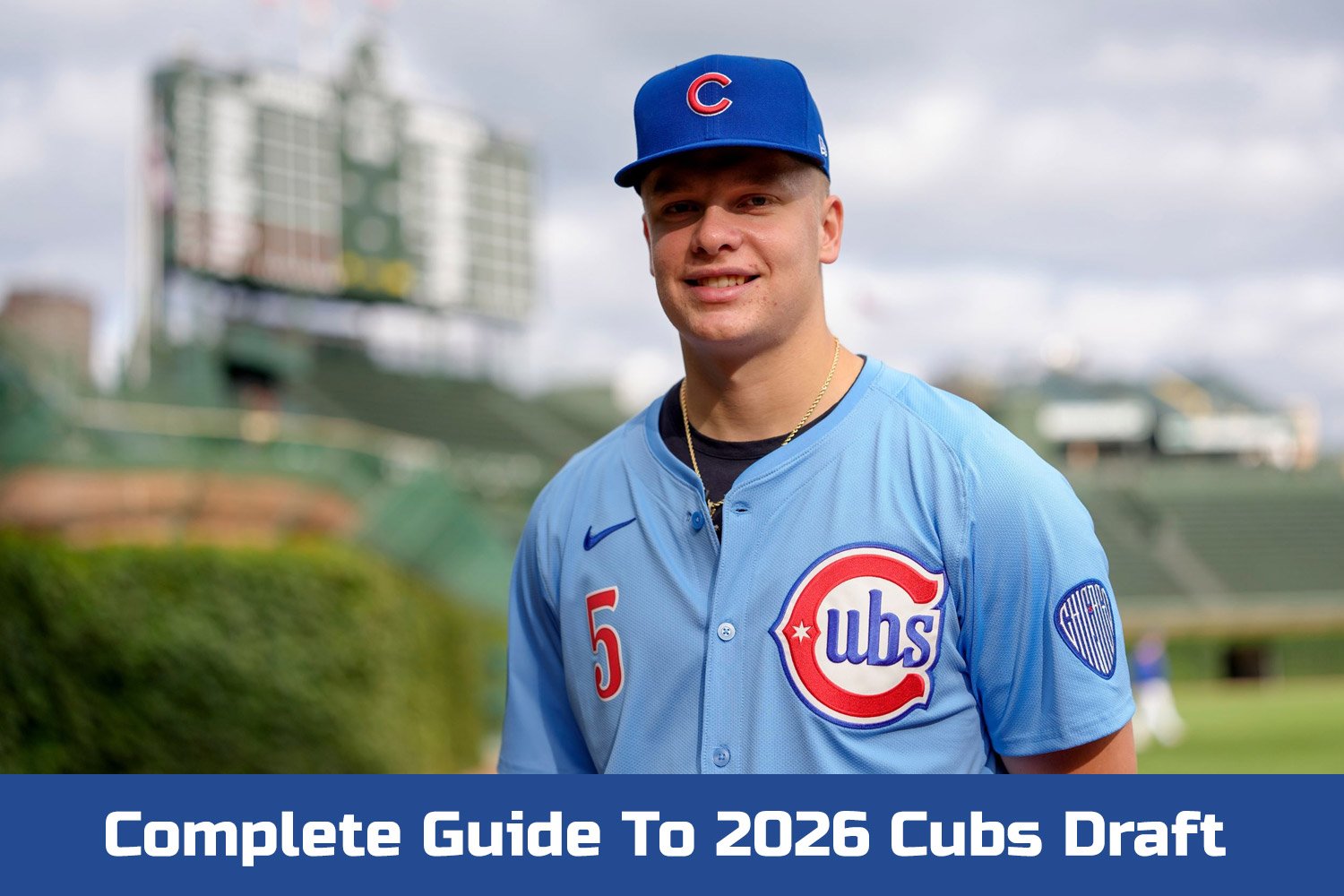 This guide is a comprehensive look at the 2026 MLB Draft with a focus on the Chicago Cubs. You’ll find a list of key dates for the draft cycle, including the release of bonus pools and pick values, the MLB Draft combine, and a breakdown of the draft itself. Additionally, you’ll find an overview of the draft combine and MLB draft weekend, in addition to links to other important draft resources like the consensus board. Cubs 2025 MLB Draft Recap The Cubs opened the 2025 draft by selecting Ethan Conrad, a complete outfielder who transferred to Wake Forest for his junior season and would have been selected sooner, but for a season-ending shoulder injury. He was followed by Kane Kepler, a diminutive leadoff hitter out of North Carolina with an excellent hit tool. The Cubs took their first arm in Dominick Reid out of Abilene Christian in the third round. They rounded out their first five rounds by selecting prep righty Caleb Wing in the fourth round (121st) and University of Alabama outfielder Kade Snell in the fifth, allowing them to go significantly over slot for prep outfielder Josiah Hartshorn in the sixth round. When Is The 2026 MLB Draft? April 1st 2026 - MLB announced draft bonus pools and pick values June 2026 - MLB Draft Combine (Chase Field, Arizona) July 11th - 12th: 2026 MLB Draft (Philadelphia, PA) July 11th - Rounds 1-4 (time TBA) July 12th - Round 5 through Round 20 (time TBA) 2026 MLB Draft Combine The draft combine is a newer event that started in the 2021 draft cycle. Held over a five-day period around a month before the draft itself, it serves as an opportunity for prospects to showcase their talents and boost their draft stock, while giving organizations better access to potential picks. In addition to medical examinations and educational programming, players have an opportunity to meet with teams in advance of the draft. Additionally, there are a number of televised workouts, featuring infield and outfield drills, batting practice for hitters, and bullpens for pitchers, all of which are tracked and underpinned by Statcast data. There is an incentive for players to attend and complete medicals, as prospects are guaranteed 75 percent of their draft slot bonus if they participate and complete medicals. How Many Rounds Are There In The MLB Draft? There is yet another design shift ahead of the 2026 draft cycle. It was shortened from a three-day event to a two-day event. Previously, day one included rounds 1 through the supplemental second round, day two included rounds 3 through 10, and day three included rounds 10 through 20. For the 2026 cycle, day one will be adjusted to include rounds one through four (~135 picks). The draft will conclude on day two with rounds five through twenty. MLB Draft Day One Explained The first day of the draft can be chaotic, as additional rounds and picks are in play beyond rounds one and two. The top of the draft (top 6 picks) is now determined by the draft lottery. Every non-playoff team is entered into the lottery, giving them the opportunity to move up in the draft order. Non-lottery-eligible teams are picked in the order they are eliminated from the postseason, with regular-season record ties broken. After the first round, prospect promotion incentive picks take place. If an eligible player wins Rookie of the Year, they earn their organization an extra pick immediately after the completion of the first round. Next come compensation picks, where teams who extend the qualifying offer to a player (who rejects it) earn an additional draft pick. Compensation pick positions depend on the contract size signed by the player rejecting the qualifying offer, as well as the payroll of the organization receiving them (there are additional compensation picks after competitive balance round B and the fourth round). After any compensation picks, comes the competitive balance round A. Teams that have one of the ten smallest markets or ten smallest revenue pools receive an additional pick in round A or round B, on an annually rotating basis. The first day of the draft is capped by the second round, competitive balance round B, and the third and fourth rounds, which typically takes us through approximately 135 picks. MLB Draft Bonus Pool Allocations & Pick Values Prior to the draft, in April, MLB announces each team's bonus pool for the forthcoming draft cycle and the value of every pick in the top 10 rounds. Each pick in the first ten rounds of the draft is assigned a value, with the total of the slots for the picks each organization has in the top ten rounds comprising their total ‘bonus pool’. Organizations can sign a player to a deal greater than a slot or less than a slot, depending on their negotiations with the player, so it’s useful to think of the slots as ‘guidelines’ and little more. Organizations are allowed to spend up to 5% more than their total pool without incurring a penalty, a choice many teams take advantage of. The Twins and the Rockies are the only teams that have never spent any overage on their bonus pool. Any amount up to 5% over the pool is met with a 75% tax on the overage. If a team spends between 5-10% more than their pool, the penalty is 75% tax on the overage and loss of a future first-rounder. Any team that exceeds its bonus pool by more than 10% up to 15% pays 100% tax on the overage and will lose a first and second-round future pick. Any team that exceeds its bonus pool by more than 15% loses two future first-round picks in addition to paying 100% tax on the overage. Rounds 11-20 work differently from the first half of the draft. These picks do not come with an assigned slot value. Teams can spend up to $150,000 per pick without that spending coming out of their bonus pool. If they spend over that amount, any overage will be deducted from their bonus pool. For example, an 11th-round pick signing for $250,000 will result in $100,000 being subtracted from that team’s bonus pool. This is where some financial strategy comes into play. Often, teams will look to accrue some ‘savings’ from their bonus pool so they can spend over the maximum of $150,000 for a prospect in the second half of the draft. NOTE: Slot values increased by 2.5% from 2025 to 2026. View Cubs Mock Draft Board Cubs 2026 MLB Draft Bonus Pool Round Pick Slot Value Round 1 23rd $3,947,600 Round 2 62nd $1,487,200 Free Agent Compensation (Tucker) 75th $1,120,900 Round 3 98th $800,000 Round 4 126th $609,200 Round 5 159th $441,300 Round 6 188th $344,400 Round 7 217th $272,000 Round 8 247th $224,100 Round 9 277th $204,100 Round 10 307th $193,300 Total Bonus Pool Allocation $9,644,100 (20th in MLB)
 -
Image courtesy of © Rick Cinclair/Telegram & Gazette / USA TODAY NETWORK via Imagn Images I take MLB mock draft rankings from major industry outlets like MLB Pipeline, ESPN, The Athletic (and many others) to form a consensus board, with a working hypothesis that using this approach will eliminate some of the noise and variance in MLB Draft mock rankings. The Chicago Cubs’ first five picks are: Round 1: 23rd Overall Round 2: 62nd Overall Compensation Round: 75th Overall Round 3: 98th Overall Round 4: 126th Overall Round 1: Brody Bumila, LHP, Bishop Feehan HS (MA) Draft aficionados will be used to the concept of a cold-weather arm rising throughout the cycle. They don't all look like Brody Bumila, though. The 6'9 two-sport star committed to Texas has been making waves this spring. As you might expect from such a unique frame, there's unique stuff to match. Bumila relies on a fastball that has been as high as 101 mph. It sits in the high 90s, coming at hitters from a drop and drive delivery and a lower launch, with good ride at the top of the zone, making it a nightmare for prep hitters in MA. There's plenty of work to do on the secondary arsenal. Bumila relies most heavily on a changeup, thrown in the low 80s, but he'll mix in a slider and a curveball, too. This is a size and stuff over polish prep arm in what could be one of the higher risk, higher reward plays of the entire class. Round 2: Blake Bryant, RHP, Citizens Christian Academy (GA) Bryant is a projectable prep righty standing 6'5, 180 pounds, currently committed to Clemson. He's jumped up boards throughout the cycle thanks to consistently outstanding performances on the summer circuit. Bryant's velocity has ticked up in the last 12 months. His fastball is up to 96 mph with run and ride. He pairs it with a sweeper in the low 80s, a curveball that sits in the high 70s, and a split change that's a bit firm currently. The command can come and go a bit with Bryant, which is typical for a lanky prep arm. It's a strong arsenal on which to build. It's easy to envision him being a problem when he fills out a bit more and polishes his repertoire. Compensation Round: Ruger Riojas, RHP, Texas Riojas pitched for two seasons at UTSA prior to transferring to Texas. He's continued to take steps forward in his two seasons with the Longhorns, capped by an excellent 2026 season. Riojas is undersized for a starter at 6'0, 195 pounds. He'll also be 23 on draft day, one of the older prospects selected in the entire class. His fastball sits 94-96 mph with good carry and will peak at 97-98 mph. It's backed up by a splitter that sits in the mid-80s, a cutter, a sweeper, and a curveball to round out a well-developed arsenal. Riojas managed a strikeout rate of 35.5% in 2026, combined with an impressive 6.2% walk rate in 81.2 innings. He'll be drafted in the first 3 rounds as a priority senior sign that will allow an organization some financial flexibility with other early picks. Round 3: Carson Kerce, SS, Georgia Tech Kerce is one of the most improved prospects in 2026. He's a good example of a collegiate prospect who has a ton of baseball skill and is light on top-end tools. Kerce hits from the right side, with a marginally open stance and a higher hand set. It's excellent bat-to-ball skills, with an overall contact rate in the mid-80s and an in-zone rate north of 90%. Add to this Kerce's lack of chase (~18%) and there's a ton of floor through his on-base ability. He's added extra base thump this year, barrelling up more pitches, resulting in his home run total jumping from 4 to 11. While it'll never be significant power at the next level (45 grade), Kerce managed 44 extra base hits for Georgia Tech in 2026. Kerce probably doesn't have the dynamism and explosiveness to stick at shortstop, but he's a sure-handed defender with a good arm and solid mobility. Second base might be a good fit. Kerce managed a .384/.473/.679 line with a 12.2 BB%, 13.3 K%, and 147 wRC+ in 278 plate appearances in 2026. Curious to see the players around the Chicago Cubs' picks in the draft? Click on the button below to view the entire mock draft board! View full article
-
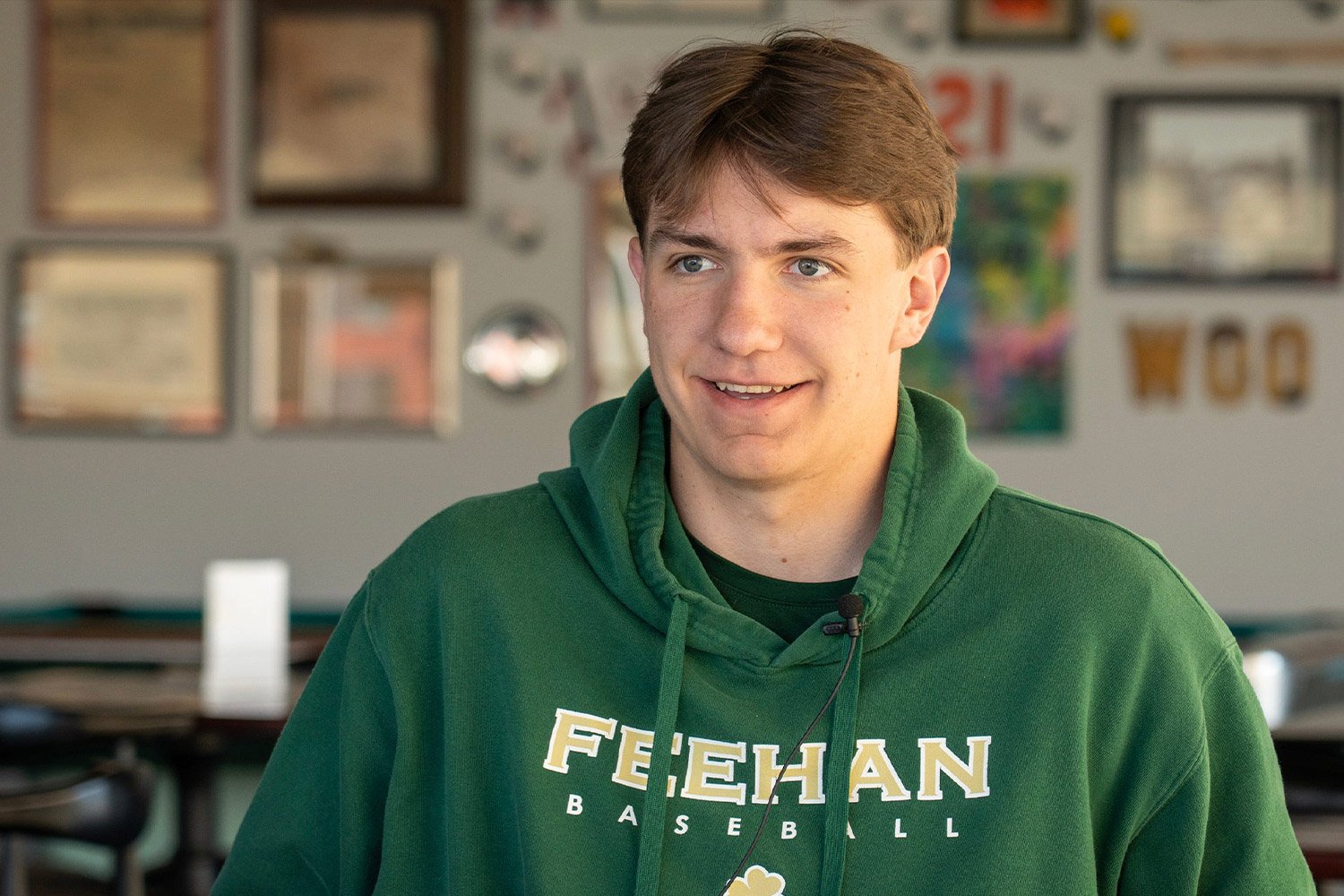 I take MLB mock draft rankings from major industry outlets like MLB Pipeline, ESPN, The Athletic (and many others) to form a consensus board, with a working hypothesis that using this approach will eliminate some of the noise and variance in MLB Draft mock rankings. The Chicago Cubs’ first five picks are: Round 1: 23rd Overall Round 2: 62nd Overall Compensation Round: 75th Overall Round 3: 98th Overall Round 4: 126th Overall Round 1: Brody Bumila, LHP, Bishop Feehan HS (MA) Draft aficionados will be used to the concept of a cold-weather arm rising throughout the cycle. They don't all look like Brody Bumila, though. The 6'9 two-sport star committed to Texas has been making waves this spring. As you might expect from such a unique frame, there's unique stuff to match. Bumila relies on a fastball that has been as high as 101 mph. It sits in the high 90s, coming at hitters from a drop and drive delivery and a lower launch, with good ride at the top of the zone, making it a nightmare for prep hitters in MA. There's plenty of work to do on the secondary arsenal. Bumila relies most heavily on a changeup, thrown in the low 80s, but he'll mix in a slider and a curveball, too. This is a size and stuff over polish prep arm in what could be one of the higher risk, higher reward plays of the entire class. Round 2: Blake Bryant, RHP, Citizens Christian Academy (GA) Bryant is a projectable prep righty standing 6'5, 180 pounds, currently committed to Clemson. He's jumped up boards throughout the cycle thanks to consistently outstanding performances on the summer circuit. Bryant's velocity has ticked up in the last 12 months. His fastball is up to 96 mph with run and ride. He pairs it with a sweeper in the low 80s, a curveball that sits in the high 70s, and a split change that's a bit firm currently. The command can come and go a bit with Bryant, which is typical for a lanky prep arm. It's a strong arsenal on which to build. It's easy to envision him being a problem when he fills out a bit more and polishes his repertoire. Compensation Round: Ruger Riojas, RHP, Texas Riojas pitched for two seasons at UTSA prior to transferring to Texas. He's continued to take steps forward in his two seasons with the Longhorns, capped by an excellent 2026 season. Riojas is undersized for a starter at 6'0, 195 pounds. He'll also be 23 on draft day, one of the older prospects selected in the entire class. His fastball sits 94-96 mph with good carry and will peak at 97-98 mph. It's backed up by a splitter that sits in the mid-80s, a cutter, a sweeper, and a curveball to round out a well-developed arsenal. Riojas managed a strikeout rate of 35.5% in 2026, combined with an impressive 6.2% walk rate in 81.2 innings. He'll be drafted in the first 3 rounds as a priority senior sign that will allow an organization some financial flexibility with other early picks. Round 3: Carson Kerce, SS, Georgia Tech Kerce is one of the most improved prospects in 2026. He's a good example of a collegiate prospect who has a ton of baseball skill and is light on top-end tools. Kerce hits from the right side, with a marginally open stance and a higher hand set. It's excellent bat-to-ball skills, with an overall contact rate in the mid-80s and an in-zone rate north of 90%. Add to this Kerce's lack of chase (~18%) and there's a ton of floor through his on-base ability. He's added extra base thump this year, barrelling up more pitches, resulting in his home run total jumping from 4 to 11. While it'll never be significant power at the next level (45 grade), Kerce managed 44 extra base hits for Georgia Tech in 2026. Kerce probably doesn't have the dynamism and explosiveness to stick at shortstop, but he's a sure-handed defender with a good arm and solid mobility. Second base might be a good fit. Kerce managed a .384/.473/.679 line with a 12.2 BB%, 13.3 K%, and 147 wRC+ in 278 plate appearances in 2026. Curious to see the players around the Chicago Cubs' picks in the draft? Click on the button below to view the entire mock draft board!
 -
 It's time to check back in with another Cubs mock. The MLB Draft is just five weeks away. This class is as muddled as any I've covered, though it's plenty deep in talent. You can find our mock consensus board here. Let's check in on some player profiles it's currently mocking to the Cubs with their first few picks in July. At #23, the Cubs Select UCLA RHP Logan Reddemann Reddemann has surged up draft boards after not featuring prominently on pre- or early-season lists. A transfer from San Diego, the 6-foot-2 righty has turned a developmental corner for an outstanding UCLA team and is putting it all together in his draft-eligible junior season. Reddemann has a little bit of a jerky delivery to the plate. Even so, he keeps the baseball well-hidden behind his frame until release, creating some deception for hitters and making the ball difficult to track. Reddemann is an excellent strike-thrower, which (in concert with an uptick in velocity this year) has left B1G Ten hitters with little chance against his stuff. Reddemann relies on a fastball that sits 94-96 MPH, but he can grab 98 MPH. There's a sinker and a cutter too, to round out a trio of fastballs. He also has a slider, which he throws in the low 80s (although it tends to blur with his cutter), and a high-70s curveball to round out a diverse arsenal. He's striking out over 305% of hitters and walking less than 5%. That's given him a chance to be a top-20 pick. At #62, the Cubs Select Georgia Prep Righty Blake Bryant Standing 6-foot-5 and weighing 180 pounds, Bryant is a projectable prep righty, currently committed to Clemson. He's jumped up boards throughout the cycle thanks to consistently outstanding performances on the summer circuit. Bryant's velocity has ticked up in the last 12 months. His fastball is up to 96 MPH with run and ride. He pairs it with a sweeper in the low 80s; a curveball that sits in the high 70s; and a split-change that's a bit firm. The command can come and go a bit with Bryant, which is typical for a lanky prep arm. It's a strong arsenal on which to build. It's easy to envision him being a problem when he fills out a bit more and polishes his repertoire. At #75, the Cubs Select Virginia Tech RHP Brett Renfrow Renfrow was previously a two-way player who began to focus solely on pitching when he got to campus at Virginia Tech. This is a class draft 'type', a college starter where stuff and ingredients don't line up neatly with outcomes. I'd classify Renfrow as someone with a significant 'up arrow' this spring, though. It's a good frame and he's surpassed 70 innings for the third consecutive season. Renfrow has slowly ticked up his strikeout rate while reducing his walk rate, which is exactly what you want to see. In terms of stuff, the fastball is good. It sits 94 and has been up to 97, playing well at the top of the zone. There's a slider/cutter hybrid he throws in the upper 80s; a curveball with plenty of depth that sits in the low 80s; and a changeup with good horizontal action. Renfrow is a pitcher you can see making significant strides in a pro organization. There are plenty of starter traits here. He's pushed himself up from top-100 consideration to the 50-75 range. At #98, the Cubs Select Florida State 1B Myles Bailey Bailey has the best raw power in the entire class. His average EV and EV90 are top of the scale. He was torching non-conference play to the tune of 13 home runs (a .913 SLG) in his first 26 games before a serious ankle injury resulted in surgery and the end of his season. Raw power isn't Bailey's only asset. He's a good athlete and has an excellent approach. He followed up a 13.7% walk rate in 2025 with a 28.7% mark in 2026. He just doesn't expand the strike zone, with a 98th-percentile chase rate. The profile does come with serious swing-and-miss concerns, however. Bailey registered a strikeout rate over 30% in 2025 and has some of the worst whiff and in-zone whiff percentages in D1 baseball. He's likely destined to stick at first base in pro ball. He has an unusually diverse range of outcomes for a college prospect, but the power upside is huge.
 -
It's time to check back in with another Cubs mock. The MLB Draft is just five weeks away. This class is as muddled as any I've covered, though it's plenty deep in talent. You can find our mock consensus board here. Let's check in on some player profiles it's currently mocking to the Cubs with their first few picks in July. At #23, the Cubs Select UCLA RHP Logan Reddemann Reddemann has surged up draft boards after not featuring prominently on pre- or early-season lists. A transfer from San Diego, the 6-foot-2 righty has turned a developmental corner for an outstanding UCLA team and is putting it all together in his draft-eligible junior season. Reddemann has a little bit of a jerky delivery to the plate. Even so, he keeps the baseball well-hidden behind his frame until release, creating some deception for hitters and making the ball difficult to track. Reddemann is an excellent strike-thrower, which (in concert with an uptick in velocity this year) has left B1G Ten hitters with little chance against his stuff. Reddemann relies on a fastball that sits 94-96 MPH, but he can grab 98 MPH. There's a sinker and a cutter too, to round out a trio of fastballs. He also has a slider, which he throws in the low 80s (although it tends to blur with his cutter), and a high-70s curveball to round out a diverse arsenal. He's striking out over 305% of hitters and walking less than 5%. That's given him a chance to be a top-20 pick. At #62, the Cubs Select Georgia Prep Righty Blake Bryant Standing 6-foot-5 and weighing 180 pounds, Bryant is a projectable prep righty, currently committed to Clemson. He's jumped up boards throughout the cycle thanks to consistently outstanding performances on the summer circuit. Bryant's velocity has ticked up in the last 12 months. His fastball is up to 96 MPH with run and ride. He pairs it with a sweeper in the low 80s; a curveball that sits in the high 70s; and a split-change that's a bit firm. The command can come and go a bit with Bryant, which is typical for a lanky prep arm. It's a strong arsenal on which to build. It's easy to envision him being a problem when he fills out a bit more and polishes his repertoire. At #75, the Cubs Select Virginia Tech RHP Brett Renfrow Renfrow was previously a two-way player who began to focus solely on pitching when he got to campus at Virginia Tech. This is a class draft 'type', a college starter where stuff and ingredients don't line up neatly with outcomes. I'd classify Renfrow as someone with a significant 'up arrow' this spring, though. It's a good frame and he's surpassed 70 innings for the third consecutive season. Renfrow has slowly ticked up his strikeout rate while reducing his walk rate, which is exactly what you want to see. In terms of stuff, the fastball is good. It sits 94 and has been up to 97, playing well at the top of the zone. There's a slider/cutter hybrid he throws in the upper 80s; a curveball with plenty of depth that sits in the low 80s; and a changeup with good horizontal action. Renfrow is a pitcher you can see making significant strides in a pro organization. There are plenty of starter traits here. He's pushed himself up from top-100 consideration to the 50-75 range. At #98, the Cubs Select Florida State 1B Myles Bailey Bailey has the best raw power in the entire class. His average EV and EV90 are top of the scale. He was torching non-conference play to the tune of 13 home runs (a .913 SLG) in his first 26 games before a serious ankle injury resulted in surgery and the end of his season. Raw power isn't Bailey's only asset. He's a good athlete and has an excellent approach. He followed up a 13.7% walk rate in 2025 with a 28.7% mark in 2026. He just doesn't expand the strike zone, with a 98th-percentile chase rate. The profile does come with serious swing-and-miss concerns, however. Bailey registered a strikeout rate over 30% in 2025 and has some of the worst whiff and in-zone whiff percentages in D1 baseball. He's likely destined to stick at first base in pro ball. He has an unusually diverse range of outcomes for a college prospect, but the power upside is huge. View full article
-
Welcome to the 2026 MLB Consensus Draft Board. This is the fifth version of the board, which started in 2022 as a top 30. Since then, it’s expanded to around 150 players on an annual basis, featuring at eight different team sites. So what is the Consensus Board? How is it made? How should it be used? The concept is loosely based on Arif Hasan’s NFL Consensus Board. It’s meant to be a tool for folks getting interested in the MLB Draft. As I was learning about the draft, I struggled to navigate wildly varied rankings and evaluations of players. The Consensus Board takes every major publicly available board and combines them into a consensus ranking, eliminating some of the noise and variance of an extremely challenging evaluation process. We’ve found this process to be useful in ranking players in appropriate ranges through around the first five rounds of the draft. On the board, you’ll find player names, handedness, listed height and weight, age, and a write-up, walking through their strengths and opportunities as a prospect. As we go through the cycle, these will be updated with tweaks, final college stats, etc. Every time a major outlet (Baseball America, ESPN, The Athletic, etc.) releases an updated list, the consensus ranking shifts. As such, the board is a lagging reflection of what the industry thinks of the class and its key players. The final Consensus Board will incorporate at least 10 other boards as inputs. New MLB Mock Draft Board Features There are a few important features to point out to help you navigate the board. There’s a search bar to help you find players of interest. If you click ‘expand’ the board will focus on the writeup you are engaged with, in addition to one immediately above it and one immediately below it. Additionally, you’ll find the logo of your team next to their draft slots to help understand where they are picking. There will be a player slotted there, based on their consensus ranking. Rather than using that ranking as an indicator of who they might actually pick, it’s more useful to use it as a proxy for what caliber of talent is available at that slot. We’ll dig in deeper to team-specific mock drafts later in the cycle. The last important note is that this year the board features ‘push’ updates. It updates automatically every hour. The board is typically updated with new write-ups five days per week, so check back regularly for updates. At #23, The Chicago Cubs Select: Logan Reddemann, RHP, UCLA Reddemann has surged up draft boards, after not featuring prominently on pre- or early-season lists. A transfer from San Diego, the 6-foot-2 righty has turned a developmental corner for an outstanding UCLA team and is putting it all together in his draft-eligible junior season. Reddeman has a little bit of a jerky delivery to the plate. Even so, he keeps the baseball well hidden behind his frame until release, creating some deception for hitters and making the ball difficult to track. Reddemann is an excellent strike thrower, which (in concert with an uptick in velocity this year) has left Big Ten hitters with little chance against his stuff. Reddemann relies on a fastball that sits 94-96 mph, but can grab 98 mph. There's a sinker and a cutter, too, to round out a trio of fastballs. He has a slider, which he throws in the low 80s, although it tends to blur with his cutter, and a high-70s curveball to round out a diverse arsenal of pitches. He's striking out over 30% of hitters through mid-April, and walking less than 5%. If that trend continues, he has a chance to be a top-20 pick. Though it's in the same range of the first round, this would be a different type of pick than Jordan Wicks was in 2021; Reddemann is more of a high-upside power arm. View full article
-
- 1
-

-
 Welcome to the 2026 MLB Consensus Draft Board. This is the fifth version of the board, which started in 2022 as a top 30. Since then, it’s expanded to around 150 players on an annual basis, featuring at eight different team sites. So what is the Consensus Board? How is it made? How should it be used? The concept is loosely based on Arif Hasan’s NFL Consensus Board. It’s meant to be a tool for folks getting interested in the MLB Draft. As I was learning about the draft, I struggled to navigate wildly varied rankings and evaluations of players. The Consensus Board takes every major publicly available board and combines them into a consensus ranking, eliminating some of the noise and variance of an extremely challenging evaluation process. We’ve found this process to be useful in ranking players in appropriate ranges through around the first five rounds of the draft. On the board, you’ll find player names, handedness, listed height and weight, age, and a write-up, walking through their strengths and opportunities as a prospect. As we go through the cycle, these will be updated with tweaks, final college stats, etc. Every time a major outlet (Baseball America, ESPN, The Athletic, etc.) releases an updated list, the consensus ranking shifts. As such, the board is a lagging reflection of what the industry thinks of the class and its key players. The final Consensus Board will incorporate at least 10 other boards as inputs. New MLB Mock Draft Board Features There are a few important features to point out to help you navigate the board. There’s a search bar to help you find players of interest. If you click ‘expand’ the board will focus on the writeup you are engaged with, in addition to one immediately above it and one immediately below it. Additionally, you’ll find the logo of your team next to their draft slots to help understand where they are picking. There will be a player slotted there, based on their consensus ranking. Rather than using that ranking as an indicator of who they might actually pick, it’s more useful to use it as a proxy for what caliber of talent is available at that slot. We’ll dig in deeper to team-specific mock drafts later in the cycle. The last important note is that this year the board features ‘push’ updates. It updates automatically every hour. The board is typically updated with new write-ups five days per week, so check back regularly for updates. At #23, The Chicago Cubs Select: Logan Reddemann, RHP, UCLA Reddemann has surged up draft boards, after not featuring prominently on pre- or early-season lists. A transfer from San Diego, the 6-foot-2 righty has turned a developmental corner for an outstanding UCLA team and is putting it all together in his draft-eligible junior season. Reddeman has a little bit of a jerky delivery to the plate. Even so, he keeps the baseball well hidden behind his frame until release, creating some deception for hitters and making the ball difficult to track. Reddemann is an excellent strike thrower, which (in concert with an uptick in velocity this year) has left Big Ten hitters with little chance against his stuff. Reddemann relies on a fastball that sits 94-96 mph, but can grab 98 mph. There's a sinker and a cutter, too, to round out a trio of fastballs. He has a slider, which he throws in the low 80s, although it tends to blur with his cutter, and a high-70s curveball to round out a diverse arsenal of pitches. He's striking out over 30% of hitters through mid-April, and walking less than 5%. If that trend continues, he has a chance to be a top-20 pick. Though it's in the same range of the first round, this would be a different type of pick than Jordan Wicks was in 2021; Reddemann is more of a high-upside power arm.
 -
Image courtesy of Thieres Rabelo In episode 86 of Destination: The Show, Jeremy and Jamie do a full recap of the 2025 MLB Draft. They dig in on the primary picks for the Blue Jays, Padres, and Red Sox before spending some time on the Cubs. Is Chicago leaning into more college upside and volatility than other teams? The guys spend a good amount of time examining the Brewers draft, one of Jamie’s favorites, in which the Brewers took a typical power-hitting corner infield bat before loading up on interesting prep profiles. Finally, they review a tweaked approach from the Twins, who leaned into more volatility and upside with the college arms, digging in specifically on Riley Quick, James Ellwanger, Jason Reitz, and Matt Barr. 0:00 Intro 4:25 Housekeeping 7:50 Episode 86 coverage plan 8:30 Toronto Blue Jays 17:59 San Diego Padres 21:40 Boston Red Sox 27:53 Chicago Cubs 38:48 Milwaukee Brewers 52:11 Minnesota Twins 53:36 Marek Houston 1:00:19 Quentin Young 1:04:20 Riley Quick 1:11:00 James Ellwanger, Jason Reitz, Matt Barr 1:21:23 Closing You can support the show by downloading it from your preferred podcast platform, including iTunes and Spotify. If you enjoy our content, consider leaving us a five-star rating and review, and also share or retweet DTS-related content. You can follow us on Twitter @DTS_POD1, @Jeremynygaard, @J_D_Cameron, and @TheodoreTollef1. We’re now on Bluesky @destinationtheshow.bsky.social. You can also find full episodes and clips of our shows on our YouTube page @DestinationTheShow. View full article
-
Destination, The Show: Episode 86. 2025 MLB Draft Review
Jamie Cameron posted an article in Podcasts
 In episode 86 of Destination: The Show, Jeremy and Jamie do a full recap of the 2025 MLB Draft. They dig in on the primary picks for the Blue Jays, Padres, and Red Sox before spending some time on the Cubs. Is Chicago leaning into more college upside and volatility than other teams? The guys spend a good amount of time examining the Brewers draft, one of Jamie’s favorites, in which the Brewers took a typical power-hitting corner infield bat before loading up on interesting prep profiles. Finally, they review a tweaked approach from the Twins, who leaned into more volatility and upside with the college arms, digging in specifically on Riley Quick, James Ellwanger, Jason Reitz, and Matt Barr. 0:00 Intro 4:25 Housekeeping 7:50 Episode 86 coverage plan 8:30 Toronto Blue Jays 17:59 San Diego Padres 21:40 Boston Red Sox 27:53 Chicago Cubs 38:48 Milwaukee Brewers 52:11 Minnesota Twins 53:36 Marek Houston 1:00:19 Quentin Young 1:04:20 Riley Quick 1:11:00 James Ellwanger, Jason Reitz, Matt Barr 1:21:23 Closing You can support the show by downloading it from your preferred podcast platform, including iTunes and Spotify. If you enjoy our content, consider leaving us a five-star rating and review, and also share or retweet DTS-related content. You can follow us on Twitter @DTS_POD1, @Jeremynygaard, @J_D_Cameron, and @TheodoreTollef1. We’re now on Bluesky @destinationtheshow.bsky.social. You can also find full episodes and clips of our shows on our YouTube page @DestinationTheShow.
 -
Image courtesy of Thieres Rabelo In episode 85 of Destination: The Show, Jeremy and Jamie live stream an episode to get ready for day one of the 2025 MLB Draft. They walk through a mock draft of the first 36 picks and alternate picking for teams based on fit, industry steam, and value. The guys pause at each team we cover in more depth to talk about options from particular demographics that make sense with their picks. Destination: The Show will be live streaming throughout day one of the 2025 MLB Draft, breaking down every pick, kicking off at 4:30 CT on Sunday, July 13th. 0:00 Intro 3:59 Mock Draft preview 5:10 Picks 1-5 14:34 Picks 6-7 18:08 Blue Jays at 8 22:35 Picks 9-14 32:35 Red Sox at 15 35:00 Twins at 16 45:40 Cubs at 17 47:00 Picks 18-19 48:55 Brewers at 20 51:33 Picks 21-24 56:04 Padres at 25 58:00 Picks 26-31 1:07:52 Brewers at 32 1:09:45 Red Sox at 33 1:10:43 Picks 34-35 1:12:18 Twins at 36 1:16:43 Listener Questions You can support the show by downloading it from wherever you get your podcasts, including iTunes and Spotify. If you enjoy the content, consider leaving us a five-star rating and review in addition to sharing or retweeting DTS-related content. You can follow us on Twitter @DTS_POD1, @Jeremynygaard, @J_D_Cameron, and @TheodoreTollef1. We’re now on Bluesky @destinationtheshow.bsky.social. You can also find full episodes and clips of our shows on our YouTube page @DestinationTheShow. View full article
-
 In episode 85 of Destination: The Show, Jeremy and Jamie live stream an episode to get ready for day one of the 2025 MLB Draft. They walk through a mock draft of the first 36 picks and alternate picking for teams based on fit, industry steam, and value. The guys pause at each team we cover in more depth to talk about options from particular demographics that make sense with their picks. Destination: The Show will be live streaming throughout day one of the 2025 MLB Draft, breaking down every pick, kicking off at 4:30 CT on Sunday, July 13th. 0:00 Intro 3:59 Mock Draft preview 5:10 Picks 1-5 14:34 Picks 6-7 18:08 Blue Jays at 8 22:35 Picks 9-14 32:35 Red Sox at 15 35:00 Twins at 16 45:40 Cubs at 17 47:00 Picks 18-19 48:55 Brewers at 20 51:33 Picks 21-24 56:04 Padres at 25 58:00 Picks 26-31 1:07:52 Brewers at 32 1:09:45 Red Sox at 33 1:10:43 Picks 34-35 1:12:18 Twins at 36 1:16:43 Listener Questions You can support the show by downloading it from wherever you get your podcasts, including iTunes and Spotify. If you enjoy the content, consider leaving us a five-star rating and review in addition to sharing or retweeting DTS-related content. You can follow us on Twitter @DTS_POD1, @Jeremynygaard, @J_D_Cameron, and @TheodoreTollef1. We’re now on Bluesky @destinationtheshow.bsky.social. You can also find full episodes and clips of our shows on our YouTube page @DestinationTheShow.
 -
Image courtesy of © Tim Heitman-Imagn Images Draft week is finally here! We’ll have a ton of coverage for you here at North Side Baseball. Here are a few important details to get you oriented to our coverage. The Cubs finished the 2024 season with the 16th-worst record in MLB. As usual, they are in a challenging financial position ahead of the 2025 Draft, compared to teams who receive additional compensation picks for being revenue-sharing recipients. The Cubs have the 9th-smallest bonus pool overall, at $9,636,800. The Cubs' top-100 picks and slot values are as follows: Slot value for pick 17: $4,750,800 Slot value for pick 56: $1,680,000 Slot value for pick 90: $865,500 Their financial and pick inflexibility puts the Cubs in an unfavorable spot. This draft class is shaping up to be uncertain in terms of top-tier talent, but with plenty of depth through around 75 picks, with prep bats a demographic of strength. You can find our MLB Draft board here. This is a project I’ve been working on since February. The rankings are consensus rankings, taken from leveraging all of the major draft boards in the industry. The goal is to eliminate some of the noise in rankings for casual fans looking to get more interested and get to know the class better. You’ll find the logo from the team next to their pick positions in each round, to give folks an idea of the caliber of talent available in a particular portion of the draft. By Sunday, you’ll find a writeup for 136 player profiles with biographical information, scouting reports, 2025 performance for college players, and potential fits. The board will be updated every day or so until day one. Additionally, we’ll be live-streaming an episode of Destination: The Show through the entirety of Day One. We’ll get started at 5:30 PM ET/4:30 PM CT. We’ll bring you information on all the picks, live reactions, and team-specific special guests. We hope you’ll join us. View full article
-
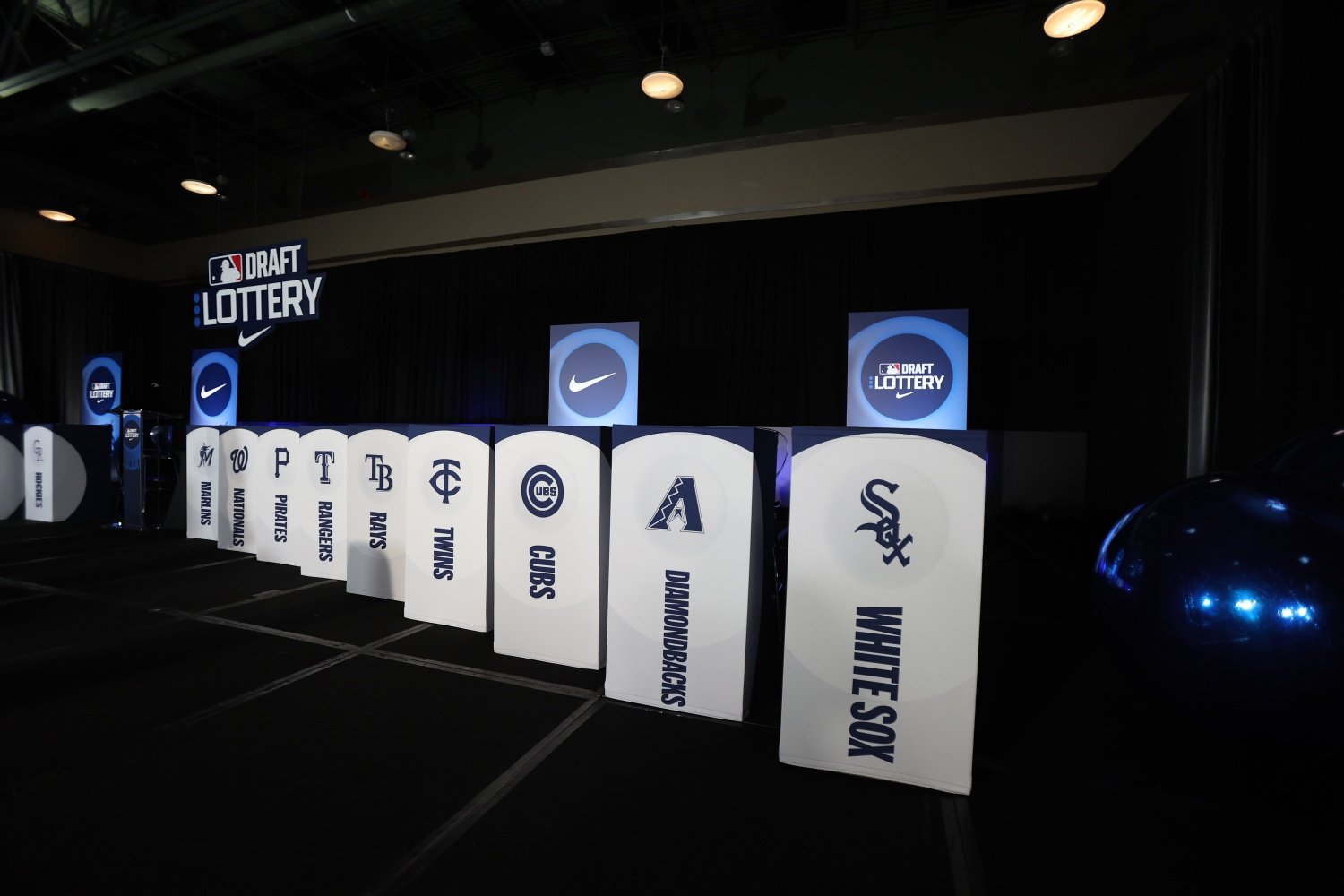 Draft week is finally here! We’ll have a ton of coverage for you here at North Side Baseball. Here are a few important details to get you oriented to our coverage. The Cubs finished the 2024 season with the 16th-worst record in MLB. As usual, they are in a challenging financial position ahead of the 2025 Draft, compared to teams who receive additional compensation picks for being revenue-sharing recipients. The Cubs have the 9th-smallest bonus pool overall, at $9,636,800. The Cubs' top-100 picks and slot values are as follows: Slot value for pick 17: $4,750,800 Slot value for pick 56: $1,680,000 Slot value for pick 90: $865,500 Their financial and pick inflexibility puts the Cubs in an unfavorable spot. This draft class is shaping up to be uncertain in terms of top-tier talent, but with plenty of depth through around 75 picks, with prep bats a demographic of strength. You can find our MLB Draft board here. This is a project I’ve been working on since February. The rankings are consensus rankings, taken from leveraging all of the major draft boards in the industry. The goal is to eliminate some of the noise in rankings for casual fans looking to get more interested and get to know the class better. You’ll find the logo from the team next to their pick positions in each round, to give folks an idea of the caliber of talent available in a particular portion of the draft. By Sunday, you’ll find a writeup for 136 player profiles with biographical information, scouting reports, 2025 performance for college players, and potential fits. The board will be updated every day or so until day one. Additionally, we’ll be live-streaming an episode of Destination: The Show through the entirety of Day One. We’ll get started at 5:30 PM ET/4:30 PM CT. We’ll bring you information on all the picks, live reactions, and team-specific special guests. We hope you’ll join us.
 -
Image courtesy of © Steven Branscombe-Imagn Images It’s mock draft season! Over the next two weeks in the buildup to the draft, we’ll be rolling out at least two mock drafts, covering the first round and the first batch of competitive-balance picks. For each of these, we’re doing our best to read the tea leaves and make picks based on the talent available at a particular slot, and considering each organization's drafting tendencies. Feel free to jump into the comments with disagreements and other preferred picks. 1. Nationals: Kade Anderson, LHP, LSU All the buzz here seems to be between Anderson and Ethan Holliday. If the LSU southpaw doesn’t go number one, surely, he won’t get past three. 2. Angels: Liam Doyle, LHP, Tennessee Fast-moving college players is the Angels' trend until it isn’t, and we'll project them to take such players until they don't. 3. Mariners: Jamie Arnold, LHP, Florida State Arnold is a quality arm for a system that’s become bat-dominant. The Mariners are outstanding at developing arms. 4. Rockies: Ethan Holliday, SS, Stillwater HS, OK This appears to be the floor for Holliday. The organization for which his dad became a household name won't let him slide any further. 5. Cardinals: JoJo Parker, SS, Purvis HS, MS If the board unfolds like this, the Cardinals will get their pick of a strong cluster of prep shortstops. Parker has a chance to be the best offensive profile of the bunch. 6. Pirates: Eli Willits, SS, Fort-Cobb Broxton HS, OK Willits has been steady on boards all spring. This would be a good get at six overall. (And yes, he's the son of former big-league outfielder Reggie Willits.) 7. Marlins: Seth Hernandez, RHP, Corona HS, CA The Marlins would be thrilled to have Hernandez here. They have consistently developed pitching talent well. 8. Blue Jays: Billy Carlson, SS, Corona HS, CA The Blue Jays are in an interesting spot. There are plenty of good options here. It would be hard to pass on Aiva Arquette, the consensus top college bat available. Toronto has been linked heavily to the prep shortstop group, though. Carlson is the best defensive shortstop in the draft. There’s potential for good impact with the bat, too. 9. Reds: Aiva Arquette, SS, Oregon State Arquette is currently ranked sixth, by consensus. The Reds would be thrilled with this outcome. He’s a physical hitter who should be able to move relatively quickly, despite some refinement needed in the hit tool. 10. White Sox: Kyson Witherspoon, RHP, Oklahoma Witherspoon is the consensus college starting pitcher number four. He shouldn’t last long outside the top 10, even if he slips past Chicago. 11. Athletics: Ike Irish, C, Auburn The Athletics have found success with college bats recently (Jacob Wilson, Nick Kurtz), Irish is one of the strongest college hit/power combos in a class lacking them. 12. Rangers: Kayson Cunningham, Johnson HS, TX Cunningham might have the best hit tool on the prep side (along with Parker), to go with plus speed. 13. Giants: Marek Houston, SS, Wake Forest Houston is shortstop 1-B to Billy Carlson’s 1-A. He’s a lock to stick at that spot, with a good approach and hit tool, despite (generously) fringy power. 14. Rays: Josh Hammond, SS, Wesleyan Academy, NC Hammond is an outstanding athlete who made tremendous strides with the bat this spring. 15. Red Sox: Gavin Kilen, 2B, Tennessee Kilen ratcheted up the power with Tennessee, to go with the great hit tool. He should have plenty of suitors in the teens. There are a number of other college bats who could make sense here, including Brendan Summerhill and Wehiwa Aloy. 16. Twins: Tyler Bremner, RHP, UC Santa Barbara The Twins are well-known for successfully developing mid-to-late college arms into viable MLB options. What if the starting ball of clay was more interesting? Bremner was a consensus top-five prospect coming into this season. It’s a metrically appealing fastball, an above-average slider, and a plus changeup. There’s work to do on the command, but he finished strong. The ceiling is a playoff-caliber starter. 17. Cubs: Gage Wood, RHP, Arkansas Wood’s surge this postseason is reminiscent of Cade Horton’s in 2022. Wood punctuated a strong stretch run with a 19-strikeout no-hitter in the College World Series. This is around his range. The Cubs system is bat-heavy, and Wood has an outlandish fastball shape on which to build. 18. Diamondbacks: Steele Hall, SS, Hewitt-Trussville HS, AL Hall has some of the best speed and athleticism in the entire class. This might be the low end of his range. 19. Orioles: Wehiwa Aloy, SS, Arkansas The Orioles won’t be put off by the aggression in Aloy’s approach. This feels like the lower end of his range, but he’s a good fit in Baltimore. 20. Brewers: Gavin Fien, 3B, Great Oaks HS, CA Fien is one of the least talked-about first-round prep profiles, and one of my favorites. He hit everything and everyone last summer. While his early spring was a little uneven, he turned it around down the stretch. He has a chance to be one of the better hit/power combos in this draft class. There’s a good chance he’s taken in the mid-teens. (No, he's not the son of ex-pitcher Casey Fien.) 21. Astros: Ethan Conrad, OF, Wake Forest The Astros love strong athletic traits. Conrad missed time due to injury but was mashing after transferring from Marist. 22. Braves: Riley Quick, RHP, Alabama Quick is a good fit here for the Braves, who often lean toward arms in their usual late first-round range. 23. Royals: Kruz Schoolcraft, LHP, Sunset HS, OR The Royals are a pitching organization, now. Schoolcraft has plenty of buzz here to land with them. 24. Tigers: Slater De Brun, OF, Summit HS, OR Another steam pick here. De Brun is a table-setter type with good strength, outstanding speed and an excellent hit tool. 25. Padres: Brady Ebel, SS, Corona HS, CA What’s the safest bet in the draft? That the Padres will take a prep player with their first pick. Ebel has a sweet left-handed swing with plenty of projection to grow into a solid hit/power combo. There’s a good defensive infield skill set at play here, too. 26. Phillies: Xavier Neyens, 3B, Mount Vernon HS, WA Neyens is another profile that has been less talked up this spring. It’s power to rival that of Ethan Holliday. 27. Guardians: Brendan Summerhill, OF, Arizona Summerhill’s range likely starts in the teens. This feels low, and this is great value for the Guardians at 27. Prospect Promotion Incentive Picks 28. Royals: Daniel Pierce, SS, Mill Creek HS, GA One of the smoothest defensive profiles at short in this class, but there’s legitimate offensive upside, too. Compensation Picks 29. Diamondbacks: Caden Bodine, C, Coastal Carolina Bodine had a tremendous postseason. It’s a plus hit tool and outstanding receiving skills as a catcher. 30. Orioles: Jace Laviolette, OF, Texas A&M The preseason consensus number-one player finds a home here. He feels like an ideal candidate for an organization with two or three picks in the top 40.f 31. Orioles: Sean Gamble, SS/OF, IMG Academy, FL A left-handed hitting power/speed threat with the type of athleticism that could lend itself to the infield or outfield long-term. 32. Brewers: Andrew Fischer, 1B/3B, Tennessee Fischer feels a little under-ranked to me. He has a patient approach, a track record with wooden bats, and just put up a .760 SLG in the SEC. This offensive profile will play anywhere. He’s a first round-caliber talent, and this represents good value. It would be a nice counterbalance to the Fien pick earlier in the round for the Brewers. Competitive Balance Round A 33. Red Sox: Patrick Forbes, RHP, Louisville The Red Sox brain trust has invested in their pitching infrastructure recently. Forbes is a high-octane arm who could develop into a monster with the right development behind him. It’s ace-caliber arm talent that’s a little rough around the edges. 34. Tigers: Zach Root, LHP, Arkansas A ready-made diverse arsenal and a track record of performance in the SEC represent good value for a farm system stacked with talent. 35. Mariners: Cam Appenzeller, Glenwood HS, IL The Mariners have money to spend in this draft. Appenzeller is one of the best prep pitchability arms in this draft class. 36. Twins: Devin Taylor, OF, Indiana The Twins WILL get their bats in the first few rounds, and Taylor has been a tremendous college performer. It’s not a spectacular profile in terms of speed and defense but he mashes. He had a 169 wRC+ with 18 home runs in 2025. That was buoyed by a 19.3 BB% and a measly 11.2 K%. This is a fast-moving, high-floor college outfield bat. View full article
-
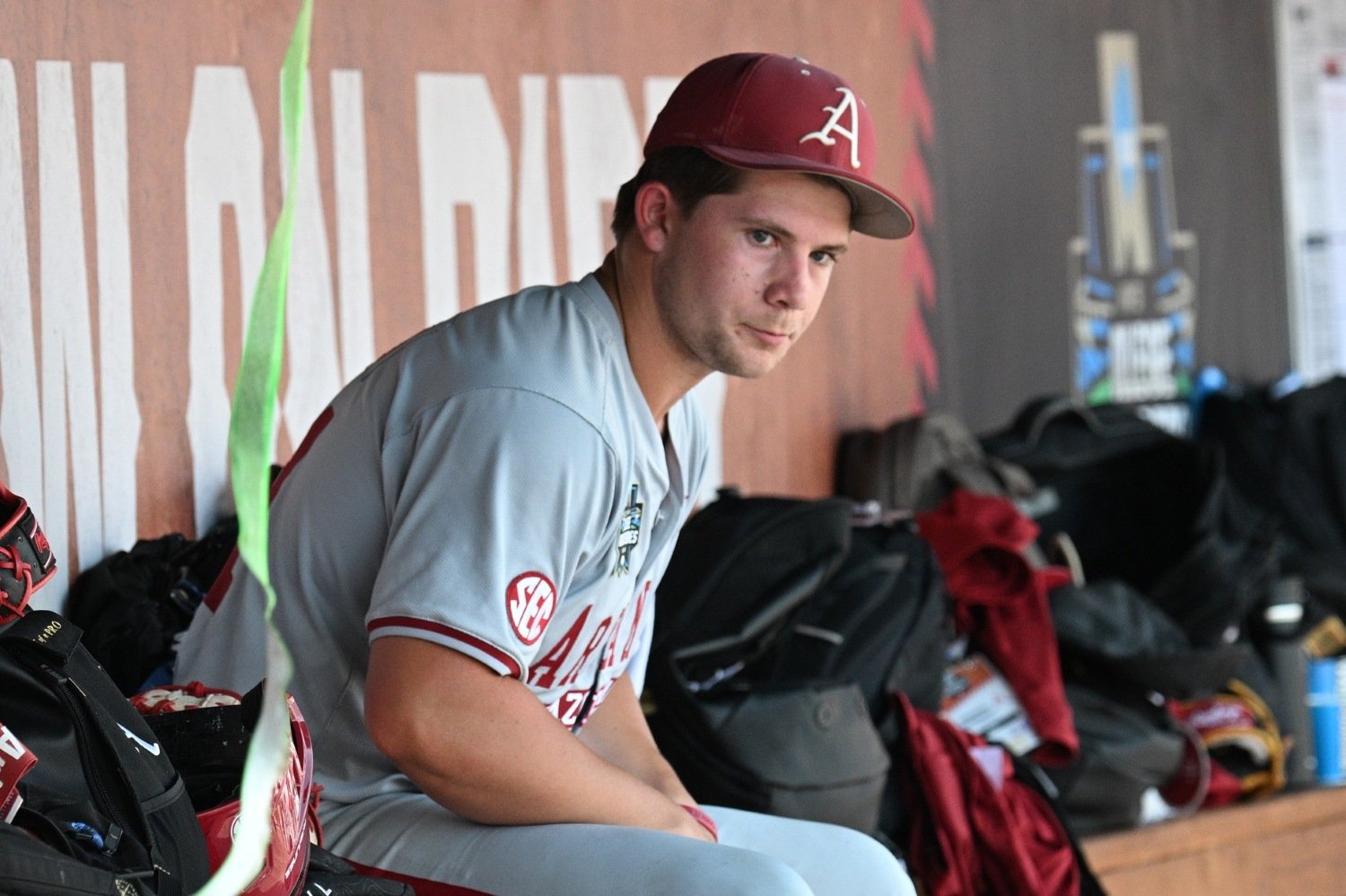 It’s mock draft season! Over the next two weeks in the buildup to the draft, we’ll be rolling out at least two mock drafts, covering the first round and the first batch of competitive-balance picks. For each of these, we’re doing our best to read the tea leaves and make picks based on the talent available at a particular slot, and considering each organization's drafting tendencies. Feel free to jump into the comments with disagreements and other preferred picks. 1. Nationals: Kade Anderson, LHP, LSU All the buzz here seems to be between Anderson and Ethan Holliday. If the LSU southpaw doesn’t go number one, surely, he won’t get past three. 2. Angels: Liam Doyle, LHP, Tennessee Fast-moving college players is the Angels' trend until it isn’t, and we'll project them to take such players until they don't. 3. Mariners: Jamie Arnold, LHP, Florida State Arnold is a quality arm for a system that’s become bat-dominant. The Mariners are outstanding at developing arms. 4. Rockies: Ethan Holliday, SS, Stillwater HS, OK This appears to be the floor for Holliday. The organization for which his dad became a household name won't let him slide any further. 5. Cardinals: JoJo Parker, SS, Purvis HS, MS If the board unfolds like this, the Cardinals will get their pick of a strong cluster of prep shortstops. Parker has a chance to be the best offensive profile of the bunch. 6. Pirates: Eli Willits, SS, Fort-Cobb Broxton HS, OK Willits has been steady on boards all spring. This would be a good get at six overall. (And yes, he's the son of former big-league outfielder Reggie Willits.) 7. Marlins: Seth Hernandez, RHP, Corona HS, CA The Marlins would be thrilled to have Hernandez here. They have consistently developed pitching talent well. 8. Blue Jays: Billy Carlson, SS, Corona HS, CA The Blue Jays are in an interesting spot. There are plenty of good options here. It would be hard to pass on Aiva Arquette, the consensus top college bat available. Toronto has been linked heavily to the prep shortstop group, though. Carlson is the best defensive shortstop in the draft. There’s potential for good impact with the bat, too. 9. Reds: Aiva Arquette, SS, Oregon State Arquette is currently ranked sixth, by consensus. The Reds would be thrilled with this outcome. He’s a physical hitter who should be able to move relatively quickly, despite some refinement needed in the hit tool. 10. White Sox: Kyson Witherspoon, RHP, Oklahoma Witherspoon is the consensus college starting pitcher number four. He shouldn’t last long outside the top 10, even if he slips past Chicago. 11. Athletics: Ike Irish, C, Auburn The Athletics have found success with college bats recently (Jacob Wilson, Nick Kurtz), Irish is one of the strongest college hit/power combos in a class lacking them. 12. Rangers: Kayson Cunningham, Johnson HS, TX Cunningham might have the best hit tool on the prep side (along with Parker), to go with plus speed. 13. Giants: Marek Houston, SS, Wake Forest Houston is shortstop 1-B to Billy Carlson’s 1-A. He’s a lock to stick at that spot, with a good approach and hit tool, despite (generously) fringy power. 14. Rays: Josh Hammond, SS, Wesleyan Academy, NC Hammond is an outstanding athlete who made tremendous strides with the bat this spring. 15. Red Sox: Gavin Kilen, 2B, Tennessee Kilen ratcheted up the power with Tennessee, to go with the great hit tool. He should have plenty of suitors in the teens. There are a number of other college bats who could make sense here, including Brendan Summerhill and Wehiwa Aloy. 16. Twins: Tyler Bremner, RHP, UC Santa Barbara The Twins are well-known for successfully developing mid-to-late college arms into viable MLB options. What if the starting ball of clay was more interesting? Bremner was a consensus top-five prospect coming into this season. It’s a metrically appealing fastball, an above-average slider, and a plus changeup. There’s work to do on the command, but he finished strong. The ceiling is a playoff-caliber starter. 17. Cubs: Gage Wood, RHP, Arkansas Wood’s surge this postseason is reminiscent of Cade Horton’s in 2022. Wood punctuated a strong stretch run with a 19-strikeout no-hitter in the College World Series. This is around his range. The Cubs system is bat-heavy, and Wood has an outlandish fastball shape on which to build. 18. Diamondbacks: Steele Hall, SS, Hewitt-Trussville HS, AL Hall has some of the best speed and athleticism in the entire class. This might be the low end of his range. 19. Orioles: Wehiwa Aloy, SS, Arkansas The Orioles won’t be put off by the aggression in Aloy’s approach. This feels like the lower end of his range, but he’s a good fit in Baltimore. 20. Brewers: Gavin Fien, 3B, Great Oaks HS, CA Fien is one of the least talked-about first-round prep profiles, and one of my favorites. He hit everything and everyone last summer. While his early spring was a little uneven, he turned it around down the stretch. He has a chance to be one of the better hit/power combos in this draft class. There’s a good chance he’s taken in the mid-teens. (No, he's not the son of ex-pitcher Casey Fien.) 21. Astros: Ethan Conrad, OF, Wake Forest The Astros love strong athletic traits. Conrad missed time due to injury but was mashing after transferring from Marist. 22. Braves: Riley Quick, RHP, Alabama Quick is a good fit here for the Braves, who often lean toward arms in their usual late first-round range. 23. Royals: Kruz Schoolcraft, LHP, Sunset HS, OR The Royals are a pitching organization, now. Schoolcraft has plenty of buzz here to land with them. 24. Tigers: Slater De Brun, OF, Summit HS, OR Another steam pick here. De Brun is a table-setter type with good strength, outstanding speed and an excellent hit tool. 25. Padres: Brady Ebel, SS, Corona HS, CA What’s the safest bet in the draft? That the Padres will take a prep player with their first pick. Ebel has a sweet left-handed swing with plenty of projection to grow into a solid hit/power combo. There’s a good defensive infield skill set at play here, too. 26. Phillies: Xavier Neyens, 3B, Mount Vernon HS, WA Neyens is another profile that has been less talked up this spring. It’s power to rival that of Ethan Holliday. 27. Guardians: Brendan Summerhill, OF, Arizona Summerhill’s range likely starts in the teens. This feels low, and this is great value for the Guardians at 27. Prospect Promotion Incentive Picks 28. Royals: Daniel Pierce, SS, Mill Creek HS, GA One of the smoothest defensive profiles at short in this class, but there’s legitimate offensive upside, too. Compensation Picks 29. Diamondbacks: Caden Bodine, C, Coastal Carolina Bodine had a tremendous postseason. It’s a plus hit tool and outstanding receiving skills as a catcher. 30. Orioles: Jace Laviolette, OF, Texas A&M The preseason consensus number-one player finds a home here. He feels like an ideal candidate for an organization with two or three picks in the top 40.f 31. Orioles: Sean Gamble, SS/OF, IMG Academy, FL A left-handed hitting power/speed threat with the type of athleticism that could lend itself to the infield or outfield long-term. 32. Brewers: Andrew Fischer, 1B/3B, Tennessee Fischer feels a little under-ranked to me. He has a patient approach, a track record with wooden bats, and just put up a .760 SLG in the SEC. This offensive profile will play anywhere. He’s a first round-caliber talent, and this represents good value. It would be a nice counterbalance to the Fien pick earlier in the round for the Brewers. Competitive Balance Round A 33. Red Sox: Patrick Forbes, RHP, Louisville The Red Sox brain trust has invested in their pitching infrastructure recently. Forbes is a high-octane arm who could develop into a monster with the right development behind him. It’s ace-caliber arm talent that’s a little rough around the edges. 34. Tigers: Zach Root, LHP, Arkansas A ready-made diverse arsenal and a track record of performance in the SEC represent good value for a farm system stacked with talent. 35. Mariners: Cam Appenzeller, Glenwood HS, IL The Mariners have money to spend in this draft. Appenzeller is one of the best prep pitchability arms in this draft class. 36. Twins: Devin Taylor, OF, Indiana The Twins WILL get their bats in the first few rounds, and Taylor has been a tremendous college performer. It’s not a spectacular profile in terms of speed and defense but he mashes. He had a 169 wRC+ with 18 home runs in 2025. That was buoyed by a 19.3 BB% and a measly 11.2 K%. This is a fast-moving, high-floor college outfield bat.
 -
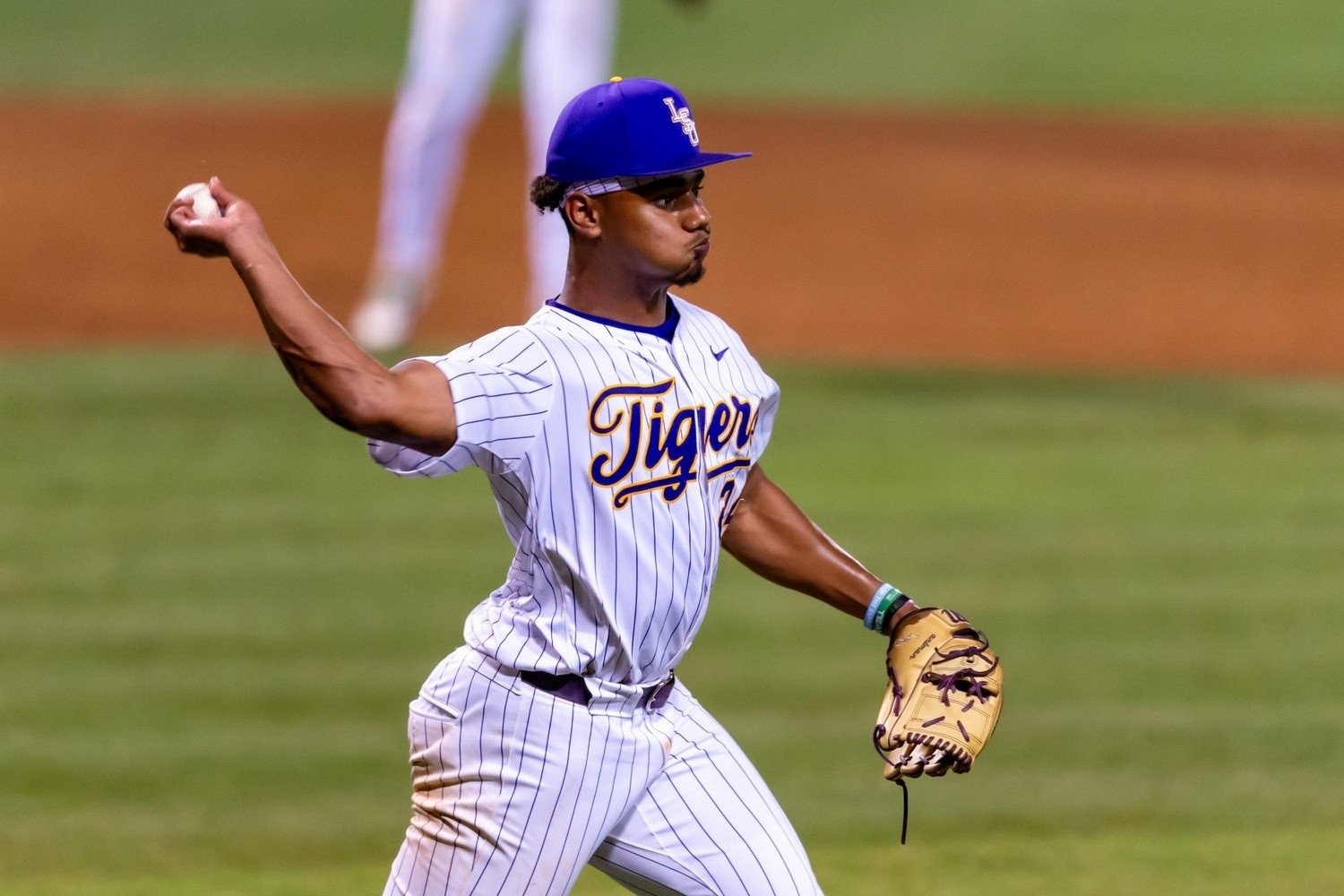 This draft cycle, we’re going to try something new. Every few weeks, I’ll be posting an article listing out who the Cubs would select based on their position on the consensus draft board. As the consensus board is updated, the players in those spots will be adjusted and I’ll post another update. This is not a true mock draft. Rather, I’m hoping it’ll give readers an idea of the caliber of talent in each of the team’s first few picks. Additionally, it should help readers who want to dig into draft coverage a bit more get familiar with the class. Here would be the Cubs' first two picks by consensus draft ranking, as of Jun. 19, 2025. First Round (17th Overall): Steele Hall, SS, Hewitt-Trussville HS, AL Hall is one of the buzziest names in the prep class. So despite being nestled close to 50th in the first few iterations of the consensus board, expect him to climb significantly as the cycle goes on. He also reclassified from the 2026 class, so he'll be one of the youngest prospects in the class at 17 on draft day. He's a right-handed hitting, prep shortstop out of Alabama, committed to the University of Tennessee. Despite an undersized frame, Hall is an explosive athlete and an elite mover. He has bounce, lateral quickness and legit plus to double-plus speed. Add a plus arm to the mix and he has a chance to stick at shortstop at the next level. Offensively, it's a hit-over-power profile, but the power is headed in the right direction—underpinned by a compact swing and improved bat speed. The power grade might get to average when it's all said and done, with all of his other tools above average or better. Second Round (56th Overall): Anthony Eyanson, RHP, LSU Eyanson has checked so many boxes as a starter: solid track record at UCSD, a good performance for the US Collegiate National Team, a strong stint on the Cape. All that came before shoving for LSU in what will be his lone season in the SEC prior to being drafted. The righty has a good frame at 6-foot-2, 200 pounds, and an easy, repeatable delivery. It's a fastball that sits in the 93-96 mph range, with good riding life at the top of the zone. His slider has become a plus pitch. It sits in the low-to-mid 80s with a ton of drop, and generates plenty of miss both in and out of the zone. There's a curveball with good depth, too, and a changeup, which is more of a developmental pitch. All of this is underpinned by really solid strike-throwing. As the SEC tournament is set to kick off, Eyanson has started 14 games with a 2.01 FIP, a 36.1 K%, and a 9.0 BB%. That's mighty impressive production that has catapulted him into the top 100 consensus players. I wouldn't be surprised if he climbed even higher down the stretch of this cycle.
 -
Image courtesy of © SCOTT CLAUSE / USATODAY Network / USA TODAY NETWORK via Imagn Images This draft cycle, we’re going to try something new. Every few weeks, I’ll be posting an article listing out who the Cubs would select based on their position on the consensus draft board. As the consensus board is updated, the players in those spots will be adjusted and I’ll post another update. This is not a true mock draft. Rather, I’m hoping it’ll give readers an idea of the caliber of talent in each of the team’s first few picks. Additionally, it should help readers who want to dig into draft coverage a bit more get familiar with the class. Here would be the Cubs' first two picks by consensus draft ranking, as of Jun. 19, 2025. First Round (17th Overall): Steele Hall, SS, Hewitt-Trussville HS, AL Hall is one of the buzziest names in the prep class. So despite being nestled close to 50th in the first few iterations of the consensus board, expect him to climb significantly as the cycle goes on. He also reclassified from the 2026 class, so he'll be one of the youngest prospects in the class at 17 on draft day. He's a right-handed hitting, prep shortstop out of Alabama, committed to the University of Tennessee. Despite an undersized frame, Hall is an explosive athlete and an elite mover. He has bounce, lateral quickness and legit plus to double-plus speed. Add a plus arm to the mix and he has a chance to stick at shortstop at the next level. Offensively, it's a hit-over-power profile, but the power is headed in the right direction—underpinned by a compact swing and improved bat speed. The power grade might get to average when it's all said and done, with all of his other tools above average or better. Second Round (56th Overall): Anthony Eyanson, RHP, LSU Eyanson has checked so many boxes as a starter: solid track record at UCSD, a good performance for the US Collegiate National Team, a strong stint on the Cape. All that came before shoving for LSU in what will be his lone season in the SEC prior to being drafted. The righty has a good frame at 6-foot-2, 200 pounds, and an easy, repeatable delivery. It's a fastball that sits in the 93-96 mph range, with good riding life at the top of the zone. His slider has become a plus pitch. It sits in the low-to-mid 80s with a ton of drop, and generates plenty of miss both in and out of the zone. There's a curveball with good depth, too, and a changeup, which is more of a developmental pitch. All of this is underpinned by really solid strike-throwing. As the SEC tournament is set to kick off, Eyanson has started 14 games with a 2.01 FIP, a 36.1 K%, and a 9.0 BB%. That's mighty impressive production that has catapulted him into the top 100 consensus players. I wouldn't be surprised if he climbed even higher down the stretch of this cycle. View full article
