Ian J Battaglia
-
Posts
8 -
Joined
-
Last visited
Content Type
Profiles
Joomla Posts 1
Chicago Cubs Videos
Chicago Cubs Free Agent & Trade Rumors, Notes, & Tidbits
2026 Chicago Cubs Top Prospects Ranking
News
2023 Chicago Cubs Draft Picks
Guides & Resources
2024 Chicago Cubs Draft Picks
The Chicago Cubs Players Project
2025 Chicago Cubs Draft Pick Tracker
2026 Chicago Cubs Draft Tracker: Picks & Bonuses
Blogs
Events
Forums
Store
Gallery
Everything posted by Ian J Battaglia
-
 Image courtesy of Masterpress/GettyImages The calendar has flipped to May, and the Cubs are sitting pretty atop the NL Central standings, at a pace that would put them right around 94 wins by the end of the year. No team has scored more runs than the Cubs thanks to the clicking offense, and they pace MLB in run differential. Despite this, there remain a few pests in the ivy at Wrigley in the early going for the North Siders. Perhaps only second to the injuries is the state of the bullpen, headlined by marquee offseason edition Ryan Pressly. Few fanbases are ever satisfied with their ownership or their bullpen, but the Cubs' second-place seven blown saves shows there may be cause for concern. Pressly, reportedly initially reluctant to accept the trade to the Cubs, did so potentially to reclaim his role as closer as his former team, the Houston Astros, made a splash by signing Josh Hader in 2024. The Cubs, coming off a 2024 that had them middle-of-the-pack as far as bullpens go, brought in the 36-year-old Pressly as a veteran presence to stabilize the emerging but young reliever core that started to bubble up through the their system. While Pressly hasn’t contributed to that blown saves stat himself, his performance in the early going has left a lot to be desired, with a 4.50 ERA and a FIP three runs higher over his first six appearances. During the rest of the month, he pitched infrequently, racking up just another six innings over that span, which saw his ERA drop to 2.25. However, his FIP remains troublingly high, all currently standing at 4.90. What might be causing his shaky performance? Well, he’s simply not striking anyone out, for one. This is a reliever, in April, who pitched a dozen innings in that span — suffice to say, it’s early. Still, he’s running a paltry 3.46 K/9, or 9.8% strikeout rate. He’s declined over the past two years in this regard from his 2018-2022 peak, but you’d still expect to see this more in the 25% range. For comparison, last year, he pitched 11 2/3 innings in April, with a 13.11 K/9. His barrel% is around his career norms, sitting at 7.7%, but his HardHit% has skyrocketed nearly 20 points to 59.0%, which is in the lowest percentile in all of MLB. Finally, his Whiff%, which has averaged around 30% in his career, is down at a measly 16.5%. Combine that with a walk rate nearly twice as high as it’s been in years past, and you’re looking for trouble. I went to Baseball Savant to see if perhaps something in his pitch mix was leading to this trouble, though the results are perhaps less cut and dry than you might expect. Pressly throws five pitches, though he leans on three: his four-seam fastball, his slider, and a curveball which he throws nearly equally. Beyond this, he also has a changeup and a sinker, which he throws roughly six percent of the time each. Oftentimes when a pitcher is getting hit harder, it's because they’ve lost some spin (read: movement) on one of their main offerings, but that’s not really the case with Ryan Pressly. His spin rates are about the same as they’ve been, and his four-seamer has actually gained a few RPMs from last year’s iteration. His pitches also aren't breaking much differently either vertically or horizontally than before, with pretty steady metrics across the board. So what gives? For one, his velocity has continued to fall as he approaches his late 30s. He’s lost another half-tick on his four seamer this year, coming in a mile and a half slower than the 95-ish MPH he threw at his peak. Additionally, he’s lost a full MPH on both of his main secondaries. The pitches that are getting squared up the most are his four-seamer, his curveball, and his sinker. As mentioned, this is a minuscule sample, but the velocity drop on Pressly's four-seamer coincided with a jump in HardHit%. With a further drop in velocity, this could just be a case of an aging reliever losing just enough zip on a pitch to flip into “hittable” territory, especially for a pitcher like Pressly with nearly no horizontal movement on his fastball. Still, not all hope is lost for Pressly. Looking at his Stuff+ ratings, his curveball continues to rate positively. The results have not been pretty so far, but after some ugly early outings, he has started to turn in more and more zeroes, dropping his ERA on the season to 2.25, which would tie a career-best. And he’s shown a willingness to evolve. After barely tinkering with a sinker in 2023, he’s now throwing it nearly six% of the time in 2025, and by Stuff+, it rates out as his second-best pitch. This is a veteran pitcher in the end of his career, finding new ways to get batters out with the repertoire he has now. Alongside consistent metrics in spin rate and pitch movement, there may be hope for Pressly yet. View full article
 -
Ryan Pressly Looks Old, But There's More Hope Than Fans Realize
Ian J Battaglia posted an article in Cubs
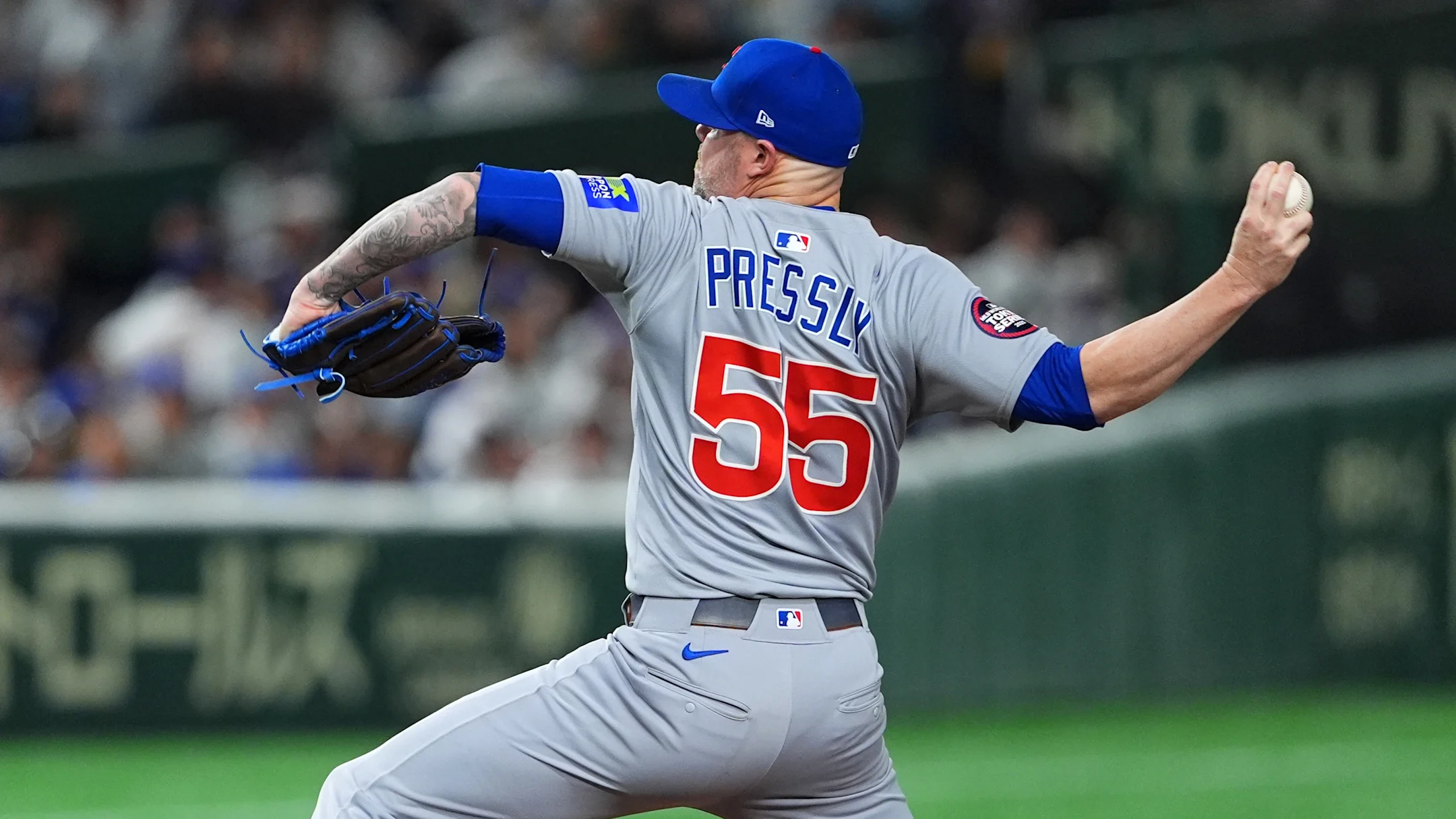 The calendar has flipped to May, and the Cubs are sitting pretty atop the NL Central standings, at a pace that would put them right around 94 wins by the end of the year. No team has scored more runs than the Cubs thanks to the clicking offense, and they pace MLB in run differential. Despite this, there remain a few pests in the ivy at Wrigley in the early going for the North Siders. Perhaps only second to the injuries is the state of the bullpen, headlined by marquee offseason edition Ryan Pressly. Few fanbases are ever satisfied with their ownership or their bullpen, but the Cubs' second-place seven blown saves shows there may be cause for concern. Pressly, reportedly initially reluctant to accept the trade to the Cubs, did so potentially to reclaim his role as closer as his former team, the Houston Astros, made a splash by signing Josh Hader in 2024. The Cubs, coming off a 2024 that had them middle-of-the-pack as far as bullpens go, brought in the 36-year-old Pressly as a veteran presence to stabilize the emerging but young reliever core that started to bubble up through the their system. While Pressly hasn’t contributed to that blown saves stat himself, his performance in the early going has left a lot to be desired, with a 4.50 ERA and a FIP three runs higher over his first six appearances. During the rest of the month, he pitched infrequently, racking up just another six innings over that span, which saw his ERA drop to 2.25. However, his FIP remains troublingly high, all currently standing at 4.90. What might be causing his shaky performance? Well, he’s simply not striking anyone out, for one. This is a reliever, in April, who pitched a dozen innings in that span — suffice to say, it’s early. Still, he’s running a paltry 3.46 K/9, or 9.8% strikeout rate. He’s declined over the past two years in this regard from his 2018-2022 peak, but you’d still expect to see this more in the 25% range. For comparison, last year, he pitched 11 2/3 innings in April, with a 13.11 K/9. His barrel% is around his career norms, sitting at 7.7%, but his HardHit% has skyrocketed nearly 20 points to 59.0%, which is in the lowest percentile in all of MLB. Finally, his Whiff%, which has averaged around 30% in his career, is down at a measly 16.5%. Combine that with a walk rate nearly twice as high as it’s been in years past, and you’re looking for trouble. I went to Baseball Savant to see if perhaps something in his pitch mix was leading to this trouble, though the results are perhaps less cut and dry than you might expect. Pressly throws five pitches, though he leans on three: his four-seam fastball, his slider, and a curveball which he throws nearly equally. Beyond this, he also has a changeup and a sinker, which he throws roughly six percent of the time each. Oftentimes when a pitcher is getting hit harder, it's because they’ve lost some spin (read: movement) on one of their main offerings, but that’s not really the case with Ryan Pressly. His spin rates are about the same as they’ve been, and his four-seamer has actually gained a few RPMs from last year’s iteration. His pitches also aren't breaking much differently either vertically or horizontally than before, with pretty steady metrics across the board. So what gives? For one, his velocity has continued to fall as he approaches his late 30s. He’s lost another half-tick on his four seamer this year, coming in a mile and a half slower than the 95-ish MPH he threw at his peak. Additionally, he’s lost a full MPH on both of his main secondaries. The pitches that are getting squared up the most are his four-seamer, his curveball, and his sinker. As mentioned, this is a minuscule sample, but the velocity drop on Pressly's four-seamer coincided with a jump in HardHit%. With a further drop in velocity, this could just be a case of an aging reliever losing just enough zip on a pitch to flip into “hittable” territory, especially for a pitcher like Pressly with nearly no horizontal movement on his fastball. Still, not all hope is lost for Pressly. Looking at his Stuff+ ratings, his curveball continues to rate positively. The results have not been pretty so far, but after some ugly early outings, he has started to turn in more and more zeroes, dropping his ERA on the season to 2.25, which would tie a career-best. And he’s shown a willingness to evolve. After barely tinkering with a sinker in 2023, he’s now throwing it nearly six% of the time in 2025, and by Stuff+, it rates out as his second-best pitch. This is a veteran pitcher in the end of his career, finding new ways to get batters out with the repertoire he has now. Alongside consistent metrics in spin rate and pitch movement, there may be hope for Pressly yet.
 -
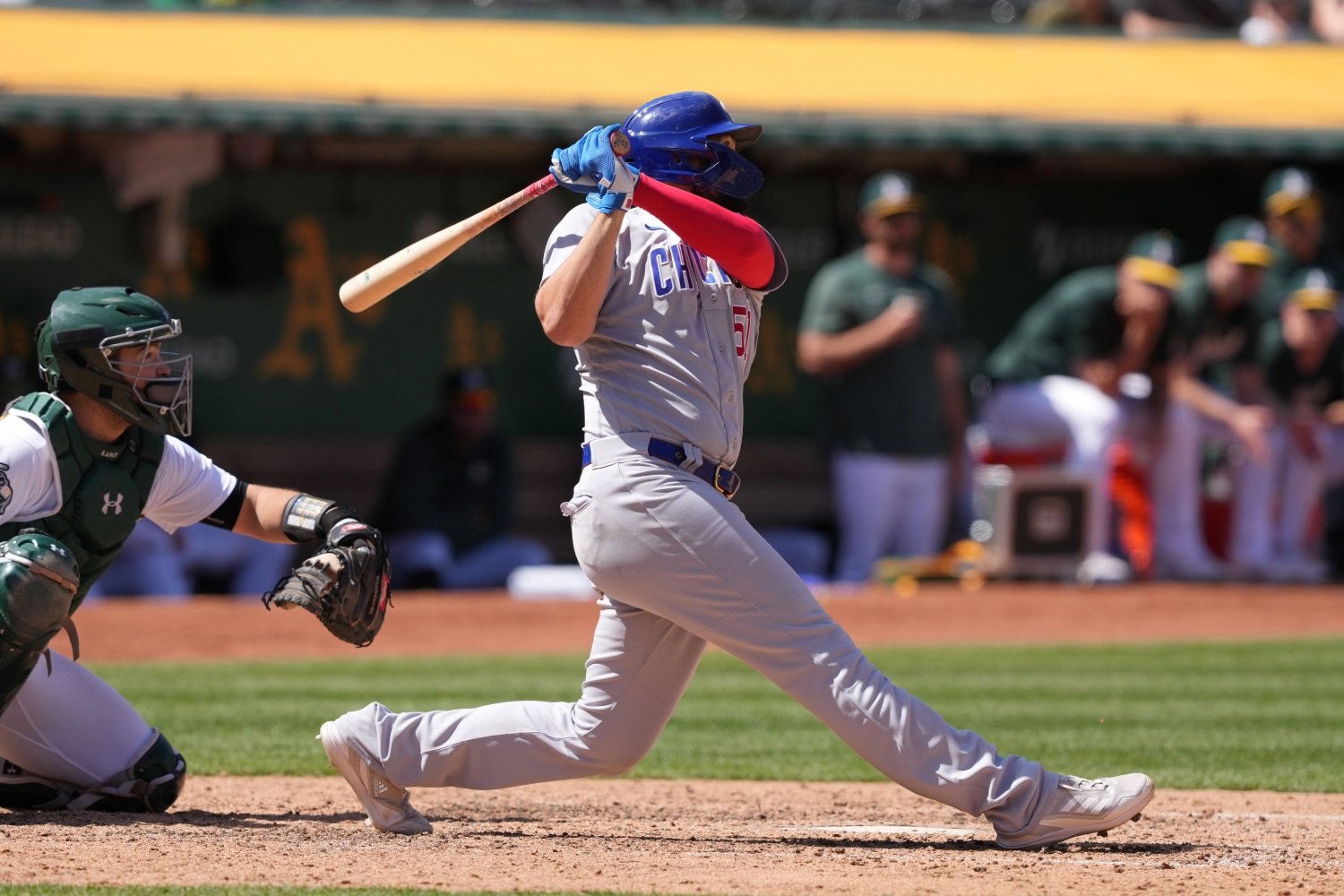 That said, there are reasons to question its sustainability. It seems unlikely that Patrick Wisdom will continue to hit like Paul Goldschmidt did last year on the way to an MVP award (though if he does, more power to him!). While the hot streaks may cool for several players, there’s cause for optimism as well. Dansby Swanson has yet to tap into his power, and is still searching for his first homer as a Cub, and Seiya Suzuki is likely to run into a few more once he really gets going. Perhaps the best reason to be optimistic about the offense, though, is by simply looking at who hasn’t been hitting so far: the catchers, Yan Gomes and Tucker Barnhart; and the first basemen, Eric Hosmer and Trey Mancini. Neither of the catchers were ever expected to hit. Sure, there may have been some optimism that between the two of them, playing the hot bats or favorable matchups, the Cubs could get the position close to league average, but that would’ve just been a bonus. It’s been clear since the Cubs moved on from Willson Contreras that the intent is to focus on defense behind the dish, as the Astros have been very successful in doing. Still, you’d like to see a bit more. Gomes is hitting for a 76 wRC+ (where 100 is league average) through nearly 50 plate appearances, and he’s been the stronger side of the platoon. That puts him 11th-worst in baseball out of 29 catchers with at least 40 PA. You’d like to see that get up to at least the mid-80s. Barnhart, for his part, has been even worse: putting up a measly 27 wRC+ through his 28 PA. While you’d hope for (and expect) a bit more from both (Gomes is only two years removed from being a near-average bat, and Barnhart (while still terrible last year) was worth nearly twice as much offensively), there already exists a solution to these woes on the roster: Luis Torrens. Torrens, who I wrote about previously, is not especially well-regarded as a catcher–particularly compared to future managers like Gomes. But he is expected to hit, and so far, he has, putting up a 117 wRC+ in 18 PA. It’s a tiny sample size, but he’s out-slugged Swanson to this point. Downgrade he may be, but the expectation is that he’s the third catcher on the team. Why not pinch-hit him for Barnhart or even Gomes late in games, leaving him to receive the last inning or two if the team needs an offensive jolt? If the Cubs have no confidence in his ability to catch, I’d wonder about his role on the roster at all. As for the first basemen: I already wrote up Hosmer’s precarious position, but Mancini’s struggles haven’t gone unnoticed. His 56 wRC+ would be insupportable even from a shortstop, but it’s especially galling given his lack of defensive value. Nor does his 22-to-1 strikeout-to-walk ratio inspire any confidence that he’ll turn things around. The obvious solution is only a bus ride away—Matt Mervis, the Cubs’ looming first base prospect, is running a 140 wRC+ at AAA through a little over 75 plate appearances (he hit 152 wRC+ in 240 PAs there, last year). But in a report from The Athletic’s Patrick Mooney this week, the Cubs seemed to signal that he’s going to have to wait. Ross echoed the sentiment on the broadcast Friday, talking about the value consistent lineups and plate appearances bring to his players. Mancini, for his part, has been very forthcoming about his struggles, saying he feels his mechanics are out of whack. While you can count me among the fans banging the drum for Mervis to take a roster spot (ideally Hosmer’s), I understand the impulse to default to consistency from Ross, and to not overreact to small samples or heartbreaking losses from Jed. But is there any need to put them both in the lineup day in and day out? The lineup already has a hole baked in, at catcher. I’m not quite clear on the need for two more, daily. Actually, that the team has been so positive offensively despite playing three lousy bats nearly every day is quite astounding. The Cubs are cruising along, and may no storms rock this boat. But if we’ve learned anything, it’s that they always do. The Cubs have lost winnable games, and in a year where a playoff spot is in reach but not guaranteed, the Cubs should be fighting for every win they can get. This is probably what Hosmer is at this point; a “good vibes veteran,” negative bat, with above-average defense, holding the spot for Mervis for league-minimum pay. Mancini has some upside remaining, but maybe the time he needs to work through his mechanical or mental struggles could come in the form of a stint on the injured list. At the very least, let your bench work for you. Torrens might not keep up his offensive performance, but he’s likely still an upgrade. Nick Madrigal finally seems to be hitting as advertised. Edwin Rios has been lackluster, but he’s only been given 20 plate appearances to show out so far. That’s not even to mention the squad of killers looming in Triple A. It’s a simple ask, really: play the hot bats.
 -
We’re already 20 games into the 2023 season, and as everyone predicted, the Cubs so far are an offensive juggernaut, ranking top-5 in the majors in runs, OPS, and wRC+. ...What’s that? You’re telling me this is completely unexpected, and the team was billed as dependent on defense and pitching? Well, luckily for Cubs fans, they’ve been good at those things too, but to this point in the season, there’s no denying the offense has been a much-welcome surprise. That said, there are reasons to question its sustainability. It seems unlikely that Patrick Wisdom will continue to hit like Paul Goldschmidt did last year on the way to an MVP award (though if he does, more power to him!). While the hot streaks may cool for several players, there’s cause for optimism as well. Dansby Swanson has yet to tap into his power, and is still searching for his first homer as a Cub, and Seiya Suzuki is likely to run into a few more once he really gets going. Perhaps the best reason to be optimistic about the offense, though, is by simply looking at who hasn’t been hitting so far: the catchers, Yan Gomes and Tucker Barnhart; and the first basemen, Eric Hosmer and Trey Mancini. Neither of the catchers were ever expected to hit. Sure, there may have been some optimism that between the two of them, playing the hot bats or favorable matchups, the Cubs could get the position close to league average, but that would’ve just been a bonus. It’s been clear since the Cubs moved on from Willson Contreras that the intent is to focus on defense behind the dish, as the Astros have been very successful in doing. Still, you’d like to see a bit more. Gomes is hitting for a 76 wRC+ (where 100 is league average) through nearly 50 plate appearances, and he’s been the stronger side of the platoon. That puts him 11th-worst in baseball out of 29 catchers with at least 40 PA. You’d like to see that get up to at least the mid-80s. Barnhart, for his part, has been even worse: putting up a measly 27 wRC+ through his 28 PA. While you’d hope for (and expect) a bit more from both (Gomes is only two years removed from being a near-average bat, and Barnhart (while still terrible last year) was worth nearly twice as much offensively), there already exists a solution to these woes on the roster: Luis Torrens. Torrens, who I wrote about previously, is not especially well-regarded as a catcher–particularly compared to future managers like Gomes. But he is expected to hit, and so far, he has, putting up a 117 wRC+ in 18 PA. It’s a tiny sample size, but he’s out-slugged Swanson to this point. Downgrade he may be, but the expectation is that he’s the third catcher on the team. Why not pinch-hit him for Barnhart or even Gomes late in games, leaving him to receive the last inning or two if the team needs an offensive jolt? If the Cubs have no confidence in his ability to catch, I’d wonder about his role on the roster at all. As for the first basemen: I already wrote up Hosmer’s precarious position, but Mancini’s struggles haven’t gone unnoticed. His 56 wRC+ would be insupportable even from a shortstop, but it’s especially galling given his lack of defensive value. Nor does his 22-to-1 strikeout-to-walk ratio inspire any confidence that he’ll turn things around. The obvious solution is only a bus ride away—Matt Mervis, the Cubs’ looming first base prospect, is running a 140 wRC+ at AAA through a little over 75 plate appearances (he hit 152 wRC+ in 240 PAs there, last year). But in a report from The Athletic’s Patrick Mooney this week, the Cubs seemed to signal that he’s going to have to wait. Ross echoed the sentiment on the broadcast Friday, talking about the value consistent lineups and plate appearances bring to his players. Mancini, for his part, has been very forthcoming about his struggles, saying he feels his mechanics are out of whack. While you can count me among the fans banging the drum for Mervis to take a roster spot (ideally Hosmer’s), I understand the impulse to default to consistency from Ross, and to not overreact to small samples or heartbreaking losses from Jed. But is there any need to put them both in the lineup day in and day out? The lineup already has a hole baked in, at catcher. I’m not quite clear on the need for two more, daily. Actually, that the team has been so positive offensively despite playing three lousy bats nearly every day is quite astounding. The Cubs are cruising along, and may no storms rock this boat. But if we’ve learned anything, it’s that they always do. The Cubs have lost winnable games, and in a year where a playoff spot is in reach but not guaranteed, the Cubs should be fighting for every win they can get. This is probably what Hosmer is at this point; a “good vibes veteran,” negative bat, with above-average defense, holding the spot for Mervis for league-minimum pay. Mancini has some upside remaining, but maybe the time he needs to work through his mechanical or mental struggles could come in the form of a stint on the injured list. At the very least, let your bench work for you. Torrens might not keep up his offensive performance, but he’s likely still an upgrade. Nick Madrigal finally seems to be hitting as advertised. Edwin Rios has been lackluster, but he’s only been given 20 plate appearances to show out so far. That’s not even to mention the squad of killers looming in Triple A. It’s a simple ask, really: play the hot bats. View full article
-
The Cubs signed Eric Hosmer to be a positive veteran influence and a part of their defensive phalanx. Less than a week into the season, though, we already have cause to wonder how long that experiment will last. In the selloff of the championship Cubs, perhaps no bigger gap was created than the one left by Anthony Rizzo. Nico Hoerner stepped into shortstop after Javier Baez’s departure, and Patrick Wisdom had already displaced Kris Bryant at third base during the course of the 2021 season. However, the heart-shaped hole at 1B has proven tougher to fill. While we got one of the best storylines in baseball in Frank Schwindel’s brilliant half-season to close out 2021, that magic proved impossible to recapture. Alfonso Rivas was also unable to lock down a roster spot after producing a lackluster 82 wRC+ over 101 games for the Cubs in 2022. The Cubs front office called out 1B as a position in need of an upgrade going into the season, and made several moves to do so. They signed Trey Mancini to a two-year deal (with an opt-out after this year if he reaches 350 plate appearances), and picked up a squeezed-out Edwin Ríos from the Dodgers. But the primary plan was also the earliest move they made: signing Eric Hosmer. Released from the last three years of his contract with the Padres (à la Jason Heyward), Hosmer found himself traded to the Red Sox this past season, and released from their roster in December. The Cubs didn’t hesitate much, signing Hosmer to a league-minimum deal (as the rest of his salary remains paid by the Padres) in early January. Hosmer is a name that’s been bandied about for the Cubs for a few seasons now, but why? Well, I’d argue you only need to look around at the rest of the diamond to see the full picture. While first base is a bat-first position, the Cubs have decided to make one part of baseball their touchstone for 2023: defense. This should be no surprise to anyone who’s watched the first few games, as Marquee is keen to show the Outs Above Average (OAA) of their two star infielders, Hoerner and Dansby Swanson, as well as the Gold Glove wins by each member when introducing the defensive alignment at the start of the game. Sure enough, with four Gold Gloves to his name, Hosmer stands out even among a highly-decorated defensive unit. However, Gold Gloves are a flawed marker at best. As happens with many other awards, narratives can sometimes lead metrics, so the reputation and hardware might not match the results. Cubs fans should know this well; Ian Happ beat out the Brewers’ Christian Yelich (who’s borderline unplayable defensively) for his first Gold Glove in left field last year. So what do the defensive metrics say about Hosmer? Defensive statistics are notably noisy. They often vary greatly year to year, and different metrics might disagree on the same player. Yet, they paint a fairly consistent picture about Hosmer. By OAA, last year Hosmer graded out at -2, in the same company as Rizzo. Still, it should be noted that this only puts him in the middle of the pack, with most first basemen falling between +3 and -4. That -2 range is the recent story for Hosmer; he’s ended up around there since 2020. Actually, it’s in his early career that he ran into trouble–ironically during the seasons in which he won his defensive awards. For his career, he’s been worth -38 OAA, and -35 of that came between 2016 to 2019. That seems to suggest either some defensive improvement (or at least a leveling out), in spite of what Padres fans might tell you. Is that enough? For one thing, Trey Mancini has graded out as well as Hosmer by OAA, albeit over a smaller sample. Beyond the glove, you can’t forget the bat. The story with Hosmer has been the same for years. He’s hitting the ball fairly hard, but directly into the dirt, turning him into one of the game's most-efficient double-play machines. Last year, he led first basemen with a whopping 56.8 ground-ball percentage. Among all players last year, only the Diamondbacks’ Alek Thomas and the Brewers’ Yelich beat him out. Unlike OAA, this is not a recent trend. Going back to 2018, his rate remains 56.6 percent, the fourth-highest in baseball. So what is it the Cubs think he brings to the table? Well, it seems clear to me that they view him as the best defender available on the roster at first; someone they were able to add for a league-minimum salary; and someone who projects to be an above-average bat (if only slightly) according to ZiPS, with an above-average walk rate and below-average strikeout rate. But you can’t talk about first base for the Cubs in 2023 without talking about the man waiting in the wings, prospect Matt Mervis. While Mervis is not exactly viewed as a defensive wizard, his bat is becoming undeniable. At the very least, he has little left to prove in the minors. Between Hosmer’s low salary, middling performance, and the potential future of the position a mere bus ride away, Hosmer’s got his work cut out for him to hang on to this roster spot for more than a few weeks. Each missed pick and mental miscue will only make his playing time harder to justify. View full article
-
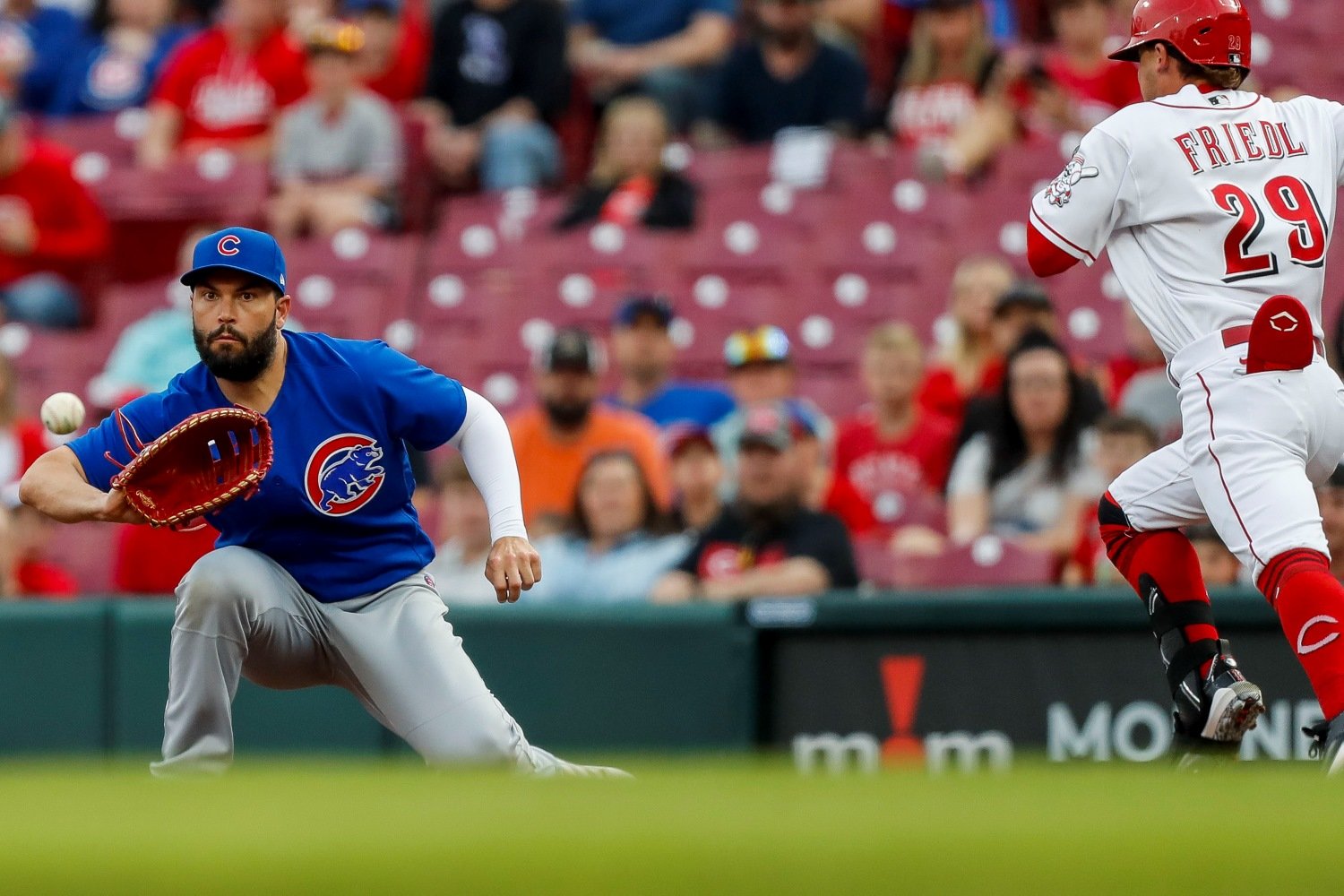 In the selloff of the championship Cubs, perhaps no bigger gap was created than the one left by Anthony Rizzo. Nico Hoerner stepped into shortstop after Javier Baez’s departure, and Patrick Wisdom had already displaced Kris Bryant at third base during the course of the 2021 season. However, the heart-shaped hole at 1B has proven tougher to fill. While we got one of the best storylines in baseball in Frank Schwindel’s brilliant half-season to close out 2021, that magic proved impossible to recapture. Alfonso Rivas was also unable to lock down a roster spot after producing a lackluster 82 wRC+ over 101 games for the Cubs in 2022. The Cubs front office called out 1B as a position in need of an upgrade going into the season, and made several moves to do so. They signed Trey Mancini to a two-year deal (with an opt-out after this year if he reaches 350 plate appearances), and picked up a squeezed-out Edwin Ríos from the Dodgers. But the primary plan was also the earliest move they made: signing Eric Hosmer. Released from the last three years of his contract with the Padres (à la Jason Heyward), Hosmer found himself traded to the Red Sox this past season, and released from their roster in December. The Cubs didn’t hesitate much, signing Hosmer to a league-minimum deal (as the rest of his salary remains paid by the Padres) in early January. Hosmer is a name that’s been bandied about for the Cubs for a few seasons now, but why? Well, I’d argue you only need to look around at the rest of the diamond to see the full picture. While first base is a bat-first position, the Cubs have decided to make one part of baseball their touchstone for 2023: defense. This should be no surprise to anyone who’s watched the first few games, as Marquee is keen to show the Outs Above Average (OAA) of their two star infielders, Hoerner and Dansby Swanson, as well as the Gold Glove wins by each member when introducing the defensive alignment at the start of the game. Sure enough, with four Gold Gloves to his name, Hosmer stands out even among a highly-decorated defensive unit. However, Gold Gloves are a flawed marker at best. As happens with many other awards, narratives can sometimes lead metrics, so the reputation and hardware might not match the results. Cubs fans should know this well; Ian Happ beat out the Brewers’ Christian Yelich (who’s borderline unplayable defensively) for his first Gold Glove in left field last year. So what do the defensive metrics say about Hosmer? Defensive statistics are notably noisy. They often vary greatly year to year, and different metrics might disagree on the same player. Yet, they paint a fairly consistent picture about Hosmer. By OAA, last year Hosmer graded out at -2, in the same company as Rizzo. Still, it should be noted that this only puts him in the middle of the pack, with most first basemen falling between +3 and -4. That -2 range is the recent story for Hosmer; he’s ended up around there since 2020. Actually, it’s in his early career that he ran into trouble–ironically during the seasons in which he won his defensive awards. For his career, he’s been worth -38 OAA, and -35 of that came between 2016 to 2019. That seems to suggest either some defensive improvement (or at least a leveling out), in spite of what Padres fans might tell you. Is that enough? For one thing, Trey Mancini has graded out as well as Hosmer by OAA, albeit over a smaller sample. Beyond the glove, you can’t forget the bat. The story with Hosmer has been the same for years. He’s hitting the ball fairly hard, but directly into the dirt, turning him into one of the game's most-efficient double-play machines. Last year, he led first basemen with a whopping 56.8 ground-ball percentage. Among all players last year, only the Diamondbacks’ Alek Thomas and the Brewers’ Yelich beat him out. Unlike OAA, this is not a recent trend. Going back to 2018, his rate remains 56.6 percent, the fourth-highest in baseball. So what is it the Cubs think he brings to the table? Well, it seems clear to me that they view him as the best defender available on the roster at first; someone they were able to add for a league-minimum salary; and someone who projects to be an above-average bat (if only slightly) according to ZiPS, with an above-average walk rate and below-average strikeout rate. But you can’t talk about first base for the Cubs in 2023 without talking about the man waiting in the wings, prospect Matt Mervis. While Mervis is not exactly viewed as a defensive wizard, his bat is becoming undeniable. At the very least, he has little left to prove in the minors. Between Hosmer’s low salary, middling performance, and the potential future of the position a mere bus ride away, Hosmer’s got his work cut out for him to hang on to this roster spot for more than a few weeks. Each missed pick and mental miscue will only make his playing time harder to justify.
 -
The most surprising inclusion on the Cubs' Opening Day roster knows a little bit about being viewed as out of place in these situations, and has experience as a third catcher. Who is Luis Torrens, and what does he bring to the table? As Spring Training came to a close, the Cubs were uncharacteristically late in determining the final roster. After years with more locks than holes around the diamond, the 2023 Chicago Cubs came into Spring Training with only a handful of positions—namely, the middle infield and the corner outfield—without debate. That naturally led to more uncertainty for this year’s 26-man–and more opportunity, depending on how you look at it. While many were discussing the merits of their utility man of choice, an arguably surprising name claimed one of the bench spots: Luis Torrens. While a quick glance at his -0.3 fWAR and 72 wRC+ might not exactly scream must-have, there’s a lot more going on under the hood that makes Torrens an interesting pick. Signed as a 16-year-old out of Venezuela by the Yankees in 2012, he eventually found his way to the Padres by way of the Reds via the Rule 5 draft. For those who aren’t aware, the Rule 5 draft is a process that allows teams to select players from other organizations who have yet to be added to the 40-man roster. For players drafted while they’re under 18, they’re eligible for the Rule 5 draft after their 5th full season. However, it doesn’t come without a catch (or a few of them). For one, the team that selects a player has to add that player to their active roster, and keep them on the roster without optioning them at any point for the entire season following their selection. Otherwise, the player is offered back to the team they were selected from. It’s a tough balancing act, with teams trying to find players who slipped through the cracks with their original org, but who look ready to be added to a major-league roster. Of course, this isn’t always the case—and that’s how 21-year-old Torrens found himself on the 2017 Padres’ big-league roster, despite having not played above A-ball to that point. Originally an infielder, he soon converted to catcher while still in the New York system, and while he’s been commended for his rapport with pitchers, his defense has left something to be desired. He’s seen as a bat-first talent with potential 20-homer power. This did not materialize in his 2017 season, where he posted a paltry 17 wRC+, second-worst in the majors among players with at least 130 plate appearances, behind only fellow catcher Luke Maile, then with Toronto. Fortunately, things picked up for Torrens from there. He found his way back to the minors, where he put up a much more respectable 142 wRC+ in nearly 100 games at AA. After a second cup of coffee with San Diego, he was shipped north to Seattle in the trade for Austin Nola. In 2021 and 2022, he appeared in 165 games for the Mariners, and posted a 101 and 72 wRC+, respectively. Well, that’s great and all, but what’s so special about a below-average hitting catcher that made him a can’t-miss player for the Cubs this year? First and foremost is the optimism about his bat. Of course, behind Yan Gomes and Tucker Barnhart, even a league-average hitting catcher would be an upgrade, and there’s reason to think he might have higher heights still to come. He’s shown out well in spring, for what that’s worth (not a ton!), contributing a 1.021 OPS to the Cubs’ spring efforts. He enters 2023 as a 26-year-old; his 15-game rolling wRC+ seems to suggest he’s starting to figure things out, and the peaks are nothing to scoff at. Second, he already hits lefties well, making him a good replacement for Barnhart, especially. As pointed out by Michael Cerami on Twitter, the Cubs tend to carry 3 catchers, where possible. Given the low expectations placed on Gomes’s and Barnhart’s bats; top Cubs catching prospect Miguel Amaya’s injury issues and lack of experience; Moises Ballesteros’ distance to the majors (he’s only 19), and a potential injury to veteran backstop Dom Nuñez (signed to catch at AAA as the next in line), Torrens gives the Cubs a young, controllable catcher with some remaining upside. All he cost was a roster spot. View full article
-
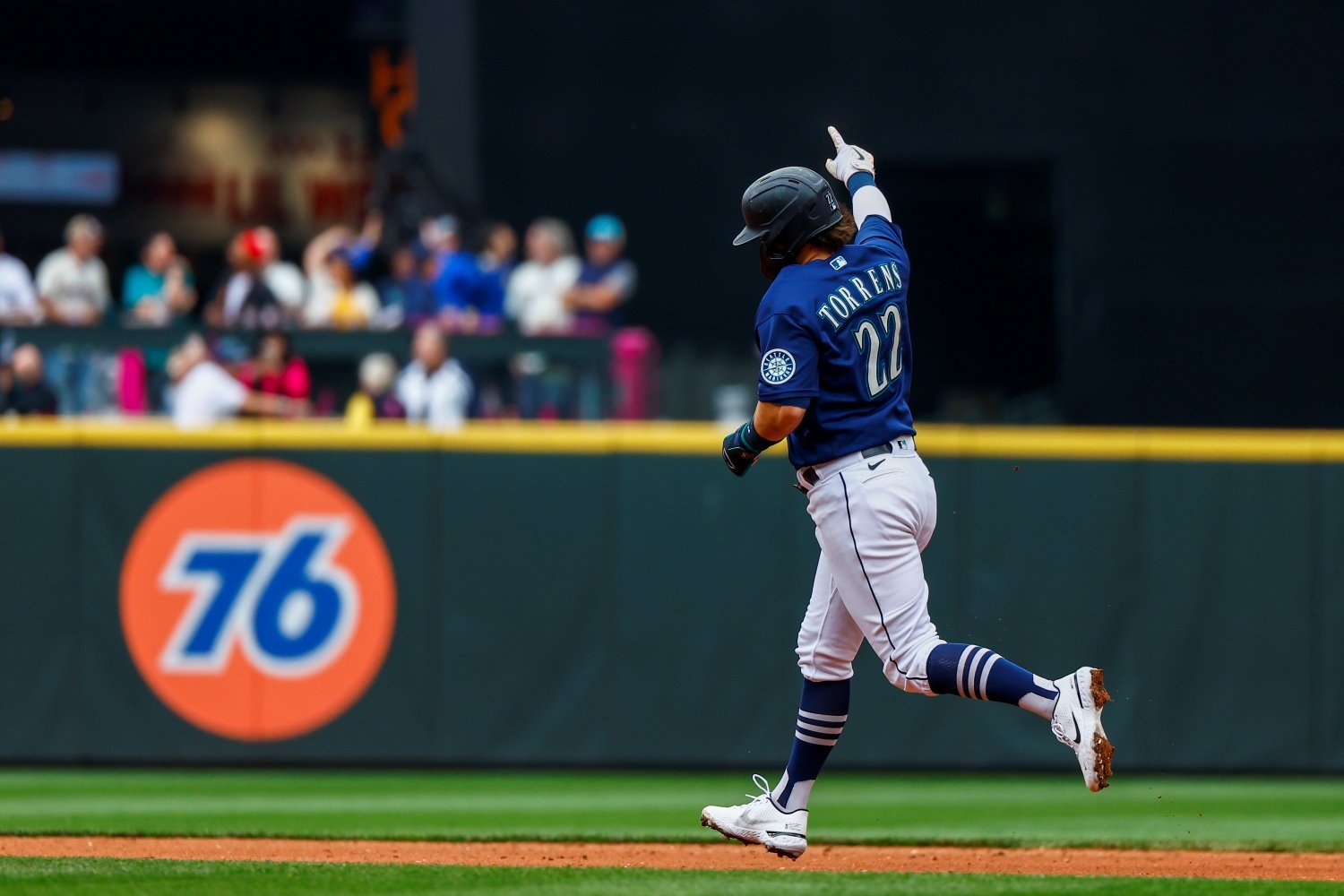 As Spring Training came to a close, the Cubs were uncharacteristically late in determining the final roster. After years with more locks than holes around the diamond, the 2023 Chicago Cubs came into Spring Training with only a handful of positions—namely, the middle infield and the corner outfield—without debate. That naturally led to more uncertainty for this year’s 26-man–and more opportunity, depending on how you look at it. While many were discussing the merits of their utility man of choice, an arguably surprising name claimed one of the bench spots: Luis Torrens. While a quick glance at his -0.3 fWAR and 72 wRC+ might not exactly scream must-have, there’s a lot more going on under the hood that makes Torrens an interesting pick. Signed as a 16-year-old out of Venezuela by the Yankees in 2012, he eventually found his way to the Padres by way of the Reds via the Rule 5 draft. For those who aren’t aware, the Rule 5 draft is a process that allows teams to select players from other organizations who have yet to be added to the 40-man roster. For players drafted while they’re under 18, they’re eligible for the Rule 5 draft after their 5th full season. However, it doesn’t come without a catch (or a few of them). For one, the team that selects a player has to add that player to their active roster, and keep them on the roster without optioning them at any point for the entire season following their selection. Otherwise, the player is offered back to the team they were selected from. It’s a tough balancing act, with teams trying to find players who slipped through the cracks with their original org, but who look ready to be added to a major-league roster. Of course, this isn’t always the case—and that’s how 21-year-old Torrens found himself on the 2017 Padres’ big-league roster, despite having not played above A-ball to that point. Originally an infielder, he soon converted to catcher while still in the New York system, and while he’s been commended for his rapport with pitchers, his defense has left something to be desired. He’s seen as a bat-first talent with potential 20-homer power. This did not materialize in his 2017 season, where he posted a paltry 17 wRC+, second-worst in the majors among players with at least 130 plate appearances, behind only fellow catcher Luke Maile, then with Toronto. Fortunately, things picked up for Torrens from there. He found his way back to the minors, where he put up a much more respectable 142 wRC+ in nearly 100 games at AA. After a second cup of coffee with San Diego, he was shipped north to Seattle in the trade for Austin Nola. In 2021 and 2022, he appeared in 165 games for the Mariners, and posted a 101 and 72 wRC+, respectively. Well, that’s great and all, but what’s so special about a below-average hitting catcher that made him a can’t-miss player for the Cubs this year? First and foremost is the optimism about his bat. Of course, behind Yan Gomes and Tucker Barnhart, even a league-average hitting catcher would be an upgrade, and there’s reason to think he might have higher heights still to come. He’s shown out well in spring, for what that’s worth (not a ton!), contributing a 1.021 OPS to the Cubs’ spring efforts. He enters 2023 as a 26-year-old; his 15-game rolling wRC+ seems to suggest he’s starting to figure things out, and the peaks are nothing to scoff at. Second, he already hits lefties well, making him a good replacement for Barnhart, especially. As pointed out by Michael Cerami on Twitter, the Cubs tend to carry 3 catchers, where possible. Given the low expectations placed on Gomes’s and Barnhart’s bats; top Cubs catching prospect Miguel Amaya’s injury issues and lack of experience; Moises Ballesteros’ distance to the majors (he’s only 19), and a potential injury to veteran backstop Dom Nuñez (signed to catch at AAA as the next in line), Torrens gives the Cubs a young, controllable catcher with some remaining upside. All he cost was a roster spot.