


Seth Stohs
-
Posts
139 -
Joined
-
Last visited
Content Type
Profiles
Joomla Posts 1
Chicago Cubs Videos
Chicago Cubs Free Agent & Trade Rumors, Notes, & Tidbits
2026 Chicago Cubs Top Prospects Ranking
News
2023 Chicago Cubs Draft Picks
Guides & Resources
2024 Chicago Cubs Draft Picks
The Chicago Cubs Players Project
2025 Chicago Cubs Draft Pick Tracker
2026 Chicago Cubs Draft Tracker: Picks & Bonuses
Blogs
Events
Forums
Store
Gallery
Everything posted by Seth Stohs
-
Pfft... if we're gonna go by career MLB batting average, there's no contest... Billy Hamilton is 239 points higher. No comparison!
-
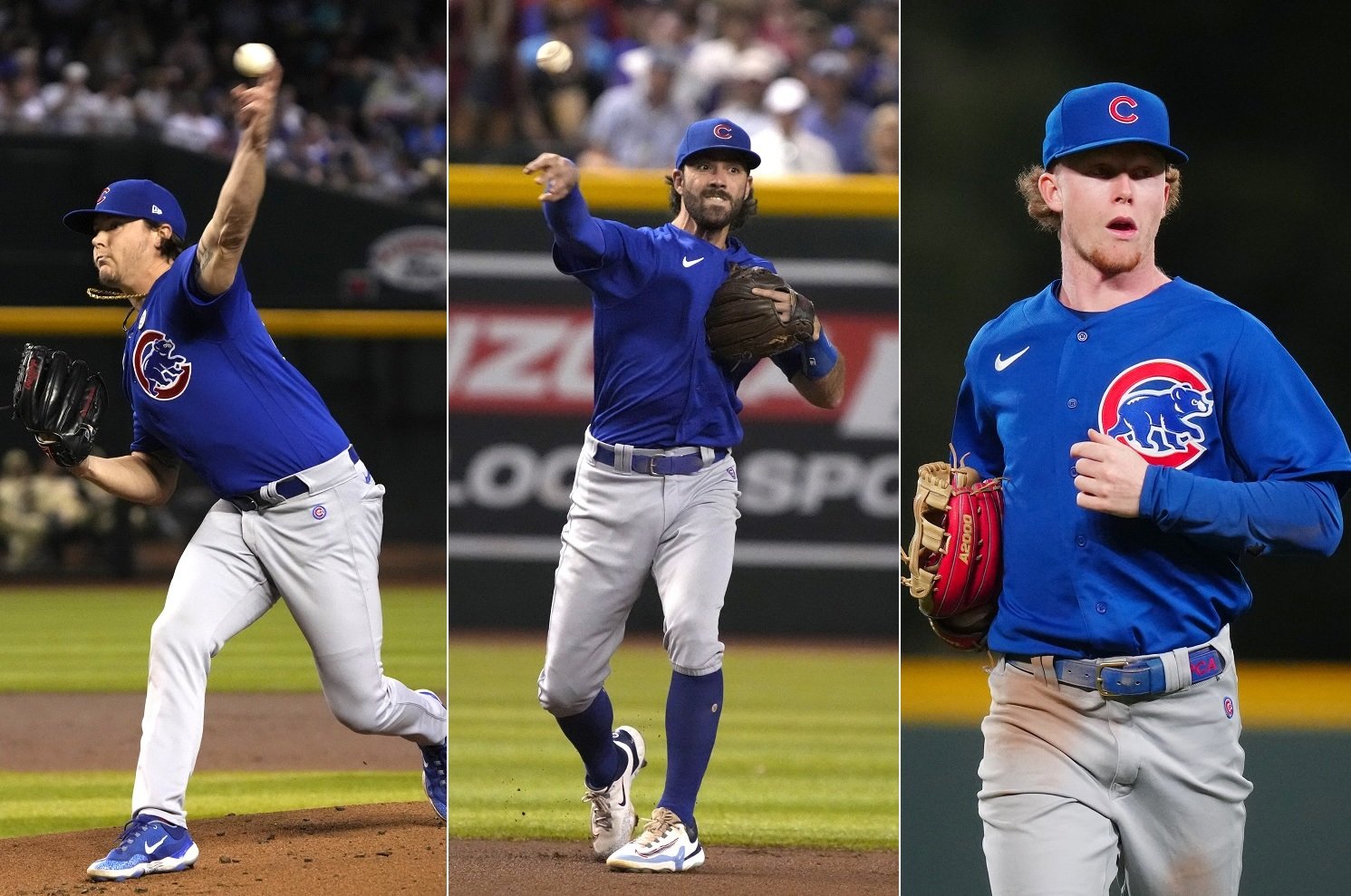 The Chicago Cubs are a big-market team with an annual budget payroll approaching $200 million. Their response to this question is likely different than it might be for a team with a budget half that size. The goal is the same. Who provides more value to a team looking to win a championship (or championships)? For a more thorough explanation of these rankings and how they are developed, check out Part 1’s introduction post. The shortened version: Which players in the Cubs organization are most crucial to developing a championship-caliber team? To rank the Cubs players and prospects, we consider age, contract status, years of control, ceiling/potential, and more. To recap, here is the first installment of this year's top 20 player assets lists: 20. Ben Brown, RHP 19. Alexander Canario, OF 18. Kyle Hendricks, RHP 17. Owen Caissie, OF 16. Kevin Alcantara, OF 15. Seiya Suzuki, OF 14. Adbert Alzolay, RH RP 13. Michael Busch, IF 12. Javier Assad, RHP 11. Jordan Wicks, LHP 10. Jameson Taillon, RHP 9. Ian Happ, OF 8. Nico Hoerner, 2B 7. Christopher Morel, UT 6. Shota Imanaga, LHP 5. SS Matt Shaw (22) Last summer, the Cubs used the 13th overall pick in the draft to select Matt Shaw out of the University of Maryland, where he had an awe-inspiring three-year career. As a freshman in 2021, he hit .332 (.952) with 16 doubles and seven homers. The following season, he hit .290 (.986) with 11 doubles and 22 home runs. In 62 games as a junior, he hit .341 (.1.142) with 20 doubles and 24 home runs. Those are pretty impressive numbers, especially coming out of the shortstop position. After signing, Shaw played in three games in Arizona. Then, he played in 20 games at High-A Wisconsin, where he hit .393 (1.082) with four doubles, three triples, and four home runs. He finished the season with 15 games at Double-A and hit .292 (.852) with four doubles and three homers. With Tennessee, he made eight starts at second base and three at shortstop and third base. With Dansby Swanson around, Shaw’s path to the big leagues likely starts at third base, and that could happen as soon as midseason this year. 4. RHP Cade Horton (22) Undrafted out of high school, Cade Horton stayed in his hometown of Norman, Oklahoma, and went to the University of Oklahoma on a baseball scholarship. He also was a walk-on to the football team. Before his freshman season, he tore his UCL and needed Tommy John surgery. As a redshirt freshman, he was a two-way player. He primarily played third base but also made four starts at shortstop and hit .235 (.648) with six doubles, two triples, and one home run. He pitched out of the Sooners bullpen early in the season but ended the year making 11 starts. Overall, he went 5-2 with a 4.86 ERA. In 53 2/3 innings, he walked 15 and struck out 64 batters. In July, the Cubs were comfortable with Horton’s medicals and surprised a lot of draft experts by selecting him with the seventh overall pick in the 2022 draft. He didn’t pitch that summer, and the Cubs were quite cautious with him, especially early in the 2023 season. He started with four starts and just 14 1/3 innings at Low-A Myrtle Beach. As you’d expect, he dominated. He gave up just two runs, walked four, and struck out 21 batters. He moved up to South Bend and threw 47 innings in 11 starts. He walked 12 and struck out 65 batters. Horton ended the season with six starts and 27 innings in Double-A Tennessee. He had a 1.33 ERA and 31 strikeouts to just 11 walks. So you don’t have to do the math; he combined for 117 strikeouts to just 27 walks in 88 1/3 innings. With less than 100 innings in 2023, seeing how the Cubs use him in 2024 will be very interesting. They should continue to be cautious because that is how valuable he can be to the organization's future. Horton has “Ace” written all over him in time. The big thing will be building up his innings count. 3. SS Dansby Swanson (29) Swanson came to the Cubs last offseason on a seven-year deal worth $177 million. While he saw his batting average drop to .244, the former #1 overall pick was worth 4.7 fWAR for the Cubs in 2023. He was an All-Star. He won his second Gold Glove. After leading the National League in games played the three previous seasons, Swanson played 147 in his first year with the Cubs. He had 25 doubles and 22 home runs. Dansby Swanson has been a big-time player, a key cog in Atlanta’s success. He is known to be an outstanding leader. He has a World Series ring. There are a lot of intangibles to Swanson’s game. However, with the contract, the Cubs and their fans will want him to have an OPS+ of over 100, which he has only done once in a full-length season over his eight years in MLB. He had a 115 OPS+ over 38 games in his debut season in 2016. His OPS+ was 111 in the 60-game Covid season of 2020. In 2022, he posted a 114 OPS+. His OPS+ in 2023 and 2021 was 99, basically league average. Swanson had six years and $157 million remaining on his contract. While the Cubs have an annual payroll that can account for a bad contract, it would be great if Swanson could provide above-league-average offensive production for the next three or four years. His defense is fantastic and will need to remain so to validate the contract. 2. OF Pete Crow-Armstrong (21) Pete Crow-Armstrong was the Mets top pick in 2020, 19th overall out of the little, big-league, starting pitcher factory Harvard-Westlake in Los Angeles. (At one time, Lucas Giolito, Max Fried, and Jack Flaherty were all in the high school’s rotation.) In July 2021, the Cubs sent Javier Baez and Trevor Williams to the Mets in return for the speedy center fielder. In 2022, he split the season between Low-A Myrtle Beach and High-A South Bend. In 101 games, he hit .312/.376/.520 (.896) with 20 doubles, 10 triples, and 16 home runs. He also had 32 stolen bases. In 2023, he started the season with 73 games at Double-A Tennessee before getting 34 games in Triple-A Iowa. In 107 total games, he hit .283/.365/.511 (.876) with 26 doubles, seven triples, 20 home runs, and 37 stolen bases. He was called up to the Cubs in early September. He went 0-for-14 at the plate but showed he can be a game-changer in center field. There is no reason to worry about 14 at-bats. Pete Crow-Armstrong is going to hit in time. Will he make the Cubs' Opening Day roster or get a couple more months? If the decision is made on defense, he will be in the big leagues from Day 1. And then, hopefully, in the Cubs lineup for the next decade or more. 1. LHP Justin Steele (28) The Cubs used their fifth-round pick in the 2014 draft to select left-handed pitcher Justin Steele out of George County HS in Lucedale, Mississippi. He moved up one level each year from 2014-2017. He fought injuries in 2018 and then reached Triple-A in 2019. He didn’t pitch in 2020. However, in 2021, he made the Cubs Opening Day roster and worked out of the bullpen. He missed the end of May and most of June. He was optioned to Iowa and made four relief appearances before they moved him into the starting rotation. He built up to five innings and then was called back up to the Cubs in early August. He had some ups and downs but completed five innings in six of nine starts. The southpaw had a solid first full season in the Cubs rotation in 2022. He made 24 starts and went 4-7 with a 3.18 ERA and 1.35 WHIP. In 119 innings, he had 50 walks to go with 126 strikeouts. He had his breakout season in 2023. He made 30 starts and went 16-5 with a 3.06 ERA and a 1.17 WHIP. In 173 1/3 innings, he walked 36 and struck out 176 batters. Even with the additional 54 innings, he still had more than a strikeout per inning. More important, his BB/9 rate dropped from 3.8 to 1.9. That’s a significant statistic for Steele because he doesn’t throw hard. His fastball in 2023 averaged just shy of 92 mph. However, his slider bumped back over 83 mph, and he used it more often than in 2023. After making around the league minimum the past three seasons, Steele will make $4 million in 2024. It is his first of what could be four arbitration-eligible seasons. If he pitches well, the Cubs will happily pay him his arbitration numbers and even look long-term. His value in trade is probably at its peak right now. I also think that he might be the key to the success of the Cubs over the next few seasons. If he pitches like he did in 2023, he can lead the rotation for years to come. That’s all for today’s installment of five players and the complete list of 20 Cubs players. Would you rearrange any of them? Do any of them jump out to you? Top 20 Cubs Player Assets (these links take you to the search results at North Side Baseball for these players.) 20. Ben Brown, RHP 19. Alexander Canario, OF 18. Kyle Hendricks, RHP 17. Owen Caissie, OF 16. Kevin Alcantara, OF 15. Seiya Suzuki, OF 14. Adbert Alzolay, RH RP 13. Michael Busch, IF 12. Javier Assad, RHP 11. Jordan Wicks, LHP 10. Jameson Taillon, RHP 9. Ian Happ, OF 8. Nico Hoerner, 2B 7. Christopher Morel, UT 6. Shota Imanaga, LHP 5. Matt Shaw, IF 4. Cade Horton , RHP 3. Dansby Swanson, SS 2. Pete Crow-Armstrong, OF 1. Justin Steele, LHP
 -
Which players in the Chicago Cubs organization are most valuable to the goal of winning championships? Over the past couple of weeks, we have been counting down the Top 20 player assets. This should become your list, so feel free to add your thoughts, agree or disagree, and make your suggestions. Image courtesy of Rick Scuteri, USA Today (photos of Steele, Swanson), Ron Chenoy, USA Today (Crow-Armstrong) The Chicago Cubs are a big-market team with an annual budget payroll approaching $200 million. Their response to this question is likely different than it might be for a team with a budget half that size. The goal is the same. Who provides more value to a team looking to win a championship (or championships)? For a more thorough explanation of these rankings and how they are developed, check out Part 1’s introduction post. The shortened version: Which players in the Cubs organization are most crucial to developing a championship-caliber team? To rank the Cubs players and prospects, we consider age, contract status, years of control, ceiling/potential, and more. To recap, here is the first installment of this year's top 20 player assets lists: 20. Ben Brown, RHP 19. Alexander Canario, OF 18. Kyle Hendricks, RHP 17. Owen Caissie, OF 16. Kevin Alcantara, OF 15. Seiya Suzuki, OF 14. Adbert Alzolay, RH RP 13. Michael Busch, IF 12. Javier Assad, RHP 11. Jordan Wicks, LHP 10. Jameson Taillon, RHP 9. Ian Happ, OF 8. Nico Hoerner, 2B 7. Christopher Morel, UT 6. Shota Imanaga, LHP 5. SS Matt Shaw (22) Last summer, the Cubs used the 13th overall pick in the draft to select Matt Shaw out of the University of Maryland, where he had an awe-inspiring three-year career. As a freshman in 2021, he hit .332 (.952) with 16 doubles and seven homers. The following season, he hit .290 (.986) with 11 doubles and 22 home runs. In 62 games as a junior, he hit .341 (.1.142) with 20 doubles and 24 home runs. Those are pretty impressive numbers, especially coming out of the shortstop position. After signing, Shaw played in three games in Arizona. Then, he played in 20 games at High-A Wisconsin, where he hit .393 (1.082) with four doubles, three triples, and four home runs. He finished the season with 15 games at Double-A and hit .292 (.852) with four doubles and three homers. With Tennessee, he made eight starts at second base and three at shortstop and third base. With Dansby Swanson around, Shaw’s path to the big leagues likely starts at third base, and that could happen as soon as midseason this year. 4. RHP Cade Horton (22) Undrafted out of high school, Cade Horton stayed in his hometown of Norman, Oklahoma, and went to the University of Oklahoma on a baseball scholarship. He also was a walk-on to the football team. Before his freshman season, he tore his UCL and needed Tommy John surgery. As a redshirt freshman, he was a two-way player. He primarily played third base but also made four starts at shortstop and hit .235 (.648) with six doubles, two triples, and one home run. He pitched out of the Sooners bullpen early in the season but ended the year making 11 starts. Overall, he went 5-2 with a 4.86 ERA. In 53 2/3 innings, he walked 15 and struck out 64 batters. In July, the Cubs were comfortable with Horton’s medicals and surprised a lot of draft experts by selecting him with the seventh overall pick in the 2022 draft. He didn’t pitch that summer, and the Cubs were quite cautious with him, especially early in the 2023 season. He started with four starts and just 14 1/3 innings at Low-A Myrtle Beach. As you’d expect, he dominated. He gave up just two runs, walked four, and struck out 21 batters. He moved up to South Bend and threw 47 innings in 11 starts. He walked 12 and struck out 65 batters. Horton ended the season with six starts and 27 innings in Double-A Tennessee. He had a 1.33 ERA and 31 strikeouts to just 11 walks. So you don’t have to do the math; he combined for 117 strikeouts to just 27 walks in 88 1/3 innings. With less than 100 innings in 2023, seeing how the Cubs use him in 2024 will be very interesting. They should continue to be cautious because that is how valuable he can be to the organization's future. Horton has “Ace” written all over him in time. The big thing will be building up his innings count. 3. SS Dansby Swanson (29) Swanson came to the Cubs last offseason on a seven-year deal worth $177 million. While he saw his batting average drop to .244, the former #1 overall pick was worth 4.7 fWAR for the Cubs in 2023. He was an All-Star. He won his second Gold Glove. After leading the National League in games played the three previous seasons, Swanson played 147 in his first year with the Cubs. He had 25 doubles and 22 home runs. Dansby Swanson has been a big-time player, a key cog in Atlanta’s success. He is known to be an outstanding leader. He has a World Series ring. There are a lot of intangibles to Swanson’s game. However, with the contract, the Cubs and their fans will want him to have an OPS+ of over 100, which he has only done once in a full-length season over his eight years in MLB. He had a 115 OPS+ over 38 games in his debut season in 2016. His OPS+ was 111 in the 60-game Covid season of 2020. In 2022, he posted a 114 OPS+. His OPS+ in 2023 and 2021 was 99, basically league average. Swanson had six years and $157 million remaining on his contract. While the Cubs have an annual payroll that can account for a bad contract, it would be great if Swanson could provide above-league-average offensive production for the next three or four years. His defense is fantastic and will need to remain so to validate the contract. 2. OF Pete Crow-Armstrong (21) Pete Crow-Armstrong was the Mets top pick in 2020, 19th overall out of the little, big-league, starting pitcher factory Harvard-Westlake in Los Angeles. (At one time, Lucas Giolito, Max Fried, and Jack Flaherty were all in the high school’s rotation.) In July 2021, the Cubs sent Javier Baez and Trevor Williams to the Mets in return for the speedy center fielder. In 2022, he split the season between Low-A Myrtle Beach and High-A South Bend. In 101 games, he hit .312/.376/.520 (.896) with 20 doubles, 10 triples, and 16 home runs. He also had 32 stolen bases. In 2023, he started the season with 73 games at Double-A Tennessee before getting 34 games in Triple-A Iowa. In 107 total games, he hit .283/.365/.511 (.876) with 26 doubles, seven triples, 20 home runs, and 37 stolen bases. He was called up to the Cubs in early September. He went 0-for-14 at the plate but showed he can be a game-changer in center field. There is no reason to worry about 14 at-bats. Pete Crow-Armstrong is going to hit in time. Will he make the Cubs' Opening Day roster or get a couple more months? If the decision is made on defense, he will be in the big leagues from Day 1. And then, hopefully, in the Cubs lineup for the next decade or more. 1. LHP Justin Steele (28) The Cubs used their fifth-round pick in the 2014 draft to select left-handed pitcher Justin Steele out of George County HS in Lucedale, Mississippi. He moved up one level each year from 2014-2017. He fought injuries in 2018 and then reached Triple-A in 2019. He didn’t pitch in 2020. However, in 2021, he made the Cubs Opening Day roster and worked out of the bullpen. He missed the end of May and most of June. He was optioned to Iowa and made four relief appearances before they moved him into the starting rotation. He built up to five innings and then was called back up to the Cubs in early August. He had some ups and downs but completed five innings in six of nine starts. The southpaw had a solid first full season in the Cubs rotation in 2022. He made 24 starts and went 4-7 with a 3.18 ERA and 1.35 WHIP. In 119 innings, he had 50 walks to go with 126 strikeouts. He had his breakout season in 2023. He made 30 starts and went 16-5 with a 3.06 ERA and a 1.17 WHIP. In 173 1/3 innings, he walked 36 and struck out 176 batters. Even with the additional 54 innings, he still had more than a strikeout per inning. More important, his BB/9 rate dropped from 3.8 to 1.9. That’s a significant statistic for Steele because he doesn’t throw hard. His fastball in 2023 averaged just shy of 92 mph. However, his slider bumped back over 83 mph, and he used it more often than in 2023. After making around the league minimum the past three seasons, Steele will make $4 million in 2024. It is his first of what could be four arbitration-eligible seasons. If he pitches well, the Cubs will happily pay him his arbitration numbers and even look long-term. His value in trade is probably at its peak right now. I also think that he might be the key to the success of the Cubs over the next few seasons. If he pitches like he did in 2023, he can lead the rotation for years to come. That’s all for today’s installment of five players and the complete list of 20 Cubs players. Would you rearrange any of them? Do any of them jump out to you? Top 20 Cubs Player Assets (these links take you to the search results at North Side Baseball for these players.) 20. Ben Brown, RHP 19. Alexander Canario, OF 18. Kyle Hendricks, RHP 17. Owen Caissie, OF 16. Kevin Alcantara, OF 15. Seiya Suzuki, OF 14. Adbert Alzolay, RH RP 13. Michael Busch, IF 12. Javier Assad, RHP 11. Jordan Wicks, LHP 10. Jameson Taillon, RHP 9. Ian Happ, OF 8. Nico Hoerner, 2B 7. Christopher Morel, UT 6. Shota Imanaga, LHP 5. Matt Shaw, IF 4. Cade Horton , RHP 3. Dansby Swanson, SS 2. Pete Crow-Armstrong, OF 1. Justin Steele, LHP View full article
-
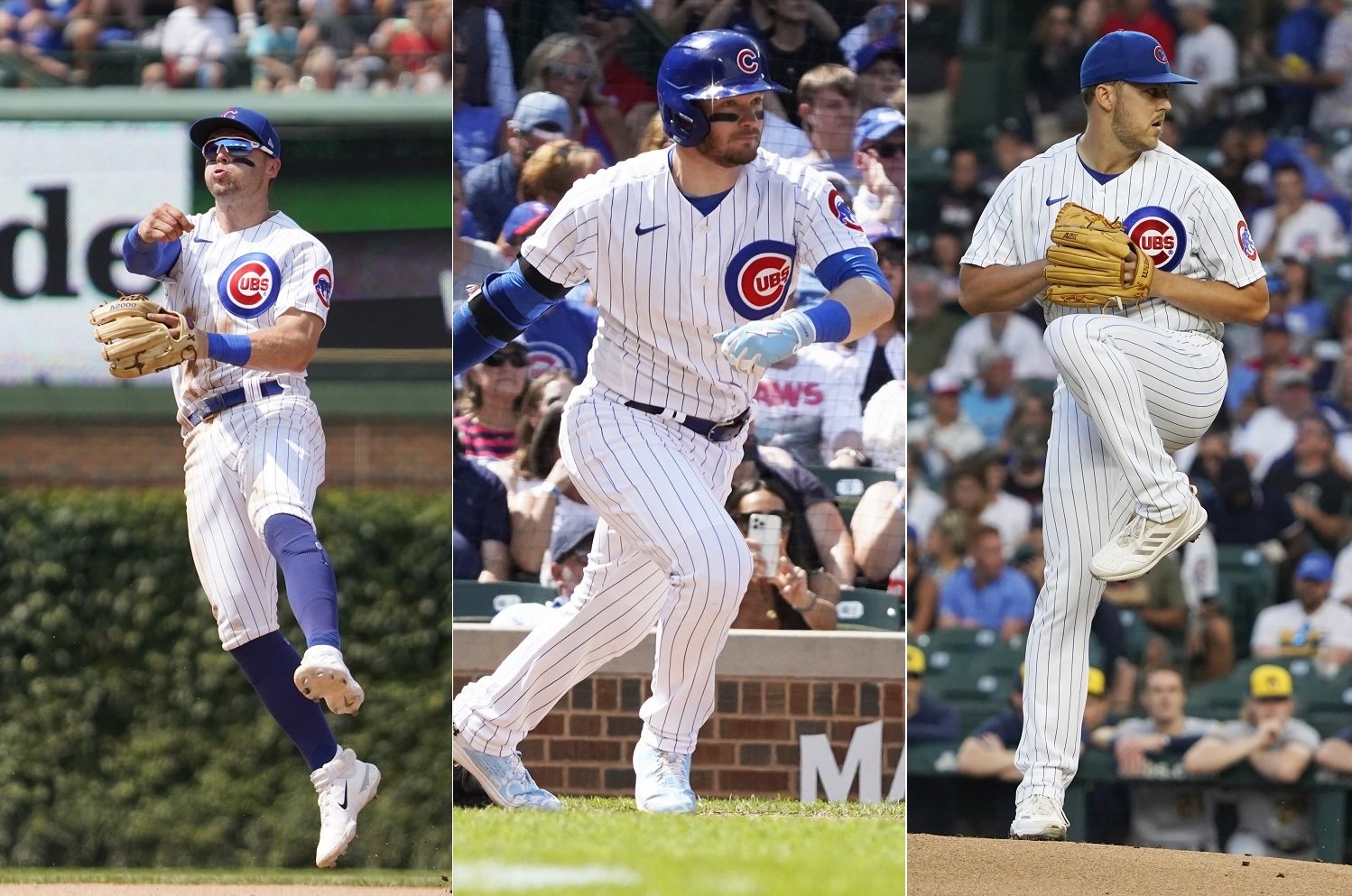 The Cubs are a big-market team with a $250-million annual budget. Their response to this question is likely different than it might be for a team with a budget half that size. The goal is the same. Who provides more value to a team looking to win a championship (or championships)? For a more thorough explanation of these rankings and how they are developed, check out Part 1’s introduction post. The shortened version: Which players in the Cubs organization are most crucial to developing a championship-caliber team? To rank the Cubs players and prospects, we consider age, contract status, years of control, ceiling/potential, and more. To recap Part 1 and Part 2, here are the players who ranked 11-20: 20. Ben Brown, RHP 19. Alexander Canario, OF 18. Kyle Hendricks, RHP 17. Owen Caissie, OF 16. Kevin Alcántara, OF 15. Seiya Suzuki, OF 14. Adbert Alzolay, RH RP 13. Michael Busch, IF 12. Javier Assad, RHP 11. Jordan Wicks, LHP 10. RHP Jameson Taillon (32) In 2010, the Pirates made Jameson Taillon the second overall pick in the draft out of high school in Texas. He moved up the ladder quickly, reaching Triple A in 2013. However, he started fighting injuries and missed the 2014 and 2015 seasons. He returned in 2016, and was dominant in 10 Triple-A starts before getting called up. He made 25 starts or more in 2017 and 2018. Then, in 2019, he got hurt again and made just seven starts. Before 2021, he was traded to the Yankees and went 22-11 over his two years there. Last offseason, the Cubs signed him to a four-year, $68-million contract. After making $14 million in 2023, he will make $18 million each of the following three seasons. In 2023, he went 8-10 with a 4.84 ERA. He made 29 starts (and one relief appearance). In 154 1/3 innings, he walked 41 and struck out 140 batters. The Cubs are betting on Taillon being able to stay healthy. He had made 29 or more starts each of the past three seasons after not pitching in 2020. However, he hasn’t thrown more than 177 1/3 innings in any of those three seasons. He also has averaged just 8.2 K/9 in that time. However, with Taillon, there has always been an expectation of more. Maybe it is because of his draft spot, size, and fastball. But at this stage, Taillon is what he is. The Cubs and their fans can hope for more, and maybe it is still there, but with that much contract left, the hope should be for him to remain healthy and pitch like a solid third starter. 9. 2B Nico Hoerner (26) The Cubs selected Nico Hoerner with the 24th overall pick in the 2018 draft out of Stanford. He quickly moved up and made his debut in 2019 with 20 games. In 2021, he missed significant time due to injury, but in 44 games, he hit .302. In 2022, he played 135 games and hit .281 with a .737 OPS. He hit 22 doubles, five triples, and 10 home runs. That year, he did a very nice job as a shortstop and was a 4.0 fWAR player. (4.7 bWAR). The Cubs signed Dansby Swanson to a huge contract last offseason to take the reins at shortstop. Hoerner moved to second base, and before the season, the Cubs locked him up to a three-year, $35-million extension that bought out one year of free agency. Hoerner responded by playing 150 games and hitting .283 with a .729 OPS. He hit 27 doubles, four triples, and nine home runs. He stole 43 bases. He also won his first Gold Glove Award. While his OPS+ was just 97, he was worth 4.7 fWAR (5.1 bWAR, top on the team). 8. OF Ian Happ (29) Cubs fans likely remember the end of the 2022 season, when video inside the Cubs dugout showed Ian Happ and Willson Contreras embracing. Everyone understood that it might be the final day in a Cubs uniform for both of them. Contreras signed elsewhere, but Happ wasn't dealt last winter and, last spring, signed an extension to stay with the Cubs through the 2026 season. He is owed another $58 million. However, Happ is still just 29 years old and playing as well as ever. He was an All-Star in 2022. He has won a Gold Glove each of the past two seasons. While Happ may not have as high a ceiling as some, he has been remarkably consistent throughout his career. He was the Cubs top pick in 2015 out of Cincinnati. He debuted less than two years later, in mid-May of 2017. Over the past three seasons, he has played at least 148 games and had at least 149 strikeouts. However, in 2023, he walked 99 times, almost 30 more than his previous career-high. The Cubs do have some depth working their way up the organizational ladder, but as long as Happ stays healthy, he’ll remain in the lineup almost daily. 7. DH Christopher Morel (24) Christopher Morel signed with the Cubs back in 2016. He gradually worked his way up the ladder. He spent most of 2021 with Double-A Tennessee. That’s where he began the 2022 season, but after 28 games, he hit .306 with five doubles and seven homers. The Cubs called him up to the big leagues and let him play in 113 games. He struggled to make contact (137 K, 425 PA) but hit a reasonable .235/.308/.433 (.741) with 19 doubles, four triples, and 16 home runs. He played center field (57 games), second base (33), third base (18), shortstop (13), and one game in left field. With Cody Bellinger's and Dansby Swanson's additions, Morel began the 2023 season in Triple-A Iowa. He dominated the PCL in April, and after 29 games, he hit .330 with nine doubles and 11 home runs. He returned to the big leagues with nothing more to prove in the minor leagues. In 107 games, he hit .247/.313/.508 (.821) with 17 doubles and 26 home runs. Again, he struck out a lot (133 K, 429 PA), which is some strong power production. Primarily, he was the Cubs DH, but he got in games at second base (19), center field (12), left field (8), right field (8), third base (5), and shortstop (2). In the Dominican Winter League this offseason, he primarily played third base and a little shortstop. With his youth and team control at pre-arbitration and arbitration prices and the type of power production he provides, Morel has to rank high on this list. However, if he is “just a DH,” it likely moves him down several spots. With Pete Crow-Armstrong potentially getting time in center, and the addition of Michael Busch, DH duties might be his calling. That’s particularly true if the Cubs add one more high-priced free agent, something they are at least rumored to be considering. 6. LHP Shota Imanaga (30) The Cubs got creative with their contract with the lefty from Japan this month. Officially, he signed a four-year, $53 million deal with an option for the 2028 season. However, after the 2025 season, the Cubs can give him a new contract to get paid $57 million over three years. If that’s the case, it’s a five-year, $80 million deal. If the Cubs decline that three-year contract, Imanaga can take a one-year, $15 million contract for 2026. In that case, the Cubs would have a different team option after that season. It's complicated yet set up so that if Imanaga pitches well, the Cubs will happily pick up the option and pay him more. If he doesn’t transition well to the big leagues, it’s just a three-year deal at reasonable dollars. But if he pitches well that third year, the Cubs can keep him, which they want to do. Uffdah! Shota Imanaga debuted for the Yokohama Bay Stars in the Japan Central League as a 22-year-old in 2016. Over eight seasons, he is 64-50 with a 3.18 ERA and a 1.12 WHIP. He pitched a total of 1,002 2/3 innings. Looking at his stat lines over those eight seasons, I wanted to see if he’s been improving over the years. Yet, he has been remarkably consistent from year to year, typically with an ERA just below three and just over a strikeout per inning. When acquiring a player from a foreign league, there will always be questions about how he will transition to the big leagues. The next question for the Cubs is just how good he can be. Can he be the team’s #2 or #3 starter? Will he be a back-of-the-rotation starter? Could he be a long-reliever/spot starter? If he can team with Justin Steele as a high-quality starter, the Cubs are in a good position, especially when someone like Jordan Wicks or Cade Horton joins the rotation full-time. That’s all for today’s installment of five players. In the coming days, I will return and continue the countdown with our picks for the top five Cubs player assets heading into the 2024 season. For now, let me know what you think of the choices for 6-20. Would you rearrange any of them? Do any of them jump out to you? 20. Ben Brown, RHP 19. Alexander Canario, OF 18. Kyle Hendricks, RHP 17. Owen Caissie, OF 16. Kevin Alcantara, OF 15. Seiya Suzuki, OF 14. Adbert Alzolay, RH RP 13. Michael Busch, IF 12. Javier Assad, RHP 11. Jordan Wicks, LHP 10. Jameson Taillon, RHP 9. Ian Happ, OF 8. Nico Hoerner, 2B 7. Christopher Morel, UT 6. Shota Imanaga, LHP
 -
Today, we jump into the Top 10 of our Cubs Player Assets rankings heading into the 2024 season. Today's group is where things get interesting. How do we compare players with three or more years of 10-digit annual salaries to players with team control and far lower salaries? Image courtesy of @David Banks, USA Today The Cubs are a big-market team with a $250-million annual budget. Their response to this question is likely different than it might be for a team with a budget half that size. The goal is the same. Who provides more value to a team looking to win a championship (or championships)? For a more thorough explanation of these rankings and how they are developed, check out Part 1’s introduction post. The shortened version: Which players in the Cubs organization are most crucial to developing a championship-caliber team? To rank the Cubs players and prospects, we consider age, contract status, years of control, ceiling/potential, and more. To recap Part 1 and Part 2, here are the players who ranked 11-20: 20. Ben Brown, RHP 19. Alexander Canario, OF 18. Kyle Hendricks, RHP 17. Owen Caissie, OF 16. Kevin Alcántara, OF 15. Seiya Suzuki, OF 14. Adbert Alzolay, RH RP 13. Michael Busch, IF 12. Javier Assad, RHP 11. Jordan Wicks, LHP 10. RHP Jameson Taillon (32) In 2010, the Pirates made Jameson Taillon the second overall pick in the draft out of high school in Texas. He moved up the ladder quickly, reaching Triple A in 2013. However, he started fighting injuries and missed the 2014 and 2015 seasons. He returned in 2016, and was dominant in 10 Triple-A starts before getting called up. He made 25 starts or more in 2017 and 2018. Then, in 2019, he got hurt again and made just seven starts. Before 2021, he was traded to the Yankees and went 22-11 over his two years there. Last offseason, the Cubs signed him to a four-year, $68-million contract. After making $14 million in 2023, he will make $18 million each of the following three seasons. In 2023, he went 8-10 with a 4.84 ERA. He made 29 starts (and one relief appearance). In 154 1/3 innings, he walked 41 and struck out 140 batters. The Cubs are betting on Taillon being able to stay healthy. He had made 29 or more starts each of the past three seasons after not pitching in 2020. However, he hasn’t thrown more than 177 1/3 innings in any of those three seasons. He also has averaged just 8.2 K/9 in that time. However, with Taillon, there has always been an expectation of more. Maybe it is because of his draft spot, size, and fastball. But at this stage, Taillon is what he is. The Cubs and their fans can hope for more, and maybe it is still there, but with that much contract left, the hope should be for him to remain healthy and pitch like a solid third starter. 9. 2B Nico Hoerner (26) The Cubs selected Nico Hoerner with the 24th overall pick in the 2018 draft out of Stanford. He quickly moved up and made his debut in 2019 with 20 games. In 2021, he missed significant time due to injury, but in 44 games, he hit .302. In 2022, he played 135 games and hit .281 with a .737 OPS. He hit 22 doubles, five triples, and 10 home runs. That year, he did a very nice job as a shortstop and was a 4.0 fWAR player. (4.7 bWAR). The Cubs signed Dansby Swanson to a huge contract last offseason to take the reins at shortstop. Hoerner moved to second base, and before the season, the Cubs locked him up to a three-year, $35-million extension that bought out one year of free agency. Hoerner responded by playing 150 games and hitting .283 with a .729 OPS. He hit 27 doubles, four triples, and nine home runs. He stole 43 bases. He also won his first Gold Glove Award. While his OPS+ was just 97, he was worth 4.7 fWAR (5.1 bWAR, top on the team). 8. OF Ian Happ (29) Cubs fans likely remember the end of the 2022 season, when video inside the Cubs dugout showed Ian Happ and Willson Contreras embracing. Everyone understood that it might be the final day in a Cubs uniform for both of them. Contreras signed elsewhere, but Happ wasn't dealt last winter and, last spring, signed an extension to stay with the Cubs through the 2026 season. He is owed another $58 million. However, Happ is still just 29 years old and playing as well as ever. He was an All-Star in 2022. He has won a Gold Glove each of the past two seasons. While Happ may not have as high a ceiling as some, he has been remarkably consistent throughout his career. He was the Cubs top pick in 2015 out of Cincinnati. He debuted less than two years later, in mid-May of 2017. Over the past three seasons, he has played at least 148 games and had at least 149 strikeouts. However, in 2023, he walked 99 times, almost 30 more than his previous career-high. The Cubs do have some depth working their way up the organizational ladder, but as long as Happ stays healthy, he’ll remain in the lineup almost daily. 7. DH Christopher Morel (24) Christopher Morel signed with the Cubs back in 2016. He gradually worked his way up the ladder. He spent most of 2021 with Double-A Tennessee. That’s where he began the 2022 season, but after 28 games, he hit .306 with five doubles and seven homers. The Cubs called him up to the big leagues and let him play in 113 games. He struggled to make contact (137 K, 425 PA) but hit a reasonable .235/.308/.433 (.741) with 19 doubles, four triples, and 16 home runs. He played center field (57 games), second base (33), third base (18), shortstop (13), and one game in left field. With Cody Bellinger's and Dansby Swanson's additions, Morel began the 2023 season in Triple-A Iowa. He dominated the PCL in April, and after 29 games, he hit .330 with nine doubles and 11 home runs. He returned to the big leagues with nothing more to prove in the minor leagues. In 107 games, he hit .247/.313/.508 (.821) with 17 doubles and 26 home runs. Again, he struck out a lot (133 K, 429 PA), which is some strong power production. Primarily, he was the Cubs DH, but he got in games at second base (19), center field (12), left field (8), right field (8), third base (5), and shortstop (2). In the Dominican Winter League this offseason, he primarily played third base and a little shortstop. With his youth and team control at pre-arbitration and arbitration prices and the type of power production he provides, Morel has to rank high on this list. However, if he is “just a DH,” it likely moves him down several spots. With Pete Crow-Armstrong potentially getting time in center, and the addition of Michael Busch, DH duties might be his calling. That’s particularly true if the Cubs add one more high-priced free agent, something they are at least rumored to be considering. 6. LHP Shota Imanaga (30) The Cubs got creative with their contract with the lefty from Japan this month. Officially, he signed a four-year, $53 million deal with an option for the 2028 season. However, after the 2025 season, the Cubs can give him a new contract to get paid $57 million over three years. If that’s the case, it’s a five-year, $80 million deal. If the Cubs decline that three-year contract, Imanaga can take a one-year, $15 million contract for 2026. In that case, the Cubs would have a different team option after that season. It's complicated yet set up so that if Imanaga pitches well, the Cubs will happily pick up the option and pay him more. If he doesn’t transition well to the big leagues, it’s just a three-year deal at reasonable dollars. But if he pitches well that third year, the Cubs can keep him, which they want to do. Uffdah! Shota Imanaga debuted for the Yokohama Bay Stars in the Japan Central League as a 22-year-old in 2016. Over eight seasons, he is 64-50 with a 3.18 ERA and a 1.12 WHIP. He pitched a total of 1,002 2/3 innings. Looking at his stat lines over those eight seasons, I wanted to see if he’s been improving over the years. Yet, he has been remarkably consistent from year to year, typically with an ERA just below three and just over a strikeout per inning. When acquiring a player from a foreign league, there will always be questions about how he will transition to the big leagues. The next question for the Cubs is just how good he can be. Can he be the team’s #2 or #3 starter? Will he be a back-of-the-rotation starter? Could he be a long-reliever/spot starter? If he can team with Justin Steele as a high-quality starter, the Cubs are in a good position, especially when someone like Jordan Wicks or Cade Horton joins the rotation full-time. That’s all for today’s installment of five players. In the coming days, I will return and continue the countdown with our picks for the top five Cubs player assets heading into the 2024 season. For now, let me know what you think of the choices for 6-20. Would you rearrange any of them? Do any of them jump out to you? 20. Ben Brown, RHP 19. Alexander Canario, OF 18. Kyle Hendricks, RHP 17. Owen Caissie, OF 16. Kevin Alcantara, OF 15. Seiya Suzuki, OF 14. Adbert Alzolay, RH RP 13. Michael Busch, IF 12. Javier Assad, RHP 11. Jordan Wicks, LHP 10. Jameson Taillon, RHP 9. Ian Happ, OF 8. Nico Hoerner, 2B 7. Christopher Morel, UT 6. Shota Imanaga, LHP View full article
-
On Saturday morning, news broke that the Chicago Cubs had reached a deal with veteran reliever Hector Neris on a one year contract for $9 million. The deal includes a club option that can become a player option if he pitches in 60 games. Image courtesy of © Troy Taormina-USA TODAY Sports Hector Neris made his big-league debut way back in 2014 with one game and one inning for the Phillies. He remained with Philadelphia through the 2021 season, pitching in a variety of roles, but he spent a lot of time as the team's closer. He became a free agent after the 2021 season and signed a two-year deal with the Houston Astros where he has set up Ryan Pressly. In 2022, he went 6-4 with a 3.72 ERA in 65 1/3 innings. He had 79 strikeouts with just 17 walks. In 2023, he worked in 71 games. He was 6-3 with a diminutive 1.71 ERA. In 68 1/3 innings, he struck out 77 batters, but he did walk 31 batters. He was hoping for a three-year deal this offseason, but instead he gets a deal that contains only one guaranteed season. It can become a two-year, $23.25 million deal depending on the options. Neris was clearly the best remaining reliever still on the market, but how will he fit into the 2024 Cubs roster. Specifically, what role should he be expected to fill? Adbert Alzolay came on very strong in 2023 as the team's closer, and one would assume he will go into the season with that role. Julian Merryweather , Mark Leiter, Jr., Jose Cuas, and the recently-acquired Yency Almonte will also get opportunities in late innings, but Neris certainly has the best track record among that group. Should Alzolay struggle, Neris would likely get an opportunity to close. It is interesting to note though that Neris did see a pretty significant drop in velocity in 2023. After consistently averaging 94-94.6 mph with his fastball for the past eight seasons, that number dropped to 93.0 mph in 2023. In addition, his split-finger's average velocity dropped from 95.1 mph in 2022 to 82.9 mph in 2023. So again, Neris put up the dazzling ERA in 2022, but it isn't hard to see why teams may have been hesitant to guarantee more years or dollars to him. We'll have more detailed analysis on the newest reliever in the Cubs organization. For now, share your initial thoughts on the signing. View full article
-
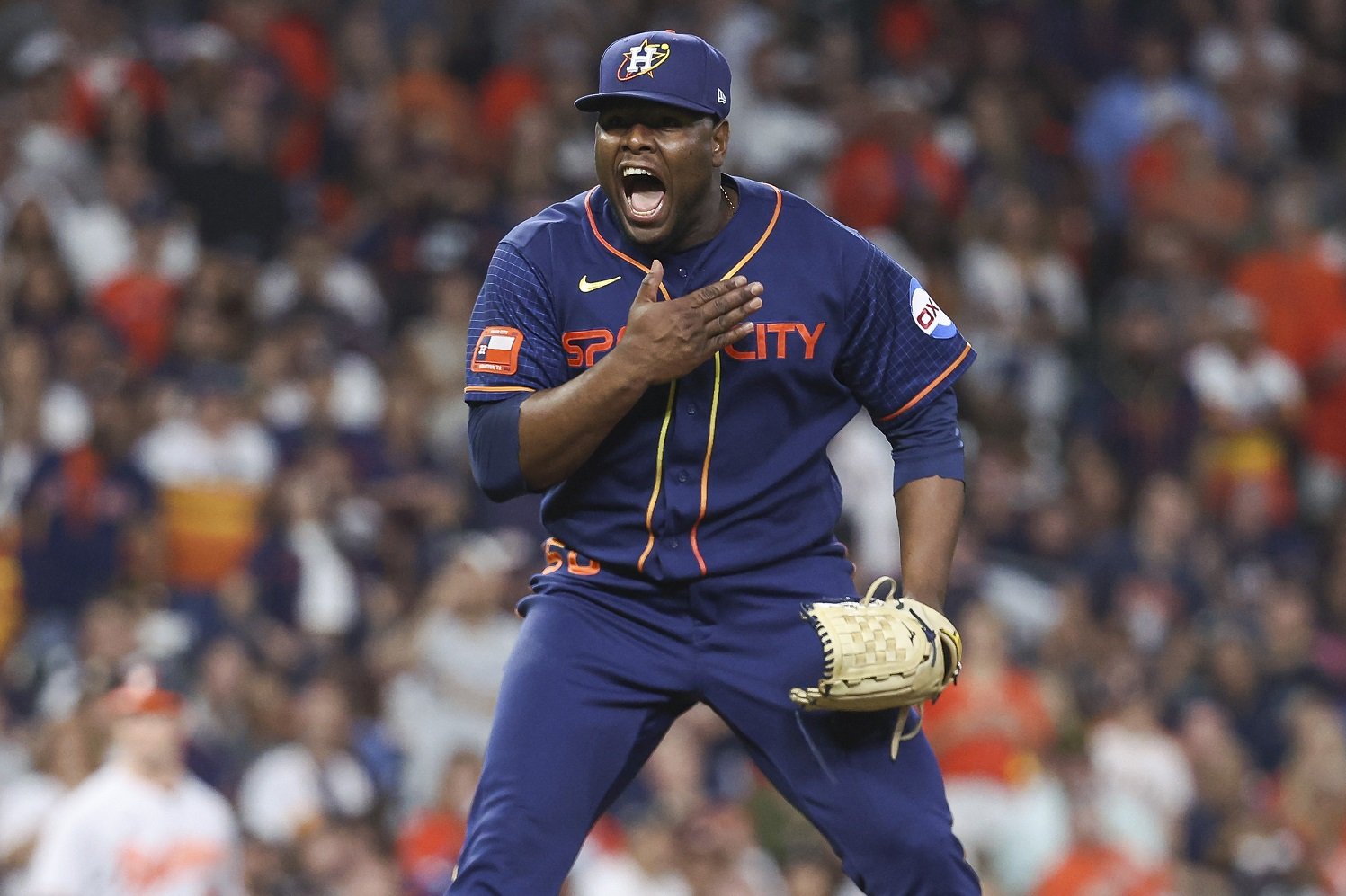 Hector Neris made his big-league debut way back in 2014 with one game and one inning for the Phillies. He remained with Philadelphia through the 2021 season, pitching in a variety of roles, but he spent a lot of time as the team's closer. He became a free agent after the 2021 season and signed a two-year deal with the Houston Astros where he has set up Ryan Pressly. In 2022, he went 6-4 with a 3.72 ERA in 65 1/3 innings. He had 79 strikeouts with just 17 walks. In 2023, he worked in 71 games. He was 6-3 with a diminutive 1.71 ERA. In 68 1/3 innings, he struck out 77 batters, but he did walk 31 batters. He was hoping for a three-year deal this offseason, but instead he gets a deal that contains only one guaranteed season. It can become a two-year, $23.25 million deal depending on the options. Neris was clearly the best remaining reliever still on the market, but how will he fit into the 2024 Cubs roster. Specifically, what role should he be expected to fill? Adbert Alzolay came on very strong in 2023 as the team's closer, and one would assume he will go into the season with that role. Julian Merryweather , Mark Leiter, Jr., Jose Cuas, and the recently-acquired Yency Almonte will also get opportunities in late innings, but Neris certainly has the best track record among that group. Should Alzolay struggle, Neris would likely get an opportunity to close. It is interesting to note though that Neris did see a pretty significant drop in velocity in 2023. After consistently averaging 94-94.6 mph with his fastball for the past eight seasons, that number dropped to 93.0 mph in 2023. In addition, his split-finger's average velocity dropped from 95.1 mph in 2022 to 82.9 mph in 2023. So again, Neris put up the dazzling ERA in 2022, but it isn't hard to see why teams may have been hesitant to guarantee more years or dollars to him. We'll have more detailed analysis on the newest reliever in the Cubs organization. For now, share your initial thoughts on the signing.
 -
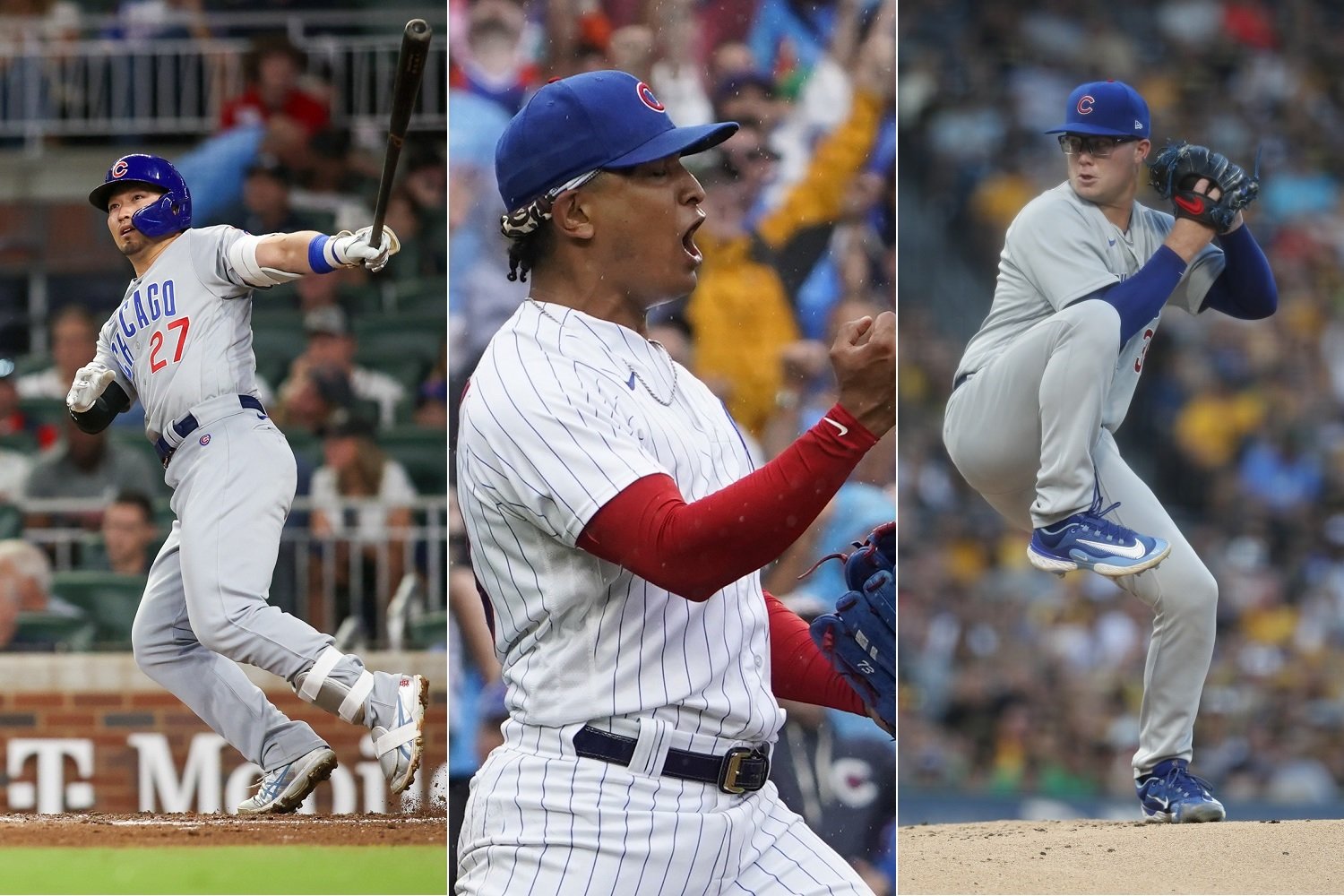 For a more thorough explanation of these rankings and how they are developed, check out Part 1’s introduction post. The shortened version: Which players in the Cubs organization are most crucial to developing a championship-caliber team? To rank the Cubs players and prospects, we consider age, contract status, years of control, ceiling/potential, and more. To recap Part 1, here are the players who ranked 16-20: 20. Ben Brown, RHP 19. Alexander Canario, OF 18. Kyle Hendricks, RHP 17. Owen Caissie, OF 16. Kevin Alcántara, OF Check back in the coming days. I will return and continue the countdown in two more parts. For now, let me know what you think of this group. 15. OF Seiya Suzuki (29) Seiya Suzuki came to the United States before the 2022 season on a five-year, $85-million deal. He had already spent nine seasons with the Hiroshima Carp, of NPB. Over 1,055 games in Japan, he hit a combined .309/.402/.541, with 208 doubles and 189 RBIs. As a 27-year-old MLB rookie in 2022, he hit .262/.336/.433, with 22 doubles and 14 homers. Then, last season, Suzuki hit .285/.357/.485 with 31 doubles and 20 home runs. It was nice to see Suzuki have a solid sophomore season with the Cubs, and even more so that he emerged from midsummer struggles to be one of baseball's best hitters over the final two months. With three years and $56 million remaining on this initial contract, it would be great to have Suzuki maintain this level of play, or even improve upon it. Frankly, maybe he should be a bit higher on the list, but with Ian Happ manning left field, right field is Suzuki’s to lose. Because of the likes of Kevin Alcántara, Owen Caissie, and even Alexander Canario in the upper levels, Suzuki will have to continue to play well. It’s also that depth (or potential depth) that keeps each of them in the second half of this list. 14. RHP Adbert Alzolay (28) Not every prospect finds success right away. Sometimes, it takes being sent up and down and back and forth between Triple A and the big leaguesa few times. Every organization has several such examples. Adbert Alzolay certainly fits into that category. The righthander from Venezuela debuted with four games (2 starts) for the Cubs in 2019. He pitched in six games (4 starts) in the shortened 2020 season. In 2021, he made 21 starts (8 relief appearances) and went 5-13 with a 4.58 ERA. Then, in 2022, he pitched in just six games, though he dominated with 19 strikeouts and two walks in 13 1/3 innings in September after missing the entire season with a shoulder/lat strain. That dominance carried over to the 2023 season. In 58 games, he went 2-5 with 22 saves, a 2.67 ERA, and a 1.02 WHIP. In 64 innings, he had 67 strikeouts with just 13 walks. Earlier this month, Alzolay and the Cubs agreed on a $2.11-million contract for 2024. It is his first of three arbitration seasons. Can Alzolay maintain his stuff? Can he continue to gain confidence working in key, ninth-inning situations? Will he continue to throw strikes? He sure looked good, and has become a key member at the back end of the bullpen. 13. IF Michael Busch (26) Earlier this month, the Cubs acquired infield prospect Michael Busch, a Top 100 global prospect, and reliever Yency Almonte from the Dodgers. Depending on upcoming transactions, Busch should play almost every day at first or third base. He can also play second base when needed and get some DH at-bats. Busch has hit at every level. Just recently, Baseball America named him a Top-5 third base prospect. Over three years at North Carolina, Busch posted a .921 OPS. Overall, in parts of four minor-league seasons, he has a .919 OPS. After playing five rookie ball games and five A-ball games, he has played 138 games at Double A (.921 OPS) and 209 games at Triple A (.930 OPS). Already 26, Busch needs to play. He played in 27 games for the Dodgers last year. While the Cubs have a couple of guys in the keystone positions who will play most days, they have plenty of questions at the corners. Busch could be an answer. Ideally, he would be an answer for the next half-dozen seasons. 12. RHP Javier Assad (26) The Cubs signed Javier Assad out of México way back in July 2015. He slowly but consistently worked his way up the organizational ladder, one level each year. He was primarily a starting pitcher through the 2022 season. In 2022, he made 21 minor-league starts with two relief appearances. He made his big-league debut, and eventually had eight starts, with one appearance out of the bullpen. In 2023, he went back and forth between Chicago and Des Moines several times in the season's first two months. At the end of May, he came up for good and worked out of the bullpen, regularly throwing two to four innings at a time. Then, in August, he moved back to the starting rotation. In his second start, he gave up one run over seven innings. Later, he gave up one run in seven innings and followed it up with eight shutout innings. So, what is his role going forward? Your guess is as good as mine, to be honest, and maybe this swingman role is what works best for him. But with his success in that role, he will get more and more opportunities. He threw 109 1/3 innings last season for the Cubs. That’s almost double what a typical reliever would throw, and it’s probably only 20 to 30 innings less than a typical fifth starter (and maybe fourth starter). There is value in a guy who can pitch in this type of role. 11. LHP Jordan Wicks (24) Jordan Wicks was the Cubs' first-round draft pick in 2021 out of Kansas State. He was 6-3 in his junior season with a 3.70 ERA in 15 starts. In 92 1/3 innings, he walked 28 and struck out 118 batters. After signing, the Cubs sent him to High-A South Bend, where he finished the season with four starts and seven innings pitched. He began 2022 with 16 starts for the SB Cubs. He finished with eight starts at Double-A Tennessee. Combined, he tossed 94 2/3 innings, struck out 121 batters, and walked 28. In 2023, he started the season with 13 starts in Double-A, and he went 4-0 with a 3.39 ERA. He moved to Triple-A Iowa and went 3-0 with a 3.82 ERA. At that point, the Cubs called him up, and he made seven big-league starts to end the season. He went 4-1 with a 4.41 ERA. After striking out 99 batters in 91 1/3 minor-league innings, he had 24 strikeouts in 34 2/3 innings. In his debut, he earned a win by tossing five innings and giving up just one run. He gave up two hits, walked one, and struck out nine batters. While his overall numbers don’t look great, they are completely skewed by his final start, wherein he gave up six earned runs in just 1 2/3 innings. Previously, he was 4-1 with a 3.00 ERA and had completed six innings in three of his starts. While Wicks profiles as a potential third or fourth starter, not an ace, he can provide a lot of value to the organization. He has three years before he is even arbitration-eligible, and he can’t be a free agent until after the 2029 season. If he can put up solid strikeout and walk rates like he did in the minor leagues, he can be quite successful, which is great for a Cubs rotation that will likely have three well-compensated starters ahead of him. That’s all for today’s installment of five players. In the coming days, I will return and continue the countdown with our picks for numbers 6 to 10. For now, let me know what you think of the choices for 11-20. Would you rearrange any of them? Do any of them jump out to you? 20. Ben Brown, RHP 19. Alexander Canario, OF 18. Kyle Hendricks, RHP 17. Owen Caissie, OF 16. Kevin Alcantara, OF 15. Seiya Suzuki, OF 14. Adbert Alzolay, RH RP 13. Michael Busch, IF 12. Javier Assad, RHP 11. Jordan Wicks, LHP
 -
In the second installment of this countdown of the Top 20 Cubs player assets, we will dive into the choices for 11 through 15. If the Cubs want a championship-caliber roster, how might these players fit into the equation? Image courtesy of Brett Davis, USA Today (Seiya Suzuki), David Banks, USA Today (Adbert Alzolay), Charles LeClaire, USA Today (Jordan Wicks) For a more thorough explanation of these rankings and how they are developed, check out Part 1’s introduction post. The shortened version: Which players in the Cubs organization are most crucial to developing a championship-caliber team? To rank the Cubs players and prospects, we consider age, contract status, years of control, ceiling/potential, and more. To recap Part 1, here are the players who ranked 16-20: 20. Ben Brown, RHP 19. Alexander Canario, OF 18. Kyle Hendricks, RHP 17. Owen Caissie, OF 16. Kevin Alcántara, OF Check back in the coming days. I will return and continue the countdown in two more parts. For now, let me know what you think of this group. 15. OF Seiya Suzuki (29) Seiya Suzuki came to the United States before the 2022 season on a five-year, $85-million deal. He had already spent nine seasons with the Hiroshima Carp, of NPB. Over 1,055 games in Japan, he hit a combined .309/.402/.541, with 208 doubles and 189 RBIs. As a 27-year-old MLB rookie in 2022, he hit .262/.336/.433, with 22 doubles and 14 homers. Then, last season, Suzuki hit .285/.357/.485 with 31 doubles and 20 home runs. It was nice to see Suzuki have a solid sophomore season with the Cubs, and even more so that he emerged from midsummer struggles to be one of baseball's best hitters over the final two months. With three years and $56 million remaining on this initial contract, it would be great to have Suzuki maintain this level of play, or even improve upon it. Frankly, maybe he should be a bit higher on the list, but with Ian Happ manning left field, right field is Suzuki’s to lose. Because of the likes of Kevin Alcántara, Owen Caissie, and even Alexander Canario in the upper levels, Suzuki will have to continue to play well. It’s also that depth (or potential depth) that keeps each of them in the second half of this list. 14. RHP Adbert Alzolay (28) Not every prospect finds success right away. Sometimes, it takes being sent up and down and back and forth between Triple A and the big leaguesa few times. Every organization has several such examples. Adbert Alzolay certainly fits into that category. The righthander from Venezuela debuted with four games (2 starts) for the Cubs in 2019. He pitched in six games (4 starts) in the shortened 2020 season. In 2021, he made 21 starts (8 relief appearances) and went 5-13 with a 4.58 ERA. Then, in 2022, he pitched in just six games, though he dominated with 19 strikeouts and two walks in 13 1/3 innings in September after missing the entire season with a shoulder/lat strain. That dominance carried over to the 2023 season. In 58 games, he went 2-5 with 22 saves, a 2.67 ERA, and a 1.02 WHIP. In 64 innings, he had 67 strikeouts with just 13 walks. Earlier this month, Alzolay and the Cubs agreed on a $2.11-million contract for 2024. It is his first of three arbitration seasons. Can Alzolay maintain his stuff? Can he continue to gain confidence working in key, ninth-inning situations? Will he continue to throw strikes? He sure looked good, and has become a key member at the back end of the bullpen. 13. IF Michael Busch (26) Earlier this month, the Cubs acquired infield prospect Michael Busch, a Top 100 global prospect, and reliever Yency Almonte from the Dodgers. Depending on upcoming transactions, Busch should play almost every day at first or third base. He can also play second base when needed and get some DH at-bats. Busch has hit at every level. Just recently, Baseball America named him a Top-5 third base prospect. Over three years at North Carolina, Busch posted a .921 OPS. Overall, in parts of four minor-league seasons, he has a .919 OPS. After playing five rookie ball games and five A-ball games, he has played 138 games at Double A (.921 OPS) and 209 games at Triple A (.930 OPS). Already 26, Busch needs to play. He played in 27 games for the Dodgers last year. While the Cubs have a couple of guys in the keystone positions who will play most days, they have plenty of questions at the corners. Busch could be an answer. Ideally, he would be an answer for the next half-dozen seasons. 12. RHP Javier Assad (26) The Cubs signed Javier Assad out of México way back in July 2015. He slowly but consistently worked his way up the organizational ladder, one level each year. He was primarily a starting pitcher through the 2022 season. In 2022, he made 21 minor-league starts with two relief appearances. He made his big-league debut, and eventually had eight starts, with one appearance out of the bullpen. In 2023, he went back and forth between Chicago and Des Moines several times in the season's first two months. At the end of May, he came up for good and worked out of the bullpen, regularly throwing two to four innings at a time. Then, in August, he moved back to the starting rotation. In his second start, he gave up one run over seven innings. Later, he gave up one run in seven innings and followed it up with eight shutout innings. So, what is his role going forward? Your guess is as good as mine, to be honest, and maybe this swingman role is what works best for him. But with his success in that role, he will get more and more opportunities. He threw 109 1/3 innings last season for the Cubs. That’s almost double what a typical reliever would throw, and it’s probably only 20 to 30 innings less than a typical fifth starter (and maybe fourth starter). There is value in a guy who can pitch in this type of role. 11. LHP Jordan Wicks (24) Jordan Wicks was the Cubs' first-round draft pick in 2021 out of Kansas State. He was 6-3 in his junior season with a 3.70 ERA in 15 starts. In 92 1/3 innings, he walked 28 and struck out 118 batters. After signing, the Cubs sent him to High-A South Bend, where he finished the season with four starts and seven innings pitched. He began 2022 with 16 starts for the SB Cubs. He finished with eight starts at Double-A Tennessee. Combined, he tossed 94 2/3 innings, struck out 121 batters, and walked 28. In 2023, he started the season with 13 starts in Double-A, and he went 4-0 with a 3.39 ERA. He moved to Triple-A Iowa and went 3-0 with a 3.82 ERA. At that point, the Cubs called him up, and he made seven big-league starts to end the season. He went 4-1 with a 4.41 ERA. After striking out 99 batters in 91 1/3 minor-league innings, he had 24 strikeouts in 34 2/3 innings. In his debut, he earned a win by tossing five innings and giving up just one run. He gave up two hits, walked one, and struck out nine batters. While his overall numbers don’t look great, they are completely skewed by his final start, wherein he gave up six earned runs in just 1 2/3 innings. Previously, he was 4-1 with a 3.00 ERA and had completed six innings in three of his starts. While Wicks profiles as a potential third or fourth starter, not an ace, he can provide a lot of value to the organization. He has three years before he is even arbitration-eligible, and he can’t be a free agent until after the 2029 season. If he can put up solid strikeout and walk rates like he did in the minor leagues, he can be quite successful, which is great for a Cubs rotation that will likely have three well-compensated starters ahead of him. That’s all for today’s installment of five players. In the coming days, I will return and continue the countdown with our picks for numbers 6 to 10. For now, let me know what you think of the choices for 11-20. Would you rearrange any of them? Do any of them jump out to you? 20. Ben Brown, RHP 19. Alexander Canario, OF 18. Kyle Hendricks, RHP 17. Owen Caissie, OF 16. Kevin Alcantara, OF 15. Seiya Suzuki, OF 14. Adbert Alzolay, RH RP 13. Michael Busch, IF 12. Javier Assad, RHP 11. Jordan Wicks, LHP View full article
-
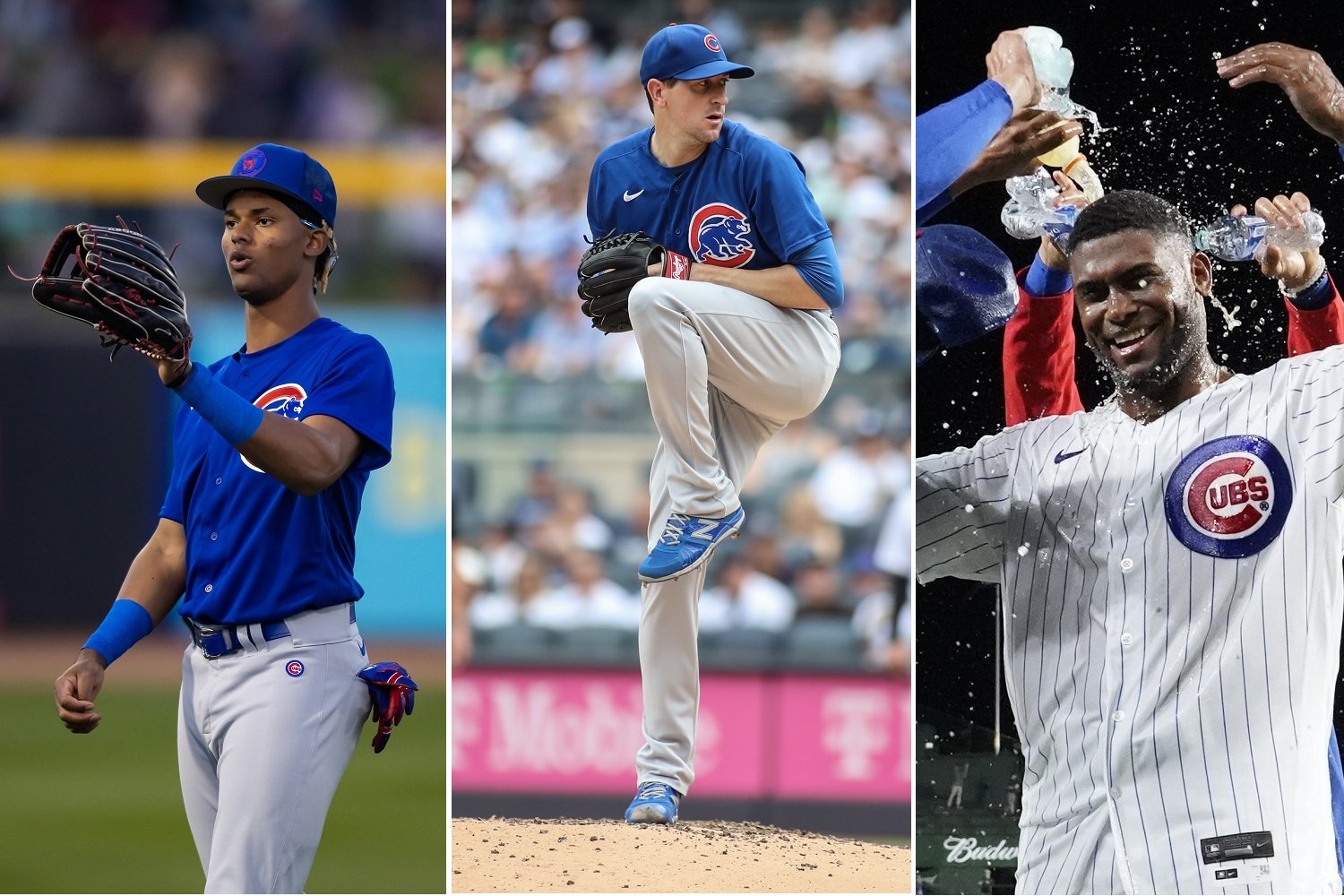 One of my favorite baseball-writing series at Twins Daily that I have enjoyed the last half-dozen years is Nick Nelson’s annual Top 20 Minnesota Twins Player Assets of the Year. Recently, he completed the four-part 2024 series. I thought bringing that series to North Side Baseball would be fun. Over the coming days, I’ll share my thoughts on the Top 20 Chicago Cubs assets, and I welcome your feedback and thoughts on each list. Since I’m stealing the series idea from Nick, I think it is only fair to use his words to define how the list is created. How do you measure a “player asset,” and how should players be ranked? This isn’t a prospect ranking. This isn’t a ranking of the best players. This list combines minor leaguers and big leaguers. How I answer those questions may (or may not) be different than how you answer those questions, and therefore, we could have a lot of discussion. The idea of this exercise is to take stock of the organization's talent through the scope of team-building. The goal is to answer this question: Which current players in the organization are most indispensable to fulfilling the vision of building a champion? We account for age, contract, controllability, upside, etc. It's not strictly a ranking of trade value because that would be more team-agnostic, whereas this list aims to capture a very Twins-specific point of view. As such, players in areas of scarcity (i.e., pitching) get elevated, while those in areas of abundance (i.e., lefty-swinging corner guys) get downgraded a bit. I always find compiling this list to be an exciting offseason pastime that brings to the surface unique conversations about Twins players, how we value them, and where the system's strengths and weaknesses lie. As I worked on creating this list, I considered many of the same factors like those mentioned above - age, team control, contract status, and more. This is an intriguing list because there is such a variety. There is a variety of player types and roles. How do you rank a Top 100 pitching prospect who got a cup of coffee compared to an All-Star hitter on a long-term but quite spendy deal? The Cubs' payroll will be $80-120 million higher in most years compared to the Twins. So, the effect of a huge contract, or even a mid-range contract, isn’t as significant a factor. Before we start our top 20… The Cubs have made a couple of transactions since I created this list. The Cubs added a couple of players to this list, which means two players were removed. I’ll mention the two players who fell out of my Top 20 to show who just missed. First, Jaxon Wiggins was the Cubs' second-round pick last year out of Arkansas. He didn’t pitch at all in 2023, recovering from injury, but the Cubs really like what he can be by using such a high draft pick. Secondly, I also had catcher Miguel Amaya in one of those spots. Catchers and catching depth are essential in any organization. Amaya finally made his big-league debut with 53 games in 2023. He played well enough that he could be a part-time catcher, and the Cubs have control of him for potentially six or seven more seasons. However, he is out of options already. You may slot them ahead of a guy or two in this 16-20 range. 20. RHP Ben Brown (24) Originally the 33rd-round pick in 2017 by the Phillies, Ben Brown came to the Cubs at the 2022 trade deadline in exchange for David Robertson. After joining the Cubs, he went 3-0 with a 4.06 ERA in seven starts at the end of the 2022 season. He began 2023 at Double-A Tennessee as well. In four starts, he went 2-0 with a 0.45 ERA. In 51 combined innings at Tennessee, he worked 51 innings and struck out 74 batters with just 19 walks. He moved up to Triple-A Iowa, where he made 15 starts and seven relief appearances. He went 6-8 with a 5.33 ERA. In 72 2/3 innings, he had 100 strikeouts but also walked 50 batters. Brown looks like a big-league starter. He stands 6-6. His fastball is consistently in the upper 90s now, and he's got a curveball that can be a very good pitch. His slider is thrown a bit harder, touching 91 and 92. With those three pitches, he has a chance when he throws strikes. Pitching wins, and while the Cubs have a high budget, having players make around league minimum for a few years is valuable. The question is whether Brown can continue to improve and remain a starter where he can potentially be a mid-rotation starter. However, if that doesn’t happen, Brown is the type of pitcher with stuff that could transition to the bullpen and, in time, become dominant. Brown is the Cubs’ #7 prospect at North Side Baseball. 19. OF Alexander Canario (23) Following a 2022 season in which he hit 26 doubles and 37 home runs between three minor-league levels, Alexander Canario began his offseason in the Dominican Winter League. In a game, he hit a regular ground ball to shortstop. He hustled down the line and tripped over the base, sprawling to the ground, clearly in pain. The result was an ankle fracture and a shoulder dislocation. The Dominican began a rehab stint in the ACL in mid-June. Two weeks later, he moved up to High-A South Bend for about two more weeks. By mid-July, he was back with the Iowa Cubs, where he hit 12 doubles and eight home runs in 37 games. The Cubs called him up for September, but then he played in just one game over the first three weeks of the month. He struck out in a pinch-hitting opportunity on September 6th for his MLB debut. His next appearance was September 19th. He went 2-for-4 with a double, a home run, and five RBIs. He then had three more plate appearances over the next 10 games. Then, on September 30th, he went 3-for-5 with a triple. Over the past two seasons, Canario has experienced some of the highest highs and lowest lows. He received a fourth option year for 2023. But it is important to remember that even though he originally signed with the Giants way back in 2016, he is still just 23 years old. He came to the Cubs from the Giants at the 2021 trade deadline as part of the Kris Bryant trade. And again, he’s returned from a devastating injury to show plus-plus power. Will he hit for average, and can he avoid huge strikeout numbers? But he could provide big power production in the middle of the Cubs lineup for a decade. Will he get that opportunity? Following the trade that sent Jackson Ferris to the Dodgers, Canario is now the Cubs’ #9 prospect, according to North Side Baseball. 18. RHP Kyle Hendricks (34) Hendricks has been an important part of the Chicago Cubs and their starting rotation for a decade. That's not bad for a former eighth-round pick out of Dartmouth. “The Professor” received Rookie of the Year votes in 2014. He finished third in Cy Young voting in 2016 when he went 16-8 with a league-leading 2.13 ERA. He again received Cy Young votes in 2020 when he posted a 2.88 ERA. In between, he never had an ERA over 3.46. Never a strikeout pitcher, Hendricks led the league in Hits allowed in 2021 and had an ERA of 4.77. In 2022, his ERA was 4.80, and he spent the final three months on the Injured List recovering from a tear in his right shoulder. In late May, he returned to the mound for the Cubs and went 6-8 with a 3.74 ERA over 137 innings. Was it enough for them to pick up his $16 million club option for 2024? That’s debatable, but in early November, the Cubs did just that. So, while he was such a key in the Cubs rotation in the second half of the 2010s, he fits in near the bottom of this top 20. Unless he were to sign a multi-year contract extension, 2024 will be his final season in the organization. However, Kyle Hendricks is a vital piece to the Cubs 2024 rotation. In the rotation, he will fall in after Justin Steele, Jameson Taillon, and Shota Imanaga. He can be a solid, consistent, stabilizing piece for the Cubs when healthy. Jordan Wicks , Hayden Wesneski, and Javier Assad could fill the fifth spot as the Cubs and their fans wait for Ben Brown and Brandon Birdsell. OK, as we all wait for Cade Horton to make his debut. 17. Owen Caissie (21) Owen Caissie’s 2023 season began a little early. He played for Team Canada in the WBC and held his own as a 20-year-old. The Canadian outfielder held his own. He was the second-round draft pick of the Padres in 2020. Before the 2021 season began, he was traded to the Cubs as part of the Yu Darvish trade. He made his pro debut in 2021, and after dominating the Arizona Complex League for 32 games, he moved up to Low-A Myrtle Beach for 22 games. The Cubs aggressively pushed him to High-A South Bend in 2022. He hit .254/.349/.402 (.751) with 21 doubles and 11 homers. He ended the season with 16 games in the Arizona Fall League. He was again pushed aggressively to start the 2023 season and responded incredibly well. In 120 games, he hit .289/.399/.519 (.918) with 31 doubles, 22 home runs, and 84 RBIs. He won’t turn 22 until a week into July and should spend most of the season at Triple-A Iowa. Caissie has tremendous power potential and should be a little higher on this list. North Side Baseball ranks him as the #4 Cubs Prospect this offseason. His outfield defense is adequate in the corners of the outfield. He takes his walks. There is one big concern as it relates to his potential. After striking out about 29% of his plate appearances in 2022, that number jumped over 31% at Double-A. With Ian Happ in left field and Seiya Suzuki in right field, the Cubs can slow-play Caissie. Despite strong Double-A numbers in 2023, they could send him back there to see what kind of contact improvement he can make. Like many other sluggers, good things tend to happen when he puts the ball in play. How much more value can he have if he cuts his K/Rate by 2%? By 5%? 16. Kevin Alcantara (21) In July 2018, the New York Yankees signed Kevin Alcantara from the Dominican Republic to a $1 million signing bonus. After the lost 2020 season, Alcantara’s 2021 FCL season just started when he was traded to the Cubs in the Anthony Rizzo deal. He hit .337 (1.024) with 12 extra-base hits in 25 ACL games for the remainder of the season. He hit .273 (.811) with 19 doubles, six triples, and 15 homers in 122 games for Myrtle Beach in 2022. He also went 14-for-17 in stolen base attempts. He was added to the 40-man roster after the season. The 6-6 outfielder began the 2023 season at High-A South Bend. In 95 games, he hit .286 (.807) with 25 doubles and 12 homers. He was also 15-for-19 on steal attempts. He missed some time due to injury but ended the season with five games at Double-A Tennessee. He went to the Fall League, and in 21 games, he hit .256 (.865) with seven doubles and five home runs. Alcantara has the type of physique that any scout would notice. While he hasn’t had a breakout season, he has shown all the tools. Again, at 6-6, he’s got the frame to continue adding power to what he’s already shown. He also runs well for such a big man. While he may never need to, he could play center field if needed. He has a strong arm. He probably won’t hit for average, but that power potential is exciting. After striking out 25% of his plate appearances in 2022, he struck out 24% of the time in 2023. The combination of Caissie, Alcantara, Canario, and Pete Crow-Armstrong, all 21-23 years old, is filled with potential. He ranks #5 on North Side Baseball’s Top Prospect rankings. To recap, here is the first installment of this year's top 20 player assets lists: 20. Ben Brown, RHP 19. Alexander Canario, OF 18. Kyle Hendricks, RHP 17. Owen Caissie, OF 16. Kevin Alcantara, 3B Check back. In the coming days, I will return and continue the countdown with our picks for numbers 11 to 15. For now, let me know what you think of this group of Cubs players.
 -
Quick Question: How would you rank the top 20 most valuable player assets in the Chicago Cubs organization? How would you define a player’s value? It has to be more than just past production on the field, but which players are most important to the short-term and long-term future of the ball club? Read on for the first installment, in which we'll explain the exercise and profile my choices for numbers 16 through 20. Image courtesy of Mark J Rebilas, USA Today (photo of Kevin Alcantara), Wendell Cruz, USA Today (photo of Kyle Hendricks), David Banks, USA Today (photo of Canario) One of my favorite baseball-writing series at Twins Daily that I have enjoyed the last half-dozen years is Nick Nelson’s annual Top 20 Minnesota Twins Player Assets of the Year. Recently, he completed the four-part 2024 series. I thought bringing that series to North Side Baseball would be fun. Over the coming days, I’ll share my thoughts on the Top 20 Chicago Cubs assets, and I welcome your feedback and thoughts on each list. Since I’m stealing the series idea from Nick, I think it is only fair to use his words to define how the list is created. How do you measure a “player asset,” and how should players be ranked? This isn’t a prospect ranking. This isn’t a ranking of the best players. This list combines minor leaguers and big leaguers. How I answer those questions may (or may not) be different than how you answer those questions, and therefore, we could have a lot of discussion. The idea of this exercise is to take stock of the organization's talent through the scope of team-building. The goal is to answer this question: Which current players in the organization are most indispensable to fulfilling the vision of building a champion? We account for age, contract, controllability, upside, etc. It's not strictly a ranking of trade value because that would be more team-agnostic, whereas this list aims to capture a very Twins-specific point of view. As such, players in areas of scarcity (i.e., pitching) get elevated, while those in areas of abundance (i.e., lefty-swinging corner guys) get downgraded a bit. I always find compiling this list to be an exciting offseason pastime that brings to the surface unique conversations about Twins players, how we value them, and where the system's strengths and weaknesses lie. As I worked on creating this list, I considered many of the same factors like those mentioned above - age, team control, contract status, and more. This is an intriguing list because there is such a variety. There is a variety of player types and roles. How do you rank a Top 100 pitching prospect who got a cup of coffee compared to an All-Star hitter on a long-term but quite spendy deal? The Cubs' payroll will be $80-120 million higher in most years compared to the Twins. So, the effect of a huge contract, or even a mid-range contract, isn’t as significant a factor. Before we start our top 20… The Cubs have made a couple of transactions since I created this list. The Cubs added a couple of players to this list, which means two players were removed. I’ll mention the two players who fell out of my Top 20 to show who just missed. First, Jaxon Wiggins was the Cubs' second-round pick last year out of Arkansas. He didn’t pitch at all in 2023, recovering from injury, but the Cubs really like what he can be by using such a high draft pick. Secondly, I also had catcher Miguel Amaya in one of those spots. Catchers and catching depth are essential in any organization. Amaya finally made his big-league debut with 53 games in 2023. He played well enough that he could be a part-time catcher, and the Cubs have control of him for potentially six or seven more seasons. However, he is out of options already. You may slot them ahead of a guy or two in this 16-20 range. 20. RHP Ben Brown (24) Originally the 33rd-round pick in 2017 by the Phillies, Ben Brown came to the Cubs at the 2022 trade deadline in exchange for David Robertson. After joining the Cubs, he went 3-0 with a 4.06 ERA in seven starts at the end of the 2022 season. He began 2023 at Double-A Tennessee as well. In four starts, he went 2-0 with a 0.45 ERA. In 51 combined innings at Tennessee, he worked 51 innings and struck out 74 batters with just 19 walks. He moved up to Triple-A Iowa, where he made 15 starts and seven relief appearances. He went 6-8 with a 5.33 ERA. In 72 2/3 innings, he had 100 strikeouts but also walked 50 batters. Brown looks like a big-league starter. He stands 6-6. His fastball is consistently in the upper 90s now, and he's got a curveball that can be a very good pitch. His slider is thrown a bit harder, touching 91 and 92. With those three pitches, he has a chance when he throws strikes. Pitching wins, and while the Cubs have a high budget, having players make around league minimum for a few years is valuable. The question is whether Brown can continue to improve and remain a starter where he can potentially be a mid-rotation starter. However, if that doesn’t happen, Brown is the type of pitcher with stuff that could transition to the bullpen and, in time, become dominant. Brown is the Cubs’ #7 prospect at North Side Baseball. 19. OF Alexander Canario (23) Following a 2022 season in which he hit 26 doubles and 37 home runs between three minor-league levels, Alexander Canario began his offseason in the Dominican Winter League. In a game, he hit a regular ground ball to shortstop. He hustled down the line and tripped over the base, sprawling to the ground, clearly in pain. The result was an ankle fracture and a shoulder dislocation. The Dominican began a rehab stint in the ACL in mid-June. Two weeks later, he moved up to High-A South Bend for about two more weeks. By mid-July, he was back with the Iowa Cubs, where he hit 12 doubles and eight home runs in 37 games. The Cubs called him up for September, but then he played in just one game over the first three weeks of the month. He struck out in a pinch-hitting opportunity on September 6th for his MLB debut. His next appearance was September 19th. He went 2-for-4 with a double, a home run, and five RBIs. He then had three more plate appearances over the next 10 games. Then, on September 30th, he went 3-for-5 with a triple. Over the past two seasons, Canario has experienced some of the highest highs and lowest lows. He received a fourth option year for 2023. But it is important to remember that even though he originally signed with the Giants way back in 2016, he is still just 23 years old. He came to the Cubs from the Giants at the 2021 trade deadline as part of the Kris Bryant trade. And again, he’s returned from a devastating injury to show plus-plus power. Will he hit for average, and can he avoid huge strikeout numbers? But he could provide big power production in the middle of the Cubs lineup for a decade. Will he get that opportunity? Following the trade that sent Jackson Ferris to the Dodgers, Canario is now the Cubs’ #9 prospect, according to North Side Baseball. 18. RHP Kyle Hendricks (34) Hendricks has been an important part of the Chicago Cubs and their starting rotation for a decade. That's not bad for a former eighth-round pick out of Dartmouth. “The Professor” received Rookie of the Year votes in 2014. He finished third in Cy Young voting in 2016 when he went 16-8 with a league-leading 2.13 ERA. He again received Cy Young votes in 2020 when he posted a 2.88 ERA. In between, he never had an ERA over 3.46. Never a strikeout pitcher, Hendricks led the league in Hits allowed in 2021 and had an ERA of 4.77. In 2022, his ERA was 4.80, and he spent the final three months on the Injured List recovering from a tear in his right shoulder. In late May, he returned to the mound for the Cubs and went 6-8 with a 3.74 ERA over 137 innings. Was it enough for them to pick up his $16 million club option for 2024? That’s debatable, but in early November, the Cubs did just that. So, while he was such a key in the Cubs rotation in the second half of the 2010s, he fits in near the bottom of this top 20. Unless he were to sign a multi-year contract extension, 2024 will be his final season in the organization. However, Kyle Hendricks is a vital piece to the Cubs 2024 rotation. In the rotation, he will fall in after Justin Steele, Jameson Taillon, and Shota Imanaga. He can be a solid, consistent, stabilizing piece for the Cubs when healthy. Jordan Wicks , Hayden Wesneski, and Javier Assad could fill the fifth spot as the Cubs and their fans wait for Ben Brown and Brandon Birdsell. OK, as we all wait for Cade Horton to make his debut. 17. Owen Caissie (21) Owen Caissie’s 2023 season began a little early. He played for Team Canada in the WBC and held his own as a 20-year-old. The Canadian outfielder held his own. He was the second-round draft pick of the Padres in 2020. Before the 2021 season began, he was traded to the Cubs as part of the Yu Darvish trade. He made his pro debut in 2021, and after dominating the Arizona Complex League for 32 games, he moved up to Low-A Myrtle Beach for 22 games. The Cubs aggressively pushed him to High-A South Bend in 2022. He hit .254/.349/.402 (.751) with 21 doubles and 11 homers. He ended the season with 16 games in the Arizona Fall League. He was again pushed aggressively to start the 2023 season and responded incredibly well. In 120 games, he hit .289/.399/.519 (.918) with 31 doubles, 22 home runs, and 84 RBIs. He won’t turn 22 until a week into July and should spend most of the season at Triple-A Iowa. Caissie has tremendous power potential and should be a little higher on this list. North Side Baseball ranks him as the #4 Cubs Prospect this offseason. His outfield defense is adequate in the corners of the outfield. He takes his walks. There is one big concern as it relates to his potential. After striking out about 29% of his plate appearances in 2022, that number jumped over 31% at Double-A. With Ian Happ in left field and Seiya Suzuki in right field, the Cubs can slow-play Caissie. Despite strong Double-A numbers in 2023, they could send him back there to see what kind of contact improvement he can make. Like many other sluggers, good things tend to happen when he puts the ball in play. How much more value can he have if he cuts his K/Rate by 2%? By 5%? 16. Kevin Alcantara (21) In July 2018, the New York Yankees signed Kevin Alcantara from the Dominican Republic to a $1 million signing bonus. After the lost 2020 season, Alcantara’s 2021 FCL season just started when he was traded to the Cubs in the Anthony Rizzo deal. He hit .337 (1.024) with 12 extra-base hits in 25 ACL games for the remainder of the season. He hit .273 (.811) with 19 doubles, six triples, and 15 homers in 122 games for Myrtle Beach in 2022. He also went 14-for-17 in stolen base attempts. He was added to the 40-man roster after the season. The 6-6 outfielder began the 2023 season at High-A South Bend. In 95 games, he hit .286 (.807) with 25 doubles and 12 homers. He was also 15-for-19 on steal attempts. He missed some time due to injury but ended the season with five games at Double-A Tennessee. He went to the Fall League, and in 21 games, he hit .256 (.865) with seven doubles and five home runs. Alcantara has the type of physique that any scout would notice. While he hasn’t had a breakout season, he has shown all the tools. Again, at 6-6, he’s got the frame to continue adding power to what he’s already shown. He also runs well for such a big man. While he may never need to, he could play center field if needed. He has a strong arm. He probably won’t hit for average, but that power potential is exciting. After striking out 25% of his plate appearances in 2022, he struck out 24% of the time in 2023. The combination of Caissie, Alcantara, Canario, and Pete Crow-Armstrong, all 21-23 years old, is filled with potential. He ranks #5 on North Side Baseball’s Top Prospect rankings. To recap, here is the first installment of this year's top 20 player assets lists: 20. Ben Brown, RHP 19. Alexander Canario, OF 18. Kyle Hendricks, RHP 17. Owen Caissie, OF 16. Kevin Alcantara, 3B Check back. In the coming days, I will return and continue the countdown with our picks for numbers 11 to 15. For now, let me know what you think of this group of Cubs players. View full article
-
The trade becomes a little less exciting when seeing that they gave up Ferris and Hope to make it happen.
-
Recently, the Cubs announced that Jason Banner, who had been the organization's VP of Player Development, had been promoted to an Assistant GM role. On Monday afternoon, we learned that Jason Kanzler is the new Director of Player Development. Image courtesy of Erik Williams-USA TODAY Sports Michael Schwab of The Juice Box Journal substack, a site that covers the Houston Astros, tweeted that "Jason Kanzler is joining the Chicago Cubs as their Director of Player Development." Kanzler has spent the past two seasons as a hitting coach with the Houston Astros. A native of upstate New York, Kanzler went to the University of Buffalo to play baseball. He was a three-year starter who really hit well over his final two seasons. He showed off his ability to fill a box score, with extra-base hits, stolen bases, some homers, and a powerful arm. He was a two-time collegiate Gold Glove center fielder. The Minnesota Twins used their 20th-round draft pick in 2013 to select Kanzler. In 2014, he split the season between Low-A Cedar Rapids and High-A Fort Myers and hit a combined .282/.344/.444, with 11 doubles, 9 triples, 12 home runs, and 27 stolen bases. He had a huge home run to help lead the Miracle to the 2014 Florida State League championship. After being released following the 2015 season, Kanzler became a teacher. He coached in the Cape Cod League. Then he joined the Astros organization and had coaching and coordinator positions in the minor leagues. For the past three years, he has been a hitting coach in the big leagues for the Houston Astros. Now, Kanzler will lead player development for the Chicago Cubs. The title is impressive, and the responsibilities are a bit daunting. Ultimately, this person is responsible for the development of every minor leaguer in the organization, from the minor-league veterans in Triple A to the new players in the rookie leagues. He will also be responsible for hiring and firing coaches and coordinators, as well as budgeting for the technology and the analytics and the videographers and everything that brings together a minor-league system. In addition, Ryan Otero has been named the organization's Director of Pitching, a job previously held by Craig Breslow. Otero is an internal promotion, who has steadily advanced during his six-plus years with the organization, and will be tasked with carrying forward the good work Breslow was doing for the organization. More On Jason Kanzler - Kernels' Jason Kanzler Keeps Proving Himself - Steve Buhr (6/17/14) - Twins Hangouts Interview with Jason Kanzler - Seth Stohs/Jeremy Nygaard (10/14/14) Great discussion on his big home run in the FSL championship, playing in cold weather, and his legendary mustache! He talked about playing alongside Byron Buxton in the outfield and playing for Doug Mientkiewicz. The below interview is really interesting, to hear Kanzler talk about his minor-league career and development. What do you think of these hires? Let's discuss them, while we wait for the team to complement behind-the-scenes changes with on-field talent infusions. View full article
-
Jason Kanzler Named Cubs' Director of Player Development
Seth Stohs posted an article in Minor Leagues
 Michael Schwab of The Juice Box Journal substack, a site that covers the Houston Astros, tweeted that "Jason Kanzler is joining the Chicago Cubs as their Director of Player Development." Kanzler has spent the past two seasons as a hitting coach with the Houston Astros. A native of upstate New York, Kanzler went to the University of Buffalo to play baseball. He was a three-year starter who really hit well over his final two seasons. He showed off his ability to fill a box score, with extra-base hits, stolen bases, some homers, and a powerful arm. He was a two-time collegiate Gold Glove center fielder. The Minnesota Twins used their 20th-round draft pick in 2013 to select Kanzler. In 2014, he split the season between Low-A Cedar Rapids and High-A Fort Myers and hit a combined .282/.344/.444, with 11 doubles, 9 triples, 12 home runs, and 27 stolen bases. He had a huge home run to help lead the Miracle to the 2014 Florida State League championship. After being released following the 2015 season, Kanzler became a teacher. He coached in the Cape Cod League. Then he joined the Astros organization and had coaching and coordinator positions in the minor leagues. For the past three years, he has been a hitting coach in the big leagues for the Houston Astros. Now, Kanzler will lead player development for the Chicago Cubs. The title is impressive, and the responsibilities are a bit daunting. Ultimately, this person is responsible for the development of every minor leaguer in the organization, from the minor-league veterans in Triple A to the new players in the rookie leagues. He will also be responsible for hiring and firing coaches and coordinators, as well as budgeting for the technology and the analytics and the videographers and everything that brings together a minor-league system. In addition, Ryan Otero has been named the organization's Director of Pitching, a job previously held by Craig Breslow. Otero is an internal promotion, who has steadily advanced during his six-plus years with the organization, and will be tasked with carrying forward the good work Breslow was doing for the organization. More On Jason Kanzler - Kernels' Jason Kanzler Keeps Proving Himself - Steve Buhr (6/17/14) - Twins Hangouts Interview with Jason Kanzler - Seth Stohs/Jeremy Nygaard (10/14/14) Great discussion on his big home run in the FSL championship, playing in cold weather, and his legendary mustache! He talked about playing alongside Byron Buxton in the outfield and playing for Doug Mientkiewicz. The below interview is really interesting, to hear Kanzler talk about his minor-league career and development. What do you think of these hires? Let's discuss them, while we wait for the team to complement behind-the-scenes changes with on-field talent infusions.
 -
Top 25 North Side Baseball Most-Viewed Articles of 2023: Part 5 (1-5)
Seth Stohs posted an article in Cubs
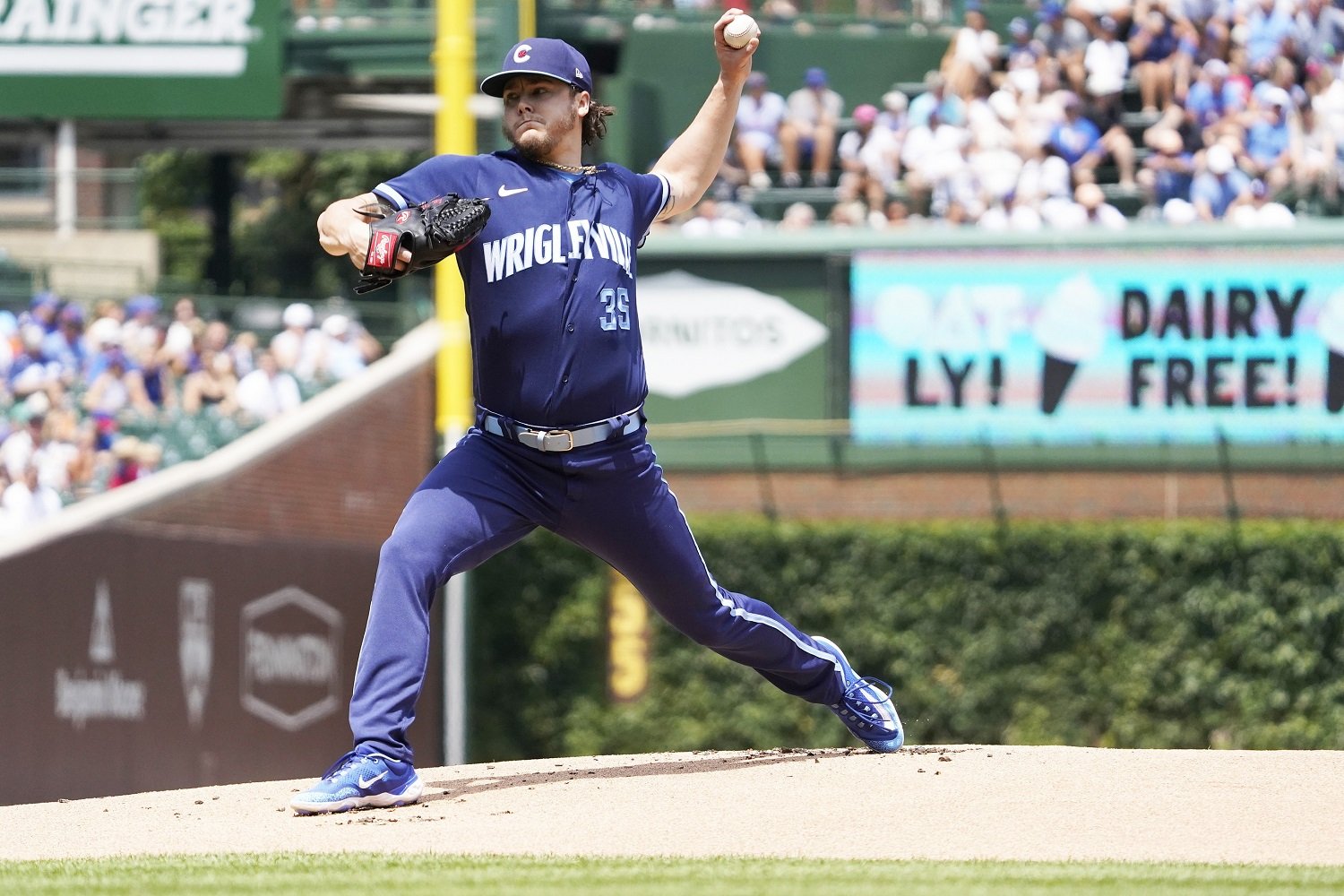 As I've mentioned before, I'm often surprised by the articles that are most successful or receive the most views. Even in the group below, you'll find some articles and not be surprised how well it would do. Others might surprise you by their randomness. When a team is fighting for a playoff spot right until the final days of the season, we want to consume everything we can. Once the season is over, figuring out the plans and priorities by looking at the present state of the roster. Everyone wants to know how much payroll their team can spend. And rumors. Everyone loves rumors. We hope that you have enjoyed this list. Feel free to discuss your favorite topics of the year. Add in your ranking of the top Cubs stories of the year. And Happy New Year to you and your families! #5 How Much Money do the Cubs have to Spend to Win in 2024 by Matt Trueblood Oct 11 Shortly after the season, Matt took a look at the Cubs payroll. They were around $230 million in 2023, just shy of the first Collective Bargaining threshold. He clearly explains the various thresholds or levels. There is a second level that will be about $257 million. There is a third level at about $277 million. There is a fourth level as well. After reviewing the free agents leaving and arbitration-eligible players, he noted where he believes that the Cubs need to be at, salary-wise, to take the next step into contending for a division title. Do you agree? #4 The Cubs Still have a 30 Percent Chance to Make the Playoffs by Matt Trueblood Sep 28 You’re a Cubs fan. You saw the line drive that Seiya Suzuki lost in the lights, turning a game-ending putout into a loss. There were a couple of really tough losses. However, with just four games remaining, the Cubs still had a reasonable chance for a wild card spot. Optimism can be a powerful thing. #3 How Would the 2024 Chicago Cubs Line Up if the Season Started Monday by Matt Trueblood Oct 9 I think it’s not only a fun exercise for baseball fans to do after the season, but it is an exercise that helps shape the offseason in your mind. In reality, this is a good exercise to do at various times throughout the offseason after every couple of transactions to see what the organization’s present needs are, and present priorities. In this article, Matt started with the incumbents at each position in a potential lineup, as well as showing the five players could be on the bench. Which players are certain to return? Which young players do they want to provide playing time for? Where can improvements be made? #2 The Jed Hoyer Cubs will Never Sign a Superstar; Will the Tom Ricketts Cubs Ever Do So? by Matt Trueblood Dec 13 While there were rumors that the Cubs might be involved in talks with Shohei Ohtani and Yoshinobu Yamamoto , the history of Jed Hoyer tells us that the Cubs weren’t likely landing spots for either. Will he be willing to go to $200 million to sign Cody Bellinger? Jed Hoyer is known for his conservative nature, so we don’t really even know what might happen if he went to owner Tom Ricketts with a request to hand out a $300 million contract for someone down the road. #1 A Trade a Day: A Big Gamble that Could Land the Cubs a Long-Term Slugger by Matt Trueblood Jul 17 The most-viewed article at North Side Baseball in 2023 came just two weeks before the trade deadline. Justin Steele was in the middle of his breakout season and the Cubs were struggling. Sometimes, selling high can catapult a team to the next level. Steele has now had two straight strong seasons, but do his stuff and his peripherals scream perennial success? That is what the Cubs’ brass would need to decide. The Cubs have four years of arbitration, four years of team control, before he can become a free agent. But could the Cubs pick up a package of prospects that would include a top hitting prospect in all of baseball that is close to big-league ready. The countdown is complete. If you missed a previous edition: Part 1 (21-25) Part 2 (16-20) Part 3 (11-15) Part 4 (6-10) Part 5 (1-5)
 -
Here we are, on the final day of 2023. Hopefully it has been a quality, successful year for you and your friends and family. It also means that we have reached our Top 5 most-viewed articles at Brewer Fanatic. Be sure to discuss these articles and share your Top 5 or Top 10 Brewers stories of 2023. Image courtesy of © David Banks-USA TODAY Sports As I've mentioned before, I'm often surprised by the articles that are most successful or receive the most views. Even in the group below, you'll find some articles and not be surprised how well it would do. Others might surprise you by their randomness. When a team is fighting for a playoff spot right until the final days of the season, we want to consume everything we can. Once the season is over, figuring out the plans and priorities by looking at the present state of the roster. Everyone wants to know how much payroll their team can spend. And rumors. Everyone loves rumors. We hope that you have enjoyed this list. Feel free to discuss your favorite topics of the year. Add in your ranking of the top Cubs stories of the year. And Happy New Year to you and your families! #5 How Much Money do the Cubs have to Spend to Win in 2024 by Matt Trueblood Oct 11 Shortly after the season, Matt took a look at the Cubs payroll. They were around $230 million in 2023, just shy of the first Collective Bargaining threshold. He clearly explains the various thresholds or levels. There is a second level that will be about $257 million. There is a third level at about $277 million. There is a fourth level as well. After reviewing the free agents leaving and arbitration-eligible players, he noted where he believes that the Cubs need to be at, salary-wise, to take the next step into contending for a division title. Do you agree? #4 The Cubs Still have a 30 Percent Chance to Make the Playoffs by Matt Trueblood Sep 28 You’re a Cubs fan. You saw the line drive that Seiya Suzuki lost in the lights, turning a game-ending putout into a loss. There were a couple of really tough losses. However, with just four games remaining, the Cubs still had a reasonable chance for a wild card spot. Optimism can be a powerful thing. #3 How Would the 2024 Chicago Cubs Line Up if the Season Started Monday by Matt Trueblood Oct 9 I think it’s not only a fun exercise for baseball fans to do after the season, but it is an exercise that helps shape the offseason in your mind. In reality, this is a good exercise to do at various times throughout the offseason after every couple of transactions to see what the organization’s present needs are, and present priorities. In this article, Matt started with the incumbents at each position in a potential lineup, as well as showing the five players could be on the bench. Which players are certain to return? Which young players do they want to provide playing time for? Where can improvements be made? #2 The Jed Hoyer Cubs will Never Sign a Superstar; Will the Tom Ricketts Cubs Ever Do So? by Matt Trueblood Dec 13 While there were rumors that the Cubs might be involved in talks with Shohei Ohtani and Yoshinobu Yamamoto , the history of Jed Hoyer tells us that the Cubs weren’t likely landing spots for either. Will he be willing to go to $200 million to sign Cody Bellinger? Jed Hoyer is known for his conservative nature, so we don’t really even know what might happen if he went to owner Tom Ricketts with a request to hand out a $300 million contract for someone down the road. #1 A Trade a Day: A Big Gamble that Could Land the Cubs a Long-Term Slugger by Matt Trueblood Jul 17 The most-viewed article at North Side Baseball in 2023 came just two weeks before the trade deadline. Justin Steele was in the middle of his breakout season and the Cubs were struggling. Sometimes, selling high can catapult a team to the next level. Steele has now had two straight strong seasons, but do his stuff and his peripherals scream perennial success? That is what the Cubs’ brass would need to decide. The Cubs have four years of arbitration, four years of team control, before he can become a free agent. But could the Cubs pick up a package of prospects that would include a top hitting prospect in all of baseball that is close to big-league ready. The countdown is complete. If you missed a previous edition: Part 1 (21-25) Part 2 (16-20) Part 3 (11-15) Part 4 (6-10) Part 5 (1-5) View full article
-
Happy Penultimate Day of 2023! That's such a fun word. Speaking of fun, check out which North Side Baseball articles were sixth to 10th in page clicks this year, and the discuss the topics in the Comments. Image courtesy of © Ray Acevedo-USA TODAY Sports Welcome to the penultimate day of 2023, and to the penultimate list in our series of most-viewed articles this year. We've got more on the now-former manager. Trade ideas. Free agent pitchers. And a nice feel-good story about a pitcher who has spent time between Triple-A and the big leagues since 2017. #10 A Trade a Day: How the Cubs Could Buy Big for 2024, in 2023 by Matt Trueblood July 19 As Matt wrote within this article, “Yes, this is a ‘the Cubs should trade for Juan Soto” post. Notice the date. The idea was that the Cubs should be aggressive and proactive. In thinking about 2023, a move for Soto would have also helped them in 2024. Obviously the Padres weren’t going to just stop spending, but like other teams, the Padres’ local TV situation makes things a little big cloudy. As you know, that trade didn’t happen. In fact, Soto remained with the Padres through the season. During the Winter Meetings, he was traded to the Yankees. It is fun to think about what the Cubs would have needed to send to San Diego for Soto, but it’s more fun to think about the impact the young slugger could have on the Cubs lineup in 2023 and 2024. #9 If the Cubs Miss the Playoffs, there’s One Man to Blame by Brandon Glick Sep 22 Despite the Cubs exceeding their expectations in 2023, they fell out of playoff contention about a week before the end of the season. A lot of good things happened, but there was always a contingent of Cubs fans and writers who did not want to give Ross any credit. I would say it is fair to say that Brandon is not a big David Ross (or Jed Hoyer) fan. He cites lineup issues, bunting, not playing their intriguing prospects when they were called up and not resting veterans enough. #8 David Ross is not the Manager the Cubs Need to Turn the Corner by Matt Trueblood May 9 Apparently this has been a theme. David Ross, a long-time big leaguer and fan favorite, made a ton of questionable decisions as a big-league manager. Every fanbase thinks that their manager does things they shouldn’t. Other players have been hired as managers soon after their playing careers with no previous coaching or managing experience. That shouldn’t be an issue for someone who has been in the game for a long time. As you can see these back-to-back articles saying Ross isn’t the guy came in September and previously in May (and there were more). There was questionable bullpen usage, and starter usage. There are lineup questions, too much bunting and not enough pinch hitting. #7 Sizing Up the Cubs Offseason Needs and Top Priorities Part 1 by FullCountTommy Oct 3 In Part 1 of “Tommy’s” review of the Cubs offseason needs, he considered two top priorities. The first was re-signing Cody Bellinger. The second was to add a strong #1 or #2 starting pitcher to team with Justin Steele in a playoff series. Then he highlighted about 10 starting pitchers that were free agents or potentially available via trade. Four of the free agents have signed elsewhere already. However, there are several of these options that remain available. #6 The Mark Leiter Jr Bandwagon is Leaving the Station by Brandon Glick Aug 30 As you know, Mark Leiter’s father pitched in the big leagues for over a decade. His uncle Al pitched in the big leagues forever. The younger Leiter has been up and down in the big league going back to 2017. Last January, he was made available on waivers and went unclaimed. Back with the Cubs in 2023, he pitched very well. Often during the season, he was the best option for David Ross to go to. Can he be part of the longer-term future? Should he be? The countdown will continue tomorrow, but if you missed a previous edition: Part 1 (21-25) Part 2 (16-20) Part 3 (11-15) Part 4 (6-10) Part 5 (1-5) - Coming Tomorrow! View full article
-
Top 25 North Side Baseball Most-Viewed Articles of 2023: Part 4 (6-10)
Seth Stohs posted an article in Cubs
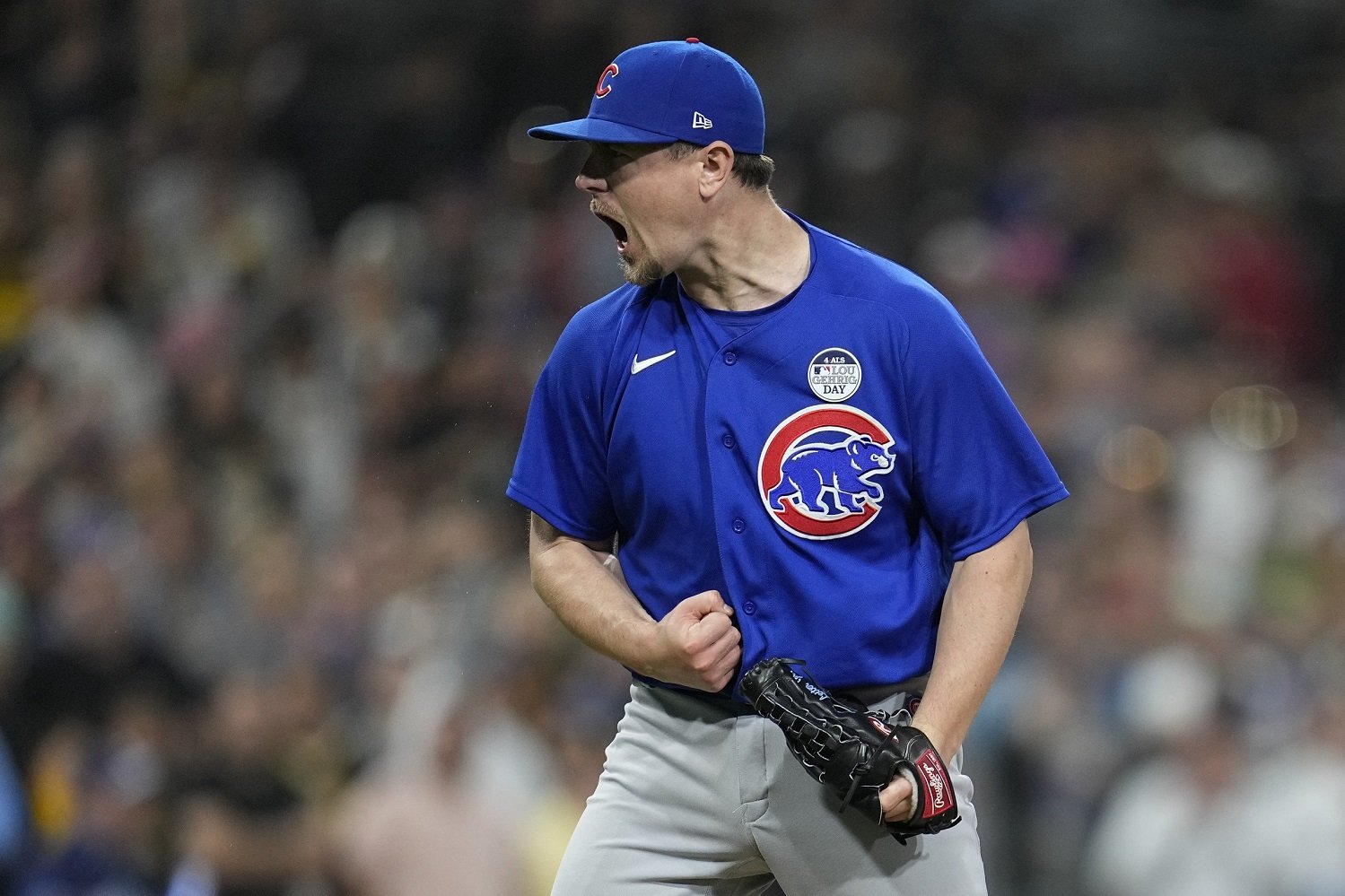 Welcome to the penultimate day of 2023, and to the penultimate list in our series of most-viewed articles this year. We've got more on the now-former manager. Trade ideas. Free agent pitchers. And a nice feel-good story about a pitcher who has spent time between Triple-A and the big leagues since 2017. #10 A Trade a Day: How the Cubs Could Buy Big for 2024, in 2023 by Matt Trueblood July 19 As Matt wrote within this article, “Yes, this is a ‘the Cubs should trade for Juan Soto” post. Notice the date. The idea was that the Cubs should be aggressive and proactive. In thinking about 2023, a move for Soto would have also helped them in 2024. Obviously the Padres weren’t going to just stop spending, but like other teams, the Padres’ local TV situation makes things a little big cloudy. As you know, that trade didn’t happen. In fact, Soto remained with the Padres through the season. During the Winter Meetings, he was traded to the Yankees. It is fun to think about what the Cubs would have needed to send to San Diego for Soto, but it’s more fun to think about the impact the young slugger could have on the Cubs lineup in 2023 and 2024. #9 If the Cubs Miss the Playoffs, there’s One Man to Blame by Brandon Glick Sep 22 Despite the Cubs exceeding their expectations in 2023, they fell out of playoff contention about a week before the end of the season. A lot of good things happened, but there was always a contingent of Cubs fans and writers who did not want to give Ross any credit. I would say it is fair to say that Brandon is not a big David Ross (or Jed Hoyer) fan. He cites lineup issues, bunting, not playing their intriguing prospects when they were called up and not resting veterans enough. #8 David Ross is not the Manager the Cubs Need to Turn the Corner by Matt Trueblood May 9 Apparently this has been a theme. David Ross, a long-time big leaguer and fan favorite, made a ton of questionable decisions as a big-league manager. Every fanbase thinks that their manager does things they shouldn’t. Other players have been hired as managers soon after their playing careers with no previous coaching or managing experience. That shouldn’t be an issue for someone who has been in the game for a long time. As you can see these back-to-back articles saying Ross isn’t the guy came in September and previously in May (and there were more). There was questionable bullpen usage, and starter usage. There are lineup questions, too much bunting and not enough pinch hitting. #7 Sizing Up the Cubs Offseason Needs and Top Priorities Part 1 by FullCountTommy Oct 3 In Part 1 of “Tommy’s” review of the Cubs offseason needs, he considered two top priorities. The first was re-signing Cody Bellinger. The second was to add a strong #1 or #2 starting pitcher to team with Justin Steele in a playoff series. Then he highlighted about 10 starting pitchers that were free agents or potentially available via trade. Four of the free agents have signed elsewhere already. However, there are several of these options that remain available. #6 The Mark Leiter Jr Bandwagon is Leaving the Station by Brandon Glick Aug 30 As you know, Mark Leiter’s father pitched in the big leagues for over a decade. His uncle Al pitched in the big leagues forever. The younger Leiter has been up and down in the big league going back to 2017. Last January, he was made available on waivers and went unclaimed. Back with the Cubs in 2023, he pitched very well. Often during the season, he was the best option for David Ross to go to. Can he be part of the longer-term future? Should he be? The countdown will continue tomorrow, but if you missed a previous edition: Part 1 (21-25) Part 2 (16-20) Part 3 (11-15) Part 4 (6-10) Part 5 (1-5) - Coming Tomorrow!
 -
We're back for Part 3 of our Most-Viewed articles of 2023 series. It could potentially be called the "If you're going to call up prospects, play them." Image courtesy of © Ron Chenoy-USA TODAY Sports In late July, there were a lot of rumors surrounding who the Cubs might acquire at the trade deadline. Would they be busy? Then in August, the Cubs were playing well and there was a lot of thought on the site and among Cubs fans that there were a few minor leaguers who could come up to the club and provide a spark. A couple of those players were called up but were not played enough to provide a lot. #15 The Cubs and Pete Crow-Armstrong Might be Facing a Good Dilemma by Brandon Glick Aug 6 It was early August, and the Cubs were on a nice run. They were seemingly back in contention for a playoff spot. Meanwhile, top prospect Pete Crow-Armstrong was playing well in Double-A and had just been promoted to Triple-A Iowa. Could he be called up to the big leagues and hopefully provide a much-needed spark? Well, a month later, PCA was called up. The 21-year-ol made two starts. After that, he was used as a defensive replacement in the late innings. His bat has a lot of work to do yet. His glove, however, is ready to play in the big leagues today. #14 September Call-Ups: Bring Me Canario by Brandon Glick Aug 23 About one week before rosters could expand from 26 to 28 players, Brandon was considering several potential options for recall. In this article, he touted the reasons to promote the powerful Alexander Canario. He had hit 37 home runs at three levels in 2022, but then he had a career-threatening injury. He got back on the field in the second half of the season. He played 10 games for South Bend and then hit .276/.342/.524 with 12 doubles and eight homers in 36 games. Ultimately, he was called up and played in six games for the Cubs. he had five hits including a double, a triple, and a home run. #13 3 Hitters the Cubs Could Target at Trade Deadline by Matt Trueblood June 27 It was still just over a month from the 2023 trade deadline, but Matt started digging into which hitters could help the Cubs if they found themselves contending. He mentions three players, each from National League teams. And without giving too much away, the Cubs got one of the three, and the other two players were not traded at all. #12 What’s the Deal with Alexander Canario by Brandon Glick Sept 9 Brandon got his wish. Canario was called up when rosters expanded, but then he (and then PCA) were used very sporadically. Manager David Ross said that he was going to play the guys that get them here. Canario played on September 6th and then didn’t play until the 19th. That day, he hit his first double and first home run and drove in five runs. And then he again didn’t play for two more days when he was a pinch hitter #11 A Trade a Day: Should the Cubs Trade Cody Bellinger to the Twins by Matt Trueblood July 15 When players sign one-year, make-good deals with an organization, the hope is that they 1.) prove healthy, and 2.) return to their best form. Cody Bellinger, the former MVP with the Dodgers, signed a one-year deal with the Cubs and it couldn’t have gone much better. He returned to his previous form offensively and continued to play strong defense. When a team signs a player to a one-year, make good deal, they want to see the player do well since they got him for cheap, but also because they can decide to potentially trade him. The Cubs found themselves too close to contention to make a trade, and yet ultimately, outside of the playoffs, so Bellinger remained through the full season. The countdown will continue tomorrow, but if you missed a previous edition: Part 1 (21-25) Part 2 (16-20) Part 3 (11-15) Part 4 (6-10) - Coming Tomorrow! View full article
-
Top 25 North Side Baseball Most-Viewed Articles of 2023: Part 3 (11-15)
Seth Stohs posted an article in Cubs
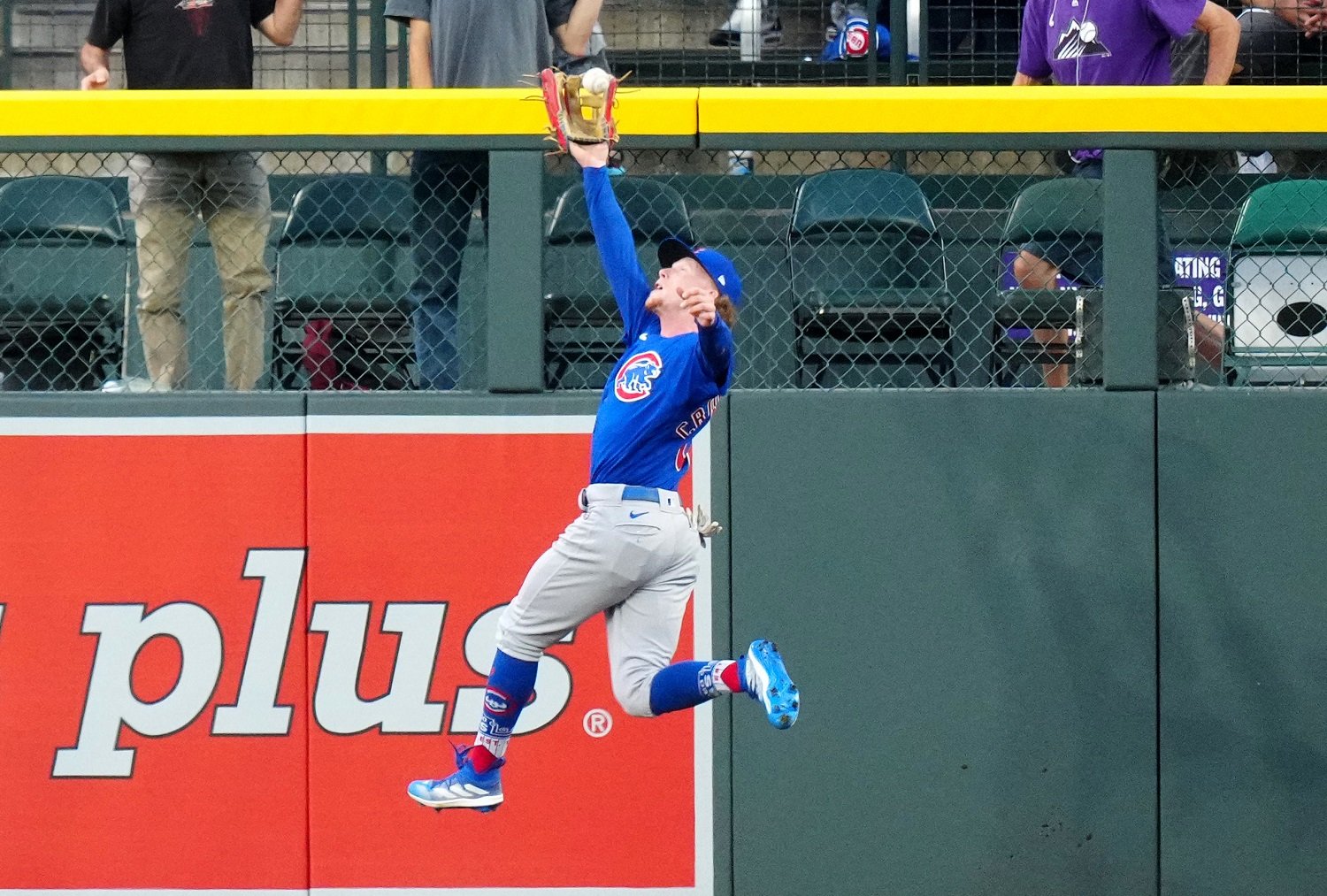 In late July, there were a lot of rumors surrounding who the Cubs might acquire at the trade deadline. Would they be busy? Then in August, the Cubs were playing well and there was a lot of thought on the site and among Cubs fans that there were a few minor leaguers who could come up to the club and provide a spark. A couple of those players were called up but were not played enough to provide a lot. #15 The Cubs and Pete Crow-Armstrong Might be Facing a Good Dilemma by Brandon Glick Aug 6 It was early August, and the Cubs were on a nice run. They were seemingly back in contention for a playoff spot. Meanwhile, top prospect Pete Crow-Armstrong was playing well in Double-A and had just been promoted to Triple-A Iowa. Could he be called up to the big leagues and hopefully provide a much-needed spark? Well, a month later, PCA was called up. The 21-year-ol made two starts. After that, he was used as a defensive replacement in the late innings. His bat has a lot of work to do yet. His glove, however, is ready to play in the big leagues today. #14 September Call-Ups: Bring Me Canario by Brandon Glick Aug 23 About one week before rosters could expand from 26 to 28 players, Brandon was considering several potential options for recall. In this article, he touted the reasons to promote the powerful Alexander Canario. He had hit 37 home runs at three levels in 2022, but then he had a career-threatening injury. He got back on the field in the second half of the season. He played 10 games for South Bend and then hit .276/.342/.524 with 12 doubles and eight homers in 36 games. Ultimately, he was called up and played in six games for the Cubs. he had five hits including a double, a triple, and a home run. #13 3 Hitters the Cubs Could Target at Trade Deadline by Matt Trueblood June 27 It was still just over a month from the 2023 trade deadline, but Matt started digging into which hitters could help the Cubs if they found themselves contending. He mentions three players, each from National League teams. And without giving too much away, the Cubs got one of the three, and the other two players were not traded at all. #12 What’s the Deal with Alexander Canario by Brandon Glick Sept 9 Brandon got his wish. Canario was called up when rosters expanded, but then he (and then PCA) were used very sporadically. Manager David Ross said that he was going to play the guys that get them here. Canario played on September 6th and then didn’t play until the 19th. That day, he hit his first double and first home run and drove in five runs. And then he again didn’t play for two more days when he was a pinch hitter #11 A Trade a Day: Should the Cubs Trade Cody Bellinger to the Twins by Matt Trueblood July 15 When players sign one-year, make-good deals with an organization, the hope is that they 1.) prove healthy, and 2.) return to their best form. Cody Bellinger, the former MVP with the Dodgers, signed a one-year deal with the Cubs and it couldn’t have gone much better. He returned to his previous form offensively and continued to play strong defense. When a team signs a player to a one-year, make good deal, they want to see the player do well since they got him for cheap, but also because they can decide to potentially trade him. The Cubs found themselves too close to contention to make a trade, and yet ultimately, outside of the playoffs, so Bellinger remained through the full season. The countdown will continue tomorrow, but if you missed a previous edition: Part 1 (21-25) Part 2 (16-20) Part 3 (11-15) Part 4 (6-10) - Coming Tomorrow!
-
- 1
-

-
- alexander canario
- cody bellinger
- (and 1 more)
-
Today we continue to review our most-viewed articles of 2023. These articles ranked 16th through 20th. Image courtesy of Mark Hoffman, USA Today Sports In today's set of five oft-viewed articles from 2023, there are several interesting topics. Comparing David Ross and Craig Counsell. A majority of Matt's Top 10 Free Agents are still available. The Angels' strange late-season roster decisions. And, the debut of the Man/Cubs Cave series was really enjoyed .... Read on and at the end be sure to take a few minutes to note your thoughts on these topics. Maybe your opinion has changed over time. #20 So, What Exactly Makes Craig Counsell So Much Better than David Ross? by Matt Trueblood Nov 7 Only weeks before hiring Craig Counsell, the Cubs leadership publicly supported David Ross as their 2024 manager. However, when Counsell became available, Jed Hoyer was aggressive in signing the former Brewers manager to the highest contract ever for a manager. That has to mean that Hoyer believes that Counsell gives the Cubs a far-better likelihood of winning, and that he believes Counsell is a much better manager. So in this article, Matt - not a big Ross supporter - discussed several ways that the Cubs are better off with Counsell at the helm. #19 Top 50 Fits for the Cubs in MLB Free Agency: Nos. 10-1 by Matt Trueblood Nov 20 Matt ranked the 50 MLB free agents that fit the Cubs needs heading into 2024. It wasn’t simply ranking the players like others, but specific to the Cubs. In this final part of the five-part series, there are 10 very exciting names, players that all have garnered interest from several teams. To date, just three of the players have signed. At least three of those players have been linked in some way to the Cubs during the offseason. It is definitely fun to look back at this list and with three exceptions, know that it’s still quite timely. #18 The Cubs Should Claim Every Angels Player on Waivers, but One is the Prize by Matt Trueblood Aug 30 In a move that had never been done so openly and abrasively, the Angels placed six veteran players on waivers. At the early August deadline, the Angels were a long-shot, but instead of trading Ohtani and bringing back talent, they chose to be buyers. Admirable? Sure. Smart? Probably not, and ultimately it went poorly in the short-term (that Angels continued to sink in the standings, Ohtani hurt his elbow, and then was shut down early) and in the long-term (have you heard about his deal with the Dodgers?). So, with 48 hours before the calendar switched to September, the Angels made pitchers Lucas Giolito, Dominic Leone, Reynaldo Lopez, and Matt Moore; and outfielders Randal Grichuk and Hunter Renfroe available. Teams could claim those players and they would be eligible for the playoffs. Matt made the case that the Cubs should place a claim on all of the players, but that adding Giolito would have a big impact on their pitching staff. Ultimately, Cleveland claimed Giolito, Lopez and Moore, and only Grichuk even got to the Cubs spot. #17 The Cubs Decision to Retain David Ross will Set the Franchise Back by Brandon Glick Oct 8 As mentioned above, at the conclusion of the Cubs season, Jed Hoyer confirmed to the media that David Ross would return as the Cubs manager in 2024. You’ve read t he article’s title. I’m guessing that you have a pretty good idea from only the title how Brandon felt about retaining Ross as manager. While there is a paragraph in the article that discusses Ross’s strength as a manager and a leader and such, the next paragraph points out a few in-game decisions when the results went poorly for the Cubs. Where do you stand on this decision but also just on what makes a good manager. Most of what makes a good manager can’t be seen by fans or media or measured statistically. And every team’s fan base thinks their manager makes a lot of in-game and lineup decisions that hurt their favorite team. #16 Friday Fan Feature: Cubs Fan Cave of the Week: Jay Herrman by Jeff Ragauskis Nov 3 This was the first of what is a really cool feature that hopefully we will be able to continue through the offseason. Jeff chatted with Jay Herrman who also shared some great pictures of his recently-completed Cubs Cave! The pictures are great. But so are the stories that Jay shared for the article, especially the emotional story behind his search for a Cubs pinball machine. Like I said, hopefully others will want to share their Cubs Cave here. If you would, please reach out and let us know. Who knows? Maybe this will give others some ideas for creation of their own Cubs Cave. More to come tomorrow, but if you missed a previous edition: Part 1 (21-25) Part 2 (16-20) Part 3 (11-15) - Coming Tomorrow! View full article
-
Top 20 North Side Baseball's Most-Viewed Articles in 2023: Part 2 (16-20)
Seth Stohs posted an article in Cubs
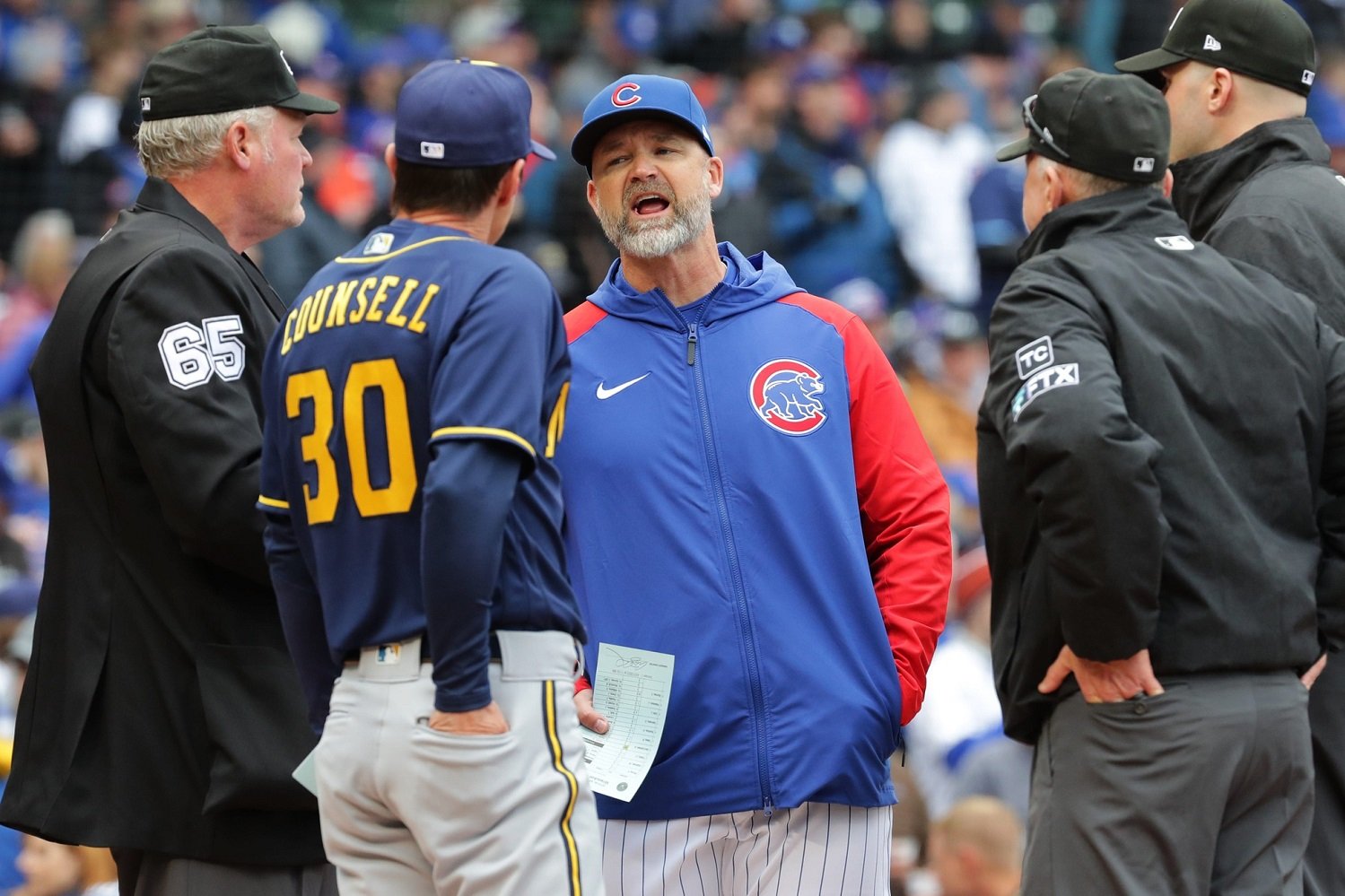 In today's set of five oft-viewed articles from 2023, there are several interesting topics. Comparing David Ross and Craig Counsell. A majority of Matt's Top 10 Free Agents are still available. The Angels' strange late-season roster decisions. And, the debut of the Man/Cubs Cave series was really enjoyed .... Read on and at the end be sure to take a few minutes to note your thoughts on these topics. Maybe your opinion has changed over time. #20 So, What Exactly Makes Craig Counsell So Much Better than David Ross? by Matt Trueblood Nov 7 Only weeks before hiring Craig Counsell, the Cubs leadership publicly supported David Ross as their 2024 manager. However, when Counsell became available, Jed Hoyer was aggressive in signing the former Brewers manager to the highest contract ever for a manager. That has to mean that Hoyer believes that Counsell gives the Cubs a far-better likelihood of winning, and that he believes Counsell is a much better manager. So in this article, Matt - not a big Ross supporter - discussed several ways that the Cubs are better off with Counsell at the helm. #19 Top 50 Fits for the Cubs in MLB Free Agency: Nos. 10-1 by Matt Trueblood Nov 20 Matt ranked the 50 MLB free agents that fit the Cubs needs heading into 2024. It wasn’t simply ranking the players like others, but specific to the Cubs. In this final part of the five-part series, there are 10 very exciting names, players that all have garnered interest from several teams. To date, just three of the players have signed. At least three of those players have been linked in some way to the Cubs during the offseason. It is definitely fun to look back at this list and with three exceptions, know that it’s still quite timely. #18 The Cubs Should Claim Every Angels Player on Waivers, but One is the Prize by Matt Trueblood Aug 30 In a move that had never been done so openly and abrasively, the Angels placed six veteran players on waivers. At the early August deadline, the Angels were a long-shot, but instead of trading Ohtani and bringing back talent, they chose to be buyers. Admirable? Sure. Smart? Probably not, and ultimately it went poorly in the short-term (that Angels continued to sink in the standings, Ohtani hurt his elbow, and then was shut down early) and in the long-term (have you heard about his deal with the Dodgers?). So, with 48 hours before the calendar switched to September, the Angels made pitchers Lucas Giolito, Dominic Leone, Reynaldo Lopez, and Matt Moore; and outfielders Randal Grichuk and Hunter Renfroe available. Teams could claim those players and they would be eligible for the playoffs. Matt made the case that the Cubs should place a claim on all of the players, but that adding Giolito would have a big impact on their pitching staff. Ultimately, Cleveland claimed Giolito, Lopez and Moore, and only Grichuk even got to the Cubs spot. #17 The Cubs Decision to Retain David Ross will Set the Franchise Back by Brandon Glick Oct 8 As mentioned above, at the conclusion of the Cubs season, Jed Hoyer confirmed to the media that David Ross would return as the Cubs manager in 2024. You’ve read t he article’s title. I’m guessing that you have a pretty good idea from only the title how Brandon felt about retaining Ross as manager. While there is a paragraph in the article that discusses Ross’s strength as a manager and a leader and such, the next paragraph points out a few in-game decisions when the results went poorly for the Cubs. Where do you stand on this decision but also just on what makes a good manager. Most of what makes a good manager can’t be seen by fans or media or measured statistically. And every team’s fan base thinks their manager makes a lot of in-game and lineup decisions that hurt their favorite team. #16 Friday Fan Feature: Cubs Fan Cave of the Week: Jay Herrman by Jeff Ragauskis Nov 3 This was the first of what is a really cool feature that hopefully we will be able to continue through the offseason. Jeff chatted with Jay Herrman who also shared some great pictures of his recently-completed Cubs Cave! The pictures are great. But so are the stories that Jay shared for the article, especially the emotional story behind his search for a Cubs pinball machine. Like I said, hopefully others will want to share their Cubs Cave here. If you would, please reach out and let us know. Who knows? Maybe this will give others some ideas for creation of their own Cubs Cave. More to come tomorrow, but if you missed a previous edition: Part 1 (21-25) Part 2 (16-20) Part 3 (11-15) - Coming Tomorrow!
 -
Our first year of North Side Baseball in this format has been a lot of fun, and a huge learning experience. Hopefully you have enjoyed the journey of the season and offseason as much as we have. On fun way to look back at the year-that-was is to review our 25 most-viewed articles. Image courtesy of David Banks-USA TODAY Sports Before we begin this series, we need to acknowledge that the current version of North Side Baseball began in early April, so it’s more like the Top 25 articles of the final eight-and-a-half months of 2023. However, it is fun to look back at the 2023 Cubs season through this lens. What were the popular topics at various themes throughout the season? There were certainly good times to go along with some frustrating or disappointing moments. #25 Nico Hoerner Needs to Bat Sixth for a While by Matt Trueblood June 9 David Ross’s lineup had been struggling for over a month, and Matt thought it was time for a change. Nico Hoerner had been written into the leadoff spot to that point, but he was struggling at the plate overall. The suggestion was to put Ian Happ into the top spot in the lineup and move Hoerner down. He also had suggestions for lineups against lefties and righties. #24 Sizing up the Cubs Offseason Needs and Top Priorities Part 2 by FullCountTommy Oct 4 FullCount’s second “Needs and Priorities” article looked at two key Cubs’ needs this offseason and provided several names for the team to consider. About ten weeks later, a few of the players are no longer available, but more are still available and could be considered. #23 We’re at a Critical Moment for Cody Bellinger by Matt Trueblood May 14 The Cubs signed Cody Bellinger to a one-year, make good contract. He was fantastic in April, but he struggled for two weeks in early May. Was it just a two-week slump, or was it more of the same? More of what he had been doing the three previous years with the Dodgers? With rumors this offseason circulating that Bellinger could be looking at a contract approaching $200 million, we can agree that he turned it around pretty well. #22 Let’s Not Let the Prospect of Bringing Back Cody Bellinger Lose Its Sizzle by Matt Trueblood Dec 14 The Cubs lost out on Shohei Ohtani. They were outbid by the Yankees for Juan Soto. Tyler Glasnow was traded to the Dodgers instead of the Cubs. And Yoshinobu Yamamoto decided to take his talents to the Dodgers. As Matt wrote, bringing back Bellinger may “feel like a lateral move at the worst time–at least narratively.” While the Cubs would still need to bring in more players, “If they do end up reupping with their best player from the season just past, though, they'll have done something bigger than they did by bringing him in the first time, and we shouldn't lose sight of that fact.” #21 This Sucks but Dansby Swanson has been Terrible in the Clutch All Season by Matt Trueblood Sept 18 The article’s title really tells the story. Simply put, Dansby Swanson’s production was not good. His Win Probability Added (WPA) was a negative. His overall offensive production was fine. He clearly exemplified the leadership skills that have made him a popular teammate. His defense is elite and he won another Gold Glove Award. But if we’re looking for areas of improvement in 2024, “clutch hitting” is one for Swanson. Check back tomorrow for the next five articles on our list. View full article
-
Top 25 North Side Baseball Most-Viewed Articles of 2023: Part 1 (21-25)
Seth Stohs posted an article in Cubs
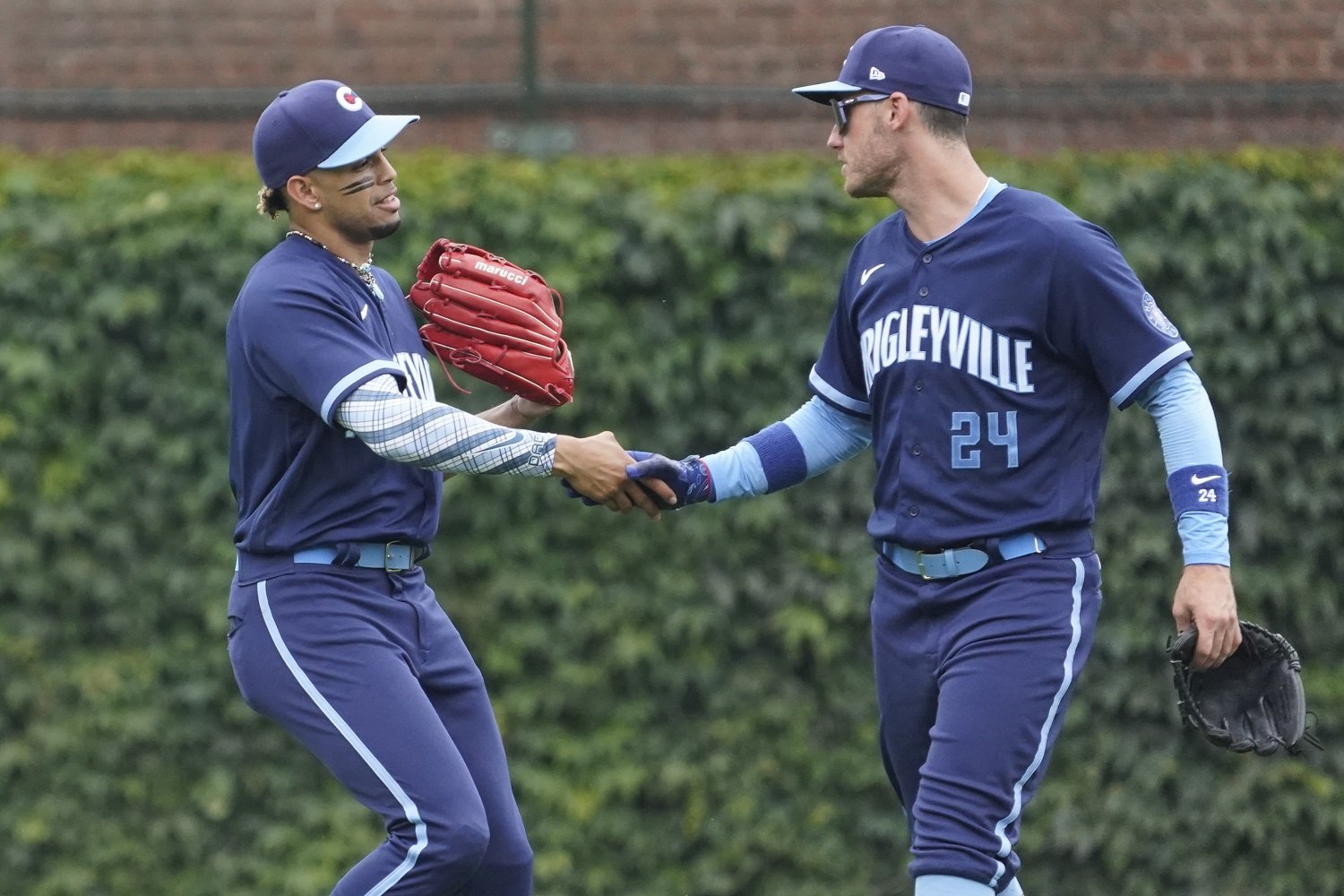 Before we begin this series, we need to acknowledge that the current version of North Side Baseball began in early April, so it’s more like the Top 25 articles of the final eight-and-a-half months of 2023. However, it is fun to look back at the 2023 Cubs season through this lens. What were the popular topics at various themes throughout the season? There were certainly good times to go along with some frustrating or disappointing moments. #25 Nico Hoerner Needs to Bat Sixth for a While by Matt Trueblood June 9 David Ross’s lineup had been struggling for over a month, and Matt thought it was time for a change. Nico Hoerner had been written into the leadoff spot to that point, but he was struggling at the plate overall. The suggestion was to put Ian Happ into the top spot in the lineup and move Hoerner down. He also had suggestions for lineups against lefties and righties. #24 Sizing up the Cubs Offseason Needs and Top Priorities Part 2 by FullCountTommy Oct 4 FullCount’s second “Needs and Priorities” article looked at two key Cubs’ needs this offseason and provided several names for the team to consider. About ten weeks later, a few of the players are no longer available, but more are still available and could be considered. #23 We’re at a Critical Moment for Cody Bellinger by Matt Trueblood May 14 The Cubs signed Cody Bellinger to a one-year, make good contract. He was fantastic in April, but he struggled for two weeks in early May. Was it just a two-week slump, or was it more of the same? More of what he had been doing the three previous years with the Dodgers? With rumors this offseason circulating that Bellinger could be looking at a contract approaching $200 million, we can agree that he turned it around pretty well. #22 Let’s Not Let the Prospect of Bringing Back Cody Bellinger Lose Its Sizzle by Matt Trueblood Dec 14 The Cubs lost out on Shohei Ohtani. They were outbid by the Yankees for Juan Soto. Tyler Glasnow was traded to the Dodgers instead of the Cubs. And Yoshinobu Yamamoto decided to take his talents to the Dodgers. As Matt wrote, bringing back Bellinger may “feel like a lateral move at the worst time–at least narratively.” While the Cubs would still need to bring in more players, “If they do end up reupping with their best player from the season just past, though, they'll have done something bigger than they did by bringing him in the first time, and we shouldn't lose sight of that fact.” #21 This Sucks but Dansby Swanson has been Terrible in the Clutch All Season by Matt Trueblood Sept 18 The article’s title really tells the story. Simply put, Dansby Swanson’s production was not good. His Win Probability Added (WPA) was a negative. His overall offensive production was fine. He clearly exemplified the leadership skills that have made him a popular teammate. His defense is elite and he won another Gold Glove Award. But if we’re looking for areas of improvement in 2024, “clutch hitting” is one for Swanson. Check back tomorrow for the next five articles on our list.
-
- 1
-
-
- nico hoerner
- cody bellinger
- (and 2 more)
-
On Monday, Major League Baseball announced the recipients of their pre-arbitration bonuses. Cubs lefty Justin Steele received one of the largest bonuses handed out. Two other Cubs also got some bonus money to spend before the holidays. Image courtesy of © Kamil Krzaczynski, USA Today In the current Collective Bargaining Agreement, the two sides (players and owners) agreed to provide bonus money for pre-arbitration eligible players who perform well. The idea is that these players barely make the league minimum for their first three MLB seasons. Then, through the arbitration process, they can start earning some money. The bonus is considered an incentive for teams to call up their young prospects, rather than playing the service time game. The league sets aside $50 million for these players. Specific amounts are earned for receiving Rookie of the Year, MVP, or Cy Young votes, or finishing first- or second-team all-MLB. For those award allocations, a player can only receive one bonus each year, whichever is higher. For instance, Diamondbacks outfielder Corbin Carroll was named Rookie of the Year and was first-team All-MLB. The award for winning Rookie of the Year is $750,000. For finishing first-team All-MLB, he gets $1 million. He would only receive the $1 million award. The remainder of the award pool is spread between the top pre-arbitration players in baseball. It is based on a formula using bWAR and fWAR. Corbin Carroll’s total bonus was $1,812,337. That ranked second to Mariners outfielder Julio Rodriguez, who received $1,865,349. A total of 101 players earned a bonus through this program. Ten players earned a bonus over $1 million. Cubs left-hander Justin Steele ranked among the biggest beneficiaries, with an impressive $1,673,331 bonus earned. The first $1 million of that bonus was due to finishing fifth in the National League Cy Young Award balloting. Here's the full list of Cubs recipients: Justin Steele ($1,673,331) Adbert Alzolay ($263,794) Javier Assad ($261,955) Steele got his feet wet with the Cubs in 2021, when he went 4-4 with a 4.26 ERA in 57 innings. In 2022, he made 24 starts and went 4-7 with a 3.18 ERA over 119 innings. Things fell into place for Steele in 2023. In 30 starts, the now-28-year-old went 16-5 with a 3.06 ERA in 173 1/3 innings. His strikeout percentage remained the same (24.6%) from 2022 to 2023. Where he made vast improvement was in strike-throwing. His walk percentage dropped from 9.8% to 5.0%, and he did that while making just $20,000 over the league’s minimum salary. The league minimum was $720,000 in 2023 (it will be $740,000 in 2024). Here is a look at the ‘regular’ salaries of these players in 2023: Justin Steele ($740,000) Adbert Alzolay ($744,750) Javier Assad ($721,500) So yes, Steele more than tripled his 2023 salary with this bonus. Think about that for a minute. Instead of claiming $740,000 of income, he will need to claim just over $2.4 million in earnings. That just might put him in a different tax bracket. Short story long, this allotment is a nice bonus for these players heading into the holiday season. Again, this is based on a formula called the Joint WAR. It uses the popular Wins Above Replacement (WAR) calculations - Baseball-Reference and FanGraphs - though the exact formula is not publicly available. Justin Steele: bWAR (3.0), fWAR (4.9) Adbert Alzolay: bWAR (1.8), fWAR (1.5) Javier Assad: bWAR (2.3), fWAR (0.9) Alzolay has been up and down with the Cubs going back to 2019. Early in his career, he had opportunities as a starter. In 2023, he made 58 appearances, all out of the bullpen. He responded very well, with his best season. He went 2-5 with a 2.67 ERA and 1.02 WHIP, and he did so while taking on many more high-leverage situations. He had 22 saves on the season. He threw his fastball a little bit harder but less frequently. He increased his slider usage from 31% to 45%, adding nearly two miles per hour. He put things together. Javier Assad debuted in 2022 and had a respectable 3.11 ERA over 37 2/3 innings. He made a few more starts for the Cubs in 2023 but found a more suitable role out of the bullpen. He went 5-3 with a 3.05 ERA over 32 games (10 starts) and 109 1/3 innings. The hope is for Assad to continue to make strides in 2024. He has a starter’s pitch mix, including five pitches. Maybe as his role becomes more and more defined, the 26-year-old would drop a pitch or two. He gets good movement, so he will be interesting to follow. In total, the pool is $50 million. The players are paid by their respective teams, and then the Commissioner’s Office reimburses the teams. With about $2.1 million going out to Steele, Alzolay, and Assad, the Cubs will line their players' pockets with more than their share (just under $1.7 million) of that $50-million league pool. They'll hope to be claiming a similar amount in 2024, regardless of the moves they make to shore things up this winter. Pete Crow-Armstrong, Christopher Morel, Miguel Amaya, Assad, Jordan Wicks, and others are still in line to benefit from the system if they perform well in substantial playing time. Congratulations to all three of these players! View full article
