Jason Ross
-
Posts
8,154 -
Joined
-
Last visited
-
Days Won
74
2 Followers


Jason Ross's Achievements





-
Lance Broz breaks down Kaira Taima.
-
Makes sense. Yeah I meant it as "The West" vs "The East" but makes sense where the confusion as to that was!
-
Ah, can see the confusion. I meant "West" as is in "the" West but in a title everything gets the capitalization treatment and what's a name and what's a direction can get missed. That said, I'll be honest; I think Sato is going to (mostly) bust. Whiff and contact is about our biggest red flag/green flag indicator from Triple-A to MLB and same for NPB to MLB. Even those who can outpace them tend to have super short shelf lives (Joey Gallo). His fastball whiff% is terrifying and while I think there's some of this that is approach, I think the tall task of "face the best pitchers in the world, also stop swinging so damn much" is a really tough ask. Guys just struggle to change fundamentally who they are like that. We got really lucky with Pete in that aspect. The power is fun. I think he's going to lead the league in K% (or be damn close) and won't have the tools to make up for it. It's really hard to find people I think will strikeout as much as he will (over 33%) who fit the profile. They usually combine it with super high BABIP (like a Zach Neto last year?) or a ton of walks (Murakami). And I just don't think Sato has it. Like, I think maybe 2026 Colson Montgomery is kind of where I think he ends up. More whiff on fastball, less on breaking stuff, some harder hit stuff and a higher BABIP, but general concept of 30+ home runs, a 35% K% and BB% under 9% leading to a 95-100 wRC+.
-
I think the Yankees feel like a real fit. LHH and the short porch. They need some OF'ers. They're a typical home for NPB players as well.
-
So, first off, this really isn't the article for it; this article is about Teruaki Sato. But I'm going to open up one comment to this, because this feels wildly uninformed. The MLB World Series is literally the Rays and the Brewers, claiming it "isn't a level playing field" really seems to ignore the current situation. Beyond that Acting like parity is an issue is also wrong. Jason Stark lays that out here. Acting like a salary cap will solve baseball, is also wrong. Owners are the issue. Stop falling for their bait. Seriously. Stop falling for their nonsense. They lie. The answer isn't to sit this out. Not only because of this, but why would you waste Pete Crow-Armstrong's best years? I'd recommend looking into this further I get it, in theory a salary cap feels like it's fair and that's the trap the owners want people to fall into. Sadly, we don't live in an altruistic world. Don't fall for their lies. Do yourself a favor, take the time to read these and realize that the answer to nothing is "salary cap". There are issues in MLB but the owners want you to focus on the wrong things. The players aren't saints either. The MLBPA routinely sells out young players and specifically teenagers and IFA kids. We can find faults there. But in the lockout fight, it's the owners who just straight up don't give a horsefeathers about baseball. The players need it. The owners just want to profit from it. Beyond that, we can discuss Sato the player in this comment section. That's what this is for. But I also cannot in good conscious let this go without saying something and hoping to eliminate the misinformation being spread.
-
Image courtesy of Darren Yamashita-Imagn Images As the postseason comes to a crescendo with the Milwaukee Brewers and Tampa Bay Rays facing off in the 2026 World Series, the Chicago Cubs' offseason shopping remains on pause. When the hot stove does begin to crackle, though, they have a lot of things to accomplish in what will likely be a short time. Their need for starting pitching is well-documented. One of the names the Cubs will have some interest in is Japanese righty Kaima Taira. I profiled Taira the other day, highlighting his fit with the organization, but the portly right-handed pitcher isn't the only big name who will be headed Stateside. Teruaki Sato, one of Japan's leading home run hitters in 2026, will also be posted by his Nippon Professional Baseball club, the Hanshin Tigers, according to multiple reports. Will the Cubs be involved in Sato's free agency? Today, we'll take a deep dive into his profile: what he does well, what he does poorly, and whether or not there's a fit between the two sides. Teruaki Sato: The Positives No conversation about Teruaki Sato can omit his prodigious power. The left-handed slugger has mashed 163 home runs over the course of six years, which is about a 27-home run average, but that doesn't do him justice. First, of those 163 dongs, a whopping 79 have come in the last two seasons. Second, NPB is currently in the midst of a "dead ball era", which makes his power outburst even more impressive. There's really little debate over how impressive his power has been. It would be a mistake to compare Sato to his MLB counterparts right now, because the makeup of the Japanese top league is very different from the American one. Not only are they experiencing a dead ball, but the velocity of NPB pitchers just isn't where MLB pitching is. Instead, comparing Sato to countryman Munataki Murakami's last (full) season in Japan can give us the proper context for his power. In Murakami's last complete season (2025 was injury shortened), the left-handed hitter crushed 33 home runs in 610 plate appearances. Sato hit 39 this year, in 100 fewer trips. Not only did he out-homer Murakami, but the Tigers' star third baseman had a better hard-hit rate, while hitting the ball on the ground less often. His power should play in the American majors, too. While many hitters struggle against a specific type of pitch, Sato crushed every type of pitch last season. His worst slugging average was against breaking balls, but he still had an above-average OPS+ against them. His OPS+ against fastballs was 260 and he had a 186 OPS+ against offspeed stuff. This makes for a more well-rounded hitter at the plate, even if we can safely guess that not all of that will hold as the heat on the fastballs he sees is turned up significantly. One reason for the prodigious power is that he has a really clean, mechanical swing. There aren't a lot of moving parts. He's upright, takes a small leg kick and shows off a swing that has significant lift. He also pulls the ball at a very high clip. This results in loud contact to the pull side in the air. It's a perfect storm for home runs, and he uses it to great effect. Another strong aspect of Sato's game is that he's fairly athletic. No one will confuse him with Pete Crow-Armstrong on the bases, but he graded out well in advanced baserunning data. This should allow him to remain a viable defender for a while. He isn't likely to steal 20 bags against MLB pitchers (he didn't even do that in NPB), but he probably won't be a negative on the bases, giving him a bit higher of a floor than either Murakami or another recent import, Kazuma Okamoto. Defensively, Sato has some versatility, in that he's played both third base and the corner outfield extensively in Japan, logging 593 games at the hot corner and 269 in the outfield. This will give his new team some choices about where to play him. Teruaki Sato: The Negatives While Sato may have seemingly super-human power potential, the slugging comes with the downside that many power hitters have: low contact rates. Sato is a free swinger. He swings a lot, both in and outside of the zone. He also has a tendency to miss a lot, both in and out of the zone. This gives evaluators pause on what to make of the power. It's great if you can hit the ball a mile, but to do that, you actually have to hit the ball, and how often Sato will do that against MLB pitching is easily the biggest question mark around his game. Sato isn't the first Japanese hitter to face these questions recently. Murakami faced similar questions last offseason. All he did was post a 125 wRC+ and smack 35 home runs in his first season, proving that these questions may have been premature. While this may signal that high-strikeout hitters can survive, though, I'm not sure Sato has the same qualities that Murakami does to help him mitigate that flaw. It's true that Murakami had (and still has—he struck out over 35% of the time in 2026) contact issues, but he was much more a discerning hitter, walking almost two times more than Sato in their final NPB seasons. He accomplished this with a 23.6% chase rate in 2025, whereas Sato was nearly 10% higher. The White Sox first baseman walked 16.6% of the time to support his slugging in 2026, something we can't expect Sato to accomplish. Big-league pitchers are very good at exploiting weaknesses, and a high-swing, high-chase hitter is one who will get themselves out. Another issue is that while Sato feasted on all pitches, the whiff rate he showed on fastballs is worrisome. A 31.8% whiff rate on fastballs is a real issue. In MLB, the average whiff rate on fastballs in 2026 was 19.1%. Murakami, our point of comparison for Sato, led the league with a 37.9% mark. In his final two seasons in Japan, however, Murakami whiffed at 29.9% of heaters in 2024 and 27,1% in 2025. There's a legitimate fear that Sato swings through so many heaters that he can't access his power in the States. Looking at his heatmap, pitchers tend to throw fastballs up and out on the NPB star. With a swing that is clearly geared for loft, Sato struggles to get his bat to those offerings. This is pretty commonplace for hitters with his swing path. It's great that he crushes fastballs, but learning to stay away from these pitches will be a point of emphasis for him as he comes to America. For Sato to truly feast, he's going to have to make meaningful approach changes. His overall zone contact rates aren't the biggest red flag; he made contact in the zone at about 82%. Where he gets in trouble is that he swings at over half the pitches he sees. Against even better pitching, he's got to learn to be far more choosy. But he's going to have to make these adjustments immediately against some of the best pitchers in the world. It's possible, but no easy task, especially for a guy about to turn 28 years old. Defensively, it's great that Sato can play multiple positions, but he's really not a good third baseman. He's considered worse on the dirt than Kazuma Okamoto. Okamoto, who logged 1,200 innings at the hot corner in 2026, graded out as a -1 DRS and a 0 OAA. That's not bad, but it means that Sato isn't going to come Stateside and be a dynamic player with many ways to affect the game. This puts even more weight on the bat to be the carrying tool. Are Teruaki Sato and the Chicago Cubs a Good Fit? Positionally, the Chicago Cubs have multiple openings that Sato could slide right into. With the organization set to see Ian Happ and Seiya Suzuki leave via free agency this winter, Sato would have little internal competition at either corner outfield position. Currently, the only two players slotted into those spots are youngsters Matt Shaw and Pedro Ramirez, who both have bats that are more suited for the infield. Where things begin to fall apart is in the type of hitters the Cubs have gravitated toward under Jed Hoyer. They're not entirely against free swingers. Nico Hoerner (who was just awarded a six-year extension) and Pete Crow-Armstrong certainly like to swing the bat. They aren't afraid of high-swing prospects either; the aforementioned Shaw and Ramirez both like to swing. They even drafted two players (in Caden Sorrell and Myles Bailey) who have significant swing-and-miss in their game during the 2026 draft. But each of these hitters comes with something that Sato doesn't: they either are high-walk or high-contact hitters. Sato does not appear to be either of those things. The Cubs really value hitters who crush fastballs, which once again makes Sato's profile a tricky one to square with the organization's philosophy. It's true that the outfielder absolutely kills the pitch. However, the Cubs also had the third-lowest whiff rate on fastballs in 2026. Will they decide his whiff issues are too great? Or that they can be the change needed in his game? Chicago is also entering a season of a lot of turnover. Needing to rebuild most of their rotation (as well as multiple needs positionally) means the Cubs will have to do a lot of shopping this year. While I'd love to believe the organization was willing to join the $300-million club, what Tom Ricketts is actually willing to spend is pretty murky. Do the Cubs just go back to the first luxury-tax line and spend $70 million this offseason? Do they blow through the first threshold and spend over $100 million? What does the CBA do to any of this? All of these are unknowns as of now. Making things even tougher is pinpointing what Sato will make. On one hand, he offers better power and positional versatility that Murakami, but he has significantly worse approach numbers and is older. He's younger than Okamoto, has more power but a lower floor, and faces more questions about where he belongs on defense. A good bet is a shorter deal (four years or fewer, possibly an opt out) with around $15-20 million as an annual average value, but the market this offseason is pretty thin on offense, meaning it could go north of that estimate, both in years and salary. If the Cubs aren't planning to go nuts with the checkbook, it gets hard to justify the risk of Sato in a hurry. I don't want to sound too negative on Sato. He has some really loud power, the capability to be a pretty good corner outfielder, and enough athleticism to find a good deal of upside. But there's enough risk that it feels unlikely that the Chicago Cubs will use what resources they have to win a bidding war on a player who doesn't fit their normal profile. If the Cubs do add an NPB star, Taira feels like a more likely option. Regardless of where he sends up, Sato will probably hit a bunch of home runs. The question is really going to be what happens in his other 500 plate appearances. Would you like the look of Teruaki Sato in Cubs pinstripes? Or do you think he'll simply strike out too much for it to be a good idea? Let us know in the comment section below! View full article
-
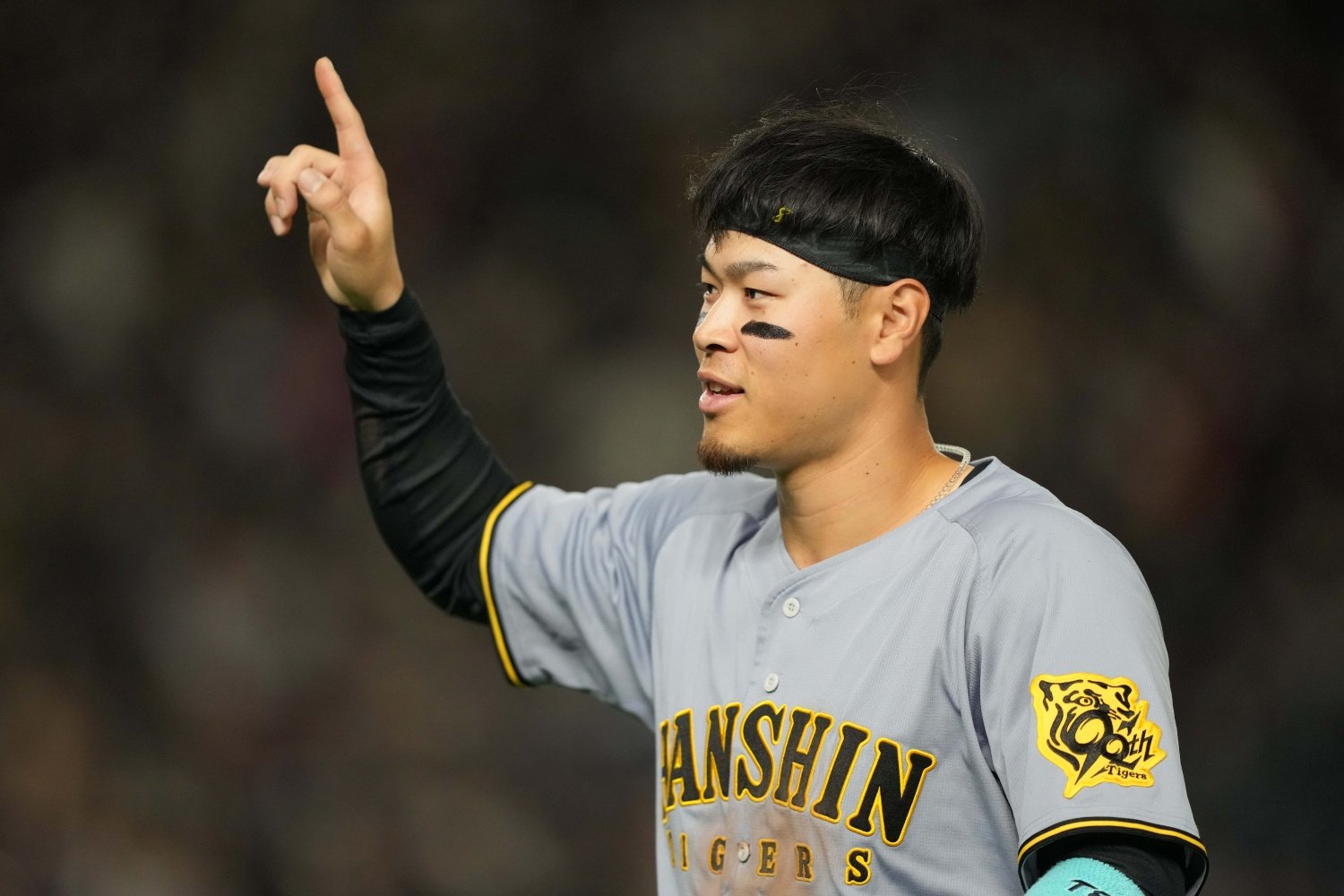 As the postseason comes to a crescendo with the Milwaukee Brewers and Tampa Bay Rays facing off in the 2026 World Series, the Chicago Cubs' offseason shopping remains on pause. When the hot stove does begin to crackle, though, they have a lot of things to accomplish in what will likely be a short time. Their need for starting pitching is well-documented. One of the names the Cubs will have some interest in is Japanese righty Kaima Taira. I profiled Taira the other day, highlighting his fit with the organization, but the portly right-handed pitcher isn't the only big name who will be headed Stateside. Teruaki Sato, one of Japan's leading home run hitters in 2026, will also be posted by his Nippon Professional Baseball club, the Hanshin Tigers, according to multiple reports. Will the Cubs be involved in Sato's free agency? Today, we'll take a deep dive into his profile: what he does well, what he does poorly, and whether or not there's a fit between the two sides. Teruaki Sato: The Positives No conversation about Teruaki Sato can omit his prodigious power. The left-handed slugger has mashed 163 home runs over the course of six years, which is about a 27-home run average, but that doesn't do him justice. First, of those 163 dongs, a whopping 79 have come in the last two seasons. Second, NPB is currently in the midst of a "dead ball era", which makes his power outburst even more impressive. There's really little debate over how impressive his power has been. It would be a mistake to compare Sato to his MLB counterparts right now, because the makeup of the Japanese top league is very different from the American one. Not only are they experiencing a dead ball, but the velocity of NPB pitchers just isn't where MLB pitching is. Instead, comparing Sato to countryman Munataki Murakami's last (full) season in Japan can give us the proper context for his power. In Murakami's last complete season (2025 was injury shortened), the left-handed hitter crushed 33 home runs in 610 plate appearances. Sato hit 39 this year, in 100 fewer trips. Not only did he out-homer Murakami, but the Tigers' star third baseman had a better hard-hit rate, while hitting the ball on the ground less often. His power should play in the American majors, too. While many hitters struggle against a specific type of pitch, Sato crushed every type of pitch last season. His worst slugging average was against breaking balls, but he still had an above-average OPS+ against them. His OPS+ against fastballs was 260 and he had a 186 OPS+ against offspeed stuff. This makes for a more well-rounded hitter at the plate, even if we can safely guess that not all of that will hold as the heat on the fastballs he sees is turned up significantly. One reason for the prodigious power is that he has a really clean, mechanical swing. There aren't a lot of moving parts. He's upright, takes a small leg kick and shows off a swing that has significant lift. He also pulls the ball at a very high clip. This results in loud contact to the pull side in the air. It's a perfect storm for home runs, and he uses it to great effect. Another strong aspect of Sato's game is that he's fairly athletic. No one will confuse him with Pete Crow-Armstrong on the bases, but he graded out well in advanced baserunning data. This should allow him to remain a viable defender for a while. He isn't likely to steal 20 bags against MLB pitchers (he didn't even do that in NPB), but he probably won't be a negative on the bases, giving him a bit higher of a floor than either Murakami or another recent import, Kazuma Okamoto. Defensively, Sato has some versatility, in that he's played both third base and the corner outfield extensively in Japan, logging 593 games at the hot corner and 269 in the outfield. This will give his new team some choices about where to play him. Teruaki Sato: The Negatives While Sato may have seemingly super-human power potential, the slugging comes with the downside that many power hitters have: low contact rates. Sato is a free swinger. He swings a lot, both in and outside of the zone. He also has a tendency to miss a lot, both in and out of the zone. This gives evaluators pause on what to make of the power. It's great if you can hit the ball a mile, but to do that, you actually have to hit the ball, and how often Sato will do that against MLB pitching is easily the biggest question mark around his game. Sato isn't the first Japanese hitter to face these questions recently. Murakami faced similar questions last offseason. All he did was post a 125 wRC+ and smack 35 home runs in his first season, proving that these questions may have been premature. While this may signal that high-strikeout hitters can survive, though, I'm not sure Sato has the same qualities that Murakami does to help him mitigate that flaw. It's true that Murakami had (and still has—he struck out over 35% of the time in 2026) contact issues, but he was much more a discerning hitter, walking almost two times more than Sato in their final NPB seasons. He accomplished this with a 23.6% chase rate in 2025, whereas Sato was nearly 10% higher. The White Sox first baseman walked 16.6% of the time to support his slugging in 2026, something we can't expect Sato to accomplish. Big-league pitchers are very good at exploiting weaknesses, and a high-swing, high-chase hitter is one who will get themselves out. Another issue is that while Sato feasted on all pitches, the whiff rate he showed on fastballs is worrisome. A 31.8% whiff rate on fastballs is a real issue. In MLB, the average whiff rate on fastballs in 2026 was 19.1%. Murakami, our point of comparison for Sato, led the league with a 37.9% mark. In his final two seasons in Japan, however, Murakami whiffed at 29.9% of heaters in 2024 and 27,1% in 2025. There's a legitimate fear that Sato swings through so many heaters that he can't access his power in the States. Looking at his heatmap, pitchers tend to throw fastballs up and out on the NPB star. With a swing that is clearly geared for loft, Sato struggles to get his bat to those offerings. This is pretty commonplace for hitters with his swing path. It's great that he crushes fastballs, but learning to stay away from these pitches will be a point of emphasis for him as he comes to America. For Sato to truly feast, he's going to have to make meaningful approach changes. His overall zone contact rates aren't the biggest red flag; he made contact in the zone at about 82%. Where he gets in trouble is that he swings at over half the pitches he sees. Against even better pitching, he's got to learn to be far more choosy. But he's going to have to make these adjustments immediately against some of the best pitchers in the world. It's possible, but no easy task, especially for a guy about to turn 28 years old. Defensively, it's great that Sato can play multiple positions, but he's really not a good third baseman. He's considered worse on the dirt than Kazuma Okamoto. Okamoto, who logged 1,200 innings at the hot corner in 2026, graded out as a -1 DRS and a 0 OAA. That's not bad, but it means that Sato isn't going to come Stateside and be a dynamic player with many ways to affect the game. This puts even more weight on the bat to be the carrying tool. Are Teruaki Sato and the Chicago Cubs a Good Fit? Positionally, the Chicago Cubs have multiple openings that Sato could slide right into. With the organization set to see Ian Happ and Seiya Suzuki leave via free agency this winter, Sato would have little internal competition at either corner outfield position. Currently, the only two players slotted into those spots are youngsters Matt Shaw and Pedro Ramirez, who both have bats that are more suited for the infield. Where things begin to fall apart is in the type of hitters the Cubs have gravitated toward under Jed Hoyer. They're not entirely against free swingers. Nico Hoerner (who was just awarded a six-year extension) and Pete Crow-Armstrong certainly like to swing the bat. They aren't afraid of high-swing prospects either; the aforementioned Shaw and Ramirez both like to swing. They even drafted two players (in Caden Sorrell and Myles Bailey) who have significant swing-and-miss in their game during the 2026 draft. But each of these hitters comes with something that Sato doesn't: they either are high-walk or high-contact hitters. Sato does not appear to be either of those things. The Cubs really value hitters who crush fastballs, which once again makes Sato's profile a tricky one to square with the organization's philosophy. It's true that the outfielder absolutely kills the pitch. However, the Cubs also had the third-lowest whiff rate on fastballs in 2026. Will they decide his whiff issues are too great? Or that they can be the change needed in his game? Chicago is also entering a season of a lot of turnover. Needing to rebuild most of their rotation (as well as multiple needs positionally) means the Cubs will have to do a lot of shopping this year. While I'd love to believe the organization was willing to join the $300-million club, what Tom Ricketts is actually willing to spend is pretty murky. Do the Cubs just go back to the first luxury-tax line and spend $70 million this offseason? Do they blow through the first threshold and spend over $100 million? What does the CBA do to any of this? All of these are unknowns as of now. Making things even tougher is pinpointing what Sato will make. On one hand, he offers better power and positional versatility that Murakami, but he has significantly worse approach numbers and is older. He's younger than Okamoto, has more power but a lower floor, and faces more questions about where he belongs on defense. A good bet is a shorter deal (four years or fewer, possibly an opt out) with around $15-20 million as an annual average value, but the market this offseason is pretty thin on offense, meaning it could go north of that estimate, both in years and salary. If the Cubs aren't planning to go nuts with the checkbook, it gets hard to justify the risk of Sato in a hurry. I don't want to sound too negative on Sato. He has some really loud power, the capability to be a pretty good corner outfielder, and enough athleticism to find a good deal of upside. But there's enough risk that it feels unlikely that the Chicago Cubs will use what resources they have to win a bidding war on a player who doesn't fit their normal profile. If the Cubs do add an NPB star, Taira feels like a more likely option. Regardless of where he sends up, Sato will probably hit a bunch of home runs. The question is really going to be what happens in his other 500 plate appearances. Would you like the look of Teruaki Sato in Cubs pinstripes? Or do you think he'll simply strike out too much for it to be a good idea? Let us know in the comment section below!
-
More than one way to skin a cat. He's got some pretty excellent extension. He hasn't shown any real "velocity" add, but 93mph and the extension which plays that up, plus a lot of pitches begins to paint the picture of a real future for him at the higher levels. I don't think Reid is ever going to be "very exciting"; the very exciting ones rarely throw a ton of pitches because they have a few pitches that carry the day. But the more you look at things like this you can see "MLB viable arm". And the Cubs need that. https://x.com/TheWrigleyWire/status/2113030197557477794
-
This isn't about teams "wanting" Nico. It isn't grading him as an overall player. It's grading his 2026 based on expectations and reality. A good reminder: a C+ remains an above-average grade, despite his below average offensive performance. Nothing is bashing. Would you like to make an actual argument over what he did that would constitute a B using just his 2026 season? I'd be glad to hear it.
-
Yeah, I don't hate Garrett. He's had some success and if the Cubs can use the fastball shape he has and reinvent him a little more into a Justin Steele type, you can find sneaky value there. I wouldn't enter with any "specific" expectations for him (like, I'm not handing him a rotation spot) but I'd group him in with the Javier Assad's and say "I've got one or two spots for you guys, battle it out in Spring Training" while the others sit in wait for the inevitable injuries. It's hard to find cheap starters who have some qualities you like. Cubs got him in early enough that they can give some directives before the lockout and that should probably help even more.
-
Braxton Garrett would not be one of those on the surface. His fastball velocity sits under 92mph. He's not really a guy who's stuff jumps off the page. He's a favorite of the pitching development side of things. He was a low-risk, controlled arm that the team wanted to get into the fold. I've heard they see parallels between what Garrett does as LHP and Steele. I wouldn't take that as Garrett = Steele, but that they have enough similarities in the shape of their fastball and arm slot that they like their chances of making him back into a viable MLB SP.
-
Context matters. Nico Hoerner was 12% worse than league average bats (100 wRC+). He's usually above average (he has a 106 wRC+ between '21-'25). We can contextualize the numbers, as I did; there's clearly some bad batted ball variance in there and the underlying data suggests "he'll be fine long term" but we can't just ignore that. The expectation was around ~20% better. Let's put this in more context. In terms of 2b who had at least 400 PAs he was: 21st in wRC+ 23rd in wOBA 5th in base running value 9th in DRS 7th in OAA 10th in fWAR of 20 qualified. He was good defensively, not elite like he has been. He was bad offensively, though the data says he'll likely be fine. But in terms of expectations and reality? Yeah, anyone giving him anything above a C+ feels to me like you're being a rosy-Hoerner-homer (in the nicest way). I love Hoerner, but his normal season is way above this. It's objectively his worst season of his career. I doubt Hoerner would give himself even a C+, to be fair. The dude is incredibly harsh on himself. I think he's a great player. I think the contract is fine. I think he'll be fine in 2027. But the expectations were an above average offensive player and a top-5 defender at his position with a likely top-5 finish in fWAR. He came in below all of that. Sure, it's better than many second baseman in baseball, but I'm grading on expectations and reality of an individual not a flat, equal grading scale. I have a very hard time giving someone who was 10th in the league at his position (20 qualified), when the expectation was much higher than that, above a C+.
-
Feels like a good idea. If you're not going to be a "pure" stuff guy, then the "throws a kitchen sink" is a viable option. Colin Rea has made a late-career out of being that type of a dude. We saw Janson Junk use "a billion different pitches" to effect at the end of the year.
-
Backing up this:
-
Someone who I trust very much has mentioned elsewhere that this probably isn't what went down. Nothing definitive but TIFWIW.