


Cubs Video
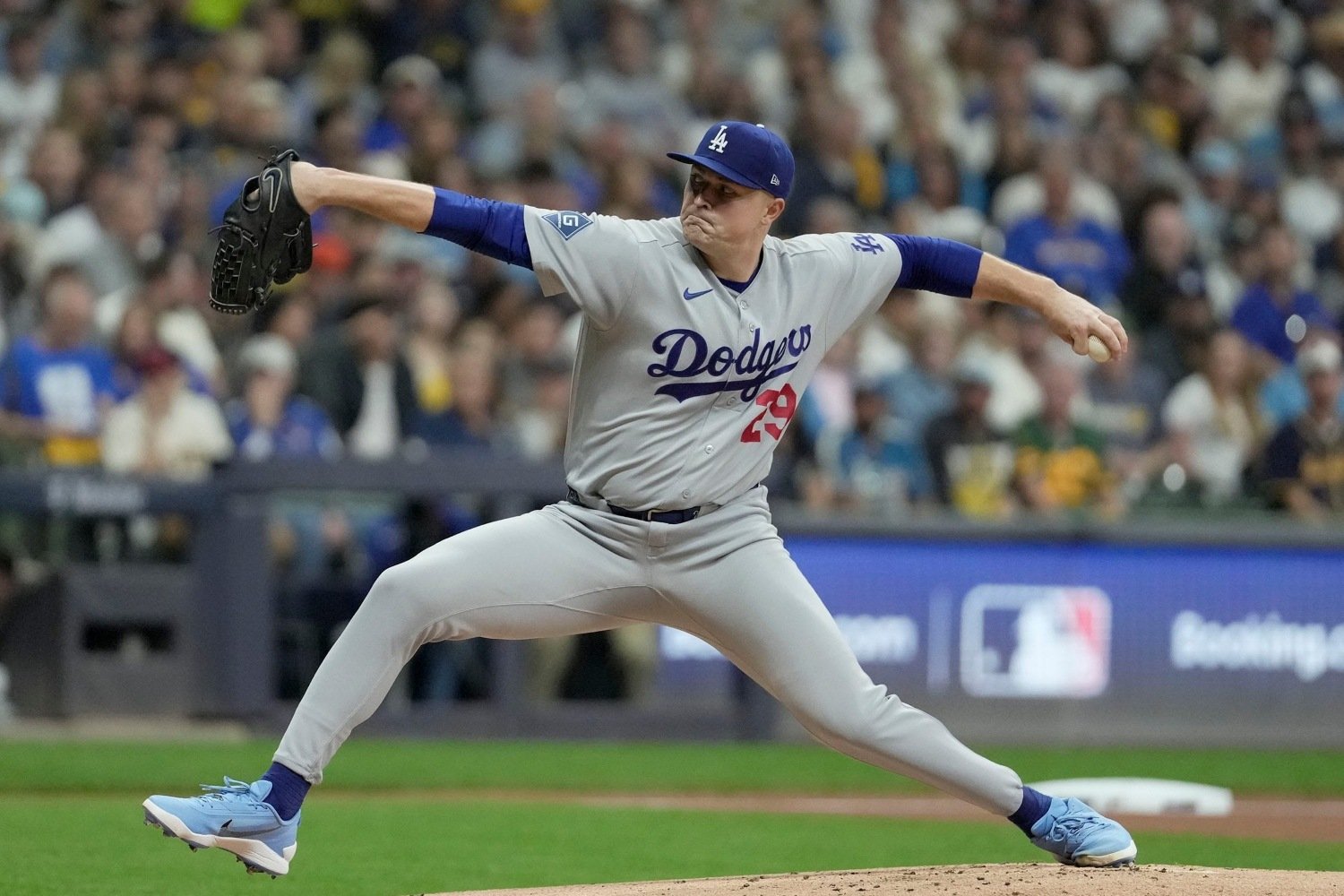
"The Chicago Cubs should sign the best player on the market" feels like a pretty obvious statement. "Yeah, no [duh], Sherlock" may go through your head when you read that, and it's a fair thought, On the surface, it isn't really much of a hot take. But give me a little space here, because I think there will be a lot of people who will find reasons to push back on me saying that about Skubal. They'll point to the cost of the contract (Skubal will set the record for AAV for a starting pitcher this offseason), the agent (Skubal is represented by Scott Boras, which really just reinforces the first point), or starting pitchers and their injuries (the Cubs had the fourth-most days missed due to time spent on the IL in 2026, so we're well acquainted with how things can go belly-up) to argue why the money should be spent elsewhere. I'm here to tell you this: the Cubs should ignore that noise and just sign the best damn pitcher on the market.
Tarik Skubal is Awesome, and the Cubs' Rotation Isn't
Let's start with the stuff we all agree upon: Skubal is awesome. From 2024 through 2026, Skubal led the world in starting pitcher fWAR, at 18.0. That's more than Cristopher Sánchez, Chris Sale, Paul Skenes, or Zach Wheeler (or anyone else, but you get my point). In the same span, he ranks second in ERA, second in expected ERA, second in xFIP, and fourth in strikeout rate, and he has the second-lowest walk rate among qualifying hurlers. It doesn't matter what statistic you look at; he's awesome. And one more thing: Skubal has the fourth-most innings pitched over those three seasons; he's available. It's one thing to have all the talent in the world, it's another to be able to use it. Outside of a small blip this season, Skubal has been a better combination of dominant and durable than anyone.
The Cubs' starting rotation is decidedly not awesome. The team has a massive need for starting pitching, making the initial fit an easy argument. Last season, the Cubs were a bottom-10 team in almost any category you can name, including fWAR (28th), xERA (24th), K% (23rd), and homers (29th). The team attempted to address this issue at the deadline, but due to the prices of controllable pitching, they were left trading for Clay Holmes, David Peterson and Kevin Gausman, all of whom are free agents. To make that happen, the team had to once again unload useful prospects. This time, that meant Jefferson Rojas, Cole Mathis and Mason McGwire.
As of this writing, the Cubs' 2027 rotation is quite murky, too. It's a mixed bag of injured pitchers who have massive question marks surrounding their future (Justin Steele, Cade Horton and Ben Brown) and players who have talent but have been ineffective (Edward Cabrera). Behind them in the farm system, there are no clear-cut candidates to step into a top-of-the-rotation role. The team hopes first-round pick Cade Townsend will be "that guy", but he hasn't thrown a professional pitch yet, so it's best to hold off on the coronation. Jaxon Wiggins has flashed the stuff, but last year was a year, he dealt with his own issues of ineffectiveness and injury. Solving the issue internally doesn't feel like a very likely scenario in the interim, so the help has to come from outside.
Starting Pitchers Get Hurt Sometimes, But They Age Better Than Hitters
If you're feeling snakebitten by starting pitchers, I wouldn't blame you. Last year was a particularly rough season for the Cubs on this front. Horton and Steele combined for under eight innings. Brown looked like a possible rotation anchor for a short time, but spent the second half on the injured list. Matthew Boyd had knee issues stemming from playing basketball with his kid. The Cubs weren't alone in this regard, of course. Pitchers get hurt all the time, and more often recently than ever before. Major League Baseball has looked into it themselves. Stints on the shelf for pitchers rose sharply from 2017-2024, with the vast majority of them happening early in the year. There is an injury crisis affecting pitchers right now, and we'd be fools to ignore it.
Obviously, though, keeping it in mind can't mean allowing it to dissuade you from all investment in hurlers. Yes, pitchers are getting hurt more often, and yes, teams are more cautious than ever with starting pitchers. As a result, however, pitchers who don't break age better than their position-playing counterparts. Hitters, not pitchers, decline earlier. Hitters over the age of 35 are becoming vanishingly rare. In 2024, just 4.1% of all plate appearances in the majors went to hitters in the back half of their 30s. We have plenty of data that shows that by the age of 32, bat speed begins a fairly rapid decline. This year, only three hitters aged 35 or older had a wRC+ over 105: Freddie Freeman, Nolan Arenado and Max Muncy. They're also the only three players to hit 2.0 fWAR at that age. Not one player aged 37 even got enough playing time to qualify for the batting title.
Compare that to pitchers aged 35 and up. The number of 35+-year-olds who got to the 2.0-WAR bench mark was more than double that of their hitting counterparts, with seven. One of those was Nick Martinez. Two pitchers over the age of 37 posted 4+ fWAR, and but for Jacob Misiorwski's unbelievable season, Chris Sale would have had a good argument for the NL Cy Young Award. It's not a one year thing either. There were eight pitchers who had more than 2.0 fWAR in 2025 over the age of 35, compared to just three hitters. Pitchers age better, in every sense except that their careers are more likely to be permanently and substantially diminished (or even ended) by injuries.
Signing a starting pitcher to the kind of deal Skubal will require probably means absorbing a year lost to injury at some point. But you can make up for that. While a hitter signed to a 10-year deal can become a multi-year albatross, pitchers have a better aging curve. Zack Wheeler, who had a deep-vein thrombosis in August 2025, proved this year that you can come back from a nasty surgery and thrive again even in your late 30s. The best pitchers tend to last, and Skubal is that kind of pitcher.
Repeating History; The Jon Lester Story
Jed Hoyer has been around the Cubs organization since he was brought on by Theo Epstein upon Epstein's arrival in 2011. He was there when the Cubs made a massive statement in the winter of 2014-15, bringing in proven winner Jon Lester. He saw the fruits of that contract, as Lester helped lead the Cubs to a 2016 World Series title and was worth 16.8 fWAR during his time on the North Side, being useful through his age-35 season. Lester brought a winning mentality. He was an absolute bulldog on the mound, who already had a playoff starter's résumé.
Jon Lester was a dude in the World Series. You may remember him in Game 7, but let's not forget what he did just two games earlier. Game 5 of the 2016 World Series is sometimes overshadowed by the more climactic games that followed in Cleveland, but it was the pivot point in that series. Down 3-1 to Cleveland, the Cubs were on life support at home. The offense had gone cold, and Cleveland smelled blood, looking to finish things off at Wrigley Field. Lester shut down that Cleveland team, limiting the visitors to just two runs over six innings as the team held on after a three-run offensive outburst early in the game. Lester was able to hold out long enough for Aroldis Chapman to get the save.
The Cubs haven't had a Lester-caliber stopper in the last two years, and it's showed. In 2025, they got knocked out by the Milwaukee Brewers because they didn't have the horses to match up in the rotation. In 2026, when the Cubs went against the San Diego Padres, they got knocked around early in Game-1 and couldn't match Nick Pivetta in Game 2. Their vaunted offense went cold, and they didn't have a strong enough starter to keep them breathing until the bats could wake up.
To make the Lester deal happen, the Cubs had to go well above their normal spending pattern. Before the lefty agreed to a 6-year, $155-million deal, the team had only eclipsed the $100-million mark once—way back in 2007, with outfielder Alfonso Soriano. We're now over a decade beyond the ink drying on that contract, and the Cubs have yet to go above $200 million. While the deal that Skubal will eventually sign should dwarf (as in more than double) the size of Lester's, that cannot be the excuse for not making that leap.
No Time is Perfect, But Now is Close Enough
The Cubs can't allow imperfections in timing or in a player's profile to be the reason they never make the big move. It's easy to think there will be a "next" or a "better" time, but there's never a better time than "now". When the Cubs signed Lester, they were fresh off a season wherein they won 73 games and finished dead last in the NL Central. That didn't stop them from breaking from their decades-long spending pattern.
The current iteration of the Cubs has won more games than they lost four years running and has made the playoffs in the last two. They have the best position player on the planet, and another top-10 fWAR player on the roster. Alex Bregman and Dansby Swanson are marching into their mid-30s, and while I'd love to believe Pete Crow-Armstrong is going to remain one of the best position players on the planet, the odds are that 2026 will be his peak season, and that 2027 will be his second-best. The Cubs are better positioned to add a special pitcher than they were in 2015, and they're certainly better positioned to benefit from that kind of addition than they'll be a year or two from now.
The market is shaping up for the Cubs to be a massive player here. The Los Angeles Dodgers, the equivalent of MLB's bogeyman, seem to be in an odd place financially. Mark Walter, the Dodgers' owner, is in some legal hot water at the moment. Reports are that the Dodgers may only want Skubal on a Kyle Tucker-style short-term, high-AAV deal. Walter is also currently looking to get out of his backing of a Cadillac F1 team, just one year into the project. There will be other big bidders, but if the Dodgers are less aggressive than they'd otherwise be, the Cubs have to seize the rare opportunity.
To be good next year, the Cubs have to spend more than they've ever spent before, and they can't by any means stop with Skubal. But it also won't require them to become the Dodgers or the Mets. In 2019, the Cubs had the third-highest payroll in baseball at around $191 million. In 2026, the fifth-highest payroll was the Blue Jays, at $270 million. The CBA is going to play a part in this, but if recent history shows us anything, there is likely to be an increase in the luxury tax again. The last CBA saw the lowest tax threshold increase $20 million in one offseason. Another, similar bump from $244 million would put that bottom threshold around $265 million. That would give the Cubs well over $100 million to spend on 2027 alone, leaving $55-$60 million after Skubal signed—enough to fill out a good roster.
As mentioned above, Skubal's agent is Scott Boras. Not everyone has a great relationship with the super agent. He can be corny and grating. He really strings things out. But the Cubs and Boras have a working relationship, which should grease the wheels. Some teams can be turned off with Boras's involvement, but the Cubs aren't one of those teams. They brought in Bregman via Boras last offseason. These two sides know each other and that gets your foot in the door.
In Summary: Just Do It
There are a lot of hurdles to make this happen. It's going to require the Cubs to first accept that their spending model needs an update. When the Cubs signed Lester, it was the 19th-largest contract ever; it is now not even in the top-70. FanGraphs recently put out an article looking at free-agent predictions for contract sizes. Their crowdsourced data put the predicted contract for Skubal at $335 million, which would make it a top-10 all-time contract. FanGraphs writer Ben Clemens was higher, at $380 million—the highest ever for a pitcher and fifth place all-time. But young pitchers like Cam Schlittler, Misiorowski, and Skenes will easily eclipse that deal in the future, much like others eclipsed Lester's. It doesn't feel like an impossible ask in that context.
Secondly, it's going to require the Cubs to accept that this is a unique opportunity. How many times are you going to have the best position player in baseball on a nice contract? How many more good years do Bregman and Swanson have left? How often will you have a need this glaring on a team with this good a chance to be good? How much more perfect does it have to be? If this isn't the guy you're going to be irrational about, who the hell is?
The good news is there is some smoke here. They looked into him at the trade deadline, but clearly that didn't go far. Jeff Passan has mentioned they "want him badly". The bad news is that in that same article, Passan mentions the Cubs may be unwilling to spend what he'd need. I'm begging them to give in and pay up, this one time.
Ultimately, I have the easy task of spending someone else's money here. I'm not shelling out $380 million of my own dollars (granted, I also am not sitting on a franchise with an estimated net worth of $5 billion) to get this over the finish line. But if the Cubs want to get to a point where they don't have to trade good prospects for rentals (like they did at this deadline); if they want to get to a point where they are getting back into the conversation of a bye in the first round of the playoffs; and if they want to avoid another year "slipping away", no other player in this market seems as stable as Skubal or fits the organization's needs more neatly.
What do you think the Cubs should do regarding Tarik Skubal? Should this be the player they break the bank for? Let us know in the comment section below.
Are you optimistic about the Cubs right now?

Want to play the role of Cubs general manager? Check out our free-to-use "You're The GM" offseason tool and build your own Cubs roster!
Build Your 2027 Roster



Recommended Comments
There are no comments to display.
Create an account or sign in to comment
You need to be a member in order to leave a comment
Create an account
Sign up for a new account in our community. It's easy!
Register a new accountSign in
Already have an account? Sign in here.
Sign In Now