


Cubs Video
It has always been Ernie Banks, Ron Santo and Billy Williams. That's always the order in which fans rattled off the triad of franchise greats who made the Cubs what they are. Banks's media savvy and showmanship, as much as his back-to-back MVP seasons and 512 home runs, made him Mr. Cub. He had rhymes; he had good looks; he was eager to please.
Santo had his own flair, with the high-leaping heel click celebration to close Cubs wins in the memorable summer of 1969. He rejected one trade to the White Sox, and always felt miserable about having accepted a second. He came back later to broadcast Cubs games for well over a decade. His ferocious love of the Cubs, his broadcasting style, his charitable work and his own battle with Type 1 diabetes made him feel as much like part of the family as like part of the team.
The two of them, without trying to, took up practically all of the oxygen available for the intergenerational celebration of franchise legends. They were so lovable that it would have taken an extraordinary feat of open-heartedness for the fan base to fully include and concelebrate Williams. It never quite happened. That's not to suggest that Williams was ever forgotten. He got a statue outside Wrigley Field, just like Santo and Banks. His number was retired. He was as actually present as either of the others, spending over a decade as a coach in uniform before transitioning into multiple roles for the team in the front office and as an ambassador over the last quarter-century.
If you were born in the second half of the 1980s, you saw Williams more than you saw either of the others. As a hitting coach and a base coach, he molded later generations of the team, right there before your eyes. In a way, that might have worked against him. Santo's work as the color commentator on Cubs radio felt like a glamor gig for him, even if he performed it unglamorously. Banks spent some time as a coach, but much less than Williams. He sold cars and endorsed lots of products. He felt hugely famous. If Williams was so great, why was he still in uniform 25 or 30 years after his fellow franchise greats ceased to be?
The reason was simple, though, and it should probably have counted for more than it did, all along: Williams loves baseball. While a player, he set the National League record by playing in 1,117 consecutive games. That workmanlike approach—that willingness and ability to go out there and do his job on the endless parade of hot summer afternoons at Wrigley—made him feel a bit less like a superhero than the others, when perhaps it should have made him seem more so. The story of his life is a brilliance so subtle that it too often went not quite unnoticed, but underestimated.
Case in point: Williams, whom Bob Gibson called the toughest hitter he faced over his own Hall of Fame career, spent over 50 years as the only Cubs lefty batter ever to hit 40 home runs in a season. He hit 42 in 1970, when he also hit .322, led the league in runs scored and finished second in MVP voting. But plenty of fans were unaware of that fun fact until this weekend, when Pete Crow-Armstrong became the second player in team history to accomplish the feat. Crow-Armstrong now has 41 homers, and will surely surpass Williams before the season's over. Until now, Williams has unequivocally been the greatest outfielder in Cubs history, despite Sammy Sosa's better peak production. Crow-Armstrong might knock him off that perch, too.
In between his playing career and this usurpation by Crow-Armstrong, Williams has been overshadowed not only by Banks and Santo, but by another generation of stars—players he himself coached, like Ryne Sandberg and Sammy Sosa. Again, there was never risk he would be truly forgotten, but he might have been lost in the shuffle in a sad way, if not for one thing: he just keeps going.
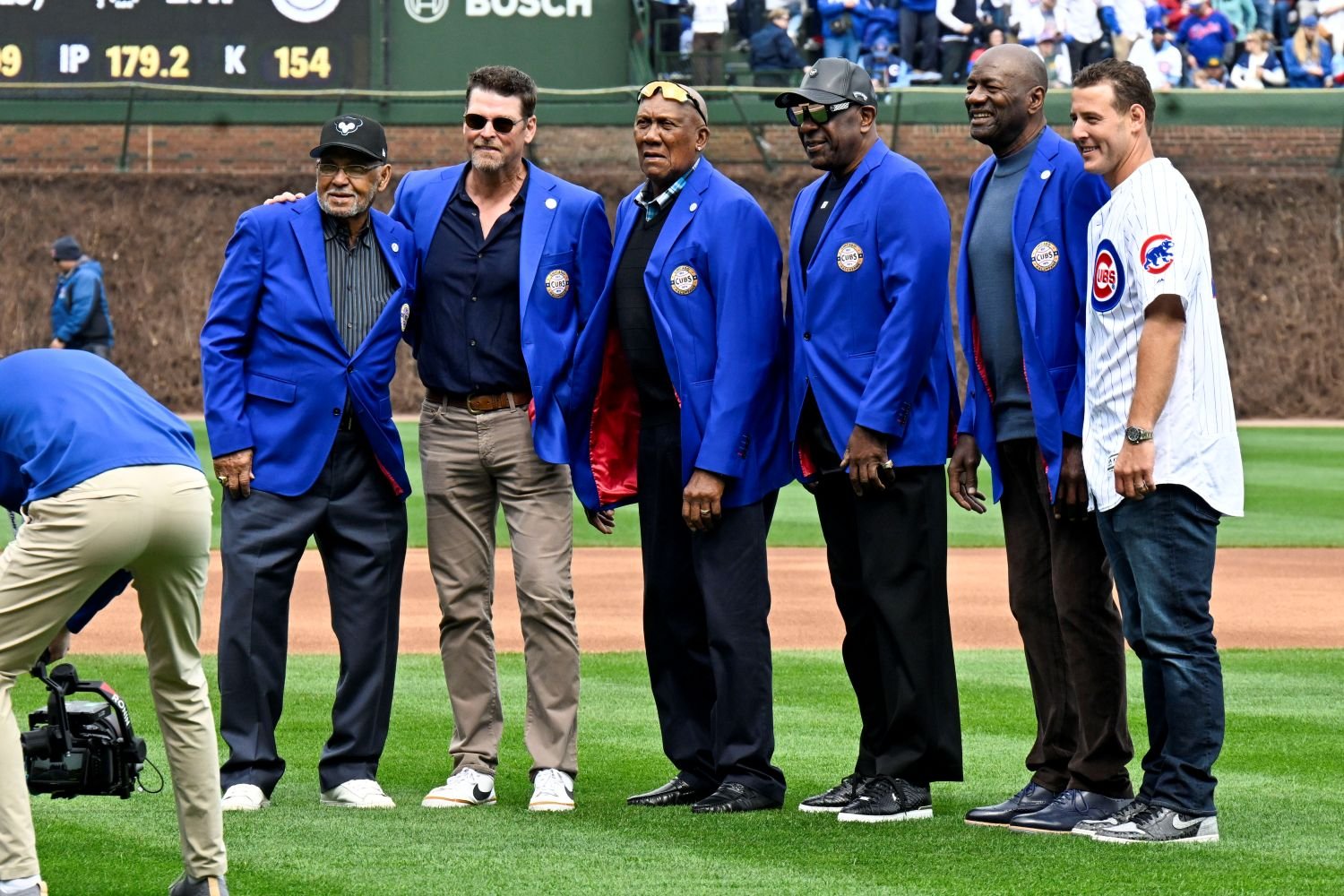
Santo died in late 2010. Banks followed in early 2015. Neither lived to see the Cubs win a championship; Williams did. Neither got to stand on the field and be saluted for their years and years of hard work to make that title happen; Williams did. Williams has seen Wrigley Field transformed. He's seen the identity of the team utterly changed. Sadly, Sandberg died too young, too. Sosa was estranged from the organization for 20 years. Fergie Jenkins and Andre Dawson are true greats of the game, but they never felt like they belonged wholly to the Cubs, the way Williams does—though Jenkins did coach in uniform for a while himself, and though Dawson will gladly tell you that his time with the Cubs was the best of his career. Rick Sutcliffe and Kerry Wood do feel like they're true-blue Cubs, despite having played elsewhere, but neither is that caliber of all-time great that makes that feeling of mutual dedication especially rewarding.
Bit by bit, Williams has become the lion of this organization. He's now 88 years old, but he's lived to see the ascent of Crow-Armstrong, who will be the next player to join the team's pantheon and spearhead the fourth or fifth generation of stars since Williams matriculated to the majors in virtual lockstep with Santo at the end of the 1950s. He grew up with Willie McCovey and, alongside McCovey and others, accepted the mantle as Major League Baseball's second generation of Black stars. Unlike McCovey, Henry Aaron, Willie Mays, Gibson and so many others, he's still here.
Here's hoping that Williams is enjoying watching Crow-Armstrong, who does things with all the swagger of Banks, Santo or Sosa and not much like Williams, but who represents the progress of an organization to which Williams has belonged (with only brief interruptions) for 70 years. Williams is a Hall of Famer. He batted .296 in his Cubs career and hit 392 home runs for them. There should be no risk of overlooking him, but as Crow-Armstrong takes his place in the firmament of Cubs superstars, it's a good time to celebrate the player next to whom his star seems to be rising closest. Even now, it would be remarkable if Crow-Armstrong ended up as beloved and as enmeshed with the team as Williams is. That's a testament to how much Williams has meant to this franchise, and for how long.





Recommended Comments
There are no comments to display.
Create an account or sign in to comment
You need to be a member in order to leave a comment
Create an account
Sign up for a new account in our community. It's easy!
Register a new accountSign in
Already have an account? Sign in here.
Sign In Now