


Cubs Video
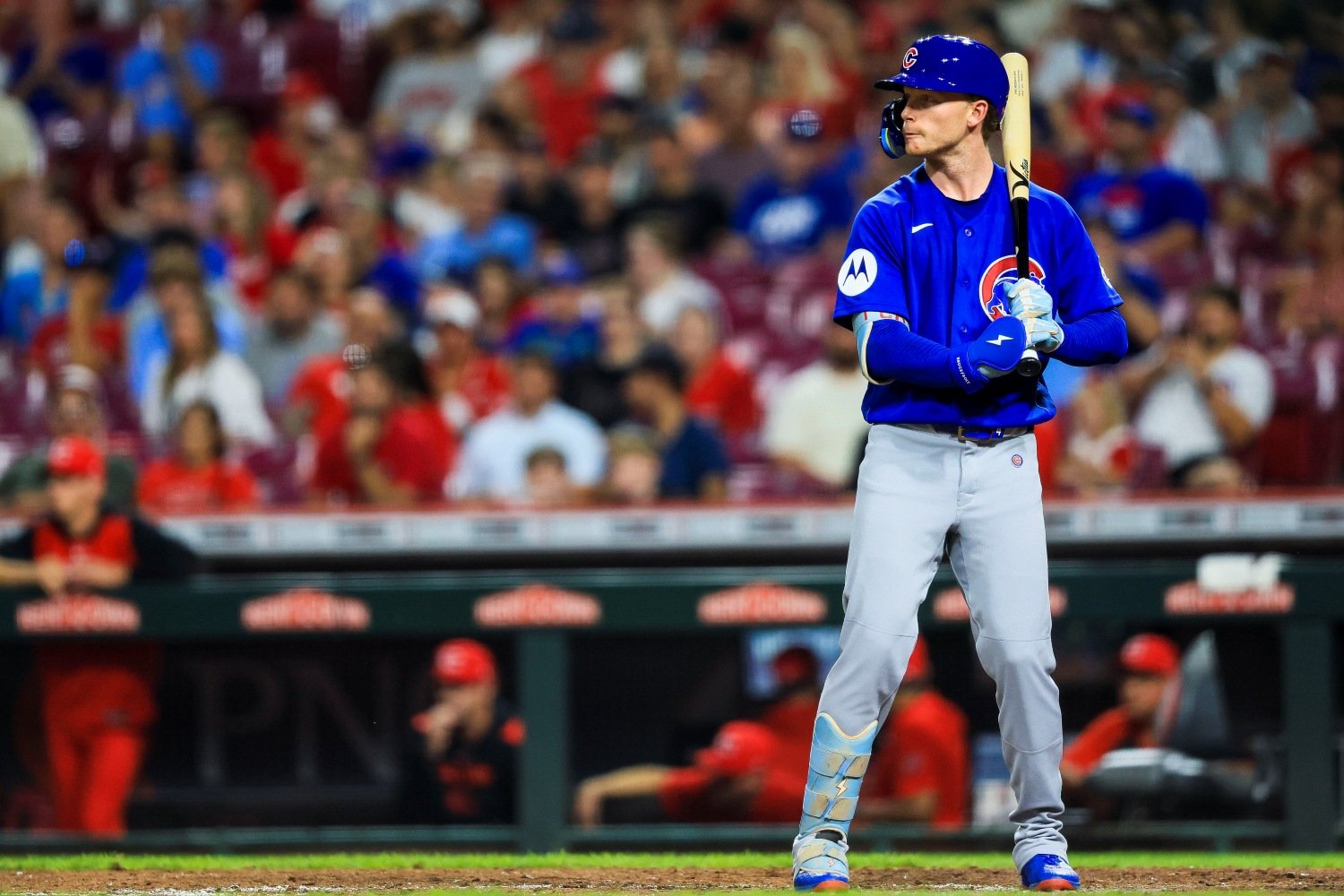
You can't have a season as good as Pete Crow-Armstrong's 2026 without getting a bit lucky. In Crow-Armstrong's case, that wasn't primarily about finding grass and running an unduly high BABIP. It was about getting some unexpected relief via the uncertainty of opponents.
Only two batters in the league had more expected runs go unclaimed when opponents failed to challenge incorrect called balls against them than did Crow-Armstrong. Milwaukee's Brice Turang saw opponents miss 42 chances to challenge pitches that should have been called strikes; the Dodgers' Freddie Freeman got away with the same number. Crow-Armstrong, however, got a whopping 45 extra called balls because opposing pitchers and catchers failed to challenge when he took tough pitches that were actually in the zone. Turang's and Freeman's opponent misses were, on average, a little more valuable to them, so Turang got 6.9 runs of value from not having strikes called, while Freeman snuck in at 6.8—just ahead of Crow-Armstrong's 6.7. Only those two got more value from catchers not tapping their helmets; only Carson Benge (48) and Steven Kwan (49) had a larger number of total pitches that should have been called strikes but weren't, on which opponents didn't challenge.
Most of the guys who lived in that range with Crow-Armstrong had something in common: extreme patience at the plate. Kwan swung at barely 51% of the pitches he saw even in the zone this year, and chased just under 20% of those outside the zone. Taking so often at the edges creates the conditions for more called balls than the average batter. Benge and Turang swung at around 64% of the in-zone pitches they saw, with fairly low chase rates. Two other hitters near the top of the unconverted overturn leaderboard, James Wood and Geraldo Perdomo, got there because they swung at around 56% of pitches in the zone.
As you know, Crow-Armstrong isn't like that. In 2025, he swung at over 81% of the strikes he saw. Even this year, as he made a radical shift toward patience in the box, that number was over 68%, and his lowest monthly mark (in July) was 65.2%. He's aggressive within the zone, which makes finding him at the top of this leaderboard surprising.
The only player like him, in that regard, is Freeman, who has made a career out of telling balls from strikes as well as anyone. Every single season, he swings at over 70% of the in-zone pitches he sees, but he keeps his chase rate down. That's earned him some calls over the years, and in the first year of ABS, opponents proved reluctant to challenge him even when that happened. What's surprising is that Crow-Armstrong, whose reputation is as a free swinger and who only moderated (rather than truly upended) that approach in 2026, would land right next to Freeman and a slew of patient hitters.
Some of it is good strike-zone judgment, to be sure. Crow-Armstrong did improve on that score this year, though his in-zone swing rate actually dropped a fair bit more than his chase rate did. He understood, right away, that the smaller zone played into his hands. He locked in more on the pitches he wanted to attack, and he laid off more offerings even if he knew there was a chance they would be called strikes, knowing that doing so was necessary in order to fully cover the pitches he could drive. He was also good at pressing for his rights when a call went against him. As we saw in Wild Card Series Game 2, that sometimes showed up as hyperaggressiveness, but Crow-Armstrong left few (just 18) "bad" called strikes as strikes. He came out way ahead, by being proactive and having opponents prove too conservative when calls broke in his favor.
That last part isn't a skill, though. Crow-Armstrong owes the value he got from catchers not flipping his incorrect balls into strikes not to his own savvy, but to manager Craig Counsell, and to his teammates. When I listed the other hitters who shared this trait with Crow-Armstrong, did you notice the other common thread between them? They all bat at the top of the order (or very near it). When Crow-Armstrong would come up in the first inning of each game, teams would be naturally conservative with challenges. There's hardly ever cause to risk burning one of your challenges in the first two or three at-bats of a game; you have to be incredibly certain to trigger a review. That meant that if a pitcher got squeezed in Crow-Armstrong's first plate appearance each day, it was likely to go uncorrected.
Often, by the time Crow-Armstrong would come up again (especially, say, for the third time), the other team would be down a challenge. Maybe one of their hitters burned one, but Crow-Armstrong's much more patient teammates get part of the credit, too. Michael Busch chased only 25% of the pitches he saw outside the zone this year. Alex Bregman's rate was even lower: 23%. Ian Happ was patient, too. No hitter in baseball prompted more failed ABS challenges by opponents than Busch, at 17. Bregman tied for sixth, at 15. Happ lured opponents into 10 bad challenges. Nico Hoerner got nine (as did Crow-Armstrong). Dansby Swanson got eight. Seiya Suzuki got seven.
Hitting at the top of the lineup is a huge advantage in terms of the utility you derive from ABS, especially for an aggressive hitter. It might feel too early to challenge a borderline strike in your first at-bat or two, but you don't take all that many of those, anyway. Meanwhile, your opponents feel the same squeamishness about challenging a called ball your first trips through, and by your third, fourth and fifth turns, they might have to be more careful, because they're already down a challenge.
This "gamification" of the zone is a frustrating part of ABS for many fans, but for what it's worth, most sports have some analog of this type of situation. A soccer player on a yellow card has to be more judicious about their tackles. A basketball player in foul trouble has to tread lightly, too. When players or teams are more conservative because they might suffer a steeper penalty for a second "offense"—returning to our actual topic, a failed challenge—it's not really a sign of a poorly designed system. It's just how sports work. However, if might be worth discussing a change whereby, instead of two challenges per team per game, each player only gets the right to lose one. That would force catchers to be more careful, and it would take many hitters (on teams who turned most of the ABS privileges over to their backstops) off the leash a bit. On the other hand, it shouldn't prompt a huge rise in actual challenges, because all players would know they had only one miss available. You'd even see pitchers be allowed to challenge by their clubs, at that point.
In the meantime, Crow-Armstrong profited handsomely from his teammates forcing bad challenges in between his turns. Fifteen of the 45 pitches that could have been strikes but weren't corrected came when the opposing team was down to one challenge left, and those didn't all come in the eighth or ninth innings. Sometimes, they came in the fifth, or even the third—stages of the game when, absent the knowledge that they'd already lost their buffer, opponents probably would have begun to feel comfortable challenging him.
Not all of the benefits of this phenomenon arrogate to Crow-Armstrong and his fellow leadoff hitters. He enjoyed lots of added value because teams eschewed chances to challenge, but only twice this year did Crow-Armstrong take a called ball in the zone at a juncture where the other team couldn't challenge, because they'd run out. Busch, however, took eight such pitches, because by the time the lineup came back to him a fourth time, that second challenge was often gone. The effects are greatest for leadoff hitters, though. Here's the percentage of takes on pitches inside the zone that were called balls (and not fixed) when the defense had a right to challenge, by batting order position:
- 7.6%
- 6.8%
- 6.5%
- 6.7%
- 6.4%
- 6.5%
- 6.6%
- 6.6%
- 6.4%
It's a small consideration, but a real one. It bolstered Crow-Armstrong during his supernal season. The league always adjusts, though. Expect him to be assailed a bit more with challenges next year, even if he maintains exactly the same plate discipline he showed this season. One way or another, he'll feel the sting of regression in this area, because he'll either chase more pitches, get fewer generous calls, or watch more of those lucky calls reversed. This is the nature of being awesome; people will start hunting ways to slow you down.





Recommended Comments
There are no comments to display.
Create an account or sign in to comment
You need to be a member in order to leave a comment
Create an account
Sign up for a new account in our community. It's easy!
Register a new accountSign in
Already have an account? Sign in here.
Sign In Now